
Pregnancy Birth Control Voluntary regulation of the number
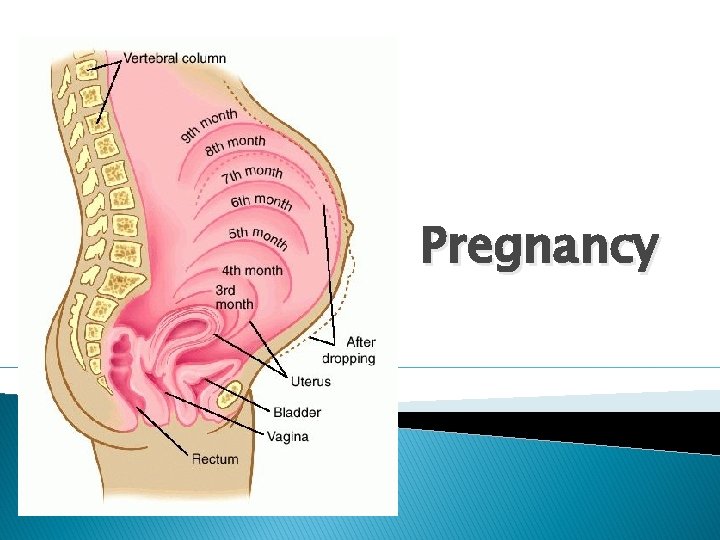
Pregnancy

Birth Control Voluntary regulation of the number of children produced and when they are conceived. Coitus interrupts: withdrawal of the penis from the vagina before ejaculation. Rhythm method: abstinence from sexual intercourse for several days before and after ovulation. Mechanical barriers: male and female condom, and female diaphragms and cervical caps.
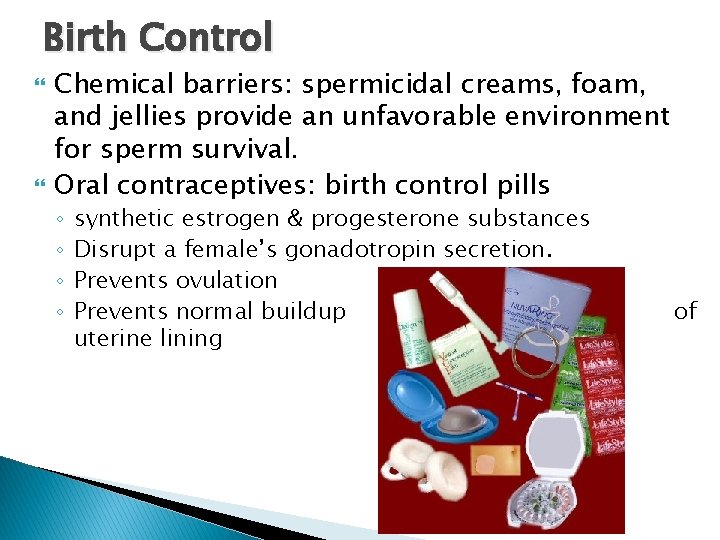
Birth Control Chemical barriers: spermicidal creams, foam, and jellies provide an unfavorable environment for sperm survival. Oral contraceptives: birth control pills ◦ ◦ synthetic estrogen & progesterone substances Disrupt a female’s gonadotropin secretion. Prevents ovulation Prevents normal buildup uterine lining of
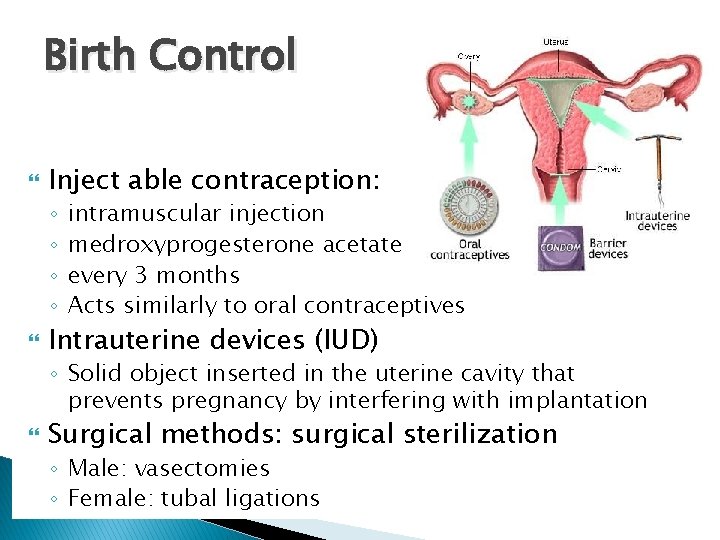
Birth Control Inject able contraception: ◦ ◦ intramuscular injection medroxyprogesterone acetate every 3 months Acts similarly to oral contraceptives Intrauterine devices (IUD) ◦ Solid object inserted in the uterine cavity that prevents pregnancy by interfering with implantation Surgical methods: surgical sterilization ◦ Male: vasectomies ◦ Female: tubal ligations
Sexually Transmitted Diseases STDs are passed during sexual contact and may go undetected for years Silent infections: early stages do not produce symptoms, especially in women
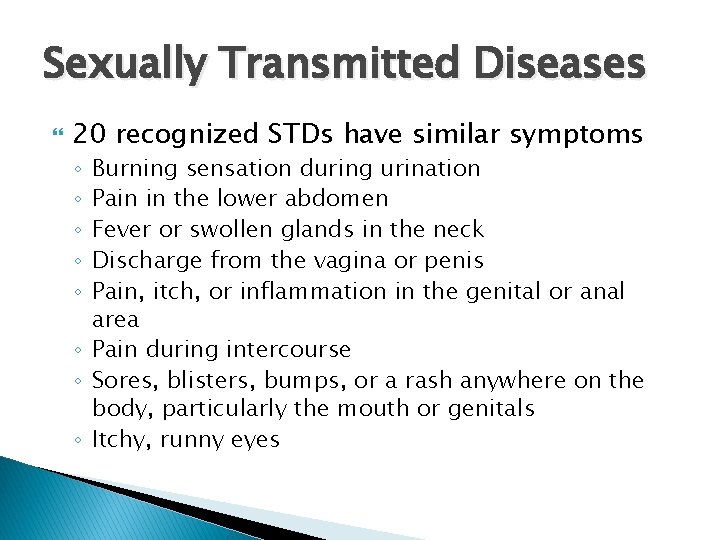
Sexually Transmitted Diseases 20 recognized STDs have similar symptoms Burning sensation during urination Pain in the lower abdomen Fever or swollen glands in the neck Discharge from the vagina or penis Pain, itch, or inflammation in the genital or anal area ◦ Pain during intercourse ◦ Sores, blisters, bumps, or a rash anywhere on the body, particularly the mouth or genitals ◦ Itchy, runny eyes ◦ ◦ ◦
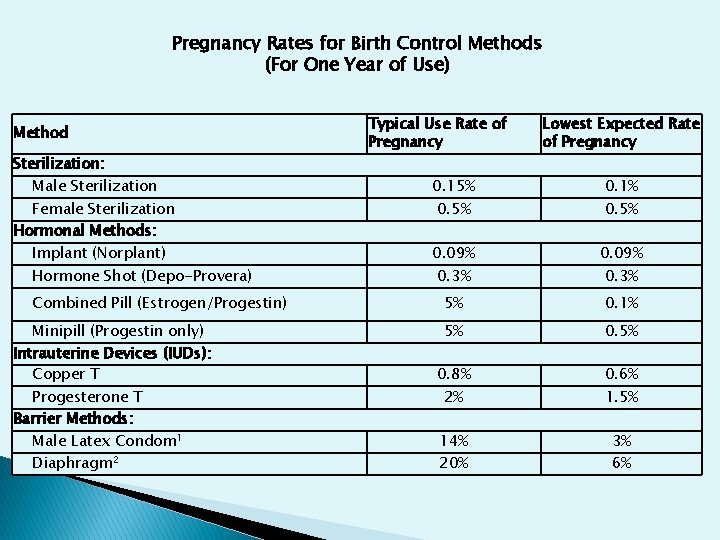
Pregnancy Rates for Birth Control Methods (For One Year of Use) Method Sterilization: Male Sterilization Female Sterilization Hormonal Methods: Implant (Norplant) Hormone Shot (Depo-Provera) Combined Pill (Estrogen/Progestin) Minipill (Progestin only) Intrauterine Devices (IUDs): Copper T Progesterone T Barrier Methods: Male Latex Condom 1 Diaphragm 2 Typical Use Rate of Pregnancy Lowest Expected Rate of Pregnancy 0. 15% 0. 1% 0. 09% 5% 0. 1% 5% 0. 8% 2% 0. 6% 1. 5% 14% 20% 3% 6% 0. 5% 0. 3%
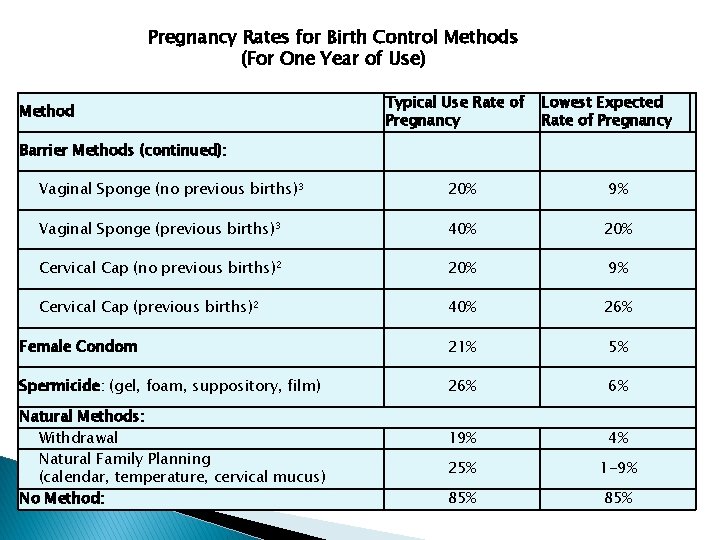
Pregnancy Rates for Birth Control Methods (For One Year of Use) Method Typical Use Rate of Pregnancy Lowest Expected Rate of Pregnancy Barrier Methods (continued): Vaginal Sponge (no previous births)3 20% 9% Vaginal Sponge (previous births)3 40% 20% Cervical Cap (no previous births)2 20% 9% Cervical Cap (previous births)2 40% 26% Female Condom 21% 5% Spermicide: (gel, foam, suppository, film) 26% 6% 19% 4% 25% 1 -9% 85% Natural Methods: Withdrawal Natural Family Planning (calendar, temperature, cervical mucus) No Method:
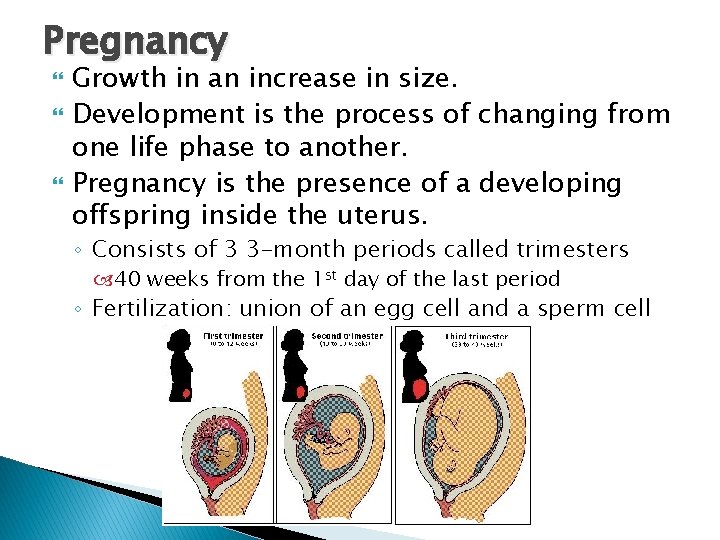
Pregnancy Growth in an increase in size. Development is the process of changing from one life phase to another. Pregnancy is the presence of a developing offspring inside the uterus. ◦ Consists of 3 3 -month periods called trimesters 40 weeks from the 1 st day of the last period ◦ Fertilization: union of an egg cell and a sperm cell
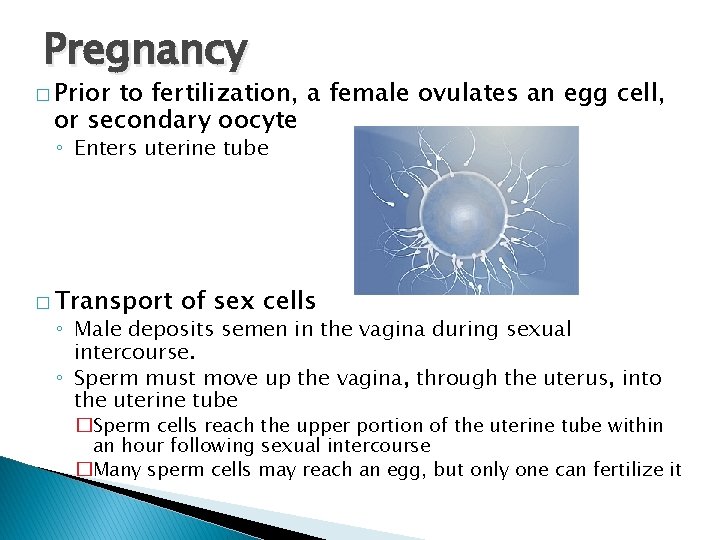
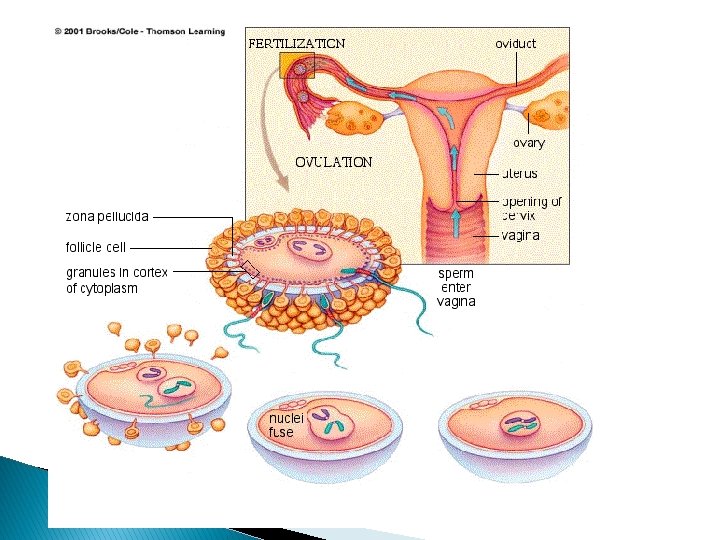
Pregnancy � Prior to fertilization, a female ovulates an egg cell, or secondary oocyte ◦ Enters uterine tube � Transport of sex cells ◦ Male deposits semen in the vagina during sexual intercourse. ◦ Sperm must move up the vagina, through the uterus, into the uterine tube �Sperm cells reach the upper portion of the uterine tube within an hour following sexual intercourse �Many sperm cells may reach an egg, but only one can fertilize it
Assistance in Transport ◦ Prostaglandin in semen stimulate a sperm cell to lash its tail to move muscular contractions in the uterus and uterine tube ◦ High estrogen levels in the female 1 st part of the menstrual cycle Stimulate the uterus and cervix to secrete a thin, watery fluid Promotes sperm transport and survival ◦ Higher progesterone levels During the latter portion of the cycle secretion of a viscous fluid Inhibits sperm transport and survival
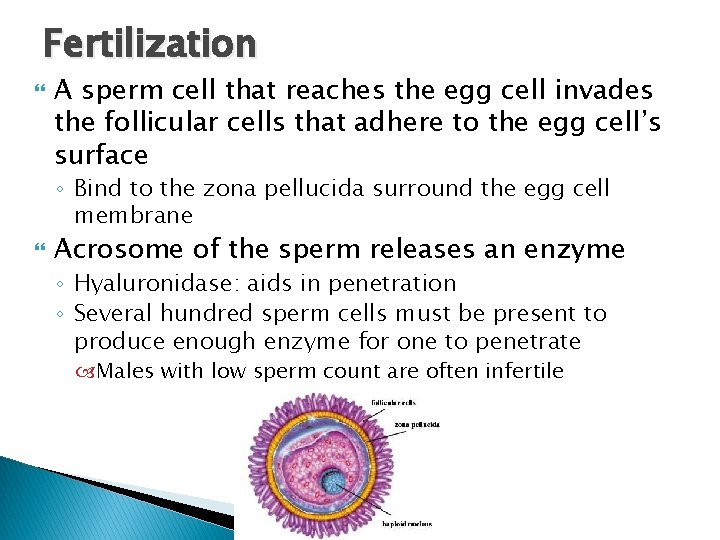
Fertilization A sperm cell that reaches the egg cell invades the follicular cells that adhere to the egg cell’s surface ◦ Bind to the zona pellucida surround the egg cell membrane Acrosome of the sperm releases an enzyme ◦ Hyaluronidase: aids in penetration ◦ Several hundred sperm cells must be present to produce enough enzyme for one to penetrate Males with low sperm count are often infertile
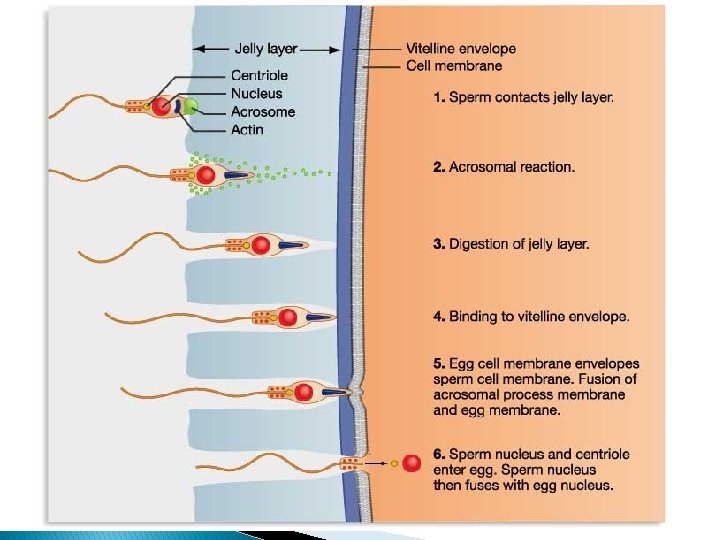
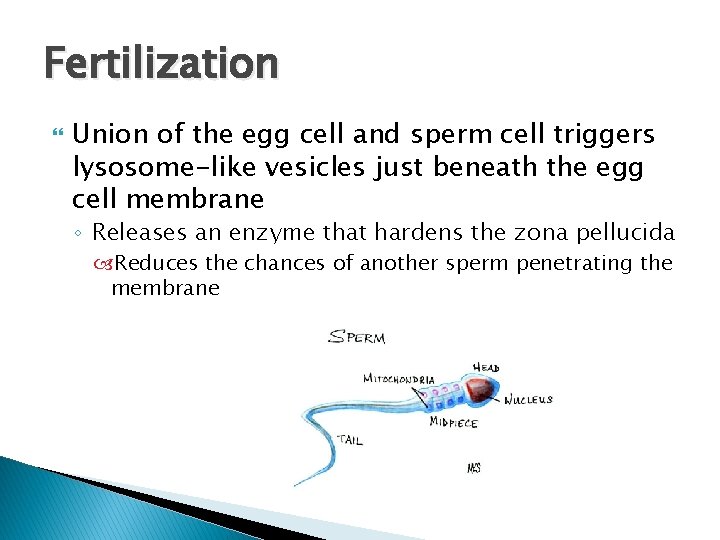
Fertilization Union of the egg cell and sperm cell triggers lysosome-like vesicles just beneath the egg cell membrane ◦ Releases an enzyme that hardens the zona pellucida Reduces the chances of another sperm penetrating the membrane
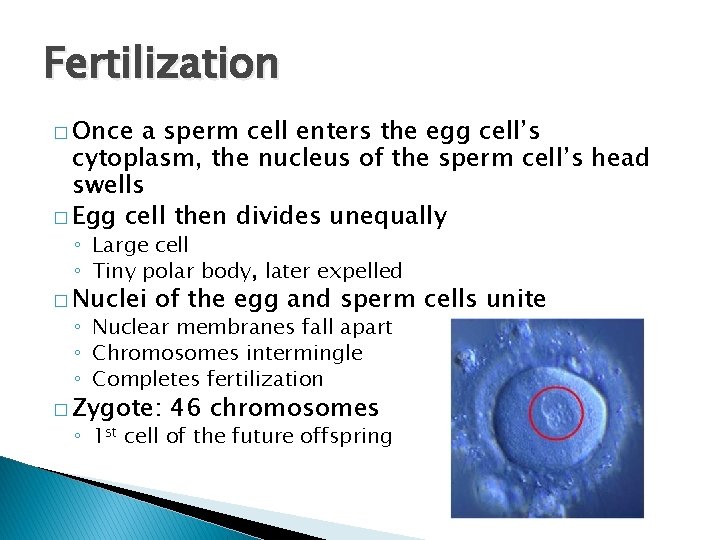
Fertilization � Once a sperm cell enters the egg cell’s cytoplasm, the nucleus of the sperm cell’s head swells � Egg cell then divides unequally ◦ Large cell ◦ Tiny polar body, later expelled � Nuclei of the egg and sperm cells unite ◦ Nuclear membranes fall apart ◦ Chromosomes intermingle ◦ Completes fertilization � Zygote: 46 chromosomes ◦ 1 st cell of the future offspring
Prenatal Period
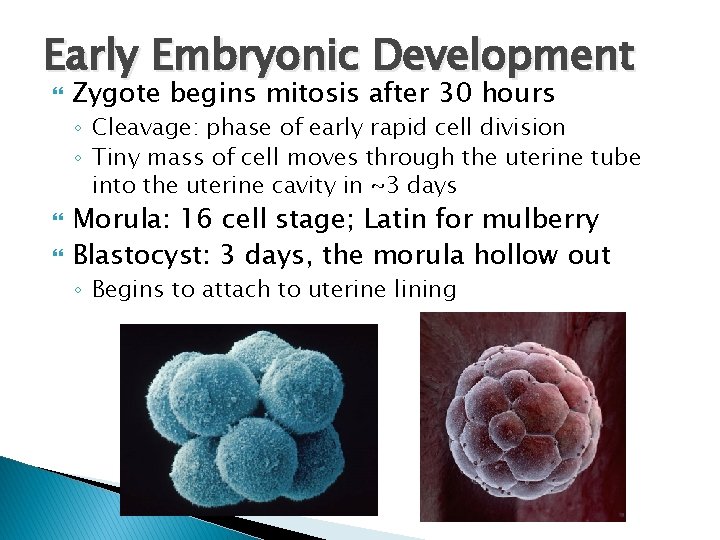
Early Embryonic Development Zygote begins mitosis after 30 hours ◦ Cleavage: phase of early rapid cell division ◦ Tiny mass of cell moves through the uterine tube into the uterine cavity in ~3 days Morula: 16 cell stage; Latin for mulberry Blastocyst: 3 days, the morula hollow out ◦ Begins to attach to uterine lining
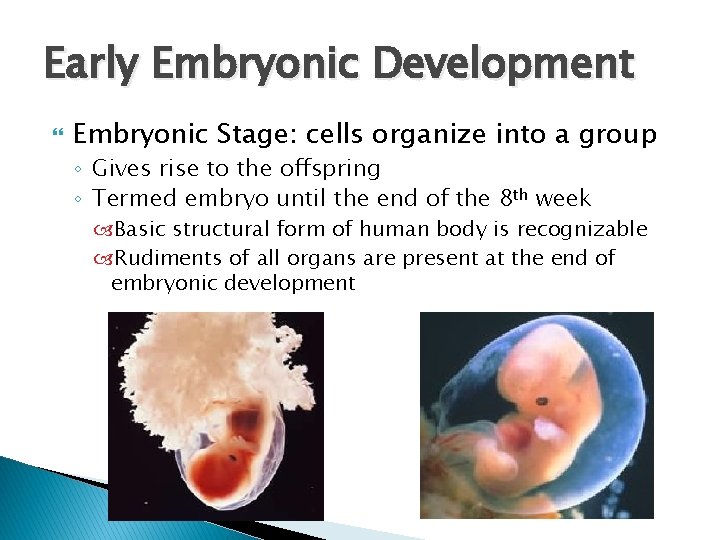
Early Embryonic Development Embryonic Stage: cells organize into a group ◦ Gives rise to the offspring ◦ Termed embryo until the end of the 8 th week Basic structural form of human body is recognizable Rudiments of all organs are present at the end of embryonic development
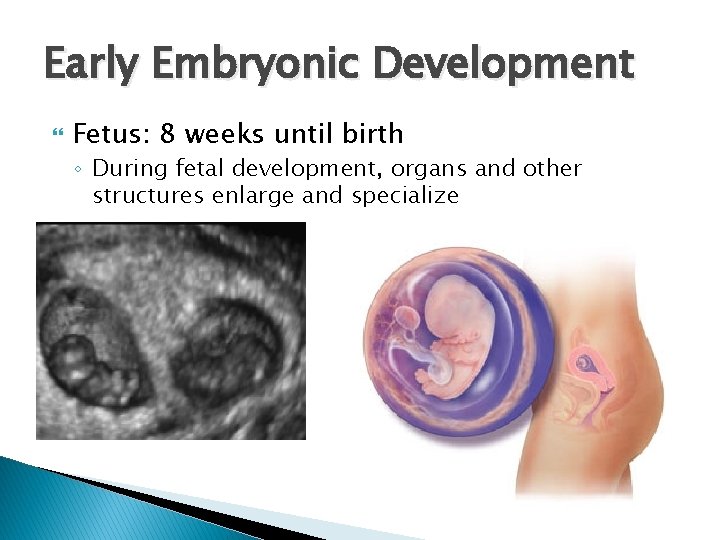
Early Embryonic Development Fetus: 8 weeks until birth ◦ During fetal development, organs and other structures enlarge and specialize
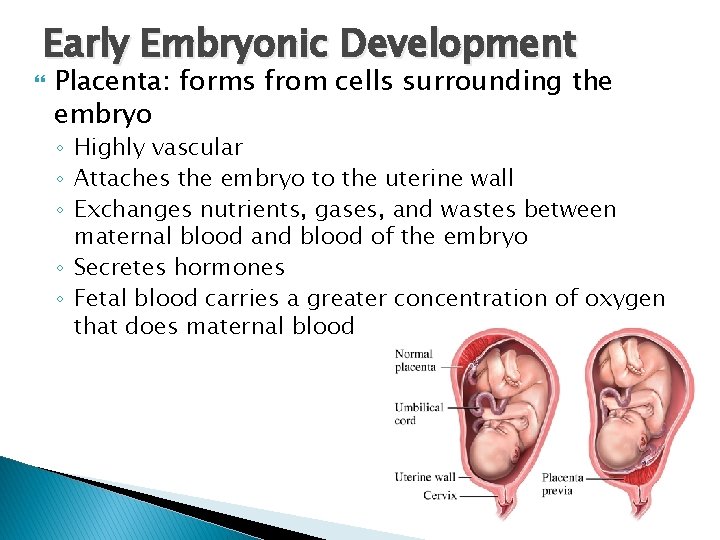
Early Embryonic Development Placenta: forms from cells surrounding the embryo ◦ Highly vascular ◦ Attaches the embryo to the uterine wall ◦ Exchanges nutrients, gases, and wastes between maternal blood and blood of the embryo ◦ Secretes hormones ◦ Fetal blood carries a greater concentration of oxygen that does maternal blood
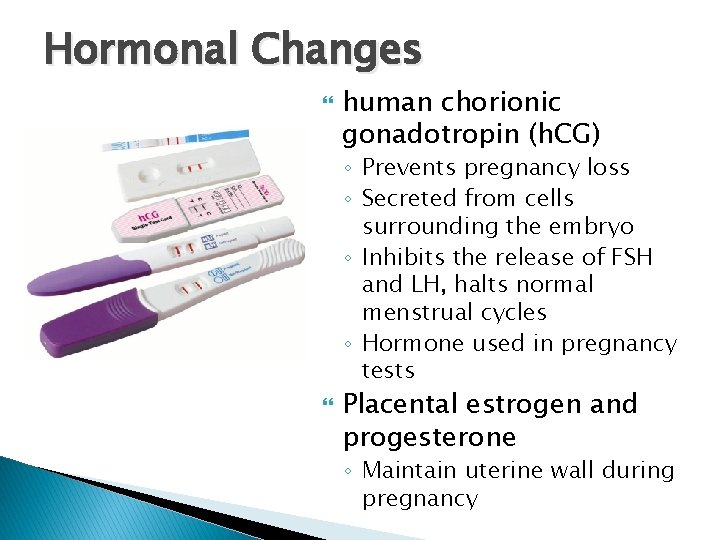
Hormonal Changes human chorionic gonadotropin (h. CG) ◦ Prevents pregnancy loss ◦ Secreted from cells surrounding the embryo ◦ Inhibits the release of FSH and LH, halts normal menstrual cycles ◦ Hormone used in pregnancy tests Placental estrogen and progesterone ◦ Maintain uterine wall during pregnancy
Hormonal Changes Placental lactogen ◦ Stimulates breast development ◦ Prepares mammary glands for milk secretion Relaxin: relaxes ligaments joining the symphysis pubis and sacroiliac joints during the last weeks of pregnancy ◦ Aids in fetal passage Aldosterone: promotes Na reabsorption ◦ Water retention

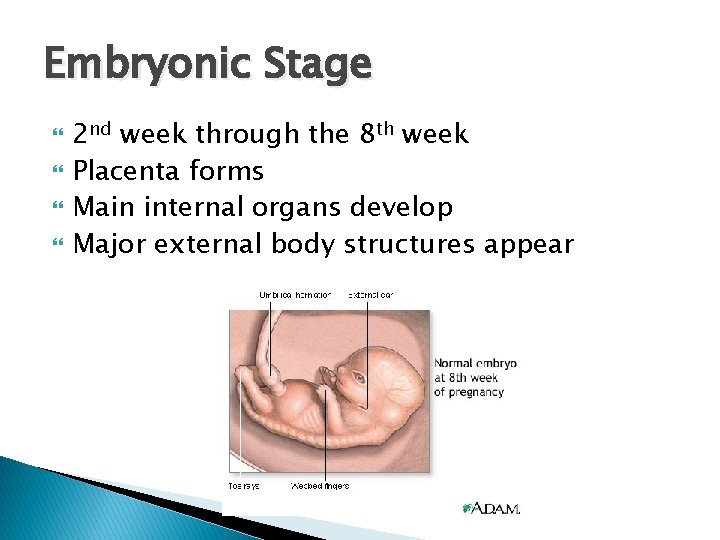
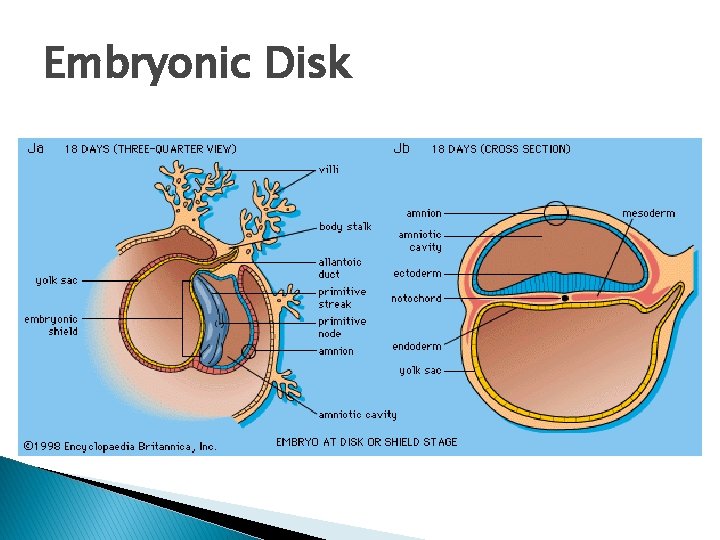
Embryonic Stage 2 nd week through the 8 th week Placenta forms Main internal organs develop Major external body structures appear
Embryonic disk � Ectoderm ◦ nervous system and sensory organs ◦ epidermis, hair, nails, and glands of the skin ◦ lining of the mouth and anal canal � Mesoderm ◦ ◦ muscle, bone, marrow, blood, and blood vessels lymphatic vessels and connective tissue internal reproductive organs and kidneys epithelial linings of the body cavity � Endoderm ◦ epithelial lining of the digestive tract, respiratory tract, urinary bladder, and urethra
Embryonic Disk
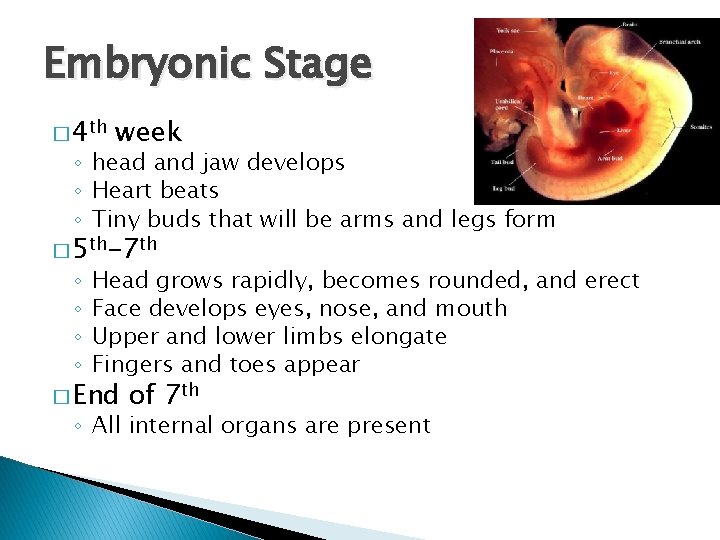
Embryonic Stage � 4 th week ◦ head and jaw develops ◦ Heart beats ◦ Tiny buds that will be arms and legs form � 5 th-7 th ◦ ◦ Head grows rapidly, becomes rounded, and erect Face develops eyes, nose, and mouth Upper and lower limbs elongate Fingers and toes appear � End of 7 th ◦ All internal organs are present
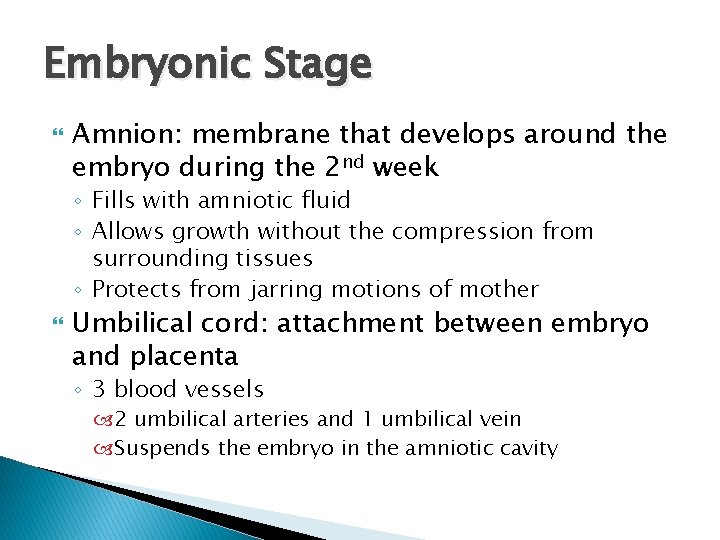
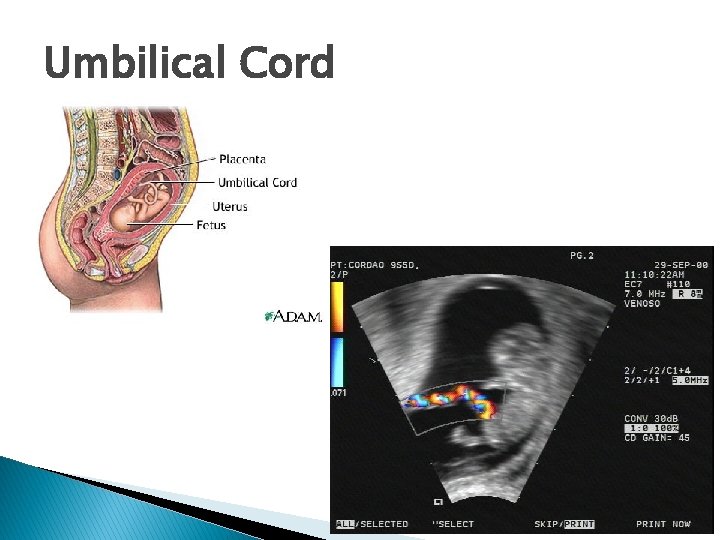
Embryonic Stage Amnion: membrane that develops around the embryo during the 2 nd week ◦ Fills with amniotic fluid ◦ Allows growth without the compression from surrounding tissues ◦ Protects from jarring motions of mother Umbilical cord: attachment between embryo and placenta ◦ 3 blood vessels 2 umbilical arteries and 1 umbilical vein Suspends the embryo in the amniotic cavity
Umbilical Cord
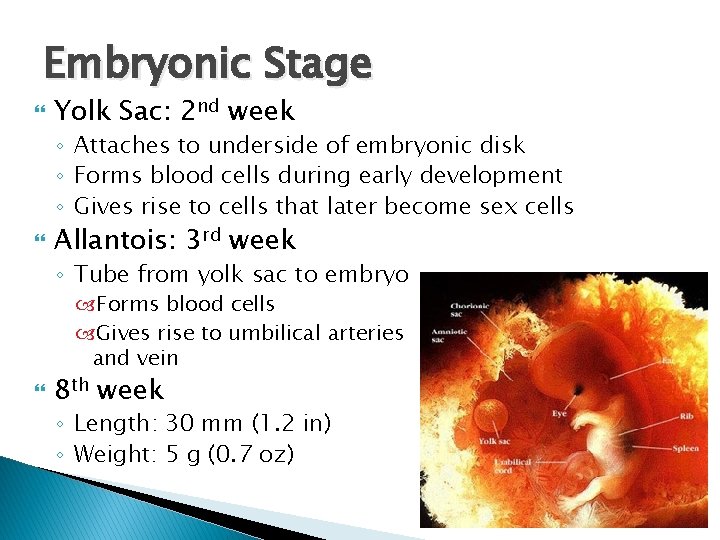
Embryonic Stage Yolk Sac: 2 nd week ◦ Attaches to underside of embryonic disk ◦ Forms blood cells during early development ◦ Gives rise to cells that later become sex cells Allantois: 3 rd week ◦ Tube from yolk sac to embryo Forms blood cells Gives rise to umbilical arteries and vein 8 th week ◦ Length: 30 mm (1. 2 in) ◦ Weight: 5 g (0. 7 oz)
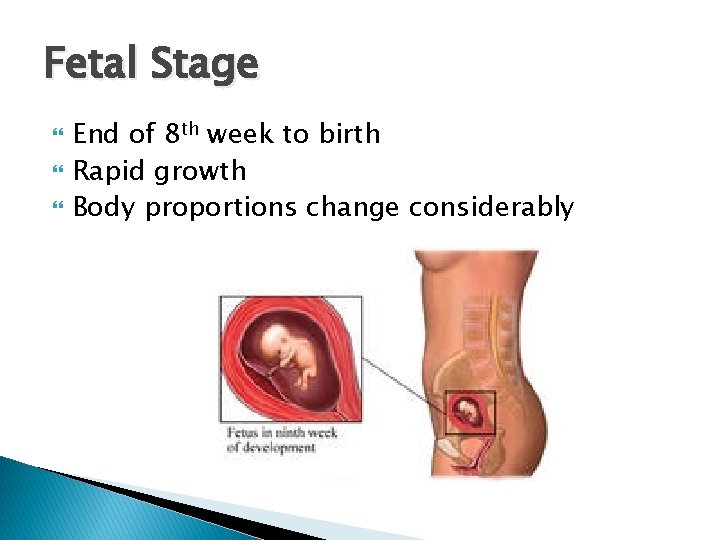
Fetal Stage End of 8 th week to birth Rapid growth Body proportions change considerably
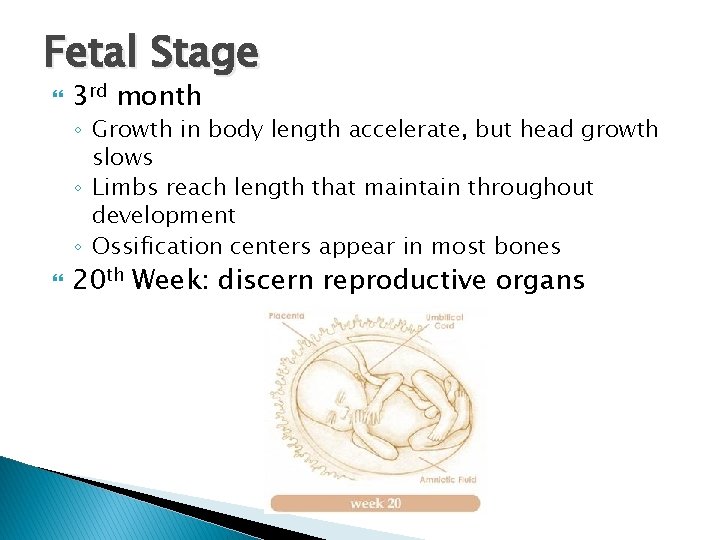
Fetal Stage 3 rd month ◦ Growth in body length accelerate, but head growth slows ◦ Limbs reach length that maintain throughout development ◦ Ossification centers appear in most bones 20 th Week: discern reproductive organs
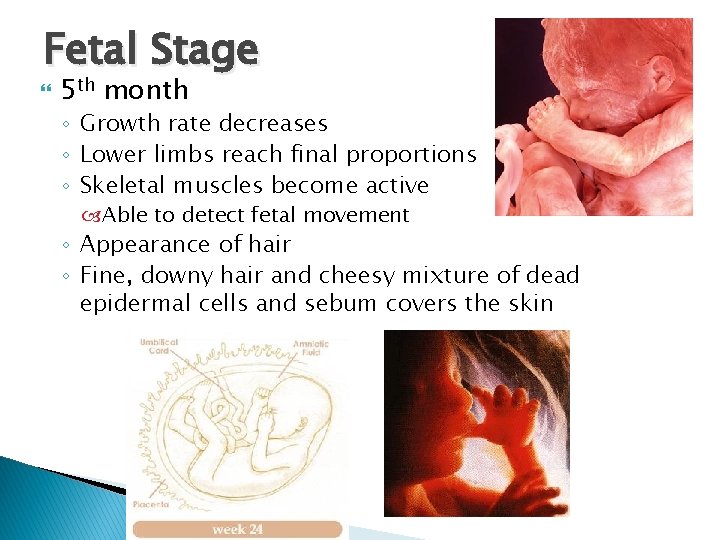
Fetal Stage 5 th month ◦ Growth rate decreases ◦ Lower limbs reach final proportions ◦ Skeletal muscles become active Able to detect fetal movement ◦ Appearance of hair ◦ Fine, downy hair and cheesy mixture of dead epidermal cells and sebum covers the skin
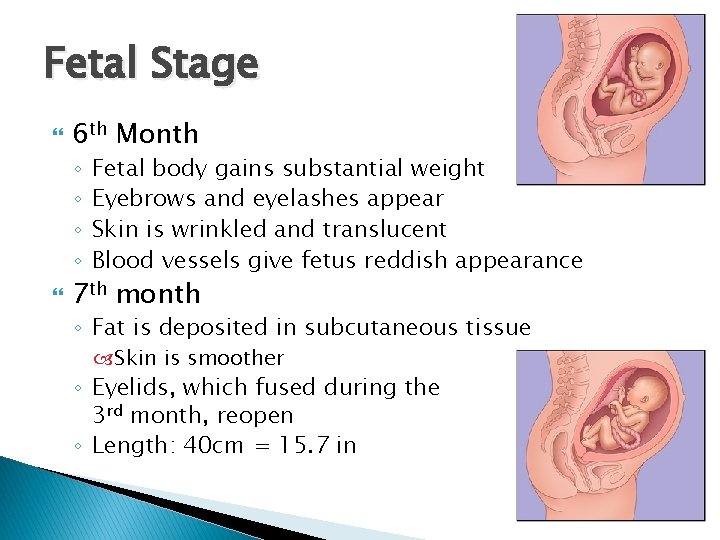
Fetal Stage 6 th Month ◦ ◦ Fetal body gains substantial weight Eyebrows and eyelashes appear Skin is wrinkled and translucent Blood vessels give fetus reddish appearance 7 th month ◦ Fat is deposited in subcutaneous tissue Skin is smoother ◦ Eyelids, which fused during the 3 rd month, reopen ◦ Length: 40 cm = 15. 7 in
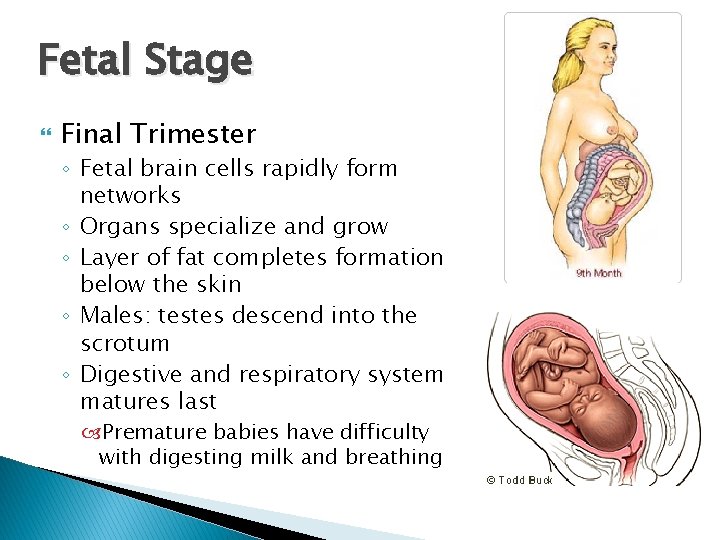
Fetal Stage Final Trimester ◦ Fetal brain cells rapidly form networks ◦ Organs specialize and grow ◦ Layer of fat completes formation below the skin ◦ Males: testes descend into the scrotum ◦ Digestive and respiratory system matures last Premature babies have difficulty with digesting milk and breathing
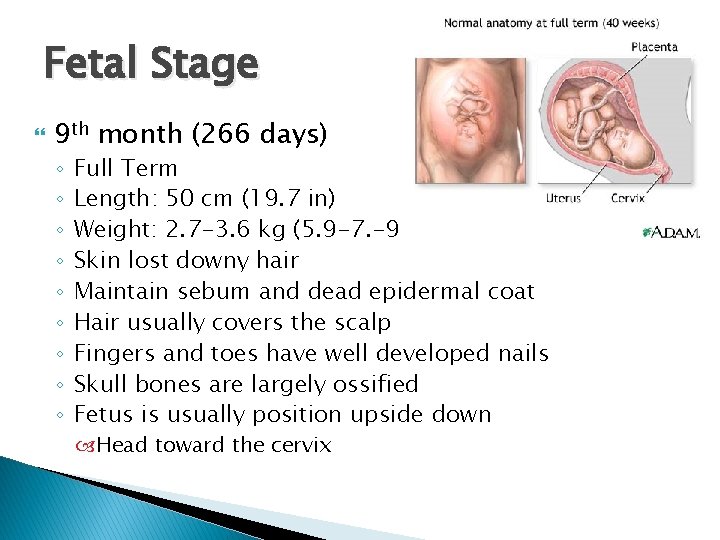
Fetal Stage 9 th month (266 days) ◦ ◦ ◦ ◦ ◦ Full Term Length: 50 cm (19. 7 in) Weight: 2. 7 -3. 6 kg (5. 9 -7. -9 lb) Skin lost downy hair Maintain sebum and dead epidermal coat Hair usually covers the scalp Fingers and toes have well developed nails Skull bones are largely ossified Fetus is usually position upside down Head toward the cervix
Birthing and Postnatal Period
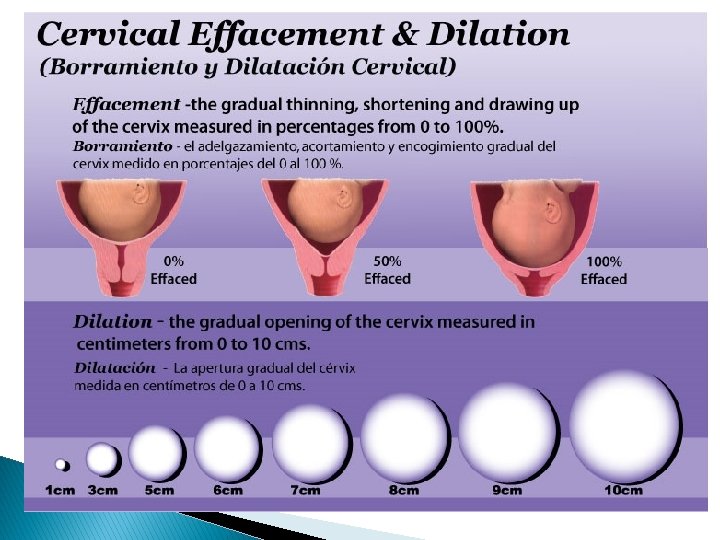
Preparing for Labor Declining progesterone concentration plays a major role in initiating birth ◦ Progesterone suppresses uterine contractions ◦ As placenta ages, progesterone declines ◦ Stimulates synthesis of prostaglandins that promotes uterine contractions Cervix thins and opens ◦ May begin a week or two before labor
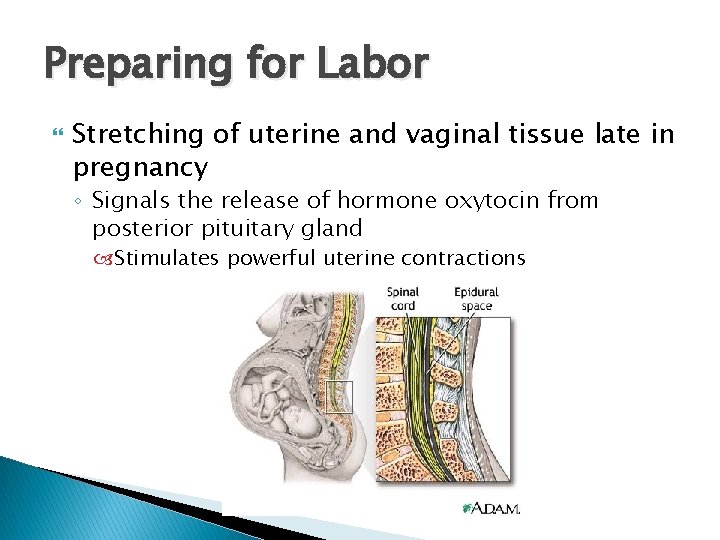
Preparing for Labor Stretching of uterine and vaginal tissue late in pregnancy ◦ Signals the release of hormone oxytocin from posterior pituitary gland Stimulates powerful uterine contractions
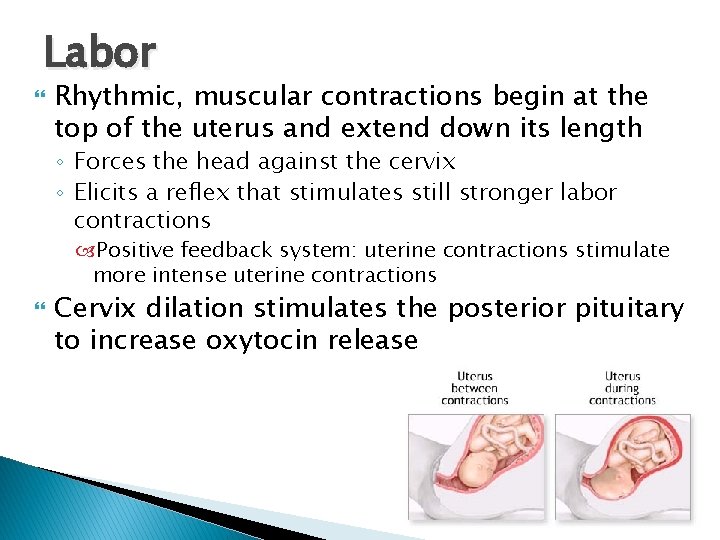
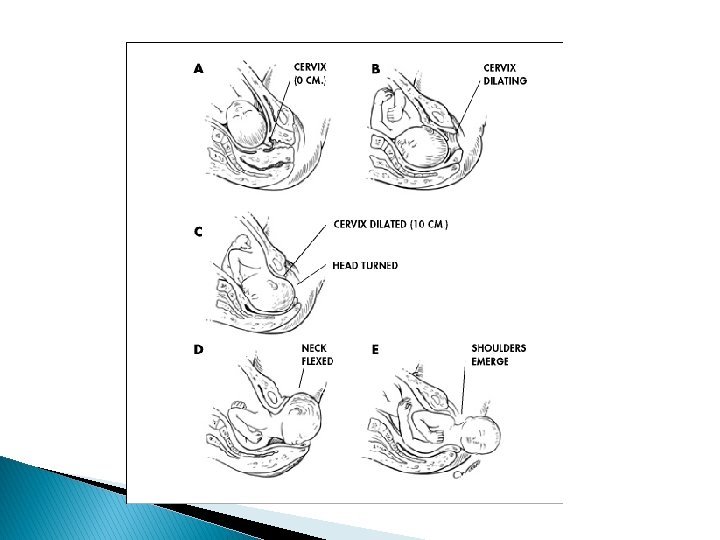
Labor Rhythmic, muscular contractions begin at the top of the uterus and extend down its length ◦ Forces the head against the cervix ◦ Elicits a reflex that stimulates still stronger labor contractions Positive feedback system: uterine contractions stimulate more intense uterine contractions Cervix dilation stimulates the posterior pituitary to increase oxytocin release
Labor Abdominal walls are stimulated to contract ◦ Helps force the fetus through the cervix and vagina to the outside Following birth, the placenta separates from the uterine wall ◦ Uterine contractions expel it through birth canal ◦ Accompanied by bleeding ◦ Oxytocin stimulates continued uterine contractions, which compress the bleeding vessels and minimizes blood loss
Postnatal Period Milk production and secretion ◦ During pregnancy, placental estrogen and progesterone stimulate mammary gland development Estrogen causes the ductile system to grow and branch, and deposits fat around them Progesterone stimulates the development of alveolar glands at the ends of the ducts Hormonal activity doubles breast size and mammary glands become capable of producing milk
Postnatal Period After birth, placental hormones decline rapidly ◦ 2 to 3 days, prolactin stimulates milk secretions Glands secrete a thin, watery fluid called colostrum Rich in proteins, but its carbohydrate and fat levels are low Rich in antibodies from mother’s immune system
Postnatal Period Reflex response to mechanical stimulation of the nipple stimulates the posterior pituitary to release oxytocin ◦ Causes the alveolar ducts to eject milk ◦ As long as milk is removed from the breasts, mammary glands will produce milk ◦ If it is not removed regularly, mammary glands will stop milk production in a week or so
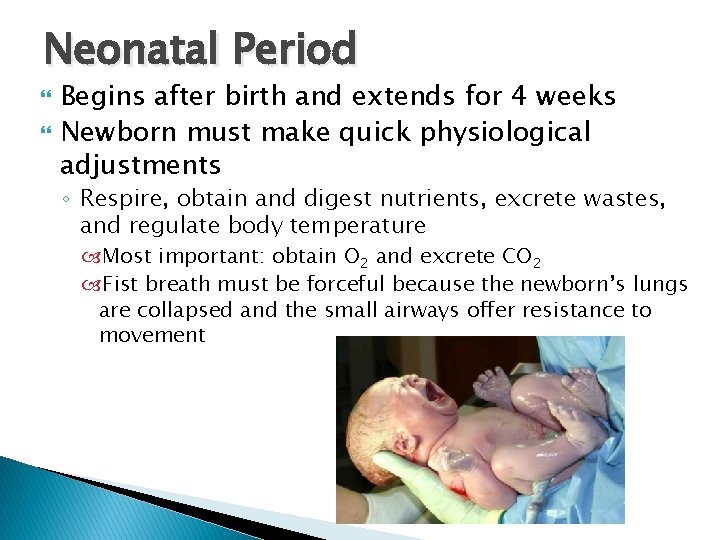
Neonatal Period Begins after birth and extends for 4 weeks Newborn must make quick physiological adjustments ◦ Respire, obtain and digest nutrients, excrete wastes, and regulate body temperature Most important: obtain O 2 and excrete CO 2 Fist breath must be forceful because the newborn’s lungs are collapsed and the small airways offer resistance to movement
Neonatal Period High metabolic rate ◦ Immature liver may be unable to supply enough glucose Utilizes stored fat as energy Kidneys ◦ Unable to secrete concentrated urine ◦ Produce a dilute fluid Homeostatic control may not function correctly ◦ Difficulty maintaining body temperature
Neonatal Period Umbilical vessels constrict The ductus venosus constricts A valve closes the foramen ovale as blood pressure in the right atrium falls and pressure in the left atrium rise The ductus arteriosus constricts
- Slides: 51