
Preemptable and Nonpreemptable Resources Sequence of events required
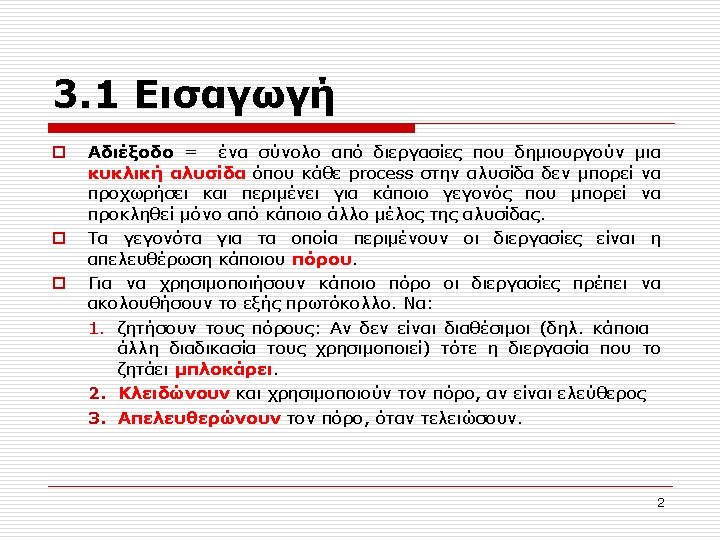
Preemptable and Nonpreemptable Resources Sequence of events required to use a resource: 1. Request the resource. 2. Use the resource. 3. Release the resource. Tanenbaum, Modern Operating Systems 3 e, (c) 2008 Prentice. Hall, Inc. All rights reserved. 0 -13 -
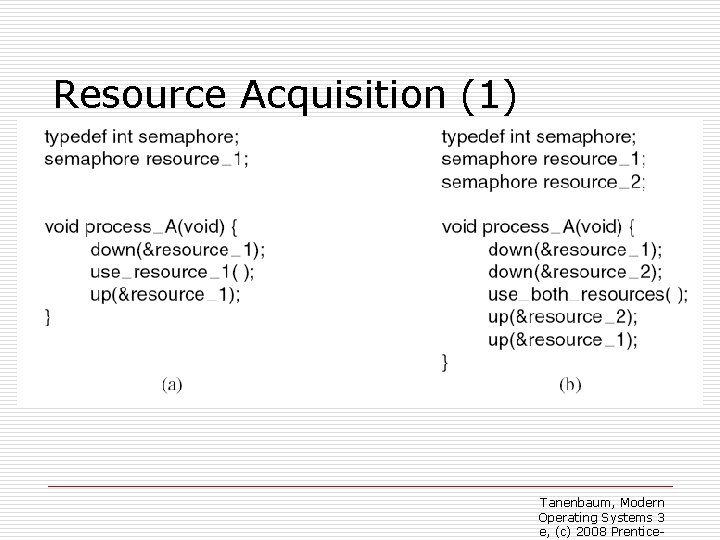
Resource Acquisition (1) o Figure 6 -1. Using a semaphore to protect resources. (a) One resource. (b) Two resources. Tanenbaum, Modern Operating Systems 3 e, (c) 2008 Prentice-
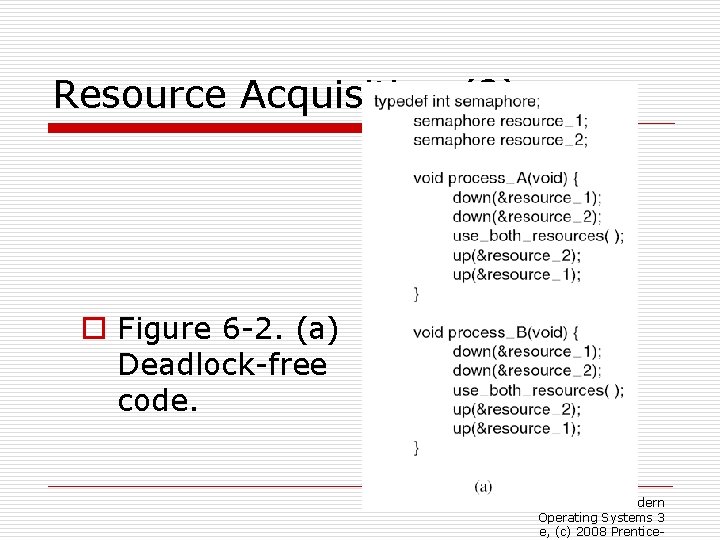
Resource Acquisition (2) o Figure 6 -2. (a) Deadlock-free code. Tanenbaum, Modern Operating Systems 3 e, (c) 2008 Prentice-
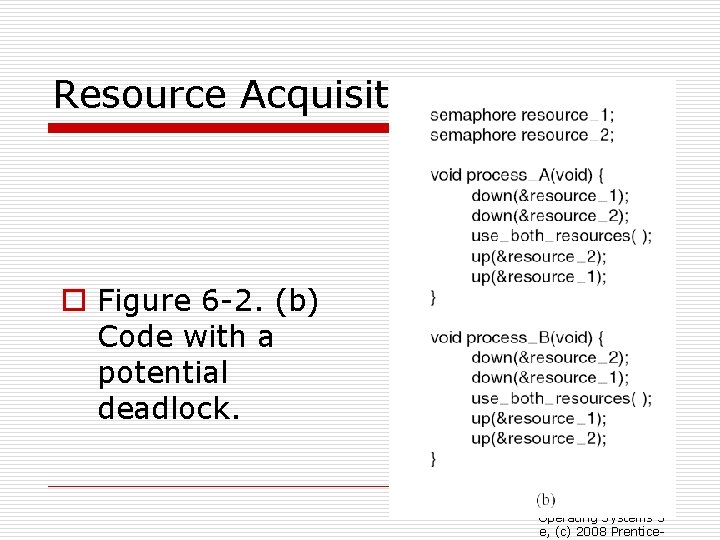
Resource Acquisition (3) o Figure 6 -2. (b) Code with a potential deadlock. Tanenbaum, Modern Operating Systems 3 e, (c) 2008 Prentice-
Introduction To Deadlocks Deadlock can be defined formally as follows: A set of processes is deadlocked if each process in the set is waiting for an event that only another process in the set can cause. Tanenbaum, Modern Operating Systems 3 e, (c) 2008 Prentice. Hall, Inc. All rights reserved. 0 -13 -
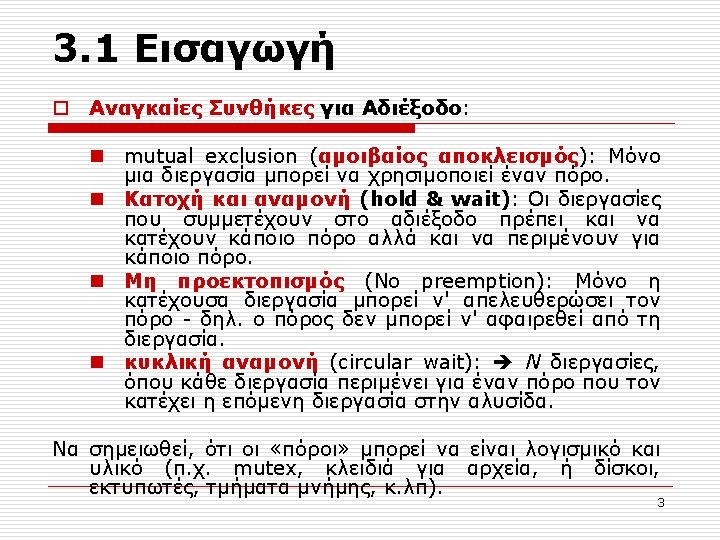
Conditions for Resource Deadlocks 1. Mutual exclusion condition 2. Hold and wait condition. 3. No preemption condition. 4. Circular wait condition. Tanenbaum, Modern Operating Systems 3 e, (c) 2008 Prentice. Hall, Inc. All rights reserved. 0 -13 -
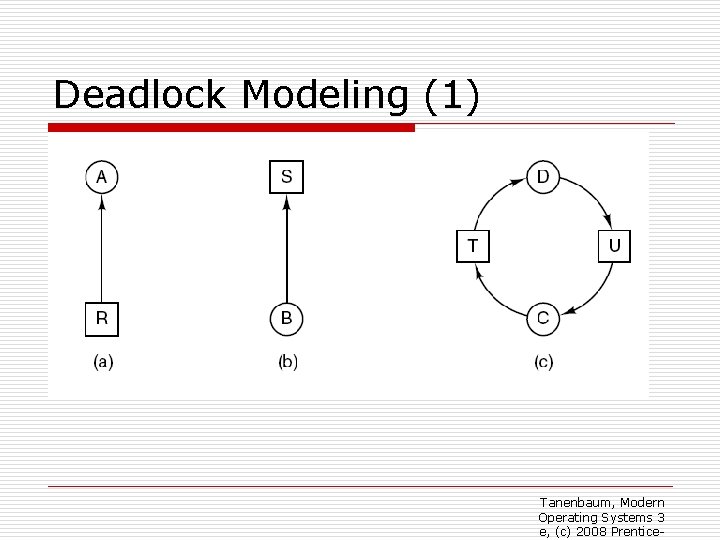
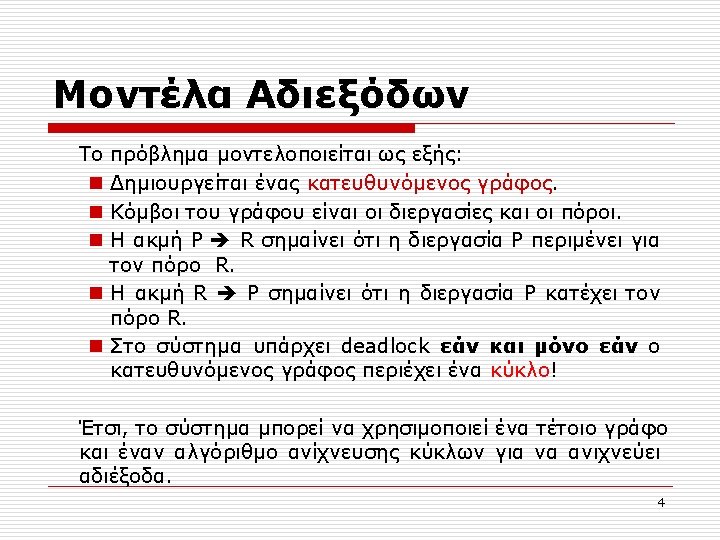
Deadlock Modeling (1) o Figure 6 -3. Resource allocation graphs. (a) Holding a resource. (b) Requesting a resource. (c) Deadlock. Tanenbaum, Modern Operating Systems 3 e, (c) 2008 Prentice-
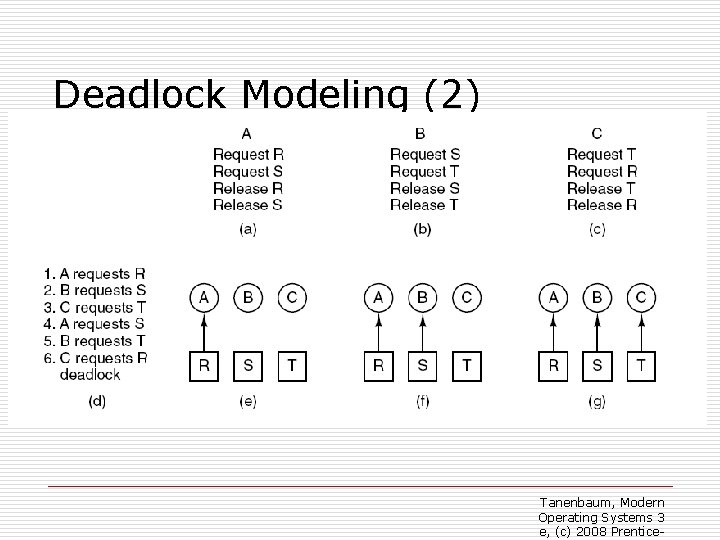
Deadlock Modeling (2) o Figure 6 -4. An example of how deadlock occurs and how it can be avoided. Tanenbaum, Modern Operating Systems 3 e, (c) 2008 Prentice-
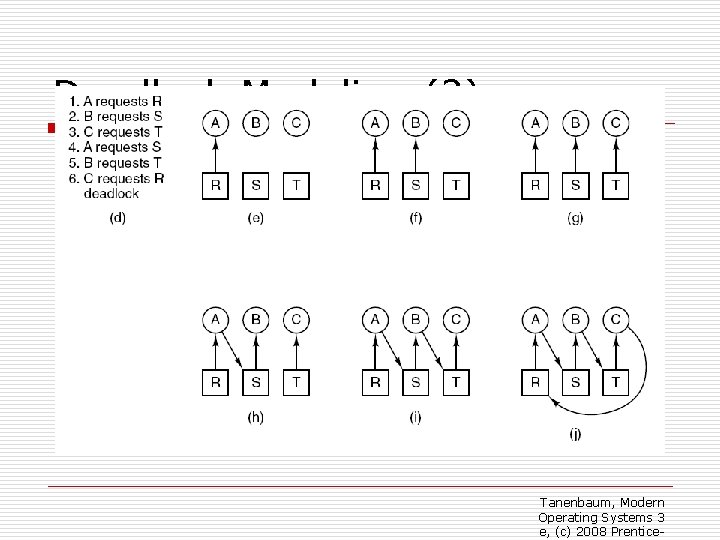
Deadlock Modeling (3) o Figure 6 -4. An example of how deadlock occurs and how it can be avoided. Tanenbaum, Modern Operating Systems 3 e, (c) 2008 Prentice-
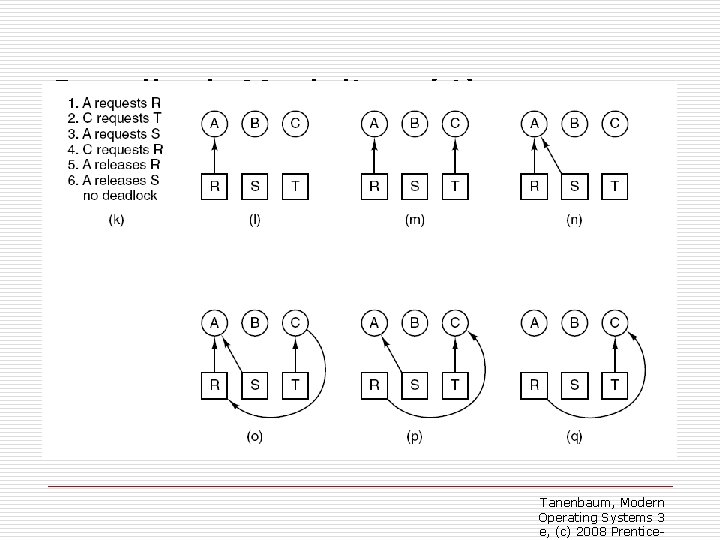
Deadlock Modeling (4) o Figure 6 -4. An example of how deadlock occurs and how it can be avoided. Tanenbaum, Modern Operating Systems 3 e, (c) 2008 Prentice-
Deadlock Modeling (5) Strategies for dealing with deadlocks: 1. Just ignore the problem. 2. Detection and recovery. Let deadlocks occur, detect them, take action. 3. Dynamic avoidance by careful resource allocation. 4. Prevention, by structurally negating one of the four required conditions. Tanenbaum, Modern Operating Systems 3 e, (c) 2008 Prentice. Hall, Inc. All rights reserved. 0 -13 -
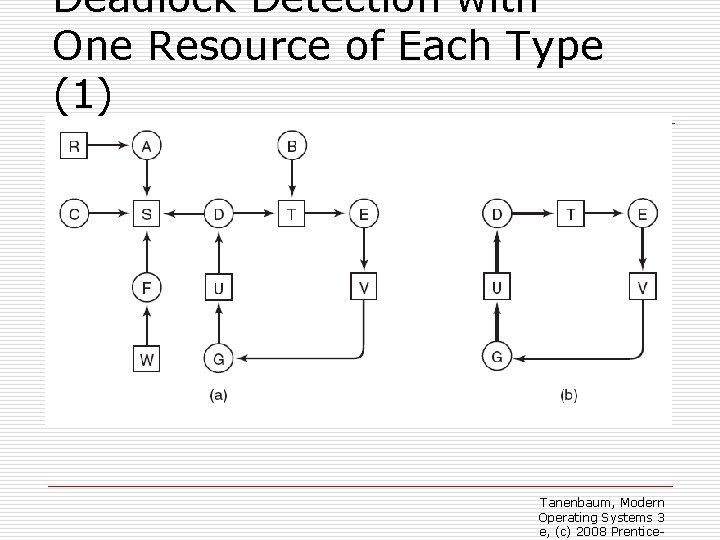
Deadlock Detection with One Resource of Each Type (1) o Figure 6 -5. (a) A resource graph. (b) A cycle extracted from (a). Tanenbaum, Modern Operating Systems 3 e, (c) 2008 Prentice-
Deadlock Detection with One Resource of Each Type (2) Algorithm for detecting deadlock: 1. For each node, N in the graph, perform the following five steps with N as the starting node. 2. Initialize L to the empty list, designate all arcs as unmarked. 3. Add current node to end of L, check to see if node now appears in L two times. If it does, graph contains a cycle (listed in L), algorithm terminates. … Tanenbaum, Modern Operating Systems 3 e, (c) 2008 Prentice. Hall, Inc. All rights reserved. 0 -13 -
Deadlock Detection with One Resource of Each Type (3) 4. From given node, see if any unmarked outgoing arcs. If so, go to step 5; if not, go to step 6. 5. Pick an unmarked outgoing arc at random and mark it. Then follow it to the new current node and go to step 3. 6. If this is initial node, graph does not contain any cycles, algorithm terminates. Otherwise, dead end. Remove it, go back to previous node, make that one current node, go to step 3. Tanenbaum, Modern Operating Systems 3 e, (c) 2008 Prentice. Hall, Inc. All rights reserved. 0 -13 -
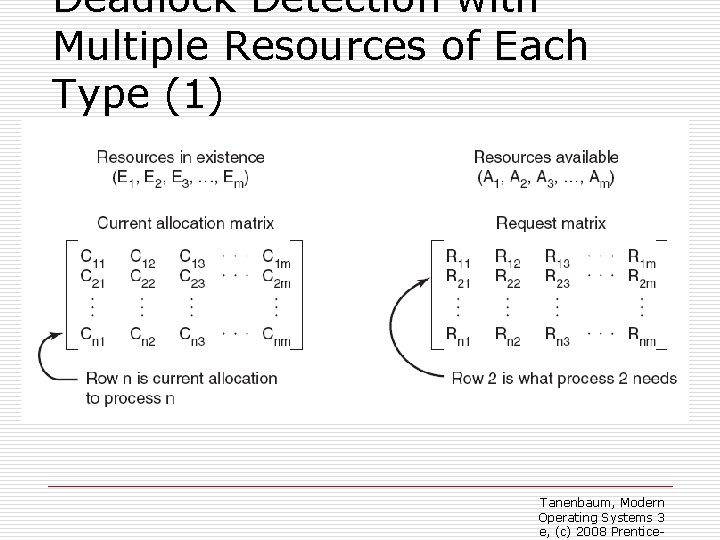
Deadlock Detection with Multiple Resources of Each Type (1) o Figure 6 -6. The four data structures needed by the deadlock detection algorithm. Tanenbaum, Modern Operating Systems 3 e, (c) 2008 Prentice-
Deadlock Detection with Multiple Resources of Each Type (2) Deadlock detection algorithm: 1. Look for an unmarked process, Pi , for which the i-th row of R is less than or equal to A. 2. If such a process is found, add the i-th row of C to A, mark the process, and go back to step 1. 3. If no such process exists, the algorithm terminates. Tanenbaum, Modern Operating Systems 3 e, (c) 2008 Prentice. Hall, Inc. All rights reserved. 0 -13 -
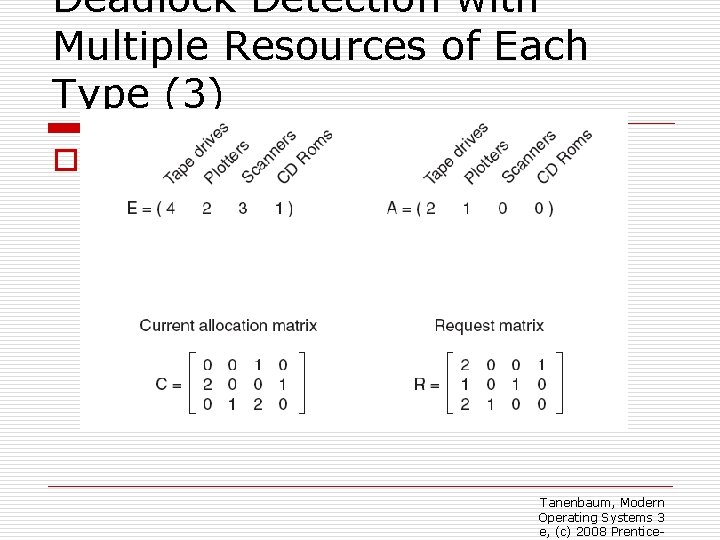
Deadlock Detection with Multiple Resources of Each Type (3) o Figure 6 -7. An example for the deadlock detection algorithm. Tanenbaum, Modern Operating Systems 3 e, (c) 2008 Prentice-
Recovery from Deadlock • Recovery through preemption • Recovery through rollback • Recovery through killing processes Tanenbaum, Modern Operating Systems 3 e, (c) 2008 Prentice. Hall, Inc. All rights reserved. 0 -13 -
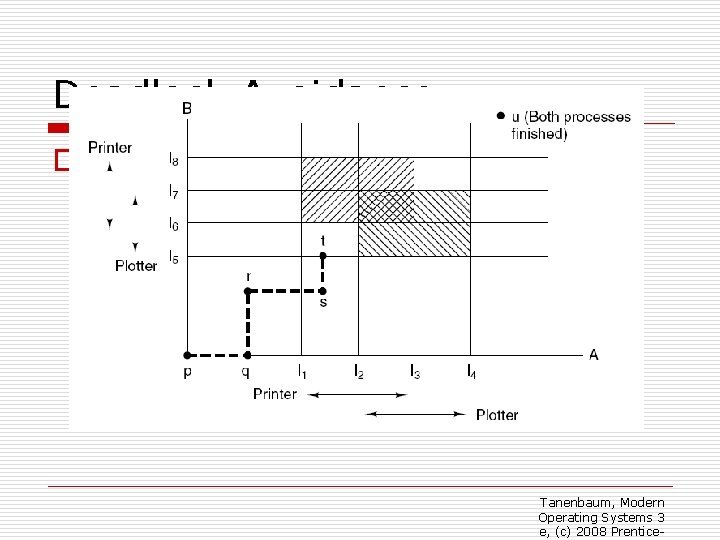
Deadlock Avoidance o Figure 6 -8. Two process resource trajectories. Tanenbaum, Modern Operating Systems 3 e, (c) 2008 Prentice-
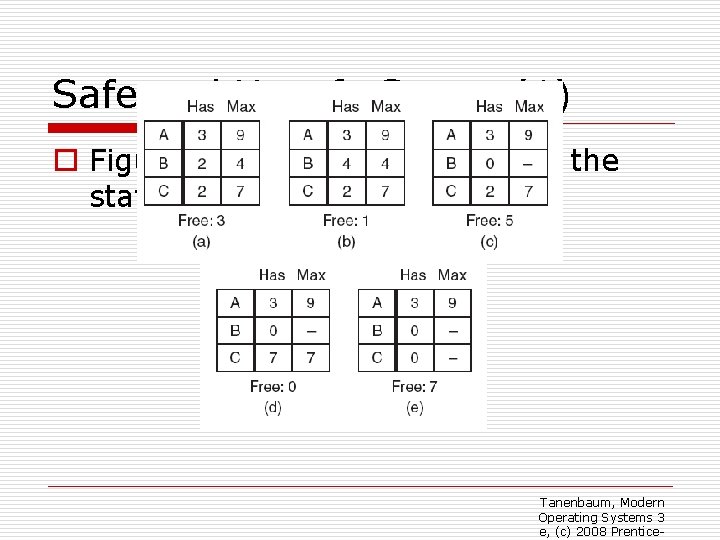
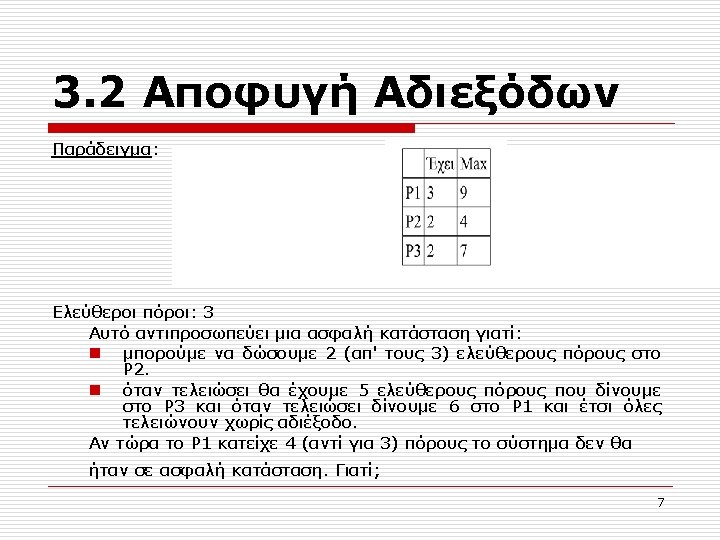
Safe and Unsafe States (1) o Figure 6 -9. Demonstration that the state in (a) is safe. Tanenbaum, Modern Operating Systems 3 e, (c) 2008 Prentice-
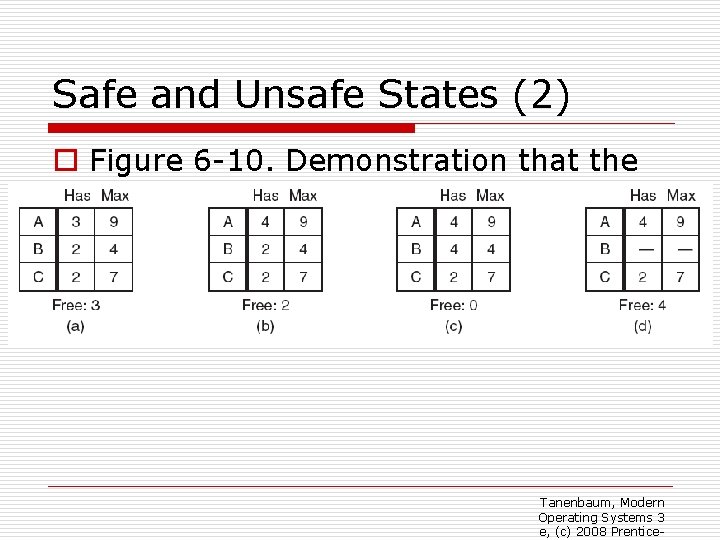
Safe and Unsafe States (2) o Figure 6 -10. Demonstration that the state in (b) is not safe. Tanenbaum, Modern Operating Systems 3 e, (c) 2008 Prentice-
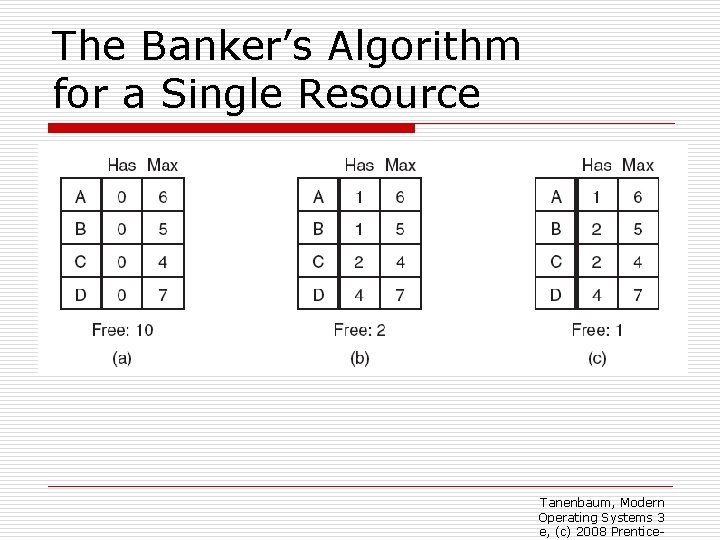
The Banker’s Algorithm for a Single Resource o Figure 6 -11. Three resource allocation states: (a) Safe. (b) Safe. (c) Unsafe. Tanenbaum, Modern Operating Systems 3 e, (c) 2008 Prentice-
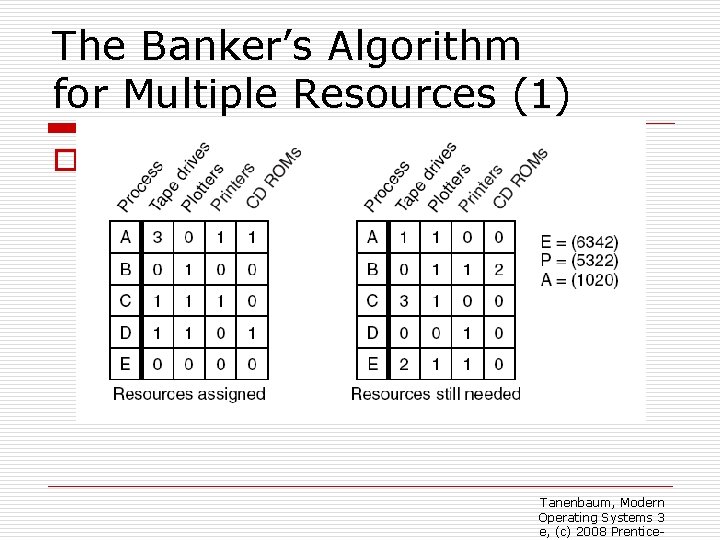
The Banker’s Algorithm for Multiple Resources (1) o Figure 6 -12. The banker’s algorithm with multiple resources. Tanenbaum, Modern Operating Systems 3 e, (c) 2008 Prentice-
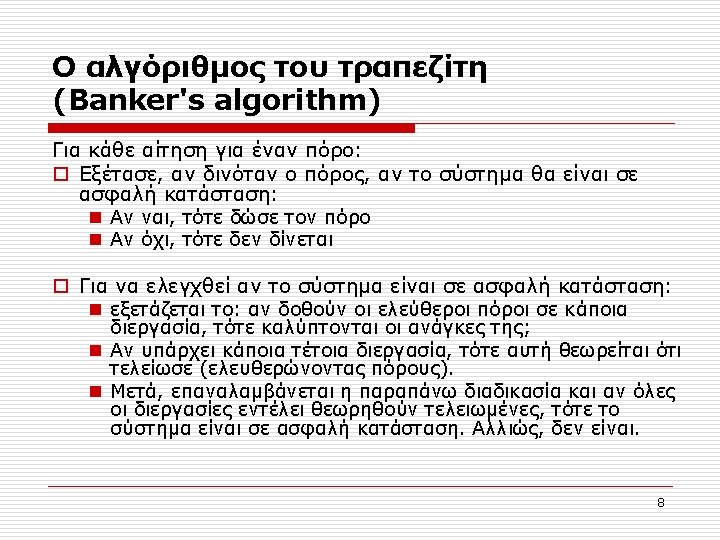
The Banker’s Algorithm for Multiple Resources (2) Algorithm for checking to see if a state is safe: 1. Look for row, R, whose unmet resource needs all ≤ A. If no such row exists, system will eventually deadlock since no process can run to completion 2. Assume process of row chosen requests all resources it needs and finishes. Mark process as terminated, add all its resources to the A vector. Tanenbaum, Modern Operating Systems 3 e, (c) 2008 Prentice. Hall, Inc. All rights reserved. 0 -13 -
Deadlock Prevention • Attacking condition • Attacking the mutual exclusion the hold and wait the no preemption the circular wait condition Tanenbaum, Modern Operating Systems 3 e, (c) 2008 Prentice. Hall, Inc. All rights reserved. 0 -13 -
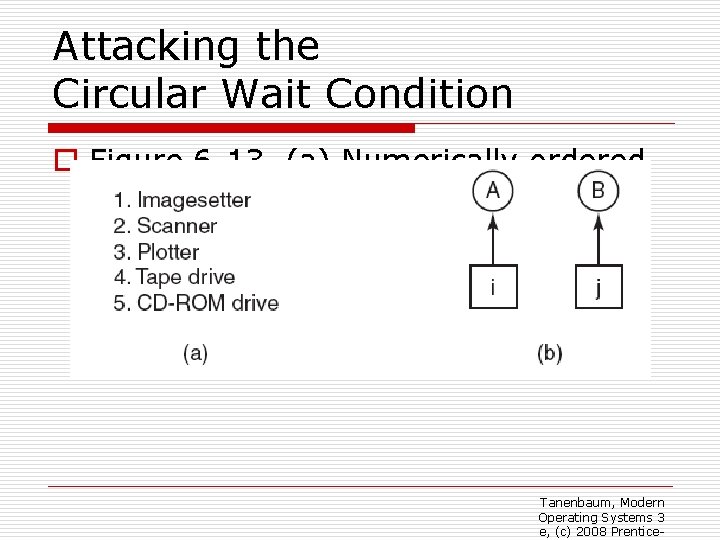
Attacking the Circular Wait Condition o Figure 6 -13. (a) Numerically ordered resources. (b) A resource graph. Tanenbaum, Modern Operating Systems 3 e, (c) 2008 Prentice-
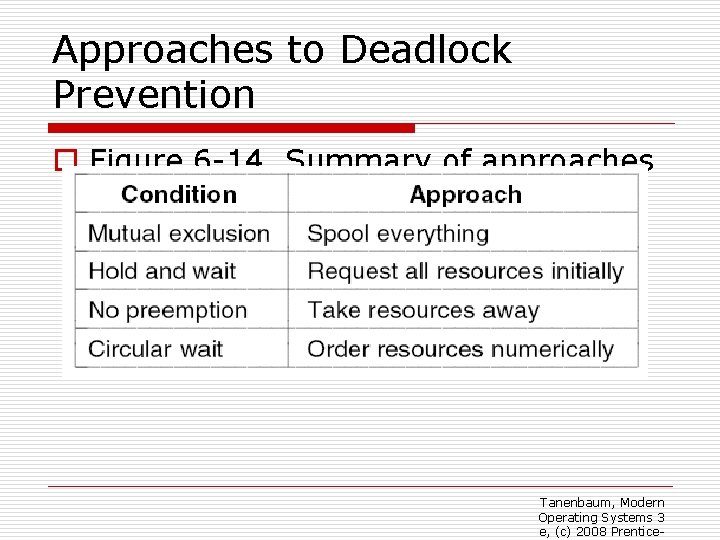
Approaches to Deadlock Prevention o Figure 6 -14. Summary of approaches to deadlock prevention. Tanenbaum, Modern Operating Systems 3 e, (c) 2008 Prentice-
Other Issues • • Two-phase locking Communication deadlocks Livelock Starvation Tanenbaum, Modern Operating Systems 3 e, (c) 2008 Prentice. Hall, Inc. All rights reserved. 0 -13 -
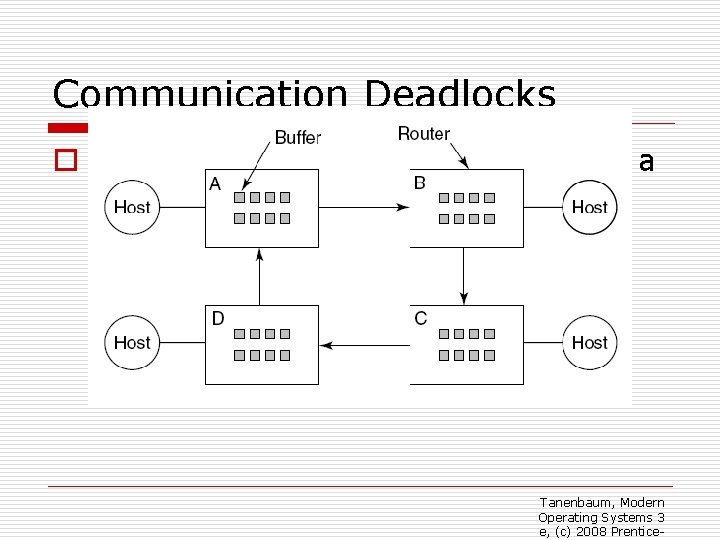
Communication Deadlocks o Figure 6 -15. A resource deadlock in a network. Tanenbaum, Modern Operating Systems 3 e, (c) 2008 Prentice-
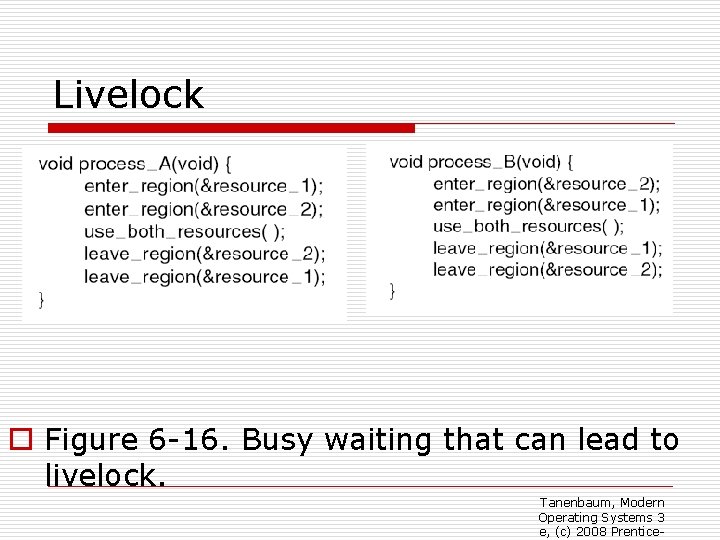
Livelock o Figure 6 -16. Busy waiting that can lead to livelock. Tanenbaum, Modern Operating Systems 3 e, (c) 2008 Prentice-
- Slides: 41