
PREDICTIONS OF KAON AND PROTON PRODUCTIONS IN PP


- Slides: 17
PREDICTIONS OF KAON AND PROTON PRODUCTIONS IN PP COLLISIONS AT 7 Te. V KRISTIYA TOMUANG Department of Physics, Naresuan University 1
Topics Introduction Model and Calculation Research Result Methods & Conclusion 2
Introduction Exotic nuclei is using as a key topics in nuclear and astronomy physics to understand the structure of matter, interaction and fundamental force including evolution of the universe. 3
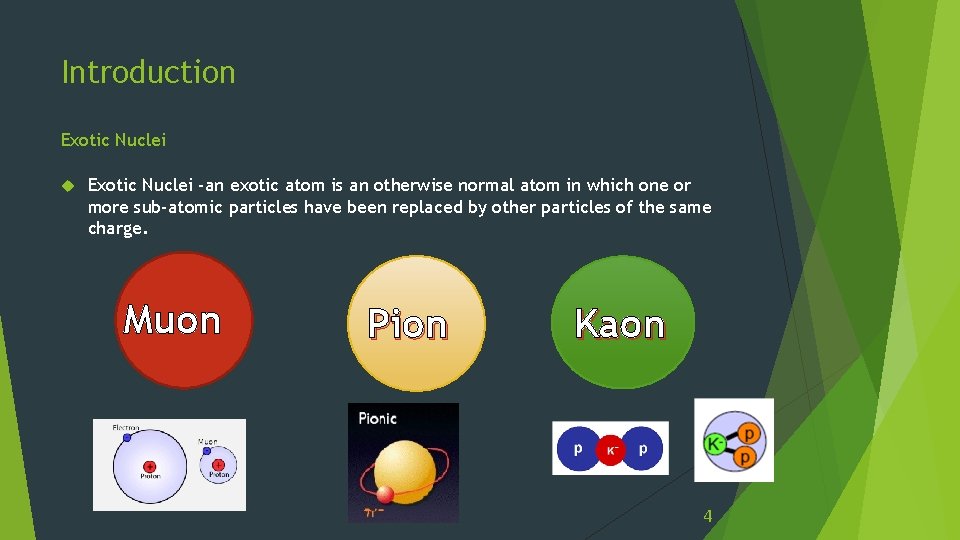
Introduction Exotic Nuclei -an exotic atom is an otherwise normal atom in which one or more sub-atomic particles have been replaced by other particles of the same charge. Muon Pion Kaon 4
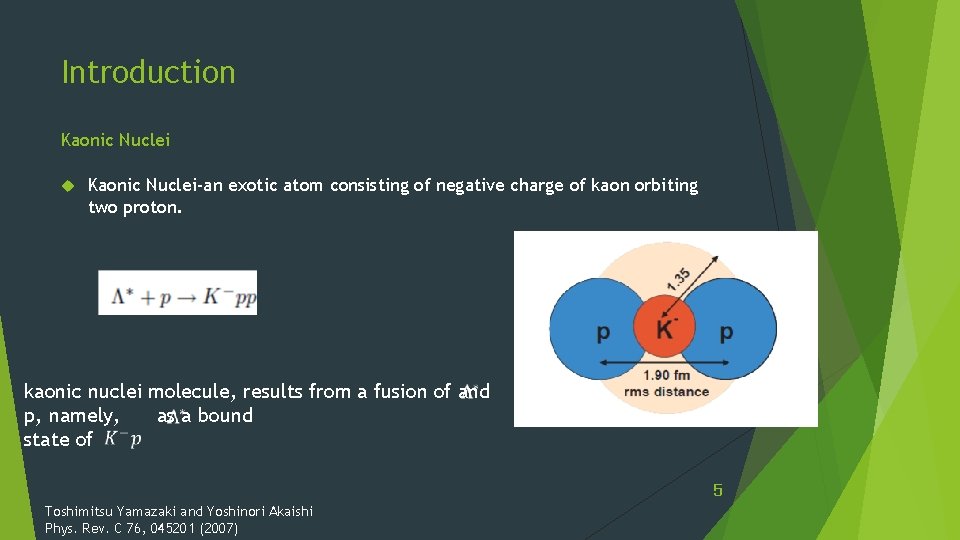
Introduction Kaonic Nuclei-an exotic atom consisting of negative charge of kaon orbiting two proton. kaonic nuclei molecule, results from a fusion of and p, namely, as a bound state of Toshimitsu Yamazaki and Yoshinori Akaishi Phys. Rev. C 76, 045201 (2007) 5
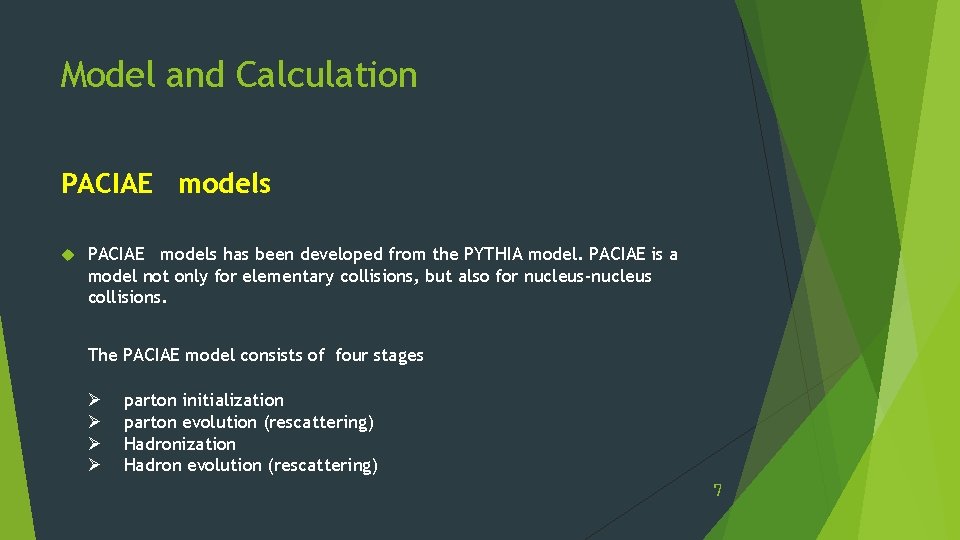
Model and Calculation PACIAE models has been developed from the PYTHIA model. PACIAE is a model not only for elementary collisions, but also for nucleus-nucleus collisions. The PACIAE model consists of four stages Ø Ø parton initialization parton evolution (rescattering) Hadronization Hadron evolution (rescattering) 7
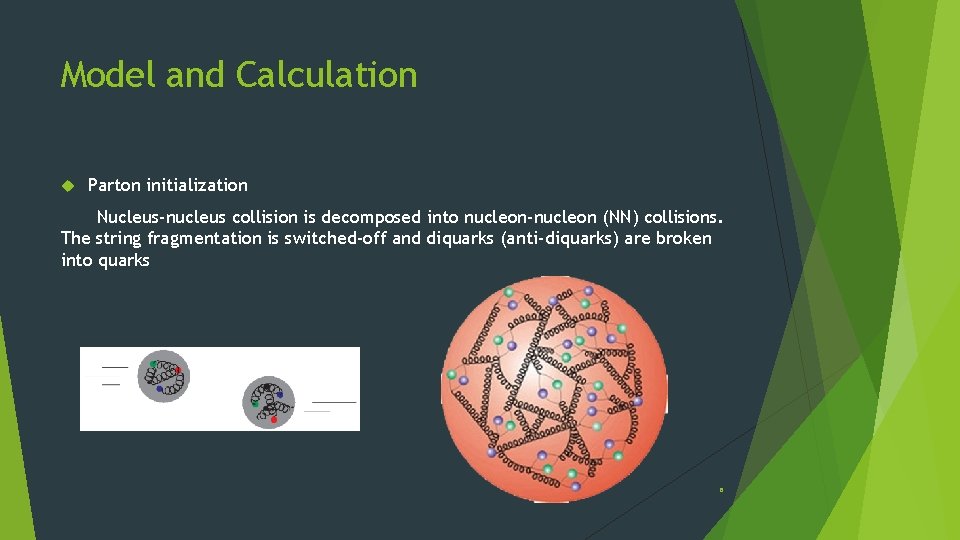
Model and Calculation Parton initialization Nucleus-nucleus collision is decomposed into nucleon-nucleon (NN) collisions. The string fragmentation is switched-off and diquarks (anti-diquarks) are broken into quarks 8
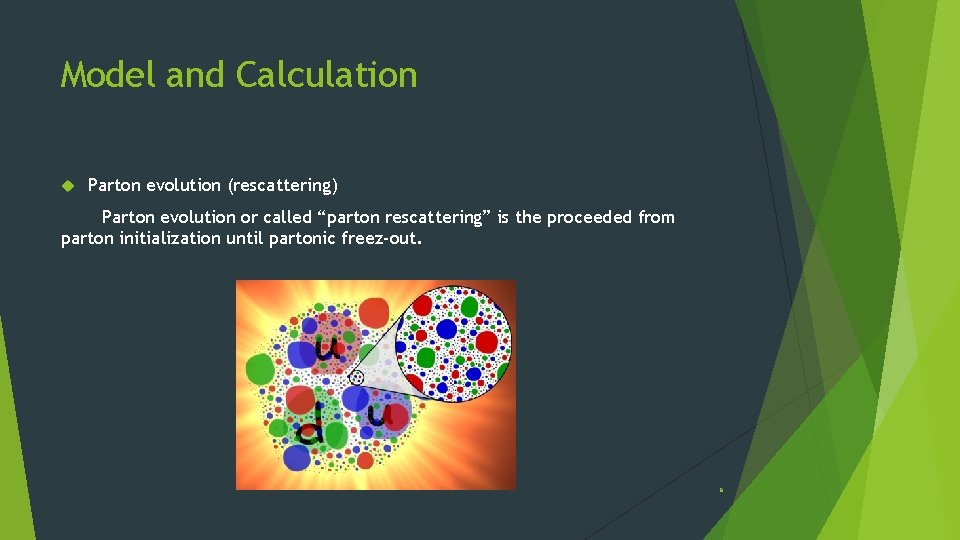
Model and Calculation Parton evolution (rescattering) Parton evolution or called “parton rescattering” is the proceeded from parton initialization until partonic freez-out. 9
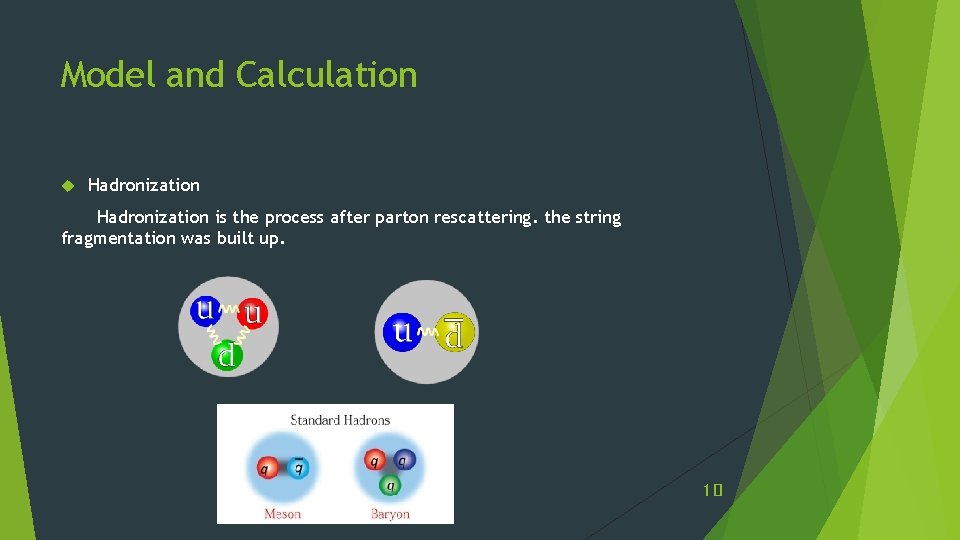
Model and Calculation Hadronization is the process after parton rescattering. the string fragmentation was built up. 10
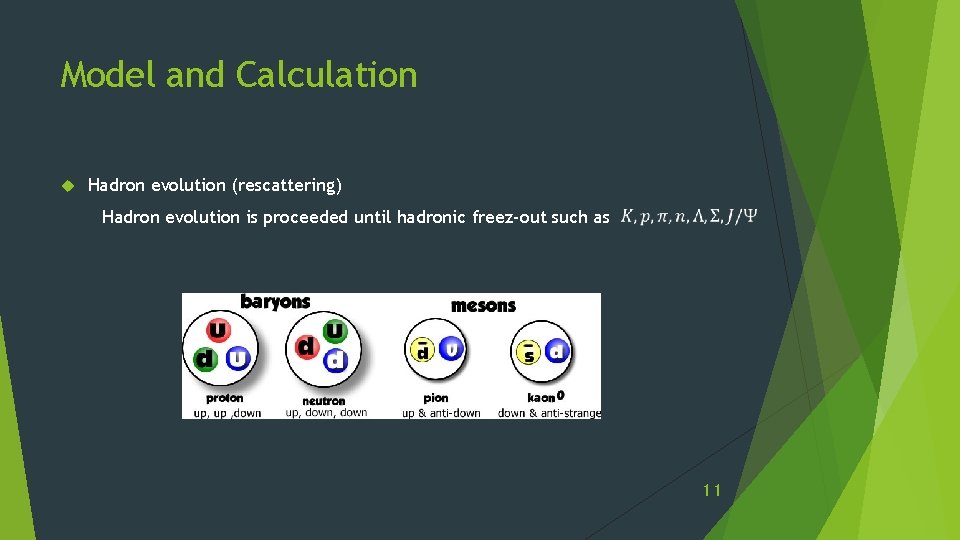
Model and Calculation Hadron evolution (rescattering) Hadron evolution is proceeded until hadronic freez-out such as 11
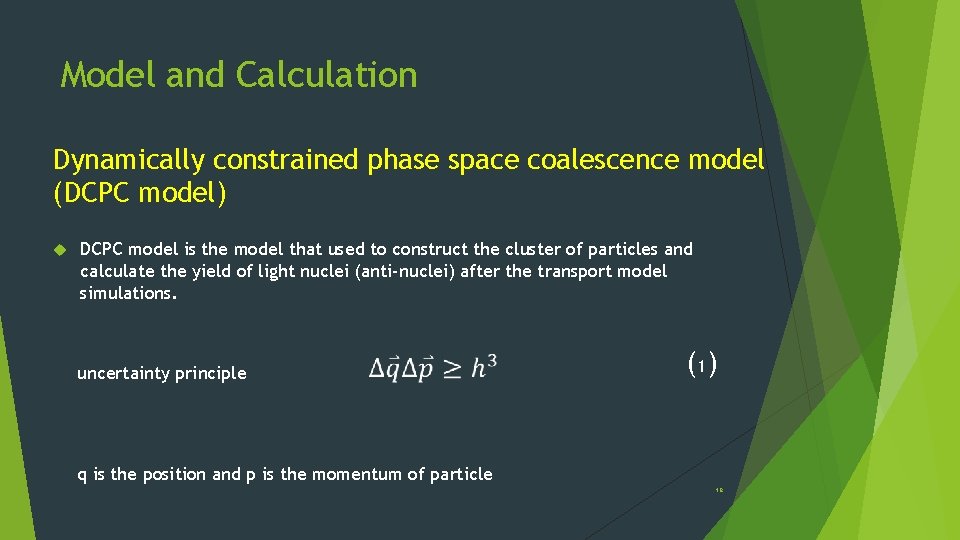
Model and Calculation Dynamically constrained phase space coalescence model (DCPC model) DCPC model is the model that used to construct the cluster of particles and calculate the yield of light nuclei (anti-nuclei) after the transport model simulations. uncertainty principle (1) q is the position and p is the momentum of particle 12
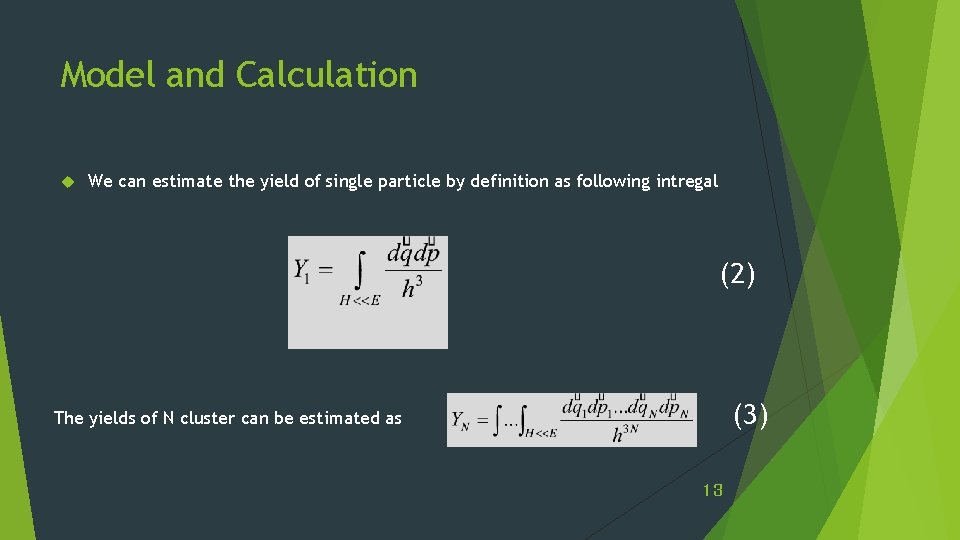
Model and Calculation We can estimate the yield of single particle by definition as following intregal (2) (3) The yields of N cluster can be estimated as 13
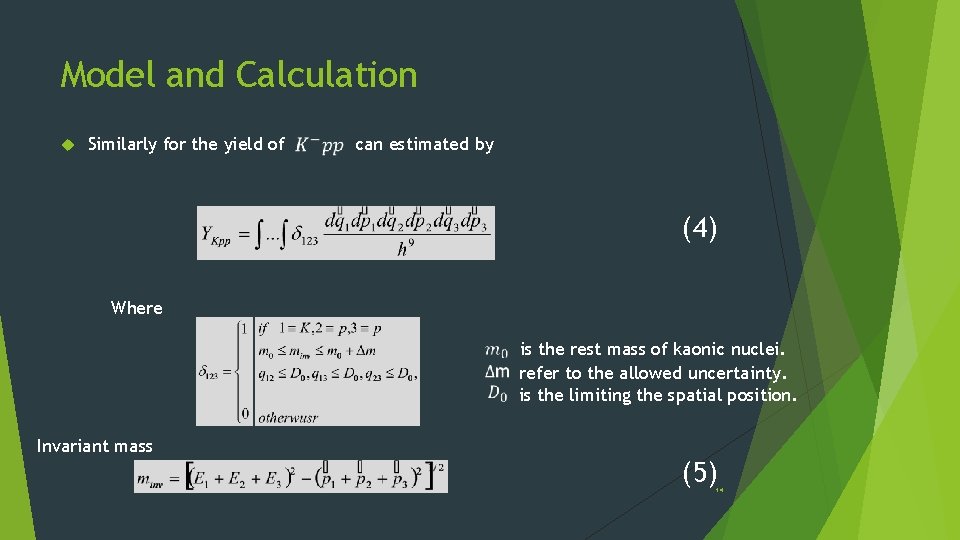
Model and Calculation Similarly for the yield of can estimated by (4) Where is the rest mass of kaonic nuclei. refer to the allowed uncertainty. is the limiting the spatial position. Invariant mass (5) 14
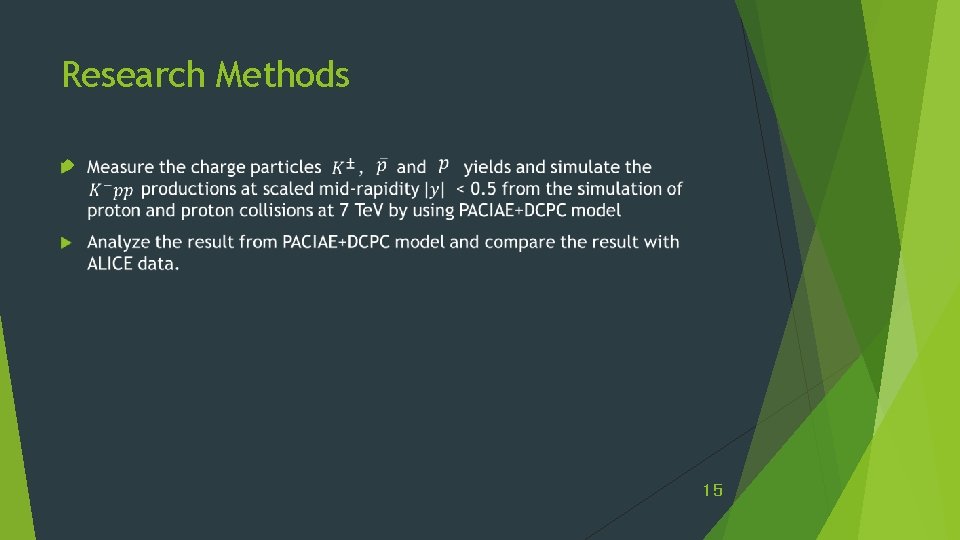
Research Methods 15
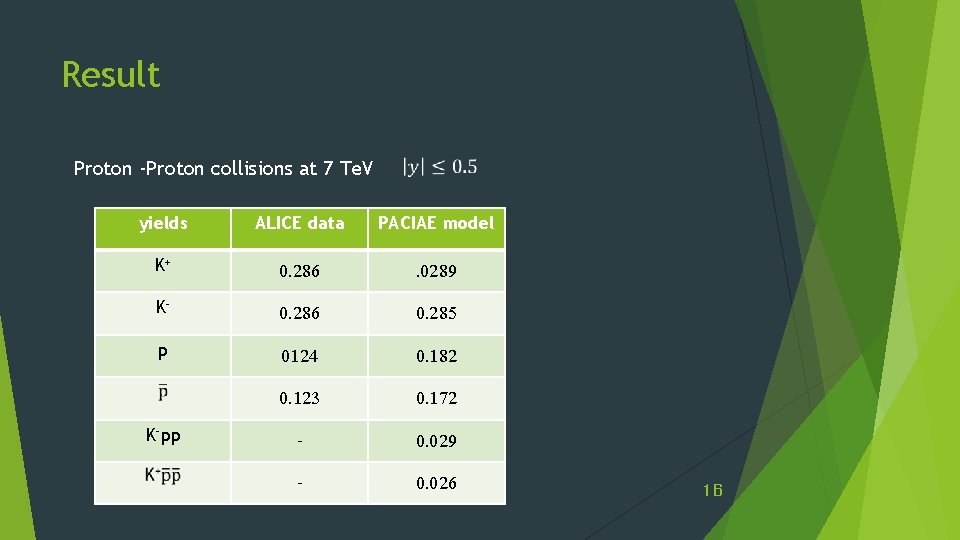
Result Proton -Proton collisions at 7 Te. V yields ALICE data PACIAE model K+ 0. 286 . 0289 K- 0. 286 0. 285 p 0124 0. 182 0. 123 0. 172 - 0. 029 - 0. 026 K-pp 16
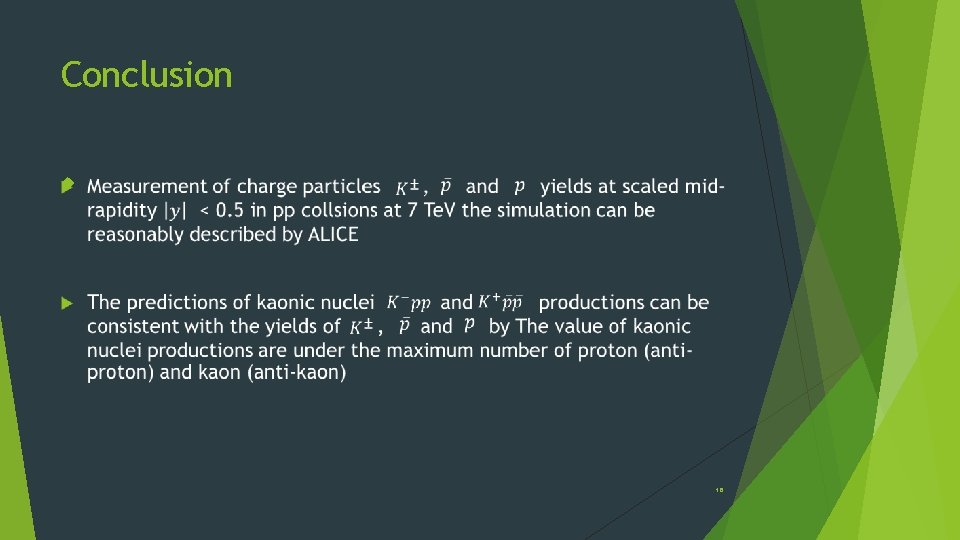
Conclusion 18
THANK YOU 19