
Predicting soil water retention curves of fine texture

- Slides: 14
Predicting soil water retention curves of fine texture soils from traditional particle size distribution data by using Soil-Water-Toolbox J. A. P. Pollacco 1, J. Fernández-Gálvez 1, 2, S. Carrick 1 1 2 Manaaki Whenua – Landcare Research, Lincoln, New Zealand Dept. of Regional Geographic Analysis and Physical Geography, University of Granada, Spain EGU 2020
Outlook 1. Alternative methods to populate S-map hydro; 2. Challenges of deriving hydraulic parameters cheaply and fast; 3. Soils are viewed by hydrologist as log-normal pore size distribution; 4. Deriving soil hydraulic parameters from Particle Size Distribution; 5. Deriving residual soil moisture from clay fraction; 6. Results of the Intergranular Mixing Particle Size Distribution model; 7. International Soil-Water-Toolbox; 8. Conclusions.
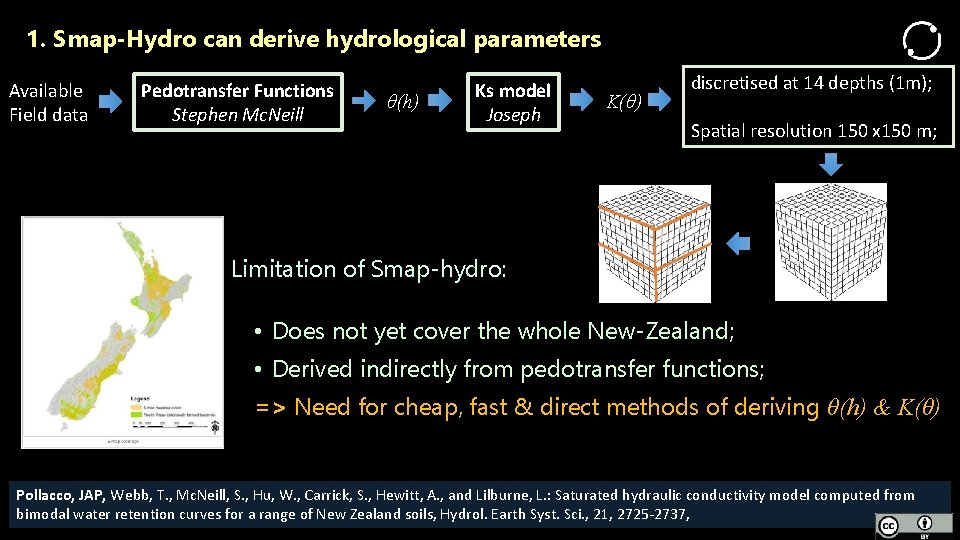
1. Smap-Hydro can derive hydrological parameters Available Field data Pedotransfer Functions Stephen Mc. Neill θ(h) Ks model Joseph K(θ) discretised at 14 depths (1 m); Spatial resolution 150 x 150 m; Limitation of Smap-hydro: • Does not yet cover the whole New-Zealand; • Derived indirectly from pedotransfer functions; => Need for cheap, fast & direct methods of deriving θ(h) & K(θ) Pollacco, JAP, Webb, T. , Mc. Neill, S. , Hu, W. , Carrick, S. , Hewitt, A. , and Lilburne, L. : Saturated hydraulic conductivity model computed from bimodal water retention curves for a range of New Zealand soils, Hydrol. Earth Syst. Sci. , 21, 2725 -2737,
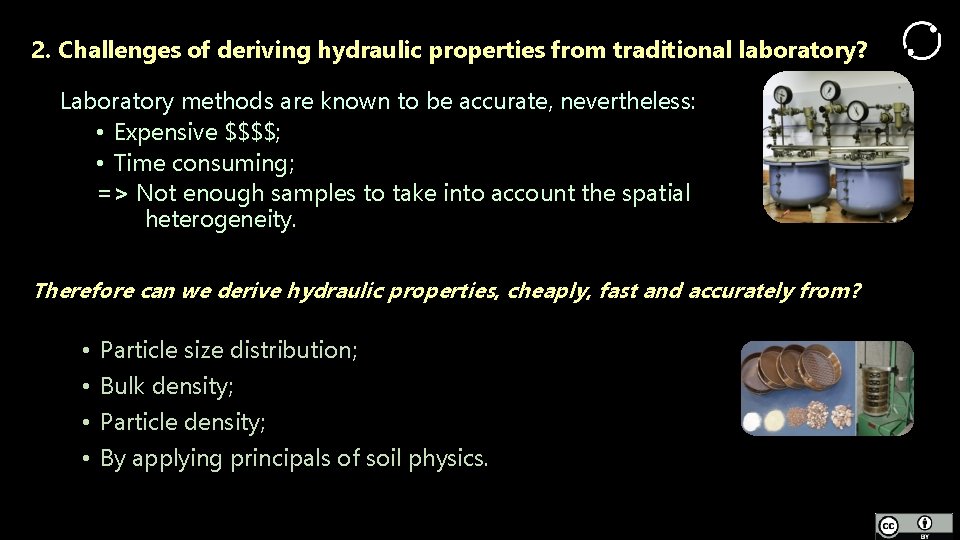
2. Challenges of deriving hydraulic properties from traditional laboratory? Laboratory methods are known to be accurate, nevertheless: • Expensive $$$$; • Time consuming; => Not enough samples to take into account the spatial heterogeneity. Therefore can we derive hydraulic properties, cheaply, fast and accurately from? • • Particle size distribution; Bulk density; Particle density; By applying principals of soil physics.
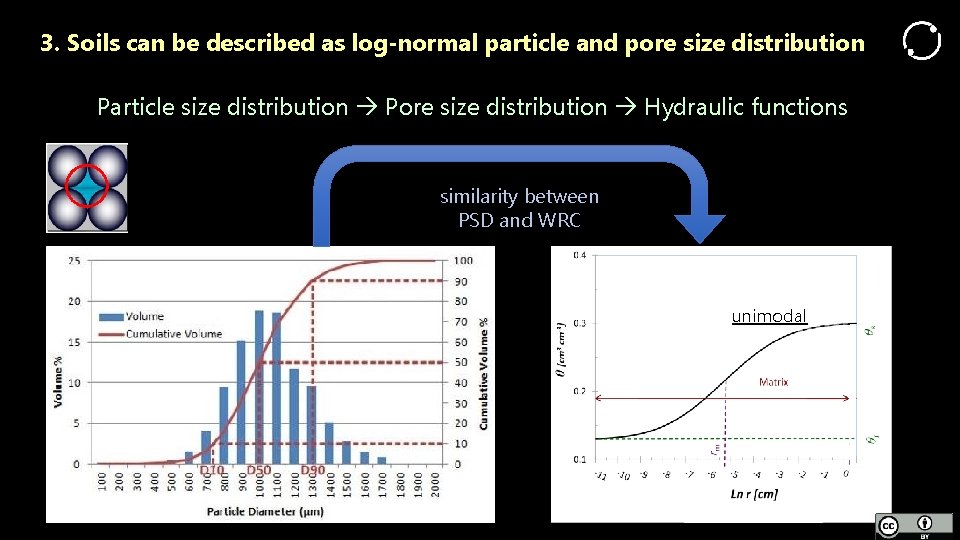
3. Soils can be described as log-normal particle and pore size distribution Particle size distribution Pore size distribution Hydraulic functions similarity between PSD and WRC unimodal
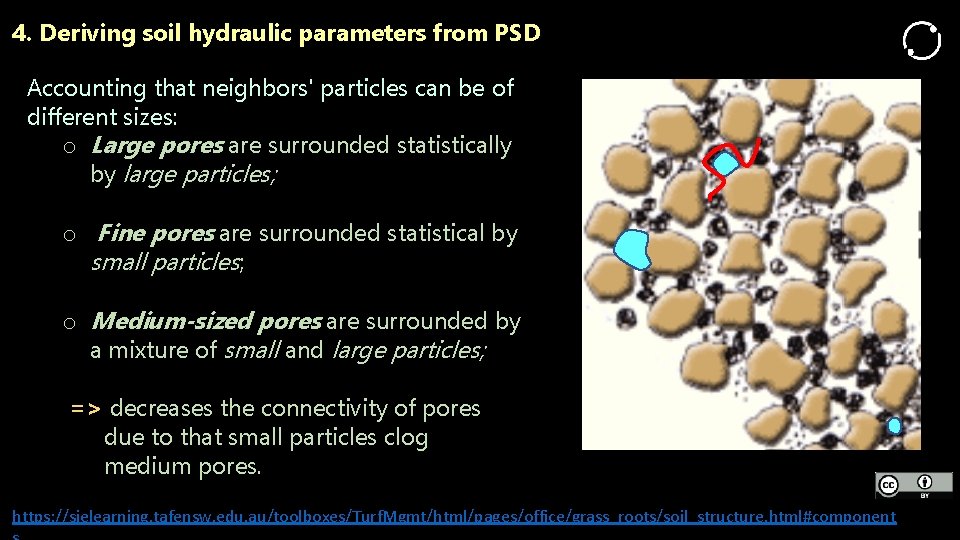
4. Deriving soil hydraulic parameters from PSD Accounting that neighbors' particles can be of different sizes: o Large pores are surrounded statistically by large particles; o Fine pores are surrounded statistical by small particles; o Medium-sized pores are surrounded by a mixture of small and large particles; => decreases the connectivity of pores due to that small particles clog medium pores. https: //sielearning. tafensw. edu. au/toolboxes/Turf. Mgmt/html/pages/office/grass_roots/soil_structure. html#component
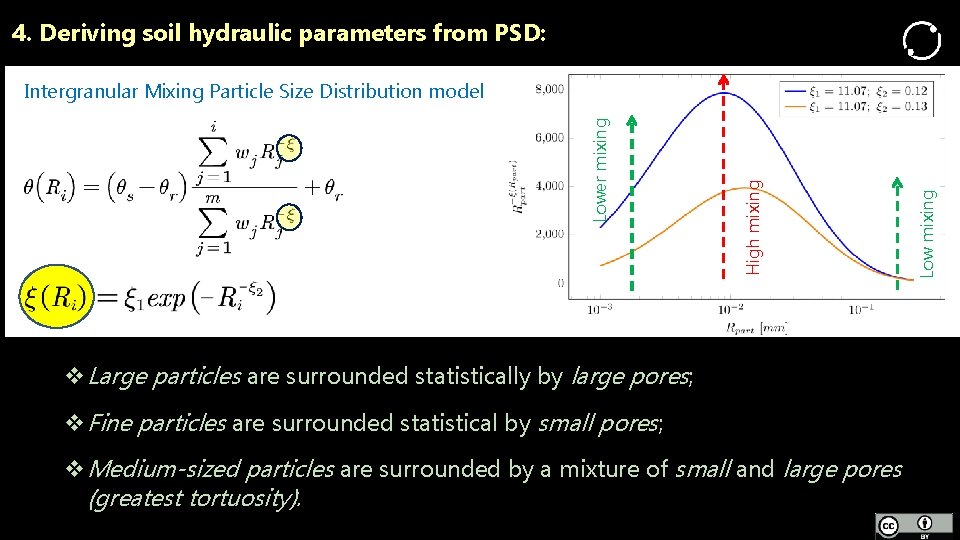
4. Deriving soil hydraulic parameters from PSD: v. Large particles are surrounded statistically by large pores; v. Fine particles are surrounded statistical by small pores; v. Medium-sized particles are surrounded by a mixture of small and large pores (greatest tortuosity). Low mixing High mixing Lower mixing Intergranular Mixing Particle Size Distribution model
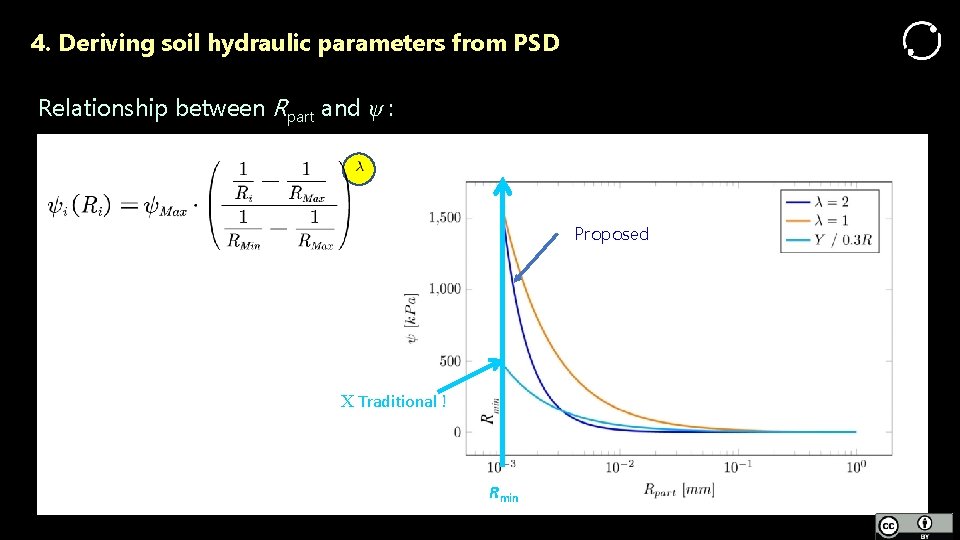
4. Deriving soil hydraulic parameters from PSD Relationship between Rpart and ψ : Proposed X Traditional ! Rmin
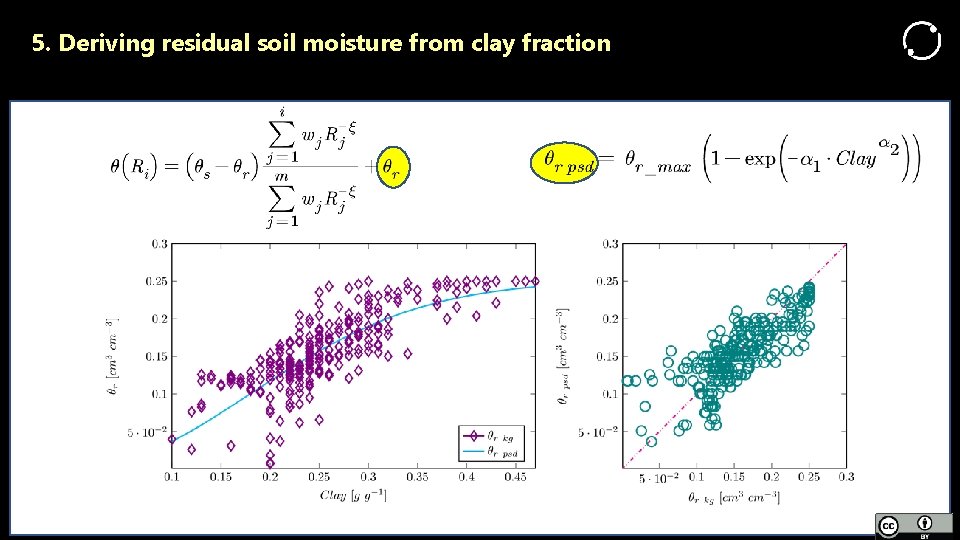
5. Deriving residual soil moisture from clay fraction
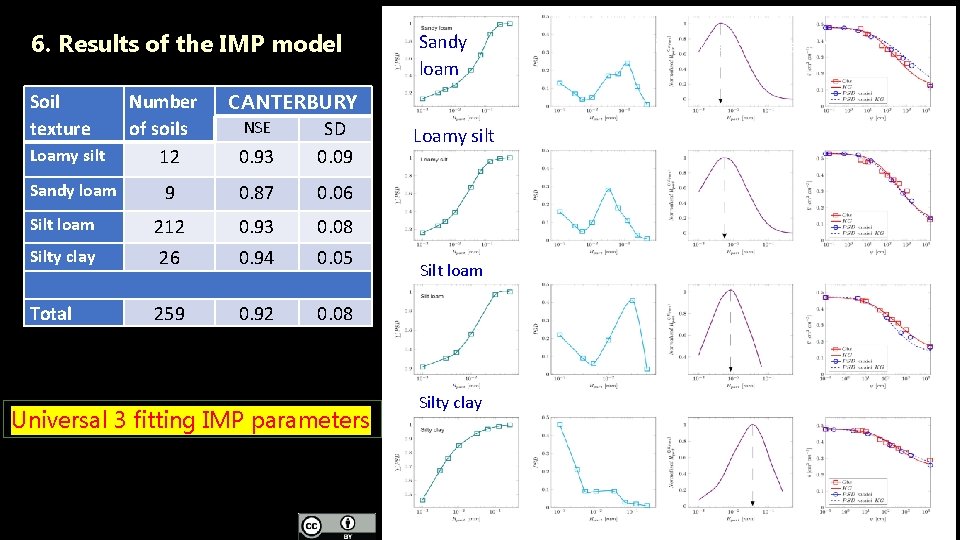
6. Results of the IMP model Soil texture Loamy silt Sandy loam Number of soils 12 CANTERBURY NSE SD 0. 93 0. 09 9 0. 87 0. 06 Silt loam 212 0. 93 0. 08 Silty clay 26 0. 94 0. 05 Total 259 0. 92 0. 08 Universal 3 fitting IMP parameters Sandy loam Loamy silt Silt loam Silty clay similarity between PSD and WRC
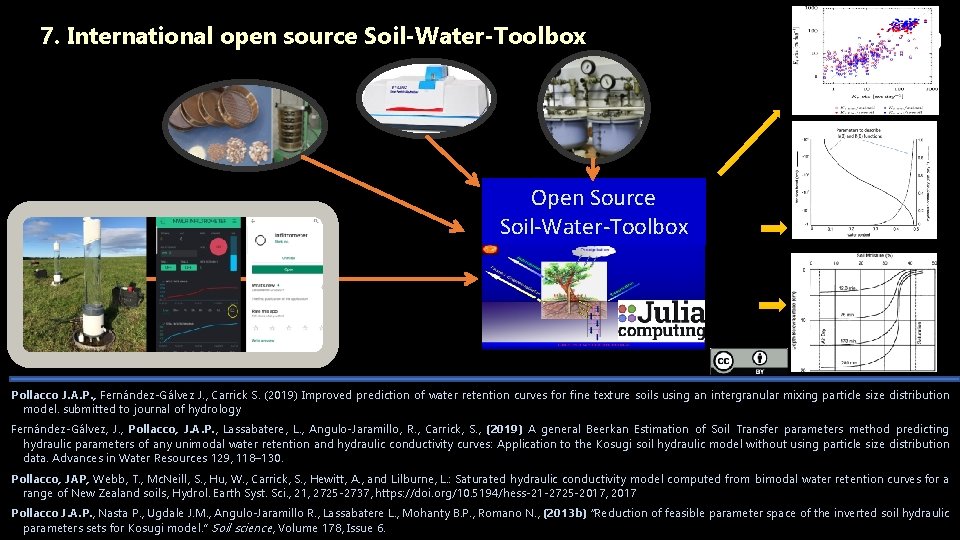
7. International open source Soil-Water-Toolbox Open Source Soil-Water-Toolbox Pollacco J. A. P. , Fernández-Gálvez J. , Carrick S. (2019) Improved prediction of water retention curves for fine texture soils using an intergranular mixing particle size distribution model. submitted to journal of hydrology Fernández-Gálvez, J. , Pollacco, J. A. P. , Lassabatere, L. , Angulo-Jaramillo, R. , Carrick, S. , (2019) A general Beerkan Estimation of Soil Transfer parameters method predicting hydraulic parameters of any unimodal water retention and hydraulic conductivity curves: Application to the Kosugi soil hydraulic model without using particle size distribution data. Advances in Water Resources 129, 118– 130. Pollacco, JAP, Webb, T. , Mc. Neill, S. , Hu, W. , Carrick, S. , Hewitt, A. , and Lilburne, L. : Saturated hydraulic conductivity model computed from bimodal water retention curves for a range of New Zealand soils, Hydrol. Earth Syst. Sci. , 21, 2725 -2737, https: //doi. org/10. 5194/hess-21 -2725 -2017, 2017 Pollacco J. A. P. , Nasta P. , Ugdale J. M. , Angulo-Jaramillo R. , Lassabatere L. , Mohanty B. P. , Romano N. , (2013 b) “Reduction of feasible parameter space of the inverted soil hydraulic parameters sets for Kosugi model. ” Soil science, Volume 178, Issue 6.
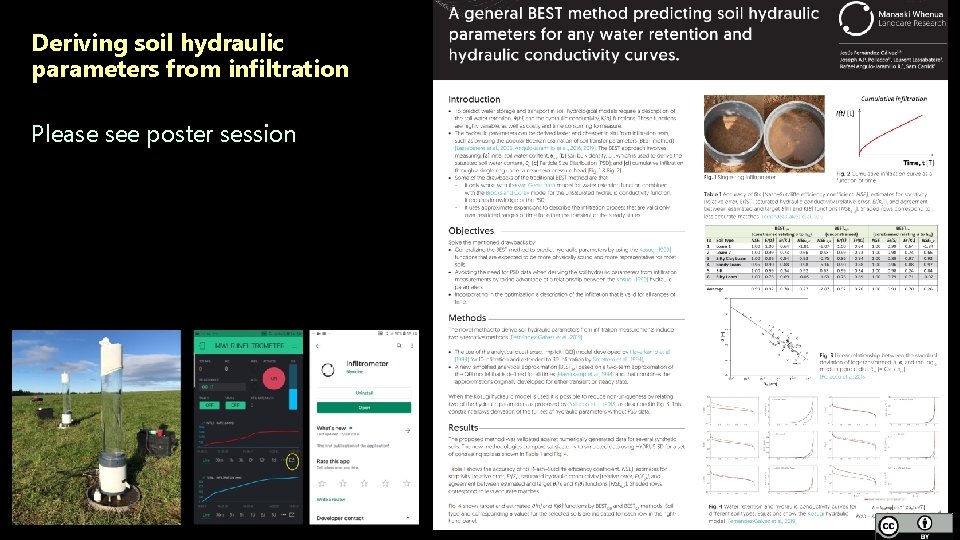
Deriving soil hydraulic parameters from infiltration Please see poster session
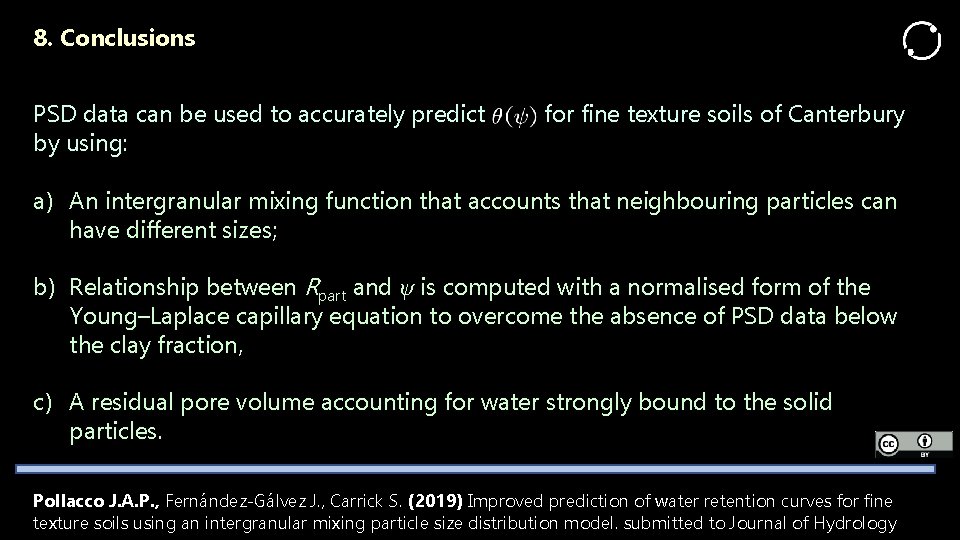
8. Conclusions PSD data can be used to accurately predict by using: for fine texture soils of Canterbury a) An intergranular mixing function that accounts that neighbouring particles can have different sizes; b) Relationship between Rpart and ψ is computed with a normalised form of the Young–Laplace capillary equation to overcome the absence of PSD data below the clay fraction, c) A residual pore volume accounting for water strongly bound to the solid particles. Pollacco J. A. P. , Fernández-Gálvez J. , Carrick S. (2019) Improved prediction of water retention curves for fine texture soils using an intergranular mixing particle size distribution model. submitted to Journal of Hydrology
Manaaki Whenua Landcare Research Contact me if interested in the Open Source Soil-Water-Tool. Box pollaccoj@landcareresearch. co. nz