
Predicting Products of Single Replacement Reactions Predicting products

- Slides: 13
Predicting Products of Single Replacement Reactions
Predicting products First you must determine if a reaction will occur. there are 2 rules. . .
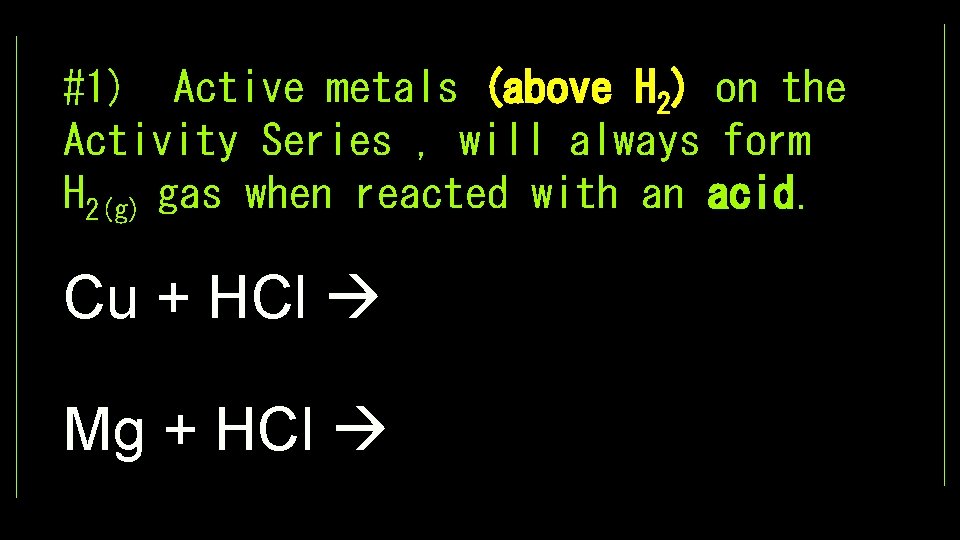
#1) Active metals (above H 2) on the Activity Series , will always form H 2(g) gas when reacted with an acid. Cu + HCl Mg + HCl
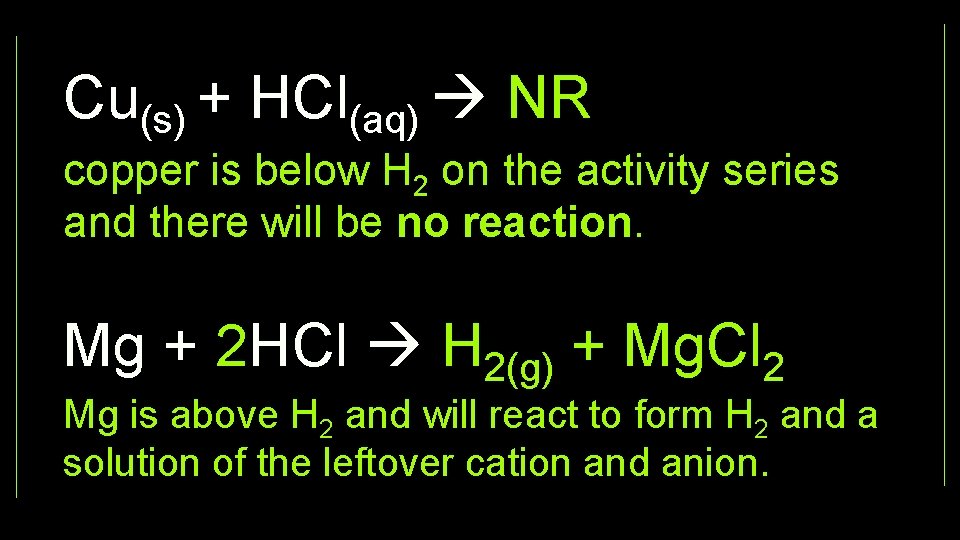
Cu(s) + HCl(aq) NR copper is below H 2 on the activity series and there will be no reaction. Mg + 2 HCl H 2(g) + Mg. Cl 2 Mg is above H 2 and will react to form H 2 and a solution of the leftover cation and anion.
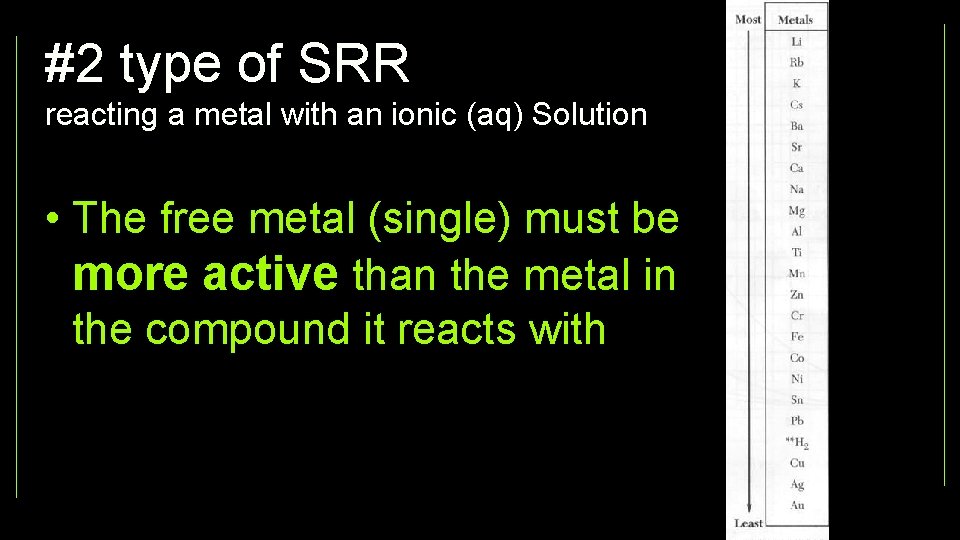
#2 type of SRR reacting a metal with an ionic (aq) Solution • The free metal (single) must be more active than the metal in the compound it reacts with
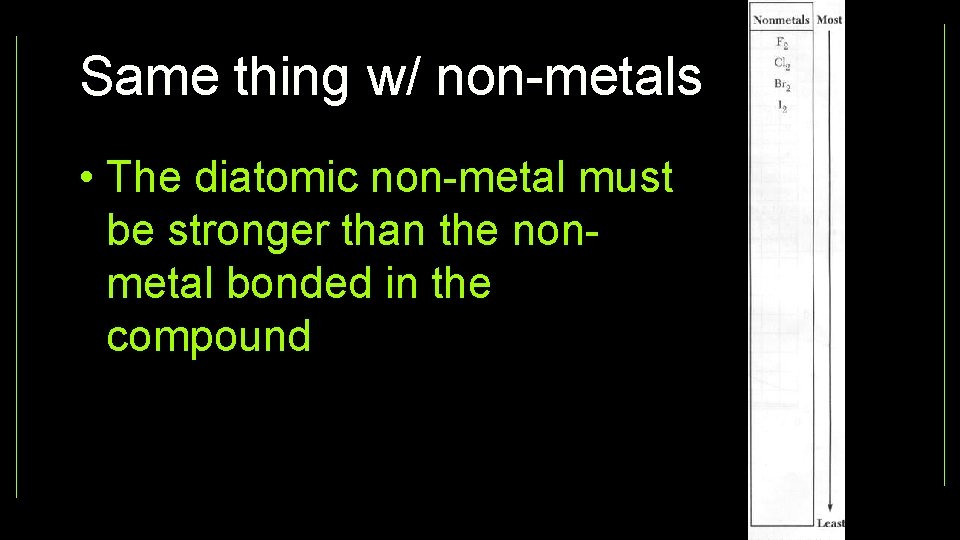
Same thing w/ non-metals • The diatomic non-metal must be stronger than the nonmetal bonded in the compound
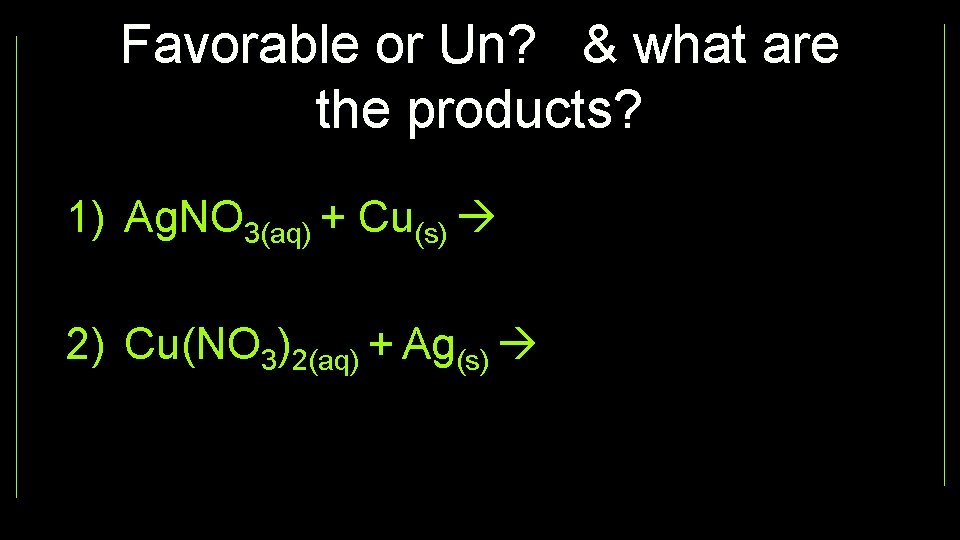
Favorable or Un? & what are the products? 1) Ag. NO 3(aq) + Cu(s) 2) Cu(NO 3)2(aq) + Ag(s)
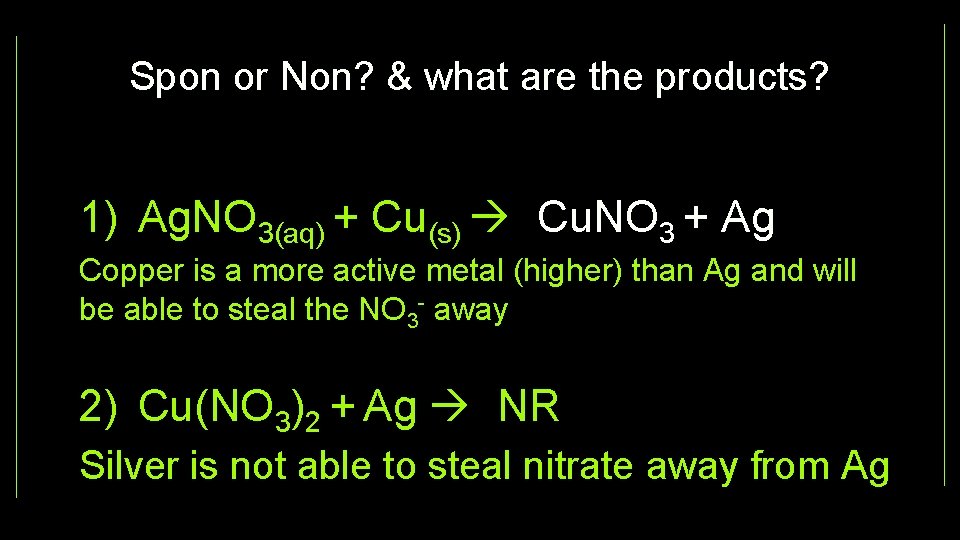
Spon or Non? & what are the products? 1) Ag. NO 3(aq) + Cu(s) Cu. NO 3 + Ag Copper is a more active metal (higher) than Ag and will be able to steal the NO 3 - away 2) Cu(NO 3)2 + Ag NR Silver is not able to steal nitrate away from Ag
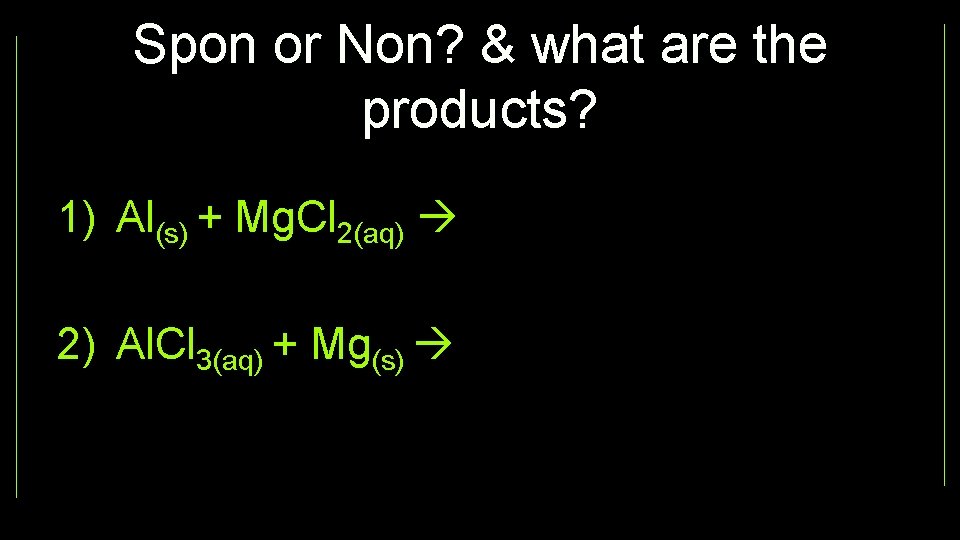
Spon or Non? & what are the products? 1) Al(s) + Mg. Cl 2(aq) 2) Al. Cl 3(aq) + Mg(s)
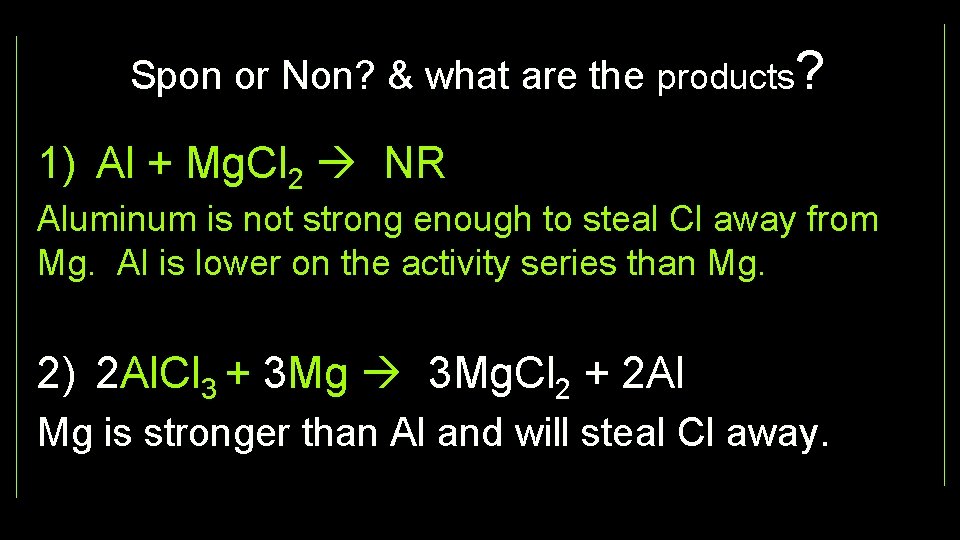
Spon or Non? & what are the products? 1) Al + Mg. Cl 2 NR Aluminum is not strong enough to steal Cl away from Mg. Al is lower on the activity series than Mg. 2) 2 Al. Cl 3 + 3 Mg. Cl 2 + 2 Al Mg is stronger than Al and will steal Cl away.
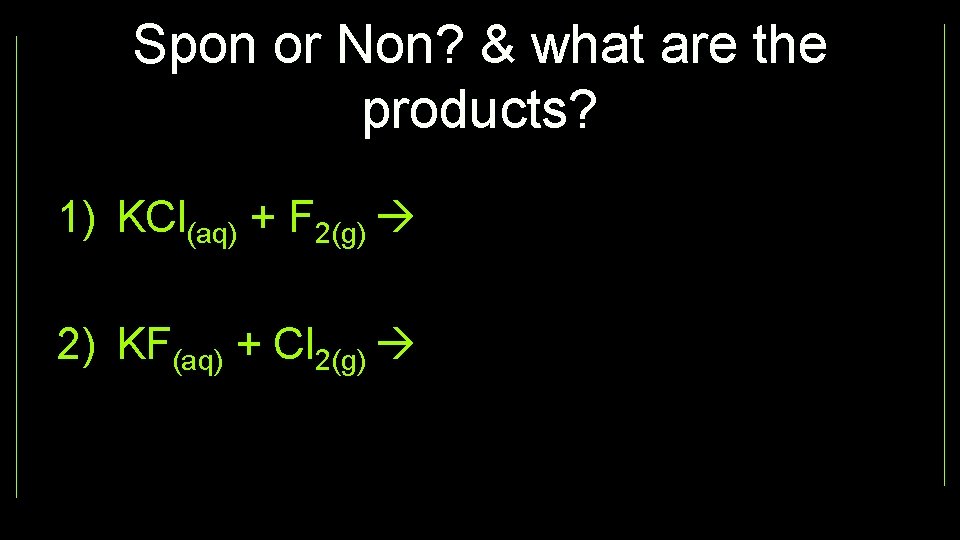
Spon or Non? & what are the products? 1) KCl(aq) + F 2(g) 2) KF(aq) + Cl 2(g)
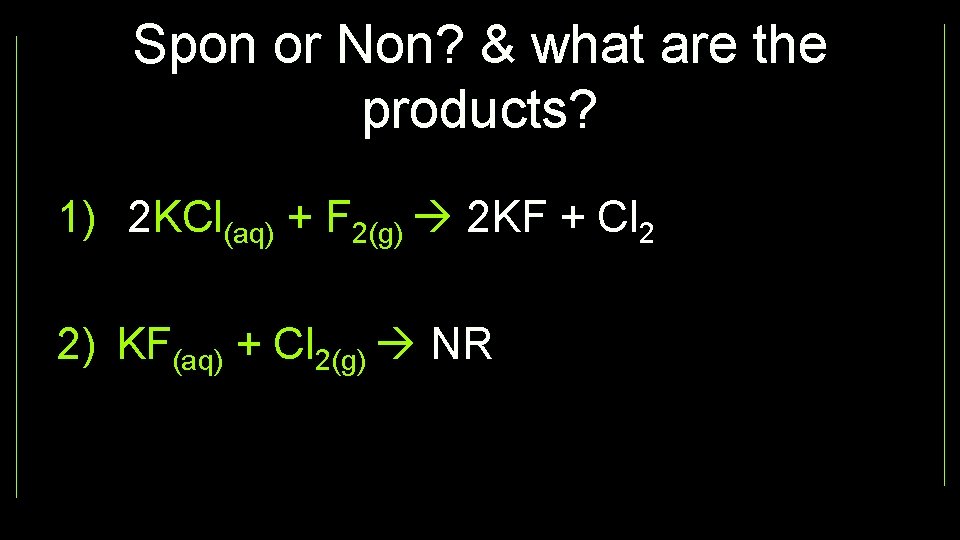
Spon or Non? & what are the products? 1) 2 KCl(aq) + F 2(g) 2 KF + Cl 2 2) KF(aq) + Cl 2(g) NR
THE END