
Predicting Genotypes and Phenotypes Punnett Squares used to
- Slides: 14
Predicting Genotypes and Phenotypes
Punnett Squares -used to predict genotypes and phenotypes of offspring based on the parents genotype -parental generation= parents genotypes -F 1 generation= 1 st generation offspring -F 2 generation= 2 nd generation offspring
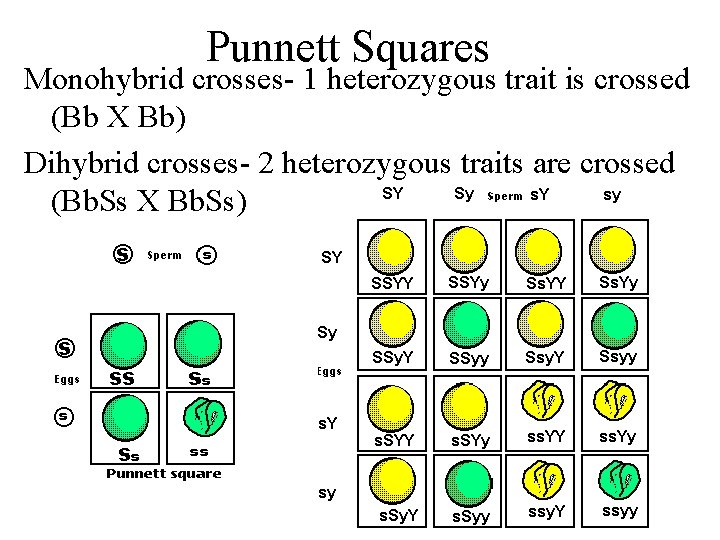
Punnett Squares Monohybrid crosses- 1 heterozygous trait is crossed (Bb X Bb) Dihybrid crosses- 2 heterozygous traits are crossed (Bb. Ss X Bb. Ss)
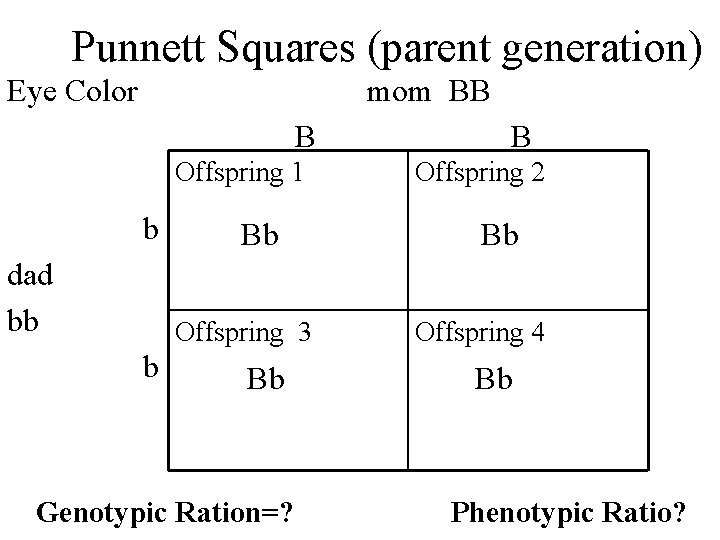
Punnett Squares (parent generation) Eye Color mom BB B Offspring 1 b dad bb Bb Offspring 3 b Bb Genotypic Ration=? B Offspring 2 Bb Offspring 4 Bb Phenotypic Ratio?
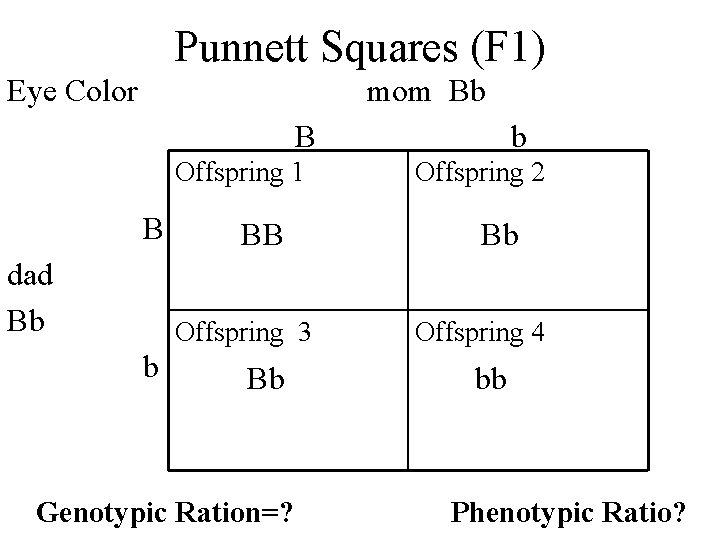
Punnett Squares (F 1) Eye Color mom Bb B Offspring 1 B dad Bb BB Offspring 3 b Bb Genotypic Ration=? b Offspring 2 Bb Offspring 4 bb Phenotypic Ratio?
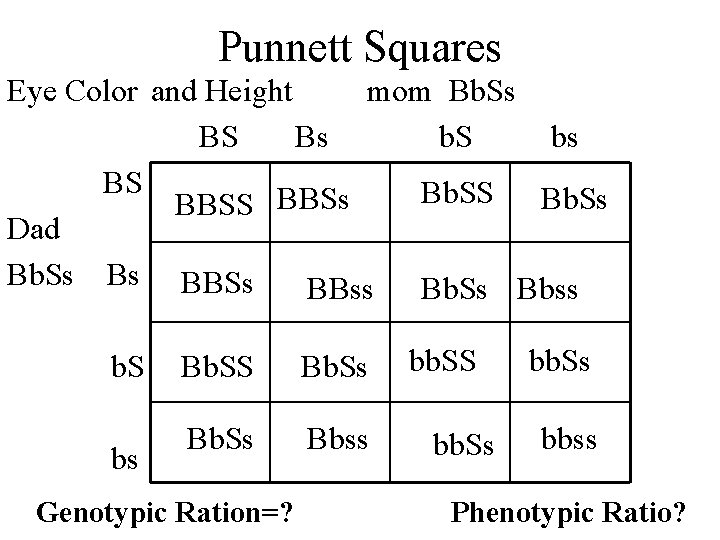
Punnett Squares Eye Color and Height mom Bb. Ss BS Bs b. S bs BS Bb. Ss BBSS BBSs Dad Bb. Ss Bs BBSs BBss Bb. Ss Bbss b. S bs Bb. SS Bb. Ss Bbss Genotypic Ration=? bb. SS bb. Ss bbss Phenotypic Ratio?
Laws of Probability • Used to predict genotype or phenotype • -Multiplication rule-to determine the probability of different events happening in combination, multiply the probability of each event. • -Addition rule-to determine the probability of the same events happening add the probability of each event. • See examples
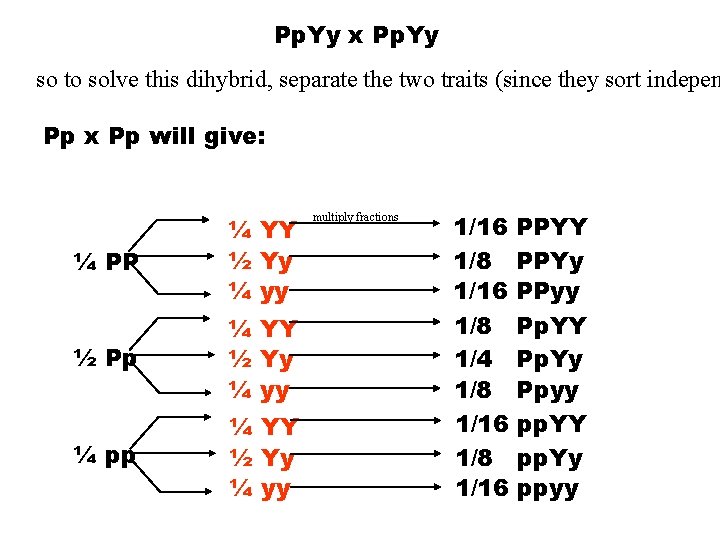
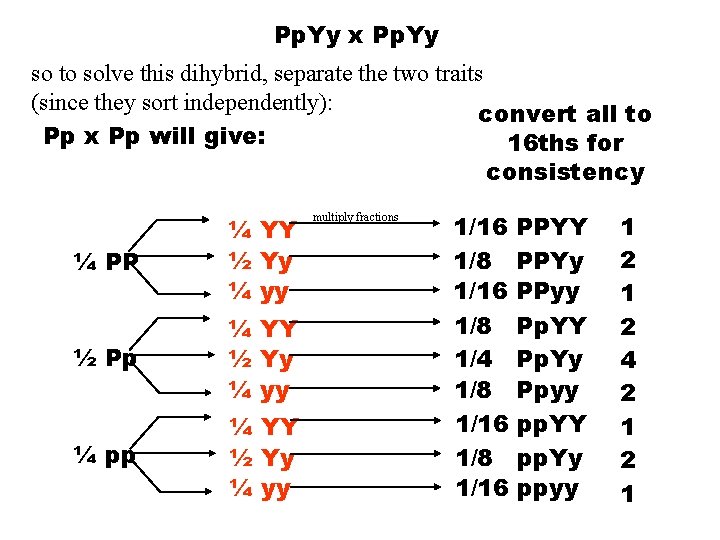
Forkline Method • this is just another way to be able to predict genotype and phenotype ratios in dihybrid problems • this way you don’t have to write the box • but it does require you to know the basic ratios that arise from monohybrids • based on the idea that: in a dihybrid, the two traits sort INDEPENDENTLY of one another • i. e. what happens with one trait is completely unrelated to what happens with the other trait
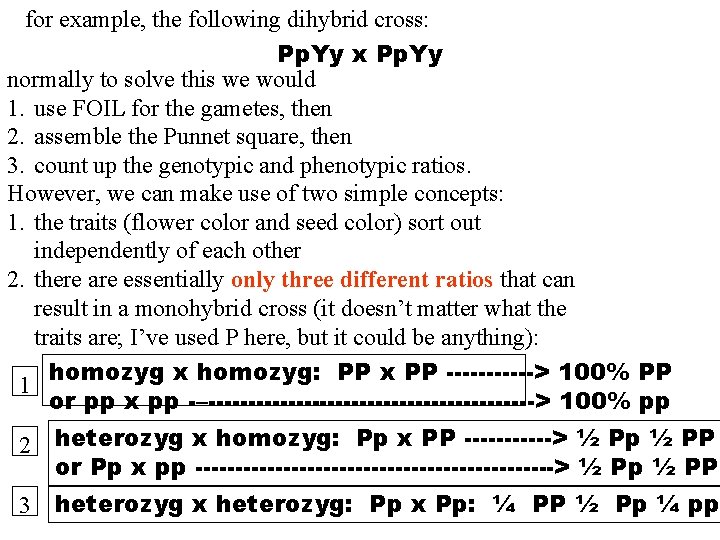
for example, the following dihybrid cross: Pp. Yy x Pp. Yy normally to solve this we would 1. use FOIL for the gametes, then 2. assemble the Punnet square, then 3. count up the genotypic and phenotypic ratios. However, we can make use of two simple concepts: 1. the traits (flower color and seed color) sort out independently of each other 2. there are essentially only three different ratios that can result in a monohybrid cross (it doesn’t matter what the traits are; I’ve used P here, but it could be anything): homozyg x homozyg: PP x PP ------> 100% PP 1 or pp x pp -–---------------------> 100% pp 2 heterozyg x homozyg: Pp x PP ------> ½ Pp ½ PP or Pp x pp -----------------------> ½ Pp ½ PP 3 heterozyg x heterozyg: Pp x Pp: ¼ PP ½ Pp ¼ pp
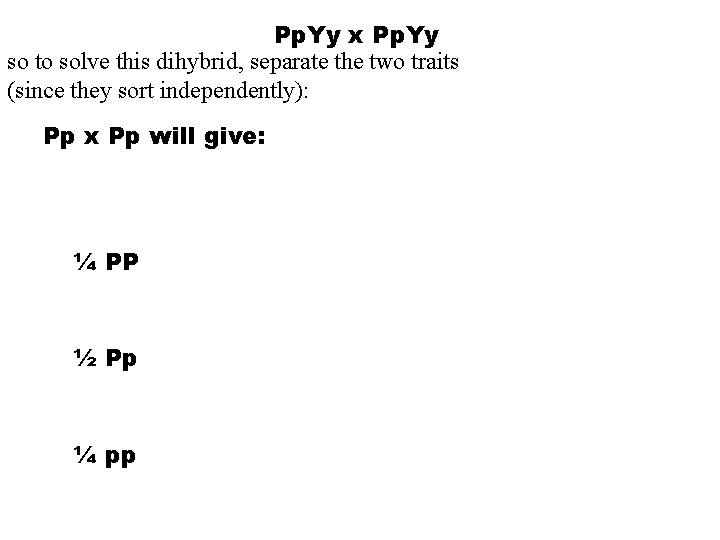
Pp. Yy x Pp. Yy so to solve this dihybrid, separate the two traits (since they sort independently): Pp x Pp will give: ¼ PP ½ Pp ¼ pp
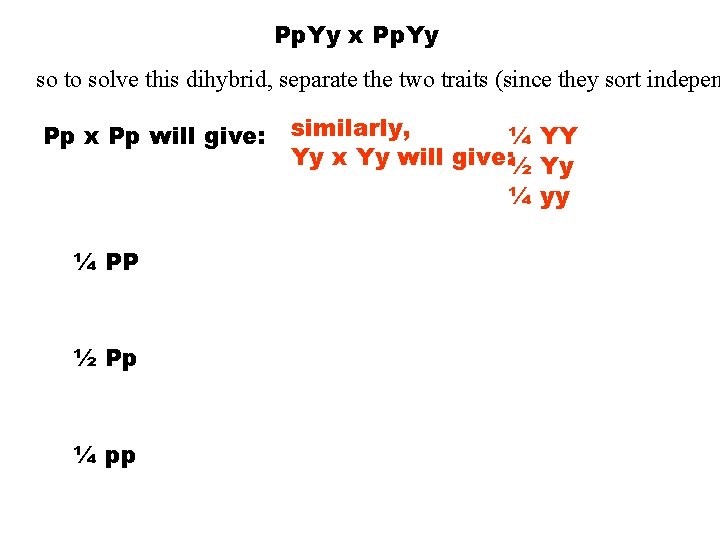
Pp. Yy x Pp. Yy so to solve this dihybrid, separate the two traits (since they sort indepen Pp x Pp will give: ¼ PP ½ Pp ¼ pp similarly, ¼ YY Yy x Yy will give: ½ Yy ¼ yy
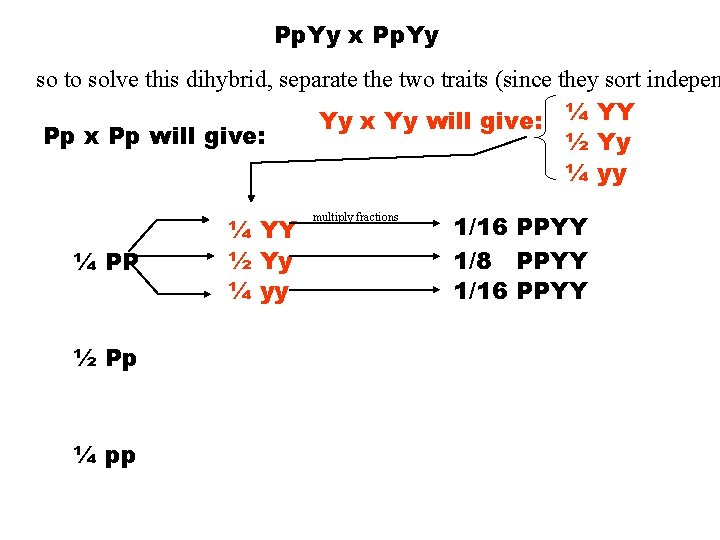
Pp. Yy x Pp. Yy so to solve this dihybrid, separate the two traits (since they sort indepen Yy x Yy will give: ¼ YY Pp x Pp will give: ½ Yy ¼ yy ¼ PP ½ Pp ¼ pp ¼ YY ½ Yy ¼ yy multiply fractions 1/16 PPYY 1/8 PPYY 1/16 PPYY
Pp. Yy x Pp. Yy so to solve this dihybrid, separate the two traits (since they sort indepen Pp x Pp will give: ¼ PP ¼ YY ½ Yy ¼ yy ½ Pp ¼ YY ½ Yy ¼ yy ¼ pp ¼ YY ½ Yy ¼ yy multiply fractions 1/16 PPYY 1/8 PPYy 1/16 PPyy 1/8 Pp. YY 1/4 Pp. Yy 1/8 Ppyy 1/16 pp. YY 1/8 pp. Yy 1/16 ppyy
Pp. Yy x Pp. Yy so to solve this dihybrid, separate the two traits (since they sort independently): convert all to Pp x Pp will give: 16 ths for consistency ¼ PP ¼ YY ½ Yy ¼ yy ½ Pp ¼ YY ½ Yy ¼ yy ¼ pp ¼ YY ½ Yy ¼ yy multiply fractions 1/16 PPYY 1/8 PPYy 1/16 PPyy 1/8 Pp. YY 1/4 Pp. Yy 1/8 Ppyy 1/16 pp. YY 1/8 pp. Yy 1/16 ppyy 1 2 4 2 1