
Predicting Genetic Outcomes PUNNETT SQUARES AND PROBABILITY PATTERNS
Predicting Genetic Outcomes PUNNETT SQUARES AND PROBABILITY
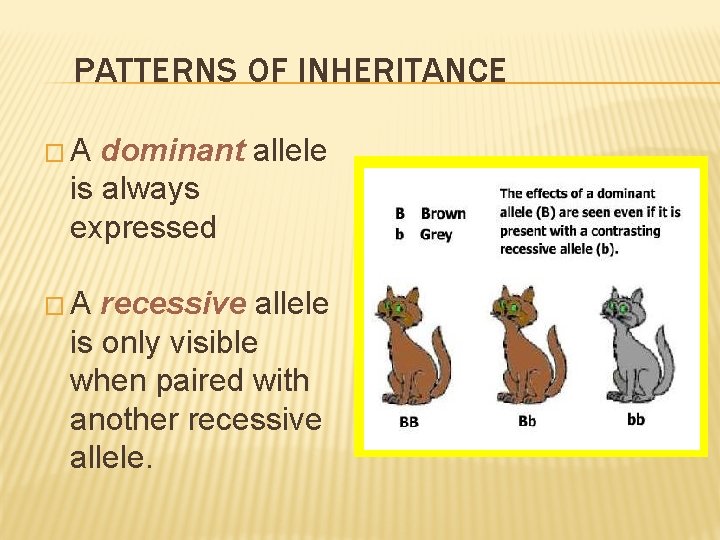
PATTERNS OF INHERITANCE �A dominant allele is always expressed �A recessive allele is only visible when paired with another recessive allele.

ALLELES – PATTERNS OF INHERITANCE • To test for patterns of inheritance, Mendel crossed two organisms with different traits Each had two distinct forms Each allele is represented by a letter CAPITAL = dominant lower = recessive Homozygous - if the two alleles for a trait are the same (AA or aa) aa Heterozygous - if the two alleles for a trait are different (Aa) Aa TT Dominant Trait Tt tt Recessive Trait
PREDICTING INHERITANCE � � � To determine the chances of inheriting a given trait, scientists use Punnett squares and symbols to represent the genes. UPPERCASE letters are used to represent dominant genes. lowercase letters are used to represent recessive genes.
PREDICTING INHERITANCE � � � For example: � T = represents the gene for TALL in pea plants � t = represents the gene for short in pea plants So: � TT & Tt both result in a TALL plant, because T is dominant over t. t is recessive. � tt will result in a short plant. Remember there are two alleles for every trait!
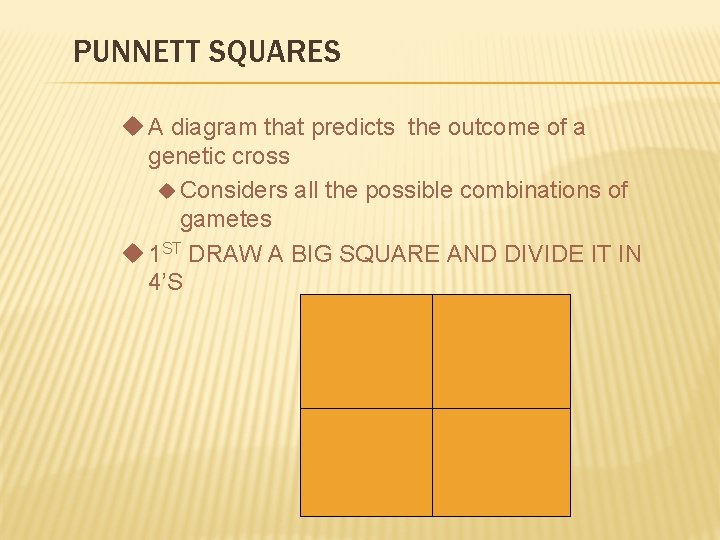
PUNNETT SQUARES u A diagram that predicts the outcome of a genetic cross u Considers all the possible combinations of gametes u 1 ST DRAW A BIG SQUARE AND DIVIDE IT IN 4’S
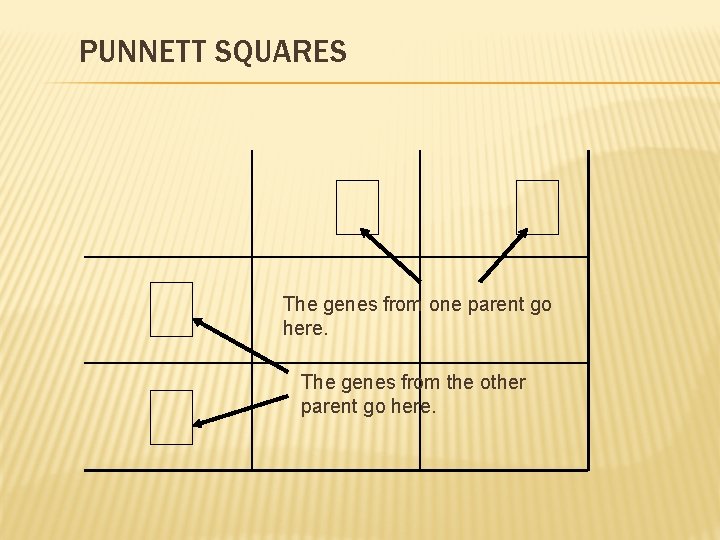
PUNNETT SQUARES The genes from one parent go here. The genes from the other parent go here.
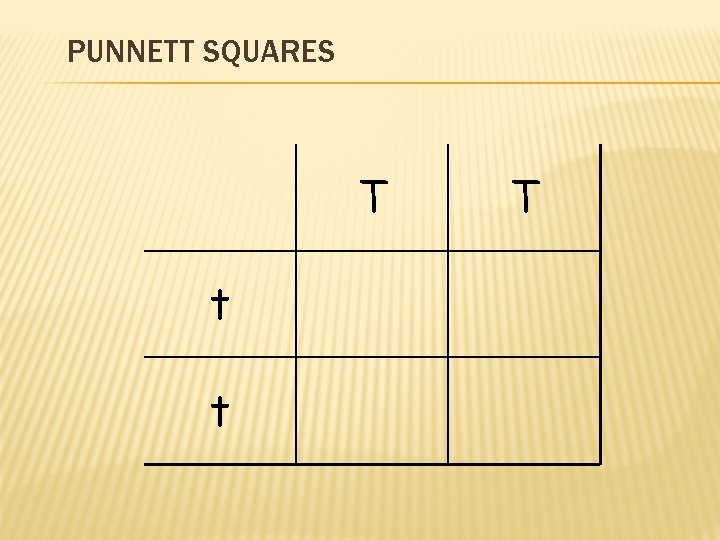
PUNNETT SQUARES T t t T
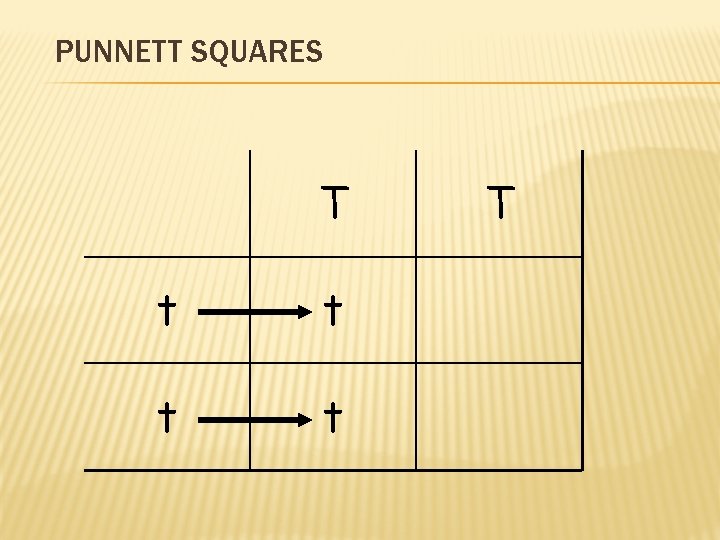
PUNNETT SQUARES T t t T

PUNNETT SQUARES T T t t t
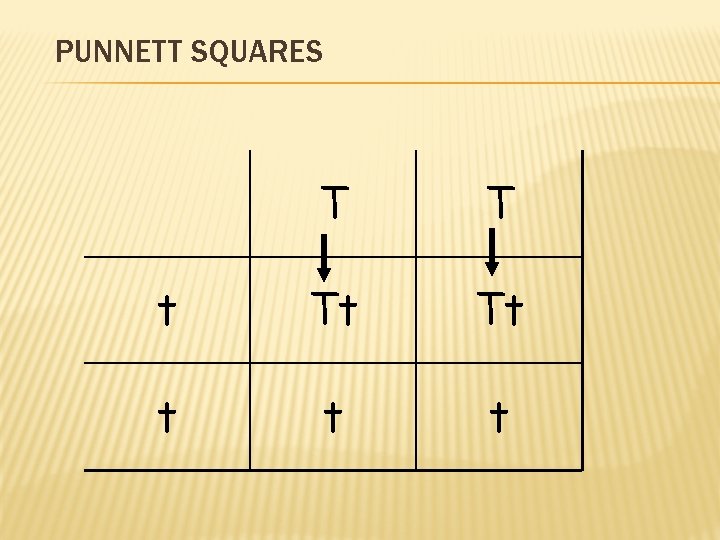
PUNNETT SQUARES T T t Tt Tt t
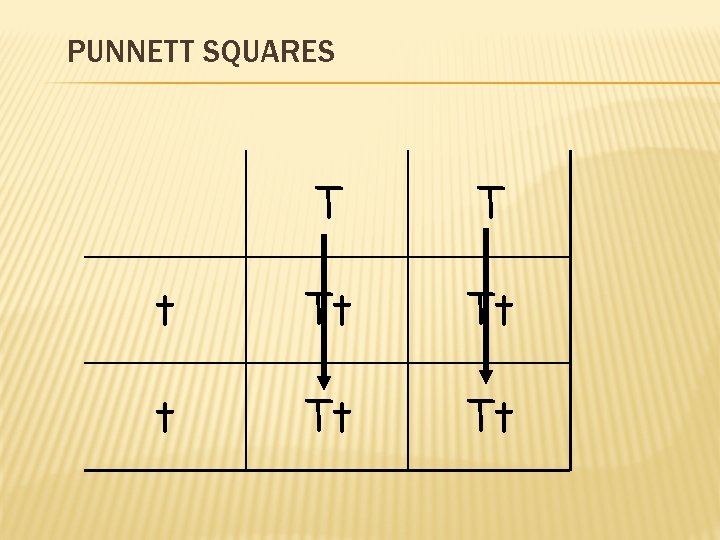
PUNNETT SQUARES T T t Tt Tt
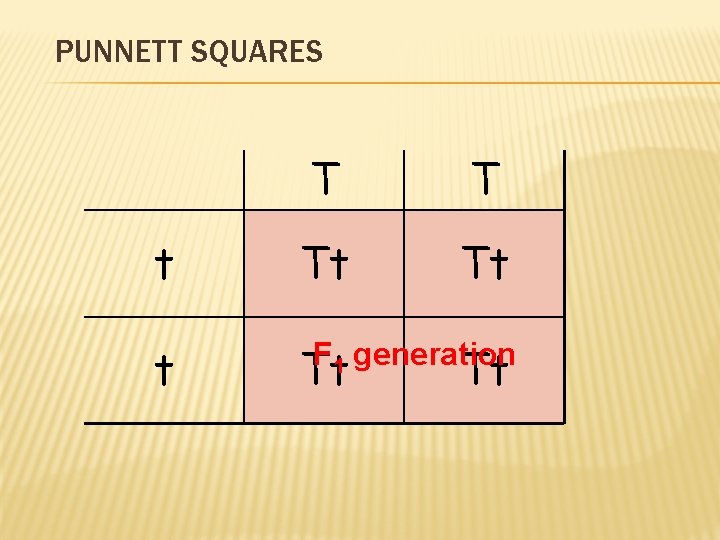
PUNNETT SQUARES t t T T Tt Tt F 1 generation Tt Tt
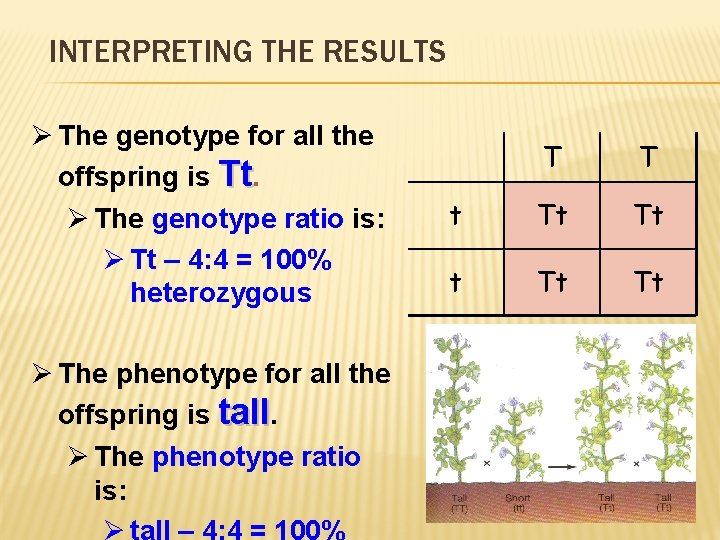
INTERPRETING THE RESULTS Ø The genotype for all the offspring is Tt. Ø The genotype ratio is: Ø Tt – 4: 4 = 100% heterozygous Ø The phenotype for all the offspring is tall. Ø The phenotype ratio is: T T t Tt Tt
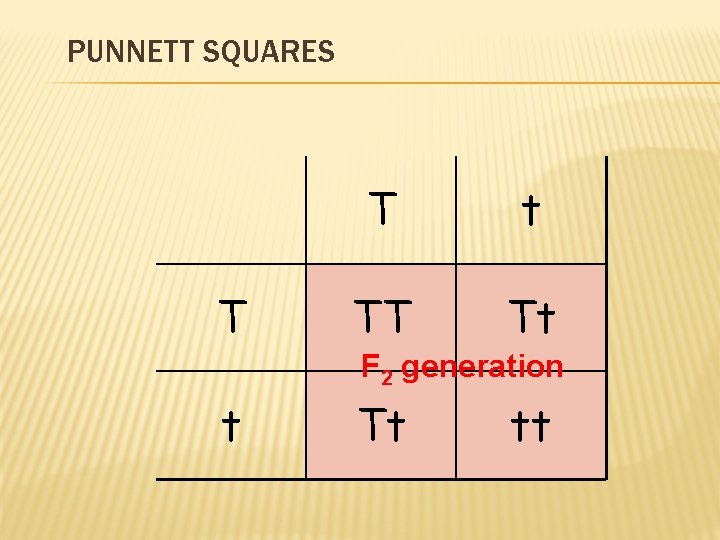
PUNNETT SQUARES T T t TT Tt F 2 generation t Tt tt
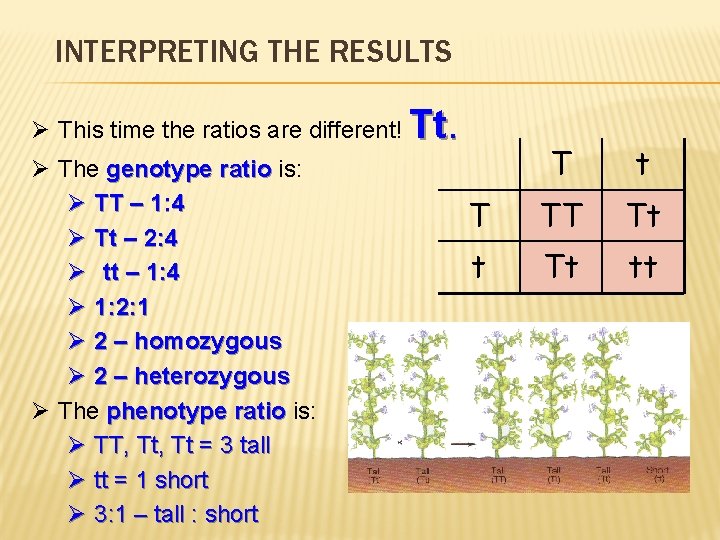
INTERPRETING THE RESULTS Ø This time the ratios are different! Ø The genotype ratio is: Ø TT – 1: 4 Ø Tt – 2: 4 Ø tt – 1: 4 Ø 1: 2: 1 Ø 2 – homozygous Ø 2 – heterozygous Ø The phenotype ratio is: Ø TT, Tt = 3 tall Ø tt = 1 short Ø 3: 1 – tall : short Tt. T t T TT Tt tt
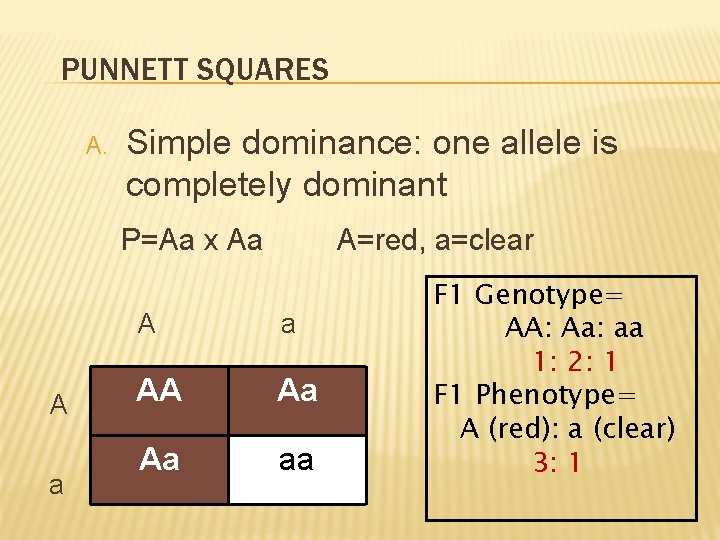
PUNNETT SQUARES A. Simple dominance: one allele is completely dominant P=Aa x Aa A a A=red, a=clear A a AA Aa Aa aa F 1 Genotype= AA: Aa: aa 1: 2: 1 F 1 Phenotype= A (red): a (clear) 3: 1
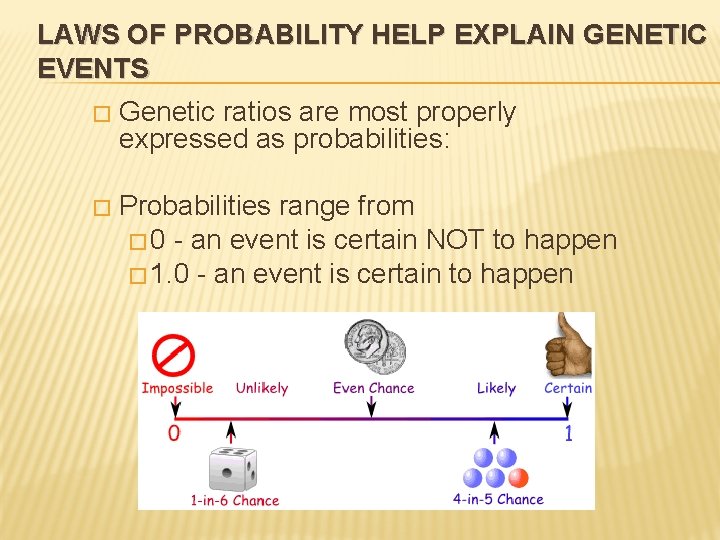
LAWS OF PROBABILITY HELP EXPLAIN GENETIC EVENTS � Genetic ratios are most properly expressed as probabilities: � Probabilities range from � 0 - an event is certain NOT to happen � 1. 0 - an event is certain to happen
PREDICTING OUTCOMESPROBABILITY � The likelihood that a specific event will occur � Probability = # of one kind of possible outcome total # of all possible outcomes � � � a coin lands on “heads” � 1 outcome Total possible outcomes � =2 � heads or tails Possibility that the coin will land on heads = 1/2
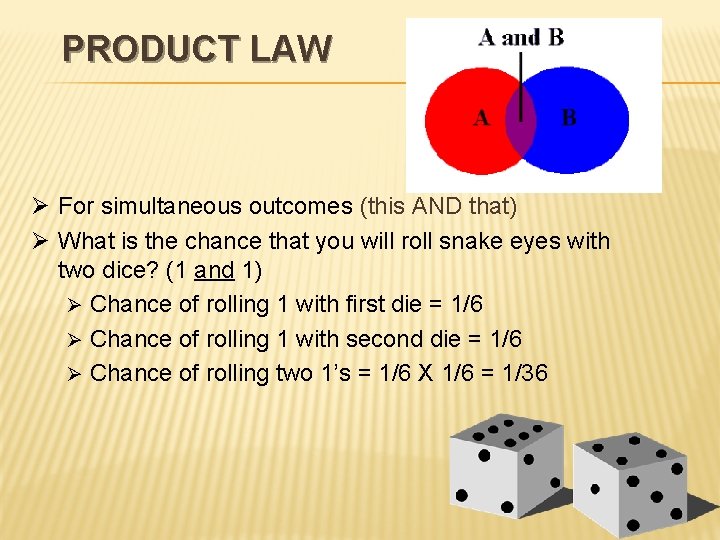
PRODUCT LAW Ø For simultaneous outcomes (this AND that) Ø What is the chance that you will roll snake eyes with two dice? (1 and 1) Ø Chance of rolling 1 with first die = 1/6 Ø Chance of rolling 1 with second die = 1/6 Ø Chance of rolling two 1’s = 1/6 X 1/6 = 1/36
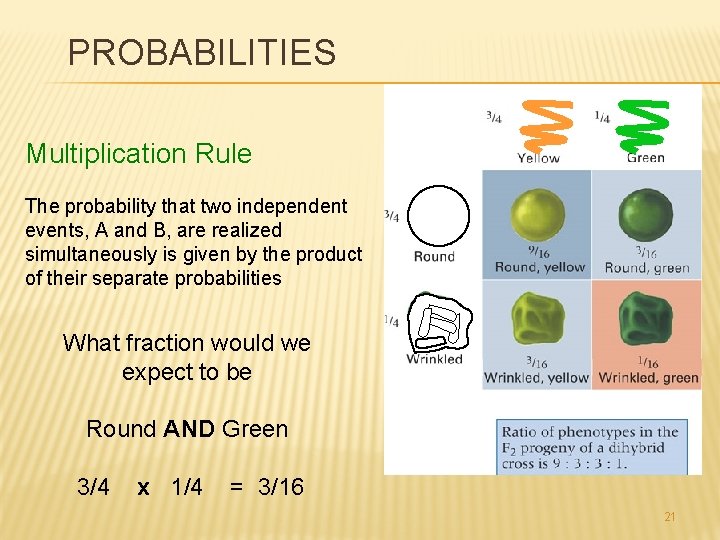
PROBABILITIES Multiplication Rule The probability that two independent events, A and B, are realized simultaneously is given by the product of their separate probabilities What fraction would we expect to be Round AND Green 3/4 x 1/4 = 3/16 21
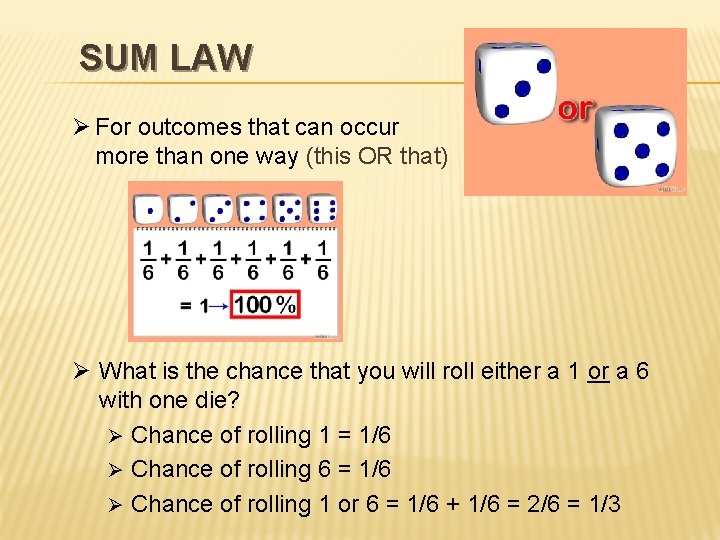
SUM LAW Ø For outcomes that can occur more than one way (this OR that) Ø What is the chance that you will roll either a 1 or a 6 with one die? Ø Chance of rolling 1 = 1/6 Ø Chance of rolling 6 = 1/6 Ø Chance of rolling 1 or 6 = 1/6 + 1/6 = 2/6 = 1/3
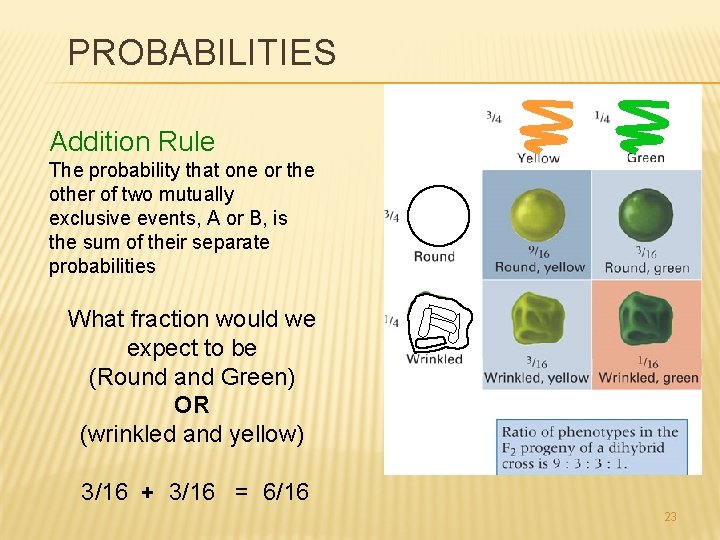
PROBABILITIES Addition Rule The probability that one or the other of two mutually exclusive events, A or B, is the sum of their separate probabilities What fraction would we expect to be (Round and Green) OR (wrinkled and yellow) 3/16 + 3/16 = 6/16 23
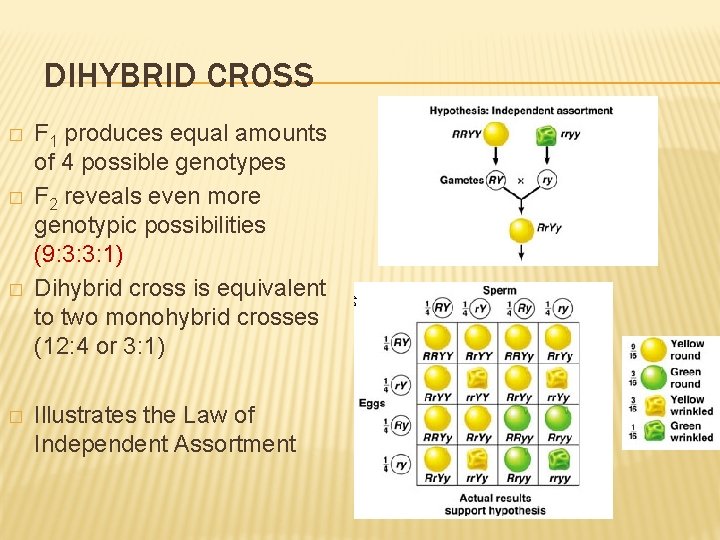
DIHYBRID CROSS � � F 1 produces equal amounts of 4 possible genotypes F 2 reveals even more genotypic possibilities (9: 3: 3: 1) Dihybrid cross is equivalent to two monohybrid crosses (12: 4 or 3: 1) Illustrates the Law of Independent Assortment
Why we look the way we look. . . MENDEL AND HEREDITY
- Slides: 25