
Predicting Biological Response at a Systems Level The
Predicting Biological Response at a Systems Level: The Virtual. Liver National Center for Computational Toxicology Imran Shah Office of Research and Development National Center for Computational Toxicology (shah. imran@epa. gov)
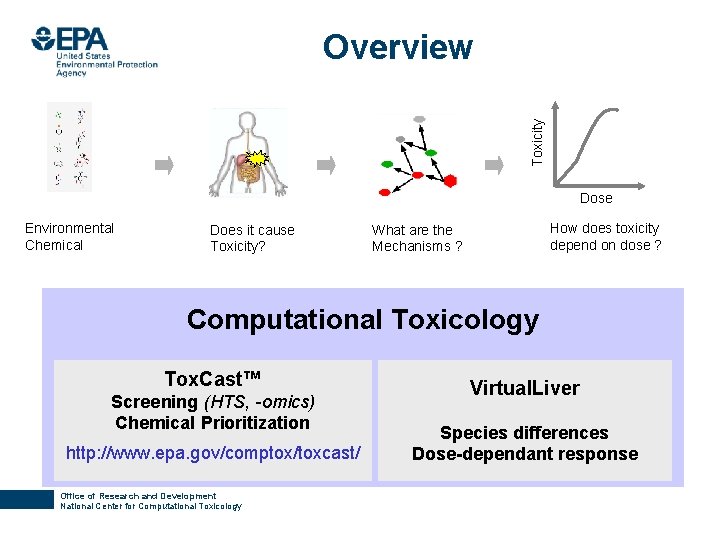
Toxicity Overview Dose Environmental Chemical Does it cause Toxicity? How does toxicity depend on dose ? What are the Mechanisms ? Computational Toxicology Tox. Cast™ Screening (HTS, -omics) Chemical Prioritization http: //www. epa. gov/comptox/toxcast/ Office of Research and Development National Center for Computational Toxicology Virtual. Liver Species differences Dose-dependant response
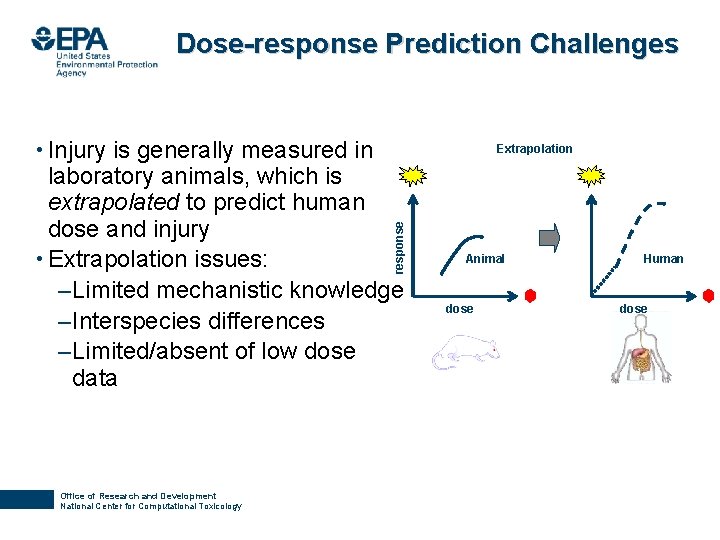
Dose-response Prediction Challenges • Injury is generally measured in Extrapolation response laboratory animals, which is extrapolated to predict human dose and injury • Extrapolation issues: –Limited mechanistic knowledge –Interspecies differences –Limited/absent of low dose data Office of Research and Development National Center for Computational Toxicology Animal dose Human dose
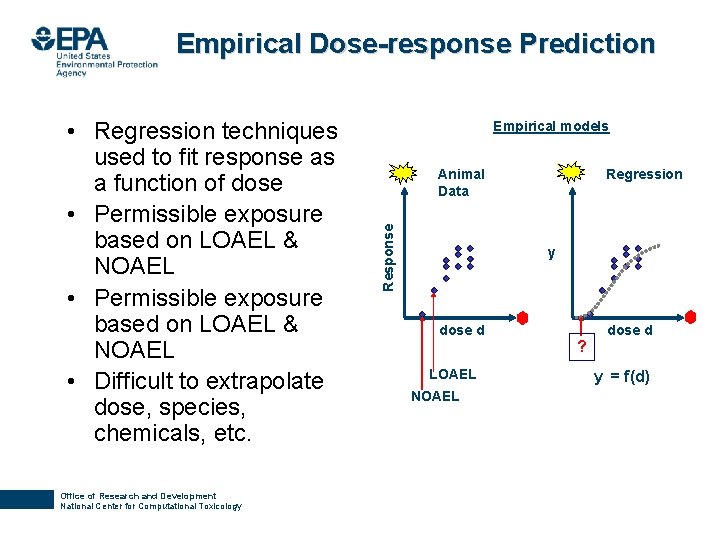
Empirical Dose-response Prediction Office of Research and Development National Center for Computational Toxicology Empirical models Animal Data Response • Regression techniques used to fit response as a function of dose • Permissible exposure based on LOAEL & NOAEL • Difficult to extrapolate dose, species, chemicals, etc. Regression y dose d LOAEL NOAEL ? dose d y = f(d)
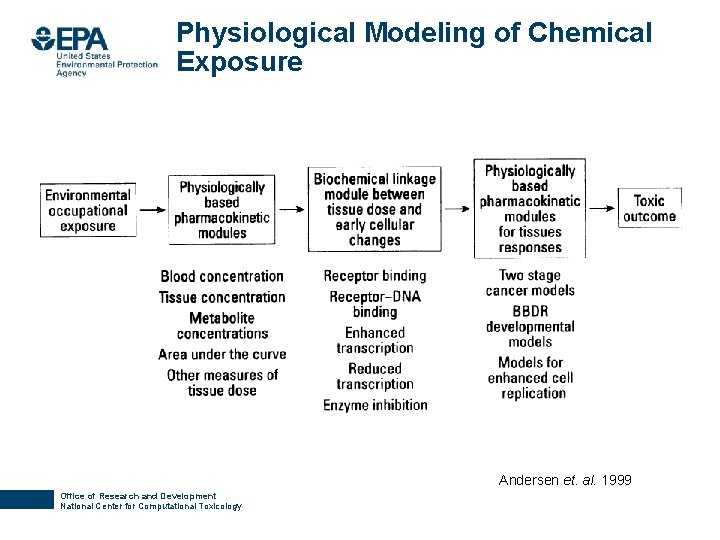
Physiological Modeling of Chemical Exposure Andersen et. al. 1999 Office of Research and Development National Center for Computational Toxicology
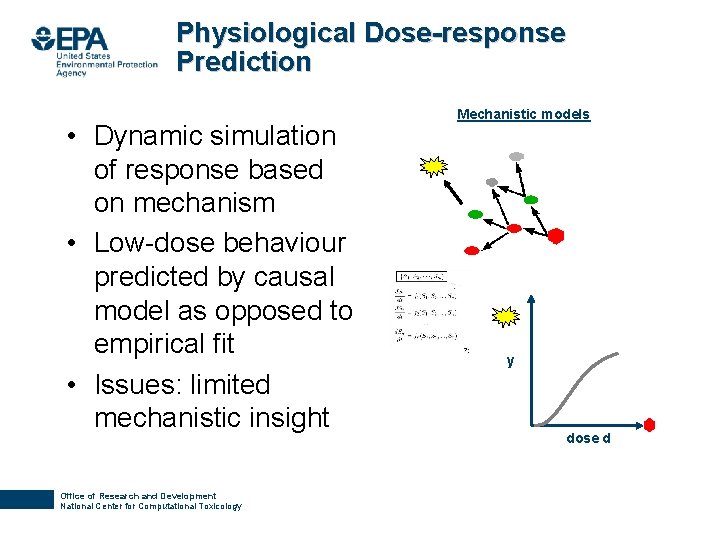
Physiological Dose-response Prediction • Dynamic simulation of response based on mechanism • Low-dose behaviour predicted by causal model as opposed to empirical fit • Issues: limited mechanistic insight Office of Research and Development National Center for Computational Toxicology Mechanistic models y dose d
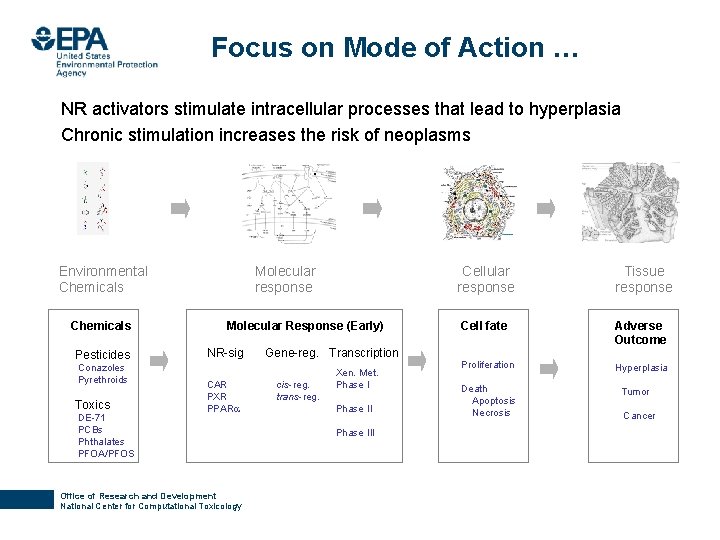
Focus on Mode of Action … NR activators stimulate intracellular processes that lead to hyperplasia Chronic stimulation increases the risk of neoplasms Environmental Chemicals Pesticides Conazoles Pyrethroids Toxics DE-71 PCBs Phthalates PFOA/PFOS Molecular response Molecular Response (Early) NR-sig CAR PXR PPARa Office of Research and Development National Center for Computational Toxicology Gene-reg. Transcription cis-reg. trans-reg. Xen. Met. Phase III Cellular response Tissue response Cell fate Adverse Outcome Proliferation Hyperplasia Death Apoptosis Necrosis Tumor Cancer
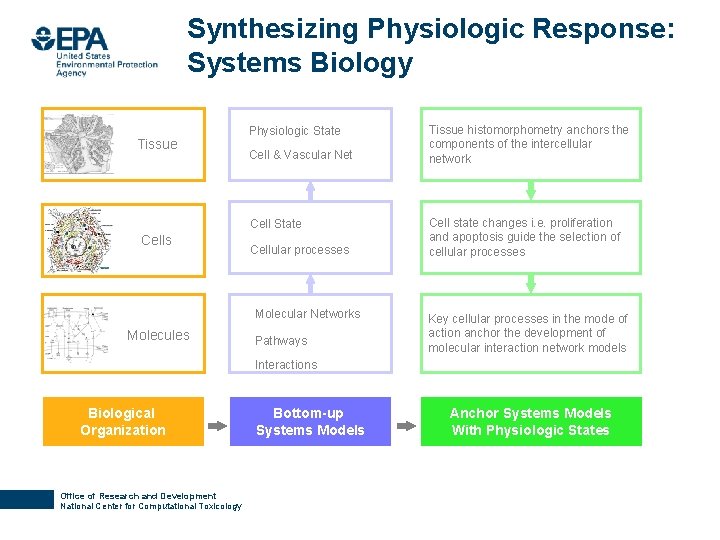
Synthesizing Physiologic Response: Systems Biology Tissue Physiologic State Cell & Vascular Net Cell State Cells Cellular processes Molecular Networks Molecules Pathways Tissue histomorphometry anchors the components of the intercellular network Cell state changes i. e. proliferation and apoptosis guide the selection of cellular processes Key cellular processes in the mode of action anchor the development of molecular interaction network models Interactions Biological Organization Office of Research and Development National Center for Computational Toxicology Bottom-up Systems Models Anchor Systems Models With Physiologic States
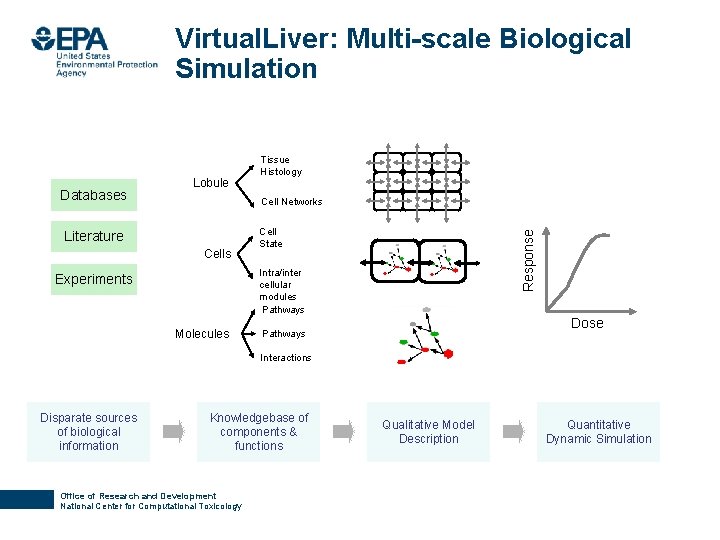
Virtual. Liver: Multi-scale Biological Simulation Cell Networks Literature Cells Cell State Response Databases Lobule Tissue Histology Intra/inter cellular modules Pathways Experiments Molecules Dose Pathways Interactions Disparate sources of biological information Knowledgebase of components & functions Office of Research and Development National Center for Computational Toxicology Qualitative Model Description Quantitative Dynamic Simulation
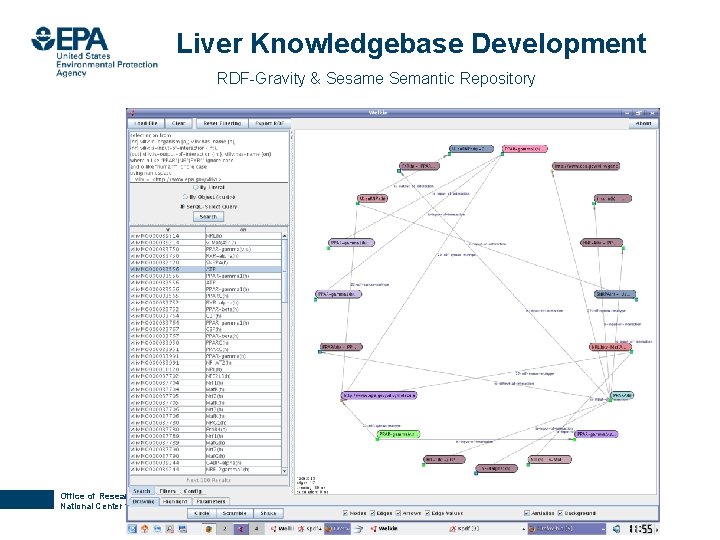
Liver Knowledgebase Development RDF-Gravity & Sesame Semantic Repository Office of Research and Development National Center for Computational Toxicology
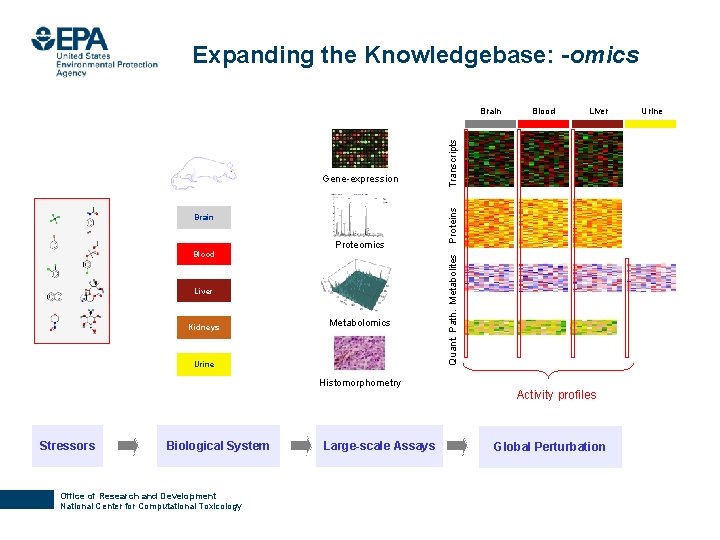
Expanding the Knowledgebase: -omics Brain Blood Proteomics Liver Kidneys Metabolomics Urine Histomorphometry Stressors Biological System Office of Research and Development National Center for Computational Toxicology Large-scale Assays Liver Quant. Path. Metabolites Proteins Gene-expression Blood Transcripts Brain Activity profiles Global Perturbation Urine
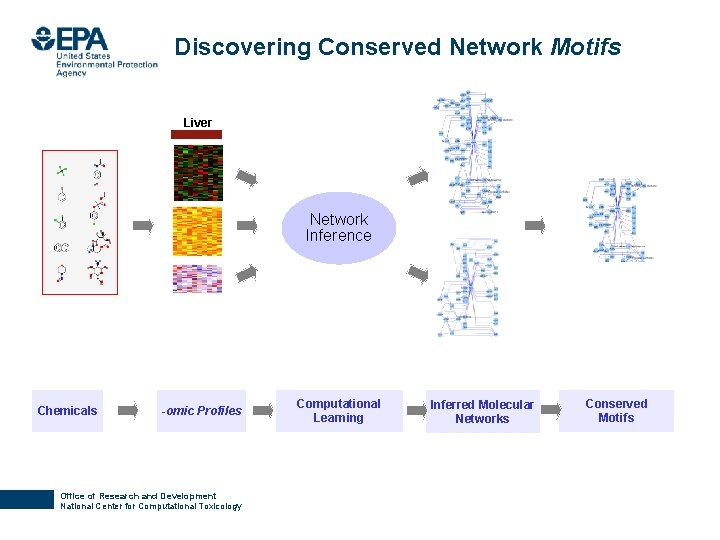
Discovering Conserved Network Motifs Liver Network Inference Chemicals -omic Profiles Office of Research and Development National Center for Computational Toxicology Computational Learning Inferred Molecular Networks Conserved Motifs
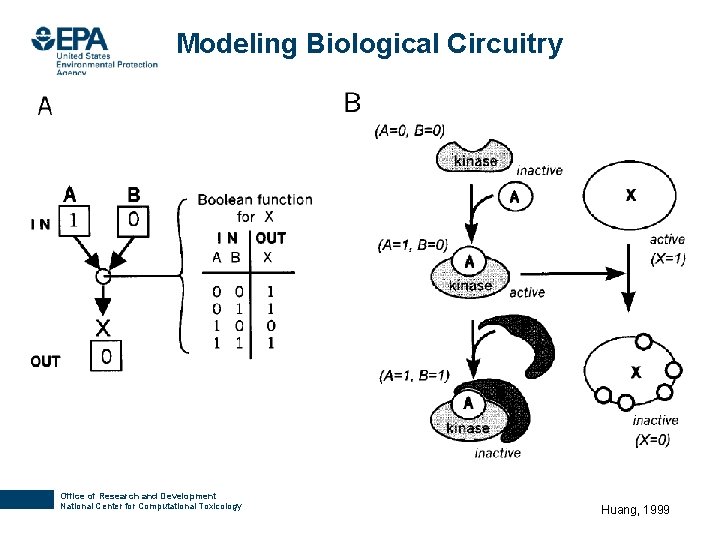
Modeling Biological Circuitry Office of Research and Development National Center for Computational Toxicology Huang, 1999
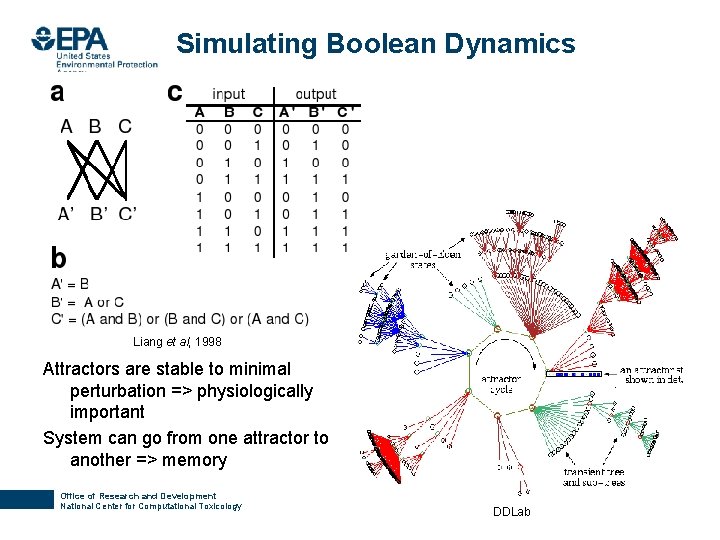
Simulating Boolean Dynamics Liang et al, 1998 Attractors are stable to minimal perturbation => physiologically important System can go from one attractor to another => memory Office of Research and Development National Center for Computational Toxicology DDLab
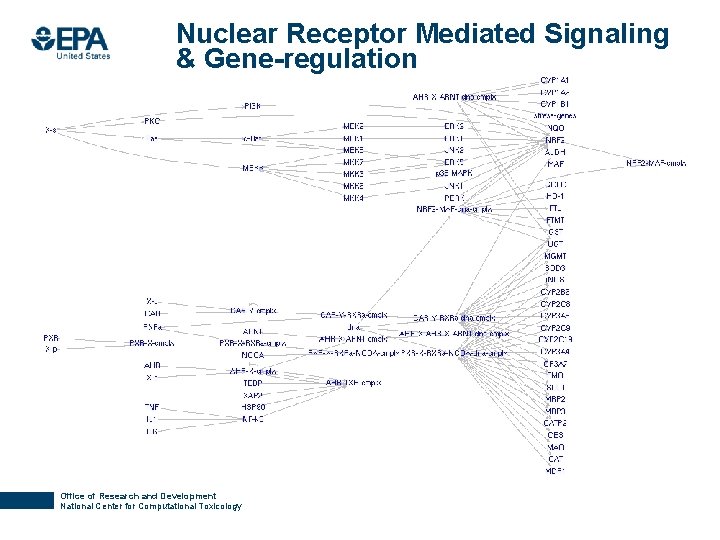
Nuclear Receptor Mediated Signaling & Gene-regulation Office of Research and Development National Center for Computational Toxicology
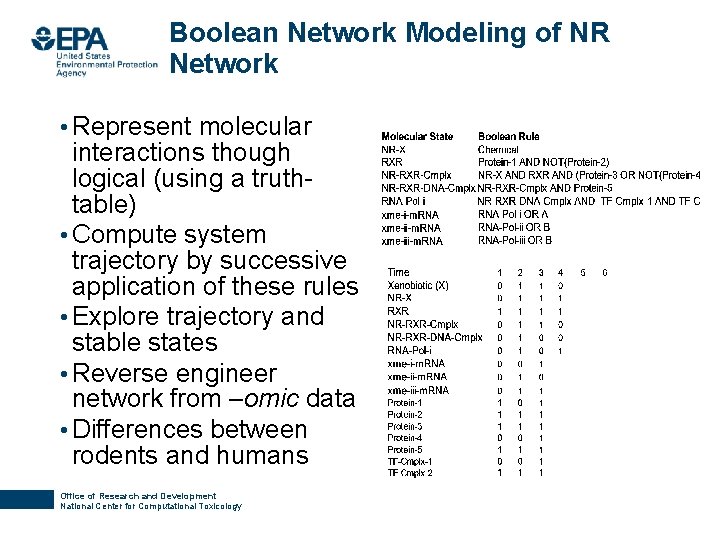
Boolean Network Modeling of NR Network • Represent molecular interactions though logical (using a truthtable) • Compute system trajectory by successive application of these rules • Explore trajectory and stable states • Reverse engineer network from –omic data • Differences between rodents and humans Office of Research and Development National Center for Computational Toxicology
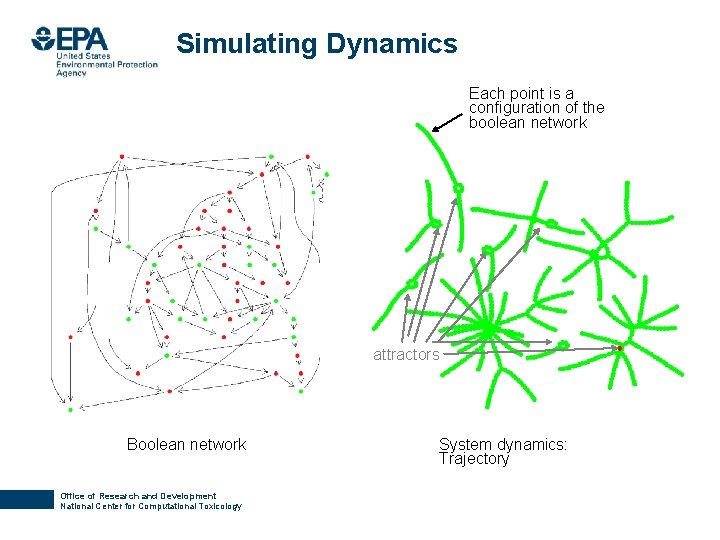
Simulating Dynamics Each point is a configuration of the boolean network attractors Boolean network Office of Research and Development National Center for Computational Toxicology System dynamics: Trajectory
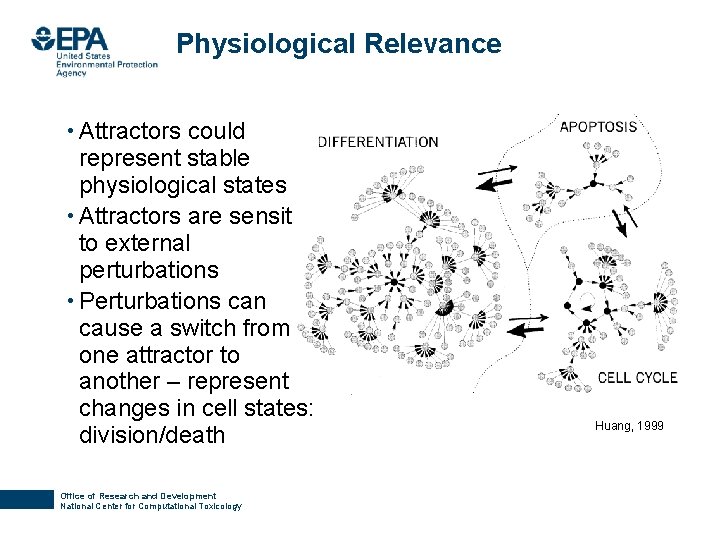
Physiological Relevance • Attractors could represent stable physiological states • Attractors are sensitive to external perturbations • Perturbations can cause a switch from one attractor to another – represent changes in cell states: division/death Office of Research and Development National Center for Computational Toxicology Huang, 1999
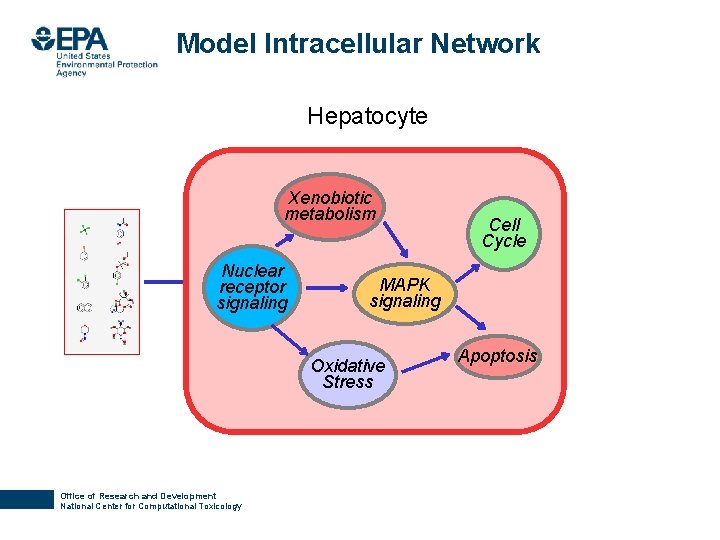
Model Intracellular Network Hepatocyte Xenobiotic metabolism Nuclear receptor signaling MAPK signaling Oxidative Stress Office of Research and Development National Center for Computational Toxicology Cell Cycle Apoptosis
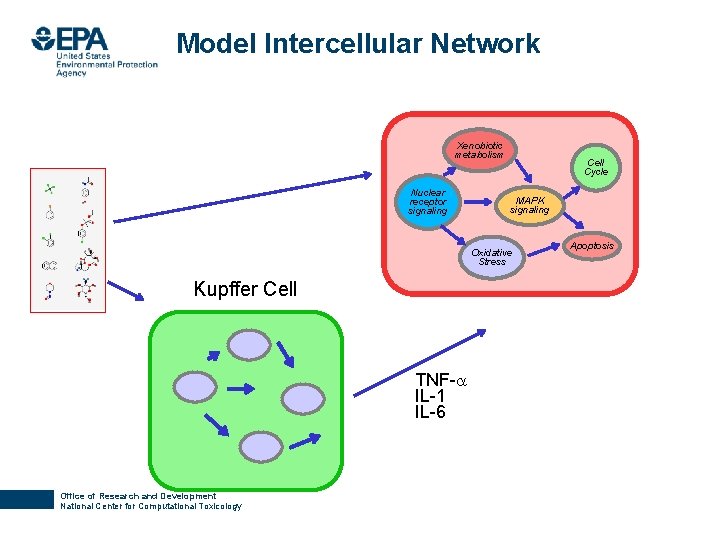
Model Intercellular Network Xenobiotic metabolism Nuclear receptor signaling Cell Cycle MAPK signaling Oxidative Stress Kupffer Cell TNF-a IL-1 IL-6 Office of Research and Development National Center for Computational Toxicology Apoptosis
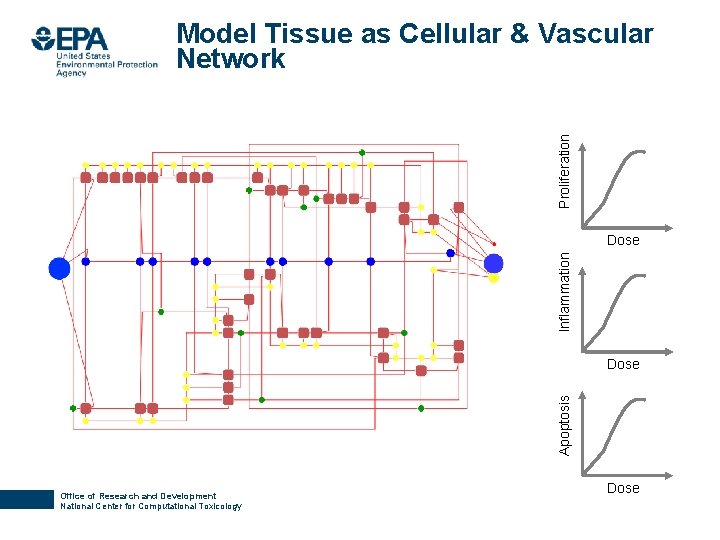
Proliferation Model Tissue as Cellular & Vascular Network Inflammation Dose Apoptosis Dose Office of Research and Development National Center for Computational Toxicology Dose
Summary & Future Outlook • Omic assays: can provide insight into conserved biological response across chemicals, species (life stages, etc. ) • Need novel in vitro cultures coupled with sophisticated in silico models • Dose-response modeling: Systems biology+physiological modeling (Virtual. Liver) • Reduce the need for animal testing through in vitro and in silico approaches Office of Research and Development National Center for Computational Toxicology
Acknowledgements Hugh Barton Jerry Blancato Rory Conolly David Dix Keith Houck Elaine Hubal Richard Judson Robert Kavlock David Reif Woody Setzer Imran Shah John Wambaugh NCCT NERL Miles Okino Daniel Chang Office of Research and Development National Center for Computational Toxicology NHEERL NCEA Chris Corton Mike De. Vito Stephen Edwards Hisham El-Masri Nicholas Luke Julian Preston Doug Wolf Chris Lau Rob Dewoskin Paul Schlosser
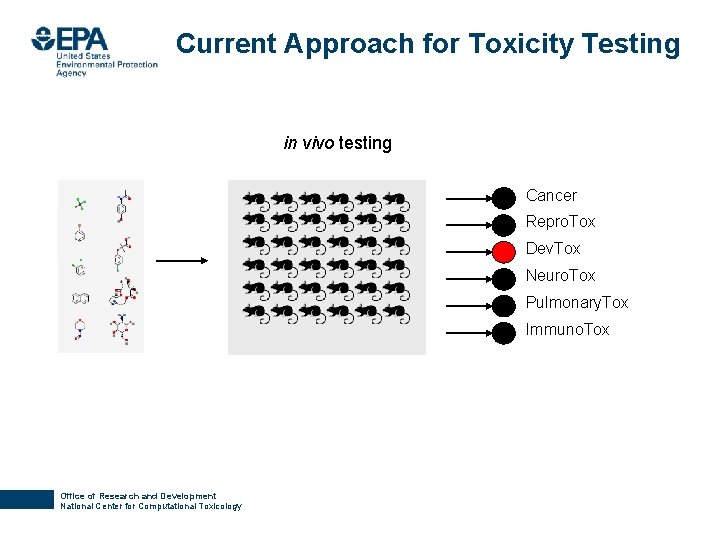
Current Approach for Toxicity Testing in vivo testing Cancer Repro. Tox Dev. Tox Neuro. Tox Pulmonary. Tox Immuno. Tox Office of Research and Development National Center for Computational Toxicology
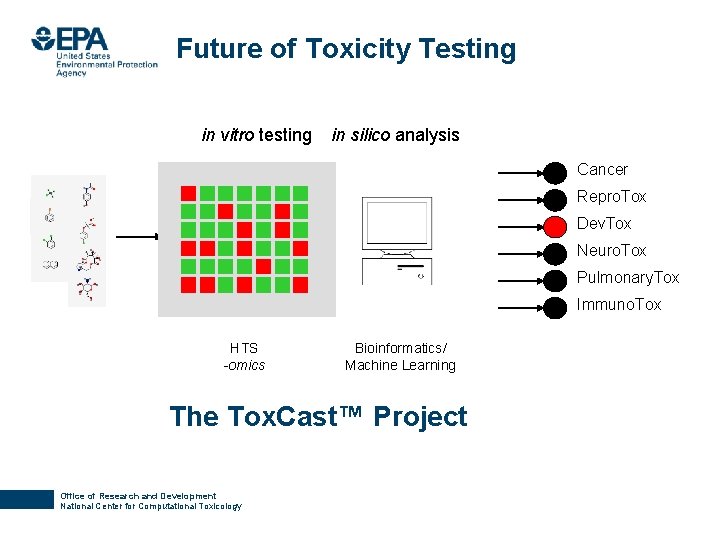
Future of Toxicity Testing in vitro testing in silico analysis Cancer Repro. Tox Dev. Tox Neuro. Tox Pulmonary. Tox Immuno. Tox HTS -omics Bioinformatics/ Machine Learning The Tox. Cast™ Project Office of Research and Development National Center for Computational Toxicology
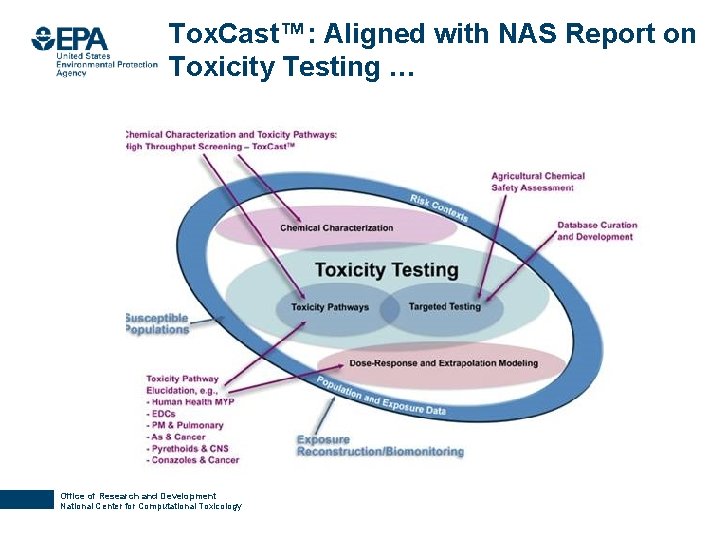
Tox. Cast™: Aligned with NAS Report on Toxicity Testing … Office of Research and Development National Center for Computational Toxicology
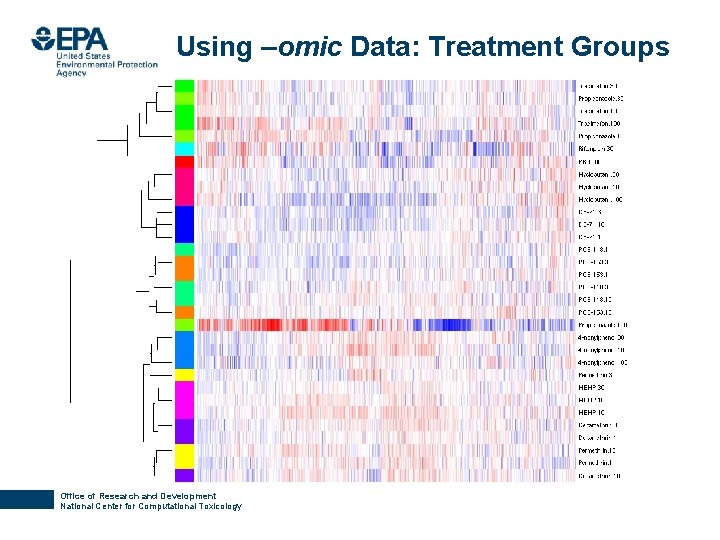
Using –omic Data: Treatment Groups Office of Research and Development National Center for Computational Toxicology
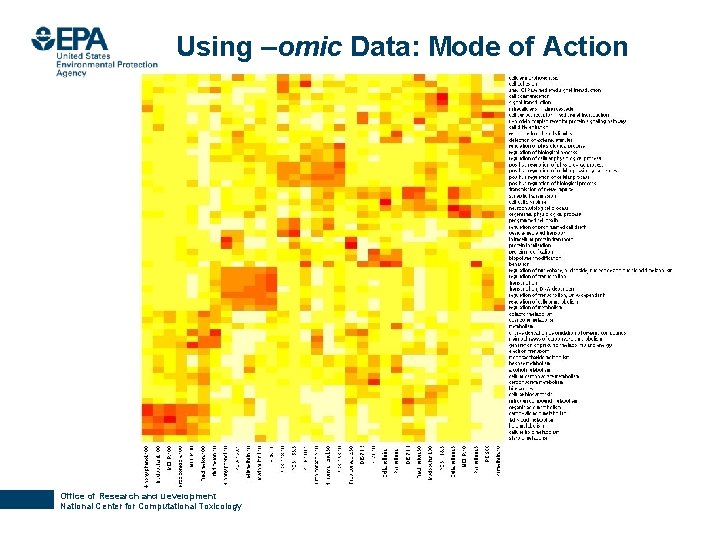
Using –omic Data: Mode of Action Office of Research and Development National Center for Computational Toxicology
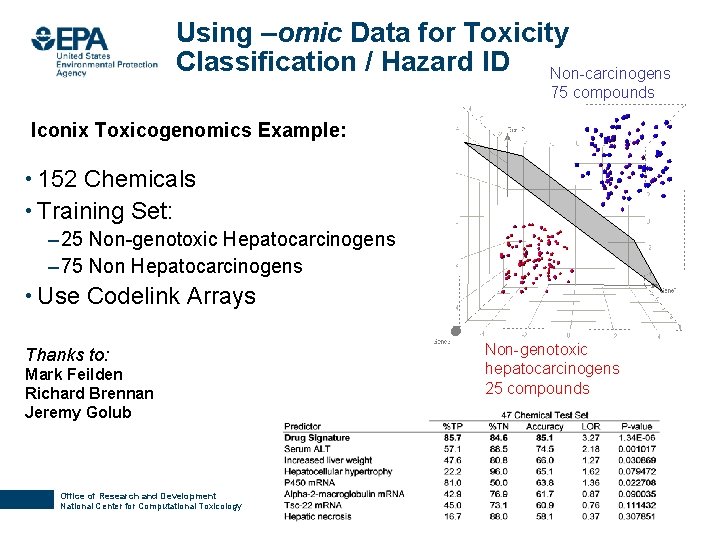
Using –omic Data for Toxicity Classification / Hazard ID Non-carcinogens 75 compounds Iconix Toxicogenomics Example: • 152 Chemicals • Training Set: – 25 Non-genotoxic Hepatocarcinogens – 75 Non Hepatocarcinogens • Use Codelink Arrays Thanks to: Mark Feilden Richard Brennan Jeremy Golub Office of Research and Development National Center for Computational Toxicology Non-genotoxic hepatocarcinogens 25 compounds
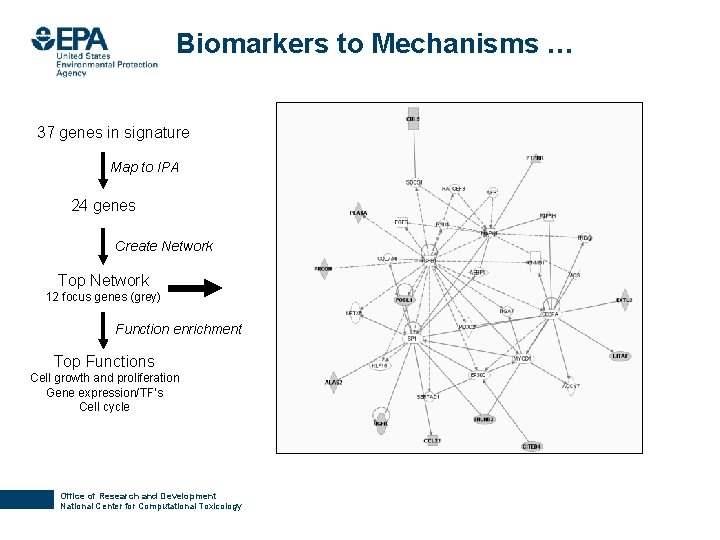
Biomarkers to Mechanisms … 37 genes in signature Map to IPA 24 genes Create Network Top Network 12 focus genes (grey) Function enrichment Top Functions Cell growth and proliferation Gene expression/TF’s Cell cycle Office of Research and Development National Center for Computational Toxicology
-omics data issues • Genomics data limitations: – Measures tissue average snapshot of m. RNA content – m. RNA content not always correlated with protein levels • To assess broader molecular context mi. RNA, protein and metabolite assays may also be necessary • Evolving large-scale assaying technologies – reduction in technical variability expected • Large number of features but relatively few obervations – biological variability continues to be problem Office of Research and Development National Center for Computational Toxicology
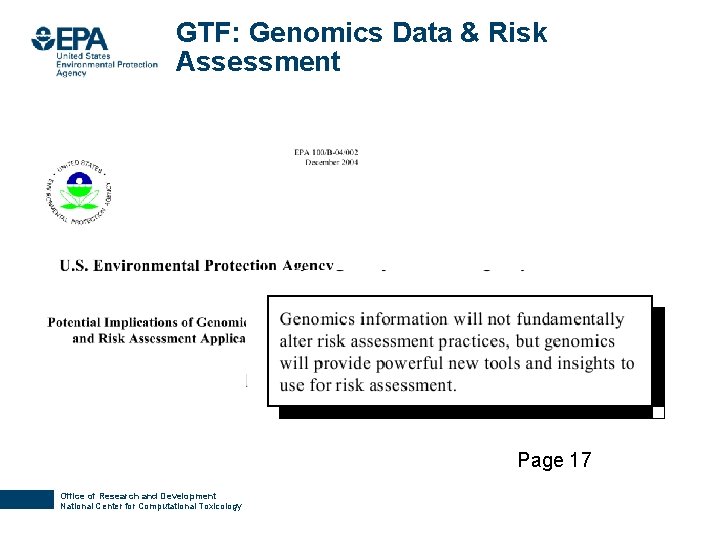
GTF: Genomics Data & Risk Assessment Page 17 Office of Research and Development National Center for Computational Toxicology
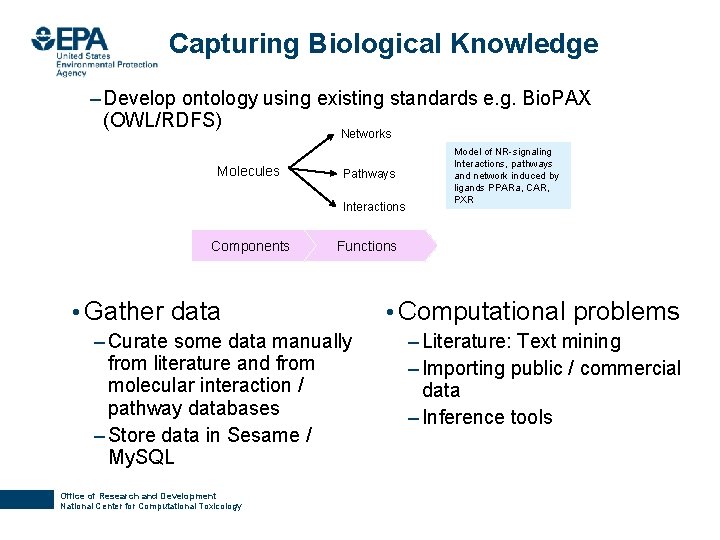
Capturing Biological Knowledge – Develop ontology using existing standards e. g. Bio. PAX (OWL/RDFS) Networks Molecules Pathways Interactions Components Functions • Gather data – Curate some data manually from literature and from molecular interaction / pathway databases – Store data in Sesame / My. SQL Office of Research and Development National Center for Computational Toxicology Model of NR-signaling Interactions, pathways and network induced by ligands PPARa, CAR, PXR • Computational problems – Literature: Text mining – Importing public / commercial data – Inference tools
Modeling & Simulating Biological Networks Qualitative Model Building 1. Knowledge-driven: Infer causal biological network mediated by nuclear receptors from molecular interactions in KB 2. Data-driven: Infer biological network using –omic profiles due to chemical perturbation Office of Research and Development National Center for Computational Toxicology Quantitative Simulation • Discrete: Represent molecule levels discretely to evaluate network topology • Continuous: Additional measurements to calibrate models for response prediction
- Slides: 34