
PredatorPrey Interaction in Structured Models Glenn Ledder J
- Slides: 9
Predator-Prey Interaction in Structured Models Glenn Ledder J. David Logan University of Nebraska-Lincoln gledder@math. unl. edu
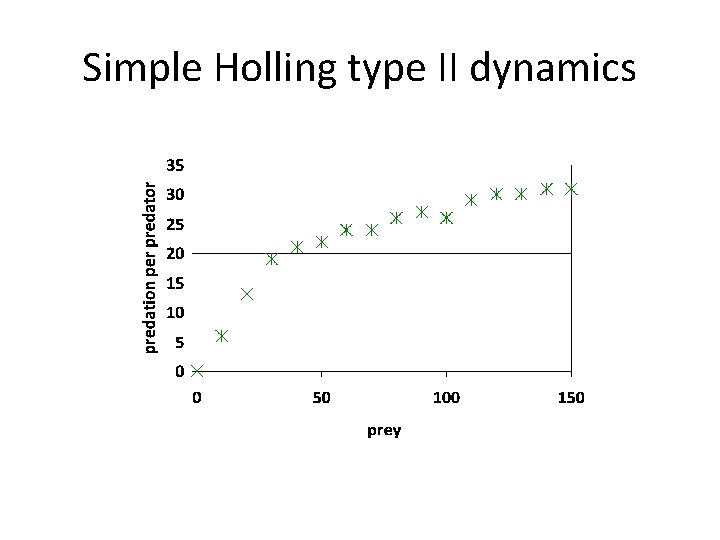
Simple Holling type II dynamics
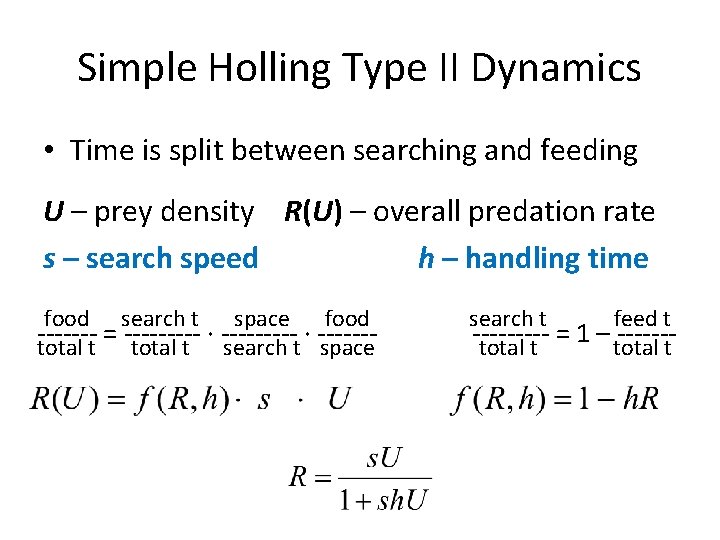
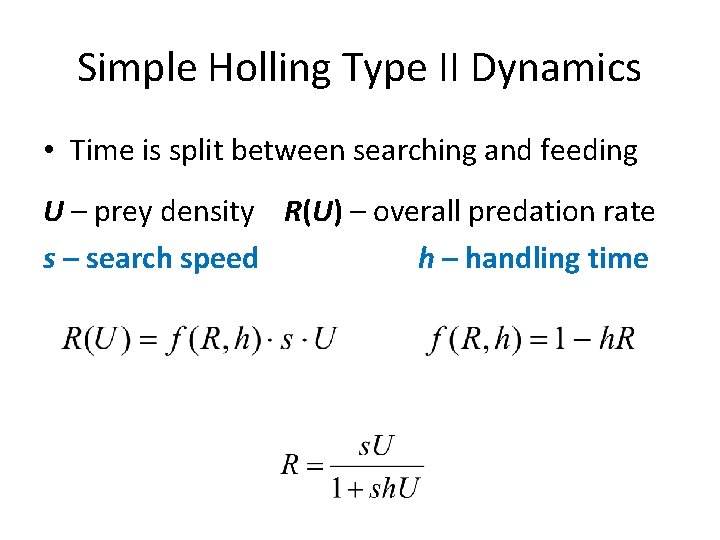
Simple Holling Type II Dynamics • Time is split between searching and feeding U – prey density R(U) – overall predation rate s – search speed h – handling time food search t space food ------= --------- · ------total t search t space search t feed t ----= 1 – total -------t total t
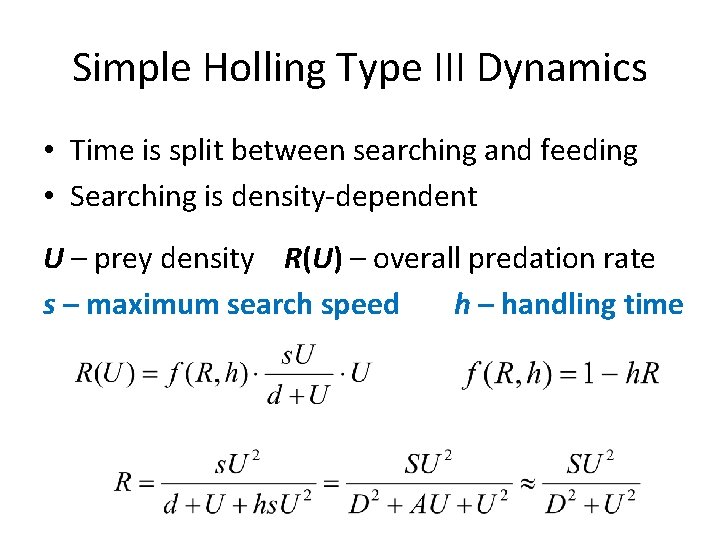
Simple Holling Type III Dynamics • Time is split between searching and feeding • Searching is density-dependent U – prey density R(U) – overall predation rate s – maximum search speed h – handling time
Simple Holling Type II Dynamics • Time is split between searching and feeding U – prey density R(U) – overall predation rate s – search speed h – handling time
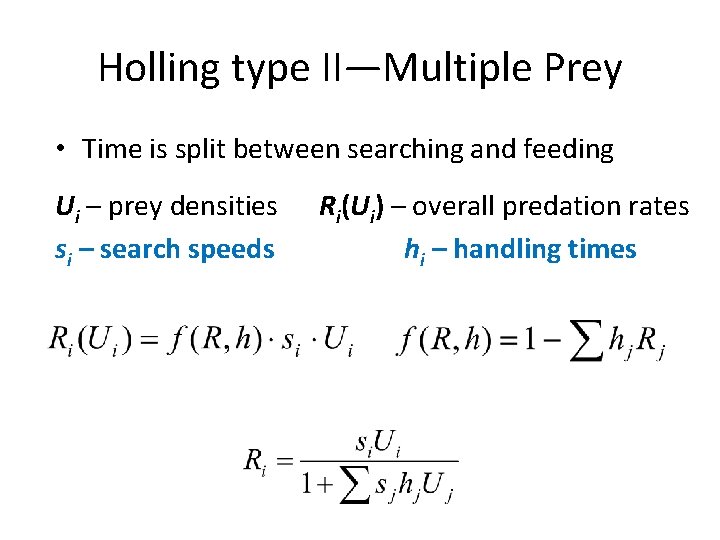
Holling type II—Multiple Prey • Time is split between searching and feeding Ui – prey densities si – search speeds Ri(Ui) – overall predation rates hi – handling times
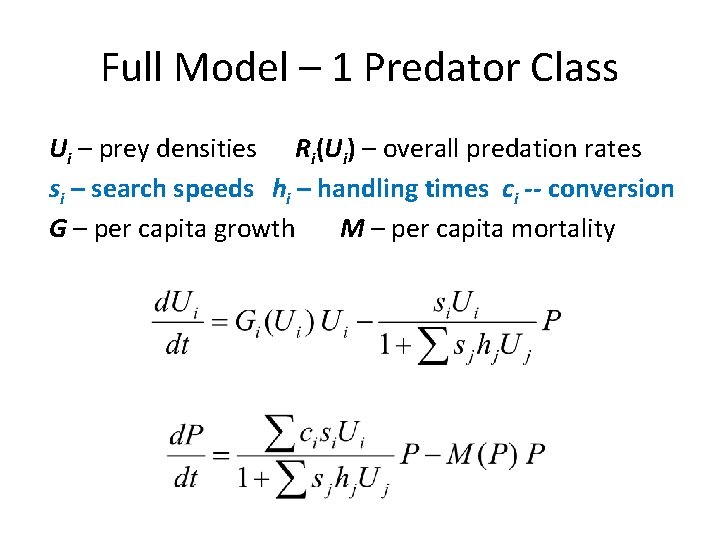
Full Model – 1 Predator Class Ui – prey densities Ri(Ui) – overall predation rates si – search speeds hi – handling times ci -- conversion G – per capita growth M – per capita mortality
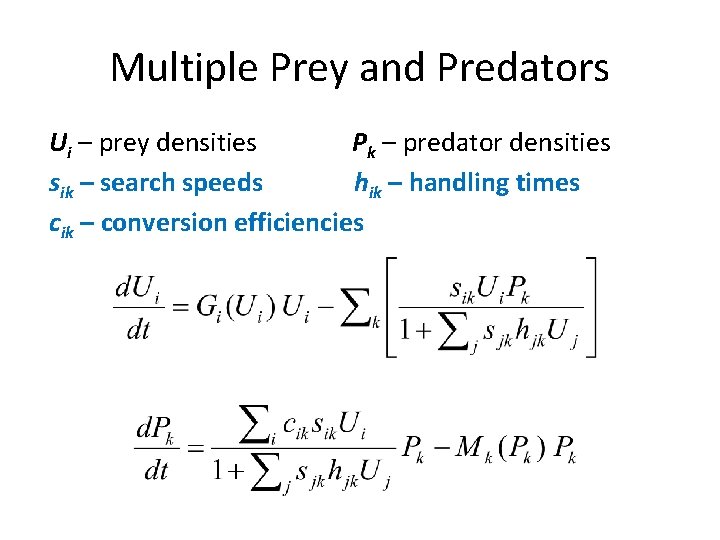
Multiple Prey and Predators Ui – prey densities Pk – predator densities sik – search speeds hik – handling times cik – conversion efficiencies
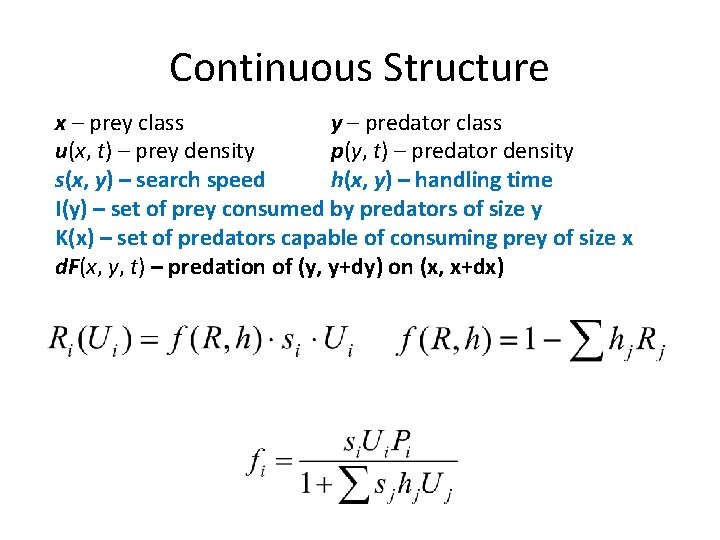
Continuous Structure x – prey class y – predator class u(x, t) – prey density p(y, t) – predator density s(x, y) – search speed h(x, y) – handling time I(y) – set of prey consumed by predators of size y K(x) – set of predators capable of consuming prey of size x d. F(x, y, t) – predation of (y, y+dy) on (x, x+dx)