
Predator Prey Competition Relationships 1132014 Predator Prey Relationships
- Slides: 10
Predator & Prey Competition Relationships 11/3/2014
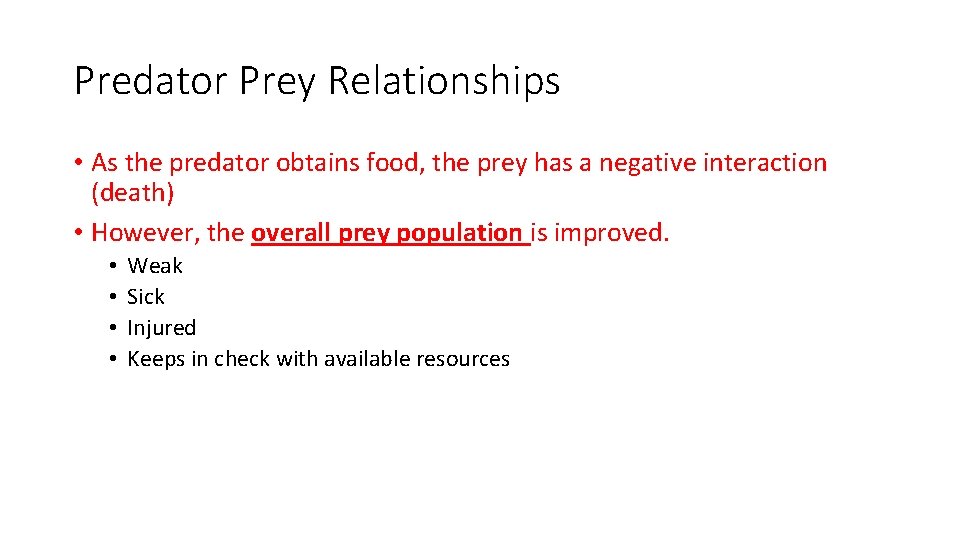
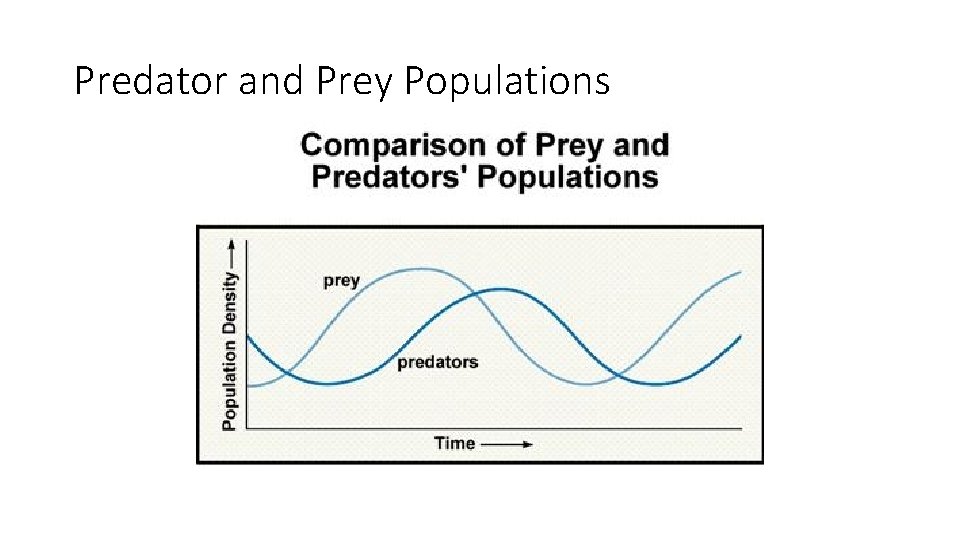
Predator Prey Relationships • As the predator obtains food, the prey has a negative interaction (death) • However, the overall prey population is improved. • • Weak Sick Injured Keeps in check with available resources
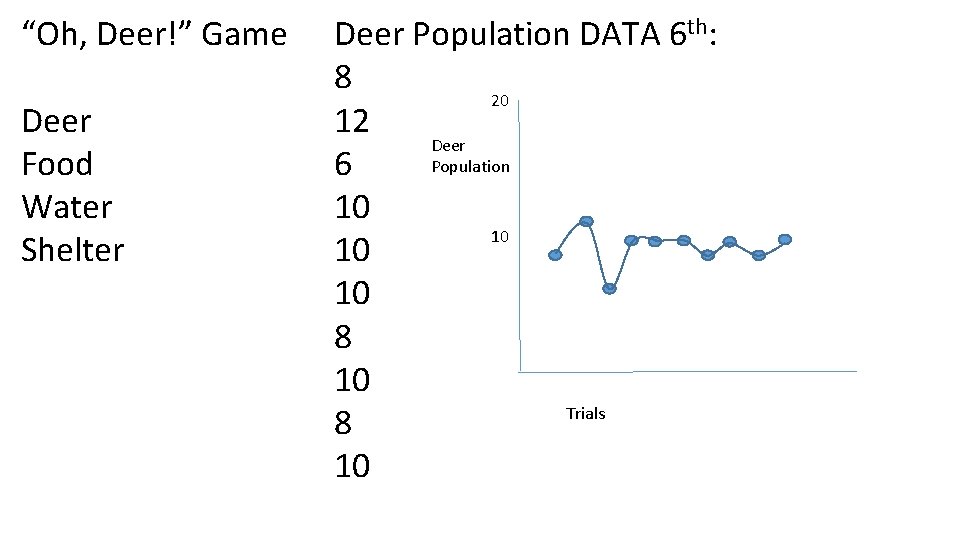
“Oh, Deer!” Game Deer Food Water Shelter Deer Population DATA 6 th: 8 20 12 Deer Population 6 10 10 8 10 Trials 8 10
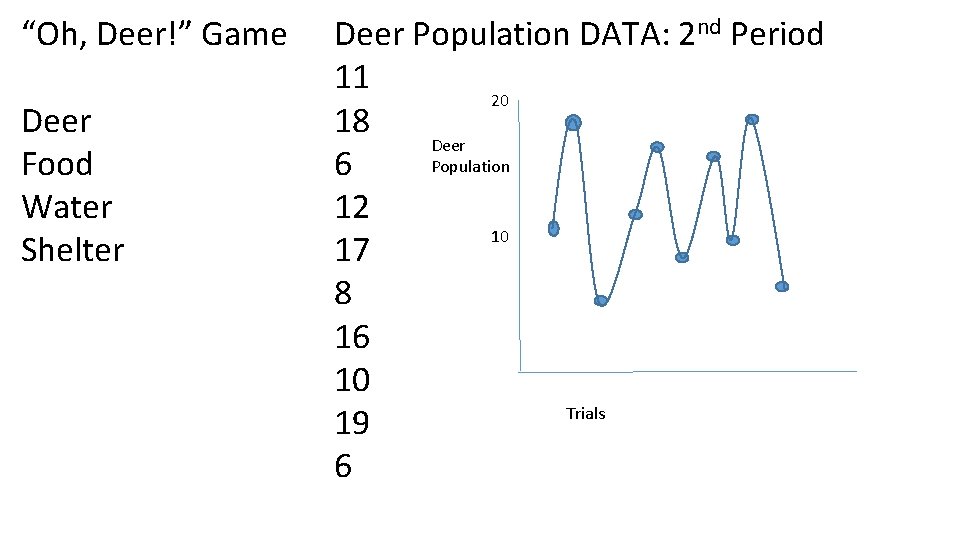
“Oh, Deer!” Game Deer Food Water Shelter Deer Population DATA: 2 nd Period 11 20 18 Deer Population 6 12 10 17 8 16 10 Trials 19 6
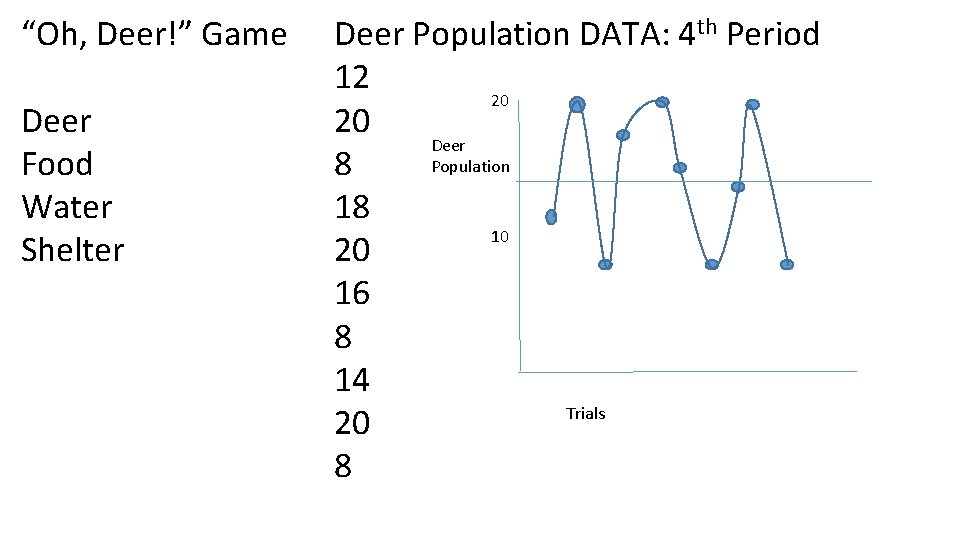
“Oh, Deer!” Game Deer Food Water Shelter Deer Population DATA: 4 th Period 12 20 20 Deer Population 8 18 10 20 16 8 14 Trials 20 8
Predator/Prey Relationship • When a predator species is removed from the ecosystem, the prey population dramatically increase in numbers and often starves through lean seasons. • Removing WOLVES from the forest • Explosion of deer population • Deer starved over winter due to lack of food to feed the increased population.
Predator and Prey Populations
Competition – driving force behind natural selection Populations compete for limited resources: • Water • Energy • Living space • Mates Competition within a species may result in the better-adapted individual, eliminating the less fit competitor. “Survival of the Fittest”
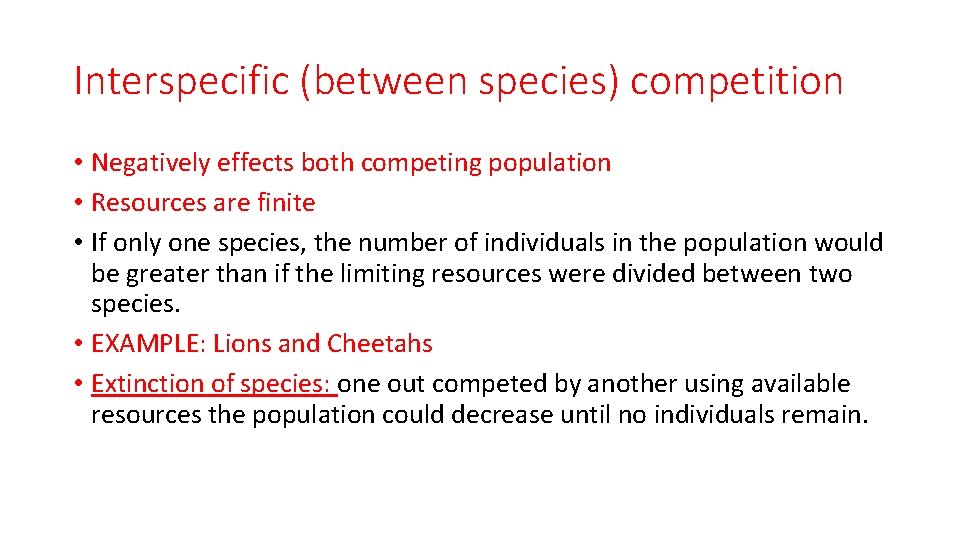
Interspecific (between species) competition • Negatively effects both competing population • Resources are finite • If only one species, the number of individuals in the population would be greater than if the limiting resources were divided between two species. • EXAMPLE: Lions and Cheetahs • Extinction of species: one out competed by another using available resources the population could decrease until no individuals remain.
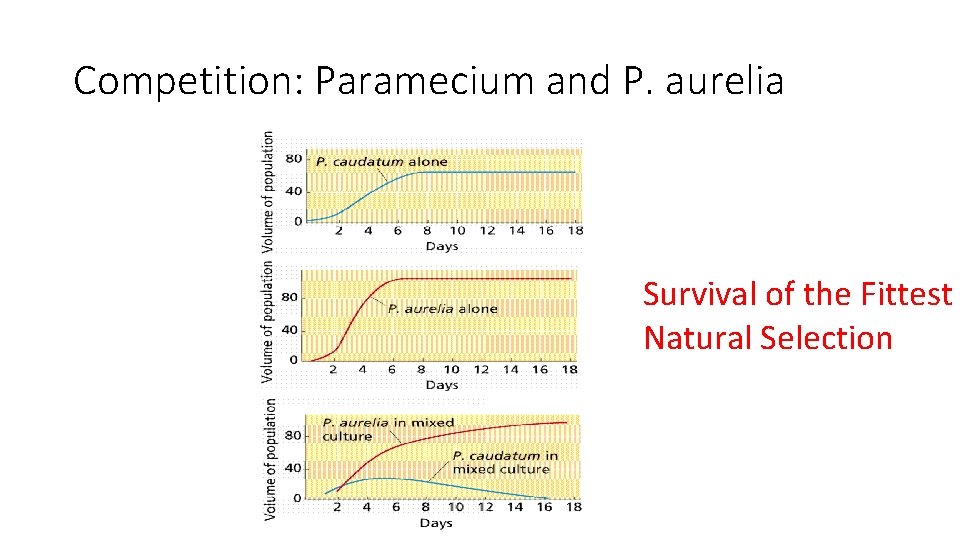
Competition: Paramecium and P. aurelia Survival of the Fittest Natural Selection