
Precursors to the American Revolution 1763 1776 Write
- Slides: 9
Precursors to the American Revolution (1763 -1776) Write 2 -3 sentences about why you think the colonists rebelled against British rule. Be specific about causes for dissension.
The Road to Revolution • • • End of the French and Indian War/Proclamation of 1763 No Taxation Without Representation/Quartering Act Boston Massacre Boston Tea Party Battle of Lexington, Concord and Bunker Hill Declaration of Independence
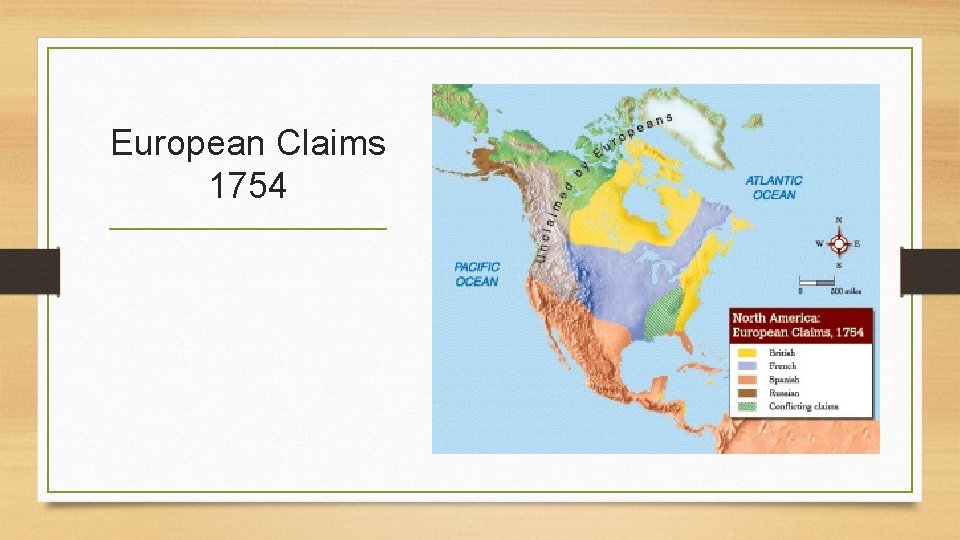
French and Indian War (Seven Years War) • Began in 1754 in the Ohio River Valley when the French built Fort Duquesne to block British expansion. • In 1755, British General Edward Braddock and his forces were defeated and the British declared war on the French in 1756. • Fighting also occurred in Europe, Africa, India and the West Indies. • British forces captured Montreal in 1760, ending the conflict in N. America
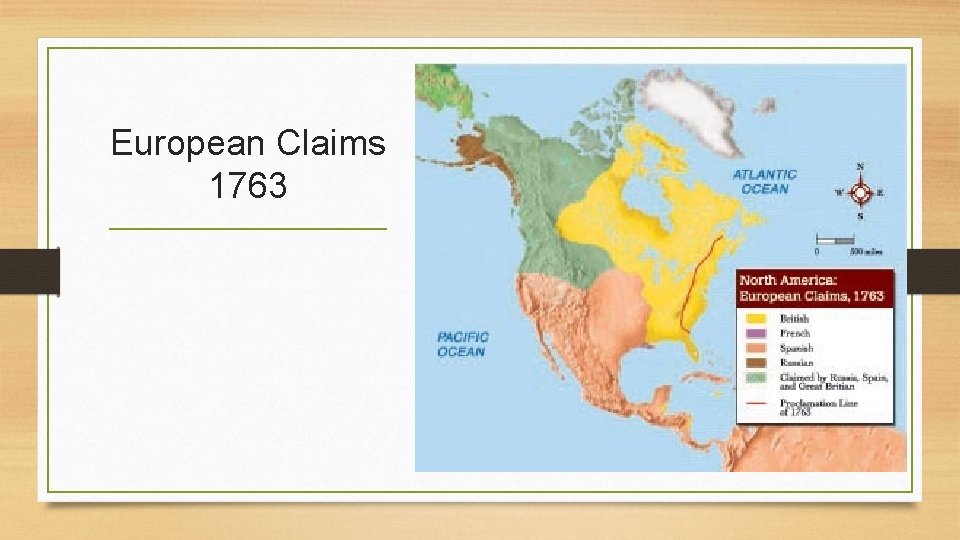
Treaty of Paris • France renounced its claim to Canada • Britain received all French Territory east of the Mississippi
European Claims 1754
European Claims 1763
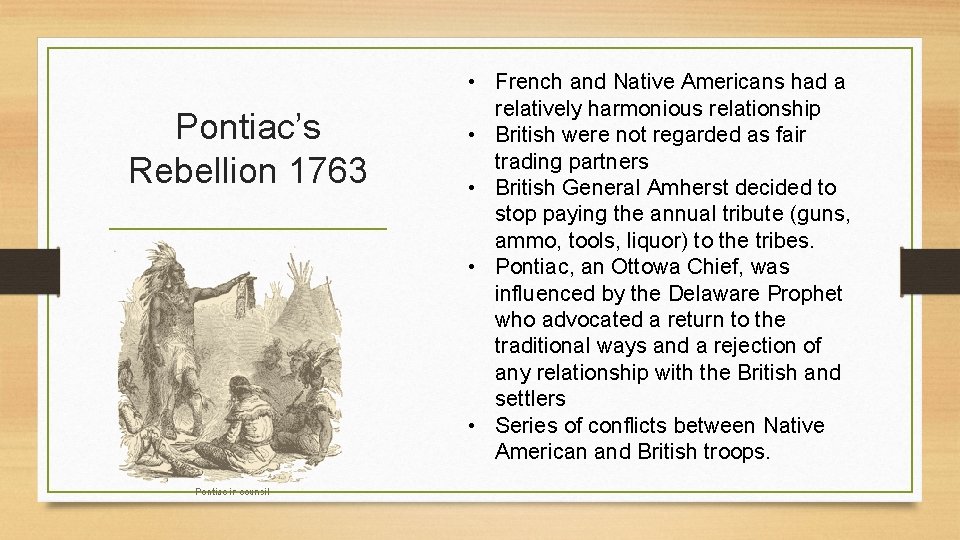
Pontiac’s Rebellion 1763 • French and Native Americans had a relatively harmonious relationship • British were not regarded as fair trading partners • British General Amherst decided to stop paying the annual tribute (guns, ammo, tools, liquor) to the tribes. • Pontiac, an Ottowa Chief, was influenced by the Delaware Prophet who advocated a return to the traditional ways and a rejection of any relationship with the British and settlers • Series of conflicts between Native American and British troops.
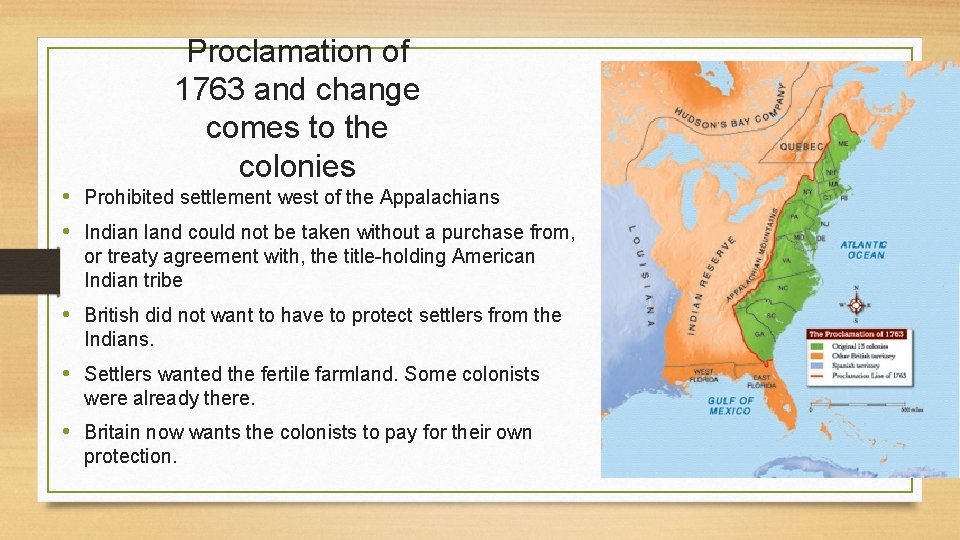
Proclamation of 1763 and change comes to the colonies • Prohibited settlement west of the Appalachians • Indian land could not be taken without a purchase from, or treaty agreement with, the title-holding American Indian tribe • British did not want to have to protect settlers from the Indians. • Settlers wanted the fertile farmland. Some colonists were already there. • Britain now wants the colonists to pay for their own protection.
Editorial • Read article – highlight key facts/opinions • Discuss in your group • Select 3 -4 main points that illustrate your group’s opinion about the end of the war and fairness of the Proclamation of 1763. • Write one paragraph explaining the point-of-view of your assigned faction. • Share and discuss