
PRECISION FARMING ADOPTION PROFITABILITY AND MAKING BETTER USE

PRECISION FARMING: ADOPTION, PROFITABILITY, AND MAKING BETTER USE OF DATA T. W. Griffin, J. Lowenberg-De. Boer, D. M. Lambert, and J. Peone Site Specific Management Center - Purdue University T. Payne and S. G. Daberkow USDA-ERS
3 part presentation 1) Adoption trends in the US and Worldwide 2) Review of PA profitability literature 3) Making better use of yield monitor data
Adoption Trends • Worldwide network of collaborators • USDA ARMS study • PA Services Dealership Survey – Whipker and Akridge, 2004

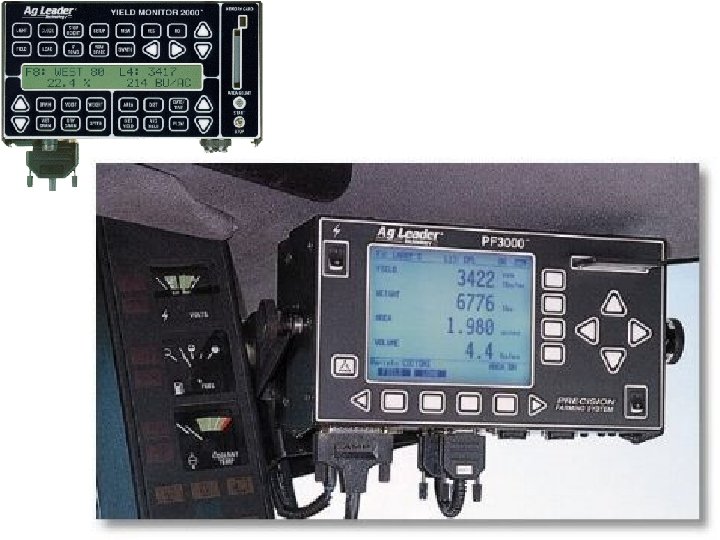
Combine Yield Monitors
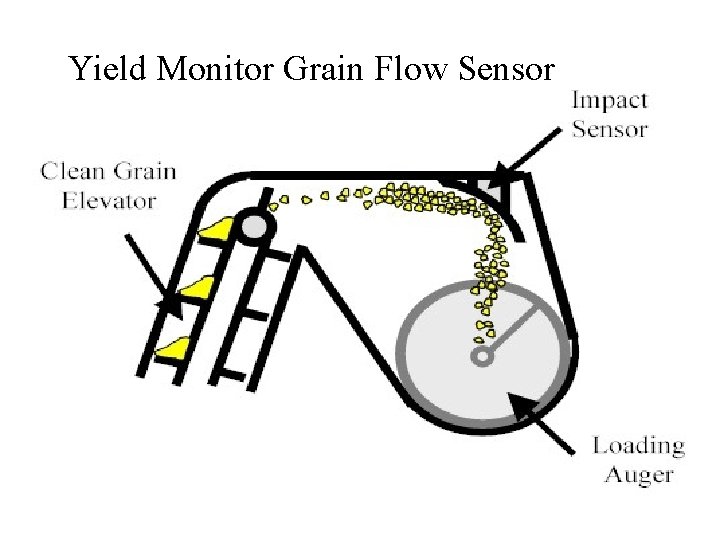
Yield Monitor Grain Flow Sensor
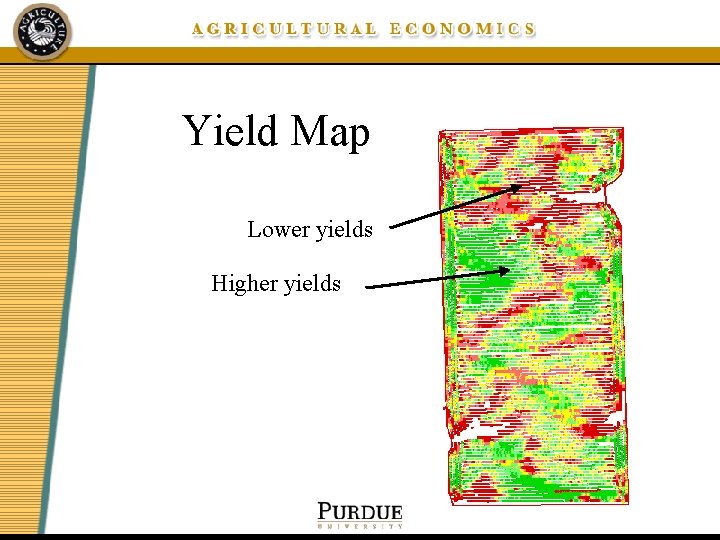
Yield Map Lower yields Higher yields
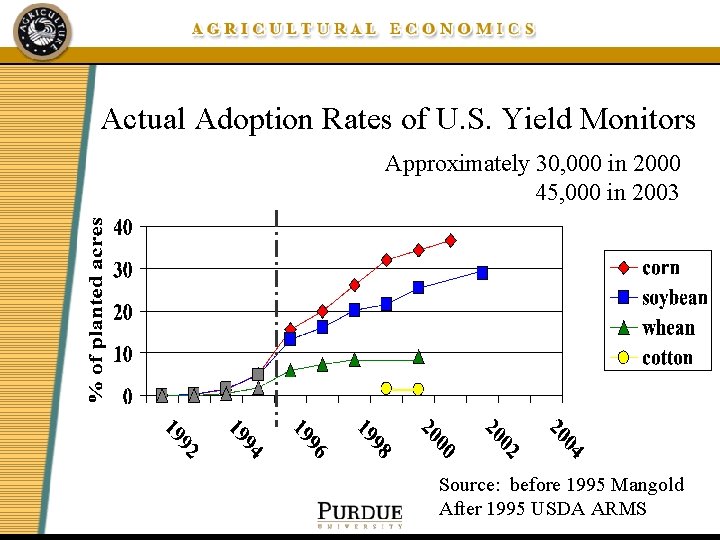
Actual Adoption Rates of U. S. Yield Monitors Approximately 30, 000 in 2000 45, 000 in 2003 Source: before 1995 Mangold After 1995 USDA ARMS
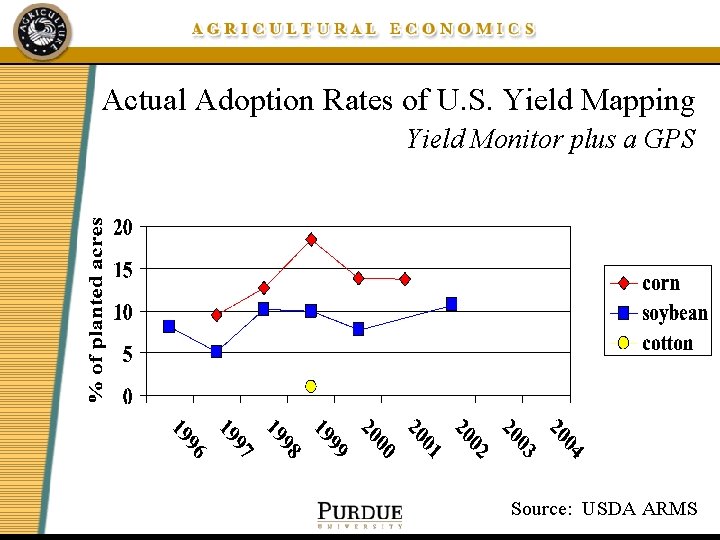
Actual Adoption Rates of U. S. Yield Mapping Yield Monitor plus a GPS Source: USDA ARMS
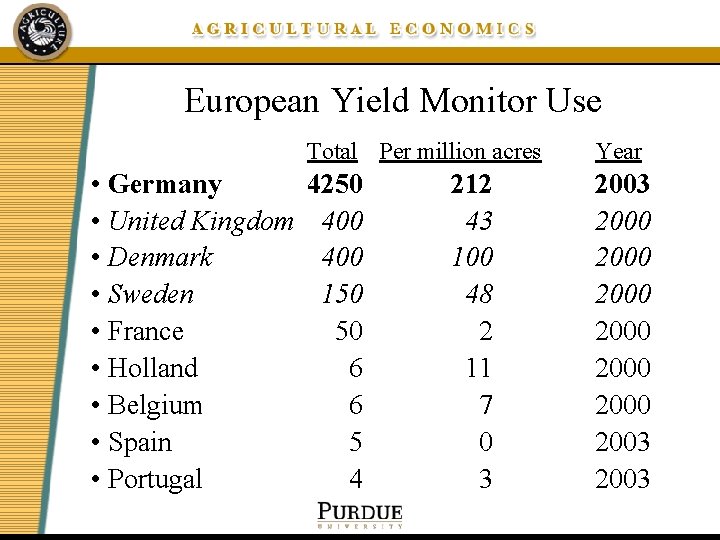
European Yield Monitor Use • Germany • United Kingdom • Denmark • Sweden • France • Holland • Belgium • Spain • Portugal Total Per million acres Year 4250 400 150 50 6 6 5 4 2003 2000 2000 2003 212 43 100 48 2 11 7 0 3
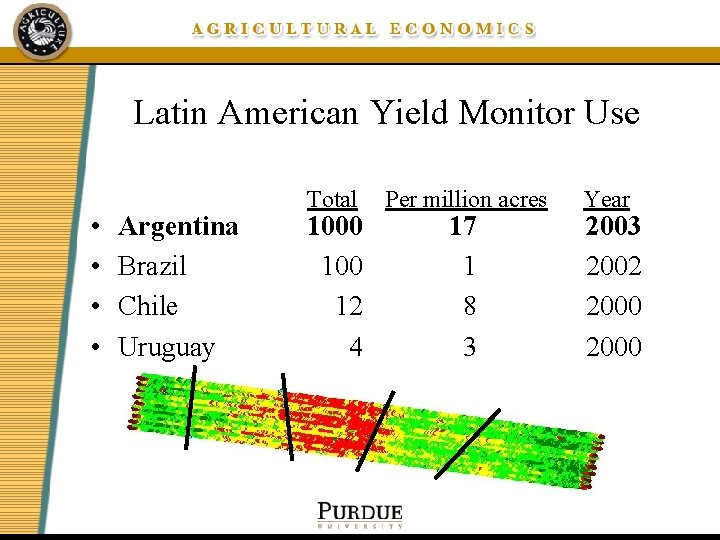
Latin American Yield Monitor Use • • Argentina Brazil Chile Uruguay Total 1000 12 4 Per million acres 17 1 8 3 Year 2003 2002 2000
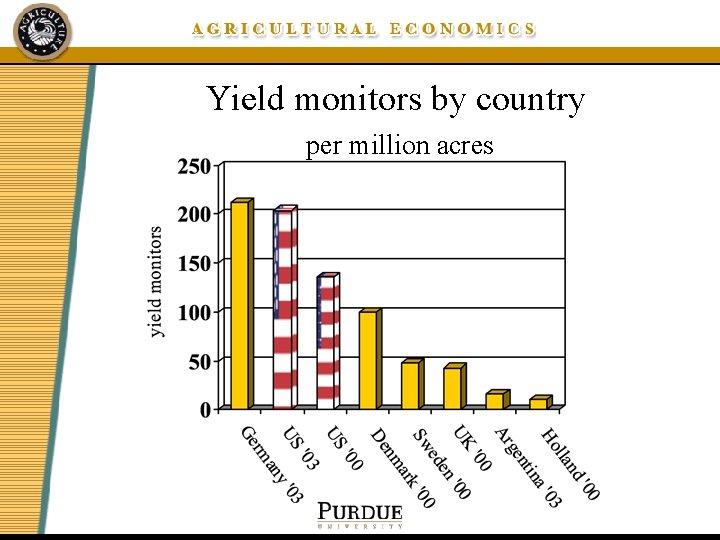
Yield monitors by country per million acres
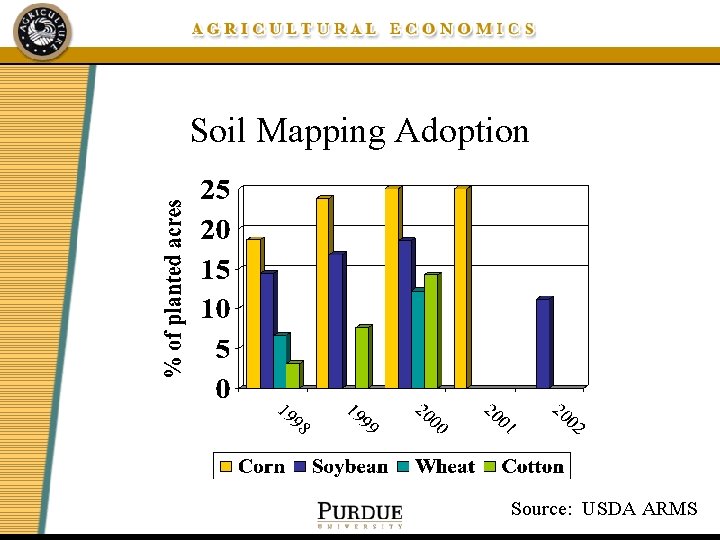
Soil Mapping Adoption Source: USDA ARMS
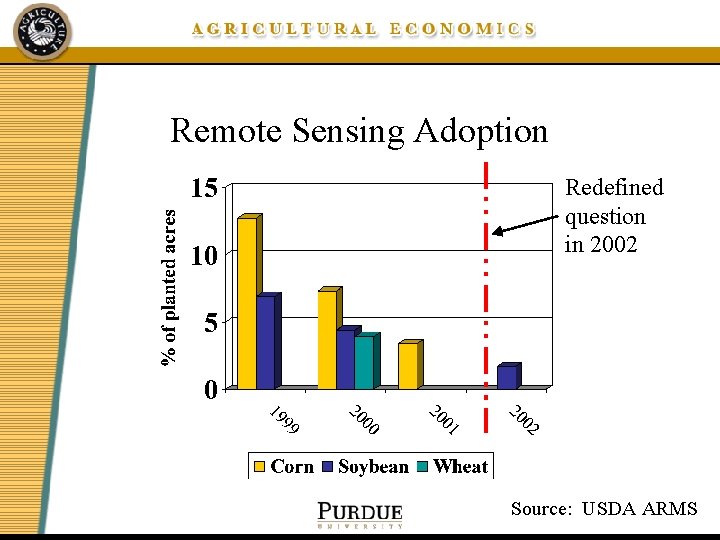
Remote Sensing Adoption Redefined question in 2002 Source: USDA ARMS
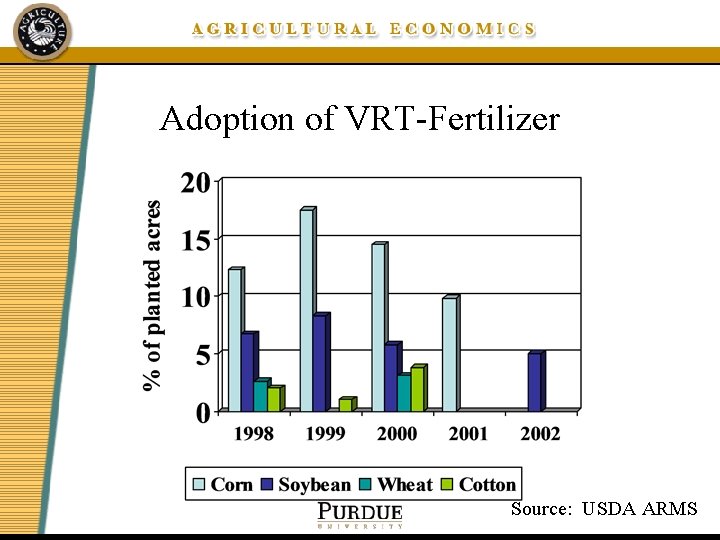
Adoption of VRT-Fertilizer Source: USDA ARMS
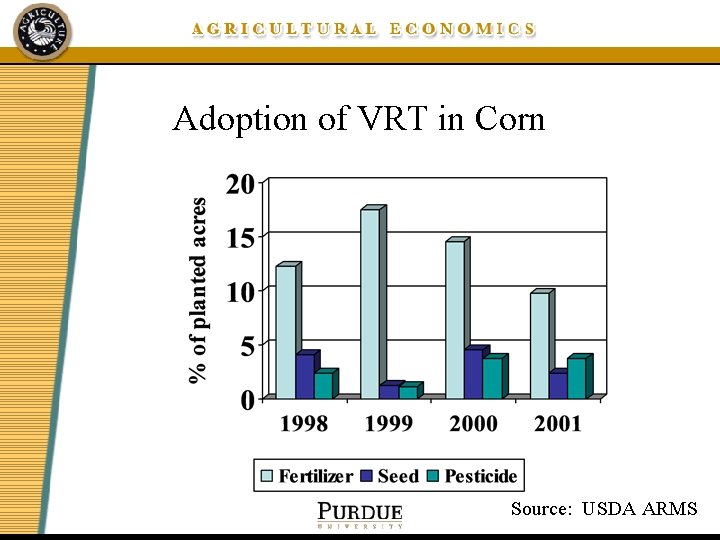
Adoption of VRT in Corn Source: USDA ARMS
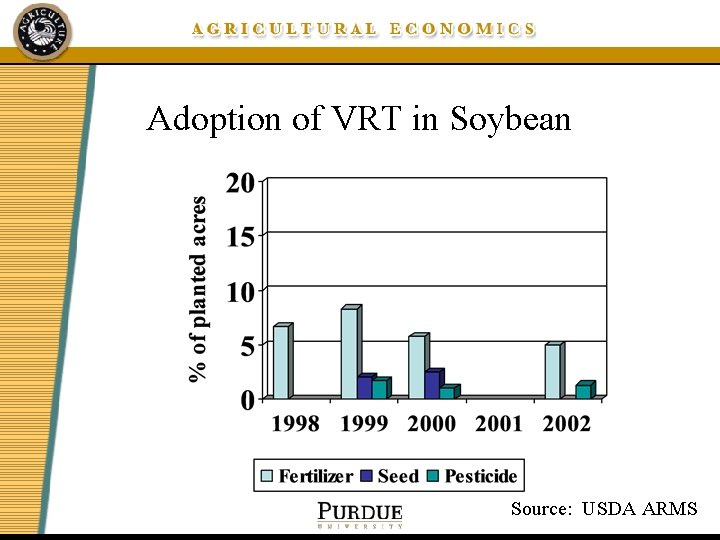
Adoption of VRT in Soybean Source: USDA ARMS
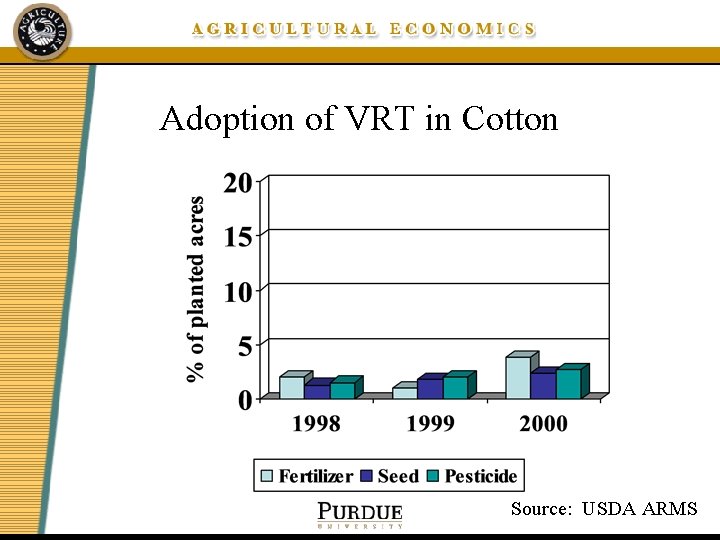
Adoption of VRT in Cotton Source: USDA ARMS
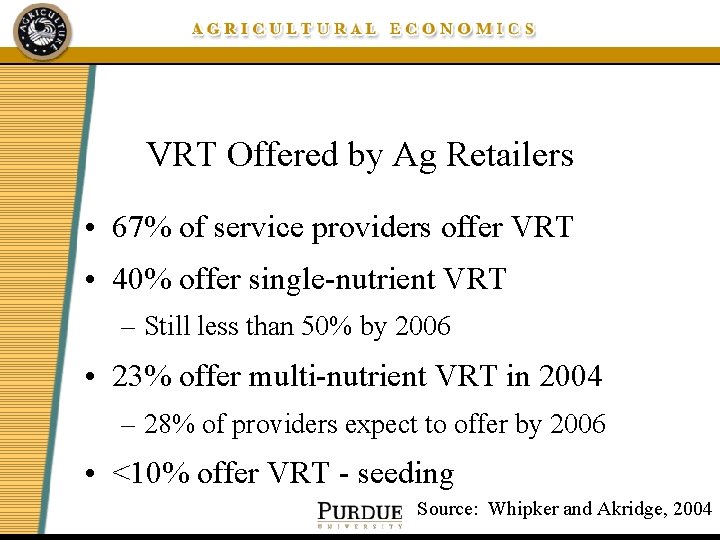
VRT Offered by Ag Retailers • 67% of service providers offer VRT • 40% offer single-nutrient VRT – Still less than 50% by 2006 • 23% offer multi-nutrient VRT in 2004 – 28% of providers expect to offer by 2006 • <10% offer VRT - seeding Source: Whipker and Akridge, 2004
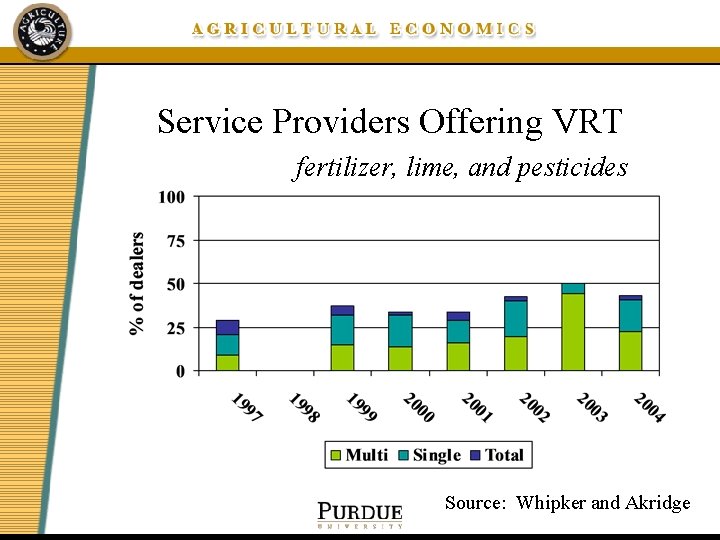
Service Providers Offering VRT fertilizer, lime, and pesticides Source: Whipker and Akridge
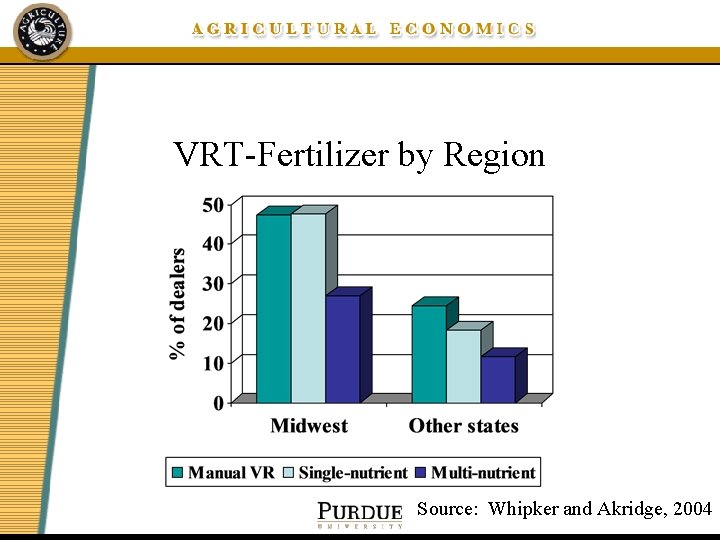
VRT-Fertilizer by Region Source: Whipker and Akridge, 2004
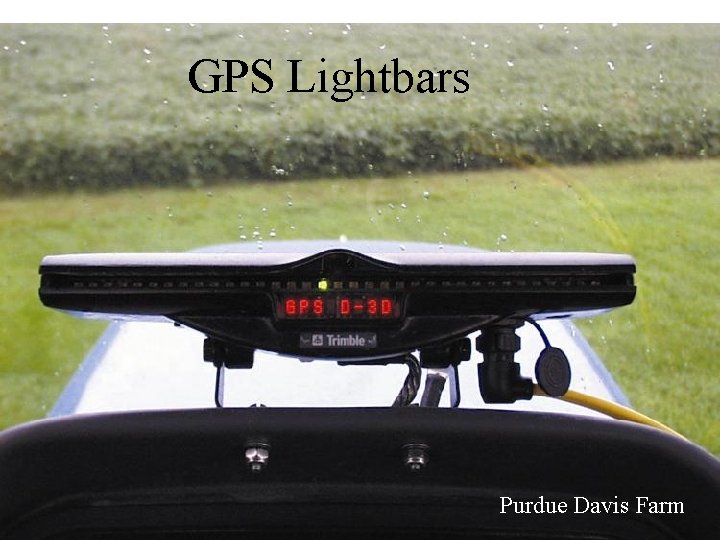
GPS Lightbars Purdue Davis Farm
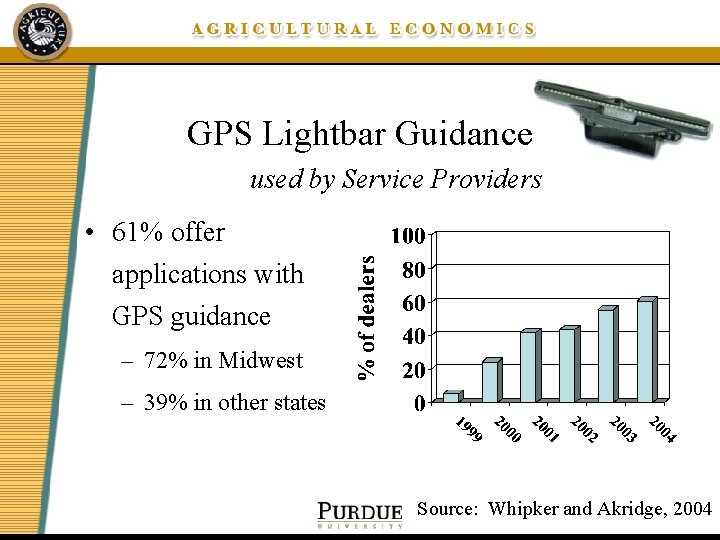
GPS Lightbar Guidance used by Service Providers • 61% offer applications with GPS guidance – 72% in Midwest – 39% in other states Source: Whipker and Akridge, 2004
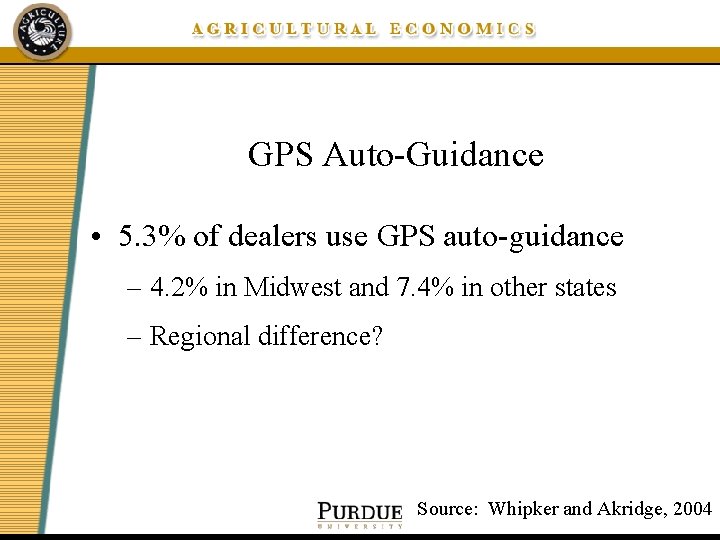
GPS Auto-Guidance • 5. 3% of dealers use GPS auto-guidance – 4. 2% in Midwest and 7. 4% in other states – Regional difference? Source: Whipker and Akridge, 2004
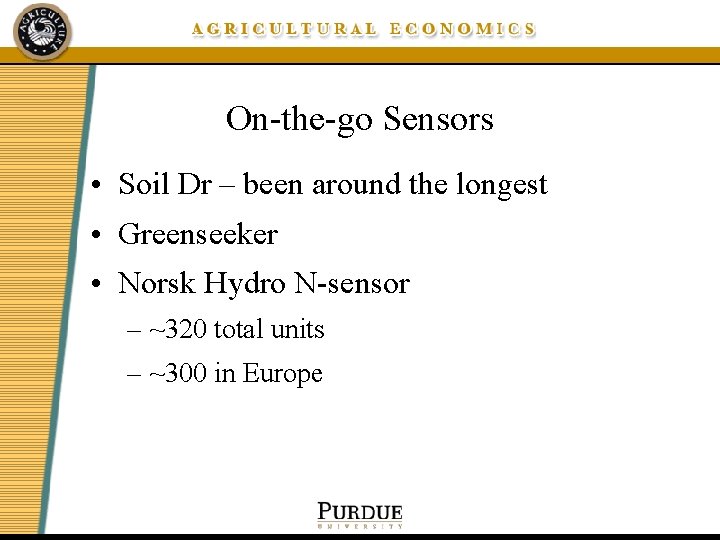
On-the-go Sensors • Soil Dr – been around the longest • Greenseeker • Norsk Hydro N-sensor – ~320 total units – ~300 in Europe
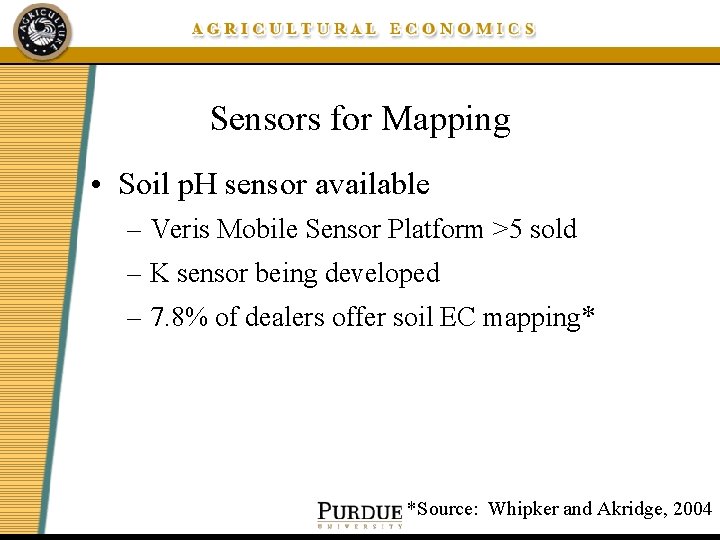
Sensors for Mapping • Soil p. H sensor available – Veris Mobile Sensor Platform >5 sold – K sensor being developed – 7. 8% of dealers offer soil EC mapping* *Source: Whipker and Akridge, 2004
Fundamental Constraints of Adoption • Lack of research support • Human capital costs • Lack of education and training
Fundamental Constraints of Adoption • Lack of support and consulting • High opportunity cost of management time • Information-intensive / embodied knowledge
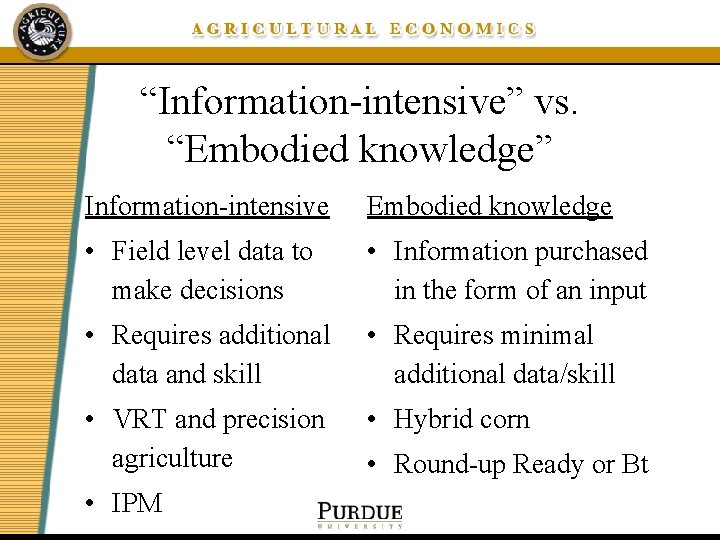
“Information-intensive” vs. “Embodied knowledge” Information-intensive Embodied knowledge • Field level data to make decisions • Information purchased in the form of an input • Requires additional data and skill • Requires minimal additional data/skill • VRT and precision agriculture • Hybrid corn • IPM • Round-up Ready or Bt
Fundamental Incentives of Adoption • Technology costs are declining • Incorporation of technology in society – GPS in cars and boats • Increased comfort level with technology – USDA FSA and NRCS using GIS with farmers
Fundamental Incentives of Adoption Automating Record Keeping • Identity tracking of commodities • Pesticide record keeping • Environmental regulations – monitor input use – May lead into cost sharing for adoption
Fundamental Incentives of Adoption Auto-guidance systems • Increase farm size with same equipment set – Reduce overlap, expand work day, increase speed • Match equipment operations (6, 8, 12 row) • Controlled trafficking • Strip till
Economies of Scale in Data Analysis • Skill to analyze 2000 ac works for 20, 000 ac • Potential for PA consulting - outsourcing • Complementary goods and services
Part 2: PA Profitability Review • Standalone VRT fertilizer often does not cover costs – Swinton and Lowenberg-De. Boer (1998) • In 2000, 63% of studies showed profits, but budget methods not standardized – Lambert and Lowenberg-De. Boer (2000) • Economics of precision agriculture are site-specific
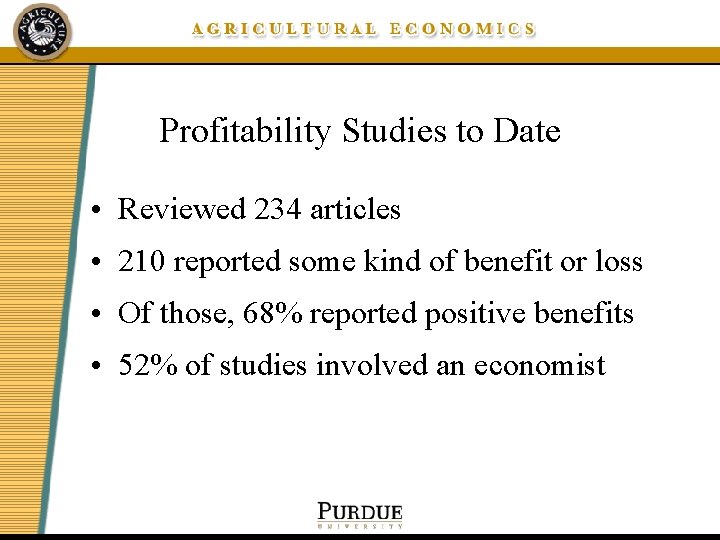
Profitability Studies to Date • Reviewed 234 articles • 210 reported some kind of benefit or loss • Of those, 68% reported positive benefits • 52% of studies involved an economist
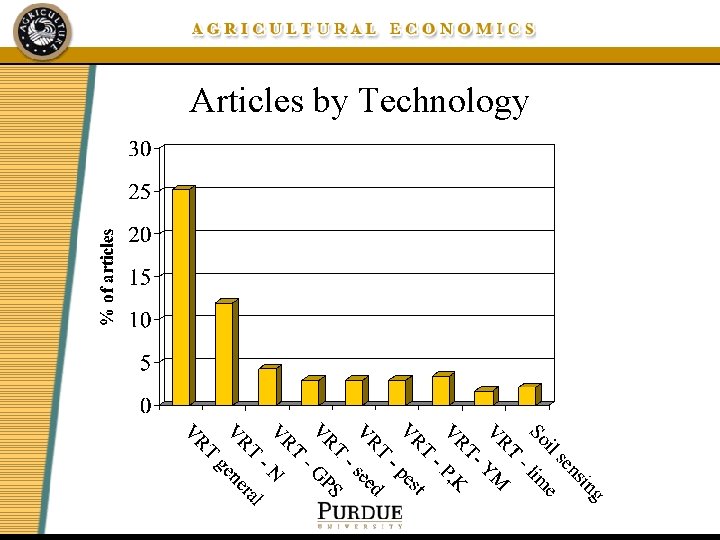
Articles by Technology
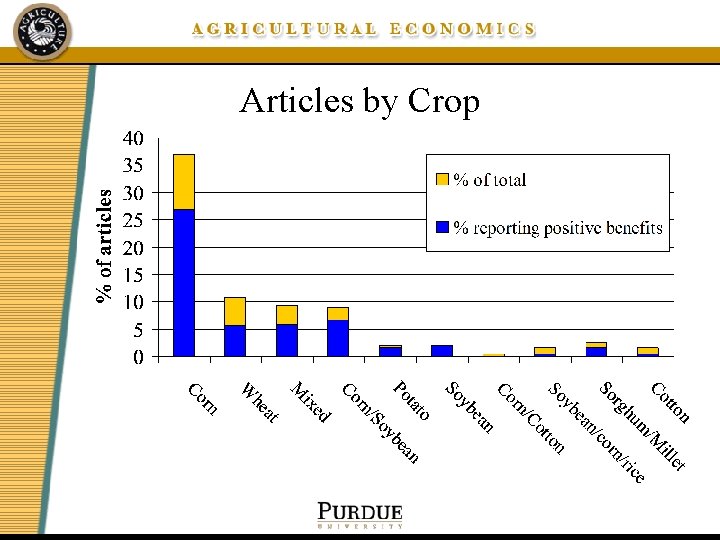
Articles by Crop
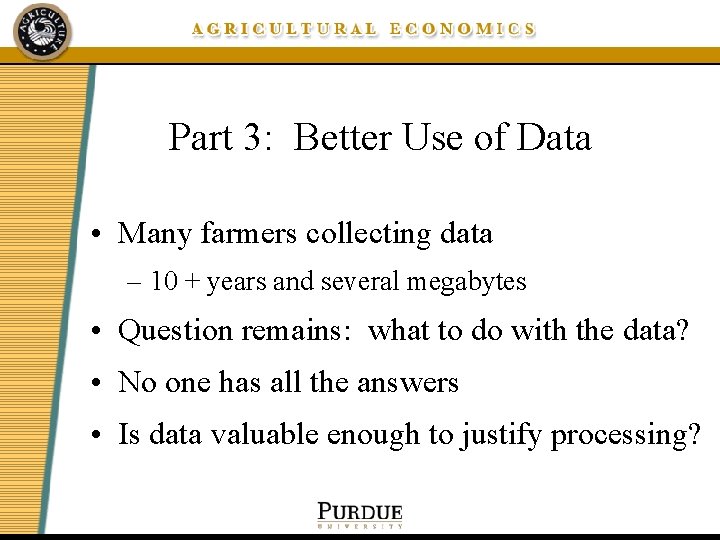
Part 3: Better Use of Data • Many farmers collecting data – 10 + years and several megabytes • Question remains: what to do with the data? • No one has all the answers • Is data valuable enough to justify processing?
Better Use of Data • Better farm-level experimental designs • Spatial statistical methods • More reliable local information
Better Experimental Designs • Small plot designs developed 70 years ago – Blocking and replications neutralize variability • Precision agriculture measures variability • Spatial statistics can model variability
Better Experimental Designs • Opportunity for fewer replication large blocks • Types of comparisons farmer tend to conduct • Experimental designs being tested in 4 states • Farmer feedback crucial to evaluation
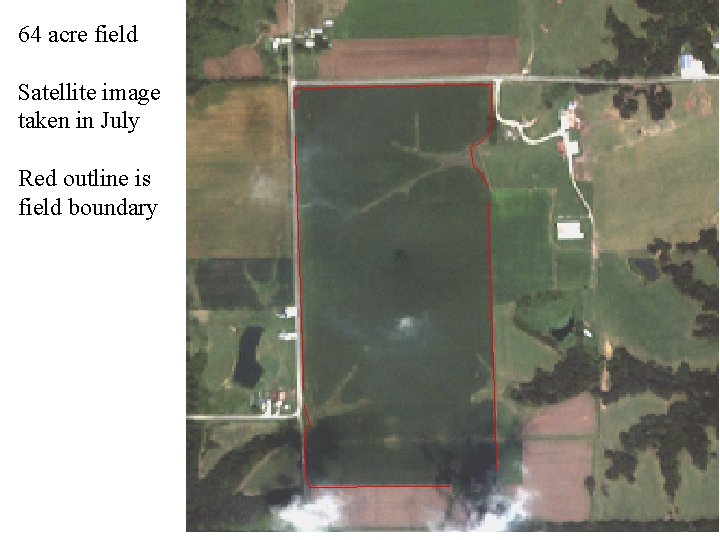
64 acre field Satellite image taken in July Red outline is field boundary
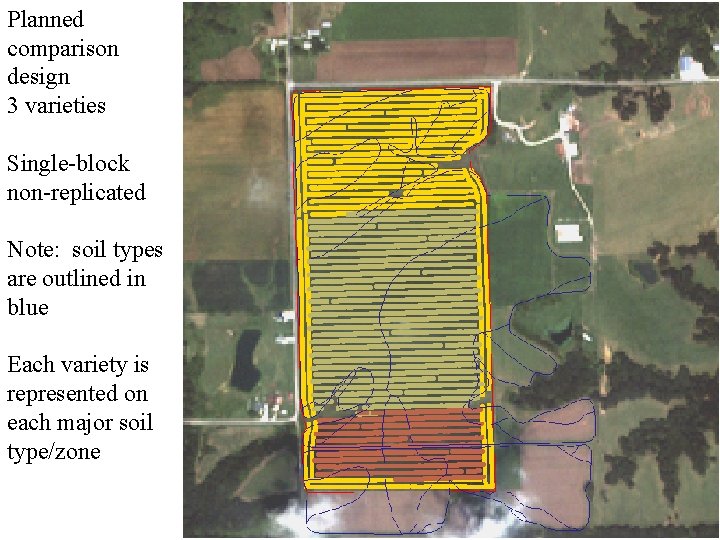
Planned comparison design 3 varieties Single-block non-replicated Note: soil types are outlined in blue Each variety is represented on each major soil type/zone
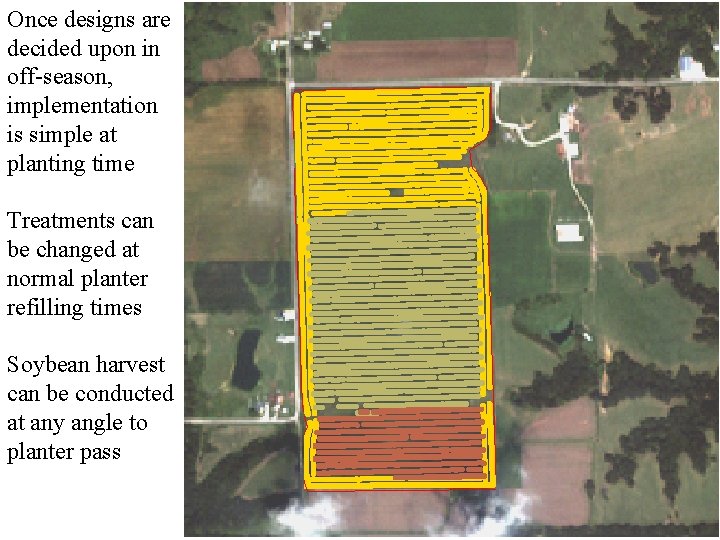
Once designs are decided upon in off-season, implementation is simple at planting time Treatments can be changed at normal planter refilling times Soybean harvest can be conducted at any angle to planter pass
Yield Monitor Data Analysis • Yield monitor data analysis service pilot project • 37 th Annual Top Farmer Crop Workshop – July 18 -21, 2004 • More reliable results gained http: //www. agecon. purdue. edu/topfarmer
Summary • Adoption has been slow and uneven • Economics well documented – many studies • Information-intensive vs. embodied knowledge ag • Need for analysis services to overcome constraints
Role of Extension Farm Management • Third party evaluation desperately needed – Firm understanding of precision technologies • Help farmers develop own recommendations instead of supplying answer – On-farm comparisons
Role of Extension Farm Management • Assist farmers and ag businesses in understanding economics of information Barriers to adoption are an opportunity for extension to be more relevant

Terry Griffin twgriffi@purdue. edu 765. 494. 4257 Site-Specific Management Center Purdue University http: //www. purdue. edu/ssmc
- Slides: 49