
Precision Experiments and Photon Spectroscopy at the Super
- Slides: 9
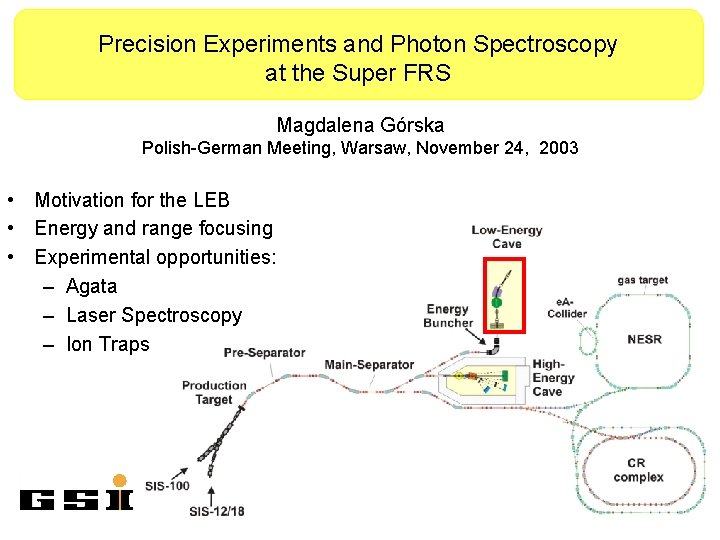
Precision Experiments and Photon Spectroscopy at the Super FRS Magdalena Gόrska Polish-German Meeting, Warsaw, November 24, 2003 • Motivation for the LEB • Energy and range focusing • Experimental opportunities: – Agata – Laser Spectroscopy – Ion Traps
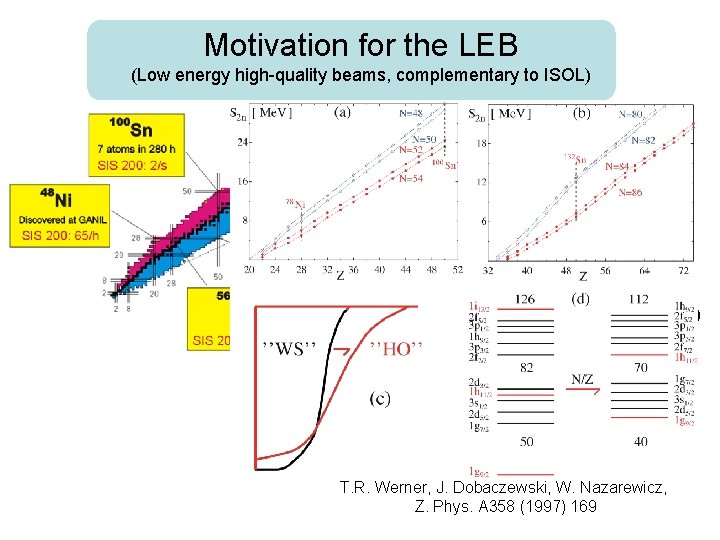
Motivation for the LEB (Low energy high-quality beams, complementary to ISOL) • Neutron rich nuclei (H. Geissel) • Shells and shapes (shell quenching) • N=Z nuclei (Z. Janas) • Symmetries (A. May) • Astrophysics (H. G. , Z. J. ) T. R. Werner, J. Dobaczewski, W. Nazarewicz, Z. Phys. A 358 (1997) 169
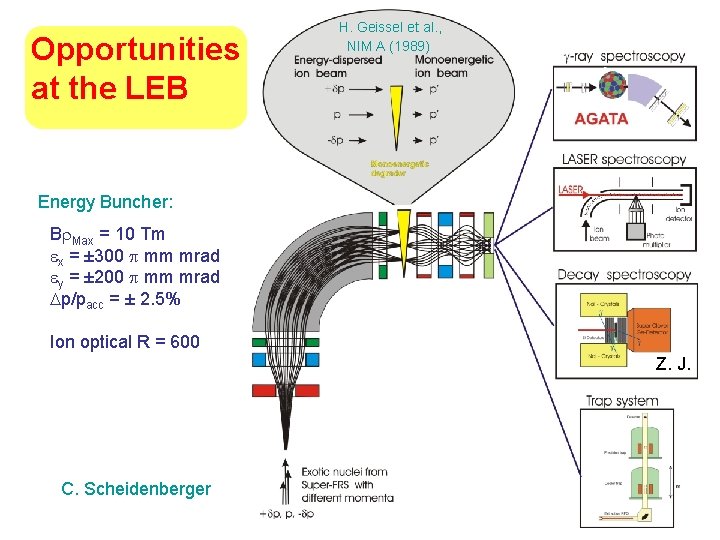
Opportunities at the LEB H. Geissel et al. , NIM A (1989) Energy Buncher: Br. Max = 10 Tm ex = ± 300 p mm mrad ey = ± 200 p mm mrad Dp/pacc = ± 2. 5% Ion optical R = 600 Z. J. C. Scheidenberger
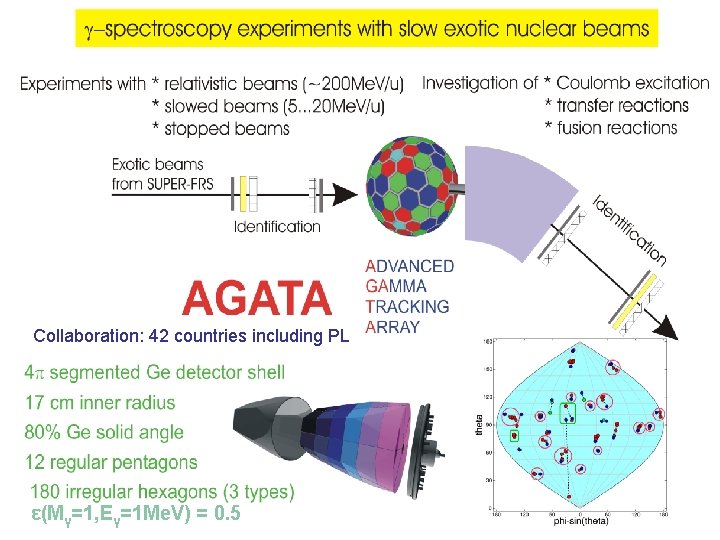
Collaboration: 42 countries including PL ε(Mγ=1, Eγ=1 Me. V) = 0. 5
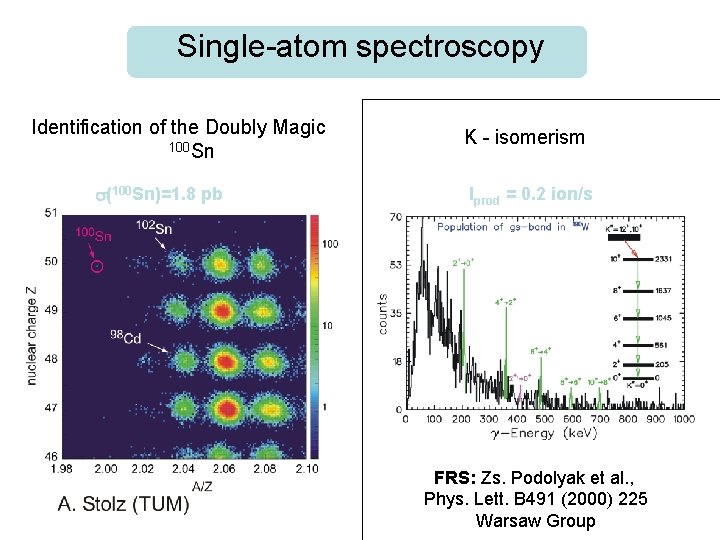
Single-atom spectroscopy Identification of the Doubly Magic 100 Sn s(100 Sn)=1. 8 pb Shell structure isomer K - isomerism I prod = 1 ion/s Iprod = 0. 2 ion/s s(100 Sn)=1. 8 pb FRS: Zs. Podolyak et al. , GANIL: J. M. Daugas et al. , Phys. Lett. B 491 (2000) 225213 Phys. Lett. B 476 (2000) Warsaw Group Warsaw
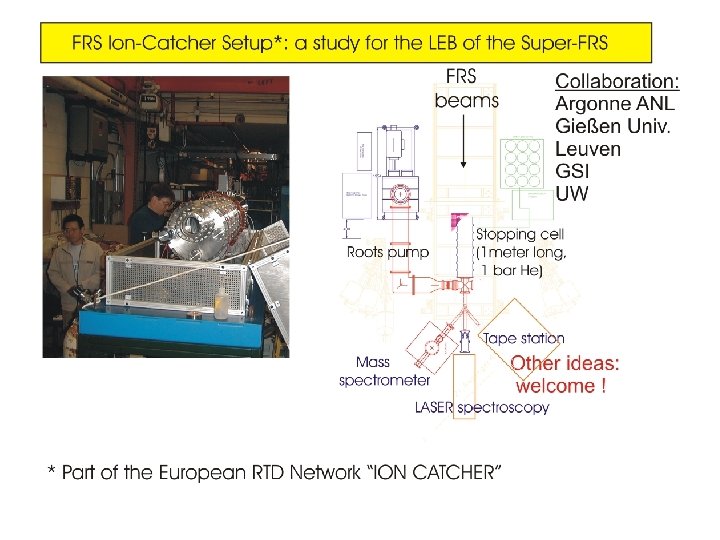
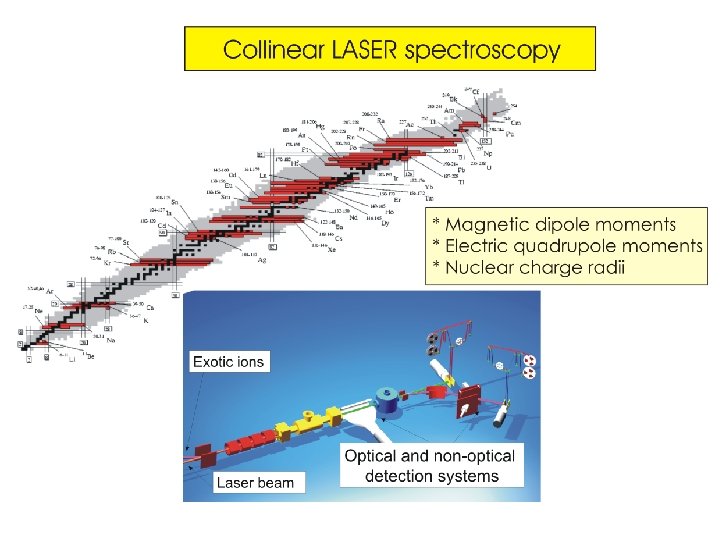
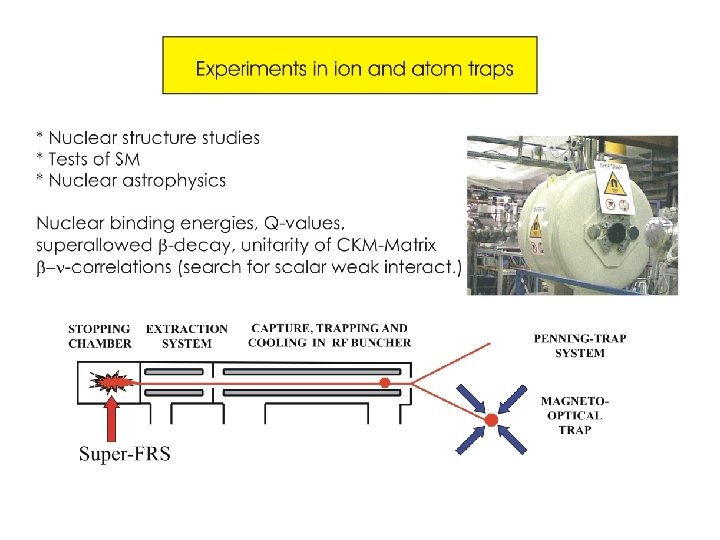
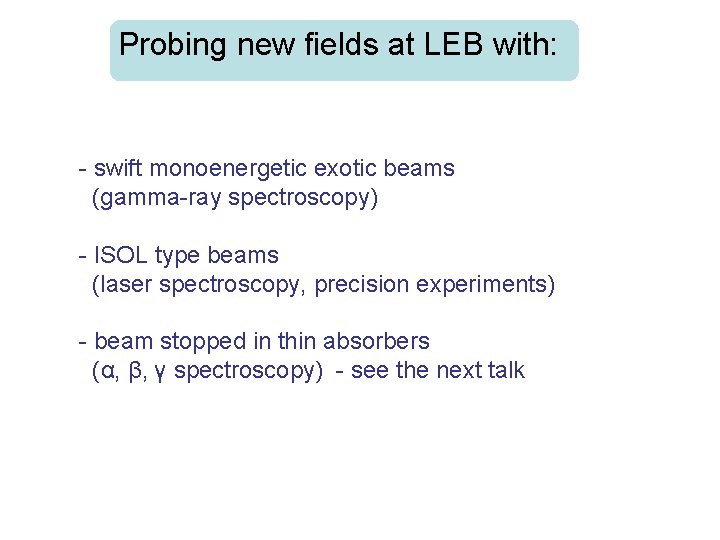
Probing new fields at LEB with: - swift monoenergetic exotic beams (gamma-ray spectroscopy) - ISOL type beams (laser spectroscopy, precision experiments) - beam stopped in thin absorbers (α, β, γ spectroscopy) - see the next talk