
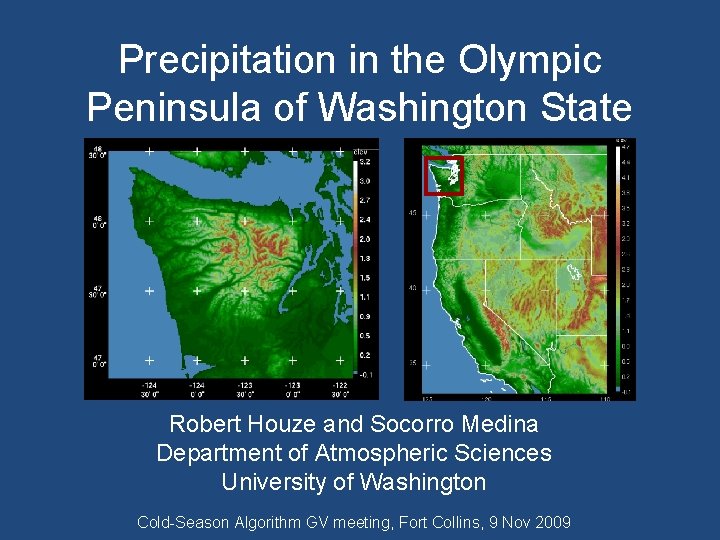
Precipitation in the Olympic Peninsula of Washington State
- Slides: 18
Precipitation in the Olympic Peninsula of Washington State Robert Houze and Socorro Medina Department of Atmospheric Sciences University of Washington Cold-Season Algorithm GV meeting, Fort Collins, 9 Nov 2009
The Olympic Peninsula is a natural “precipitation laboratory” • Persistent southwesterly flow during the winter provides a reliable source of moisture • Extremely large precipitation accumulation produced as the moist SWly flow impinges on coastal terrain • Low 0ºC level rain at low elevations, snow at higher levels
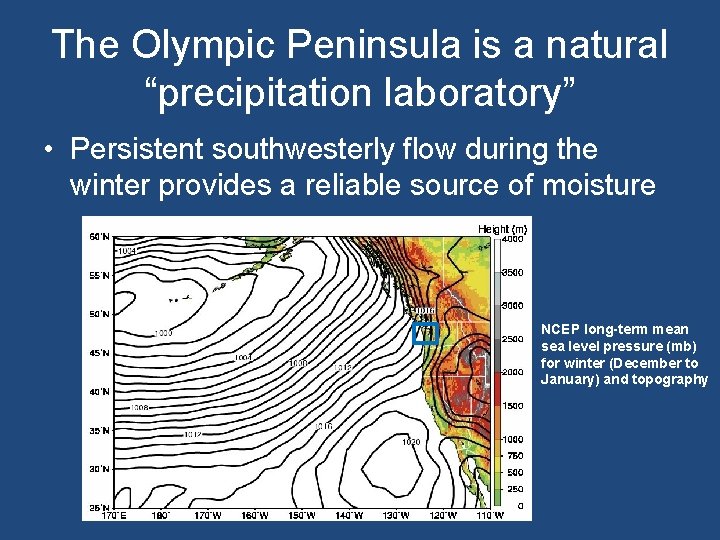
The Olympic Peninsula is a natural “precipitation laboratory” • Persistent southwesterly flow during the winter provides a reliable source of moisture NCEP long-term mean sea level pressure (mb) for winter (December to January) and topography
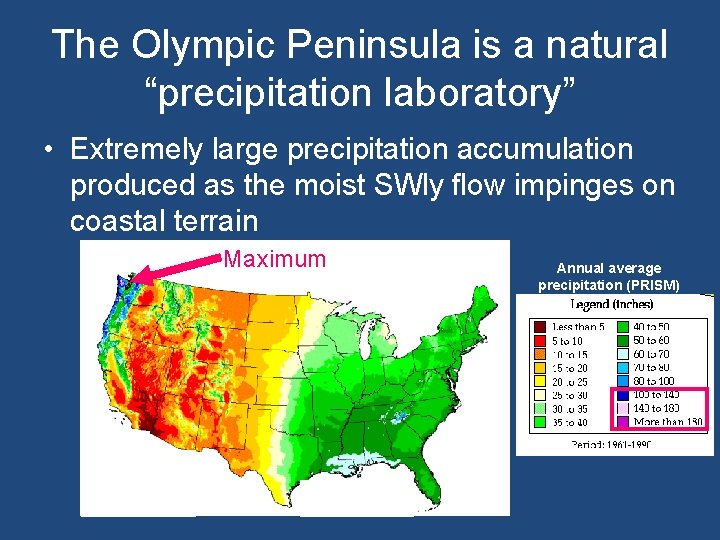
The Olympic Peninsula is a natural “precipitation laboratory” • Extremely large precipitation accumulation produced as the moist SWly flow impinges on coastal terrain Maximum Annual average precipitation (PRISM)
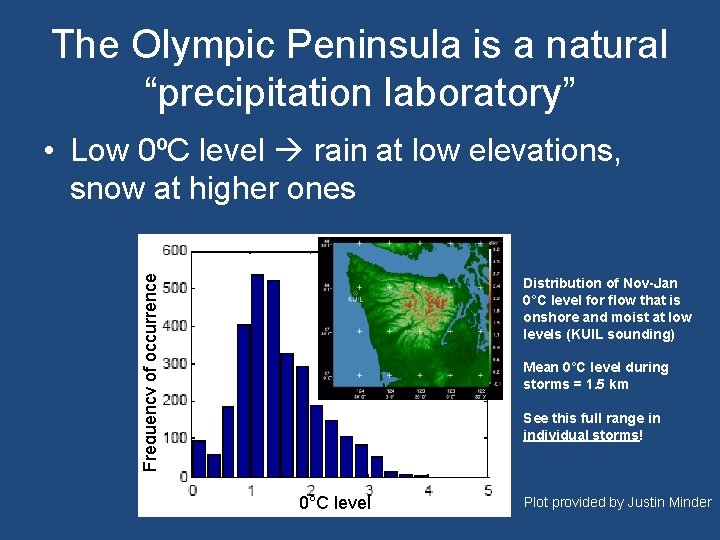
The Olympic Peninsula is a natural “precipitation laboratory” Frequency of occurrence • Low 0ºC level rain at low elevations, snow at higher ones Distribution of Nov-Jan 0°C level for flow that is onshore and moist at low levels (KUIL sounding) Mean 0°C level during storms = 1. 5 km See this full range in individual storms! 0°C level Plot provided by Justin Minder
Resources and experience in the region • 1965 -2000: Cascade Project, CYCLES, COAST • 2001: IMPROVE field experiment • 2004 -2008: Detailed observing network across a southwestern Olympics ridge • 2009: NOAA Mobile Atmospheric River Monitoring System in Westport • 2012: NWS Coastal radar expected to be in place • Ongoing: Regional Environmental Prediction
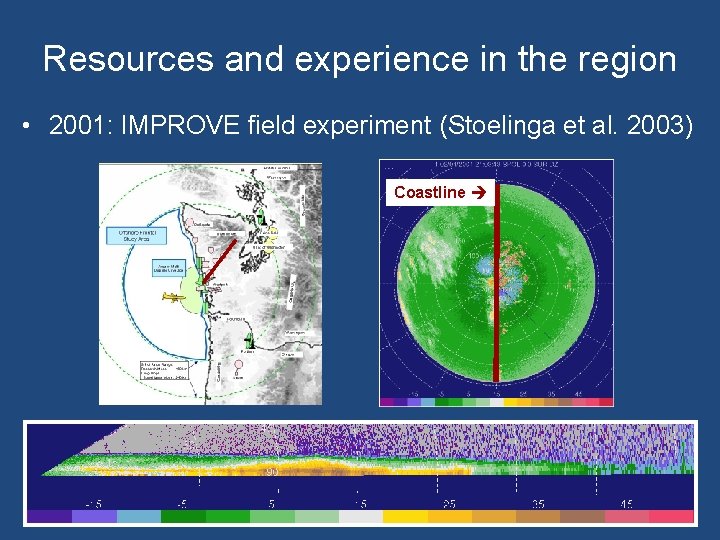
Resources and experience in the region • 2001: IMPROVE field experiment (Stoelinga et al. 2003) Coastline
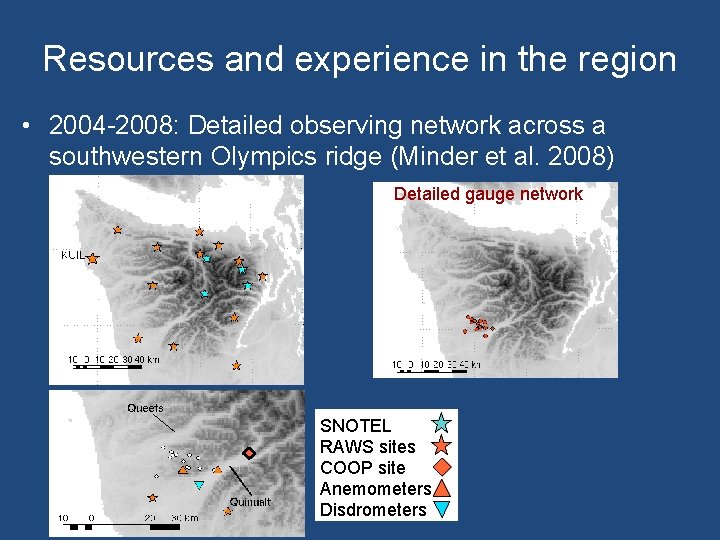
Resources and experience in the region • 2004 -2008: Detailed observing network across a southwestern Olympics ridge (Minder et al. 2008) Detailed gauge network SNOTEL RAWS sites COOP site Anemometers Disdrometers
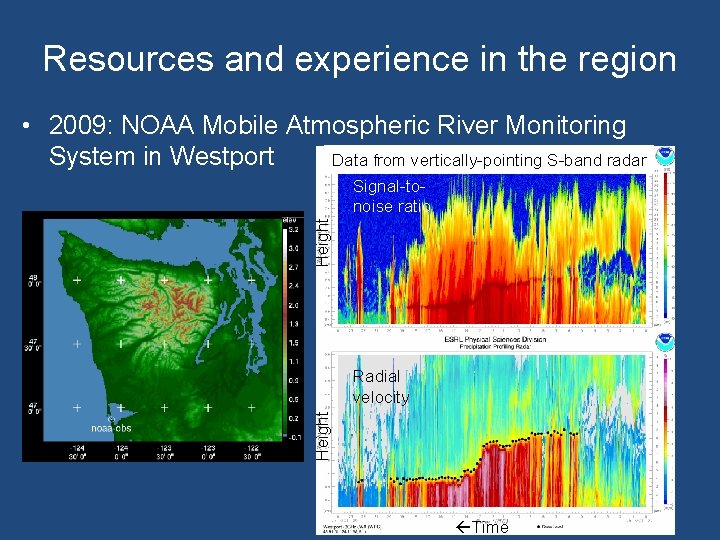
Resources and experience in the region • 2009: NOAA Mobile Atmospheric River Monitoring System in Westport Data from vertically-pointing S-band radar Height Signal-tonoise ratio Height Radial velocity Time
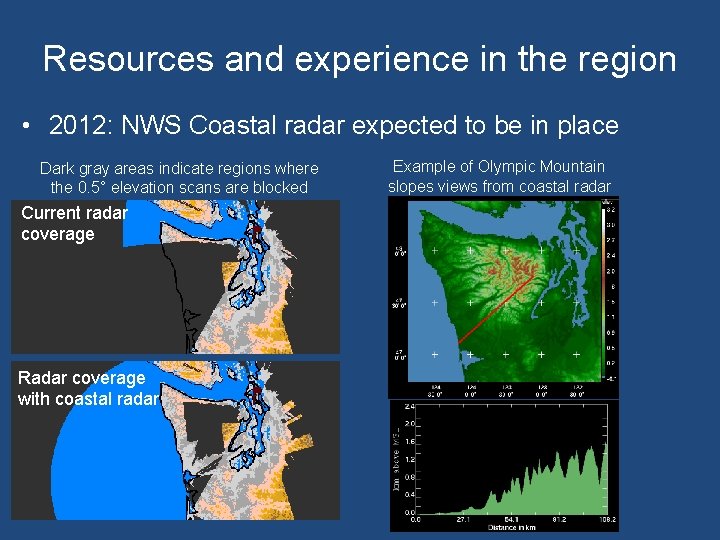
Resources and experience in the region • 2012: NWS Coastal radar expected to be in place Dark gray areas indicate regions where the 0. 5° elevation scans are blocked Current radar coverage Radar coverage with coastal radar Example of Olympic Mountain slopes views from coastal radar
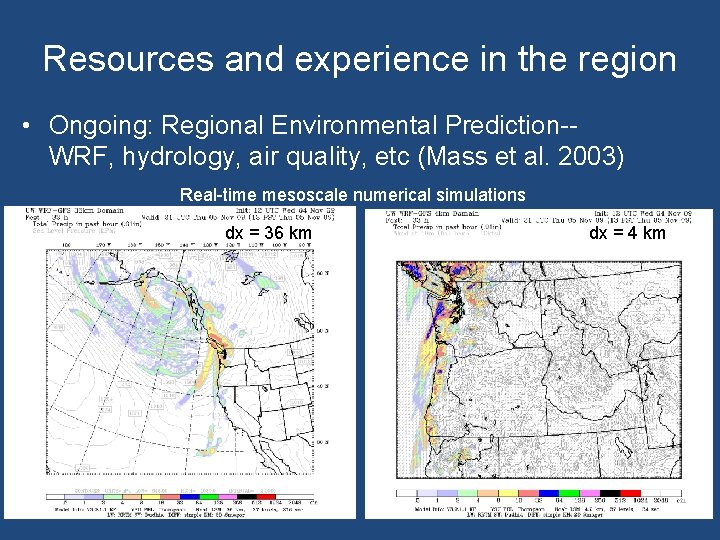
Resources and experience in the region • Ongoing: Regional Environmental Prediction-WRF, hydrology, air quality, etc (Mass et al. 2003) Real-time mesoscale numerical simulations dx = 36 km dx = 4 km
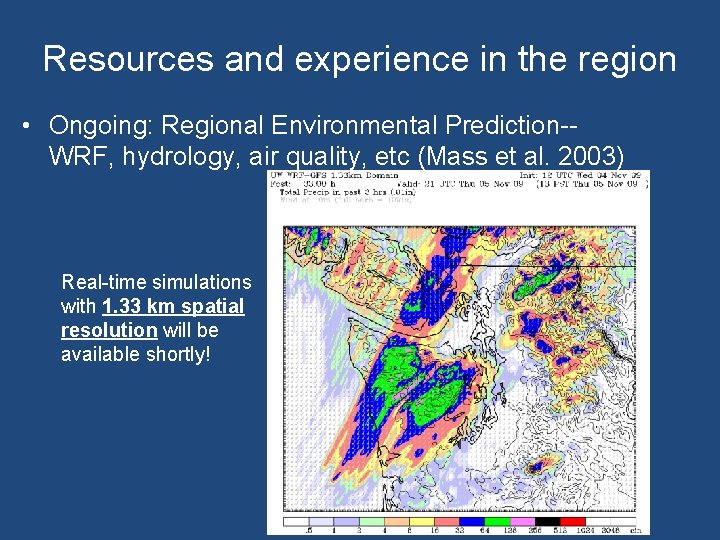
Resources and experience in the region • Ongoing: Regional Environmental Prediction-WRF, hydrology, air quality, etc (Mass et al. 2003) Real-time simulations with 1. 33 km spatial resolution will be available shortly!
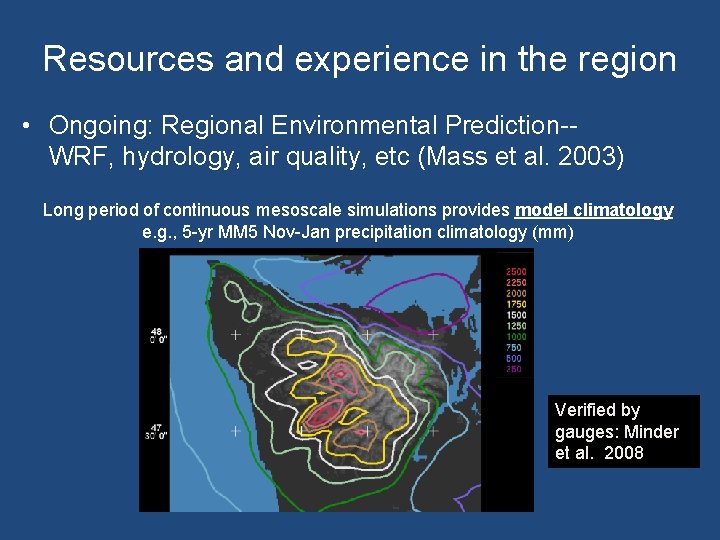
Resources and experience in the region • Ongoing: Regional Environmental Prediction-WRF, hydrology, air quality, etc (Mass et al. 2003) Long period of continuous mesoscale simulations provides model climatology e. g. , 5 -yr MM 5 Nov-Jan precipitation climatology (mm) Verified by gauges: Minder et al. 2008
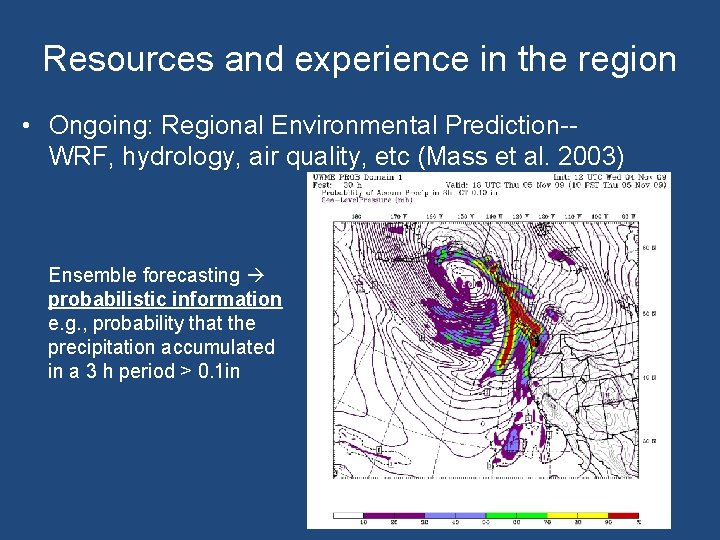
Resources and experience in the region • Ongoing: Regional Environmental Prediction-WRF, hydrology, air quality, etc (Mass et al. 2003) Ensemble forecasting probabilistic information e. g. , probability that the precipitation accumulated in a 3 h period > 0. 1 in
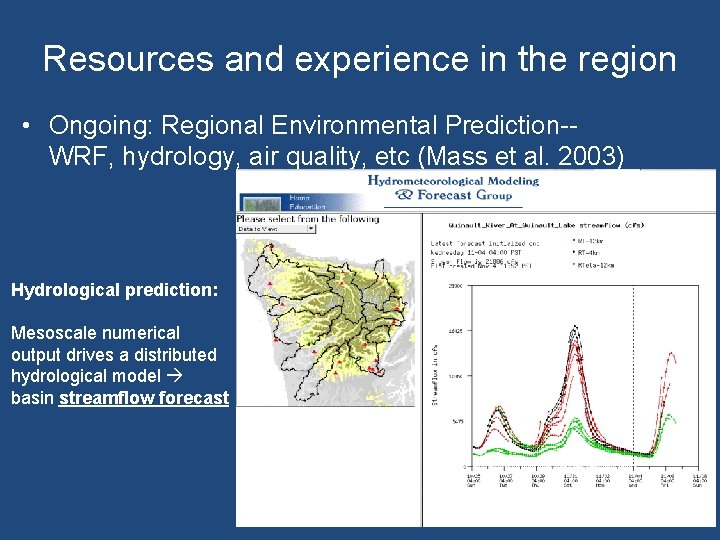
Resources and experience in the region • Ongoing: Regional Environmental Prediction-WRF, hydrology, air quality, etc (Mass et al. 2003) Hydrological prediction: Mesoscale numerical output drives a distributed hydrological model basin streamflow forecast
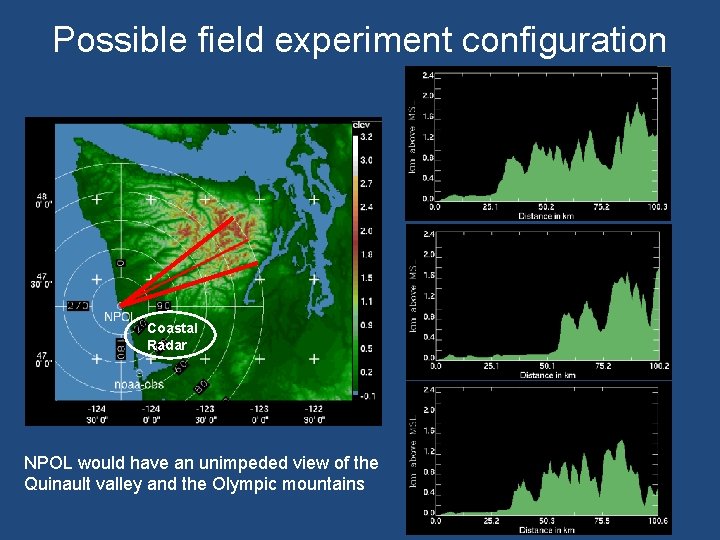
Possible field experiment configuration Coastal Radar NPOL would have an unimpeded view of the Quinault valley and the Olympic mountains
Conclusions • The Olympic Peninsula is an ideal natural precipitation laboratory given: – Persistence of moist flow, complex terrain, huge precipitation amounts, and low 0°C level • The existing and planned resources and the past experience in this region provide a strong framework for a field campaign
Acknowledgment This research was supported by NASA grant NNX 07 AD 59 G and NSF grant ATM-08205586