
PRECARIOUS WORK IN THE EU Kristin Carls external
- Slides: 26
PRECARIOUS WORK IN THE EU Kristin Carls (external collaborator ACTRAV/ITCILO)
Precarious work in the crisis Three issues: (A) quantitative development: temporary + part time + own account work (B) regulations: legislation + social dialogue + collective bargaining (C) union activities Definition: n precarious work = fewer rights + protections multidimensional character: temporary, economic, organisational, social dimension
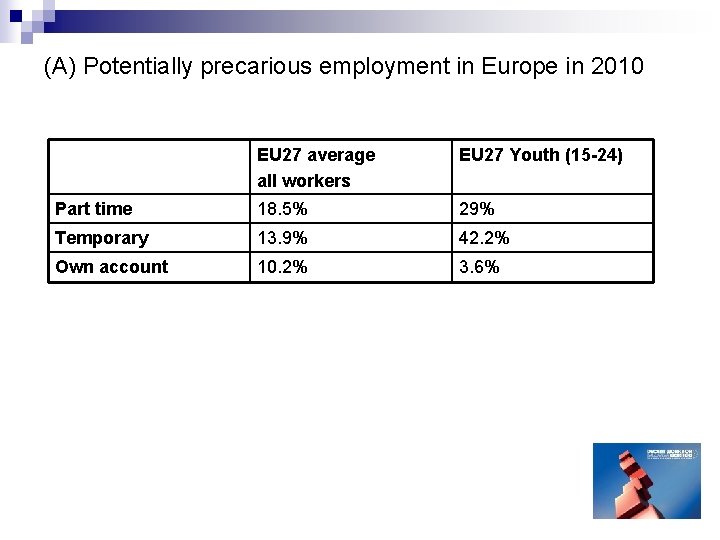
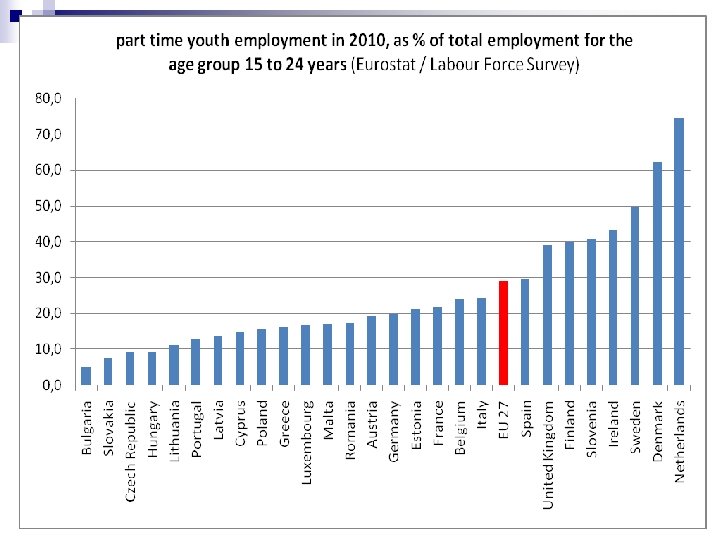
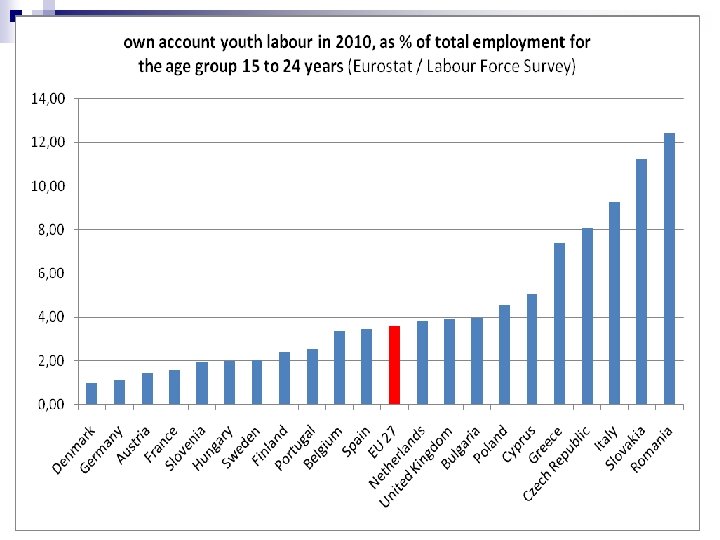
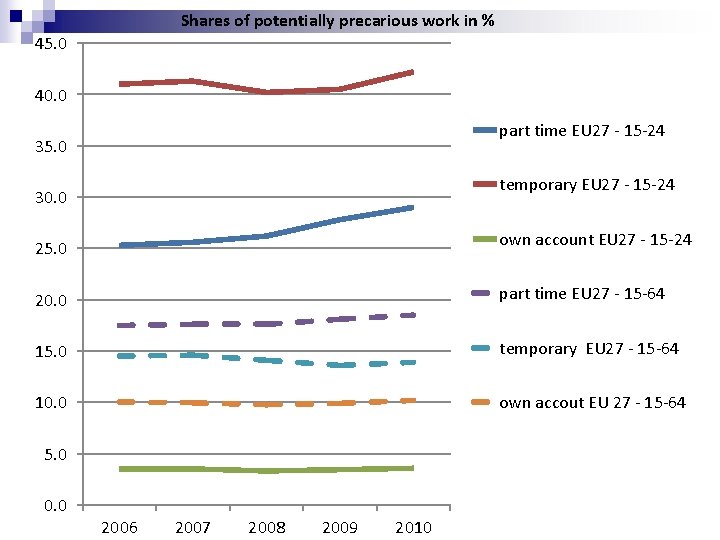
(A) Potentially precarious employment in Europe in 2010 EU 27 average all workers EU 27 Youth (15 -24) Part time 18. 5% 29% Temporary 13. 9% 42. 2% Own account 10. 2% 3. 6%
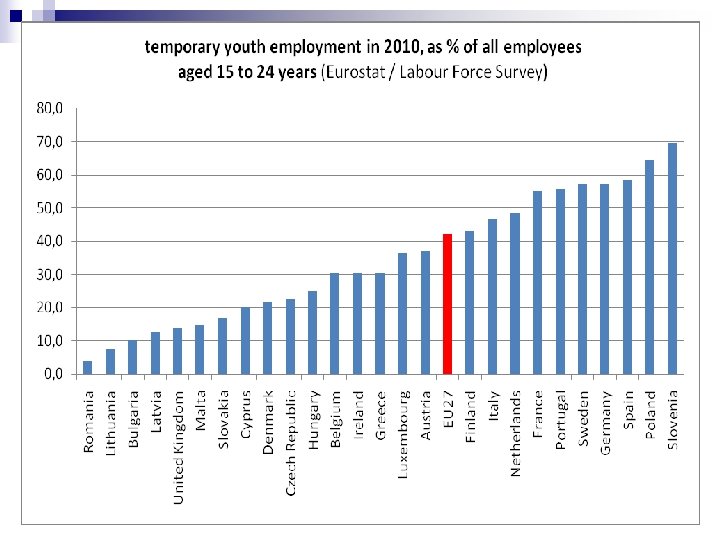
4
5
6
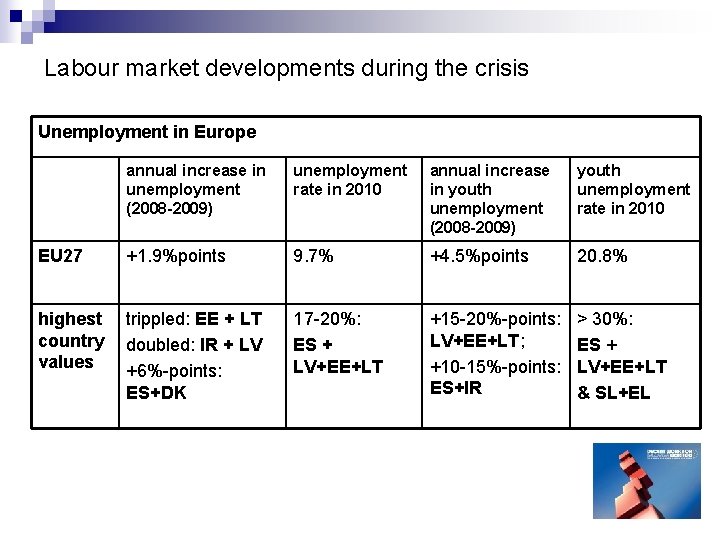
Labour market developments during the crisis Unemployment in Europe annual increase in unemployment (2008 -2009) unemployment rate in 2010 annual increase in youth unemployment (2008 -2009) youth unemployment rate in 2010 EU 27 +1. 9%points 9. 7% +4. 5%points 20. 8% highest country values trippled: EE + LT doubled: IR + LV +6%-points: ES+DK 17 -20%: ES + LV+EE+LT +15 -20%-points: LV+EE+LT; +10 -15%-points: ES+IR > 30%: ES + LV+EE+LT & SL+EL
Shares of potentially precarious work in % 45. 0 40. 0 part time EU 27 - 15 -24 35. 0 temporary EU 27 - 15 -24 30. 0 own account EU 27 - 15 -24 25. 0 20. 0 part time EU 27 - 15 -64 15. 0 temporary EU 27 - 15 -64 10. 0 own accout EU 27 - 15 -64 5. 0 0. 0 2006 2007 2008 2009 2010
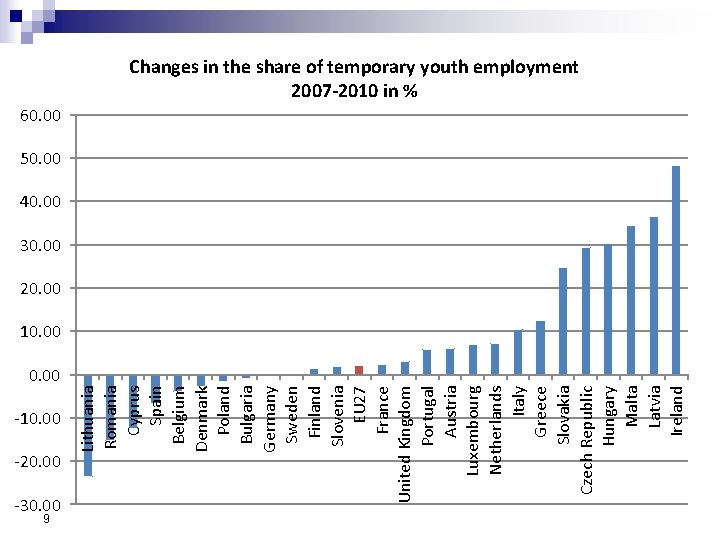
-10. 00 -20. 00 -30. 00 9 Lithuania Romania Cyprus Spain Belgium Denmark Poland Bulgaria Germany Sweden Finland Slovenia EU 27 France United Kingdom Portugal Austria Luxembourg Netherlands Italy Greece Slovakia Czech Republic Hungary Malta Latvia Ireland Changes in the share of temporary youth employment 2007 -2010 in % 60. 00 50. 00 40. 00 30. 00 20. 00 10. 00
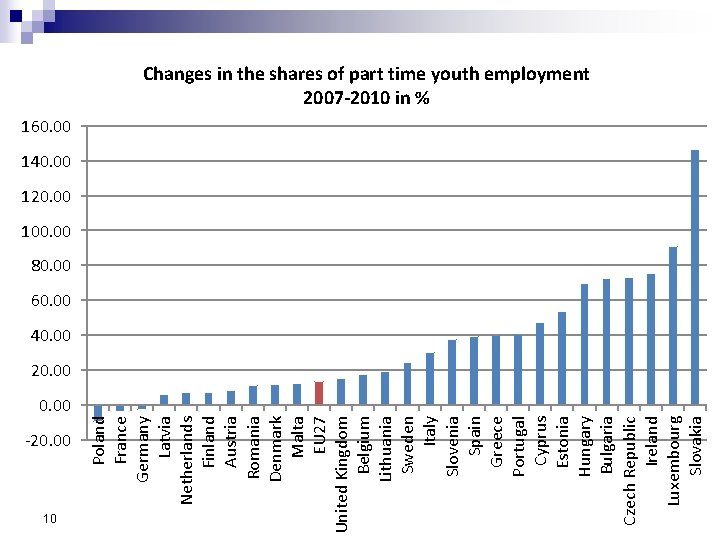
-20. 00 10 Poland France Germany Latvia Netherlands Finland Austria Romania Denmark Malta EU 27 United Kingdom Belgium Lithuania Sweden Italy Slovenia Spain Greece Portugal Cyprus Estonia Hungary Bulgaria Czech Republic Ireland Luxembourg Slovakia Changes in the shares of part time youth employment 2007 -2010 in % 160. 00 140. 00 120. 00 100. 00 80. 00 60. 00 40. 00 20. 00
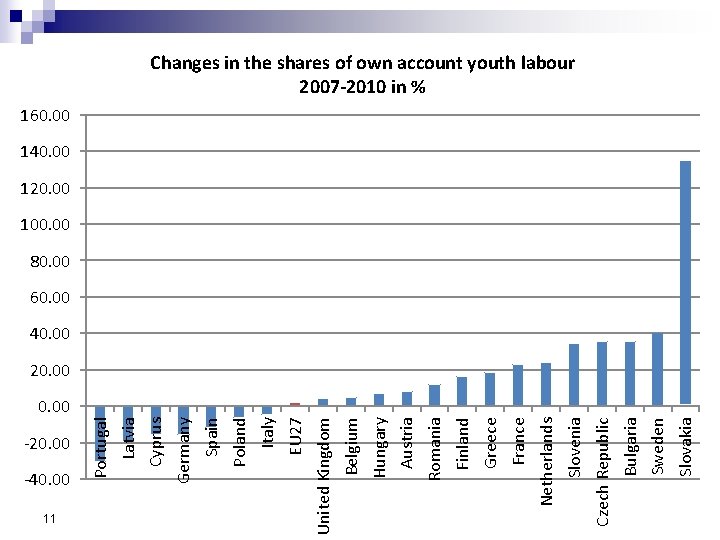
-20. 00 -40. 00 EU 27 Italy Poland Spain Germany Cyprus Latvia Slovakia Sweden Bulgaria Czech Republic Slovenia Netherlands France Greece Finland Romania Austria Hungary Belgium United Kingdom 11 Portugal Changes in the shares of own account youth labour 2007 -2010 in % 160. 00 140. 00 120. 00 100. 00 80. 00 60. 00 40. 00 20. 00
(B) Labour market regulations during the crisis n n flexibilisation and welfare policies reregulation of precarious work restrictions ¨ enhancement of rights + protections ¨ survey results from 20 EU-countries
Flexibilisation n nearly all survey countries n issues: flexibilisation of working times & easier use of part time + short-time work ¨ easier use of temporary employment & new forms of flexible employment ¨
Welfare policies Two phases: n early crisis reactions: pointed extensions ¨ n esp. unemployment benefits + short-time working schemes since 2009/2010: heavy retrenchment ¨ esp. social assistance + unemployment + maternity benefits
Reregulation of potentialy precarious employment n some new restrictions in 11 countries ¨ n issues: n maximum duration n accepted reasons n transformation n working time flexibility some enhancements of rights+protections in 10 countries: ¨ issues: n inclusion in short-time working schemes n access to unemployment benefits n equal treatment
Youth related measures: n focus = ALMP + flexibilisation n less initiatives to enhance rights+protections ¨ increased social security coverage: SI+EL+IT+ES + UK+AU+FR ¨ better transition opportunities: EL+PT counter examples: - reduced minimum wages: SE+EL - reduced legal protections: SE+ES+NL - restriction of unemployment benefits: FI+IR
Decent work outcomes? ! n limited efforts if compared to simultaneous flexibilisation n contrasted by austerity policies
(C) Unions‘ activities n recognition of precarioius work as policy issue: ¨ n priorities: transformation + restrictions + rights/protections + ALMP limited concrete activities: specific support structures versus universal approach ¨ organising: low-paid services & TAW + bogus self-employed + youth ¨ awareness raising + public opinion campaigns ¨
Young workers n Activities for young workers in precarious employment: ¨ awareness raising + communication campaigns: n topics: working+housing conditions (SI/ZSSS) + internships (UK/TUC + IR/ICTU) n methods: web-campaign (IT/CGIL) + action week (PT/CGTP)
Evaluations: n strong + weak points: ¨ reregulation of flexibility through social dialogue <-> but: degrading social dialogue ¨ campaigning on rights + protections <-> but: lacking effectiveness need for more attention + concrete action + organising
THANK YOU
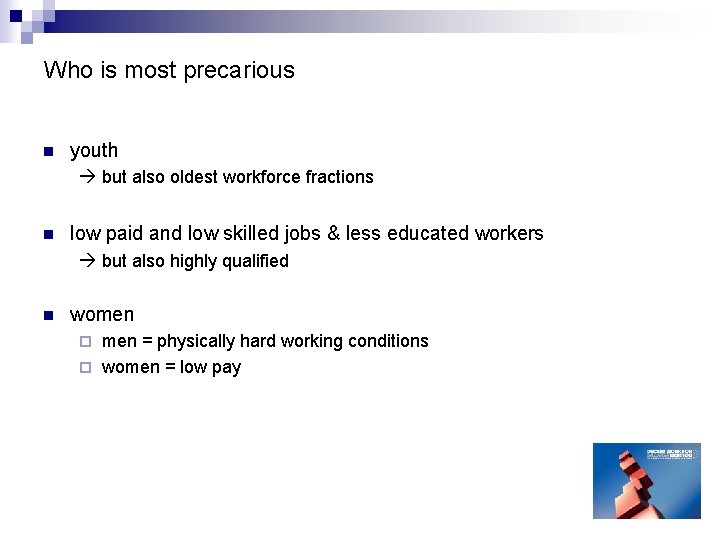
Who is most precarious n youth but also oldest workforce fractions n low paid and low skilled jobs & less educated workers but also highly qualified n women = physically hard working conditions ¨ women = low pay ¨
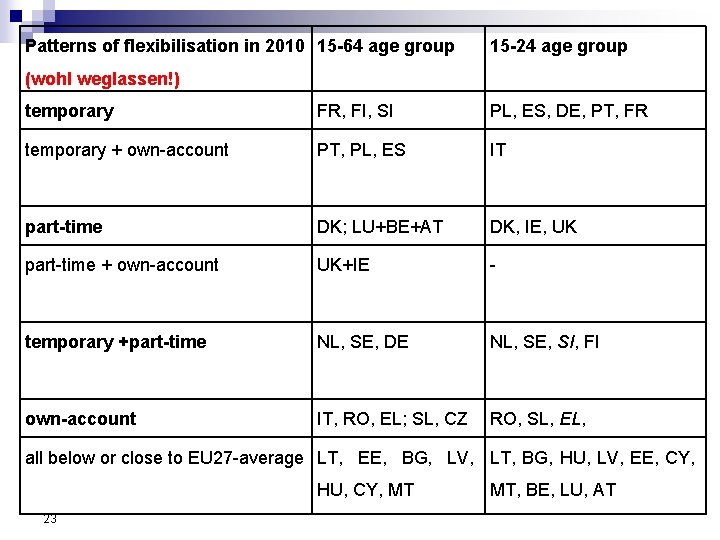
Patterns of flexibilisation in 2010 15 -64 age group 15 -24 age group (wohl weglassen!) temporary FR, FI, SI PL, ES, DE, PT, FR temporary + own-account PT, PL, ES IT part-time DK; LU+BE+AT DK, IE, UK part-time + own-account UK+IE - temporary +part-time NL, SE, DE NL, SE, SI, FI own-account IT, RO, EL; SL, CZ RO, SL, EL, all below or close to EU 27 -average LT, EE, BG, LV, LT, BG, HU, LV, EE, CY, HU, CY, MT 23 MT, BE, LU, AT
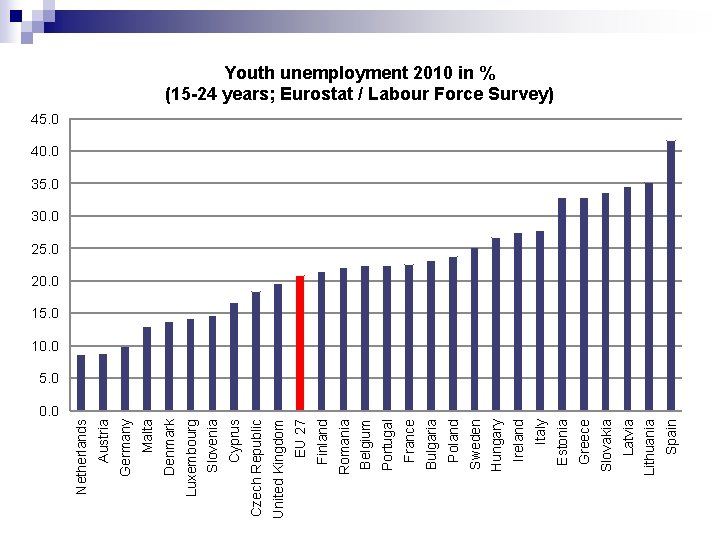
Spain Lithuania Latvia Slovakia Greece Estonia Italy Ireland Hungary Sweden Poland Bulgaria France Portugal Belgium Romania Finland EU 27 United Kingdom Czech Republic Cyprus Slovenia Luxembourg Denmark Malta Germany Austria Netherlands Youth unemployment 2010 in % (15 -24 years; Eurostat / Labour Force Survey) 45. 0 40. 0 35. 0 30. 0 25. 0 20. 0 15. 0 10. 0 5. 0 0. 0
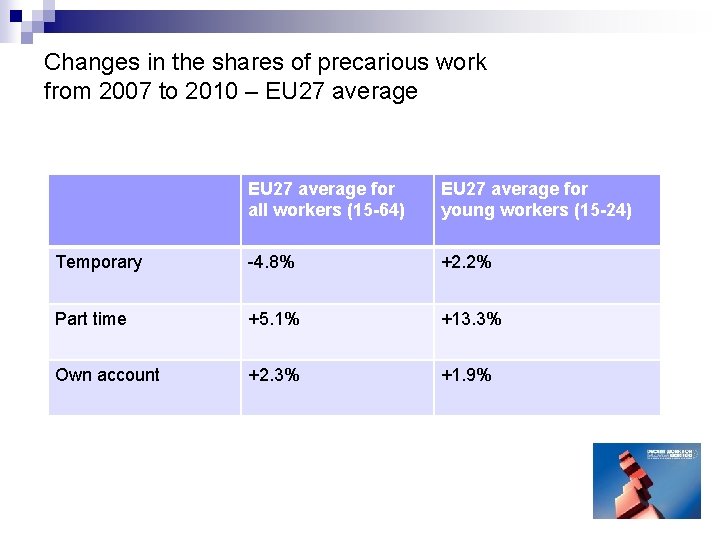
Changes in the shares of precarious work from 2007 to 2010 – EU 27 average for all workers (15 -64) EU 27 average for young workers (15 -24) Temporary -4. 8% +2. 2% Part time +5. 1% +13. 3% Own account +2. 3% +1. 9%
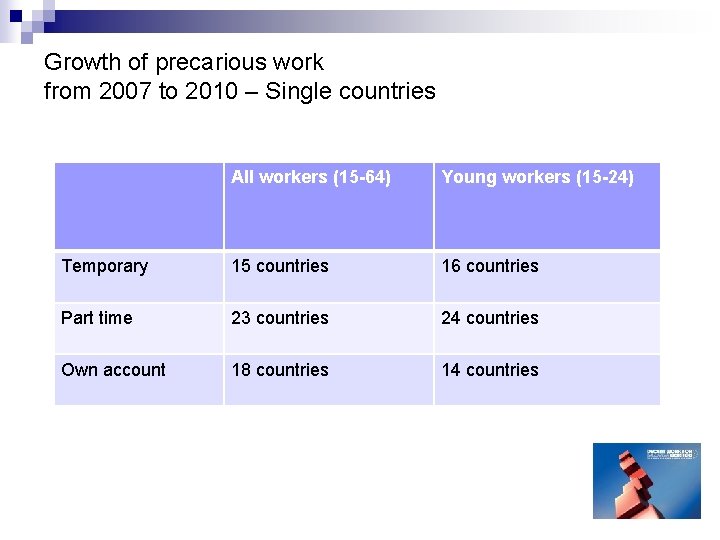
Growth of precarious work from 2007 to 2010 – Single countries All workers (15 -64) Young workers (15 -24) Temporary 15 countries 16 countries Part time 23 countries 24 countries Own account 18 countries 14 countries