
PRECAMBRIAN PROTEROZOIC PRECAMBRIAN EONS PROTEROZOIC EON ARCHEAN EON

PRECAMBRIAN PROTEROZOIC
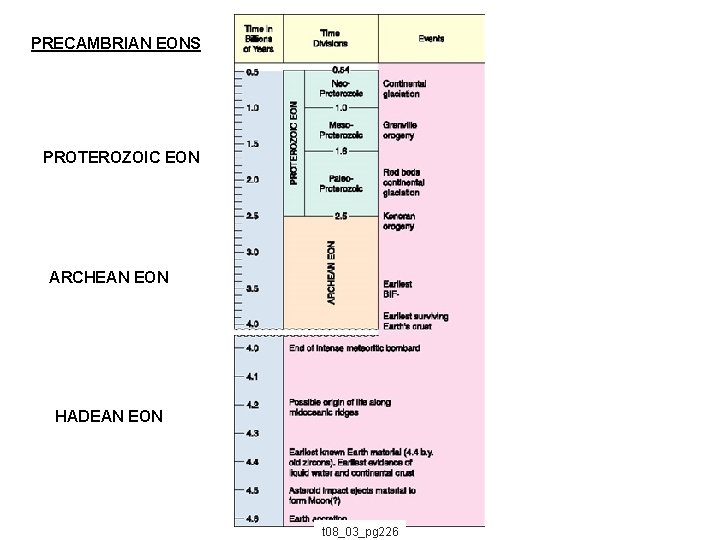
PRECAMBRIAN EONS PROTEROZOIC EON ARCHEAN EON HADEAN EON t 08_03_pg 226
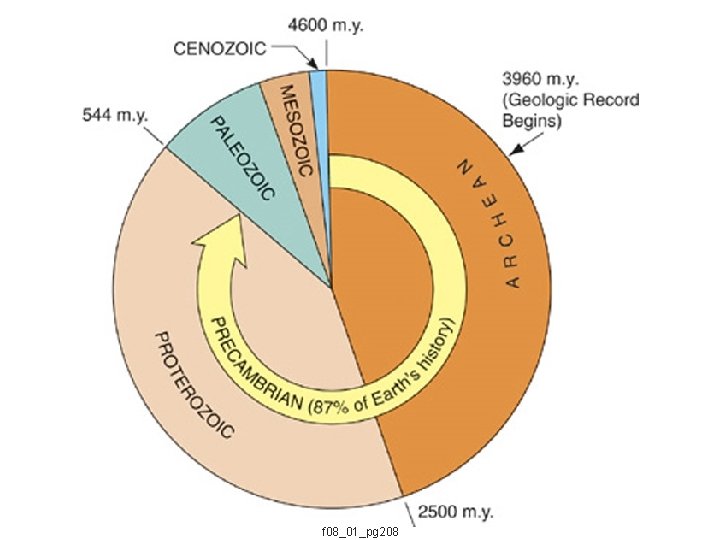
f 08_01_pg 208
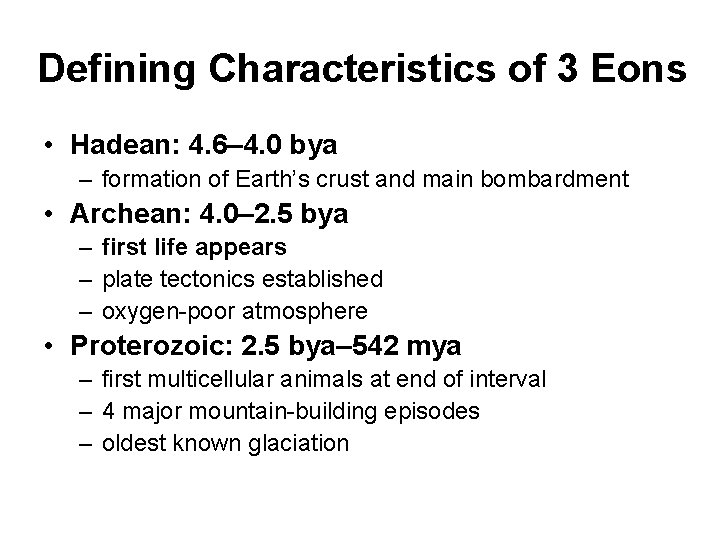
Defining Characteristics of 3 Eons • Hadean: 4. 6– 4. 0 bya – formation of Earth’s crust and main bombardment • Archean: 4. 0– 2. 5 bya – first life appears – plate tectonics established – oxygen-poor atmosphere • Proterozoic: 2. 5 bya– 542 mya – first multicellular animals at end of interval – 4 major mountain-building episodes – oldest known glaciation

Proterozoic
f 09_01_pg 3
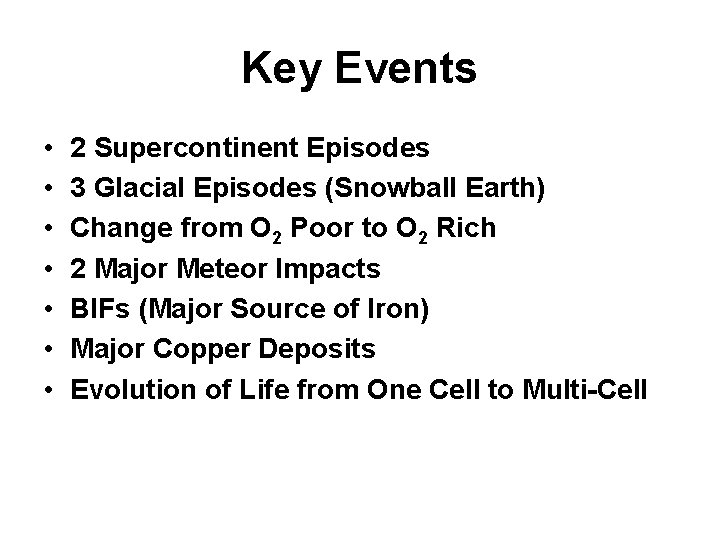
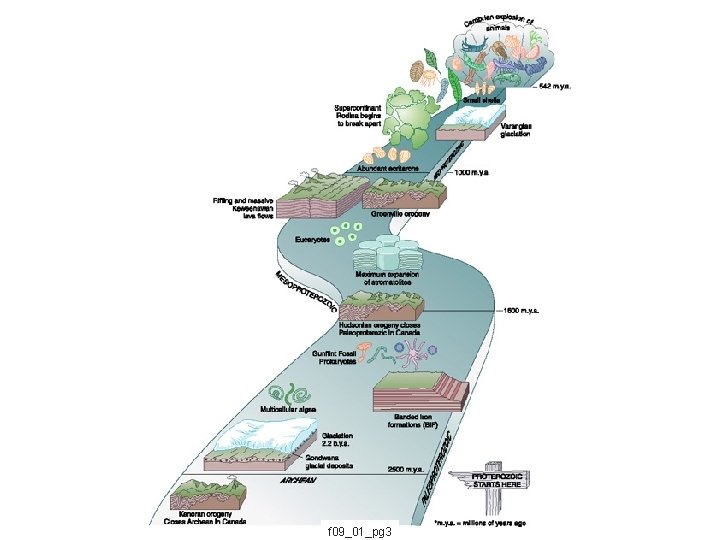
Key Events • • 2 Supercontinent Episodes 3 Glacial Episodes (Snowball Earth) Change from O 2 Poor to O 2 Rich 2 Major Meteor Impacts BIFs (Major Source of Iron) Major Copper Deposits Evolution of Life from One Cell to Multi-Cell
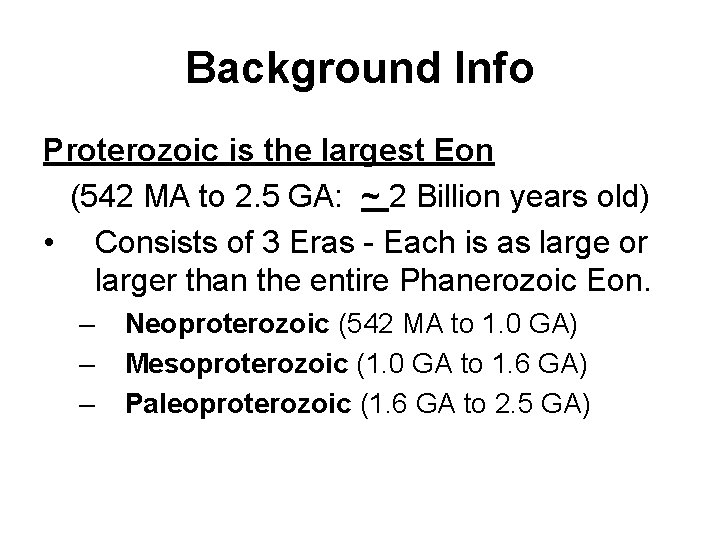
Background Info Proterozoic is the largest Eon (542 MA to 2. 5 GA: ~ 2 Billion years old) • Consists of 3 Eras - Each is as large or larger than the entire Phanerozoic Eon. – – – Neoproterozoic (542 MA to 1. 0 GA) Mesoproterozoic (1. 0 GA to 1. 6 GA) Paleoproterozoic (1. 6 GA to 2. 5 GA)
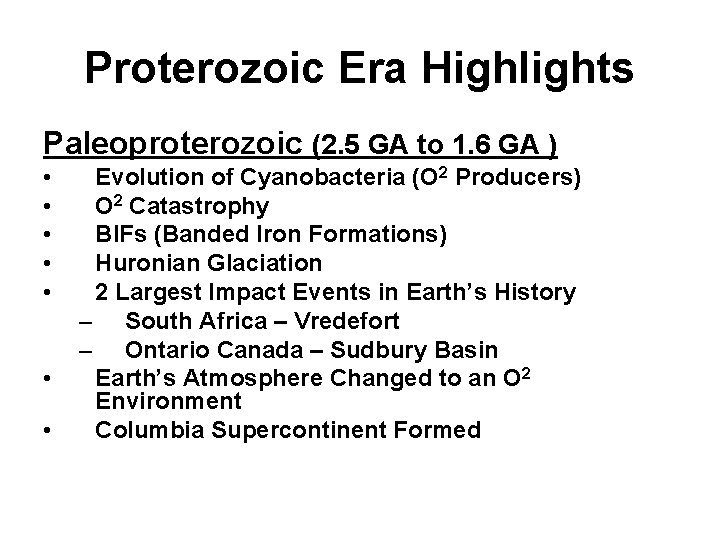
Proterozoic Era Highlights Paleoproterozoic (2. 5 GA to 1. 6 GA ) • • Evolution of Cyanobacteria (O 2 Producers) O 2 Catastrophy BIFs (Banded Iron Formations) Huronian Glaciation 2 Largest Impact Events in Earth’s History – South Africa – Vredefort – Ontario Canada – Sudbury Basin Earth’s Atmosphere Changed to an O 2 Environment Columbia Supercontinent Formed
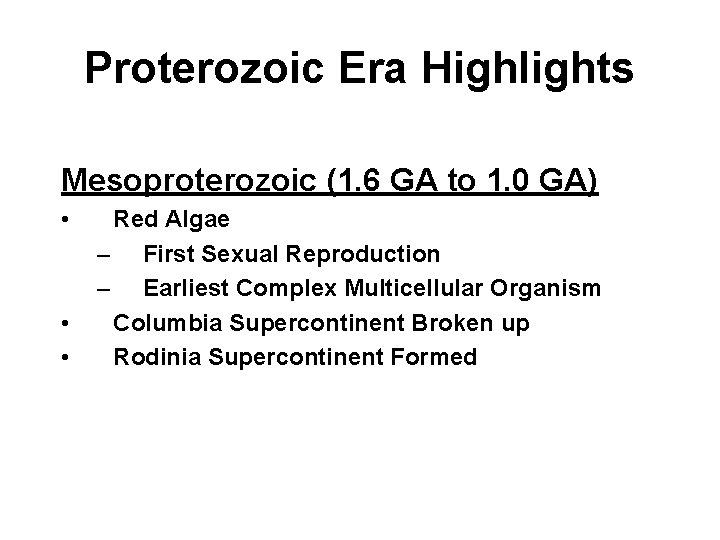
Proterozoic Era Highlights Mesoproterozoic (1. 6 GA to 1. 0 GA) • • • Red Algae – First Sexual Reproduction – Earliest Complex Multicellular Organism Columbia Supercontinent Broken up Rodinia Supercontinent Formed
Proterozoic Era Highlights Neoproterozoic (1. 0 GA to 542 MA) • • • Extreme Glaciation (Snowball Earth) Earliest Multicellular Organisms (Ediacaren) Break-up of Rodinia Supercontinent

Supercontinents
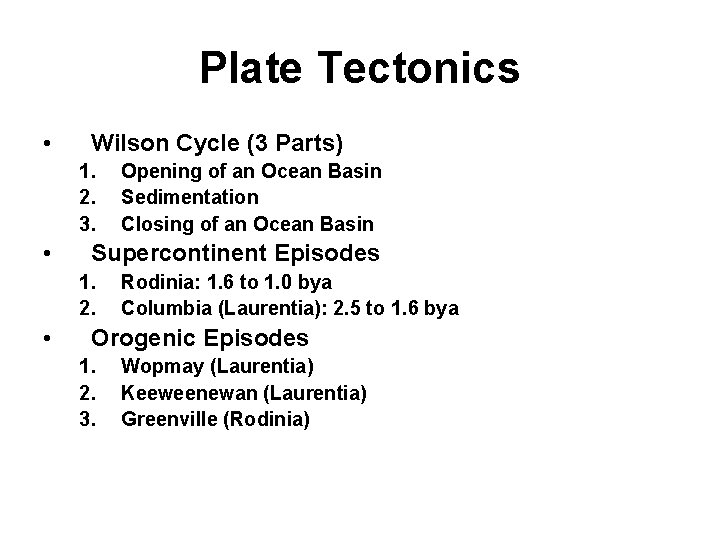
Plate Tectonics • Wilson Cycle (3 Parts) 1. 2. 3. • Supercontinent Episodes 1. 2. • Opening of an Ocean Basin Sedimentation Closing of an Ocean Basin Rodinia: 1. 6 to 1. 0 bya Columbia (Laurentia): 2. 5 to 1. 6 bya Orogenic Episodes 1. 2. 3. Wopmay (Laurentia) Keeweenewan (Laurentia) Greenville (Rodinia)
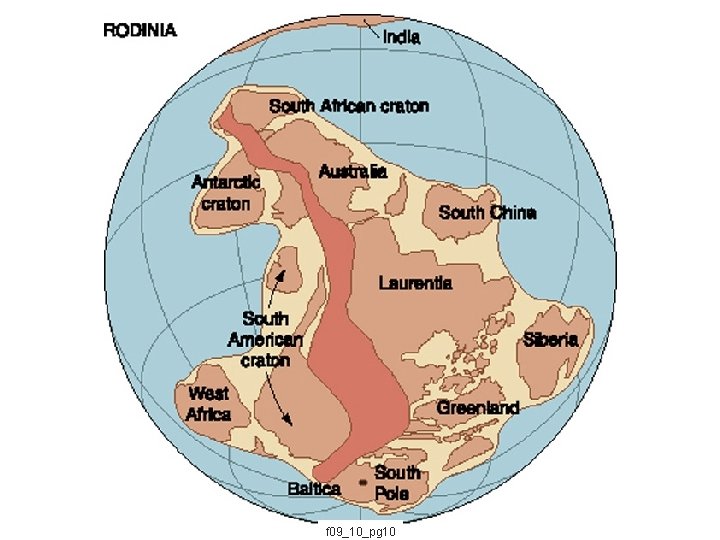
f 09_10_pg 10
Oxygen Catastrophy
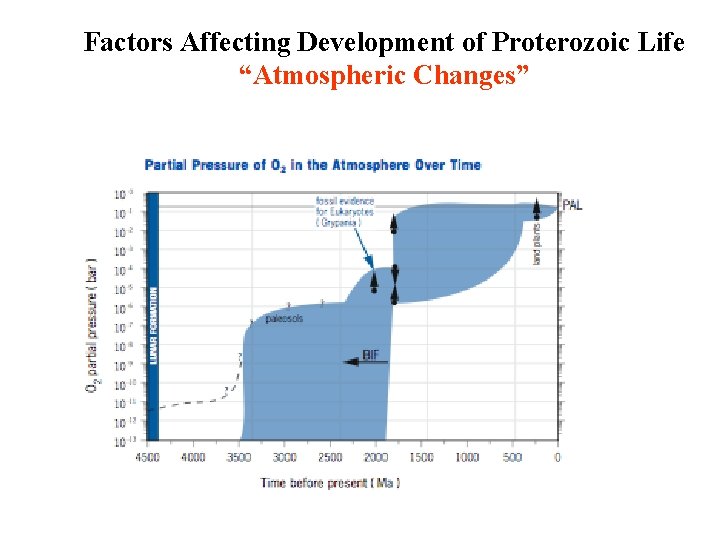
Oxygen Catastrophy (1. 6 – 2. 5 bya) • Oxygen created from photosynthesis • Oxygen toxic to anaerobic organisms • Initial lag of 300 million years for free oxygen in the atmosphere • Oxygen initially combined with free iron in the oceans to form magnetite.
Formation of an Oxygen-rich Atmosphere • The change from an oxygen-poor to an oxygen-rich atmosphere occurred by the Proterozoic, which began 2. 5 billion years ago at the end of the Archean. • The development of an oxygen-rich atmosphere is the result of: • Photochemical dissociation - The breaking up of water molecules into hydrogen and oxygen in the upper atmosphere caused by ultraviolet radiation from the Sun (a minor process today) • Photosynthesis - The process by which photosynthetic bacteria and plants produce oxygen (major process).
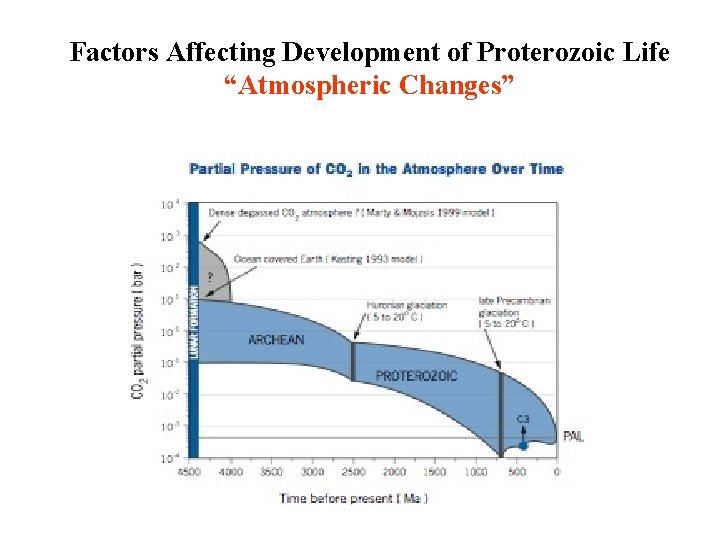
Evidence for Free Oxygen in the Proterozoic Atmosphere • Red beds, or sedimentary rocks with iron oxide cements, including shales, siltstones, and sandstones, appear in rocks younger than 1. 8 billion years old. This is in the Proterozoic Eon, after the disappearance of the BIF. • Carbonate rocks (limestones and dolostones) appear in the stratigraphic record at about the same time that red beds appear. This indicates that carbon dioxide was less abundant in the atmosphere and oceans so that the water was no longer acidic.

Asteroid Impacts
Asteroid Impacts Paleoproterozoic (2. 5 GA to 1. 6 GA ) • • 2 Largest Impact Events in Earth’s History – South Africa – Vredefort – Ontario Canada – Sudbury Basin U. S. : – Barringer Meteor Crater - Arizona

Glacial Episodes
Glaciation • By 2. 8 billion years ago, Earth had cooled sufficiently for glaciation to occur. Earth's earliest glaciation is recorded in 2. 8 billion year-old sedimentary rocks in South Africa.
Glaciation Snowball Earth (635 – 750 MA) 1. Marinoan (635 – 700 MA) 2. Sturtian (700 – 750 MA) 3. Huronian (2. 5 – 1. 6 GA)
Snowball Earth (630 – 850 mya) • Glacial Periods: Startian & Marinoan/Varanger • Causes – – Reflective surface of continents Removal of CO 2 from atmosphere Change in ocean circulation patterns Intro of pure oxygen which converted methane into CO 2 – Reduction in Organic Activity • Subsequent melting caused by emission of CO 2 from volcanic activity

ICE THICKNESSES
Proterozoic Life Forms
Proterozoic Life Forms • • Life Forms – Acritiarchs (Single Celled) – Ediacarens (Multi-Celled) Evolutionary Development – From Prokaryotic to Eukaryotic – Onset of Sexual Reproduction – From Single Cell to Multi-Cell – Soft-Bodied to Shell Covering
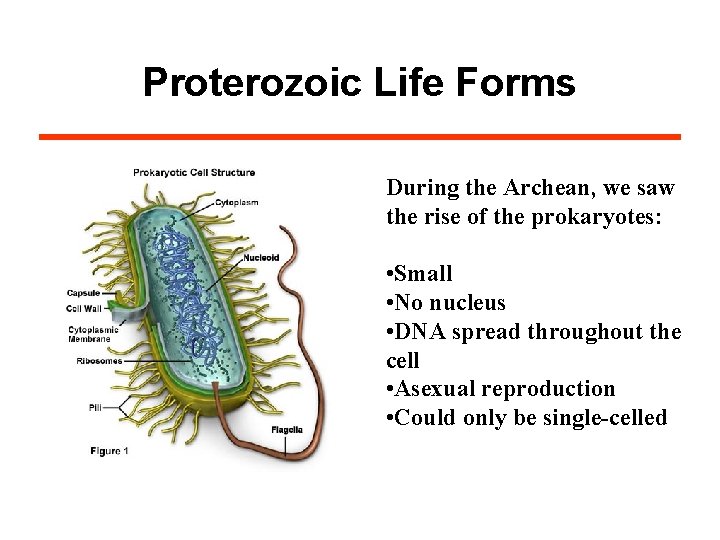
Proterozoic Life Forms During the Archean, we saw the rise of the prokaryotes: • Small • No nucleus • DNA spread throughout the cell • Asexual reproduction • Could only be single-celled
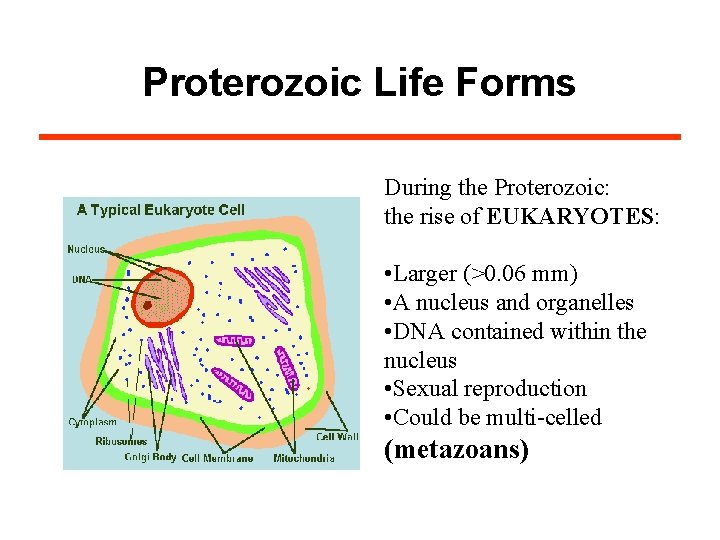
Proterozoic Life Forms During the Proterozoic: the rise of EUKARYOTES: • Larger (>0. 06 mm) • A nucleus and organelles • DNA contained within the nucleus • Sexual reproduction • Could be multi-celled (metazoans)
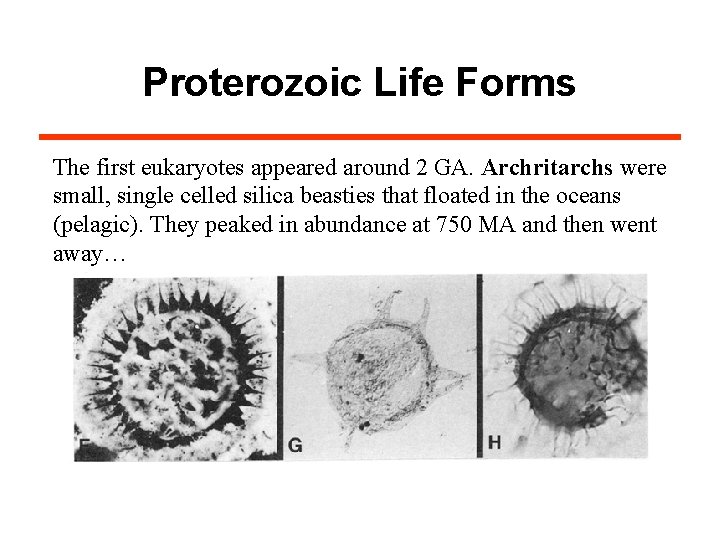
Proterozoic Life Forms The first eukaryotes appeared around 2 GA. Archritarchs were small, single celled silica beasties that floated in the oceans (pelagic). They peaked in abundance at 750 MA and then went away… 0. 1 mm
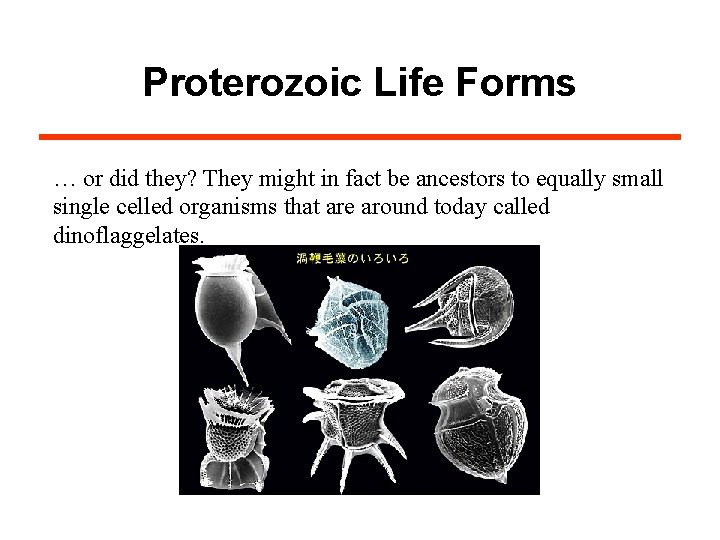
Proterozoic Life Forms … or did they? They might in fact be ancestors to equally small single celled organisms that are around today called dinoflaggelates. 0. 1 mm
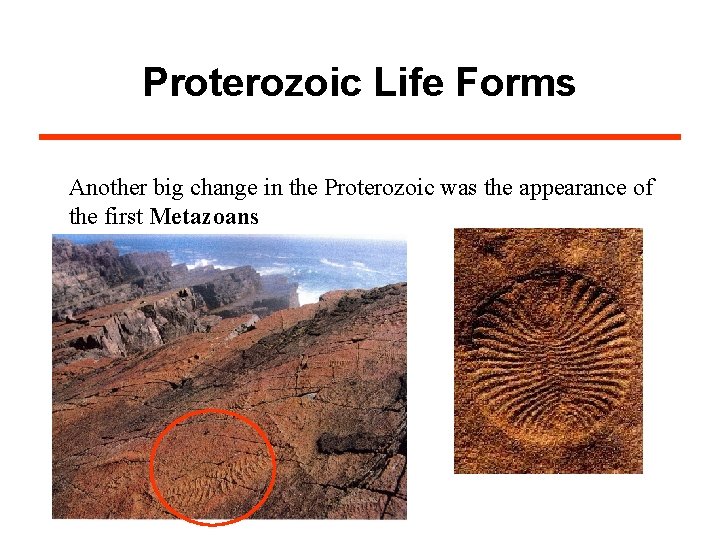
Proterozoic Life Forms Another big change in the Proterozoic was the appearance of the first Metazoans 5 cm
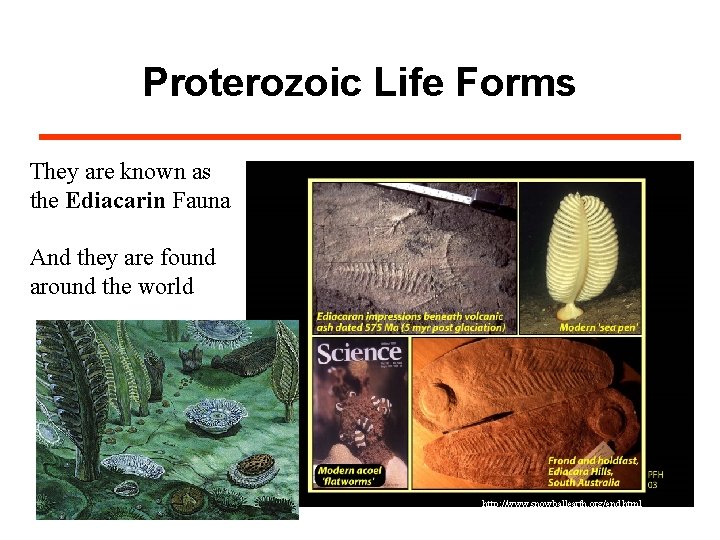
Proterozoic Life Forms They are known as the Ediacarin Fauna And they are found around the world http: //www. snowballearth. org/end. html http: //www. cartage. org. lb/en/themes/Sciences
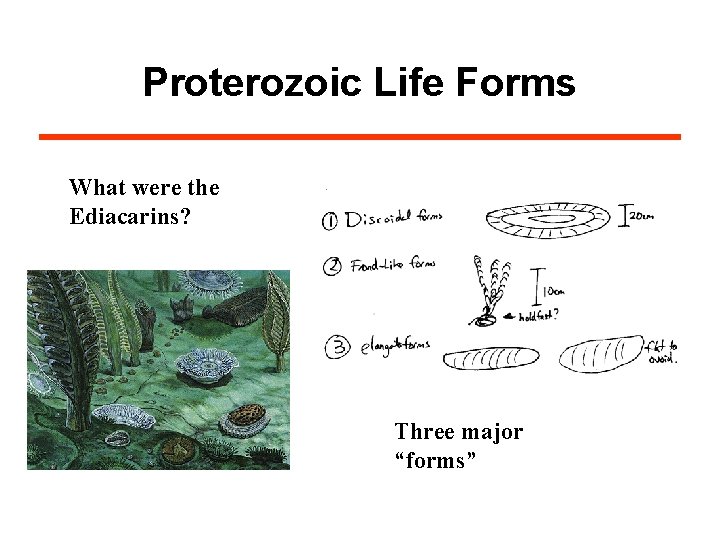
Proterozoic Life Forms What were the Ediacarins? Three major “forms” http: //www. cartage. org. lb/en/themes/Sciences
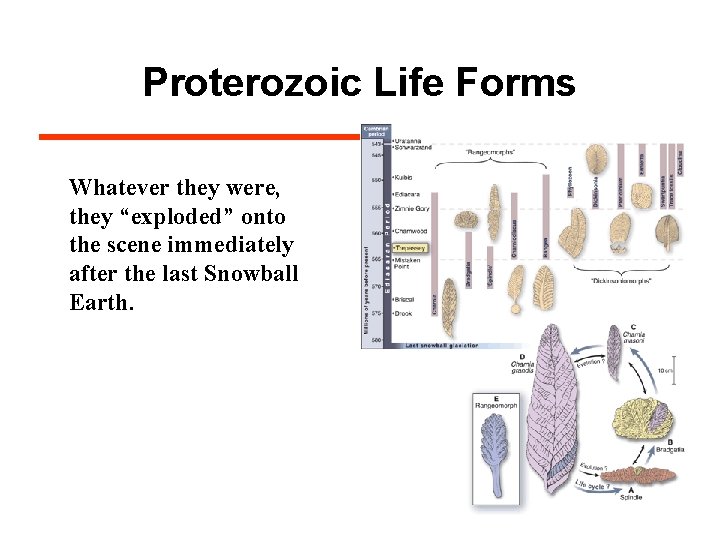
Proterozoic Life Forms Whatever they were, they “exploded” onto the scene immediately after the last Snowball Earth. http: //pharyngula. org/index/science/2004/08/
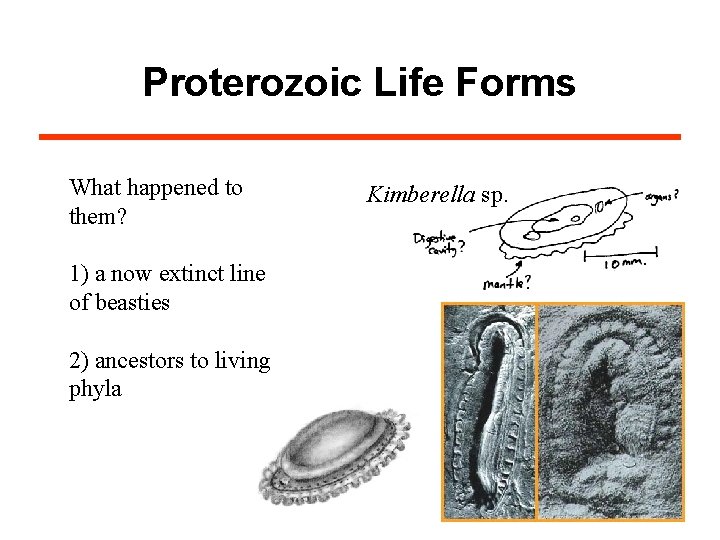
Proterozoic Life Forms What happened to them? Kimberella sp. 1) a now extinct line of beasties 2) ancestors to living phyla http: //www. ucmp. berkeley. edu/vendian/kimberella. jpg
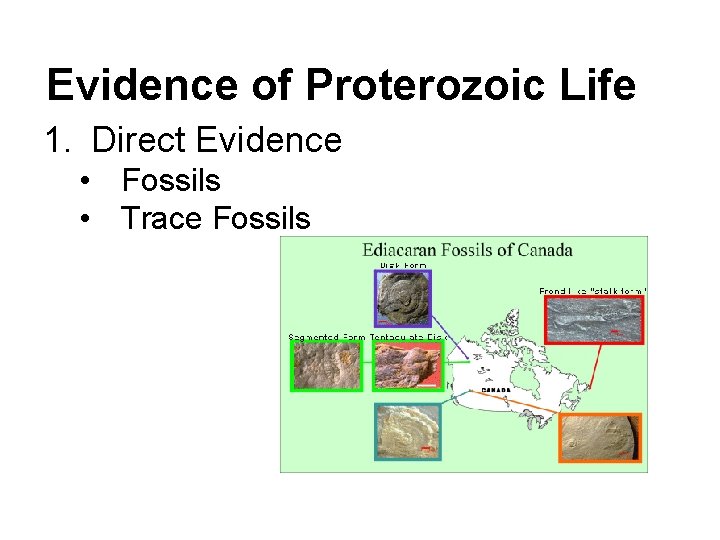
Evidence of Proterozoic Life 1. Direct Evidence • Fossils • Trace Fossils
Evidence of Proterozoic Life 2. Indirect Evidence • BIFs (Banded Iron Formation)

Factors Affecting Development of Proterozoic Life
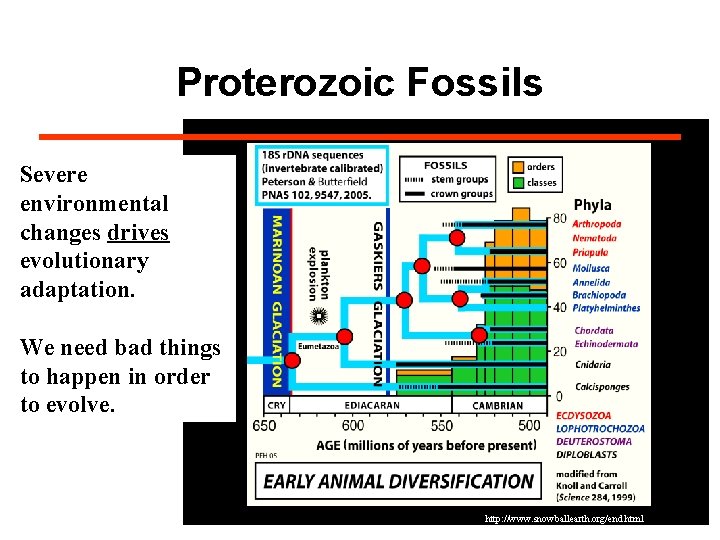
Proterozoic Fossils Severe environmental changes drives evolutionary adaptation. We need bad things to happen in order to evolve. http: //www. snowballearth. org/end. html
Factors Affecting Development of Proterozoic Life 1. Terrestrial 1. 2. 3. 4. Atmospheric Changes Climate Geography Results 1. Greenhouse Earth (no continental glaciers present) 2. Icehouse Earth (continental glaciers present) 3. Snowball Earth (Frozen oceans at equator)
Factors Affecting Development of Proterozoic Life “Atmospheric Changes”
Factors Affecting Development of Proterozoic Life “Atmospheric Changes”
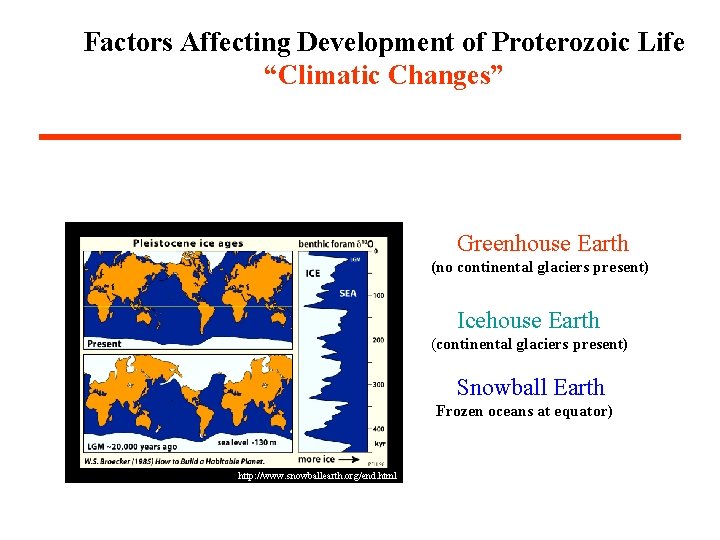
Factors Affecting Development of Proterozoic Life “Climatic Changes” We now recognize three major Earth phases 1) Greenhouse Earth (no continental glaciers present) 2) Icehouse Earth (continental glaciers present) 3) Snowball Earth (Frozen oceans at equator) http: //www. snowballearth. org/end. html
Factors Affecting Development of Proterozoic Life 2. Extra-Terrestrial 1. Solar Radiation 2. Impact Events

Implications of Proterozoic Info
Implications of Proterozoic Info 1. Ediacarin Evolutionary Development 2. Diversity of Life 3. Present Day Global Warming

THE END
- Slides: 48