
PreAP Algebra 2 Goals Analyze graphs of functions

Pre-AP Algebra 2 Goal(s): ØAnalyze graphs of functions to determine: ØDomain & Range ØZeros (from intercept form) ØIncreasing/decreasing intervals ØLocal and global maximum/minimum ØPositive/negative intervals
Characteristics of Function Graphs ü Domain: x-values (left to right) of a function ü Range: y-values (bottom to top) of a function Domain and range can be written in inequality or interval notation. Remember to write domain & range values from LOW to HIGH.
Characteristics of Function Graphs A function (or part of a function) is said to be positive if the y-values are greater than zero for a defined interval of the graph. A function (or part of a function) is said to be negative if the y-values are less than zero for a defined interval of the graph.
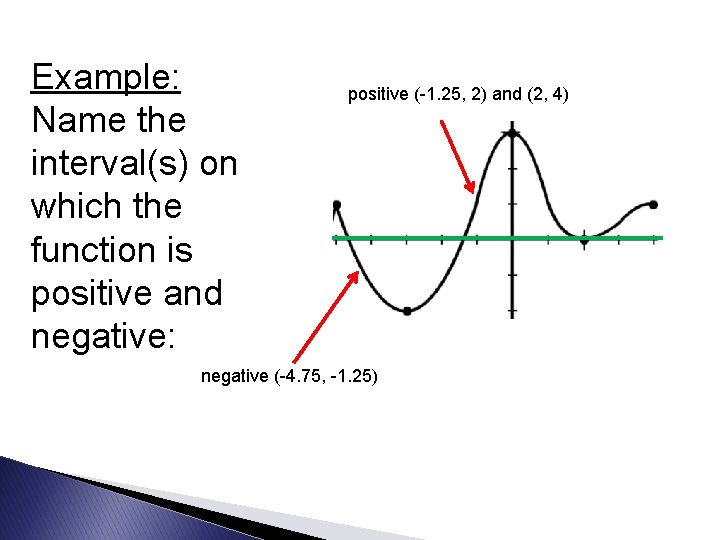
Example: Name the interval(s) on which the function is positive and negative: positive (-1. 25, 2) and (2, 4) negative (-4. 75, -1. 25)
Characteristics of Function Graphs A function (or part of a function) is said to be increasing if the y-values are increasing as the x-values increase (read from left to right). A function (or part of a function) is said to be decreasing if the y-values are decreasing as the x-values increase (read from left to right).
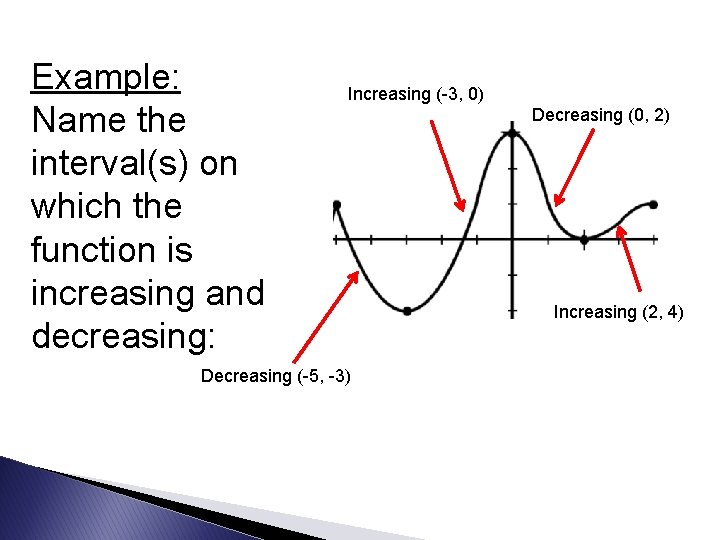
Example: Name the interval(s) on which the function is increasing and decreasing: Increasing (-3, 0) Decreasing (-5, -3) Decreasing (0, 2) Increasing (2, 4)
Characteristics of Function Graphs The absolute (or global) minimum is the lowest point on the entirety of a graph. If the range -∞ , there is no absolute minimum. The absolute (or global) maximum is the highest point on the entirety of a graph. If the range ∞ , there is no absolute maximum.
Characteristics of Function Graphs The local minimum is the lowest point on a defined interval of a graph. The local maximum is the highest point on a defined interval of a graph.
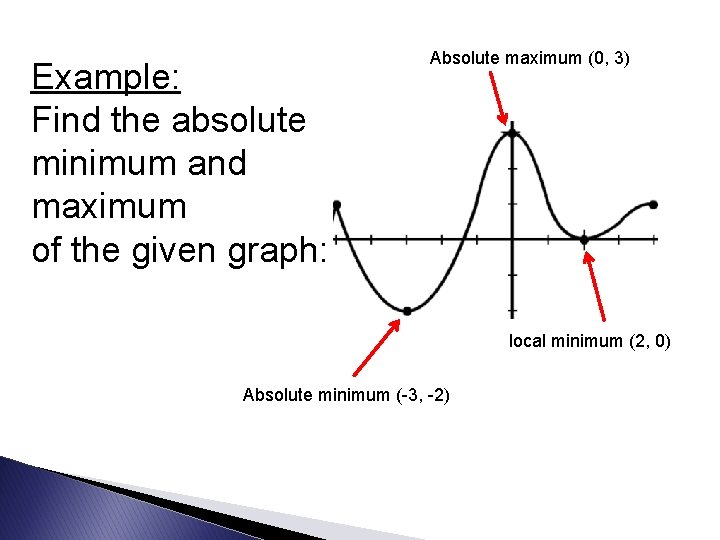
Example: Find the absolute minimum and maximum of the given graph: Absolute maximum (0, 3) local minimum (2, 0) Absolute minimum (-3, -2)
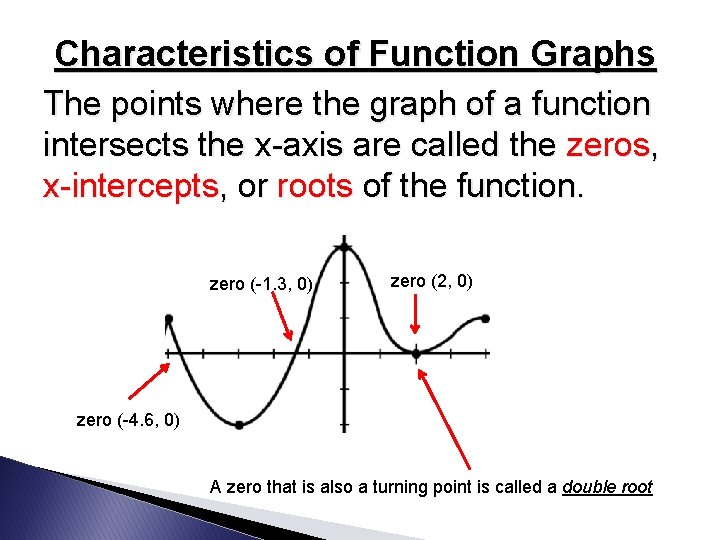
Characteristics of Function Graphs The points where the graph of a function intersects the x-axis are called the zeros, x-intercepts, or roots of the function. zero (-1. 3, 0) zero (2, 0) zero (-4. 6, 0) A zero that is also a turning point is called a double root
- Slides: 10