
Preanalytical factors that can affect coag test results


- Slides: 54
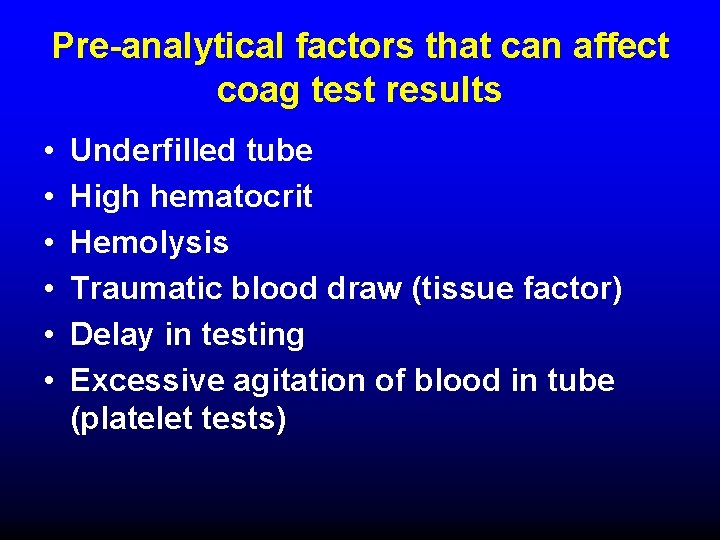
Pre-analytical factors that can affect coag test results • • • Underfilled tube High hematocrit Hemolysis Traumatic blood draw (tissue factor) Delay in testing Excessive agitation of blood in tube (platelet tests)
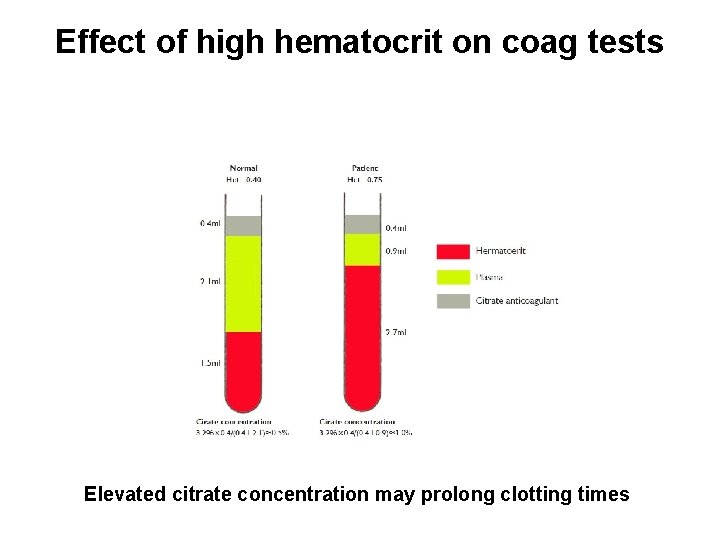
Effect of high hematocrit on coag tests Elevated citrate concentration may prolong clotting times
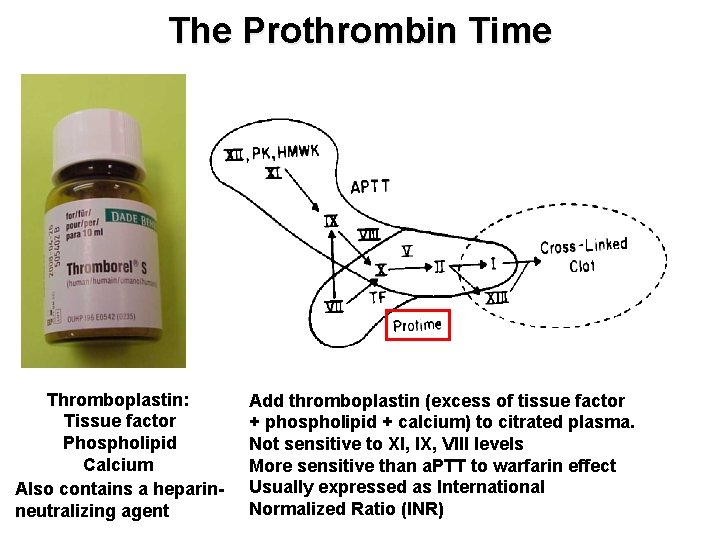
The Prothrombin Time Thromboplastin: Tissue factor Phospholipid Calcium Also contains a heparinneutralizing agent Add thromboplastin (excess of tissue factor + phospholipid + calcium) to citrated plasma. Not sensitive to XI, IX, VIII levels More sensitive than a. PTT to warfarin effect Usually expressed as International Normalized Ratio (INR)
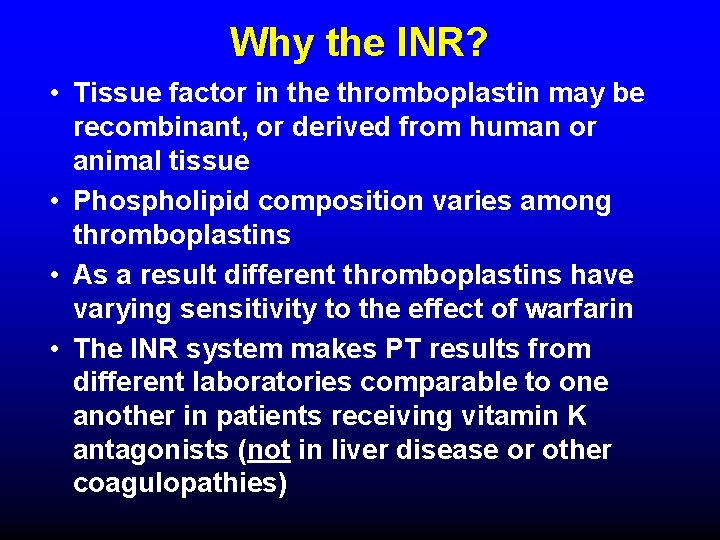
Why the INR? • Tissue factor in the thromboplastin may be recombinant, or derived from human or animal tissue • Phospholipid composition varies among thromboplastins • As a result different thromboplastins have varying sensitivity to the effect of warfarin • The INR system makes PT results from different laboratories comparable to one another in patients receiving vitamin K antagonists (not in liver disease or other coagulopathies)
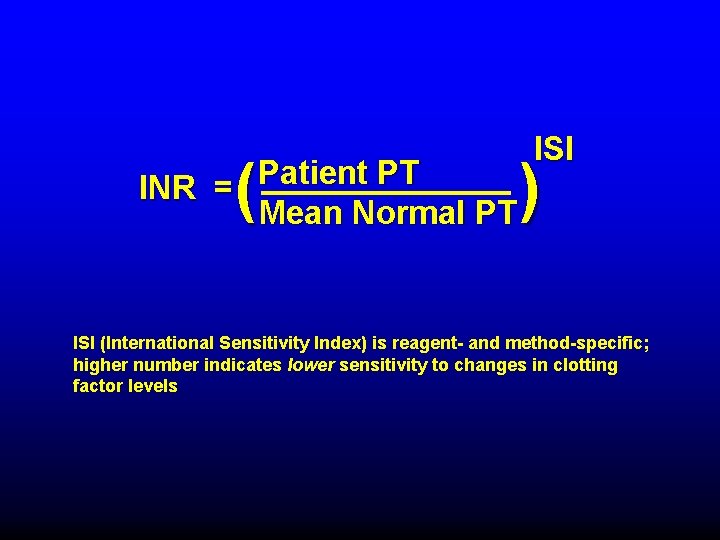
( ISI ) Patient PT INR = Mean Normal PT ISI (International Sensitivity Index) is reagent- and method-specific; higher number indicates lower sensitivity to changes in clotting factor levels
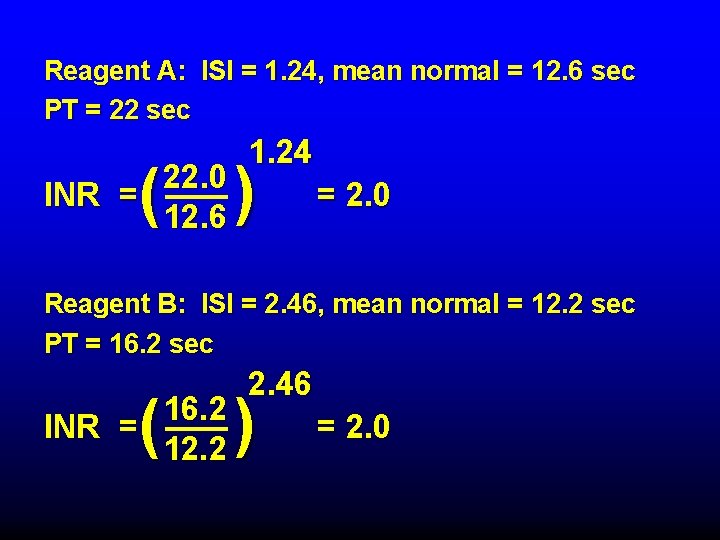
Reagent A: ISI = 1. 24, mean normal = 12. 6 sec PT = 22 sec ( 22. 0 INR = 12. 6 1. 24 ) = 2. 0 Reagent B: ISI = 2. 46, mean normal = 12. 2 sec PT = 16. 2 sec ( 16. 2 INR = 12. 2 2. 46 ) = 2. 0
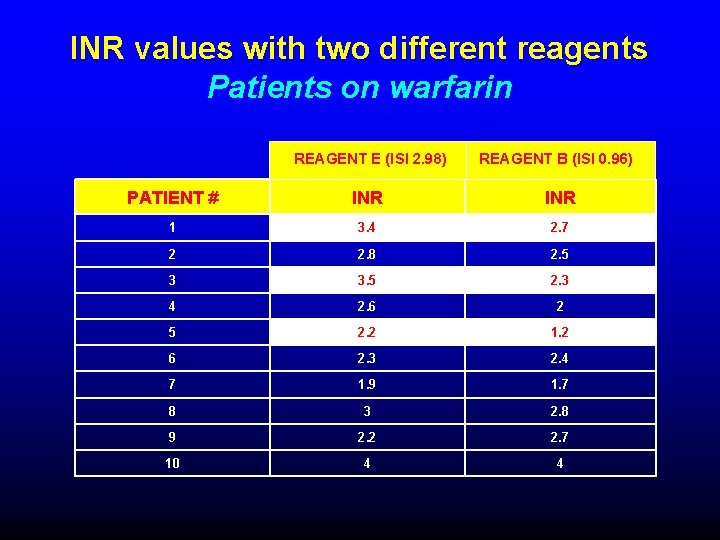
INR values with two different reagents Patients on warfarin REAGENT E (ISI 2. 98) REAGENT B (ISI 0. 96) PATIENT # INR 1 3. 4 2. 7 2 2. 8 2. 5 3 3. 5 2. 3 4 2. 6 2 5 2. 2 1. 2 6 2. 3 2. 4 7 1. 9 1. 7 8 3 2. 8 9 2. 2 2. 7 10 4 4
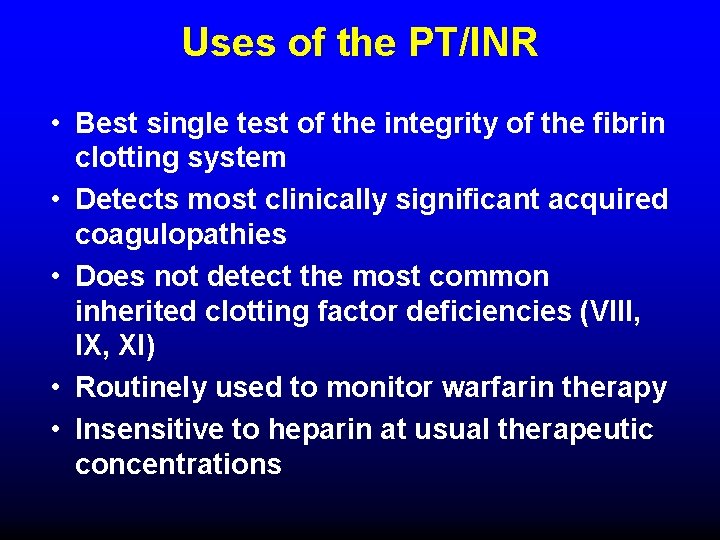
Uses of the PT/INR • Best single test of the integrity of the fibrin clotting system • Detects most clinically significant acquired coagulopathies • Does not detect the most common inherited clotting factor deficiencies (VIII, IX, XI) • Routinely used to monitor warfarin therapy • Insensitive to heparin at usual therapeutic concentrations
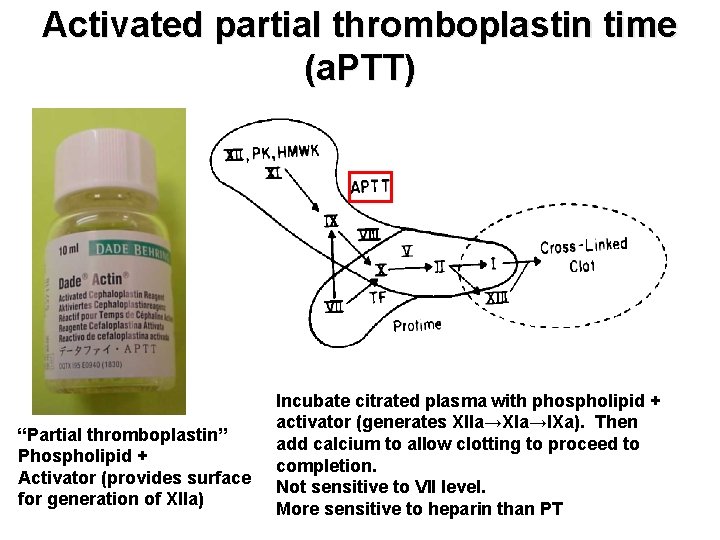
Activated partial thromboplastin time (a. PTT) “Partial thromboplastin” Phospholipid + Activator (provides surface for generation of XIIa) Incubate citrated plasma with phospholipid + activator (generates XIIa→XIa→IXa). Then add calcium to allow clotting to proceed to completion. Not sensitive to VII level. More sensitive to heparin than PT
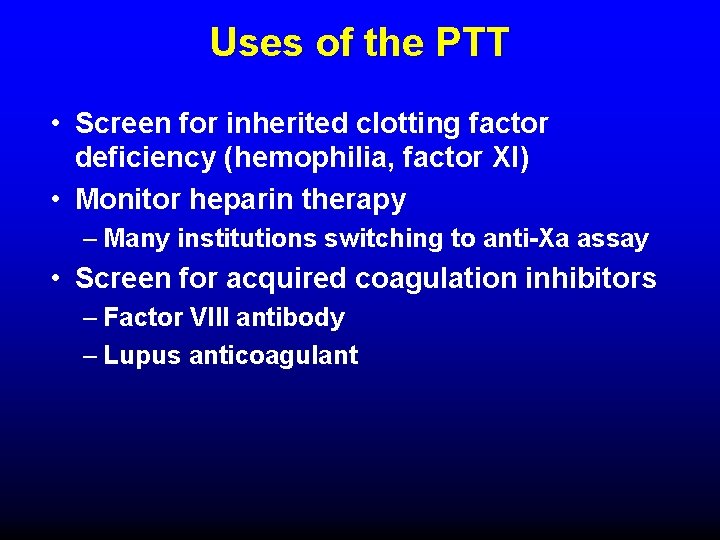
Uses of the PTT • Screen for inherited clotting factor deficiency (hemophilia, factor XI) • Monitor heparin therapy – Many institutions switching to anti-Xa assay • Screen for acquired coagulation inhibitors – Factor VIII antibody – Lupus anticoagulant
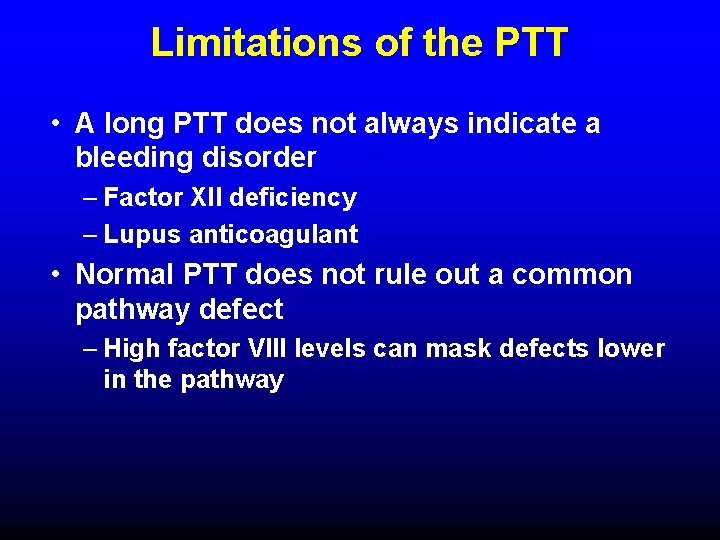
Limitations of the PTT • A long PTT does not always indicate a bleeding disorder – Factor XII deficiency – Lupus anticoagulant • Normal PTT does not rule out a common pathway defect – High factor VIII levels can mask defects lower in the pathway
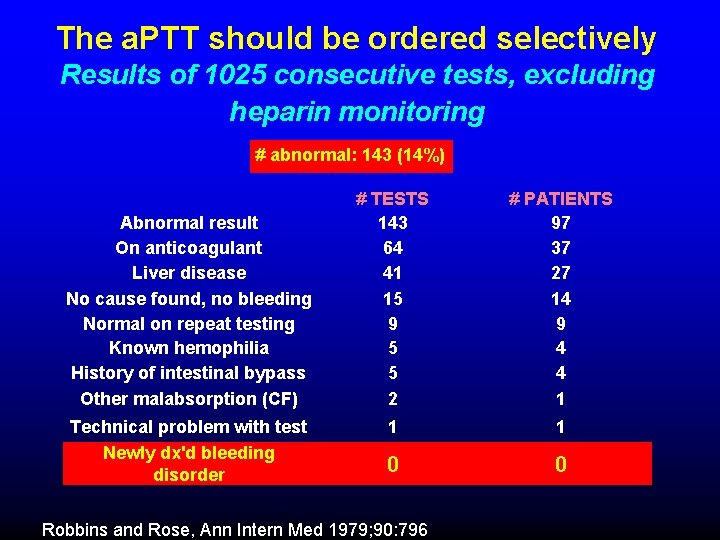
The a. PTT should be ordered selectively Results of 1025 consecutive tests, excluding heparin monitoring # abnormal: 143 (14%) Abnormal result On anticoagulant Liver disease No cause found, no bleeding Normal on repeat testing Known hemophilia History of intestinal bypass Other malabsorption (CF) Technical problem with test Newly dx'd bleeding disorder # TESTS 143 64 41 15 9 5 5 2 # PATIENTS 97 37 27 14 9 4 4 1 1 1 0 0 Robbins and Rose, Ann Intern Med 1979; 90: 796
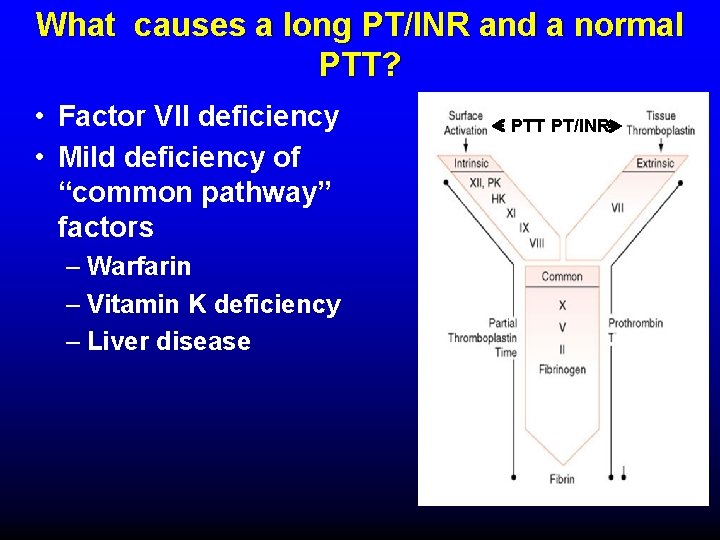
What causes a long PT/INR and a normal PTT? • Factor VII deficiency • Mild deficiency of “common pathway” factors – Warfarin – Vitamin K deficiency – Liver disease PTT PT/INR
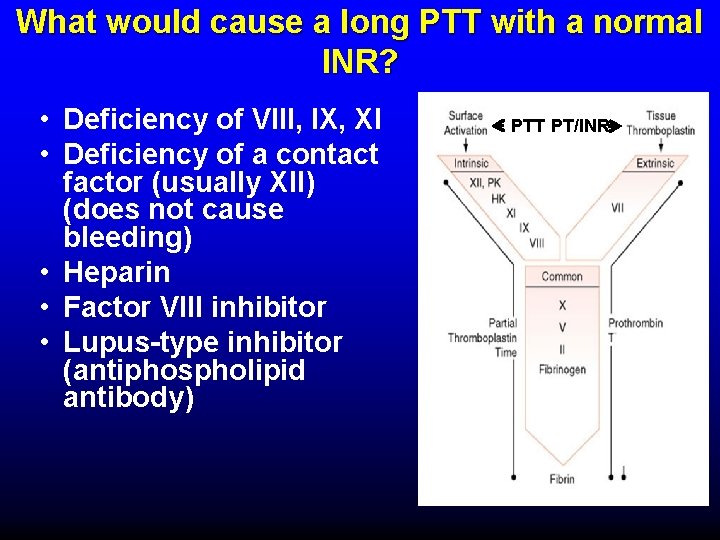
What would cause a long PTT with a normal INR? • Deficiency of VIII, IX, XI • Deficiency of a contact factor (usually XII) (does not cause bleeding) • Heparin • Factor VIII inhibitor • Lupus-type inhibitor (antiphospholipid antibody) PTT PT/INR
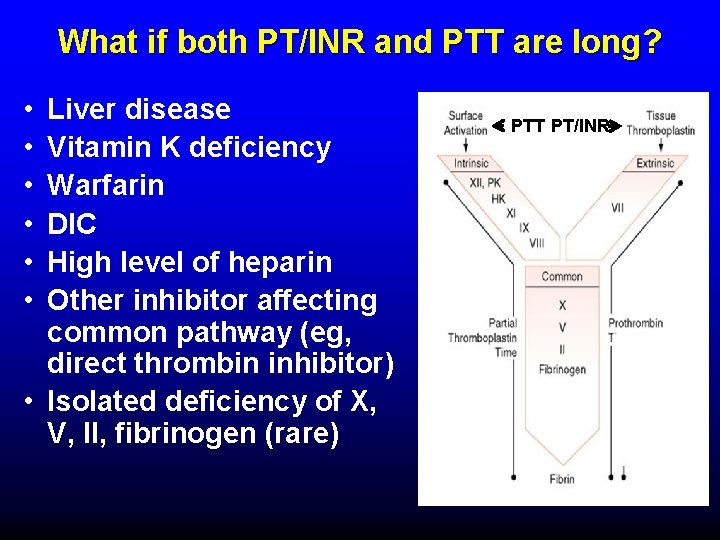
What if both PT/INR and PTT are long? • • • Liver disease Vitamin K deficiency Warfarin DIC High level of heparin Other inhibitor affecting common pathway (eg, direct thrombin inhibitor) • Isolated deficiency of X, V, II, fibrinogen (rare) PTT PT/INR
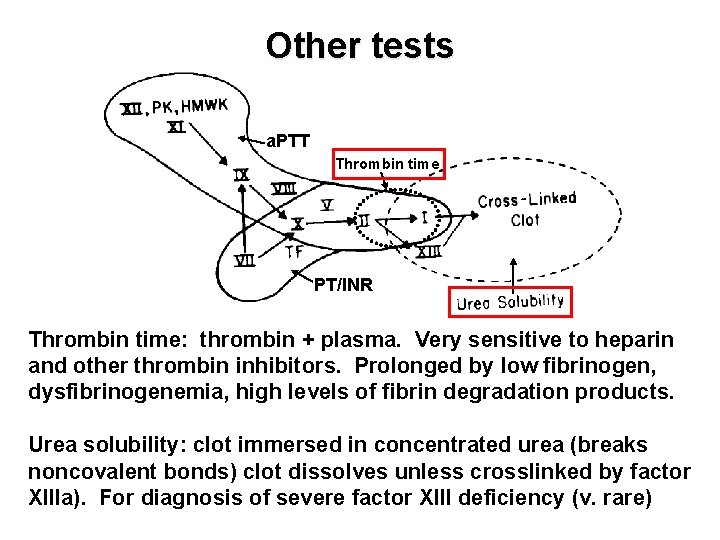
Other tests a. PTT Thrombin time PT/INR Thrombin time: thrombin + plasma. Very sensitive to heparin and other thrombin inhibitors. Prolonged by low fibrinogen, dysfibrinogenemia, high levels of fibrin degradation products. Urea solubility: clot immersed in concentrated urea (breaks noncovalent bonds) clot dissolves unless crosslinked by factor XIIIa). For diagnosis of severe factor XIII deficiency (v. rare)
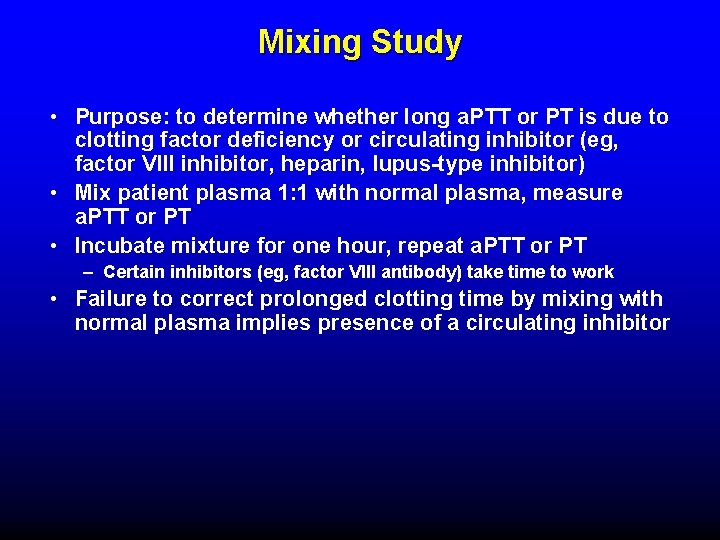
Mixing Study • Purpose: to determine whether long a. PTT or PT is due to clotting factor deficiency or circulating inhibitor (eg, factor VIII inhibitor, heparin, lupus-type inhibitor) • Mix patient plasma 1: 1 with normal plasma, measure a. PTT or PT • Incubate mixture for one hour, repeat a. PTT or PT – Certain inhibitors (eg, factor VIII antibody) take time to work • Failure to correct prolonged clotting time by mixing with normal plasma implies presence of a circulating inhibitor
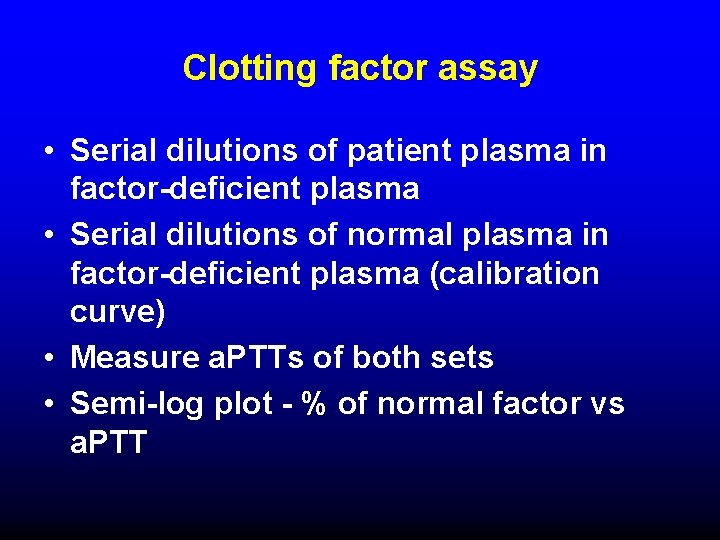
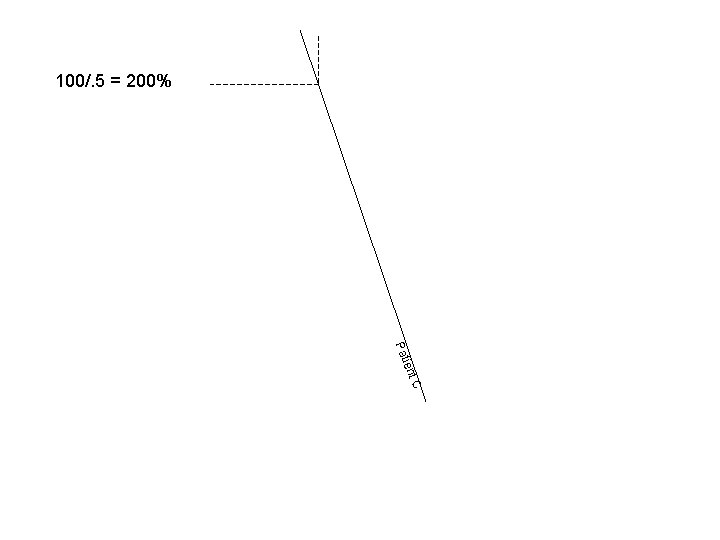
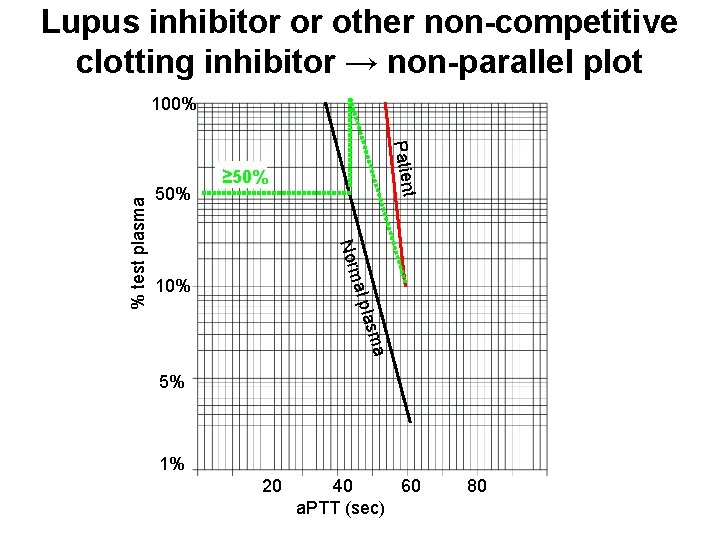
Clotting factor assay • Serial dilutions of patient plasma in factor-deficient plasma • Serial dilutions of normal plasma in factor-deficient plasma (calibration curve) • Measure a. PTTs of both sets • Semi-log plot - % of normal factor vs a. PTT
t. C ien Pat
100/. 5 = 200% t. C ien Pat
Lupus inhibitor or other non-competitive clotting inhibitor → non-parallel plot Patient 50% ≥ 50% Norm 10% a asm al pl % test plasma 100% 5% 1% 20 40 60 a. PTT (sec) 80
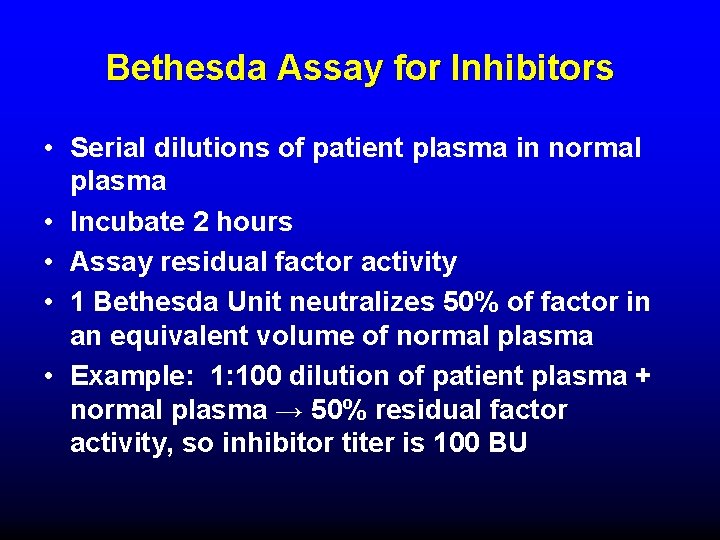
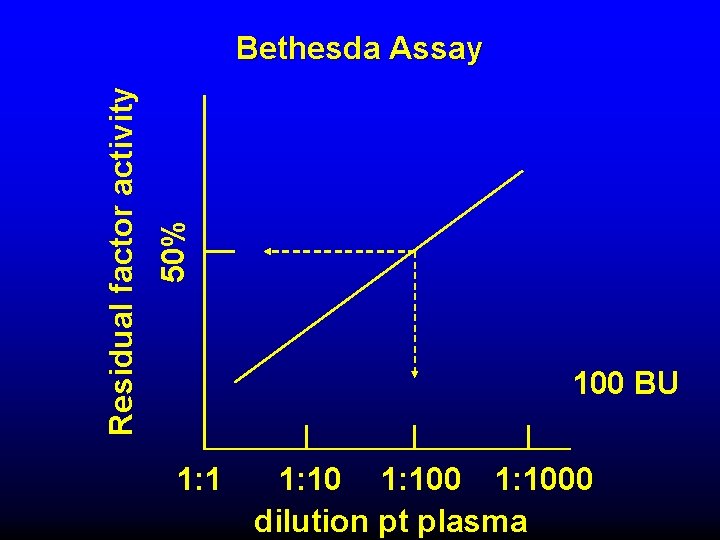
Bethesda Assay for Inhibitors • Serial dilutions of patient plasma in normal plasma • Incubate 2 hours • Assay residual factor activity • 1 Bethesda Unit neutralizes 50% of factor in an equivalent volume of normal plasma • Example: 1: 100 dilution of patient plasma + normal plasma → 50% residual factor activity, so inhibitor titer is 100 BU
50% Residual factor activity Bethesda Assay 100 BU 1: 1000 dilution pt plasma
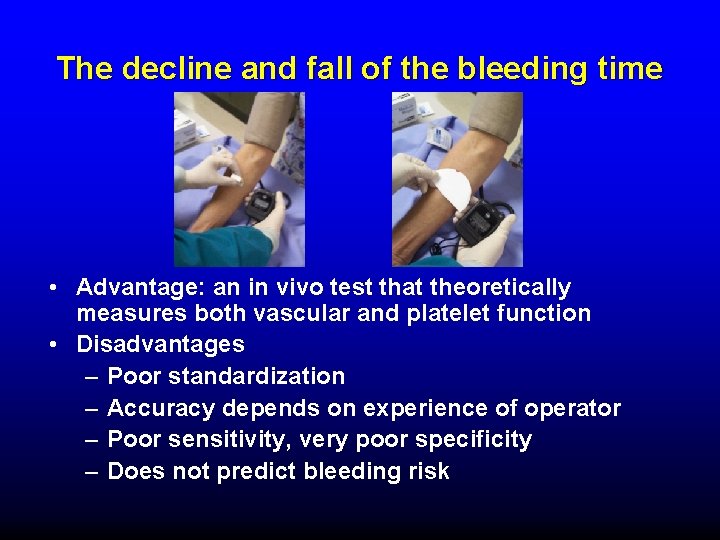
The decline and fall of the bleeding time • Advantage: an in vivo test that theoretically measures both vascular and platelet function • Disadvantages – Poor standardization – Accuracy depends on experience of operator – Poor sensitivity, very poor specificity – Does not predict bleeding risk
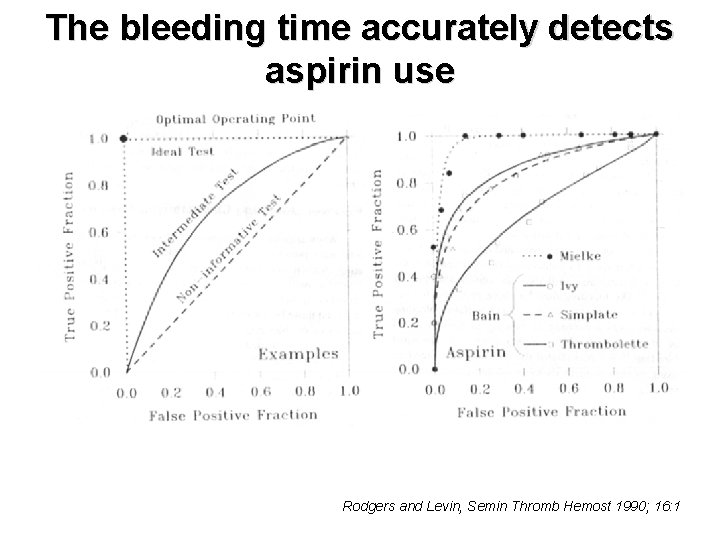
The bleeding time accurately detects aspirin use Rodgers and Levin, Semin Thromb Hemost 1990; 16: 1
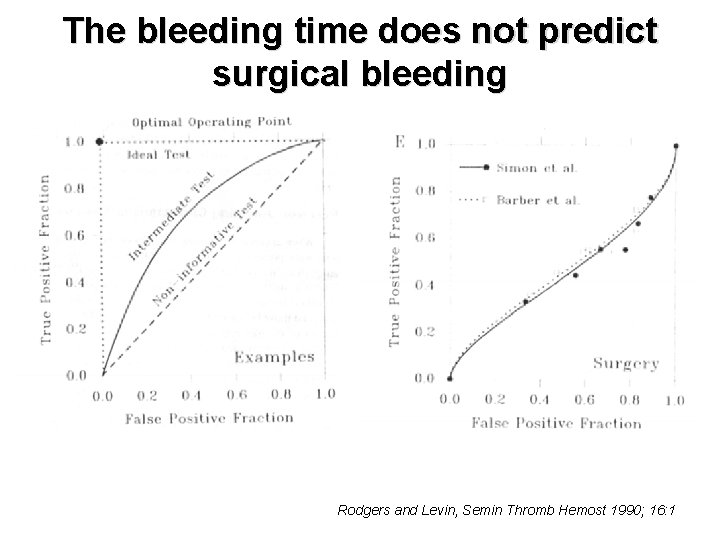
The bleeding time does not predict surgical bleeding Rodgers and Levin, Semin Thromb Hemost 1990; 16: 1
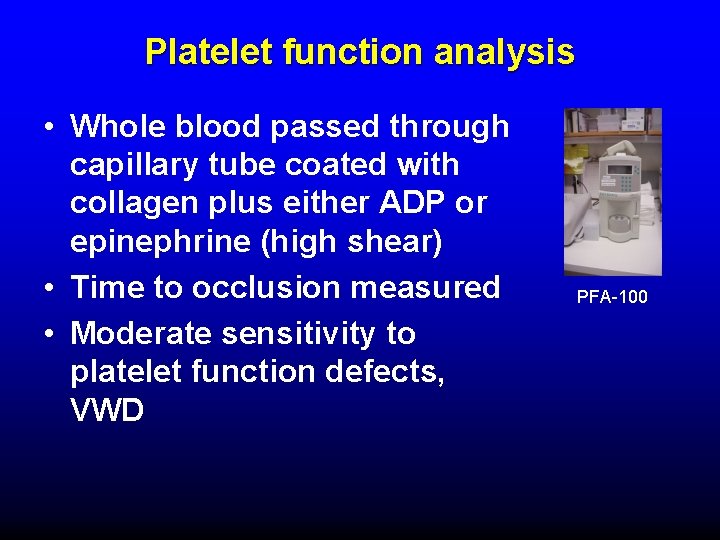
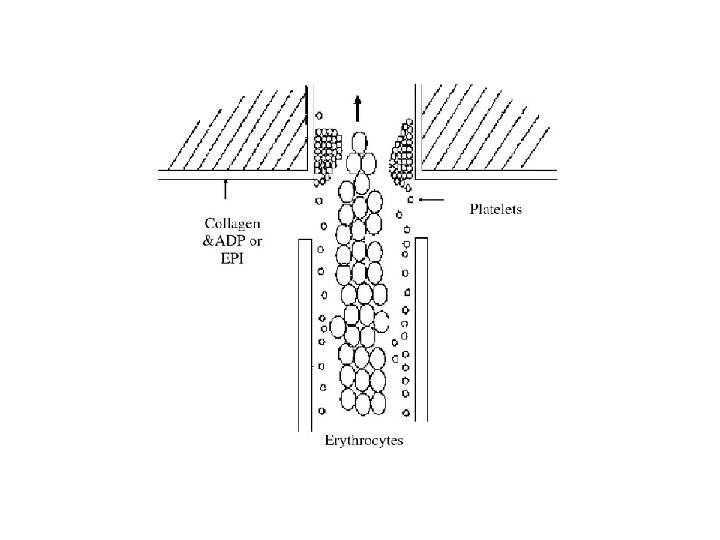
Platelet function analysis • Whole blood passed through capillary tube coated with collagen plus either ADP or epinephrine (high shear) • Time to occlusion measured • Moderate sensitivity to platelet function defects, VWD PFA-100
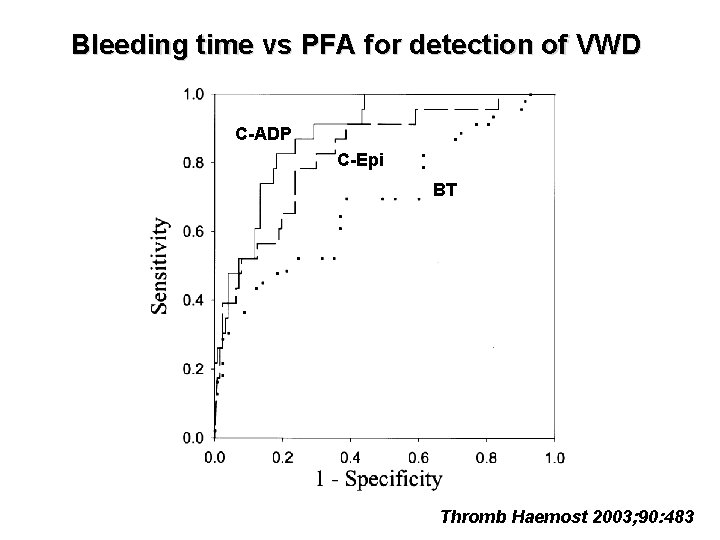
Bleeding time vs PFA for detection of VWD C-ADP C-Epi BT Thromb Haemost 2003; 90: 483
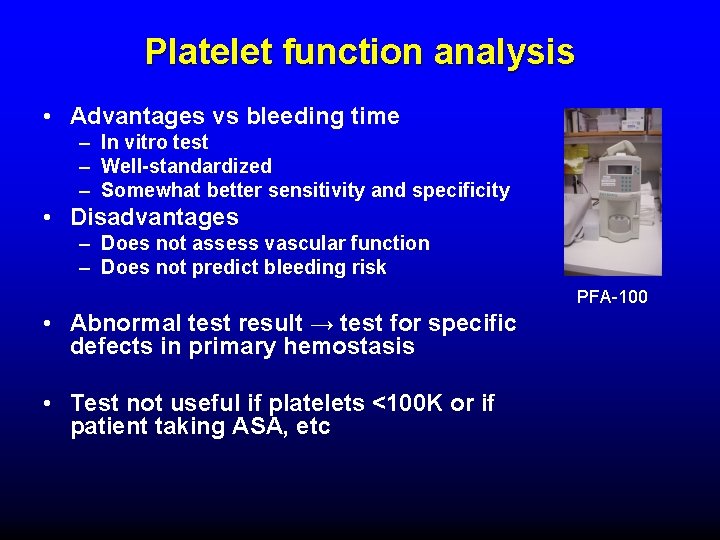
Platelet function analysis • Advantages vs bleeding time – In vitro test – Well-standardized – Somewhat better sensitivity and specificity • Disadvantages – Does not assess vascular function – Does not predict bleeding risk PFA-100 • Abnormal test result → test for specific defects in primary hemostasis • Test not useful if platelets <100 K or if patient taking ASA, etc
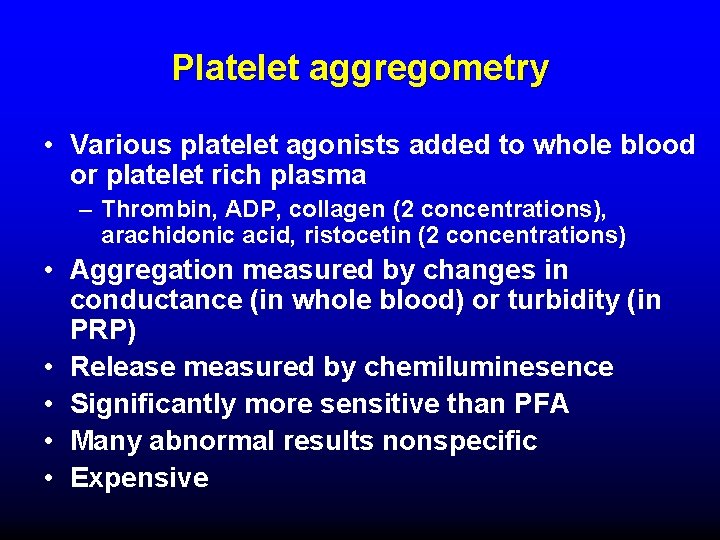
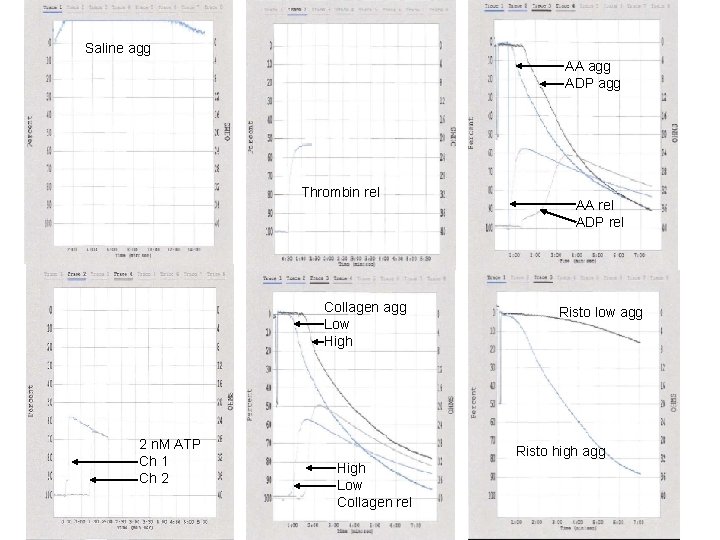
Platelet aggregometry • Various platelet agonists added to whole blood or platelet rich plasma – Thrombin, ADP, collagen (2 concentrations), arachidonic acid, ristocetin (2 concentrations) • Aggregation measured by changes in conductance (in whole blood) or turbidity (in PRP) • Release measured by chemiluminesence • Significantly more sensitive than PFA • Many abnormal results nonspecific • Expensive
Saline agg AA agg ADP agg Thrombin rel Collagen agg Low High 2 n. M ATP Ch 1 Ch 2 AA rel ADP rel Risto low agg Risto high agg High Low Collagen rel
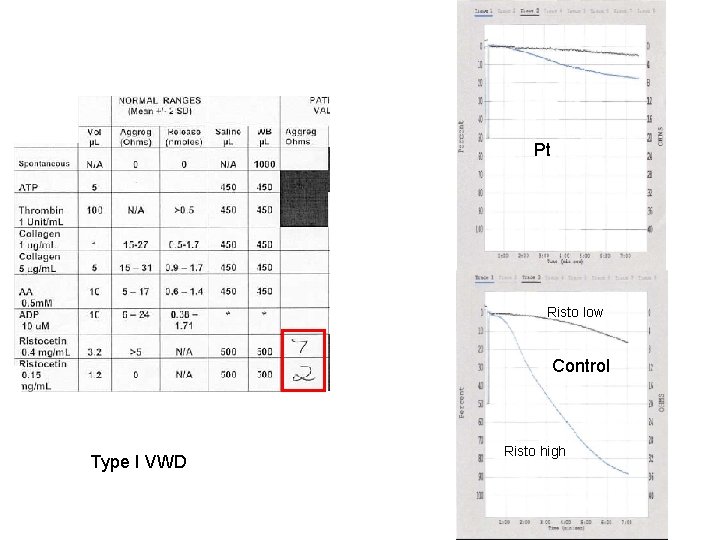
Pt Risto low Control Type I VWD Risto high
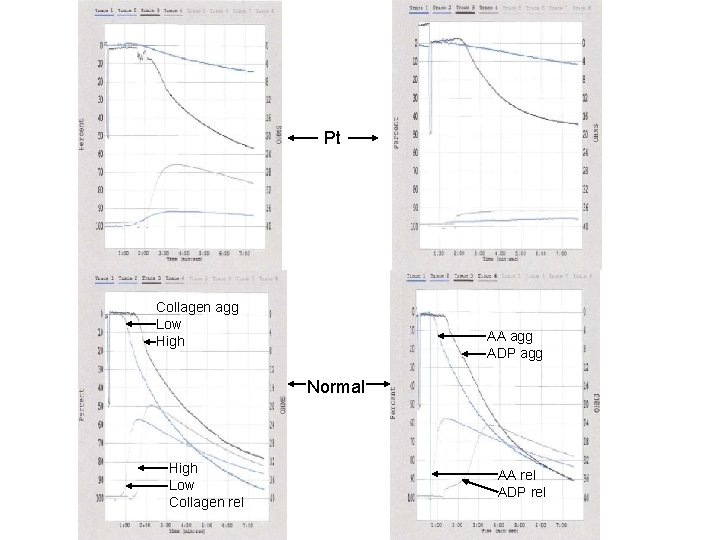
Pt Collagen agg Low High AA agg ADP agg Normal High Low Collagen rel AA rel ADP rel
Took Excedrin 5 days ago
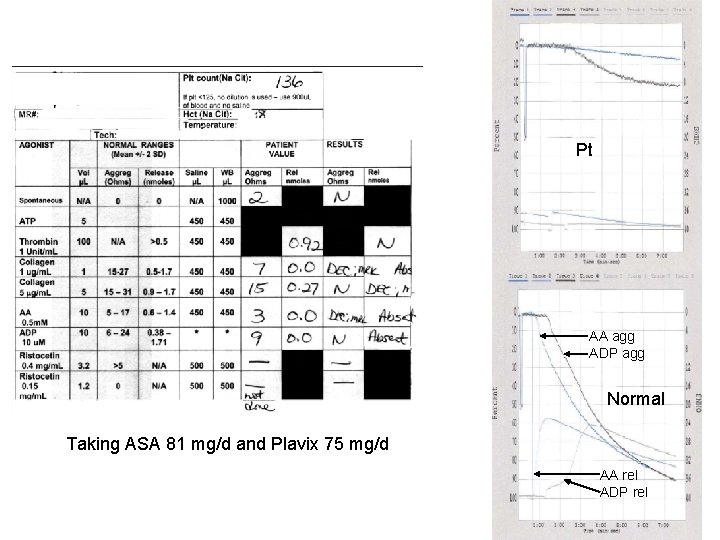
Pt AA agg ADP agg Normal Taking ASA 81 mg/d and Plavix 75 mg/d AA rel ADP rel
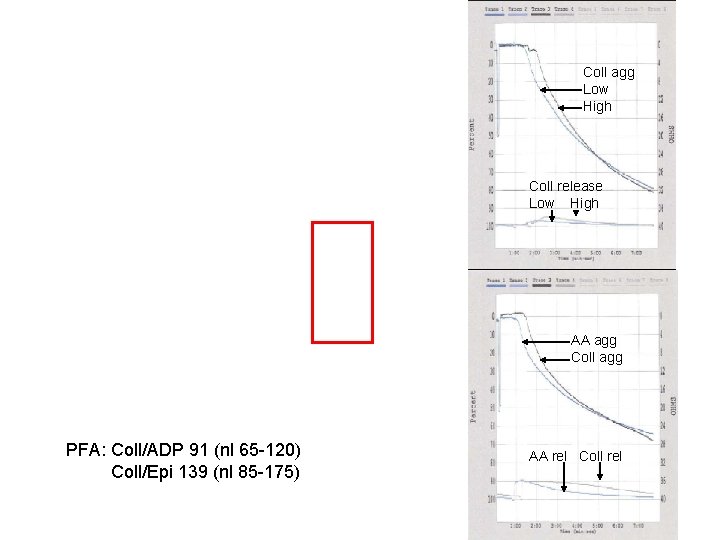
Coll agg Low High Coll release Low High AA agg Coll agg PFA: Coll/ADP 91 (nl 65 -120) Coll/Epi 139 (nl 85 -175) AA rel Coll rel
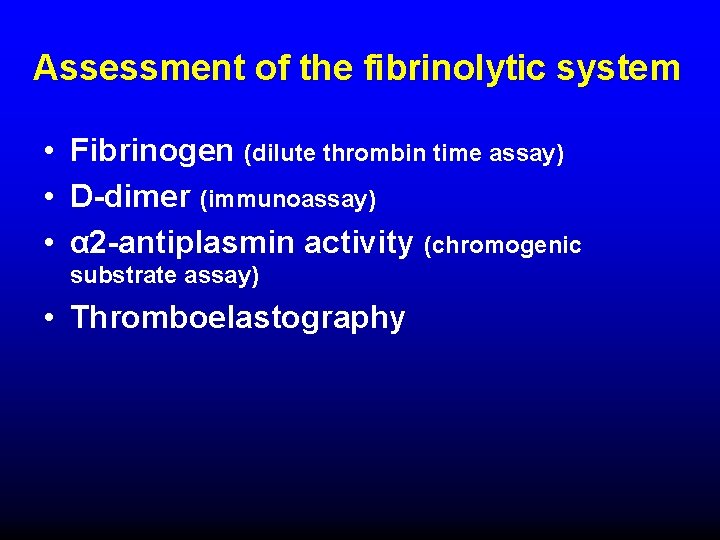
Assessment of the fibrinolytic system • Fibrinogen (dilute thrombin time assay) • D-dimer (immunoassay) • α 2 -antiplasmin activity (chromogenic substrate assay) • Thromboelastography
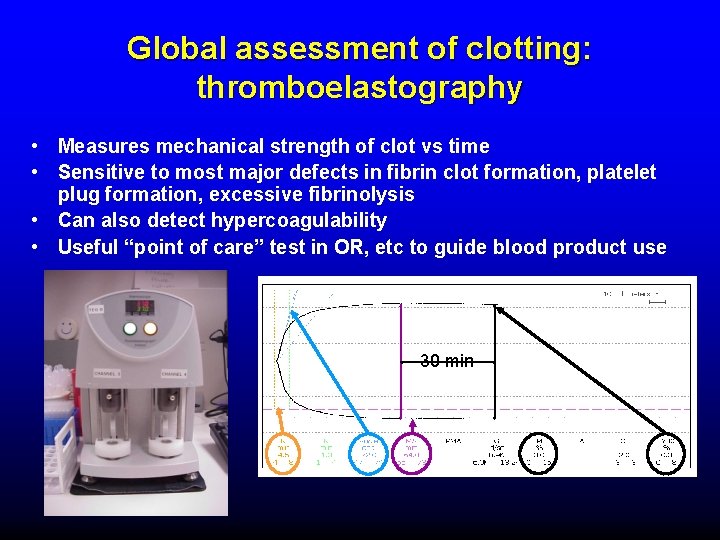
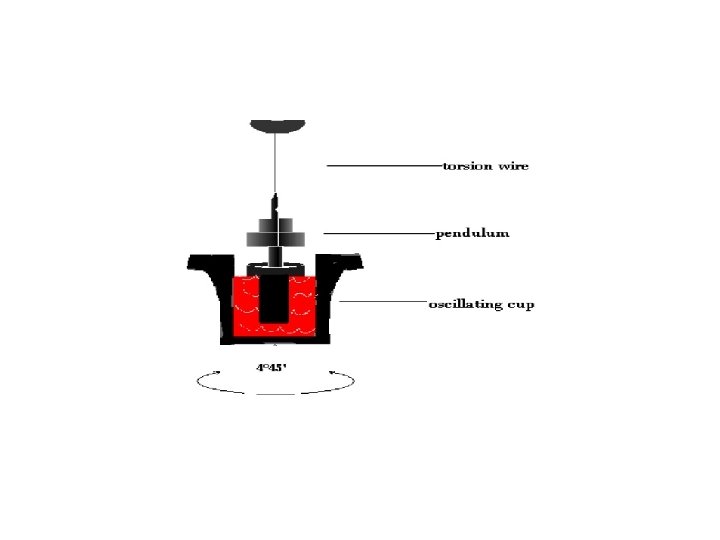
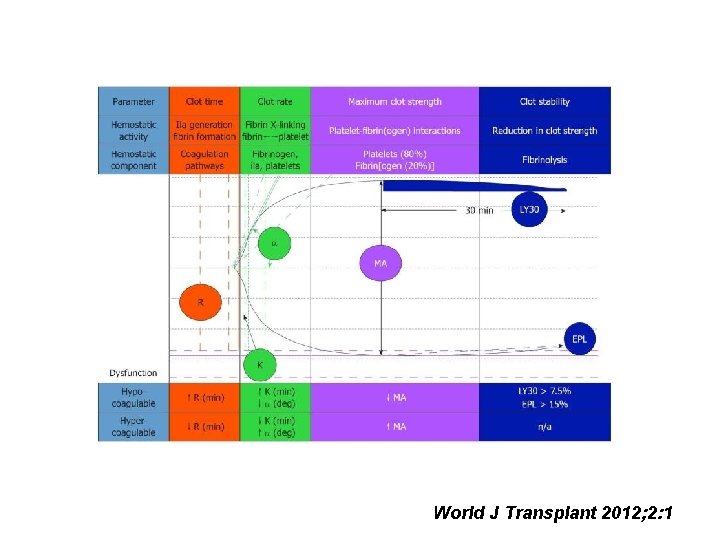
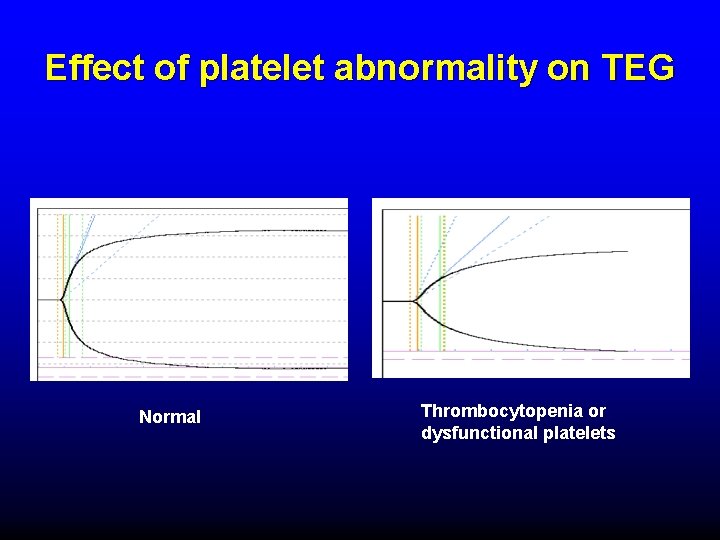
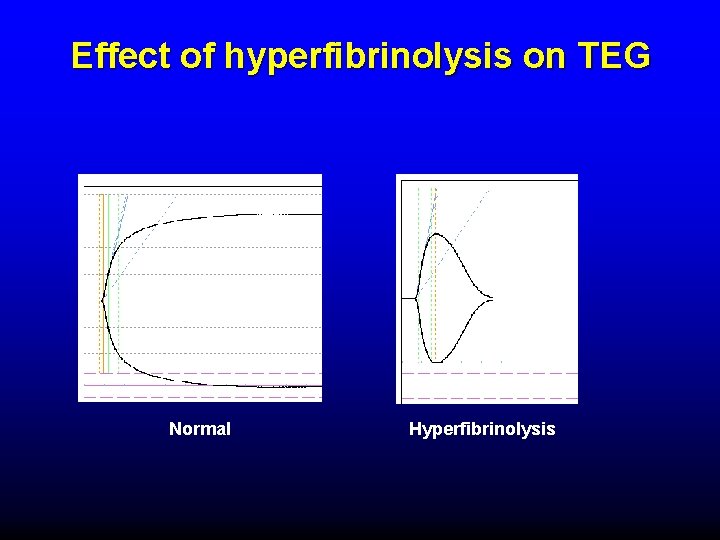
Global assessment of clotting: thromboelastography • Measures mechanical strength of clot vs time • Sensitive to most major defects in fibrin clot formation, platelet plug formation, excessive fibrinolysis • Can also detect hypercoagulability • Useful “point of care” test in OR, etc to guide blood product use 30 min
World J Transplant 2012; 2: 1
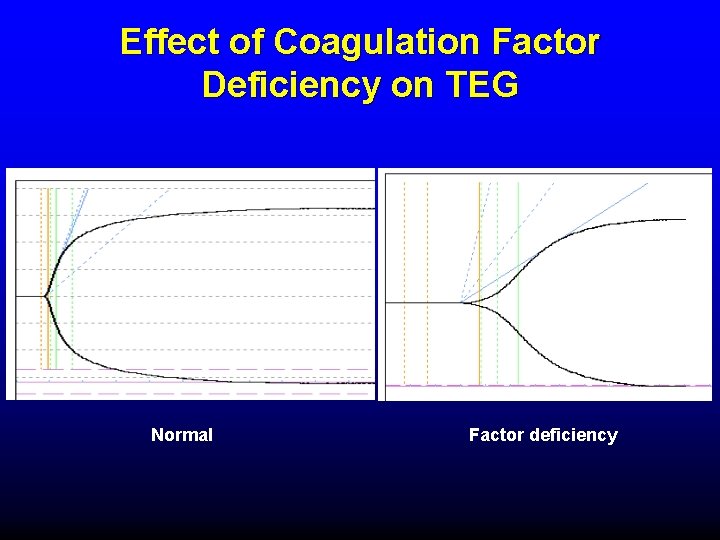
Effect of Coagulation Factor Deficiency on TEG Normal Factor deficiency
Effect of platelet abnormality on TEG Normal Thrombocytopenia or dysfunctional platelets
Effect of hyperfibrinolysis on TEG Normal Hyperfibrinolysis
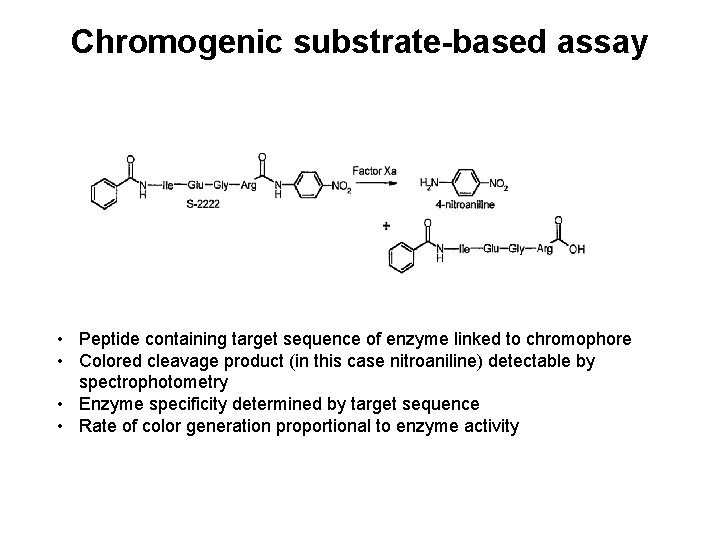
Chromogenic substrate-based assay • Peptide containing target sequence of enzyme linked to chromophore • Colored cleavage product (in this case nitroaniline) detectable by spectrophotometry • Enzyme specificity determined by target sequence • Rate of color generation proportional to enzyme activity
Examples of chromogenic assays • Anti-Xa assay – Patient plasma added to mixture of Xa and chromogenic substrate (± antithrombin) – Residual Xa activity inversely proportional to inhibitor level • Protein C activity – Patient plasma + venom enzyme that selectively activates protein C; activated protein C cleaves substrate
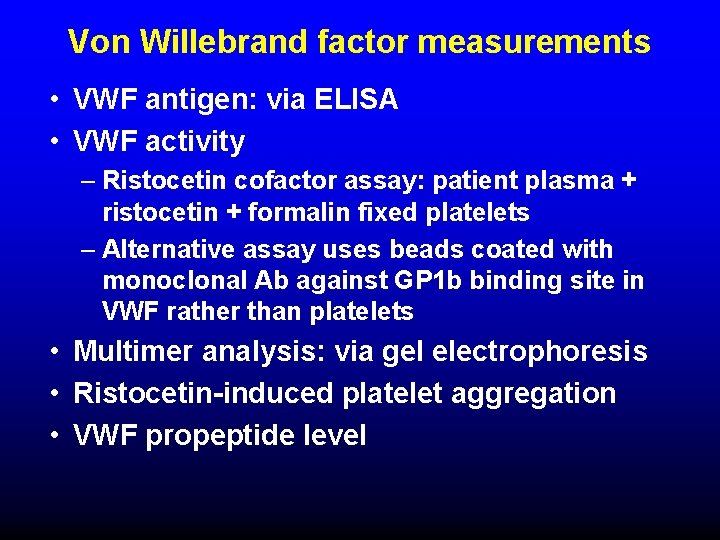
Von Willebrand factor measurements • VWF antigen: via ELISA • VWF activity – Ristocetin cofactor assay: patient plasma + ristocetin + formalin fixed platelets – Alternative assay uses beads coated with monoclonal Ab against GP 1 b binding site in VWF rather than platelets • Multimer analysis: via gel electrophoresis • Ristocetin-induced platelet aggregation • VWF propeptide level
VWF multimer analysis
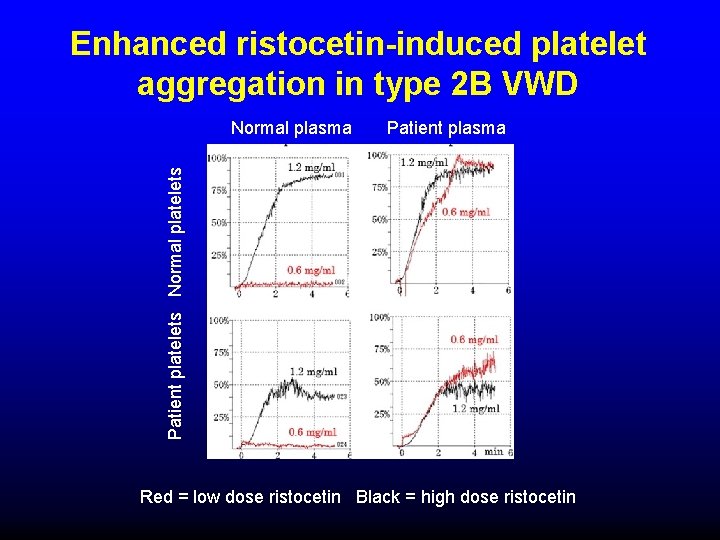
Enhanced ristocetin-induced platelet aggregation in type 2 B VWD Patient plasma Patient platelets Normal plasma Red = low dose ristocetin Black = high dose ristocetin
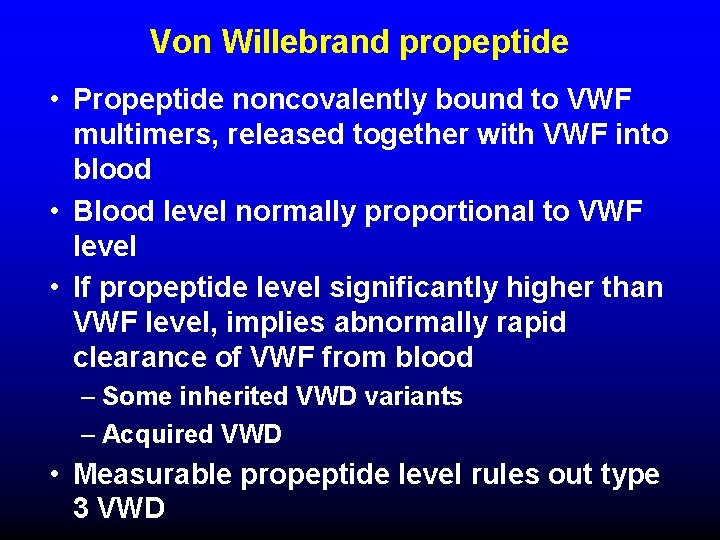
Von Willebrand propeptide • Propeptide noncovalently bound to VWF multimers, released together with VWF into blood • Blood level normally proportional to VWF level • If propeptide level significantly higher than VWF level, implies abnormally rapid clearance of VWF from blood – Some inherited VWD variants – Acquired VWD • Measurable propeptide level rules out type 3 VWD