
Pre Type II Nucleosynthesis sprocess ratio to solar
- Slides: 76
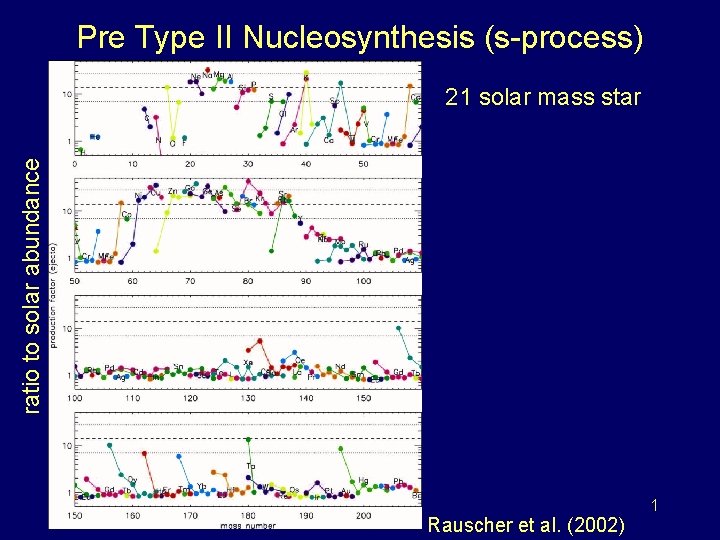
Pre Type II Nucleosynthesis (s-process) ratio to solar abundance 21 solar mass star Rauscher et al. (2002) 1
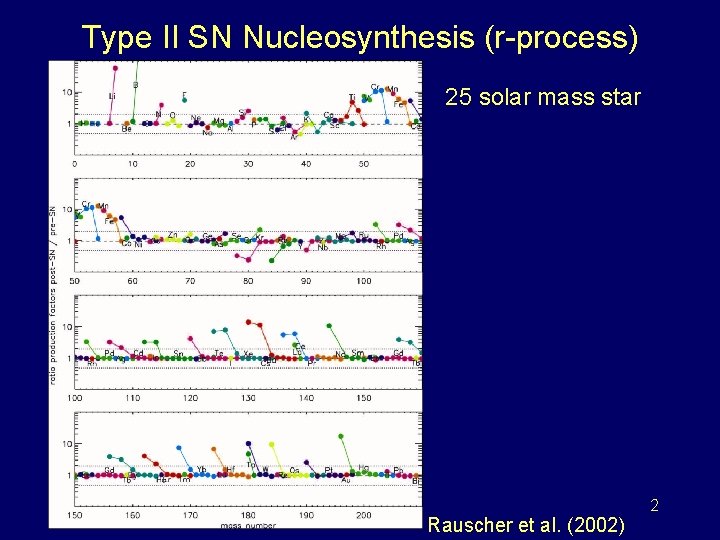
Type II SN Nucleosynthesis (r-process) 25 solar mass star Rauscher et al. (2002) 2
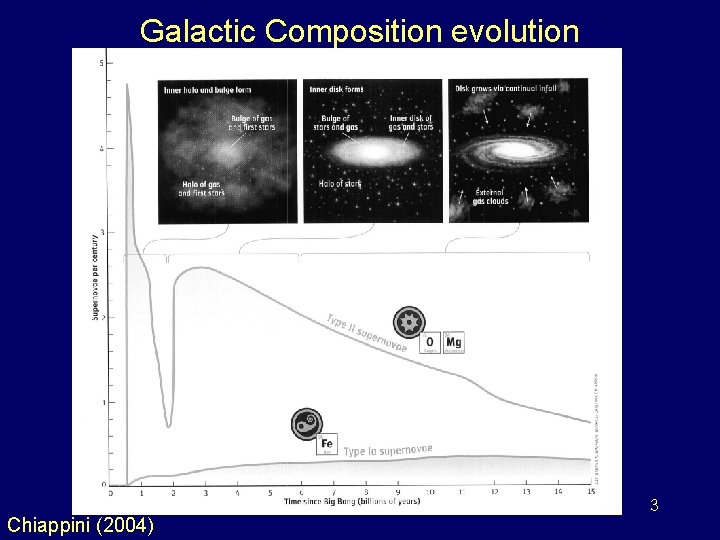
Galactic Composition evolution Chiappini (2004) 3
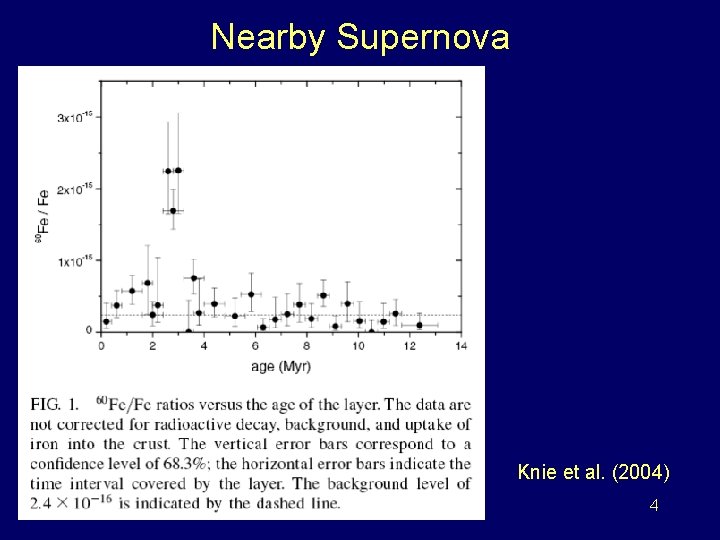
Nearby Supernova Knie et al. (2004) 4
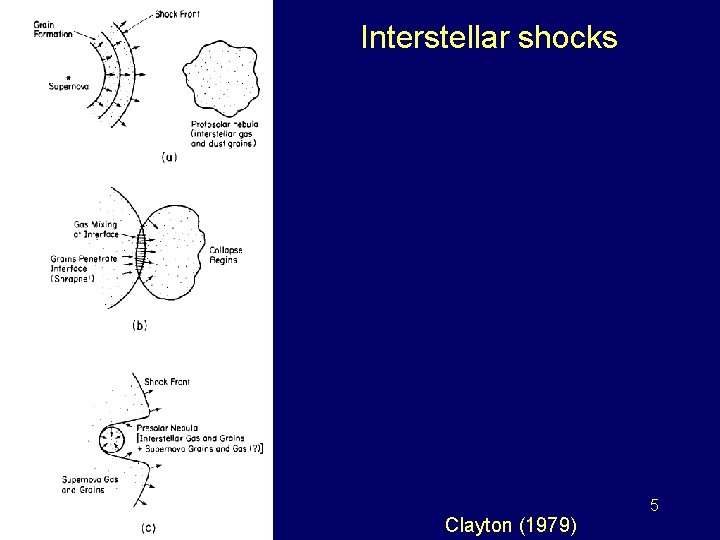
Interstellar shocks Clayton (1979) 5
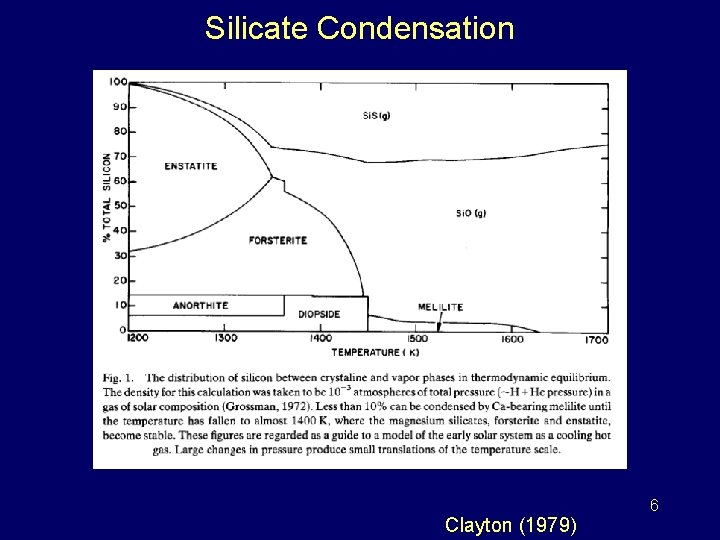
Silicate Condensation Clayton (1979) 6
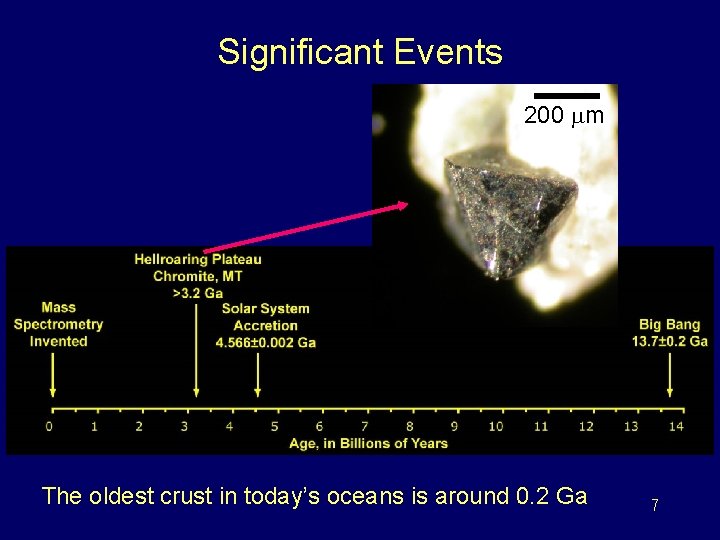
Significant Events 200 mm The oldest crust in today’s oceans is around 0. 2 Ga 7
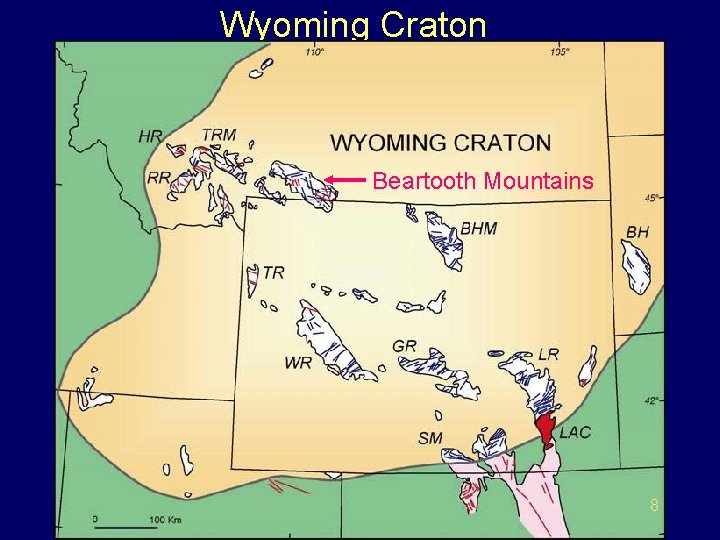
Wyoming Craton Beartooth Mountains 8
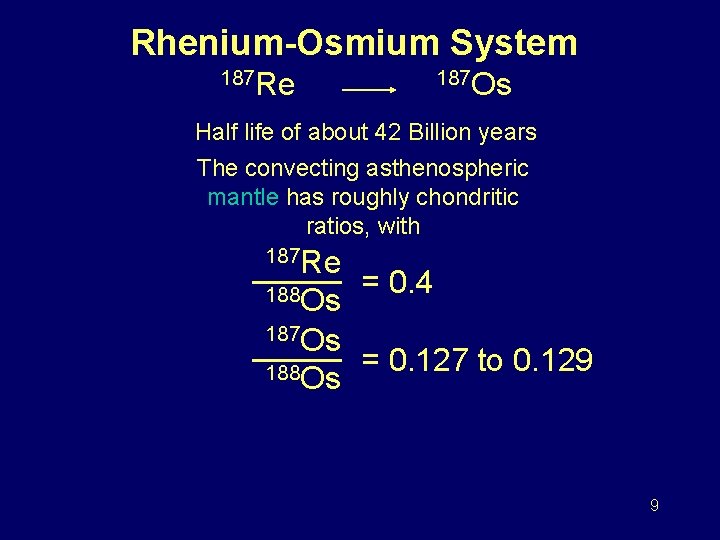
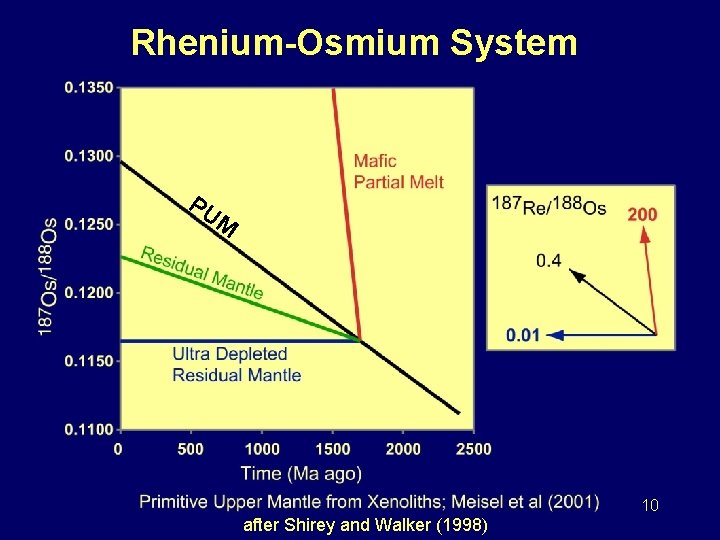
Rhenium-Osmium System 187 Re 187 Os Half life of about 42 Billion years The convecting asthenospheric mantle has roughly chondritic ratios, with 187 Re 188 Os 187 Os 188 Os = 0. 4 = 0. 127 to 0. 129 9
Rhenium-Osmium System PU M 10 after Shirey and Walker (1998)
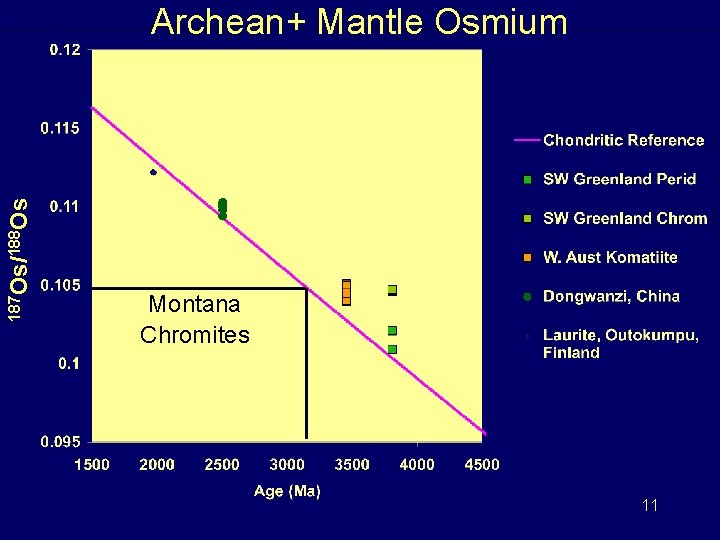
187 Os/188 Os Archean+ Mantle Osmium Montana Chromites 11
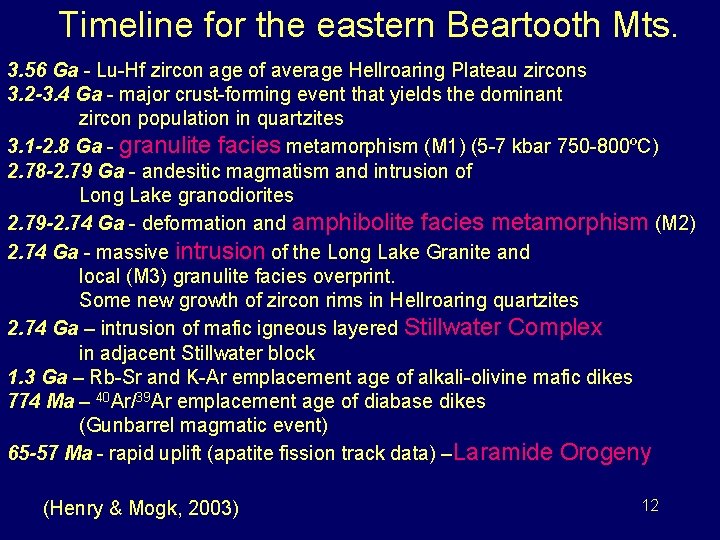
Timeline for the eastern Beartooth Mts. 3. 56 Ga - Lu-Hf zircon age of average Hellroaring Plateau zircons 3. 2 -3. 4 Ga - major crust-forming event that yields the dominant zircon population in quartzites 3. 1 -2. 8 Ga - granulite facies metamorphism (M 1) (5 -7 kbar 750 -800ºC) 2. 78 -2. 79 Ga - andesitic magmatism and intrusion of Long Lake granodiorites 2. 79 -2. 74 Ga - deformation and amphibolite facies metamorphism (M 2) 2. 74 Ga - massive intrusion of the Long Lake Granite and local (M 3) granulite facies overprint. Some new growth of zircon rims in Hellroaring quartzites 2. 74 Ga – intrusion of mafic igneous layered Stillwater Complex in adjacent Stillwater block 1. 3 Ga – Rb-Sr and K-Ar emplacement age of alkali-olivine mafic dikes 774 Ma – 40 Ar/39 Ar emplacement age of diabase dikes (Gunbarrel magmatic event) 65 -57 Ma - rapid uplift (apatite fission track data) –Laramide Orogeny (Henry & Mogk, 2003) 12
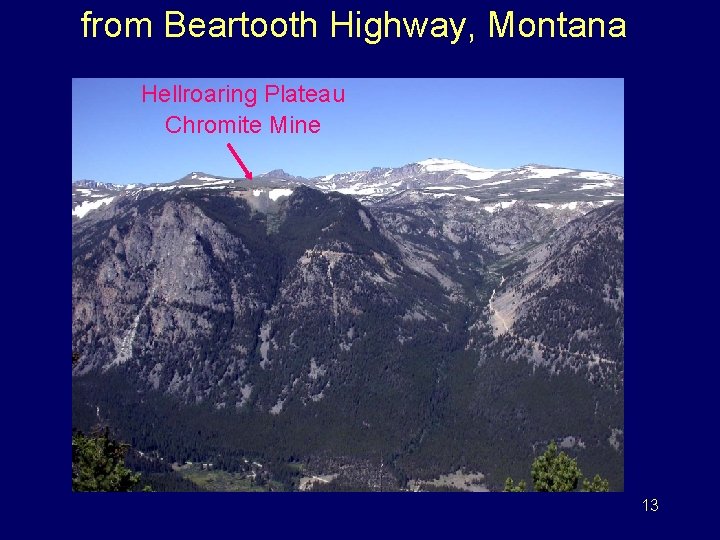
from Beartooth Highway, Montana Hellroaring Plateau Chromite Mine 13
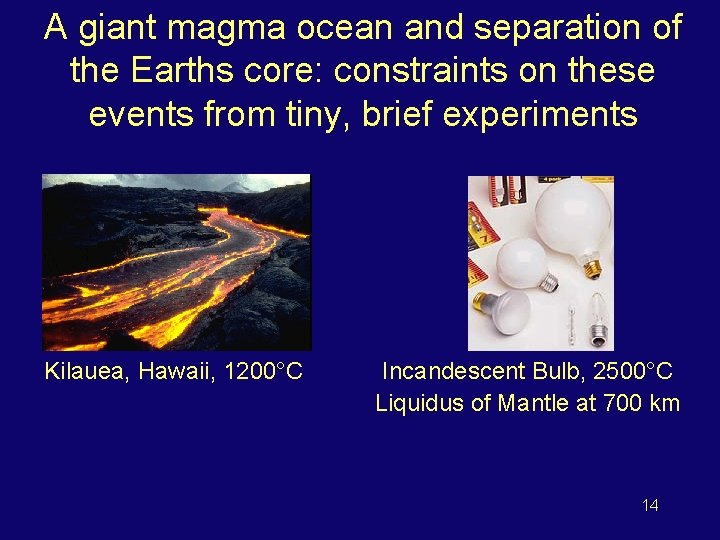
A giant magma ocean and separation of the Earths core: constraints on these events from tiny, brief experiments Kilauea, Hawaii, 1200°C Incandescent Bulb, 2500°C Liquidus of Mantle at 700 km 14
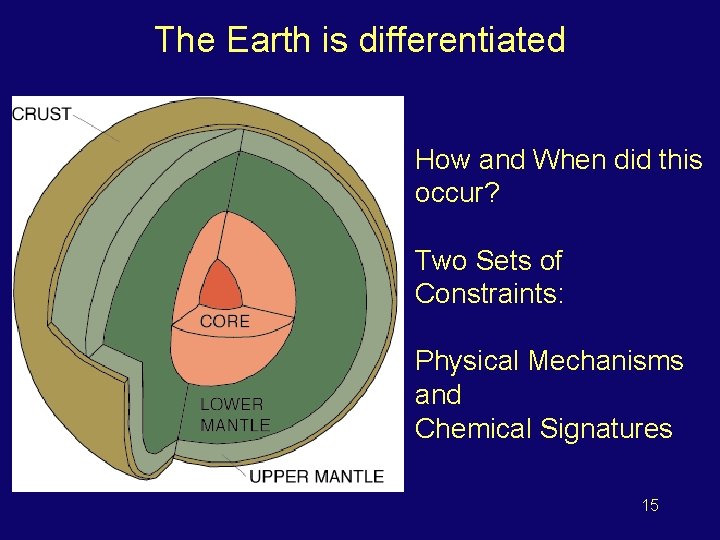
The Earth is differentiated How and When did this occur? Two Sets of Constraints: Physical Mechanisms and Chemical Signatures 15
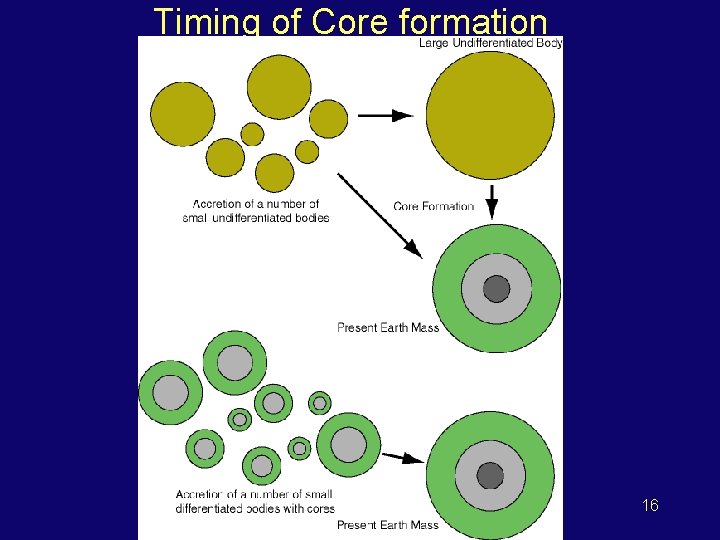
Timing of Core formation 16
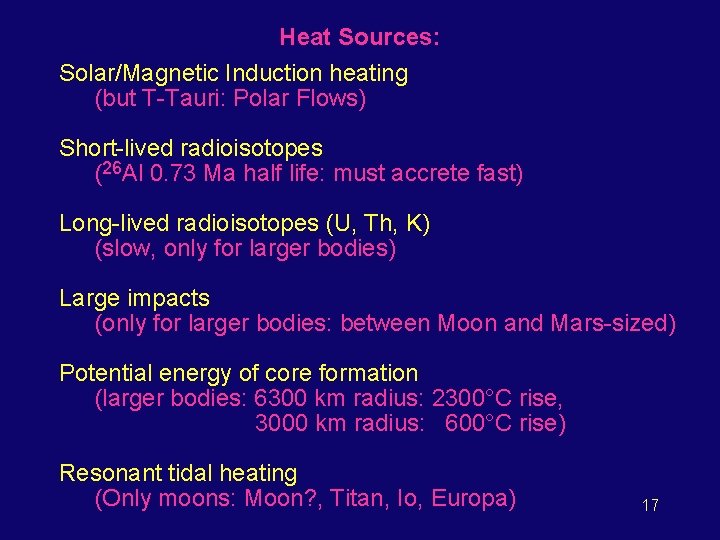
Heat Sources: Solar/Magnetic Induction heating (but T-Tauri: Polar Flows) Short-lived radioisotopes (26 Al 0. 73 Ma half life: must accrete fast) Long-lived radioisotopes (U, Th, K) (slow, only for larger bodies) Large impacts (only for larger bodies: between Moon and Mars-sized) Potential energy of core formation (larger bodies: 6300 km radius: 2300°C rise, 3000 km radius: 600°C rise) Resonant tidal heating (Only moons: Moon? , Titan, Io, Europa) 17
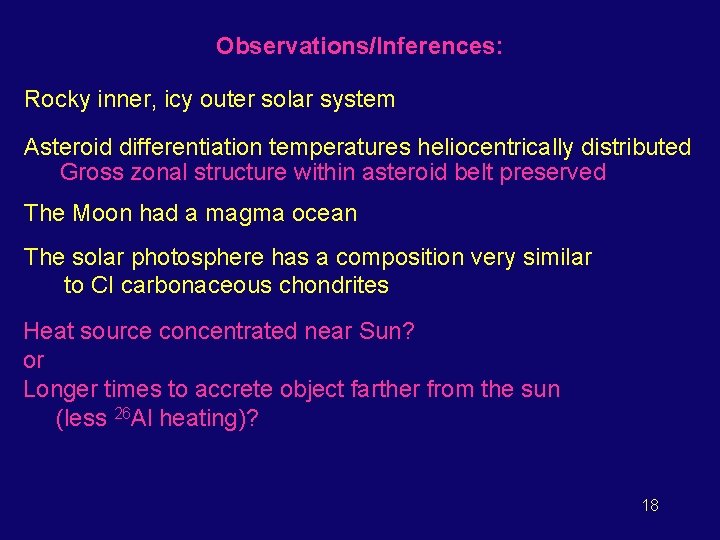
Observations/Inferences: Rocky inner, icy outer solar system Asteroid differentiation temperatures heliocentrically distributed Gross zonal structure within asteroid belt preserved The Moon had a magma ocean The solar photosphere has a composition very similar to CI carbonaceous chondrites Heat source concentrated near Sun? or Longer times to accrete object farther from the sun (less 26 Al heating)? 18
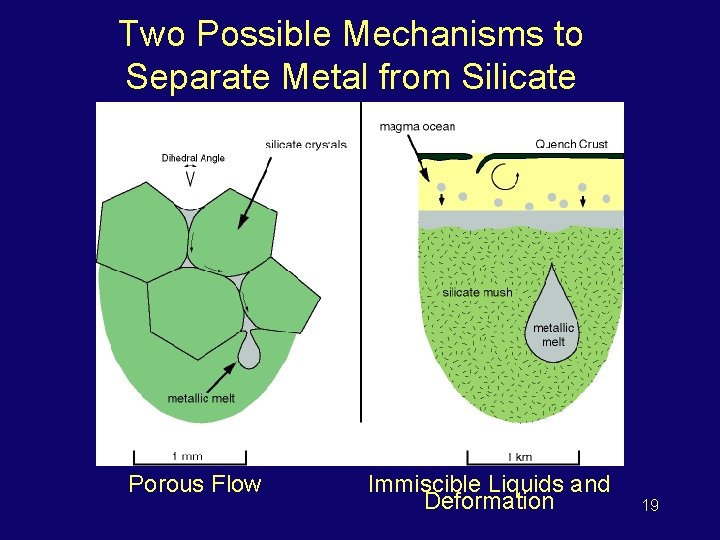
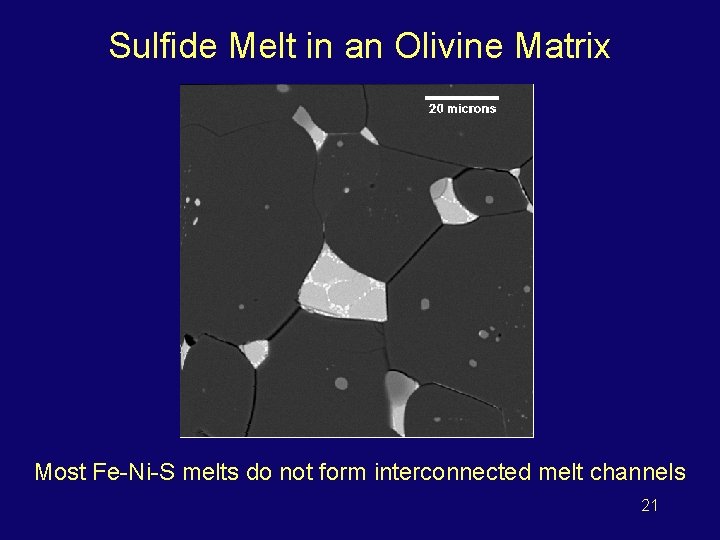
Two Possible Mechanisms to Separate Metal from Silicate Porous Flow Immiscible Liquids and Deformation 19
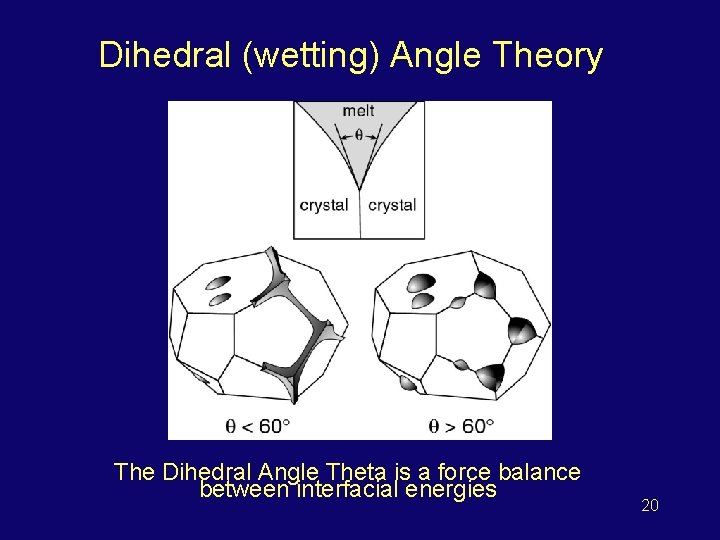
Dihedral (wetting) Angle Theory The Dihedral Angle Theta is a force balance between interfacial energies 20
Sulfide Melt in an Olivine Matrix Most Fe-Ni-S melts do not form interconnected melt channels 21
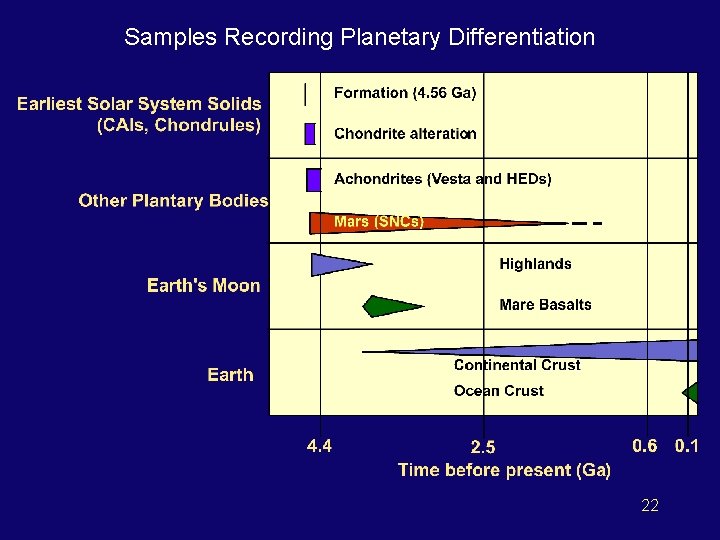
Samples Recording Planetary Differentiation 22
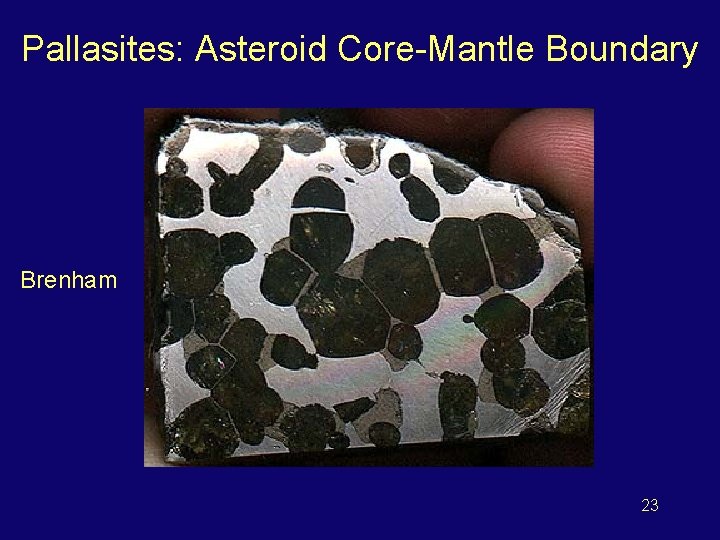
Pallasites: Asteroid Core-Mantle Boundary Brenham 23
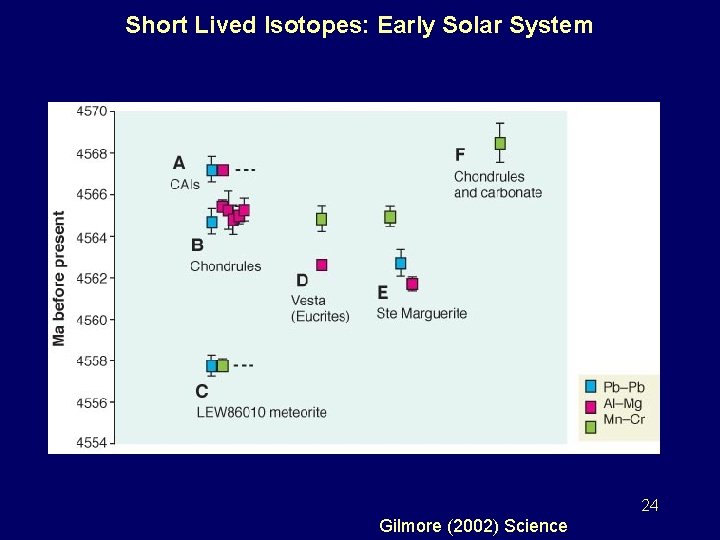
Short Lived Isotopes: Early Solar System 24 Gilmore (2002) Science
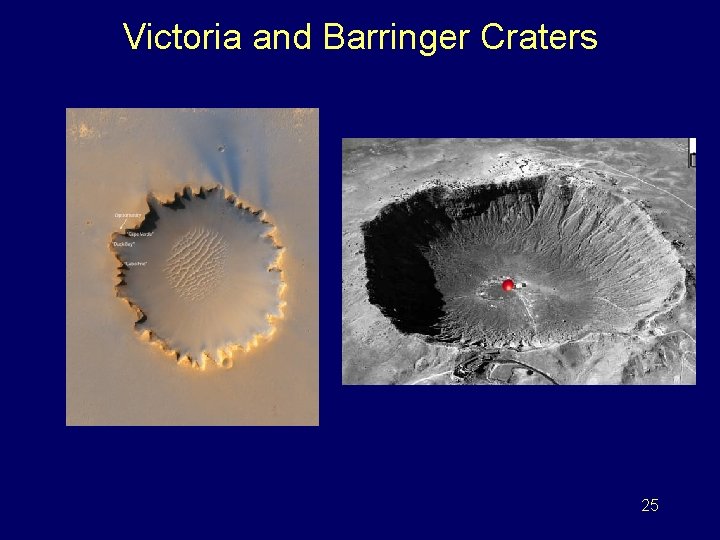
Victoria and Barringer Craters 25
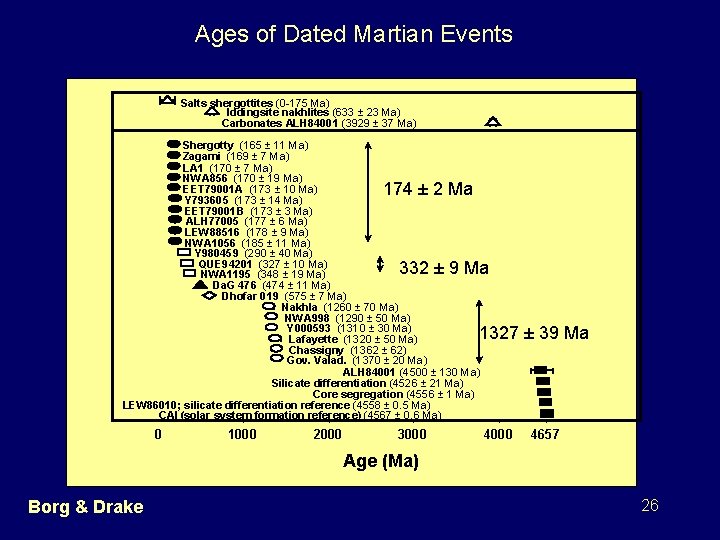
Ages of Dated Martian Events Salts shergottites (0 -175 Ma) Iddingsite nakhlites (633 ± 23 Ma) Carbonates ALH 84001 (3929 ± 37 Ma) Shergotty (165 ± 11 Ma) Zagami (169 ± 7 Ma) LA 1 (170 ± 7 Ma) NWA 856 (170 ± 19 Ma) EET 79001 A (173 ± 10 Ma) Y 793605 (173 ± 14 Ma) EET 79001 B (173 ± 3 Ma) ALH 77005 (177 ± 6 Ma) LEW 88516 (178 ± 9 Ma) NWA 1056 (185 ± 11 Ma) Y 980459 (290 ± 40 Ma) QUE 94201 (327 ± 10 Ma) NWA 1195 (348 ± 19 Ma) Da. G 476 (474 ± 11 Ma) Dhofar 019 (575 ± 7 Ma) Nakhla (1260 ± 70 Ma) NWA 998 (1290 ± 50 Ma) Y 000593 (1310 ± 30 Ma) Lafayette (1320 ± 50 Ma) Chassigny (1362 ± 62) Gov. Valad. (1370 ± 20 Ma) ALH 84001 (4500 ± 130 Ma) Silicate differentiation (4526 ± 21 Ma) Core segregation (4556 ± 1 Ma) LEW 86010; silicate differentiation reference (4558 ± 0. 5 Ma) CAI (solar system formation reference) (4567 ± 0. 6 Ma) 174 ± 2 Ma 332 ± 9 Ma 1327 ± 39 Ma 0 1000 2000 3000 4657 Age (Ma) Borg & Drake 26
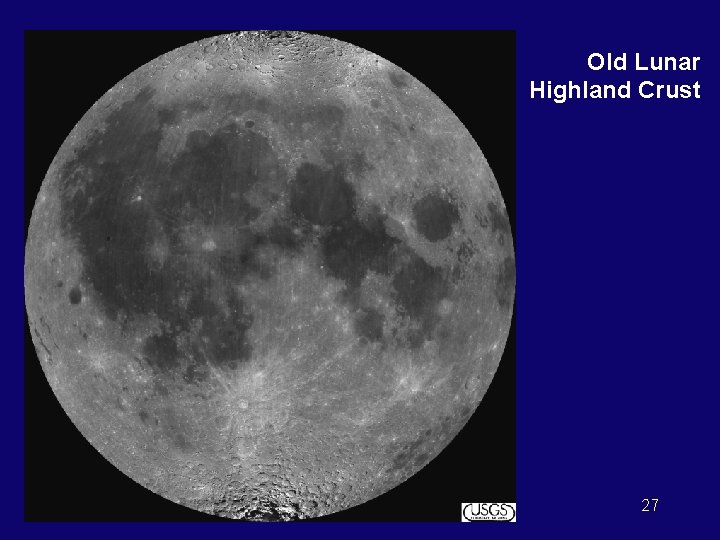
Old Lunar Highland Crust 27
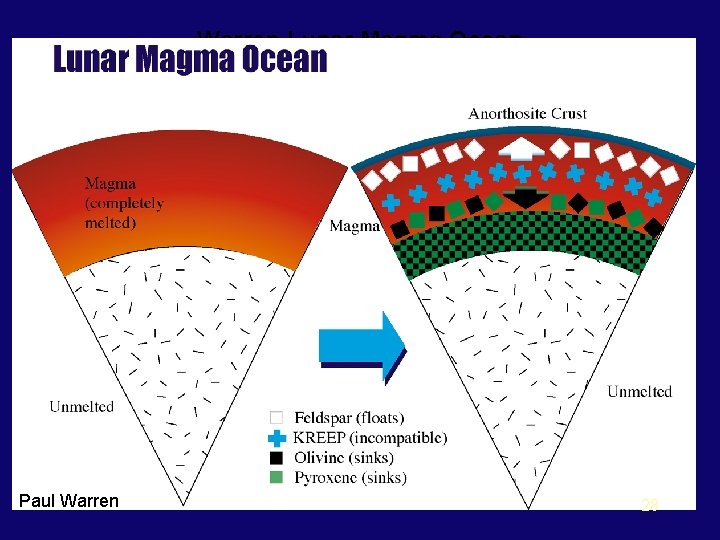
Warren Lunar Magma Ocean Paul Warren 28
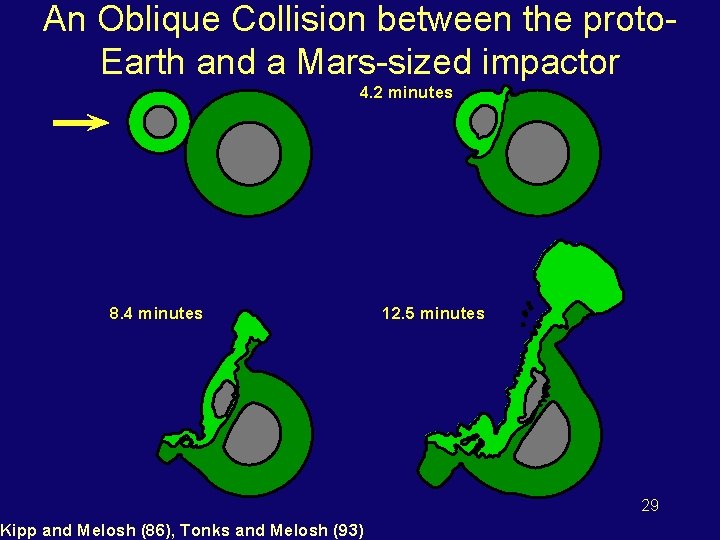
An Oblique Collision between the proto. Earth and a Mars-sized impactor 4. 2 minutes 8. 4 minutes Kipp and Melosh (86), Tonks and Melosh (93) 12. 5 minutes 29
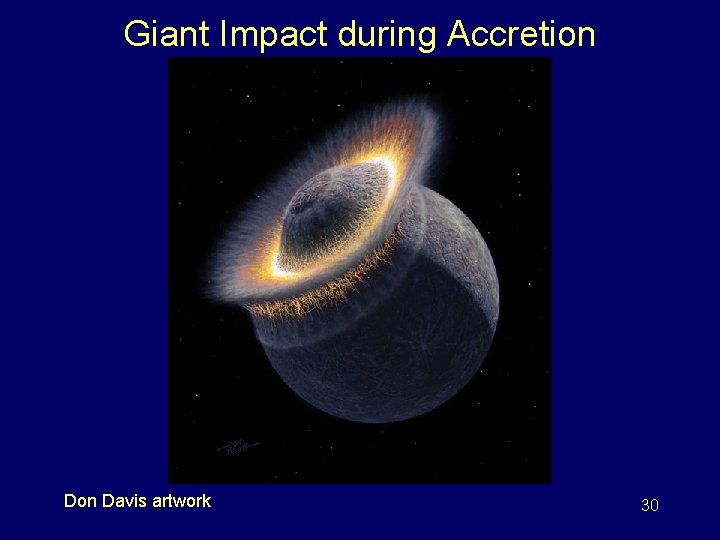
Giant Impact during Accretion Davis artwork 30
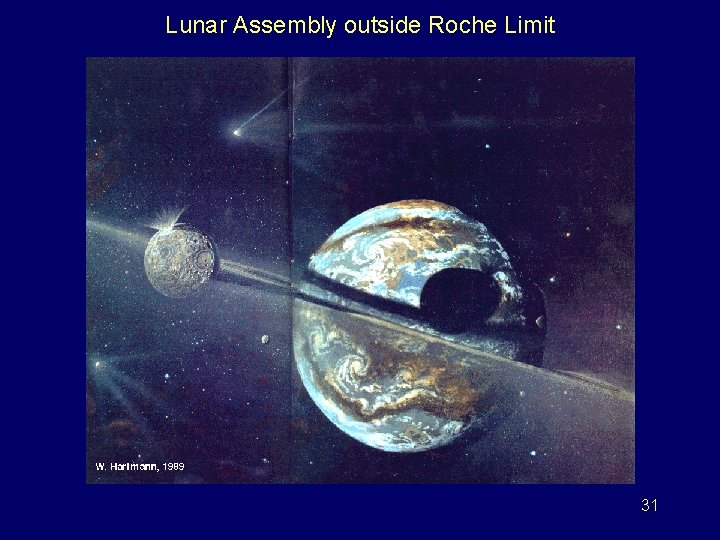
Lunar Assembly outside Roche Limit 31
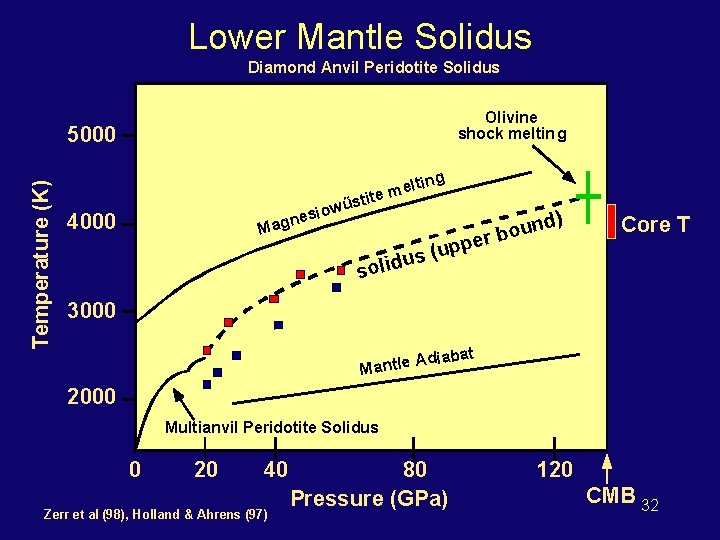
Lower Mantle Solidus Diamond Anvil Peridotite Solidus Olivine shock meltin g Temperature (K) 5000 s tite ü w o ne si g a M 4000 tin g l e m (up s u solid pe und o b r ) Core T 3000 diabat A e l t n Ma 2000 Multianvil Peridotite Solidus 0 20 40 Zerr et al (98), Holland & Ahrens (97) 80 Pressure (GPa) 120 CMB 32
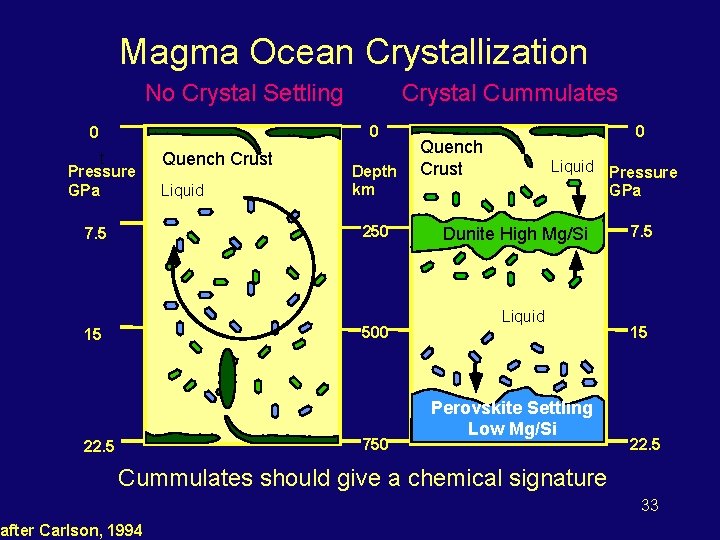
Magma Ocean Crystallization No Crystal Settling Crystal Cummulates 0 0 t Pressure GPa Quench Crust Liquid Depth km 250 7. 5 500 15 750 22. 5 0 Quench Crust Liquid Pressure GPa Dunite High Mg/Si Liquid Perovskite Settling Low Mg/Si 7. 5 15 22. 5 Cummulates should give a chemical signature after Carlson, 1994 33
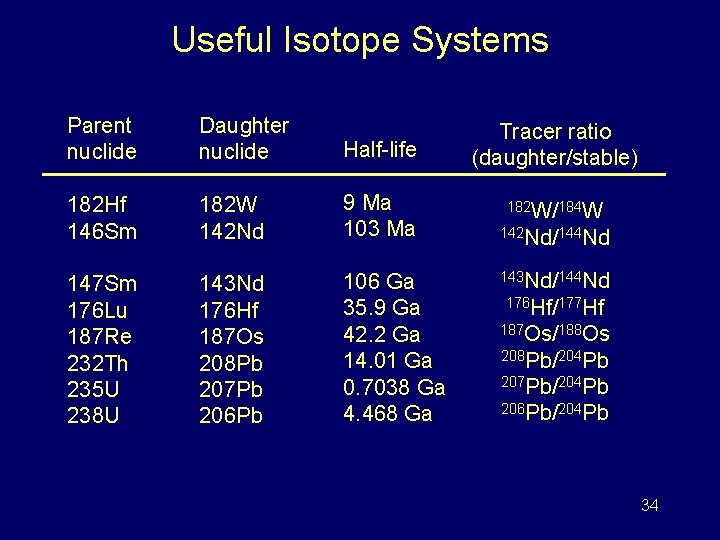
Useful Isotope Systems Parent nuclide 182 Hf 146 Sm Daughter nuclide 182 W 142 Nd Half-life 9 Ma 103 Ma 147 Sm 176 Lu 187 Re 232 Th 235 U 238 U 143 Nd 176 Hf 187 Os 208 Pb 207 Pb 206 Pb 106 Ga 35. 9 Ga 42. 2 Ga 14. 01 Ga 0. 7038 Ga 4. 468 Ga Tracer ratio (daughter/stable) 182 W/184 W 142 Nd/144 Nd 143 Nd/144 Nd 176 Hf/177 Hf 187 Os/188 Os 208 Pb/204 Pb 207 Pb/204 Pb 206 Pb/204 Pb 34
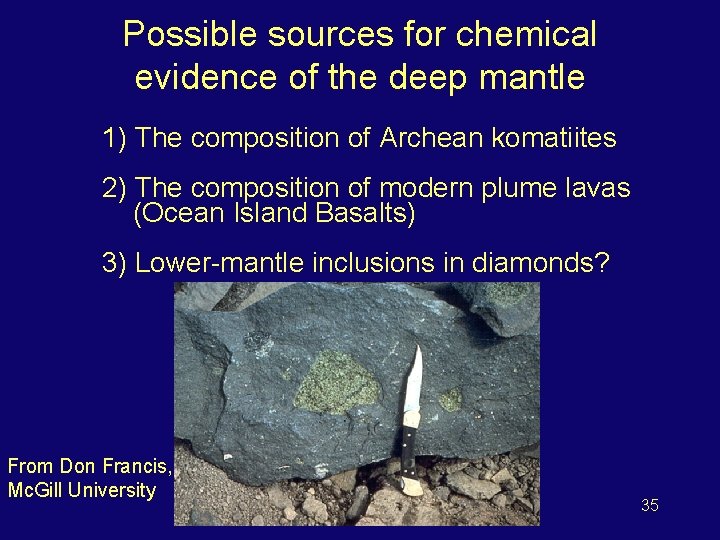
Possible sources for chemical evidence of the deep mantle 1) The composition of Archean komatiites 2) The composition of modern plume lavas (Ocean Island Basalts) 3) Lower-mantle inclusions in diamonds? From Don Francis, Mc. Gill University 35
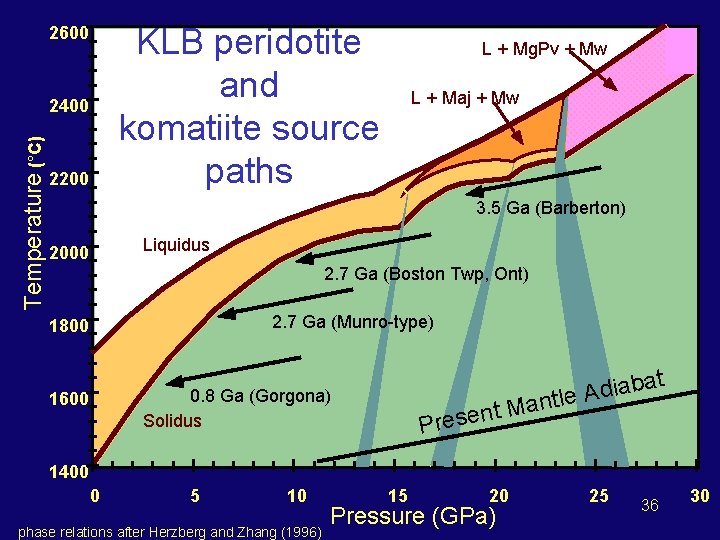
KLB peridotite and komatiite source paths 2600 Temperature (°C) 2400 L + Mg. Pv + Mw L + Maj + Mw . 2200 3. 5 Ga (Barberton) Liquidus 2000 2. 7 Ga (Boston Twp, Ont) 2. 7 Ga (Munro-type) 1800 0. 8 Ga (Gorgona) Solidus 1600 t a b a i d antle A M t n e s e r P 1400 0 5 10 phase relations after Herzberg and Zhang (1996) 15 20 Pressure (GPa) 25 36 30
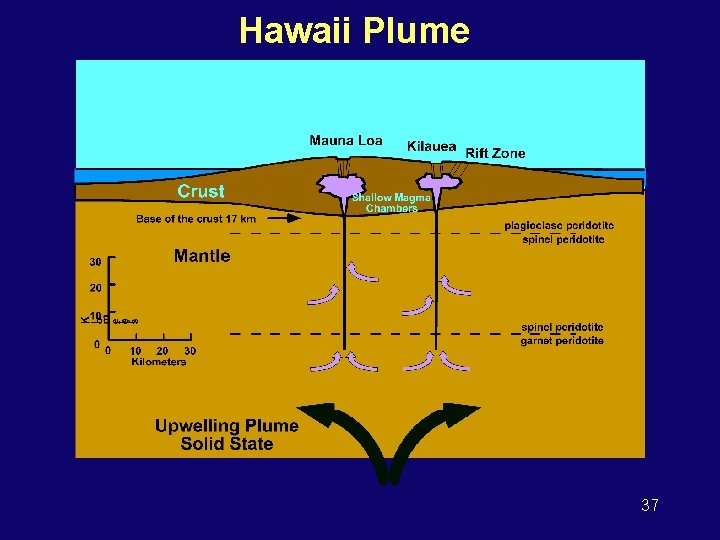
Hawaii Plume 37
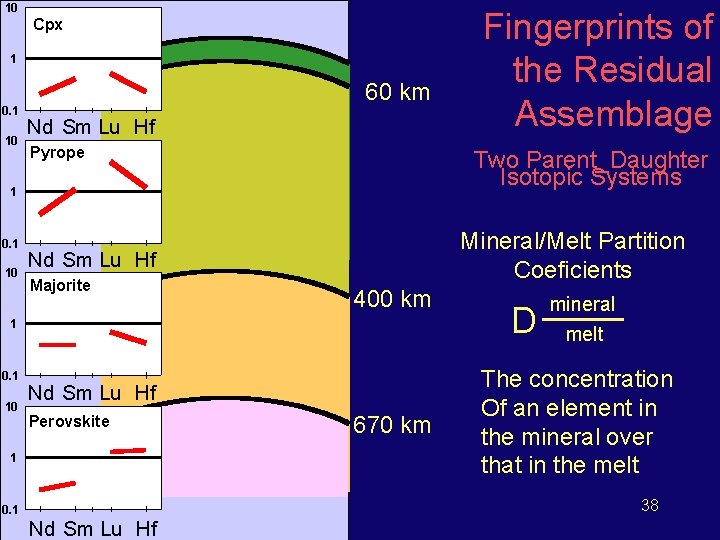
10 Cpx 1 0. 1 10 60 km Nd Sm Lu Hf Pyrope Two Parent_Daughter Isotopic Systems 1 0. 1 10 Mineral/Melt Partition Coeficients Nd Sm Lu Hf Majorite 400 km 1 0. 1 10 Nd Sm Lu Hf Perovskite 1 Fingerprints of the Residual Assemblage 670 km D mineral melt The concentration Of an element in the mineral over that in the melt 38 0. 1 Nd Sm Lu Hf
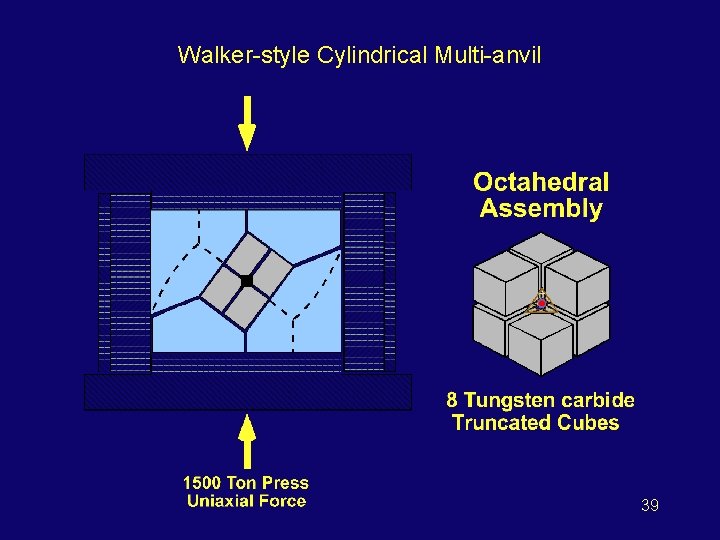
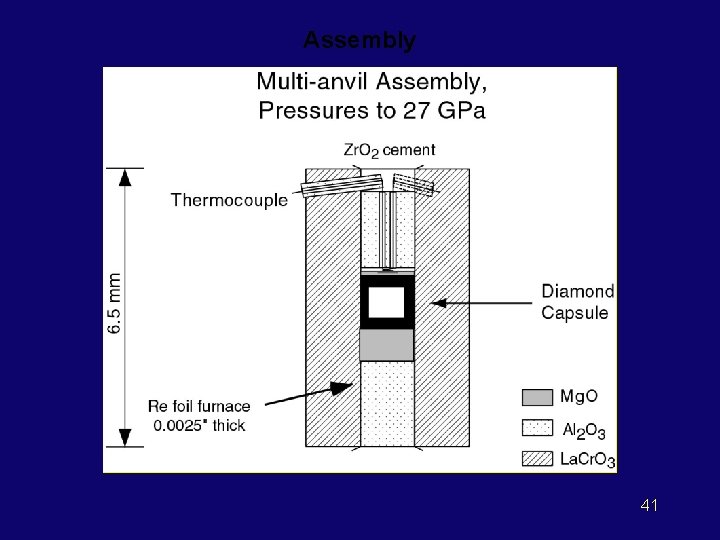
Walker-style Cylindrical Multi-anvil 39
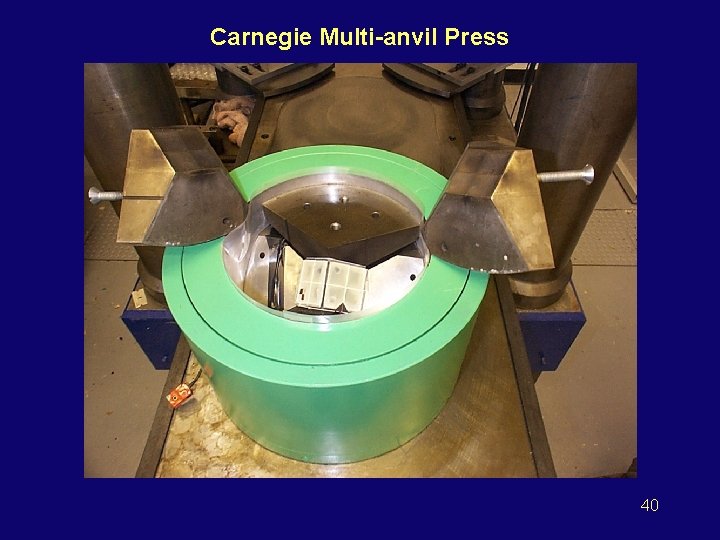
Carnegie Multi-anvil Press 40
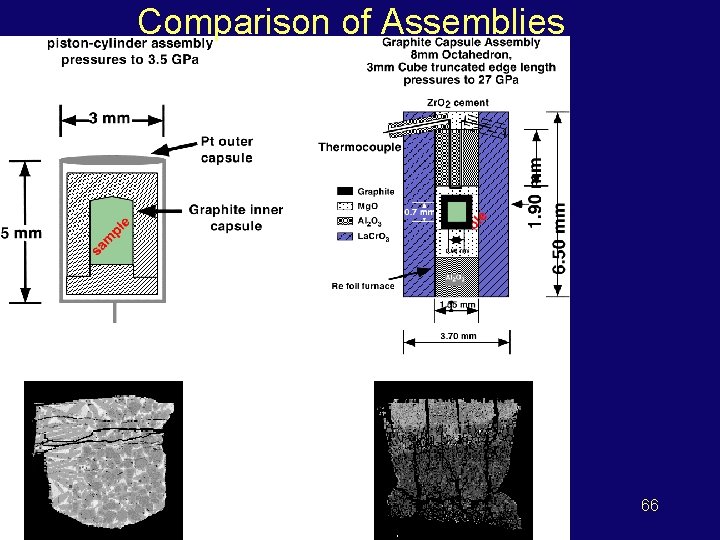
Assembly 41
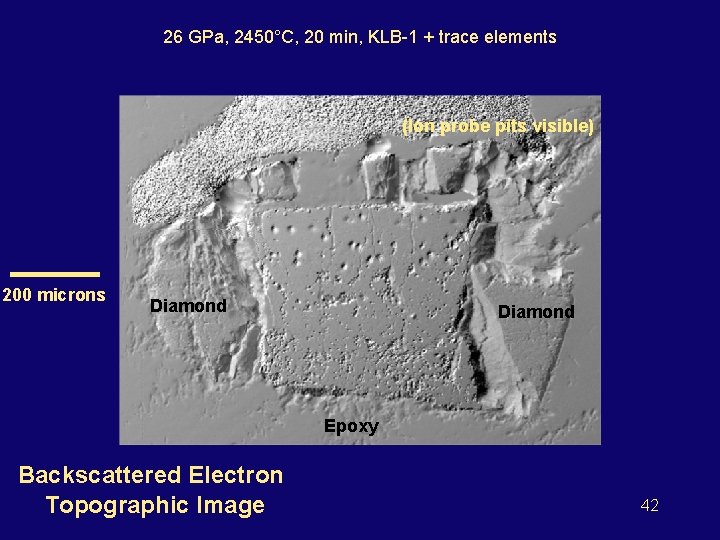
26 GPa, 2450°C, 20 min, KLB-1 + trace elements (Ion probe pits visible) 200 microns Diamond Epoxy Backscattered Electron Topographic Image 42
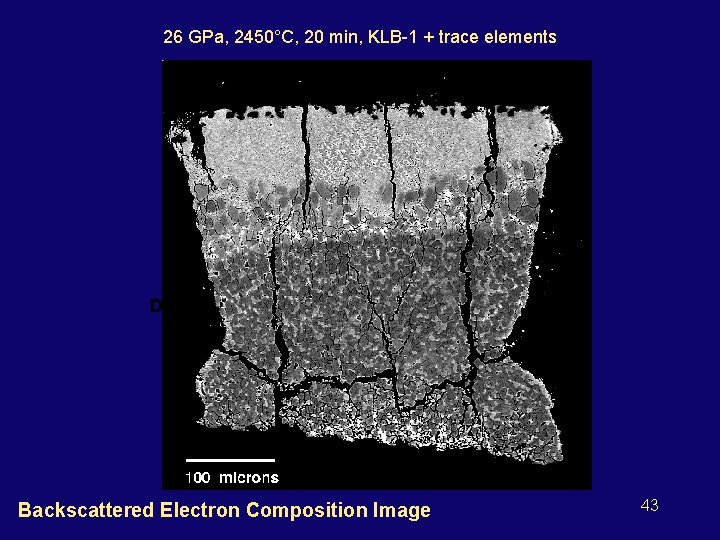
26 GPa, 2450°C, 20 min, KLB-1 + trace elements Diamond Epoxy Backscattered Electron Composition Image 43
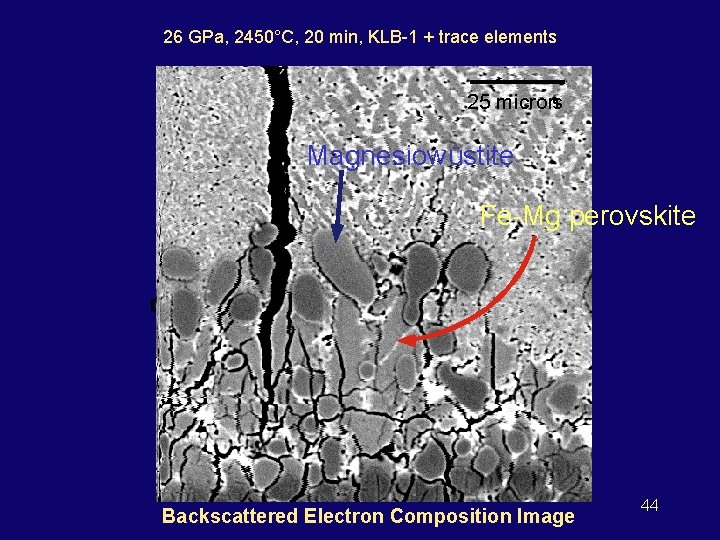
26 GPa, 2450°C, 20 min, KLB-1 + trace elements 25 microns Magnesiowüstite Fe-Mg perovskite Diamond Epoxy Backscattered Electron Composition Image 44
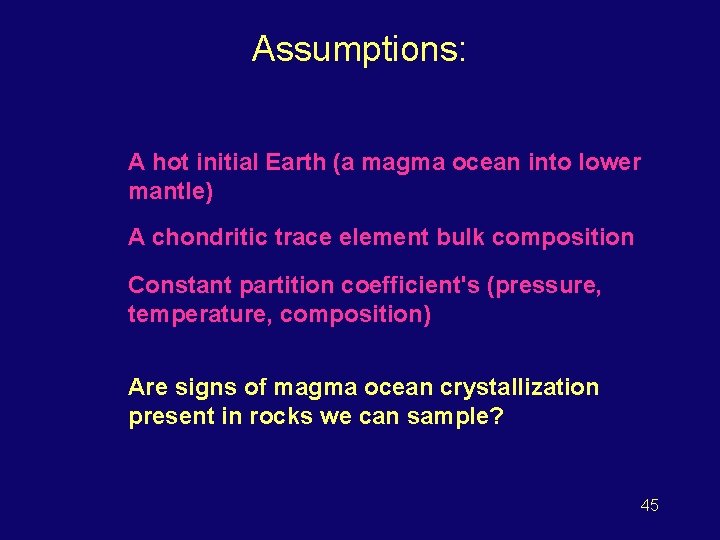
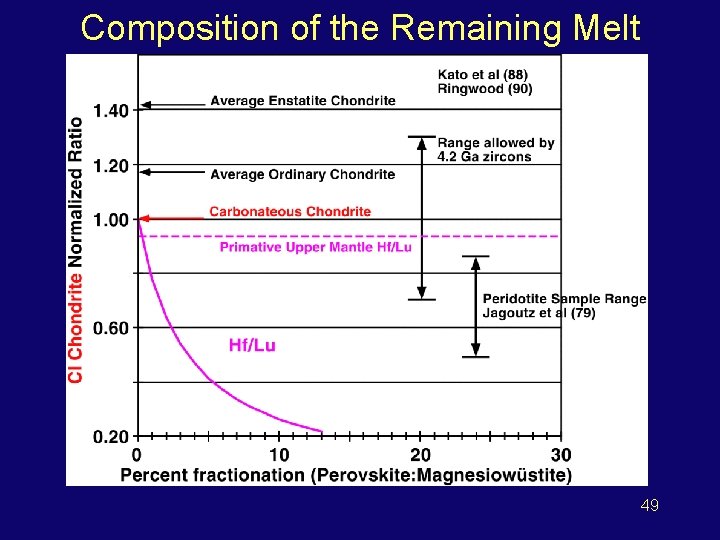
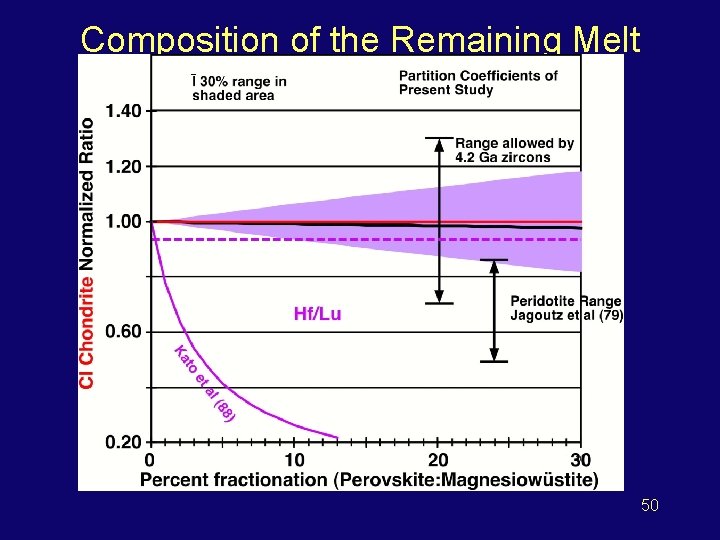
Assumptions: A hot initial Earth (a magma ocean into lower mantle) A chondritic trace element bulk composition Constant partition coefficient's (pressure, temperature, composition) Are signs of magma ocean crystallization present in rocks we can sample? 45
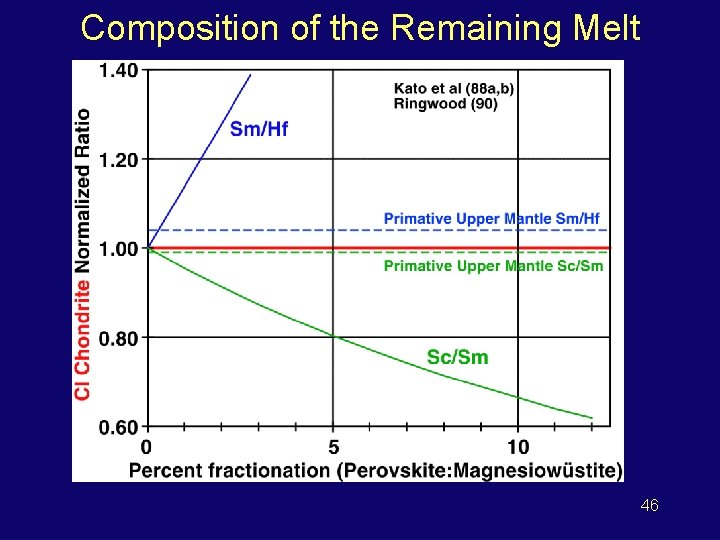
Composition of the Remaining Melt 46
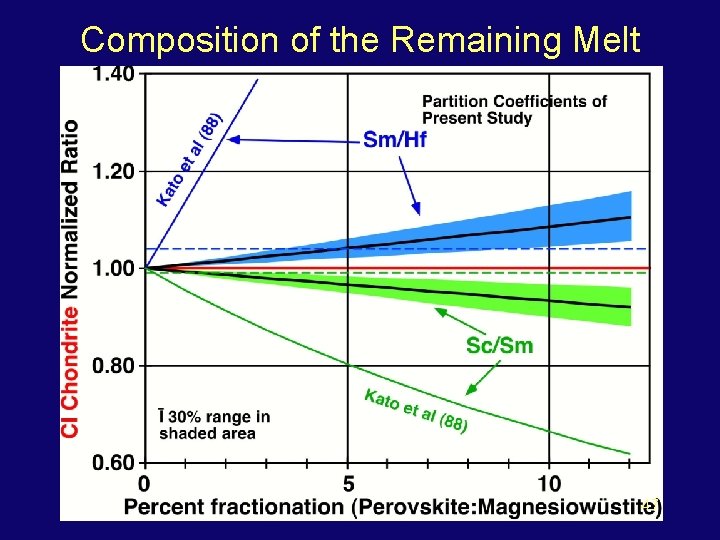
Composition of the Remaining Melt 47
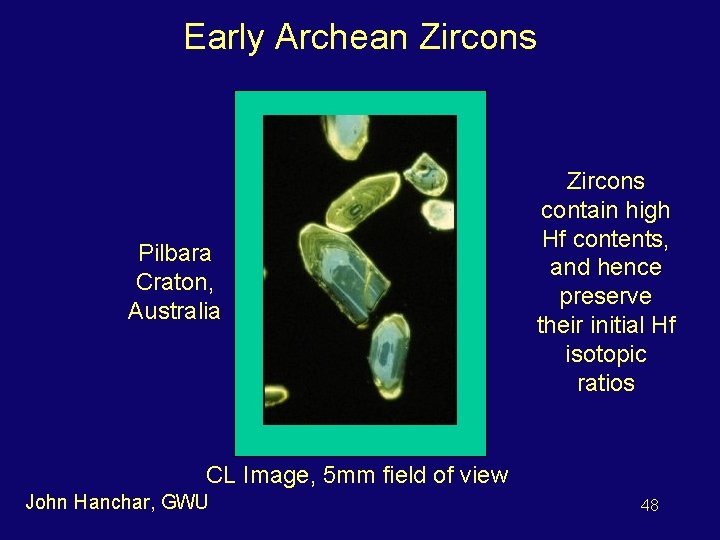
Early Archean Zircons Pilbara Craton, Australia Zircons contain high Hf contents, and hence preserve their initial Hf isotopic ratios CL Image, 5 mm field of view John Hanchar, GWU 48
Composition of the Remaining Melt 49
Composition of the Remaining Melt 50
Temp 51
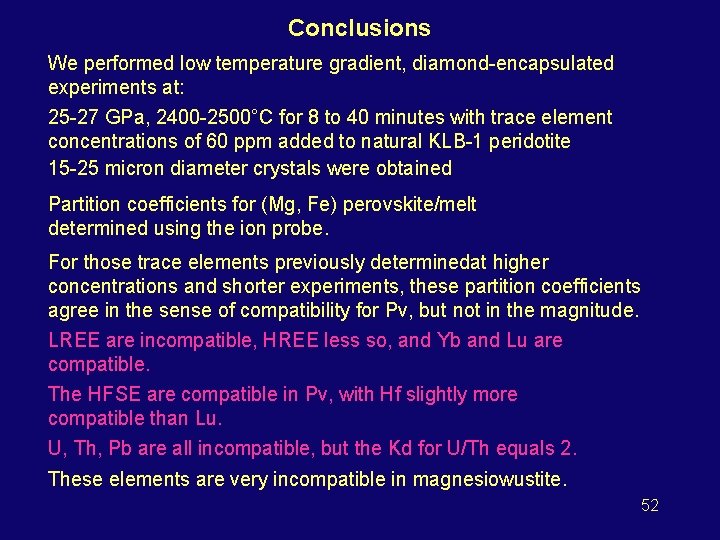
Conclusions We performed low temperature gradient, diamond-encapsulated experiments at: 25 -27 GPa, 2400 -2500°C for 8 to 40 minutes with trace element concentrations of 60 ppm added to natural KLB-1 peridotite 15 -25 micron diameter crystals were obtained Partition coefficients for (Mg, Fe) perovskite/melt determined using the ion probe. For those trace elements previously determinedat higher concentrations and shorter experiments, these partition coefficients agree in the sense of compatibility for Pv, but not in the magnitude. LREE are incompatible, HREE less so, and Yb and Lu are compatible. The HFSE are compatible in Pv, with Hf slightly more compatible than Lu. U, Th, Pb are all incompatible, but the Kd for U/Th equals 2. These elements are very incompatible in magnesiowustite. 52
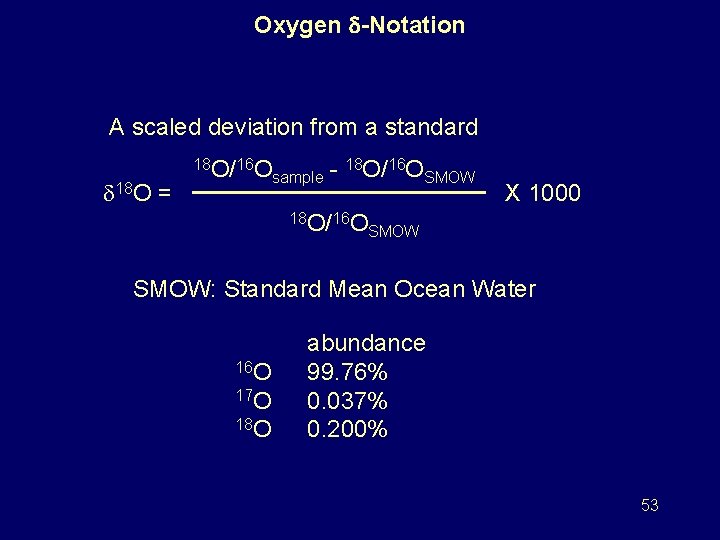
Oxygen d-Notation A scaled deviation from a standard d 18 O = 18 O/16 O sample - 18 O/16 O SMOW X 1000 SMOW: Standard Mean Ocean Water 16 O 17 O 18 O abundance 99. 76% 0. 037% 0. 200% 53
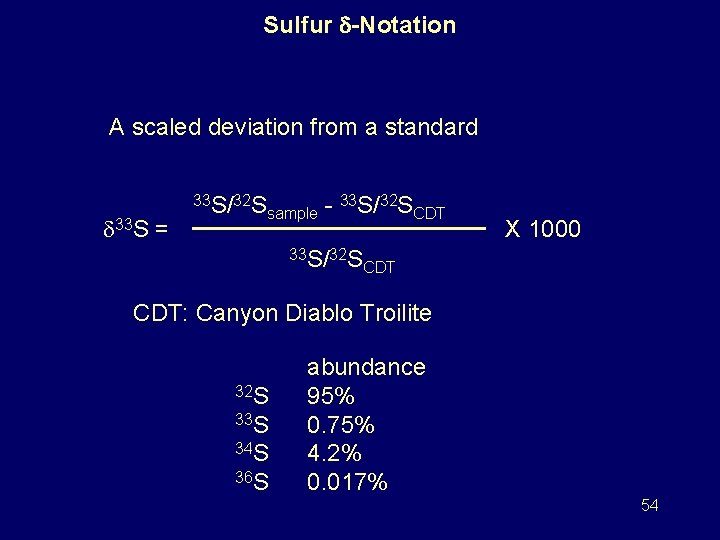
Sulfur d-Notation A scaled deviation from a standard d 33 S = 33 S/32 S sample - 33 S/32 S CDT X 1000 CDT: Canyon Diablo Troilite 32 S 33 S 34 S 36 S abundance 95% 0. 75% 4. 2% 0. 017% 54
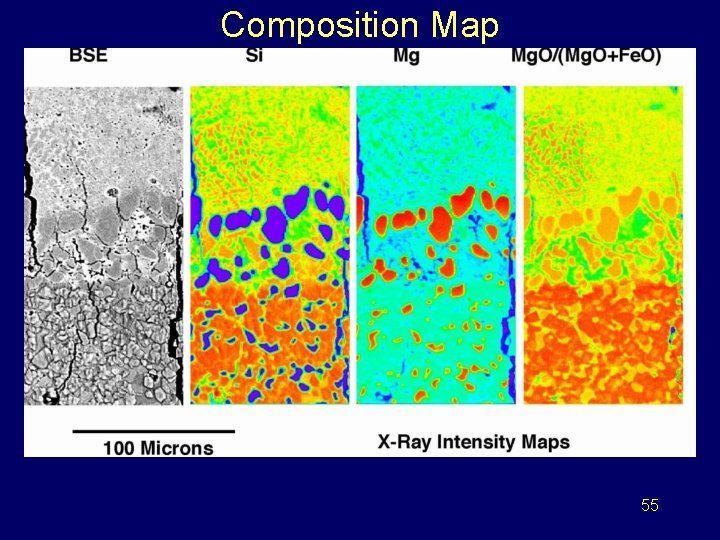
Composition Map 55
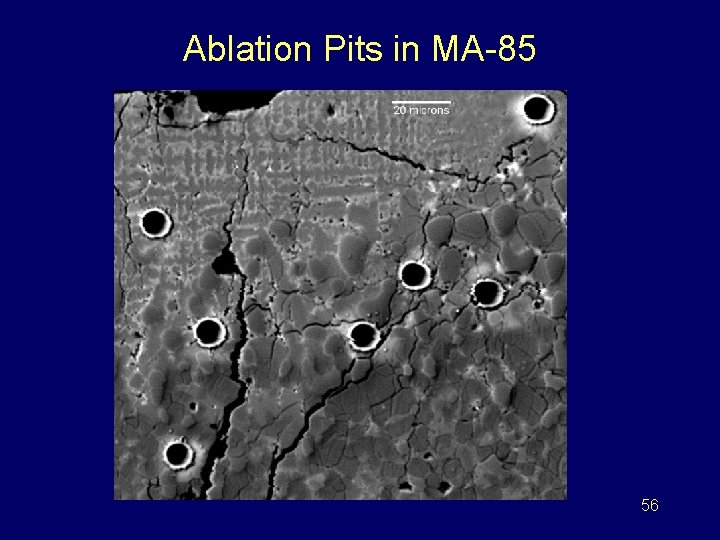
Ablation Pits in MA-85 Text 56
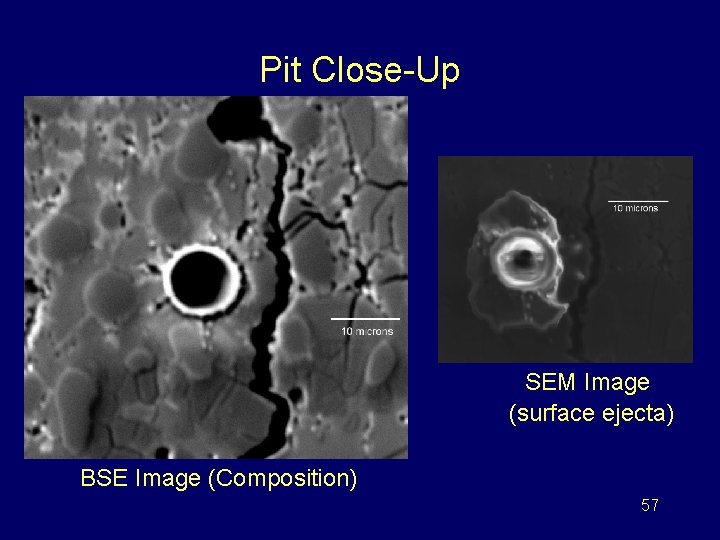
Pit Close-Up SEM Image (surface ejecta) BSE Image (Composition) 57
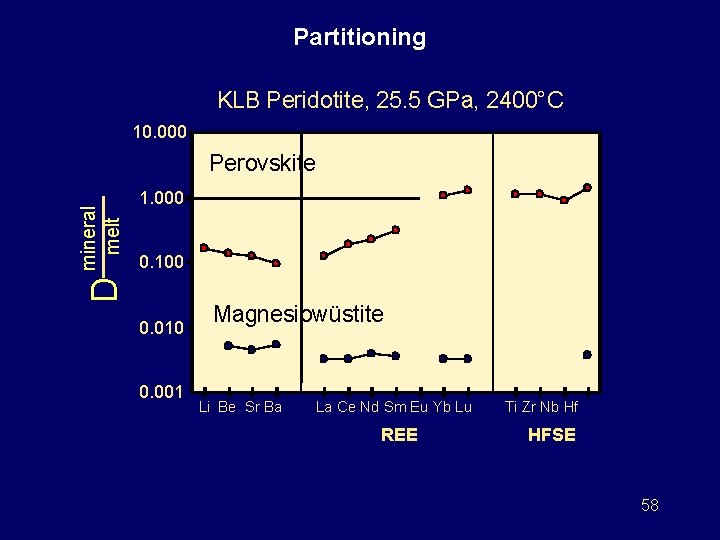
Partitioning KLB Peridotite, 25. 5 GPa, 2400°C 10. 000 1. 000 0. 100 D mineral melt Perovskite 0. 010 0. 001 Magnesiowüstite Li Be Sr Ba La Ce Nd Sm Eu Yb Lu Ti Zr Nb Hf REE HFSE 58
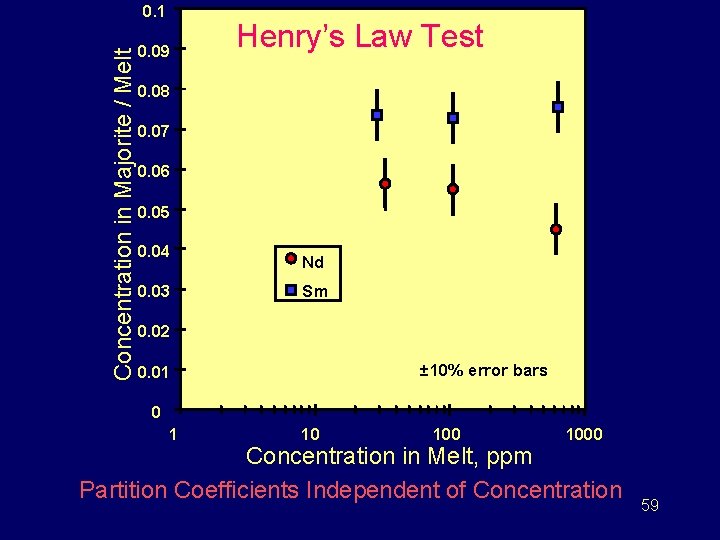
Concentration in Majorite / Melt 0. 1 . 0. 09 Henry’s Law Test 0. 08 0. 07 0. 06 0. 05 0. 04 0. 03 Nd Sm 0. 02 ± 10% error bars 0. 01 0 1 10 1000 Concentration in Melt, ppm Partition Coefficients Independent of Concentration 59
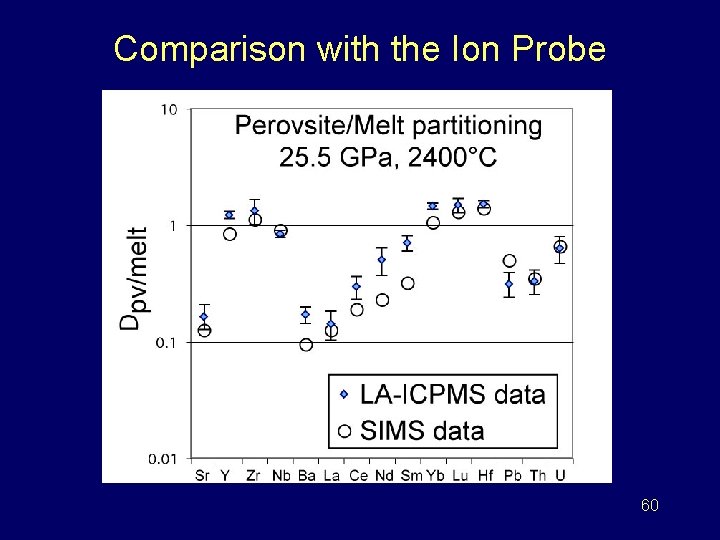
Comparison with the Ion Probe 60
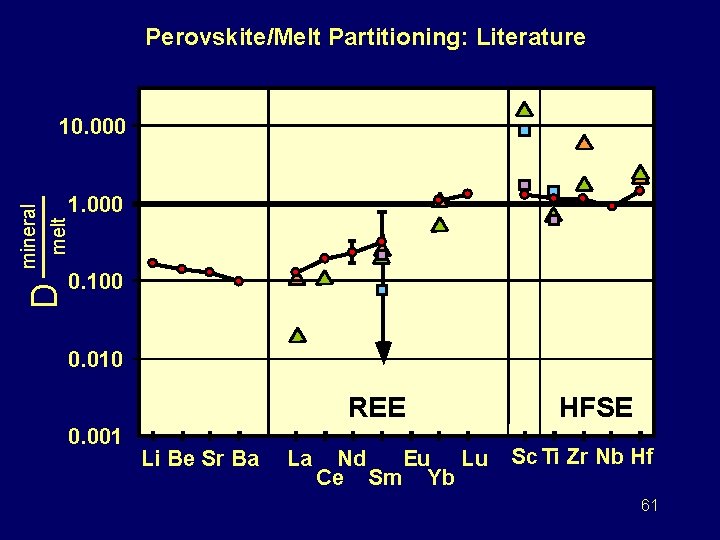
Perovskite/Melt Partitioning: Literature 10. 000 D mineral melt 1. 000 0. 100 0. 010 REE 0. 001 Li Be Sr Ba La Nd Eu Lu Ce Sm Yb HFSE Sc Ti Zr Nb Hf 61
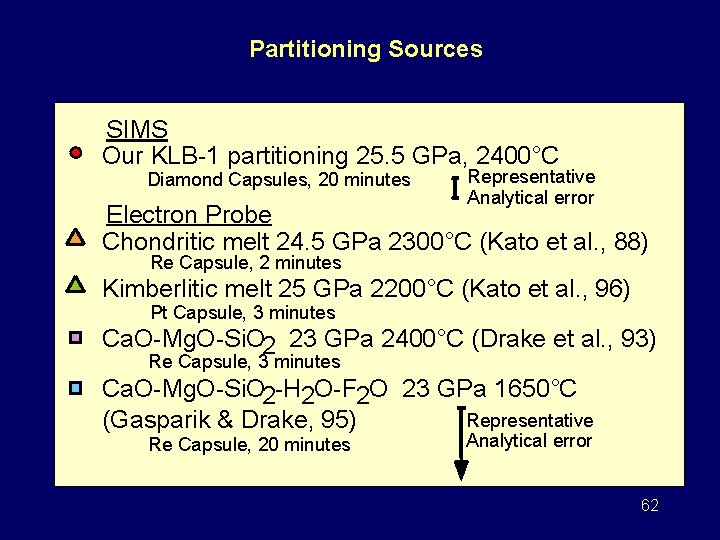
Partitioning Sources SIMS Our KLB-1 partitioning 25. 5 GPa, 2400°C Diamond Capsules, 20 minutes Representative Analytical error Electron Probe Chondritic melt 24. 5 GPa 2300°C (Kato et al. , 88) Re Capsule, 2 minutes Kimberlitic melt 25 GPa 2200°C (Kato et al. , 96) Pt Capsule, 3 minutes Ca. O-Mg. O-Si. O 2 23 GPa 2400°C (Drake et al. , 93) Re Capsule, 3 minutes Ca. O-Mg. O-Si. O 2 -H 2 O-F 2 O 23 GPa 1650°C Representative (Gasparik & Drake, 95) Re Capsule, 20 minutes Analytical error 62
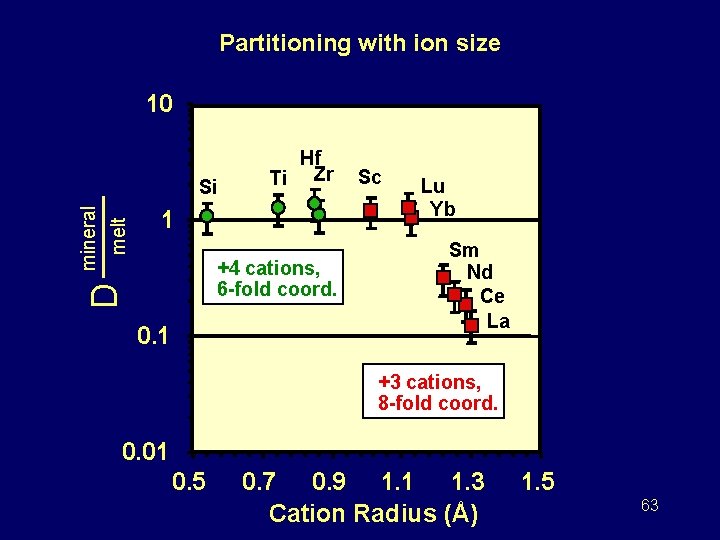
Partitioning with ion size 10 1 +4 cations, 6 -fold coord. D mineral melt Si Hf Ti Zr 0. 1 Sc Lu Yb Sm Nd Ce La +3 cations, 8 -fold coord. 0. 01 0. 5 0. 7 0. 9 1. 1 1. 3 Cation Radius (Å) 1. 5 63
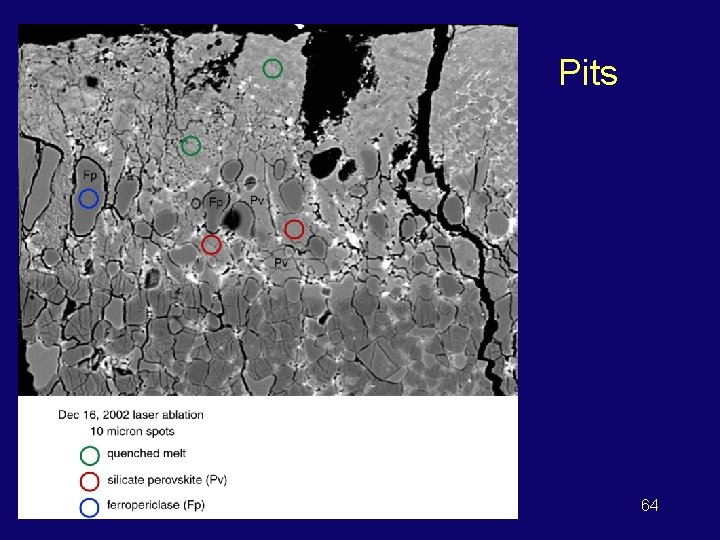
Pits 64
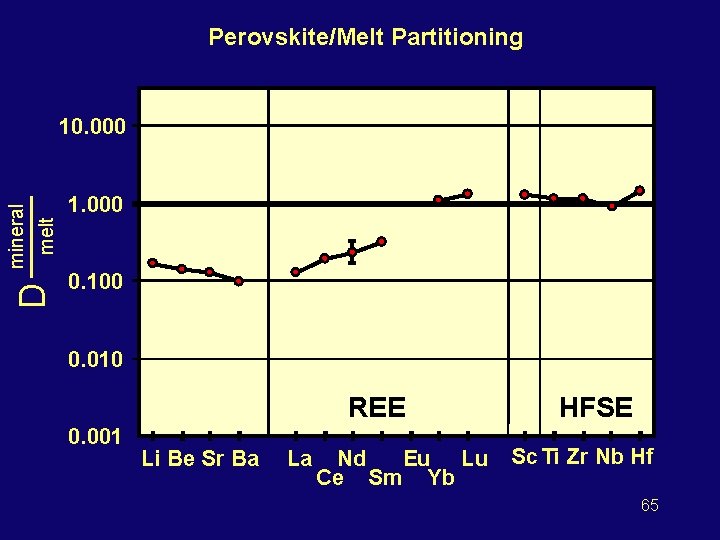
Perovskite/Melt Partitioning D mineral melt 10. 000 1. 000 0. 100 0. 010 REE 0. 001 Li Be Sr Ba La Nd Eu Lu Ce Sm Yb HFSE Sc Ti Zr Nb Hf 65
Comparison of Assemblies 66
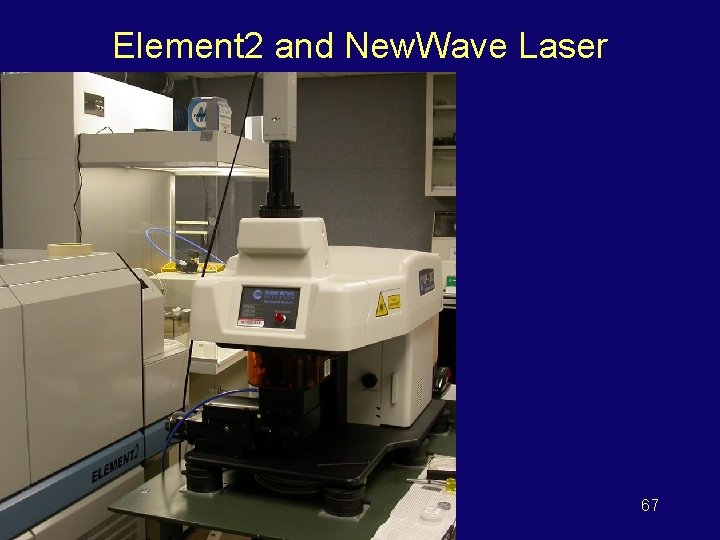
Element 2 and New. Wave Laser 67
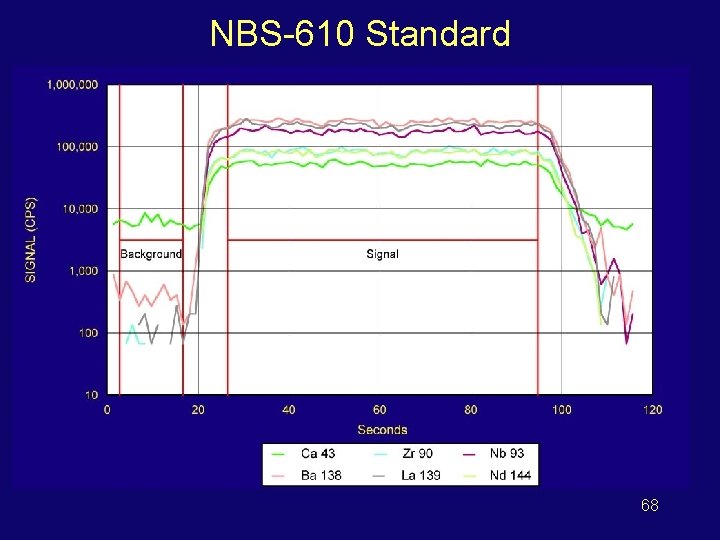
NBS-610 Standard 68
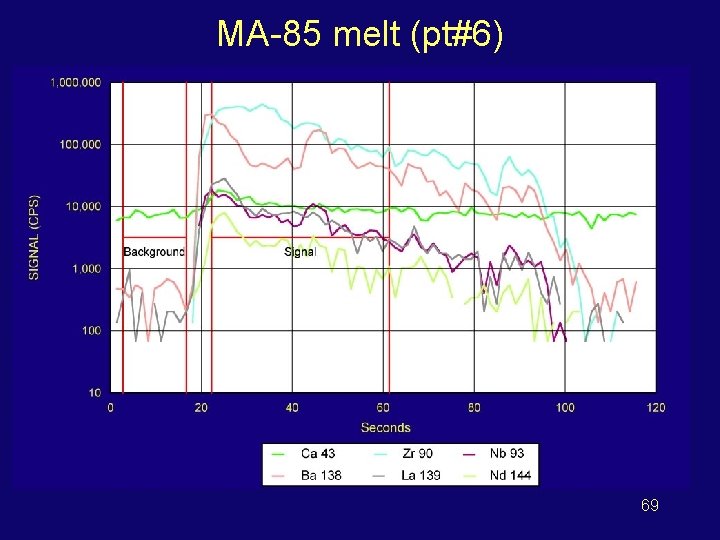
MA-85 melt (pt#6) 69
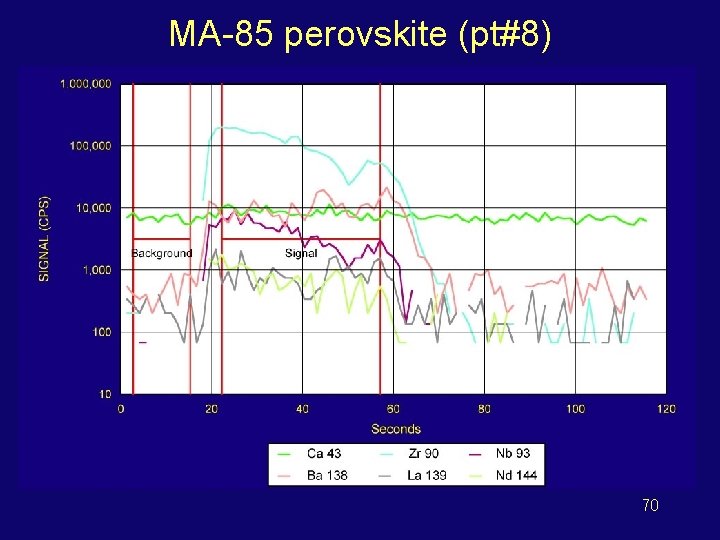
MA-85 perovskite (pt#8) 70
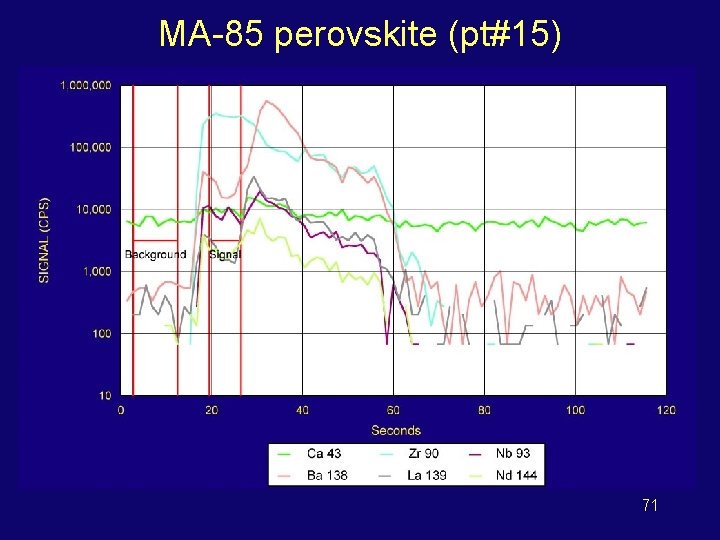
MA-85 perovskite (pt#15) 71
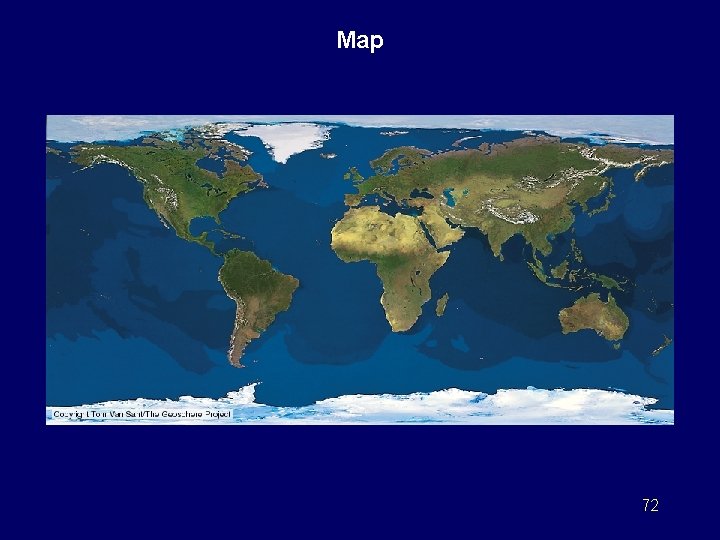
Map 72
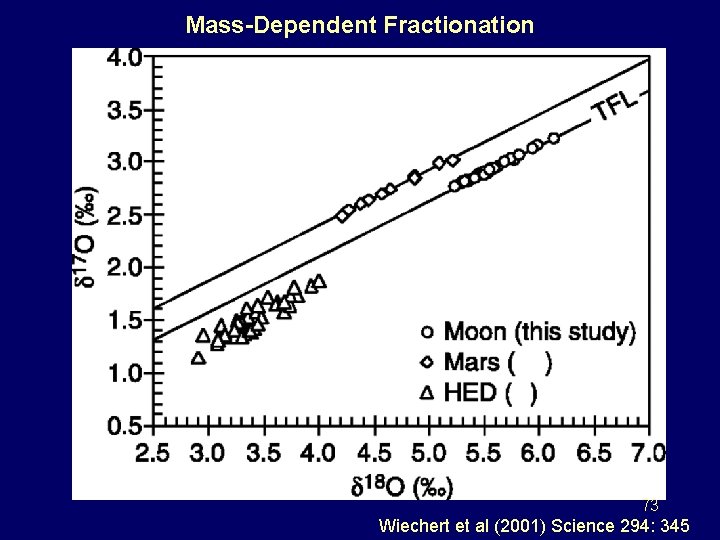
Mass-Dependent Fractionation 73 Wiechert et al (2001) Science 294: 345
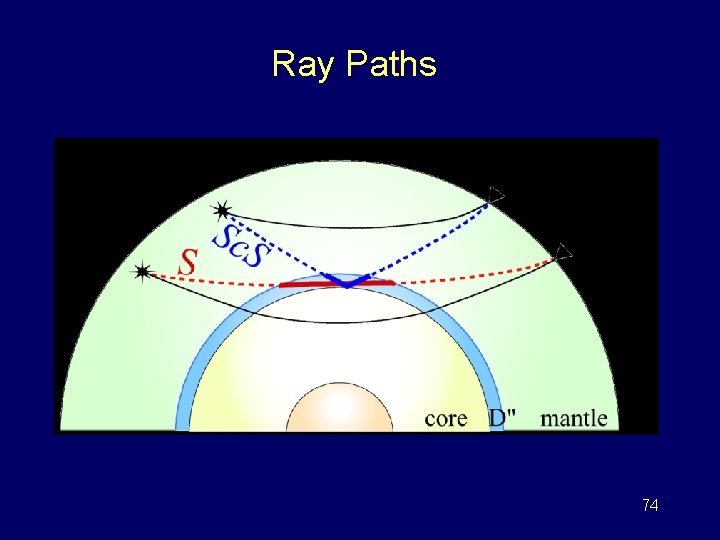
Ray Paths 74
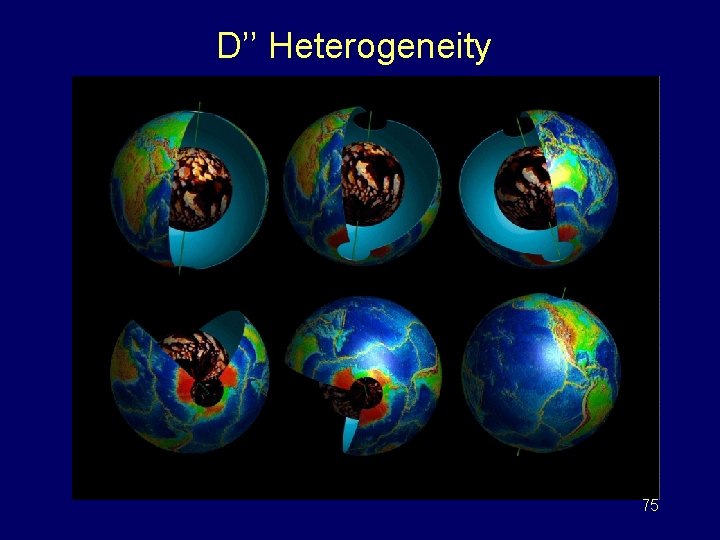
D’’ Heterogeneity 75
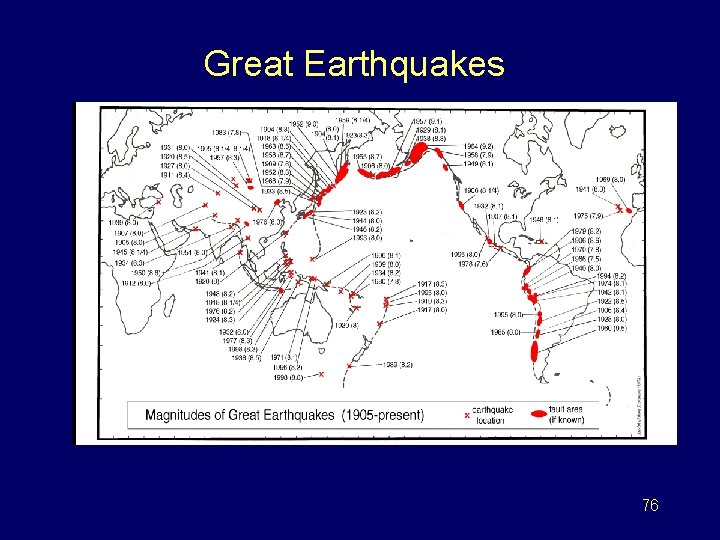
Great Earthquakes 76