
Pre pregnancy competency and family planning Introduction Competencies

- Slides: 16
Pre pregnancy competency and family planning
Introduction: Competencies in this category are about health assessment of the woman and fetus, promotion of health and well-being, detection of complications during pregnancy and care of women with an unintended pregnancy.
A. Provide pre-pregnancy care • Anatomy and physiology of female and male related to reproduction and sexual development • Socio-cultural aspects of human sexuality • Evidence based screening for cancer of reproductive organs and other health problems such as diabetes, hypertension, thyroid conditions, and chronic infections that impact pregnancy
• Identify and assist in reducing barriers related to accessing and using sexual and reproductive health services • Assess nutritional status, current immunization status, health behaviors such as smoking, existing medical conditions, and exposure to known teratogens • Carry out screening procedures for sexually transmitted and other infections, HIV, cervical cancer • Provide counseling about nutritional supplements such as folic acid, dietary intake, exercise, updating immunizations as needed. • modifying risk behaviors. • and prevention of sexually transmitted infections.
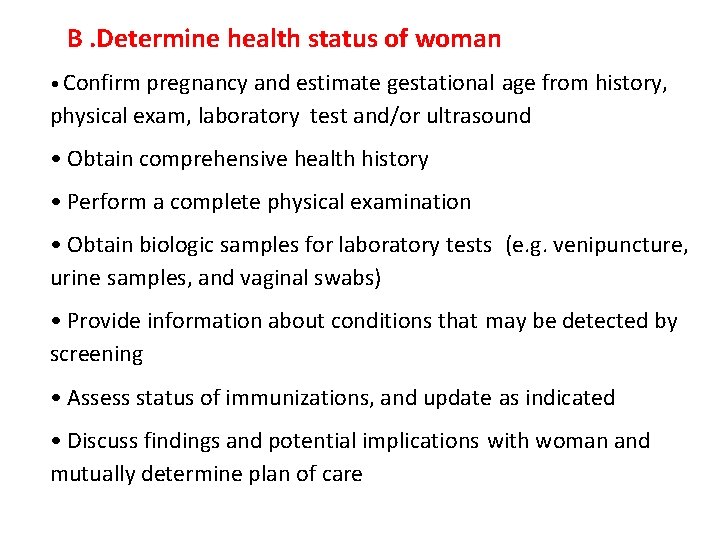
B. Determine health status of woman • Confirm pregnancy and estimate gestational age from history, physical exam, laboratory test and/or ultrasound • Obtain comprehensive health history • Perform a complete physical examination • Obtain biologic samples for laboratory tests (e. g. venipuncture, urine samples, and vaginal swabs) • Provide information about conditions that may be detected by screening • Assess status of immunizations, and update as indicated • Discuss findings and potential implications with woman and mutually determine plan of care
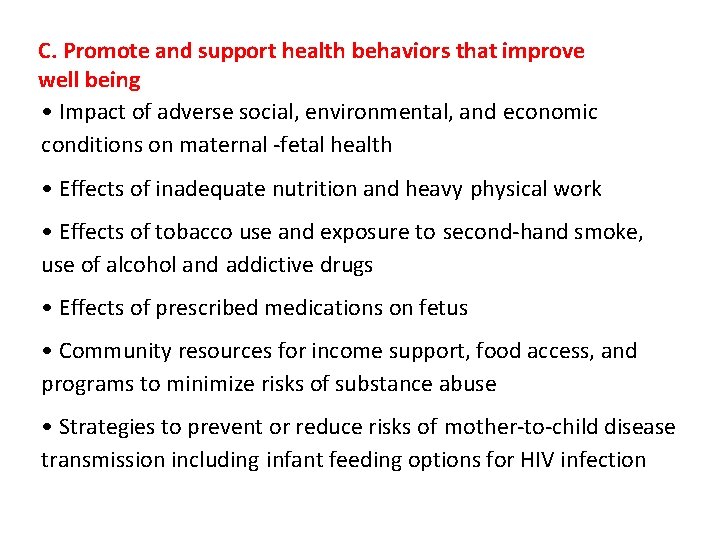
C. Promote and support health behaviors that improve well being • Impact of adverse social, environmental, and economic conditions on maternal -fetal health • Effects of inadequate nutrition and heavy physical work • Effects of tobacco use and exposure to second-hand smoke, use of alcohol and addictive drugs • Effects of prescribed medications on fetus • Community resources for income support, food access, and programs to minimize risks of substance abuse • Strategies to prevent or reduce risks of mother-to-child disease transmission including infant feeding options for HIV infection
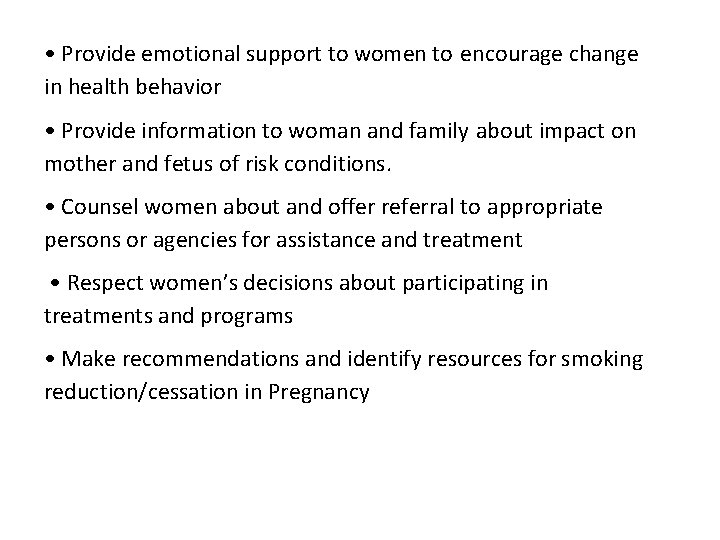
• Provide emotional support to women to encourage change in health behavior • Provide information to woman and family about impact on mother and fetus of risk conditions. • Counsel women about and offer referral to appropriate persons or agencies for assistance and treatment • Respect women’s decisions about participating in treatments and programs • Make recommendations and identify resources for smoking reduction/cessation in Pregnancy
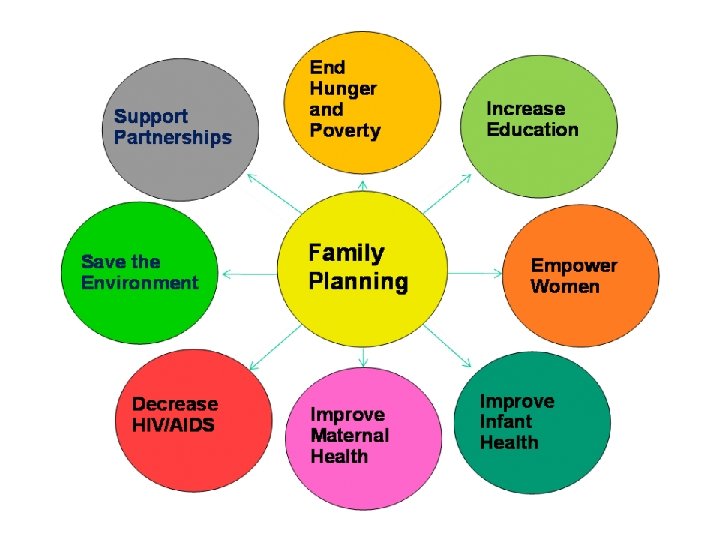
Benefits of family planning / contraception Promotion of family planning – and ensuring access to preferred contraceptive methods for women and couples – is essential to securing the well-being and autonomy of women, while supporting the health and development of communities.
Preventing pregnancy-related health risks in women 1 -Reducing infant mortality 2 -Helping to prevent HIV/AIDS 3 -Empowering people and enhancing education 4 -Reducing adolescent pregnancies 5 -Slowing population growth
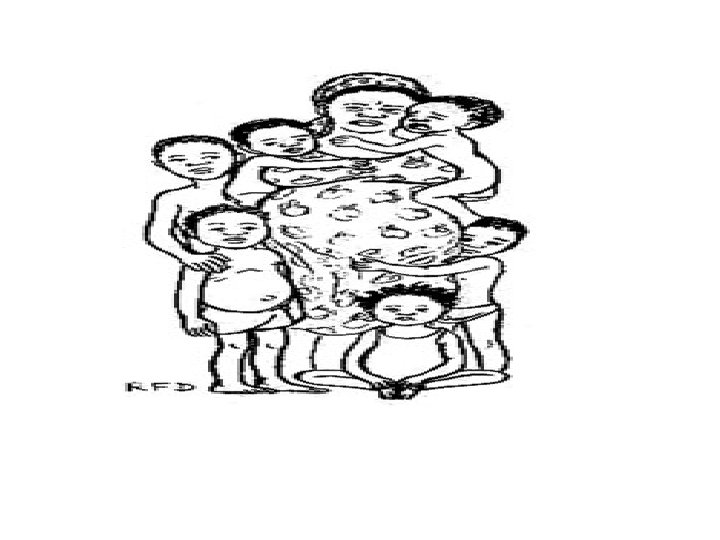
Benefits of birth spacing: For maximum protection, women after childbirth should not wait until the return of monthly bleeding to start a contraceptive method, but start as soon as safe guidance for her chosen method allows
Appropriate birth spacing lowers the risk of: • Maternal mortality • Fetal death (miscarriage or stillbirth), neonatal mortality • Anemia in the mother during subsequent pregnancies • Postpartum inflammation of the endometrium lining the uterus • Premature rupture of the amniotic membranes surrounding the fetus • Premature birth • Intrauterine growth retardation and a low birth-weight baby • Malnutrition of newborns and infants due to insufficient breast milk.