
Pre operative procedure For exploratory laparotomy in Rebecca
Pre – operative procedure For exploratory laparotomy in Rebecca, the sheep
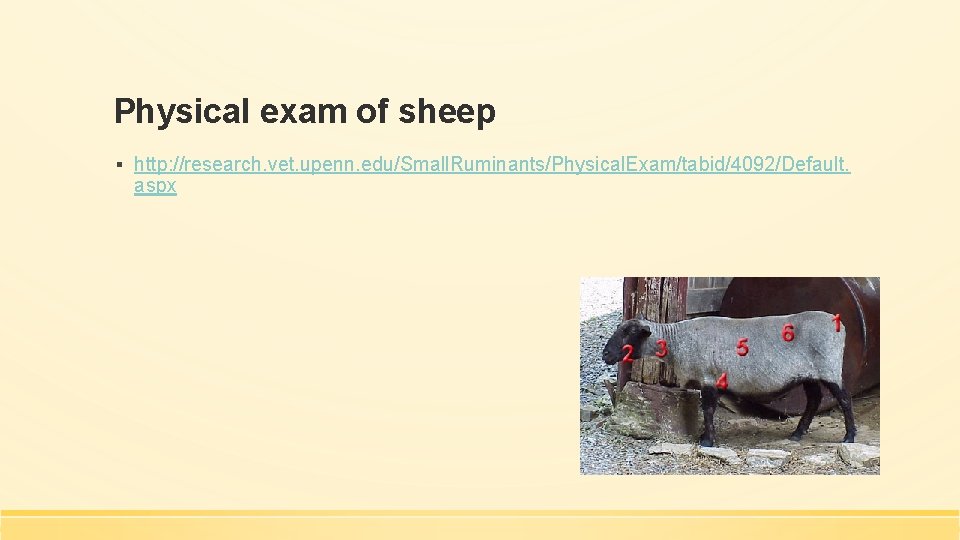
Physical exam of sheep ▪ http: //research. vet. upenn. edu/Small. Ruminants/Physical. Exam/tabid/4092/Default. aspx

Normal vital signs of sheep Sign Range Body temperature 102 -103°F Heart rate 60 -90 beats/minute Respiration 12 -20 breaths/minute
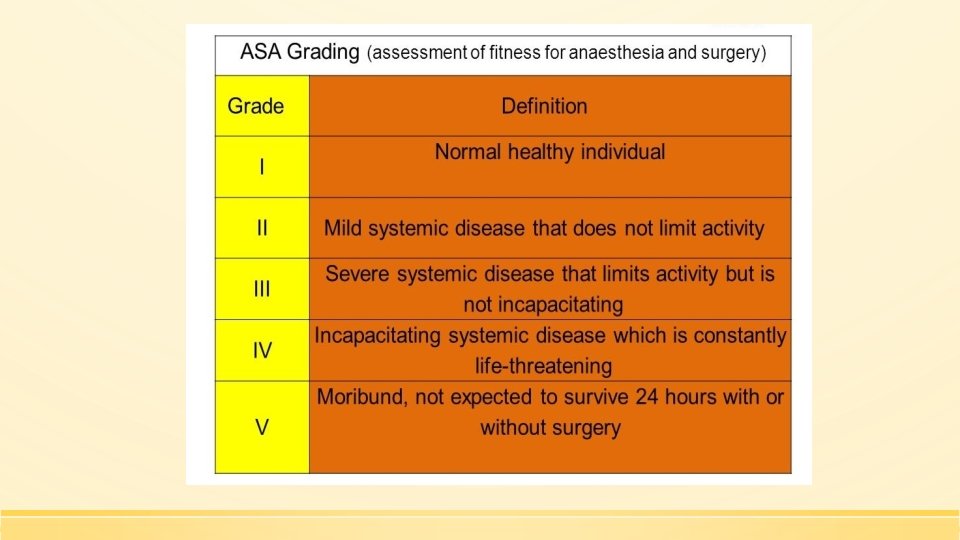
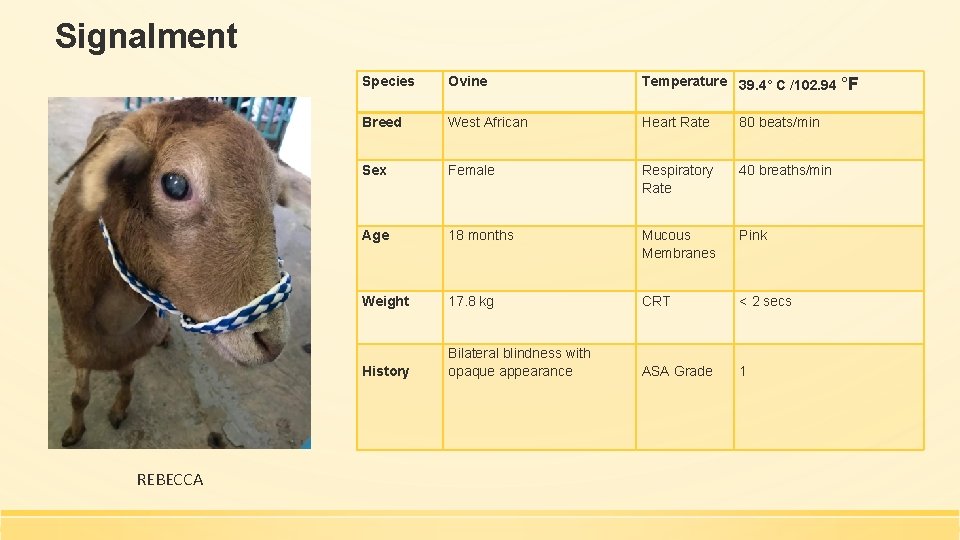
Signalment REBECCA Species Ovine Temperature 39. 4° C /102. 94 °F Breed West African Heart Rate 80 beats/min Sex Female Respiratory Rate 40 breaths/min Age 18 months Mucous Membranes Pink Weight 17. 8 kg CRT < 2 secs History Bilateral blindness with opaque appearance ASA Grade 1
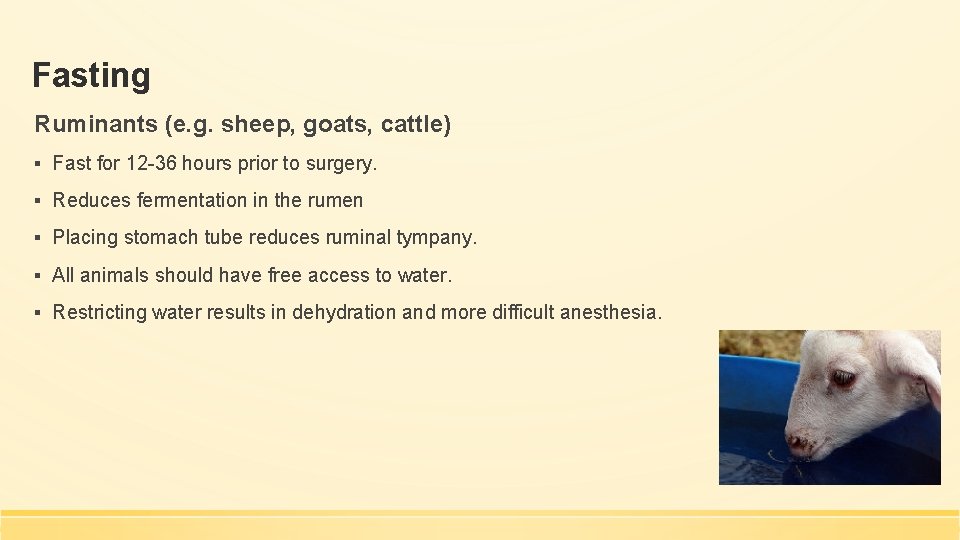
Fasting Ruminants (e. g. sheep, goats, cattle) ▪ Fast for 12 -36 hours prior to surgery. ▪ Reduces fermentation in the rumen ▪ Placing stomach tube reduces ruminal tympany. ▪ All animals should have free access to water. ▪ Restricting water results in dehydration and more difficult anesthesia.
Set-up of Prep Area Ensure prep area has: Working heat support on table Functioning anesthesia machine (if required) Stethoscope and thermometer Appropriate drugs and reversal agents (analgesics and anesthetics) Functioning monitoring equipment Prep supplies and clippers Vacuum
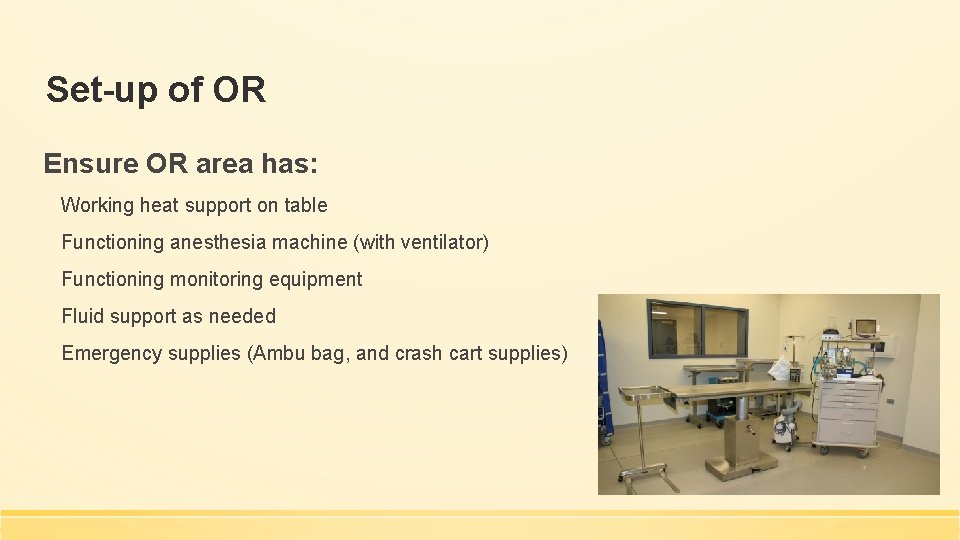
Set-up of OR Ensure OR area has: Working heat support on table Functioning anesthesia machine (with ventilator) Functioning monitoring equipment Fluid support as needed Emergency supplies (Ambu bag, and crash cart supplies)
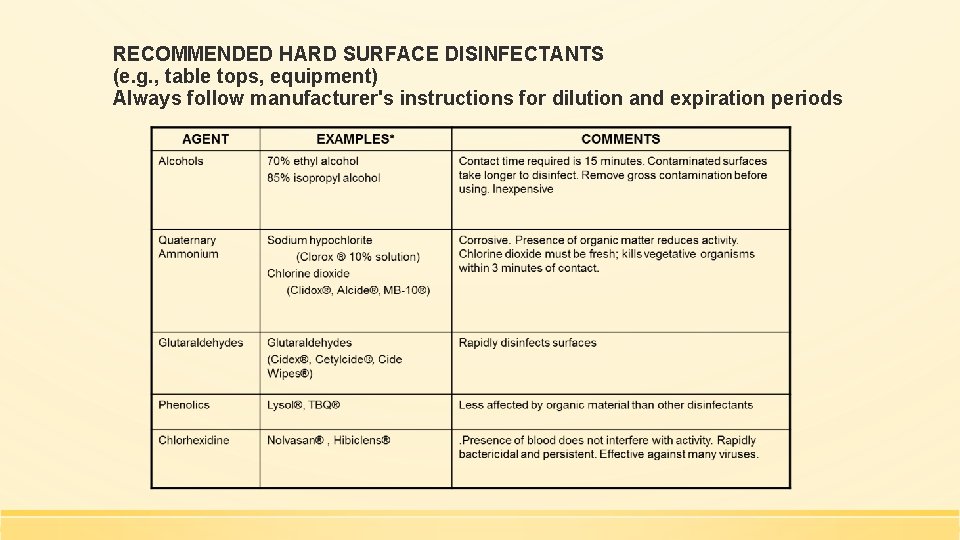
RECOMMENDED HARD SURFACE DISINFECTANTS (e. g. , table tops, equipment) Always follow manufacturer's instructions for dilution and expiration periods

RECOMMENDED SKIN DISINFECTANTS Alternating disinfectants is more effective than using a single agent.

Surgeon Preparation ▪ For survival surgical procedures (major and minor), the surgeon should wear clean scrubs, a surgical hat, and mask. ▪ Surgeons should wash their hands with an antiseptic surgical scrub and dry their hands with a sterile towel. ▪ Sterile surgical gloves and a sterile surgical gown should be worn. ▪ https: //www. youtube. com/watch? v=Mpw. Mnj. QR 41 Y

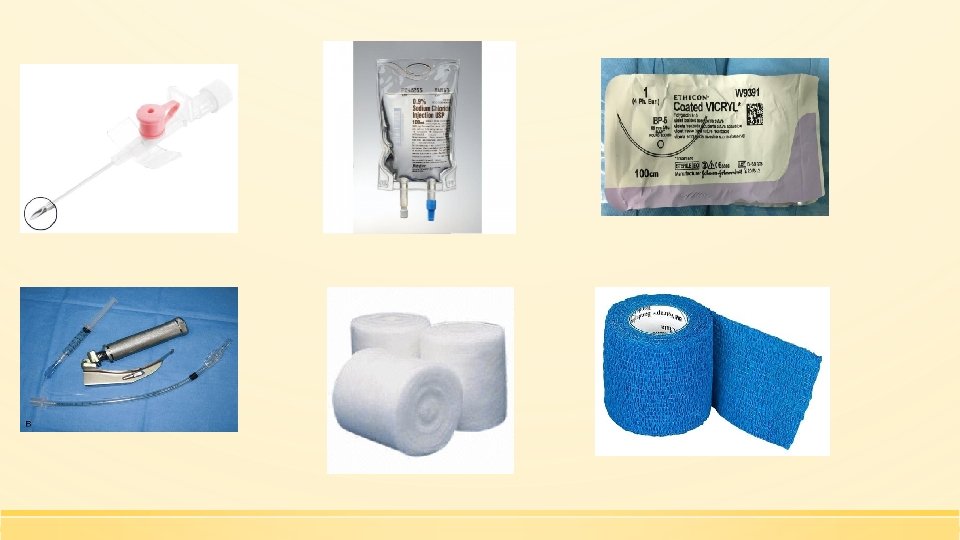
Surgical equipment
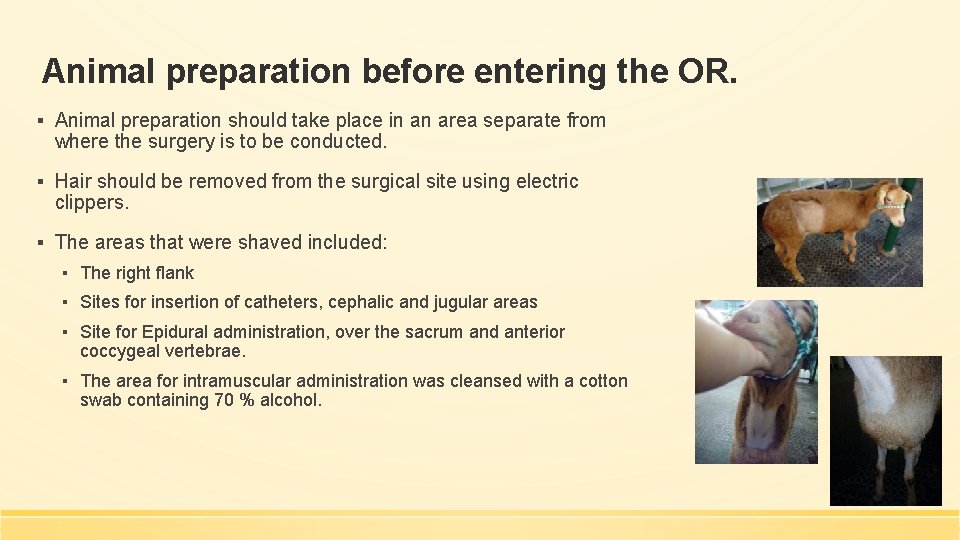
Animal preparation before entering the OR. ▪ Animal preparation should take place in an area separate from where the surgery is to be conducted. ▪ Hair should be removed from the surgical site using electric clippers. ▪ The areas that were shaved included: ▪ The right flank ▪ Sites for insertion of catheters, cephalic and jugular areas ▪ Site for Epidural administration, over the sacrum and anterior coccygeal vertebrae. ▪ The area for intramuscular administration was cleansed with a cotton swab containing 70 % alcohol.
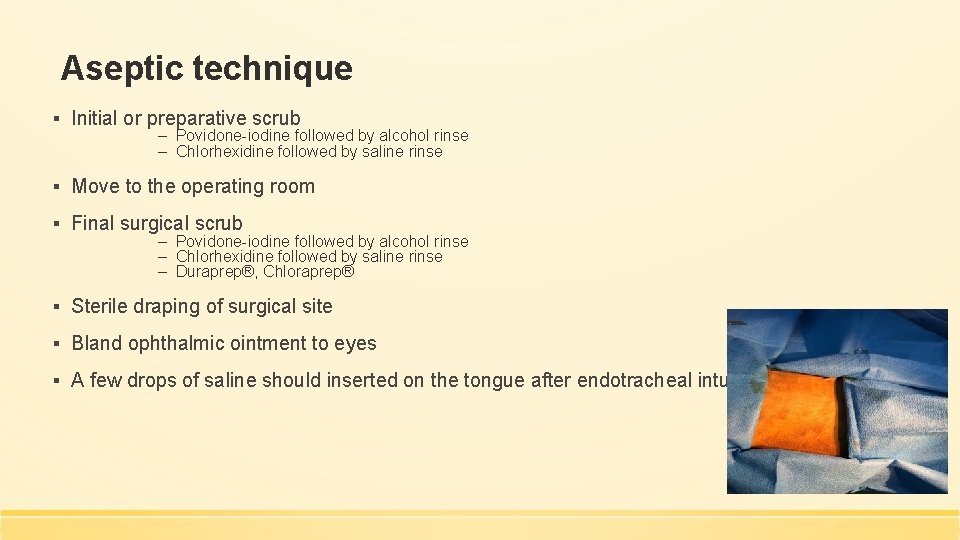
Aseptic technique ▪ Initial or preparative scrub – Povidone-iodine followed by alcohol rinse – Chlorhexidine followed by saline rinse ▪ Move to the operating room ▪ Final surgical scrub – Povidone-iodine followed by alcohol rinse – Chlorhexidine followed by saline rinse – Duraprep®, Chloraprep® ▪ Sterile draping of surgical site ▪ Bland ophthalmic ointment to eyes ▪ A few drops of saline should inserted on the tongue after endotracheal intubation
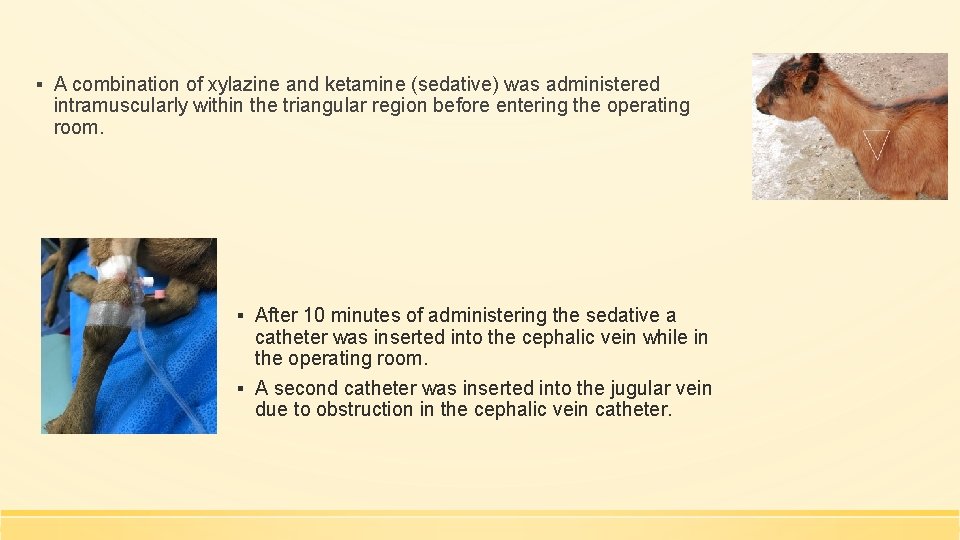
▪ A combination of xylazine and ketamine (sedative) was administered intramuscularly within the triangular region before entering the operating room. ▪ After 10 minutes of administering the sedative a catheter was inserted into the cephalic vein while in the operating room. ▪ A second catheter was inserted into the jugular vein due to obstruction in the cephalic vein catheter.
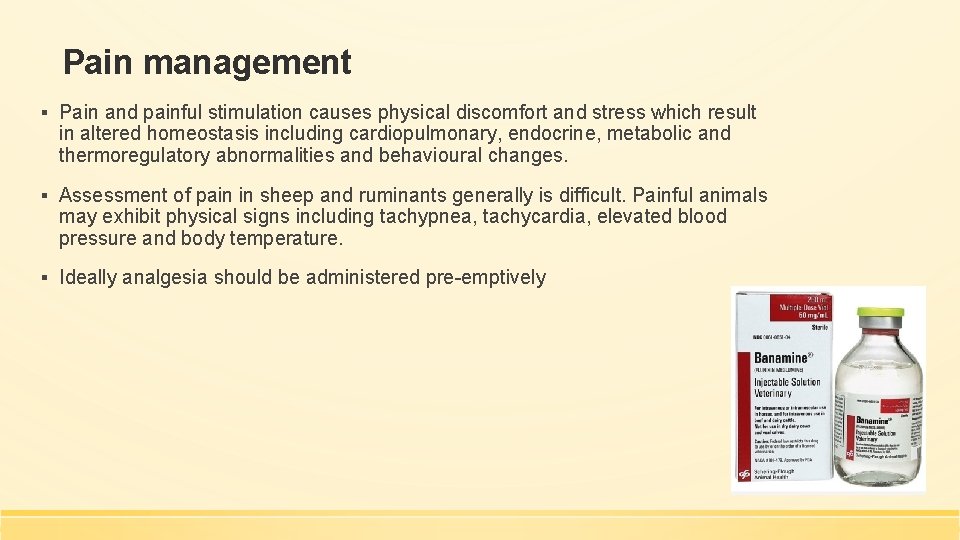
Pain management ▪ Pain and painful stimulation causes physical discomfort and stress which result in altered homeostasis including cardiopulmonary, endocrine, metabolic and thermoregulatory abnormalities and behavioural changes. ▪ Assessment of pain in sheep and ruminants generally is difficult. Painful animals may exhibit physical signs including tachypnea, tachycardia, elevated blood pressure and body temperature. ▪ Ideally analgesia should be administered pre-emptively
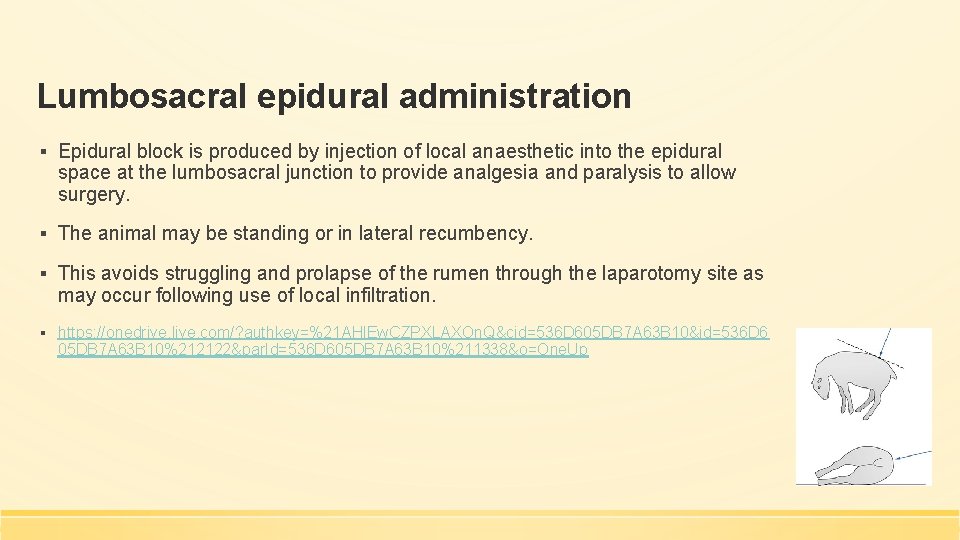
Lumbosacral epidural administration ▪ Epidural block is produced by injection of local anaesthetic into the epidural space at the lumbosacral junction to provide analgesia and paralysis to allow surgery. ▪ The animal may be standing or in lateral recumbency. ▪ This avoids struggling and prolapse of the rumen through the laparotomy site as may occur following use of local infiltration. ▪ https: //onedrive. live. com/? authkey=%21 AHl. Ew. CZPXLAXOn. Q&cid=536 D 605 DB 7 A 63 B 10&id=536 D 6 05 DB 7 A 63 B 10%212122&par. Id=536 D 605 DB 7 A 63 B 10%211338&o=One. Up
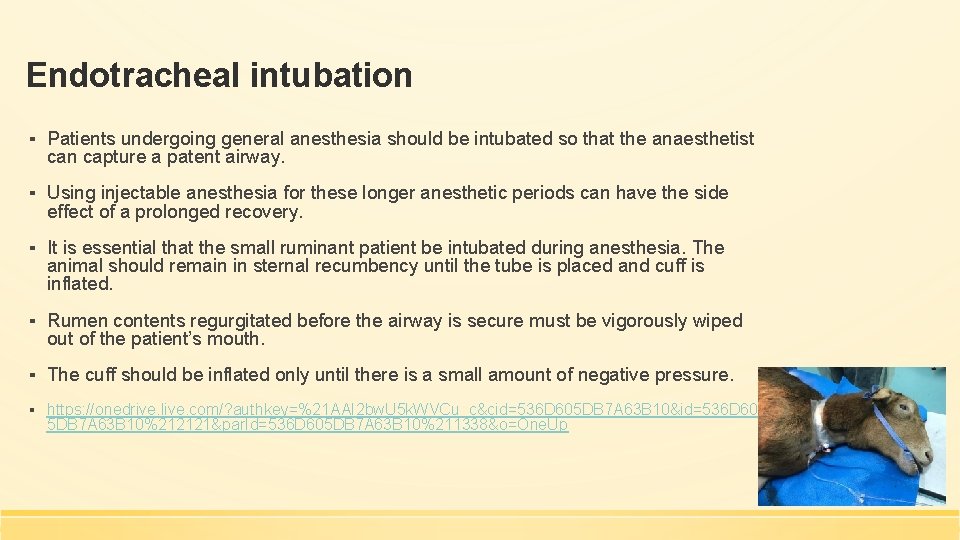
Endotracheal intubation ▪ Patients undergoing general anesthesia should be intubated so that the anaesthetist can capture a patent airway. ▪ Using injectable anesthesia for these longer anesthetic periods can have the side effect of a prolonged recovery. ▪ It is essential that the small ruminant patient be intubated during anesthesia. The animal should remain in sternal recumbency until the tube is placed and cuff is inflated. ▪ Rumen contents regurgitated before the airway is secure must be vigorously wiped out of the patient’s mouth. ▪ The cuff should be inflated only until there is a small amount of negative pressure. ▪ https: //onedrive. live. com/? authkey=%21 AAI 2 bw. U 5 k. WVCu_c&cid=536 D 605 DB 7 A 63 B 10&id=536 D 60 5 DB 7 A 63 B 10%212121&par. Id=536 D 605 DB 7 A 63 B 10%211338&o=One. Up
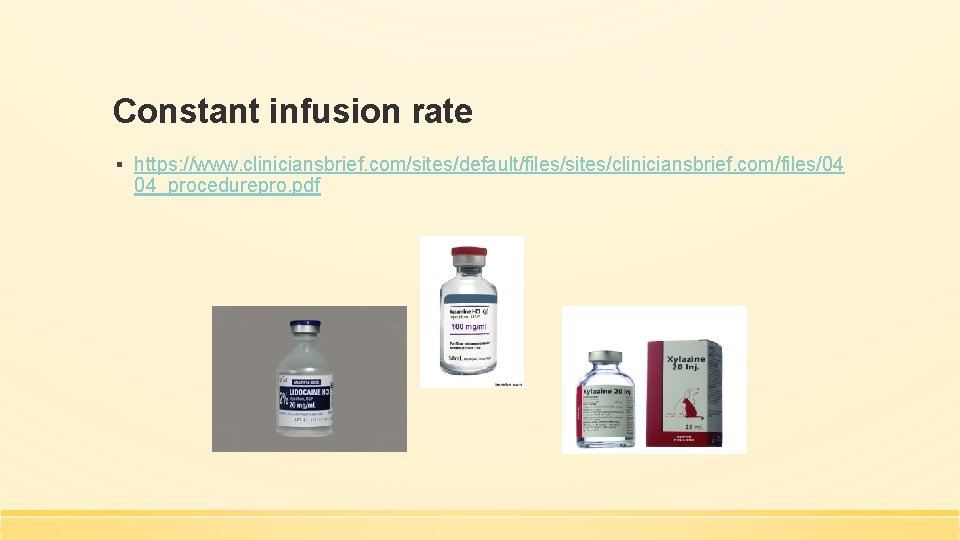
Constant infusion rate ▪ https: //www. cliniciansbrief. com/sites/default/files/sites/cliniciansbrief. com/files/04 04_procedurepro. pdf
Checking Anesthetic Depth ▪ Reflexes ▪ Jaw tone ▪ Eye position, pupil size and pupillary light response ▪ Heart and respiratory rates ▪ Response to surgical stimuli ▪ https: //www. youtube. com/watch? v=j. V 3 MDFek 1 r 0
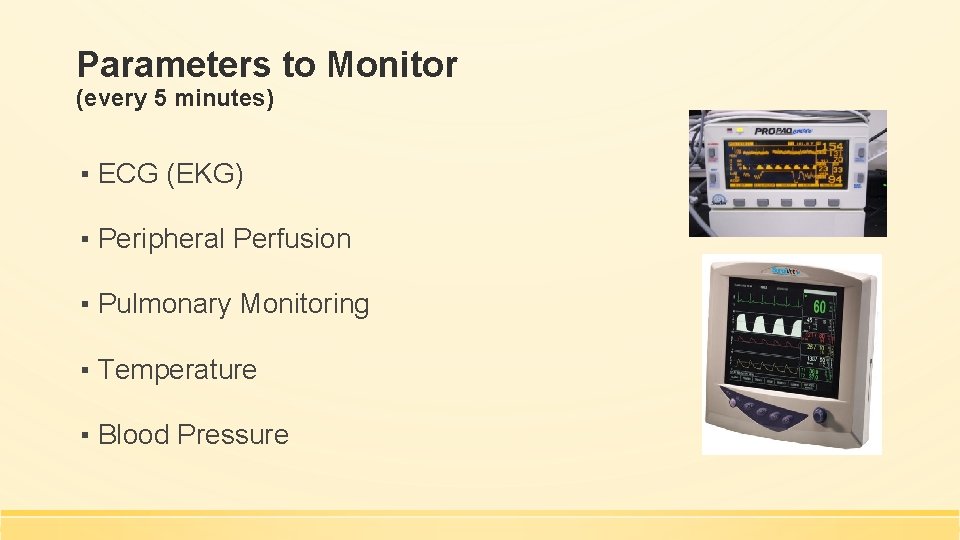
Parameters to Monitor (every 5 minutes) ▪ ECG (EKG) ▪ Peripheral Perfusion ▪ Pulmonary Monitoring ▪ Temperature ▪ Blood Pressure
- Slides: 22