
Pre natal testing what is it and why

- Slides: 23
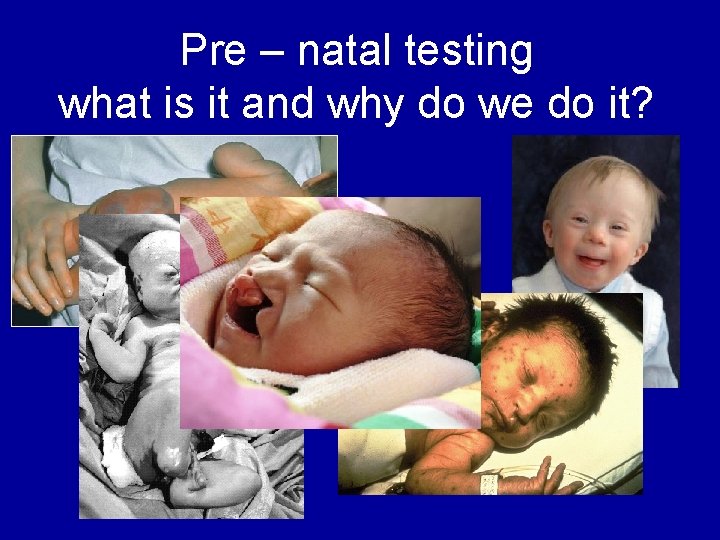
Pre – natal testing what is it and why do we do it?
Common Tests • Genetic or Chromosomal Tests – amniocentesis – chorionic villus sampling – fetal blood sampling (cordeocentesis)
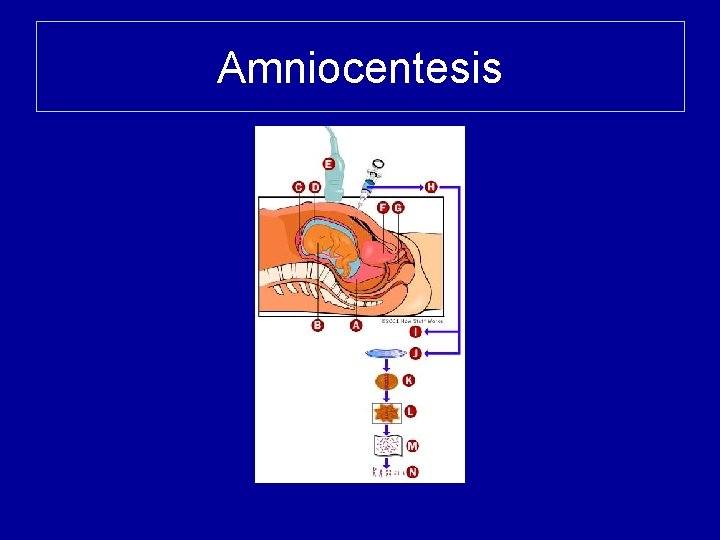
Amniocentesis • Amniocentesis samples the fluid (amniotic fluid) that surrounds the growing baby in the uterus. – in the fluid, there are cells from the baby, can be grown and analyzed. – done between 15 to 18 weeks – two to three weeks before the results are back
Amniocentesis
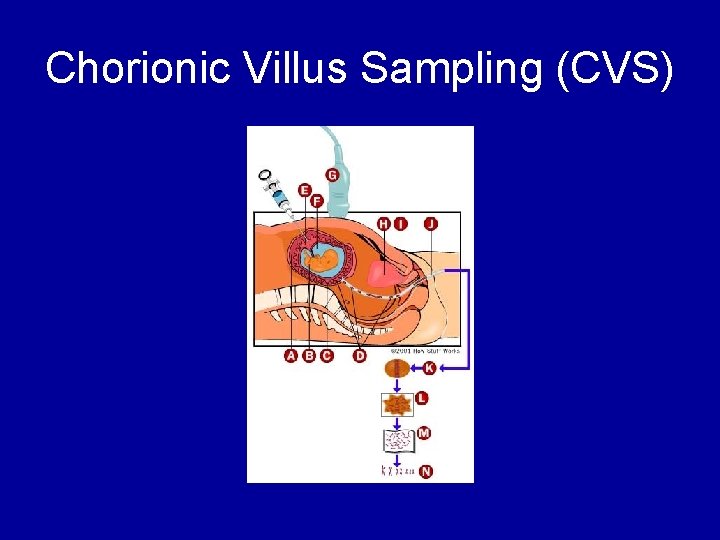
Chorionic Villus Sampling • chorionic villus sampling (CVS) obtains tissue from the placenta (chorion) instead of fluid. – tissue can be taken by inserting a needle through the abdomen. – between weeks nine and 11 – results obtained earlier in pregnancy – CVS carries a higher risk
Chorionic Villus Sampling (CVS)
Fetal Blood Sampling (cordeocentesis) • Fetal blood sampling: fetal blood is obtained from the umbilical cord for analysis. – needle through the mother's abdomen into the umbilical cord and withdraws a blood sample. – can be done from 18 weeks to full term. – Results are back the fastest.
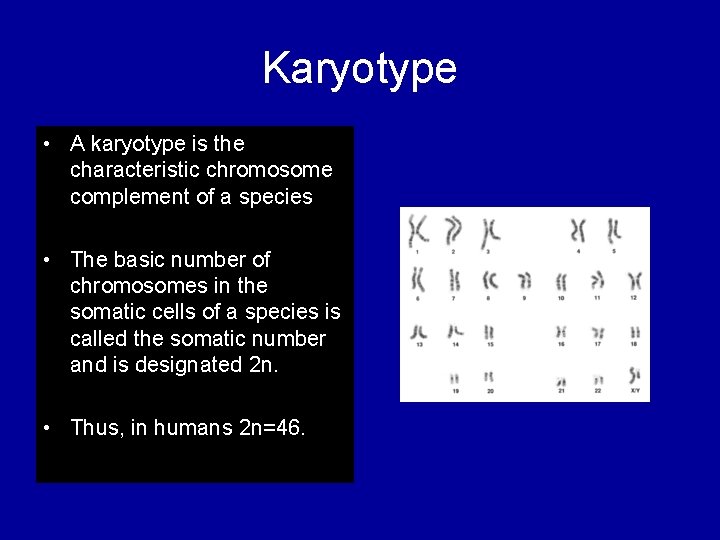
Karyotype • A karyotype is the characteristic chromosome complement of a species • The basic number of chromosomes in the somatic cells of a species is called the somatic number and is designated 2 n. • Thus, in humans 2 n=46.
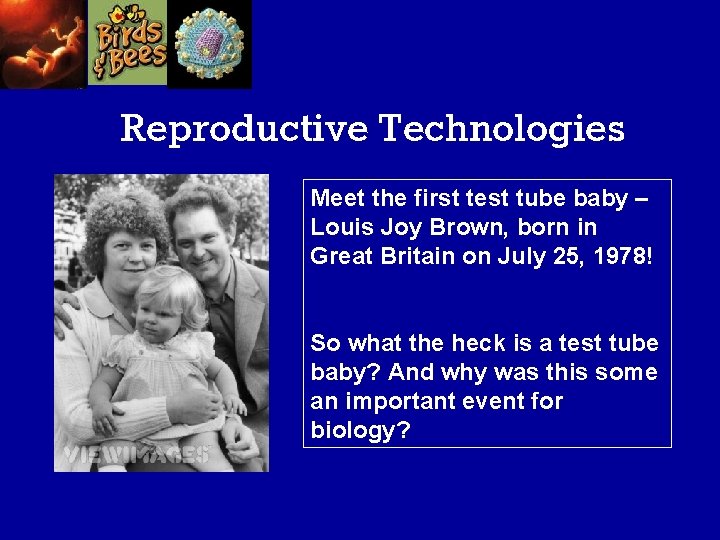
Reproductive Technologies Meet the first test tube baby – Louis Joy Brown, born in Great Britain on July 25, 1978! So what the heck is a test tube baby? And why was this some an important event for biology?
Reproductive Technologies that enhance reproductive potential were an incredible achievement for infertile couples (although not for sterile couples). Note: Sterile – men and women unable to have children. Infertile – men and women who have had trouble conceiving children (unsuccessful after one year of trying).
Common causes of infertility: MEN • obstruction in epididymis or vas deferens. • low sperm count (due to smoking, temp, infection) • inability to become erect or ejaculate
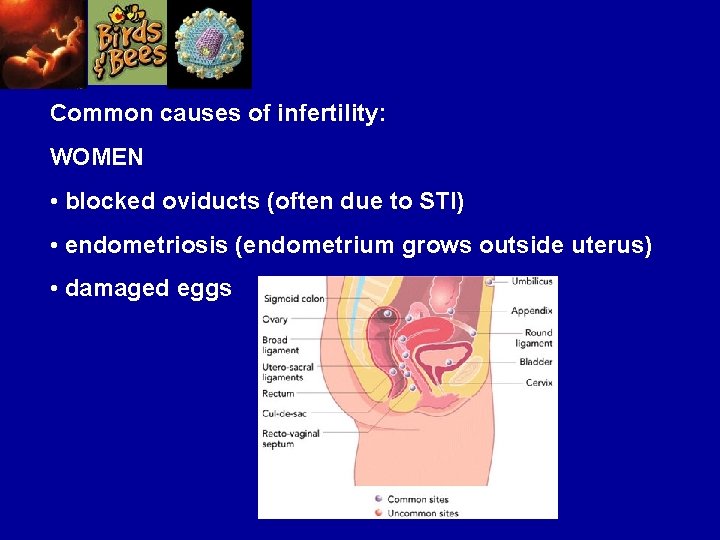
Common causes of infertility: WOMEN • blocked oviducts (often due to STI) • endometriosis (endometrium grows outside uterus) • damaged eggs
Reproductive Technologies Artificial Insemination • Sperm are collected, concentrated, and placed in woman’s vagina. • Sperm banks can provide sperm for AI.
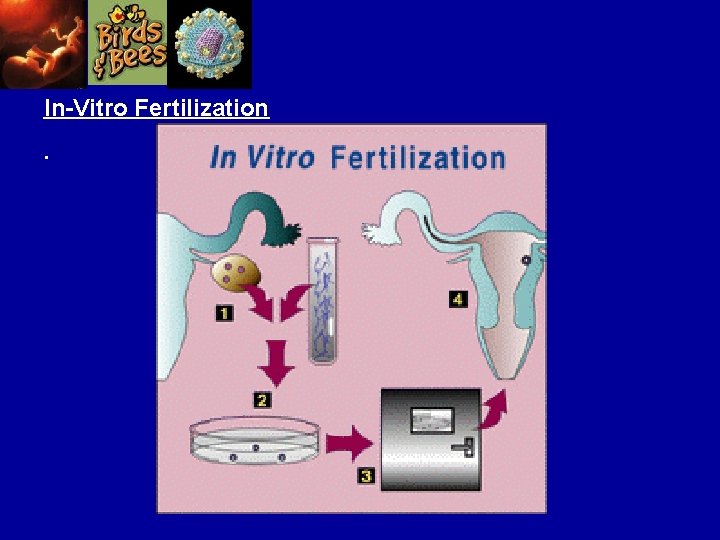
In-Vitro Fertilization • Female is given hormone (Gn. RH) to promote follicle development and eggs are removed from developing follicles in the female ovary. • Sperm is collected from male. • Egg and sperm are placed in laboratory glassware with the hope that fertilization will occur. • After 2 -5 days, the fertilized egg is replaced into the uterus. • Success rate varies greatly, but can be as high as 40% in 30 year old women. That is why many eggs are removed, to increase success!
In-Vitro Fertilization.
Gamete In-Vitro Fertilization (GIFT) • GIFT begins in the exact same way as IVF. • The thing that makes GIFT different is that eggs and sperm are put into the oviduct instead of lab glassware. • Success rate is higher than with IVF.
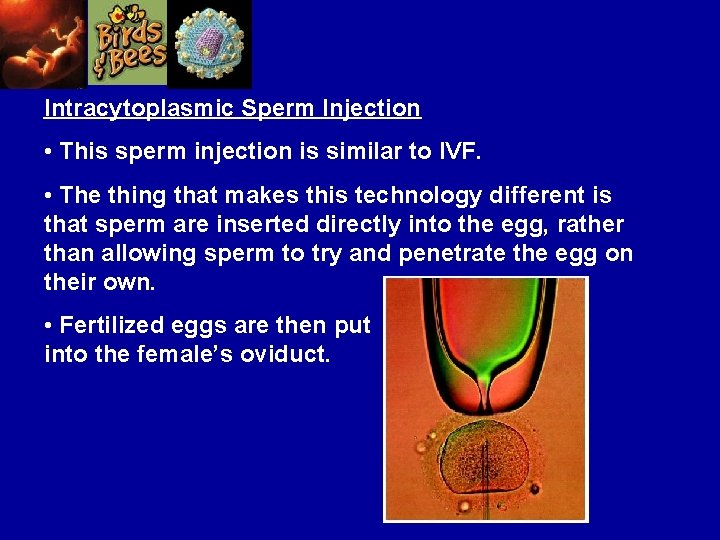
Intracytoplasmic Sperm Injection • This sperm injection is similar to IVF. • The thing that makes this technology different is that sperm are inserted directly into the egg, rather than allowing sperm to try and penetrate the egg on their own. • Fertilized eggs are then put into the female’s oviduct.
Surrogacy • When a female can not carry a child, another women can perform that task. • A surrogate mother may only contribute the uterus, which means a fertilized eggs is inserted into her oviduct via IVF. • A surrogate mother may also contribute her egg, which means sperm are injected into her uterus via AI.
Vasectomy and Tubal Ligation Reversals • Although success rates are not particularly high, these procedures can be surgically repaired.
Thought Questions 1 In each of the following situations, suggest a reproductive technology that might be appropriate: 1. Male has low sperm count and female is reproductively healthy. 2. Male has healthy sperm count and female rarely ovulates, but is otherwise reproductively healthy. 3. Male has a healthy sperm count, but female has blocked oviducts. 4. Female has no male partner but wants to conceive.
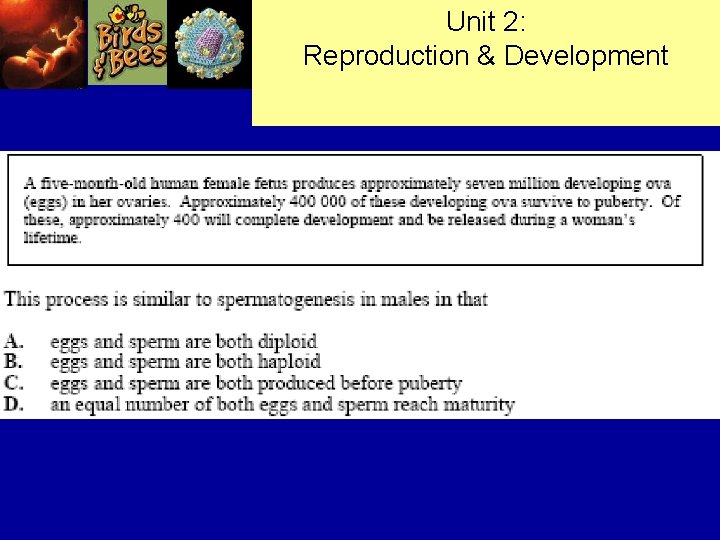
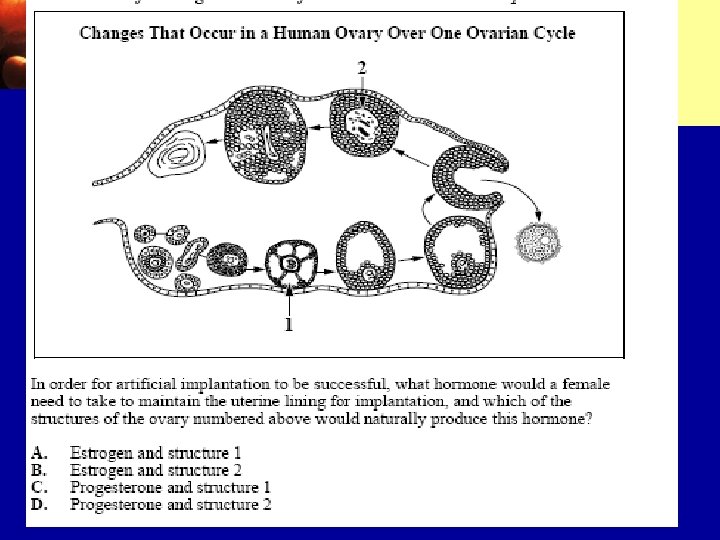
Unit Review Questions from Diploma: Answer as groups. We will correct together.
Unit 2: Reproduction & Development
Unit 2: Reproduction & Development