
Pre Communication Skills E A Draffan Prelinguistic Communication
- Slides: 16
Pre. Communication Skills E. A. Draffan
Pre-linguistic Communication • Pre-linguistic stage approx. 0 > 6 months - crying, whimpering, cooing - involuntary responses to stimuli. • But … first language acquisition begins at or before birth, • However…linguists consider human language to be creative i. e. free from internal or external stimuli 2
3 Learning the Sounds of a Language • “Sensory and brain mechanisms for hearing are developed at 30 weeks of gestational age. ” • A 2013 study “shows that unborn babies are listening to their mothers talk during the last 10 weeks of pregnancy and at birth can demonstrate what they’ve heard. ” • “Babies only hours old are able to differentiate between sounds from their native language and a foreign language” • https: //www. washington. edu/news/2013/01/02/while-in-wombbabies-begin-learning-language-from-their-mothers/
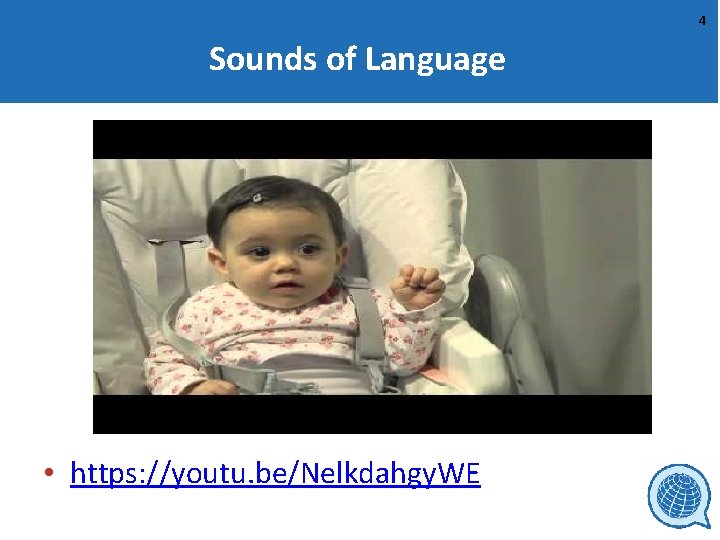
4 Sounds of Language • https: //youtu. be/Nelkdahgy. WE
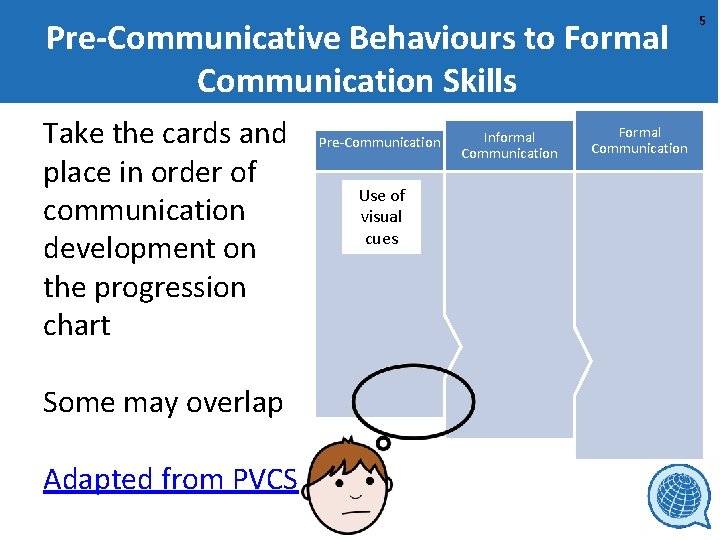
Pre-Communicative Behaviours to Formal Communication Skills Take the cards and place in order of communication development on the progression chart Some may overlap Adapted from PVCS Pre-Communication Use of visual cues Informal Communication Formal Communication 5
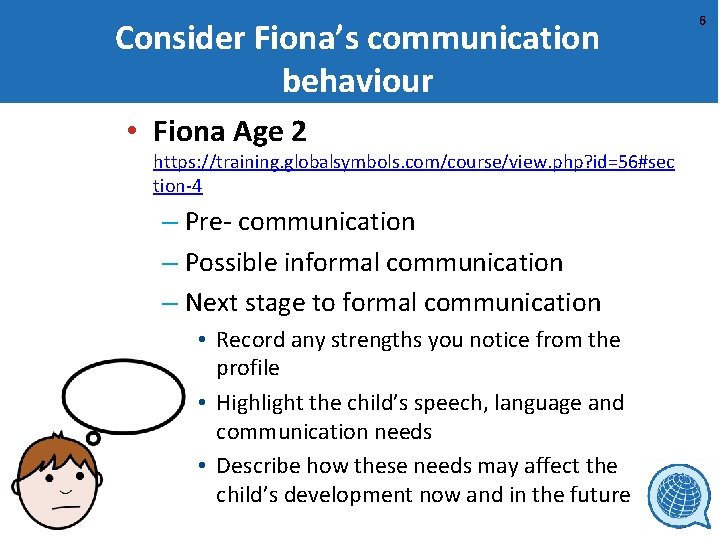
Consider Fiona’s communication behaviour • Fiona Age 2 https: //training. globalsymbols. com/course/view. php? id=56#sec tion-4 – Pre- communication – Possible informal communication – Next stage to formal communication • Record any strengths you notice from the profile • Highlight the child’s speech, language and communication needs • Describe how these needs may affect the child’s development now and in the future 6
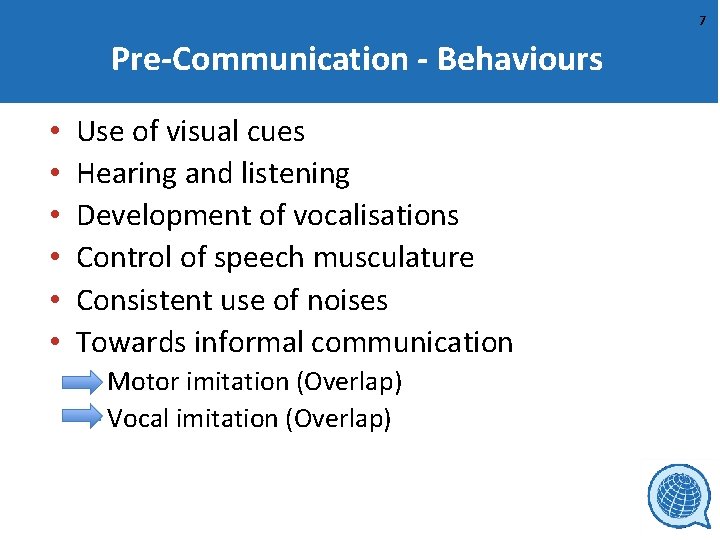
7 Pre-Communication - Behaviours • • • Use of visual cues Hearing and listening Development of vocalisations Control of speech musculature Consistent use of noises Towards informal communication – Motor imitation (Overlap) – Vocal imitation (Overlap)
8 Ideas to gain attention • Goal is to engage the child with his/her world • Use familiar routines, find child’s interests and follow the child’s lead • Try objects with interesting sounds, lights, or textures to grab and hold the child’s attention • Model the purpose of the item/toy, as the child may not know how to interact with it (may have to be hand over hand initially) • Be face to face, use physical proximity, exaggerated gestures/tone of voice/exclamations/facial expression, use touch, physically get into child’s line of vision • Progress to sharing a common focus by shifting their attention between each other and an object/activity Includes: gaining, directing, shifting, and maintaining attention • Directed through eye gaze or gesture (e. g. , point)
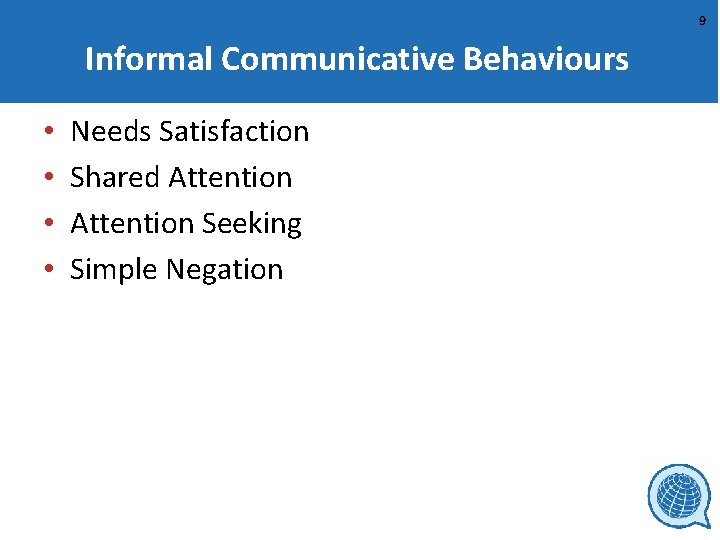
9 Informal Communicative Behaviours • • Needs Satisfaction Shared Attention Seeking Simple Negation
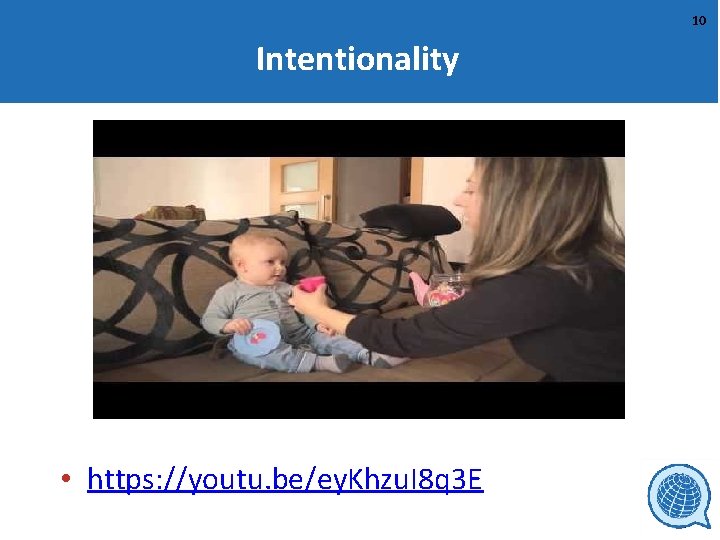
10 Intentionality • https: //youtu. be/ey. Khzu. I 8 q 3 E
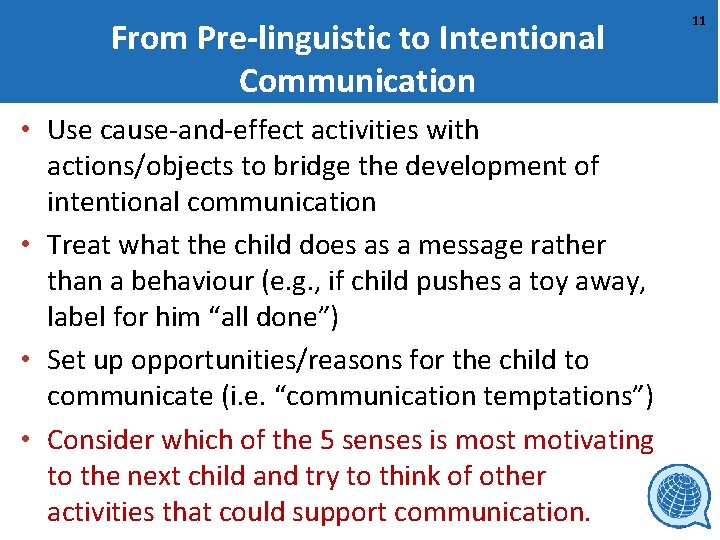
From Pre-linguistic to Intentional Communication • Use cause-and-effect activities with actions/objects to bridge the development of intentional communication • Treat what the child does as a message rather than a behaviour (e. g. , if child pushes a toy away, label for him “all done”) • Set up opportunities/reasons for the child to communicate (i. e. “communication temptations”) • Consider which of the 5 senses is most motivating to the next child and try to think of other activities that could support communication. 11
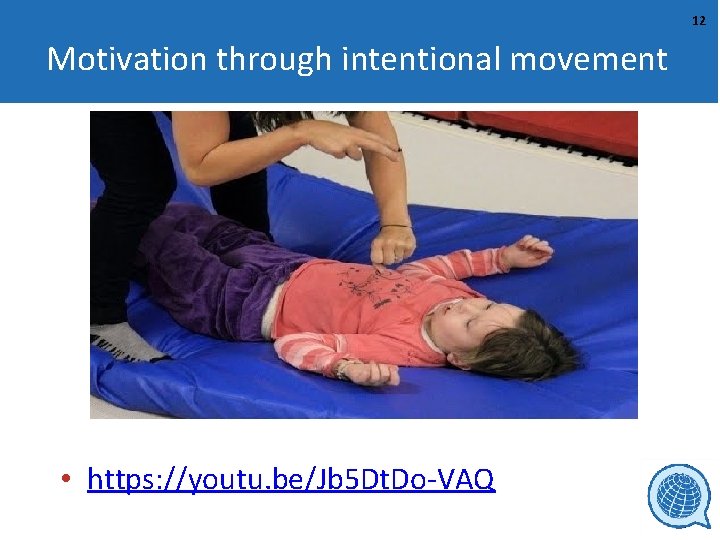
12 Motivation through intentional movement • https: //youtu. be/Jb 5 Dt. Do-VAQ
13 Formal Communication Skills • Understanding of non-vocal communication • Understanding of vocalisation and speech • Use of symbols, signs or speech
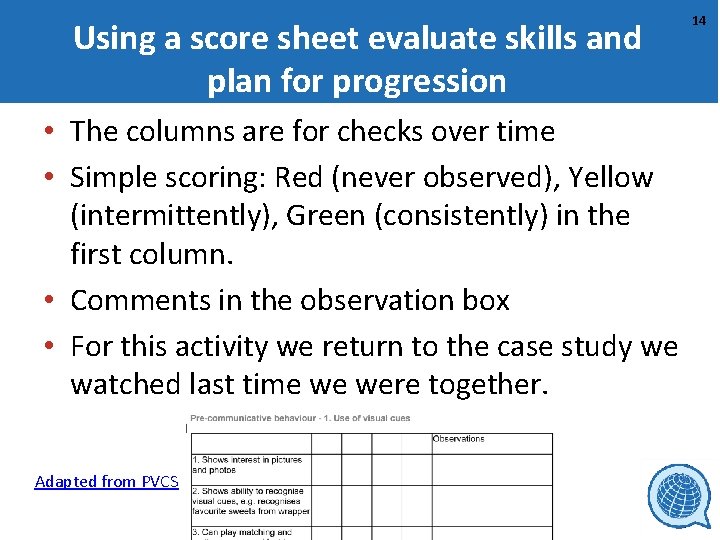
Using a score sheet evaluate skills and plan for progression • The columns are for checks over time • Simple scoring: Red (never observed), Yellow (intermittently), Green (consistently) in the first column. • Comments in the observation box • For this activity we return to the case study we watched last time we were together. Adapted from PVCS 14
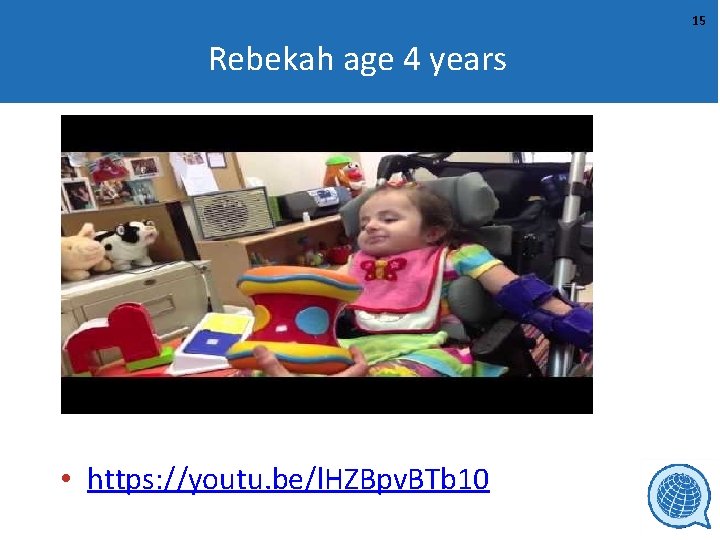
15 Rebekah age 4 years • https: //youtu. be/l. HZBpv. BTb 10
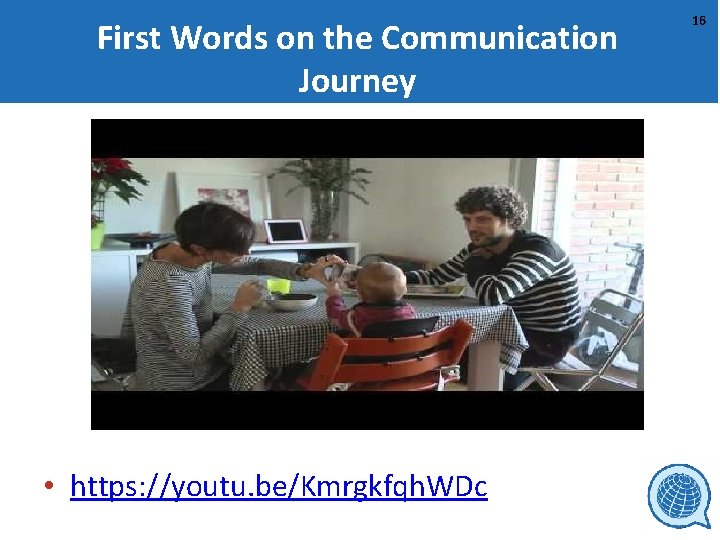
First Words on the Communication Journey • https: //youtu. be/Kmrgkfqh. WDc 16