
Pre AP Biology Protein Synthesis 4 2 Part
Pre – AP Biology Protein Synthesis (4. 2) Part 1
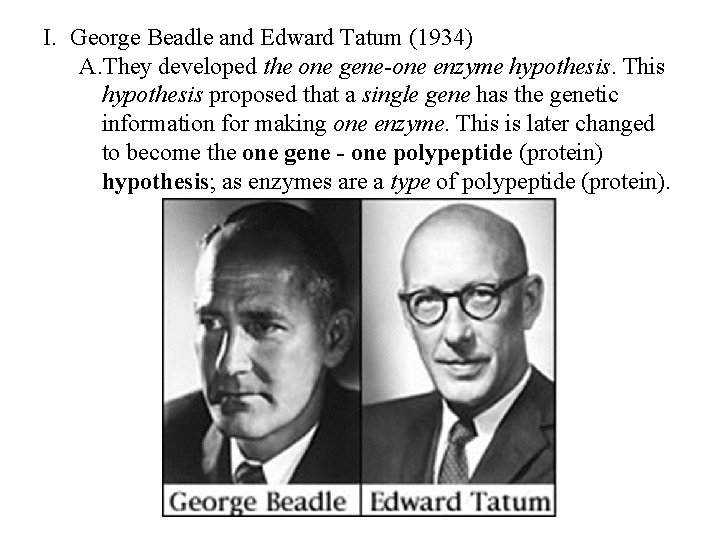
I. George Beadle and Edward Tatum (1934) A. They developed the one gene-one enzyme hypothesis. This hypothesis proposed that a single gene has the genetic information for making one enzyme. This is later changed to become the one gene - one polypeptide (protein) hypothesis; as enzymes are a type of polypeptide (protein).
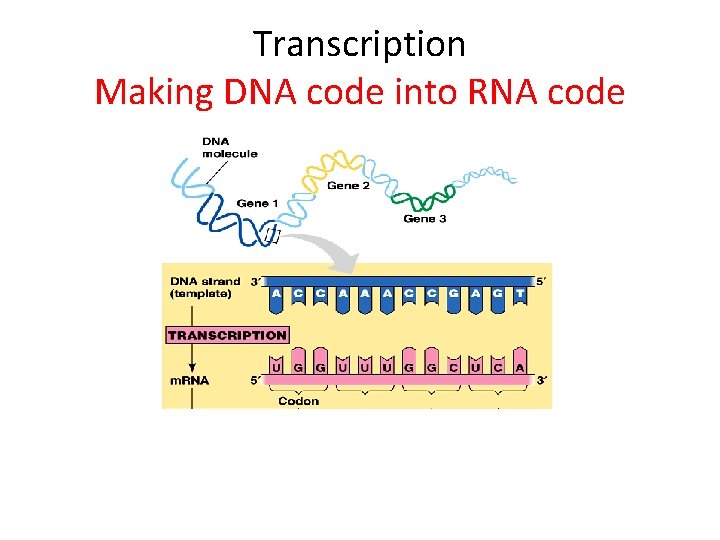
II. Transcription (means “ the process of making a working copy of an original”) A. This process is the making of a recyclable, workable copy of DNA but in the form of RNA. (The recyclable copy will become known as m. RNA – messenger RNA. It is a recyclable copy of the “Million Dollar DNA Blueprint”. ) 1. m. RNA is synthesized (made) by an enzyme called RNA Polymerase 2. The message (m. RNA) will be sent to the construction site (ribosomes) for building the protein. 3. RNA nucleotides use Ribose instead of Deoxyribose as the five carbon sugar. 4. In RNA, Uracil replaces Thymine. (Thymine can’t exit nuclear pores. Remember, ribosomes are out in the cytoplasm, so Thymine needs to be substituted by Uracil. ) 5. m. RNA is a single-stranded molecule, therefore it is less stable than DNA
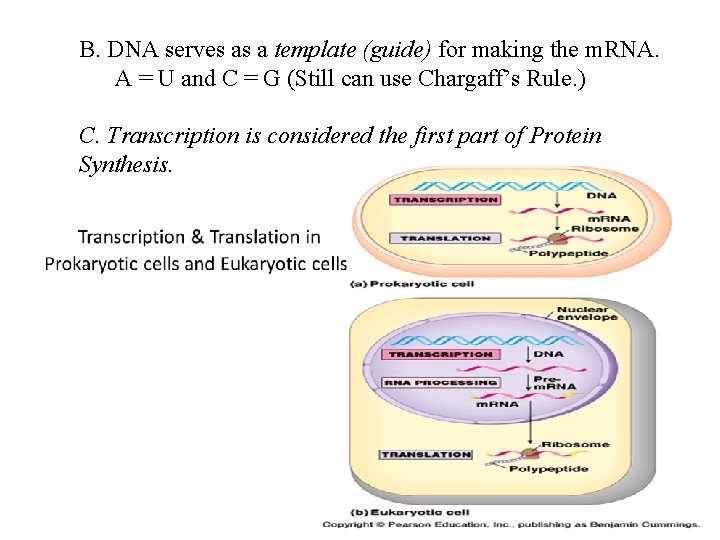
B. DNA serves as a template (guide) for making the m. RNA. A = U and C = G (Still can use Chargaff’s Rule. ) C. Transcription is considered the first part of Protein Synthesis.
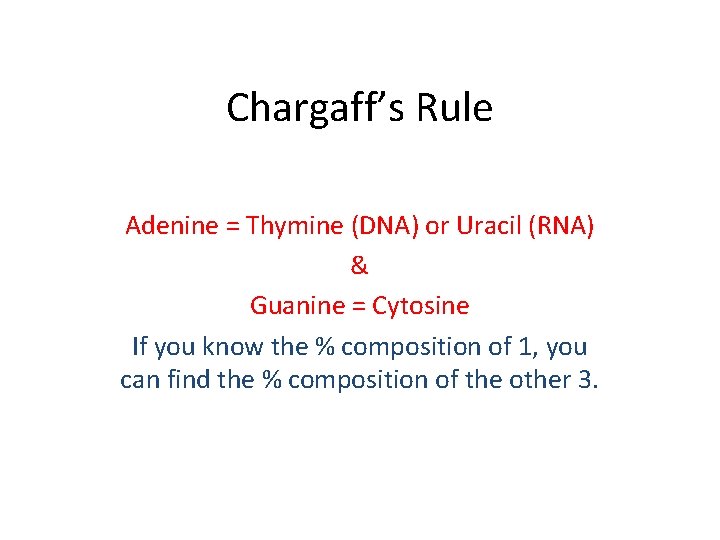
Chargaff’s Rule Adenine = Thymine (DNA) or Uracil (RNA) & Guanine = Cytosine If you know the % composition of 1, you can find the % composition of the other 3.
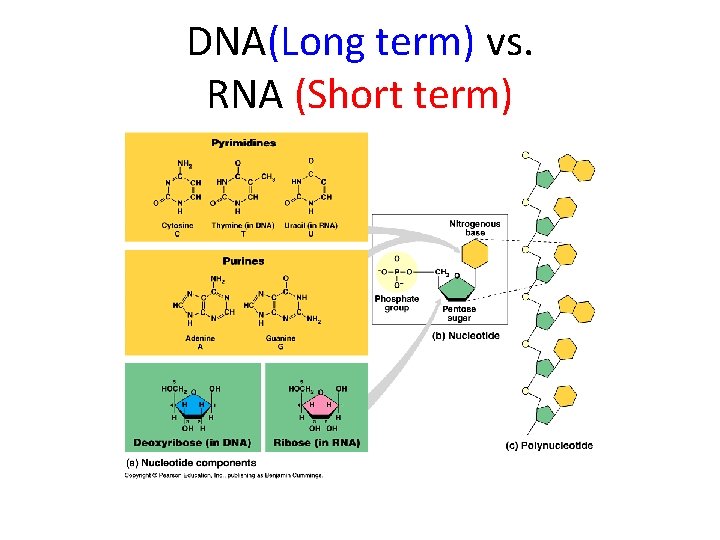
DNA(Long term) vs. RNA (Short term)
III. Translation (means “The process of taking from one language and changing to another language”) A. In this process the cell is turning nucleotide language (DNA/RNA) into amino acid language to make proteins. Remember, amino acids are the building blocks of proteins. B. This process occurs at the Ribosome. The ribosome has a nickname… “the Translator”. It is also considered a “construction site” since the cell is building a protein using the copied “blueprint” that was provided. C. Translation is considered the second part of Protein Synthesis.
IV. Codon “A. K. A Triplet Code” (This is the RNA language that will be translated into polypeptides. ) A. Codons are a “three letter” or three nucleotide sequence of RNA (determined by the template strand of DNA/ Important Blueprint Information) but are read on the RNA! (The m. RNA is being translated; not the DNA. ) 1. The codons must be read 5’ 3’on the m. RNA! (Because this is how the m. RNA was made. You do not write a sentence and then read it backwards do you. It would make no sense. )
B. RNA Codon Chart for Amino Acids (Contains the 20 known amino acids for living organisms. ) 1. There are three essential things you need to know about the genetic code (RNA Codon Chart) a. The RNA referred to is m. RNA and it must be read in a 5’ 3 orientation. b. Each 3 letter codon (e. g. GCU) codes for one, and only one, amino acid. c. Most amino acids have more than one codon. d. Therefore the genetic code is redundant, but it is not ambiguous. 2. 61 of the 64 possible codons (4³ = 64) codes for an Amino Acid. a. 4 refers to the four nucleotides possible (A, C, U, G); 3 refers to the number of pieces in a unit (codon).
3. AUG is the start codon and is the codon for the amino acid Methionine (It depends on the position of Methionine in the m. RNA. The first codon on the 5’ end that is AUG, will be the start codon. If it is not the first, it will be regular methionine. ) 4. UAA, UAG, and UGA are the stop codons. (These codons stop the process of transcription. ) 5. This chart is universal for all living organisms and viruses. (Viruses are not considered living. ) (This hits on theme of Unity and Diversity. Unity in that it indicates Common Ancestry among all organisms and viruses. Diversity is in the differences of the sequences of amino acids strung together to make a protein. ) 6. The codon will match the anti-codon sequence in the translation phase of protein synthesis. C. Reading Frame (This term refers to a set of 3 consecutive nucleotides. They are read in 5’ 3’ Direction. )
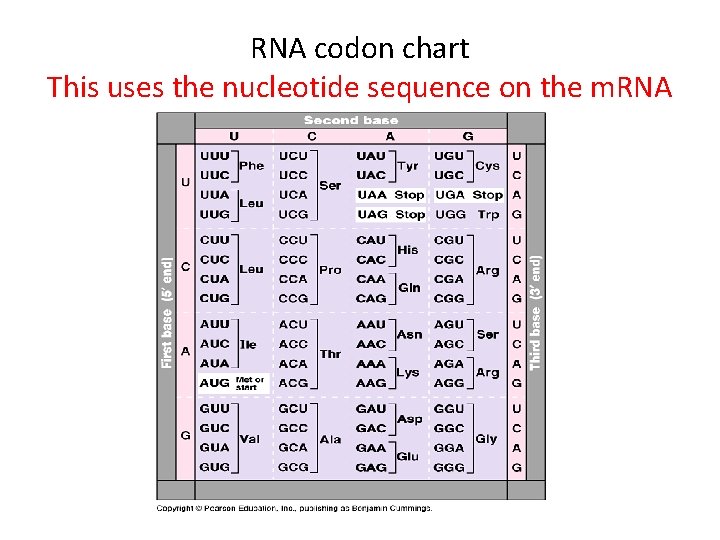
RNA codon chart This uses the nucleotide sequence on the m. RNA
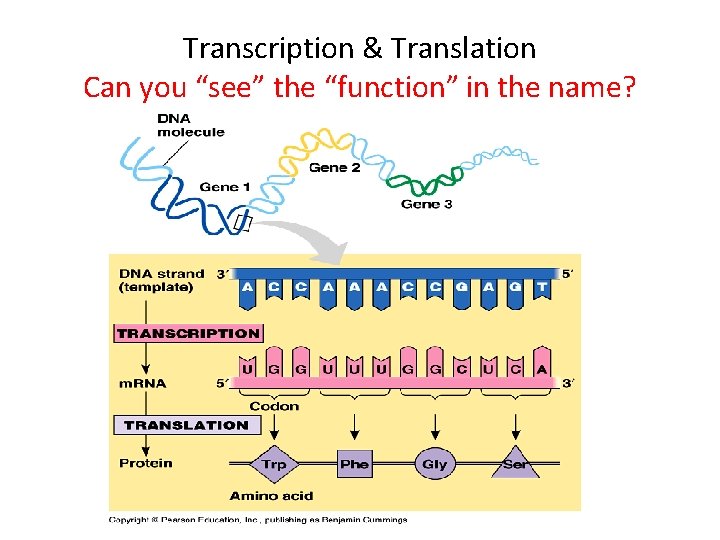
Transcription & Translation Can you “see” the “function” in the name?
Pre – AP Biology Protein Synthesis (4. 2) Part 2
Transcription Making DNA code into RNA code
I. m. RNA Synthesis and Modification The making of m. RNA. (This process occurs at the nucleolus. Remember, • the nucleolus is “like” a copy machine because we are making a cheap • recyclable copy of the DNA sequence. ) A. Three Phases of Production to a transcription unit (a piece of m. RNA. ): 1. Initiation 2. Elongation 3. Termination
1. Initiation This is building our factory to make m. RNA basically. a. A protein called a Transcription Factor attaches to promoter sequence of the gene being transcribed. Then additional transcription factors (proteins and enzymes) are added in the building process. b. The whole “factory” is called a Transcription Initiation Complex. (Can you see the definition in the term? Transcription is the process being done. Initiation refers to the beginning process. Complex indicates we have many parts involved in making the structure. )
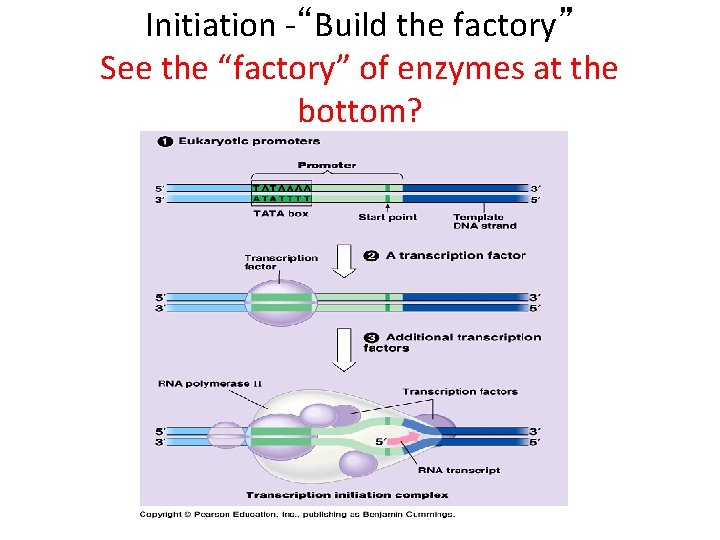
Initiation -“Build the factory” See the “factory” of enzymes at the bottom?
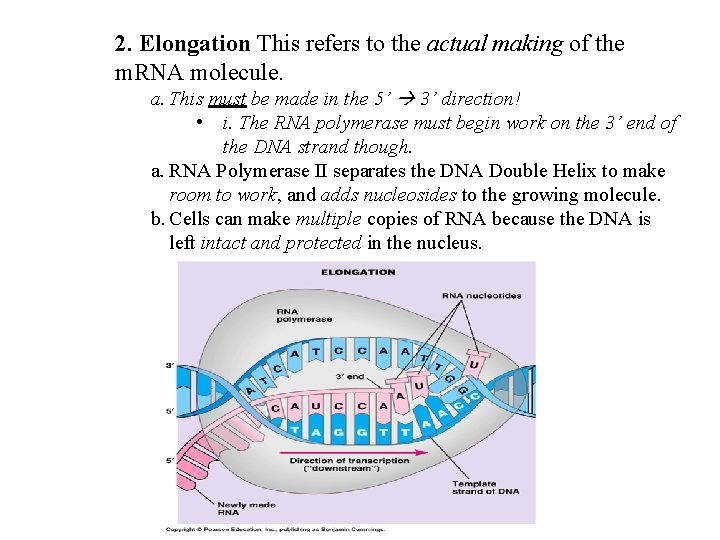
2. Elongation This refers to the actual making of the m. RNA molecule. a. This must be made in the 5’ 3’ direction! • i. The RNA polymerase must begin work on the 3’ end of the DNA strand though. a. RNA Polymerase II separates the DNA Double Helix to make room to work, and adds nucleosides to the growing molecule. b. Cells can make multiple copies of RNA because the DNA is left intact and protected in the nucleus.
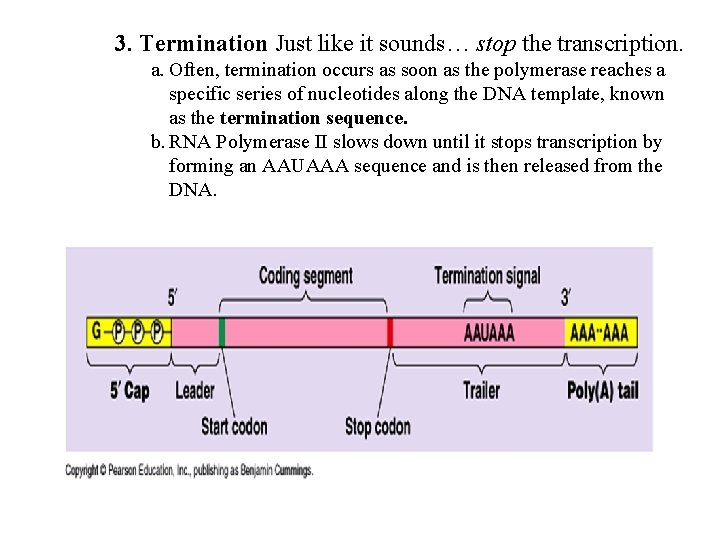
3. Termination Just like it sounds… stop the transcription. a. Often, termination occurs as soon as the polymerase reaches a specific series of nucleotides along the DNA template, known as the termination sequence. b. RNA Polymerase II slows down until it stops transcription by forming an AAUAAA sequence and is then released from the DNA.
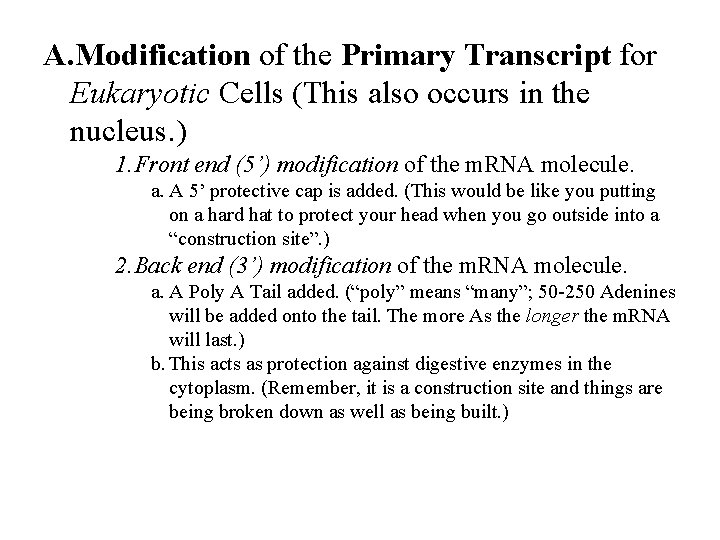
A. Modification of the Primary Transcript for Eukaryotic Cells (This also occurs in the nucleus. ) 1. Front end (5’) modification of the m. RNA molecule. a. A 5’ protective cap is added. (This would be like you putting on a hard hat to protect your head when you go outside into a “construction site”. ) 2. Back end (3’) modification of the m. RNA molecule. a. A Poly A Tail added. (“poly” means “many”; 50 -250 Adenines will be added onto the tail. The more As the longer the m. RNA will last. ) b. This acts as protection against digestive enzymes in the cytoplasm. (Remember, it is a construction site and things are being broken down as well as being built. )
3. Middle modification of the m. RNA molecule. a. During this step, remove the non-coding introns (These act as spacers) using Spliceosomes. A spliceosome is a type of enzymes that act as scissors. b. Generally, the coding exons are joined together into one continuous sequence. i. At times, “alternating splicing” can occur, when the order of the exons may need to be rearranged. This process allowing for different proteins to be formed. c. Spliceosomes “Stitch” the pieces together to make the finalized secondary m. RNA transcript that is now ready for transport to the ribosomes for translation into proteins.
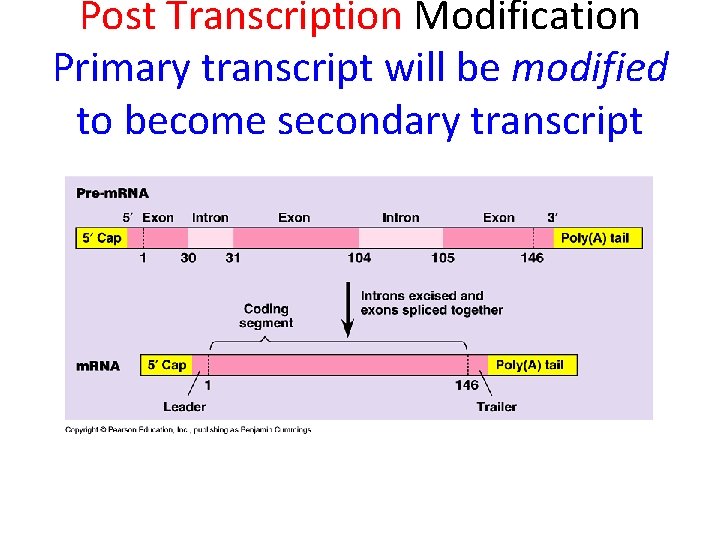
Post Transcription Modification Primary transcript will be modified to become secondary transcript
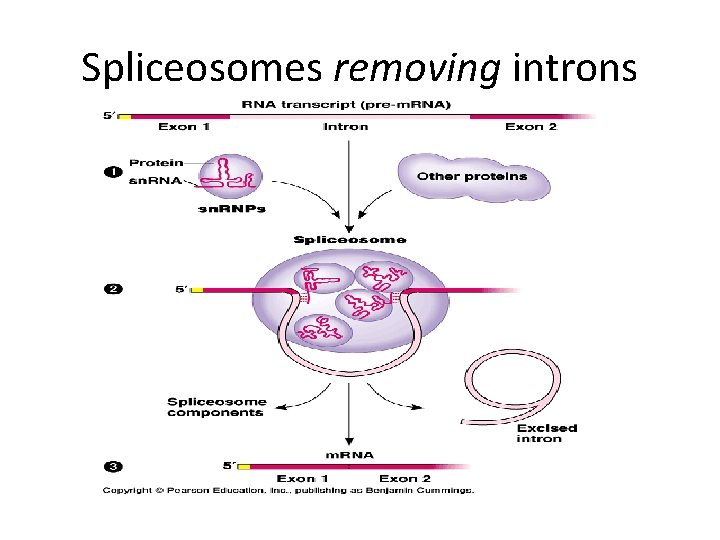
Spliceosomes removing introns
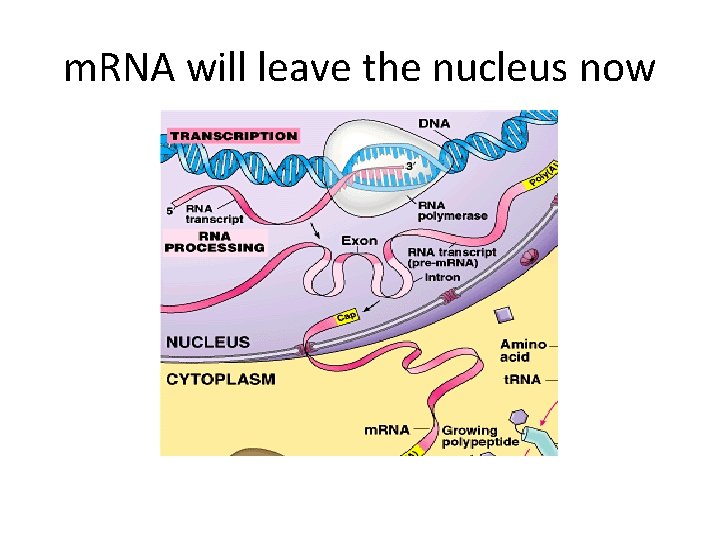
m. RNA will leave the nucleus now
Pre – AP Biology Protein Synthesis (4. 2) Part 3
I. Translation Protein Synthesis - This is the process of actually making the protein. A. This process occurs at the Ribosome “the Translator”. B. The process turns the m. RNA into a primary (1’) sequence of amino acids for making of the protein.
C. This process needs the assistance of t. RNA (transfer RNA) to transfer free amino acids from the cytoplasm to the construction site of the Ribosome. 1. Remember, that the anticodon is found on the t. RNA molecule, not the m. RNA. 2. The Anticodon “matches” the codon on the m. RNA molecule ensuring the proper amino acid is brought to the construction site of the Ribosome. If they do not match … it is the wrong Amino Acid! 3. The amino acid is connected to the 3’ end of the t. RNA molecule. a. Remember, the t. RNA molecule is a nucleotide sequence; so there is a phosphate on the 5’ end an open bound on the 3’ end… so this is where the amino acid gets attached so that it can be transported to the ribosome (construction site).
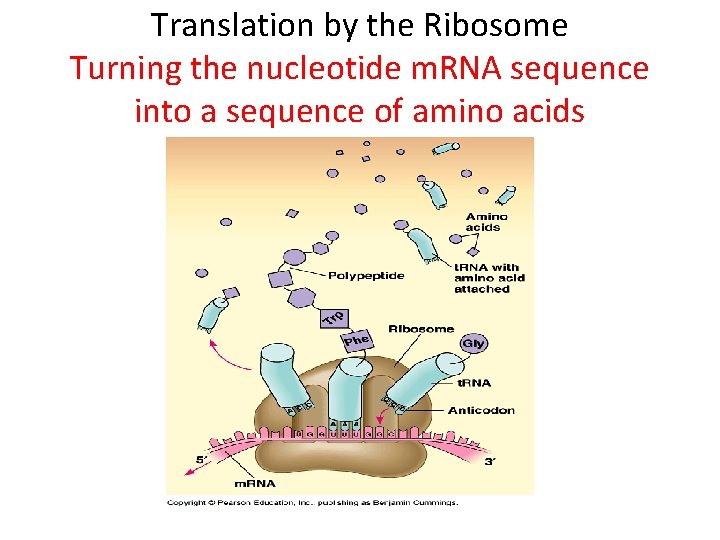
Translation by the Ribosome Turning the nucleotide m. RNA sequence into a sequence of amino acids

Amino Acid Codon Chart
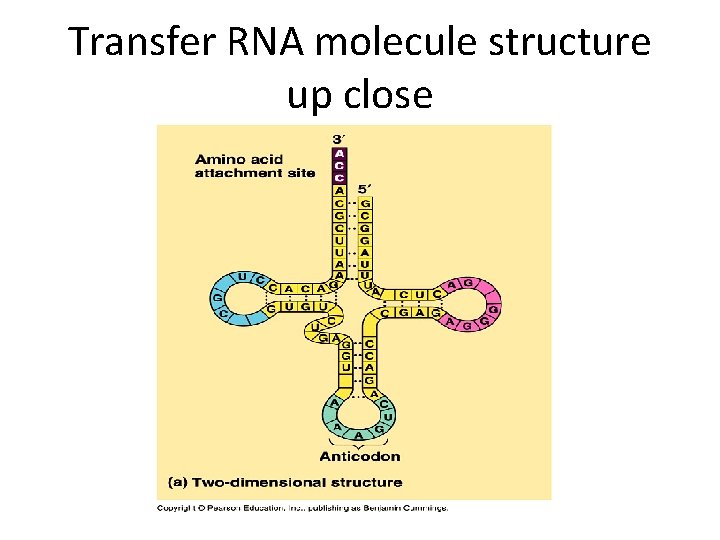
Transfer RNA molecule structure up close
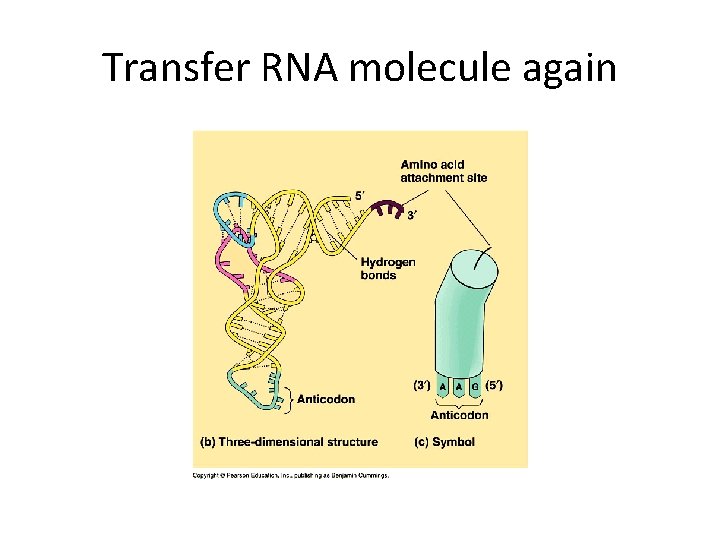
Transfer RNA molecule again
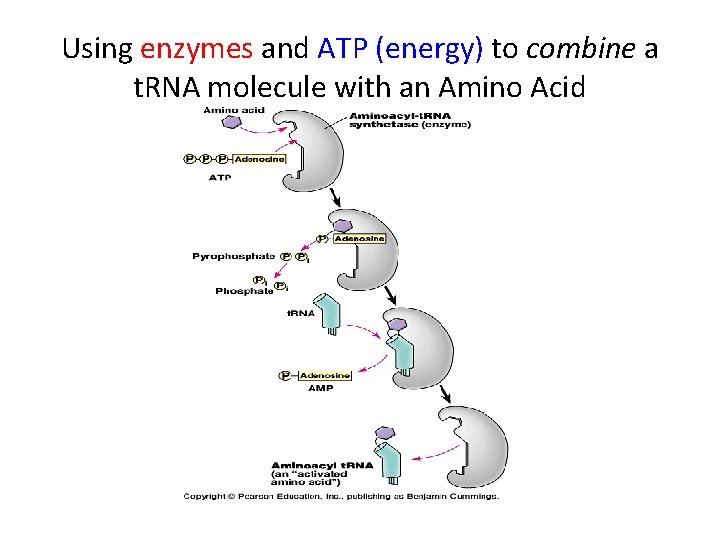
Using enzymes and ATP (energy) to combine a t. RNA molecule with an Amino Acid
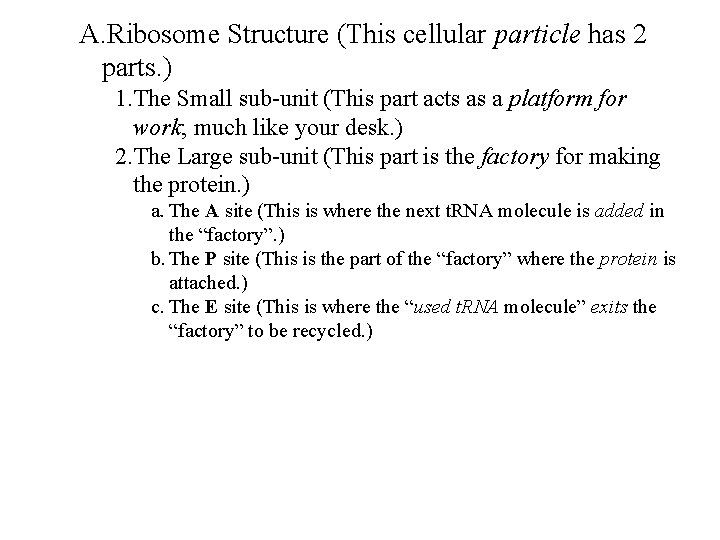
A. Ribosome Structure (This cellular particle has 2 parts. ) 1. The Small sub-unit (This part acts as a platform for work; much like your desk. ) 2. The Large sub-unit (This part is the factory for making the protein. ) a. The A site (This is where the next t. RNA molecule is added in the “factory”. ) b. The P site (This is the part of the “factory” where the protein is attached. ) c. The E site (This is where the “used t. RNA molecule” exits the “factory” to be recycled. )
3. The ribosome translocates (“walks”) down the m. RNA one codon at a time until it gets to the stop codon at the end of the m. RNA molecule. Thus having completed the “message” on how to make that particular protein. 4. Remember, these are not membrane-bound organelles. All cells possess these structures.
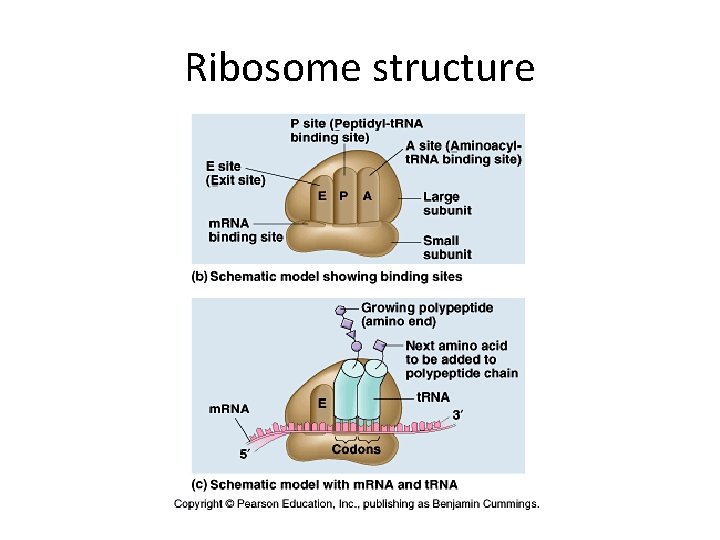
Ribosome structure
A. The process of translation has three phases: They are the same 3 as Transcription. 1. Initiation - This is building the factory needed to make the protein. a. The small sub-unit attaches to the 5’ cap. (This signals the large sub unit. ) b. AUG (the start codon on the m. RNA molecule) brings in the t. RNA (using the anticodon) molecule with Methionine attached. This starts production of the protein. c. The large sub-unit is aligned so that Methionine is in the P site. The A site is open for the addition of the next t. RNA molecule.
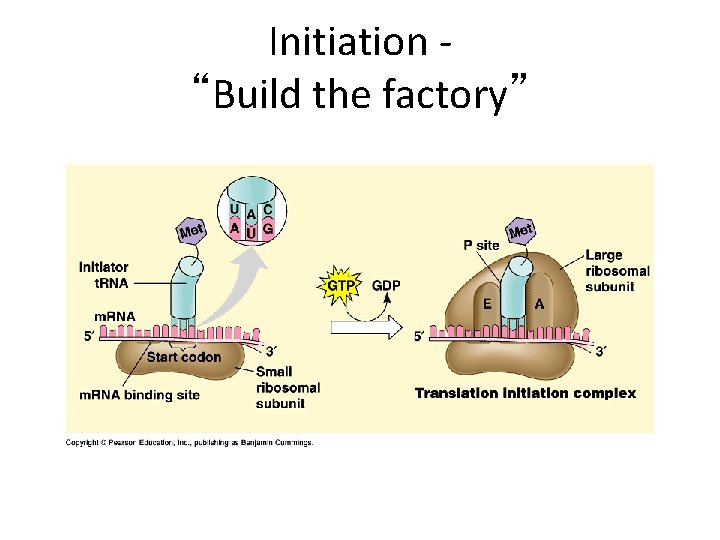
Initiation “Build the factory”
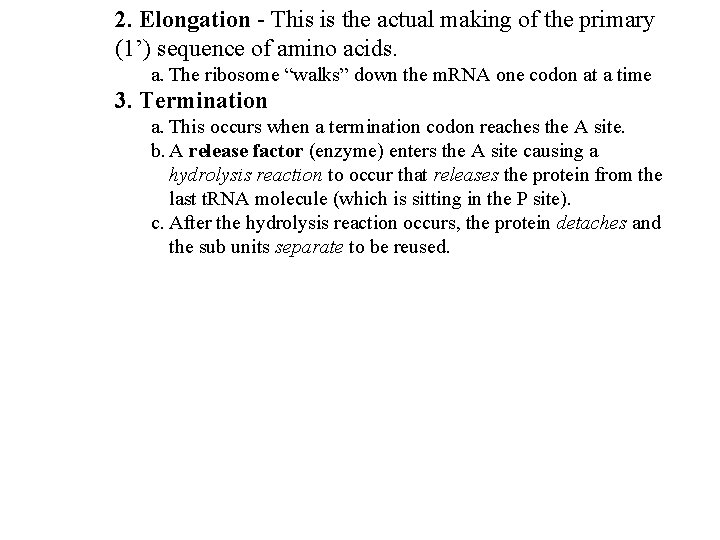
2. Elongation - This is the actual making of the primary (1’) sequence of amino acids. a. The ribosome “walks” down the m. RNA one codon at a time 3. Termination a. This occurs when a termination codon reaches the A site. b. A release factor (enzyme) enters the A site causing a hydrolysis reaction to occur that releases the protein from the last t. RNA molecule (which is sitting in the P site). c. After the hydrolysis reaction occurs, the protein detaches and the sub units separate to be reused.
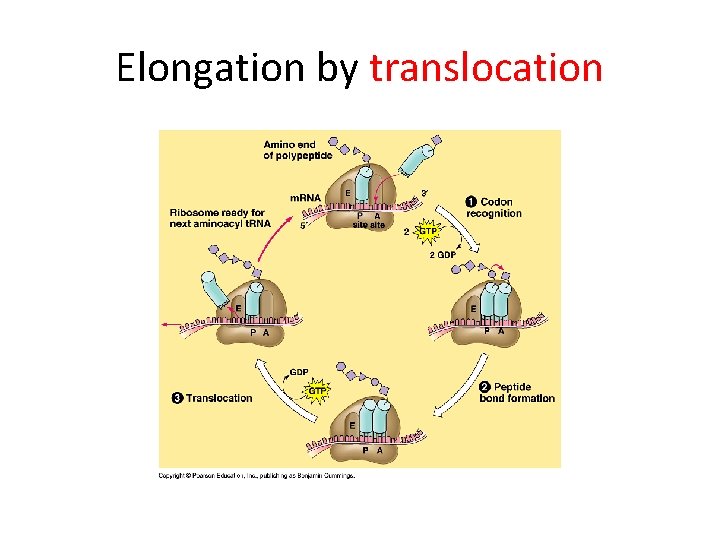
Elongation by translocation

Termination – releasing the 1’of Amino Acids
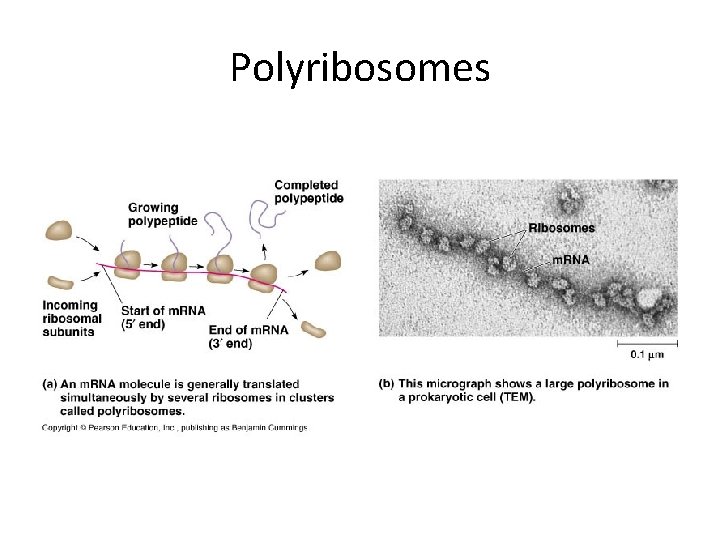
Polyribosomes
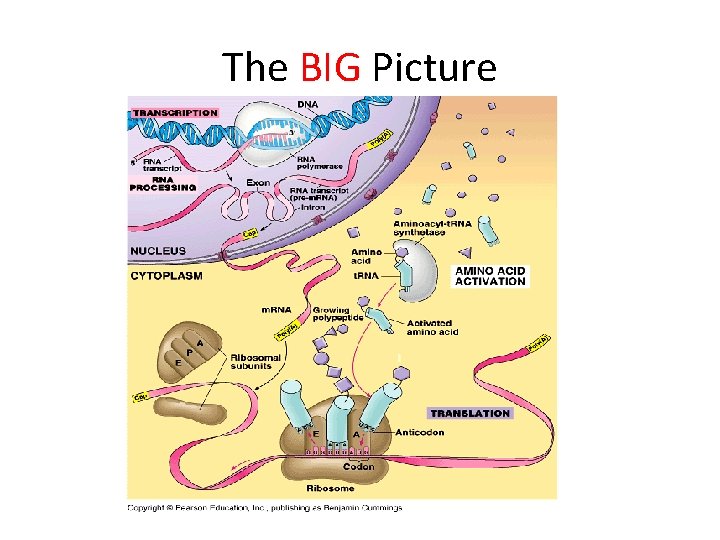
The BIG Picture
4. The m. RNA may be reused to make more of that particular protein or it may be broken down and the nucleotides recycled. a. Polyribosomes (many ribosomes) can also occur on a single strand of m. RNA. b. This allows for a cell to make many copies of the same protein very quickly. (Such as might be needed during repair. ) II. Post (means “after”) Translation Modification (This is the protein folding that must occur for the protein to be functional. ) A. If the 1’ sequence enters a Chaperonin to fold, the protein will stay inside the cell. B. If the 1’ sequence enters the Rough Endoplasmic Reticulum (RER) to fold, the protein will be exported out of the cell.
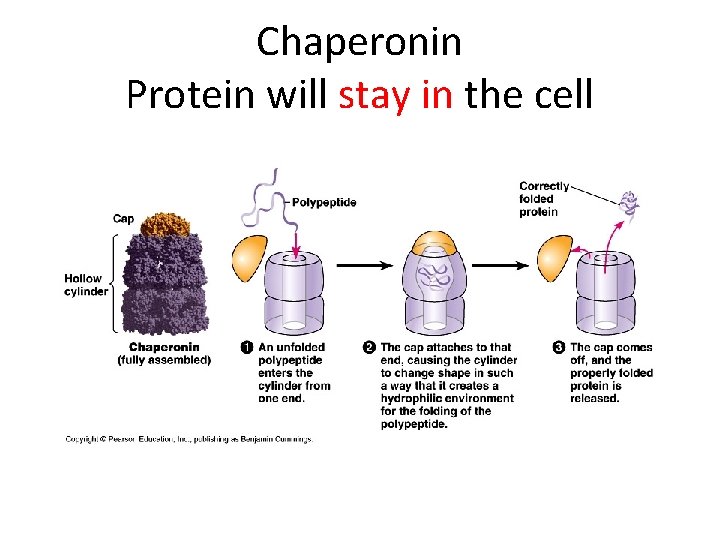
Chaperonin Protein will stay in the cell
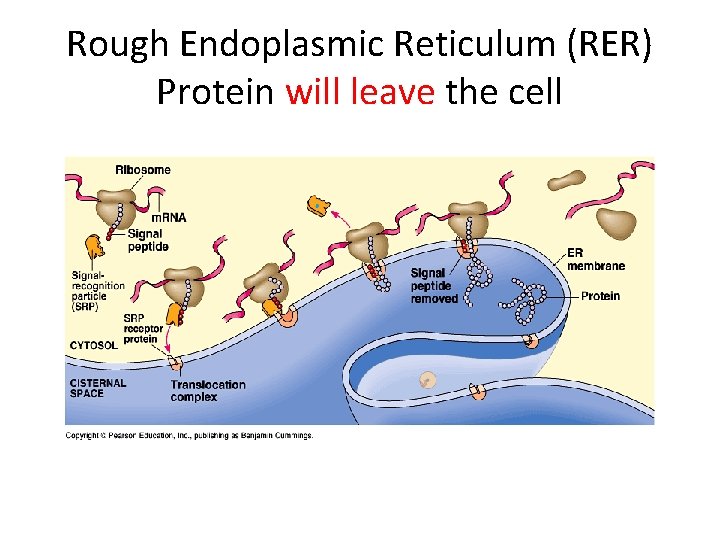
Rough Endoplasmic Reticulum (RER) Protein will leave the cell
Pre – AP Biology Protein Synthesis (4. 2) Part 4
I. Mutations A. Change in the nucleotide sequence of DNA or m. RNA that code for a protein. B. Caused by Mutagens (Means to “generate a mutation”. ) 1. These are physical or chemical interactions that change the nucleotide sequence of DNA. 2. Examples of mutagens: a. Ultraviolet radiation (UV Radiation) from the sun b. Cigarette Smoke c. Alcohol in excess d. Viruses e. Car Exhaust f. Chemicals (laboratory, pesticides, insecticides, poisons)
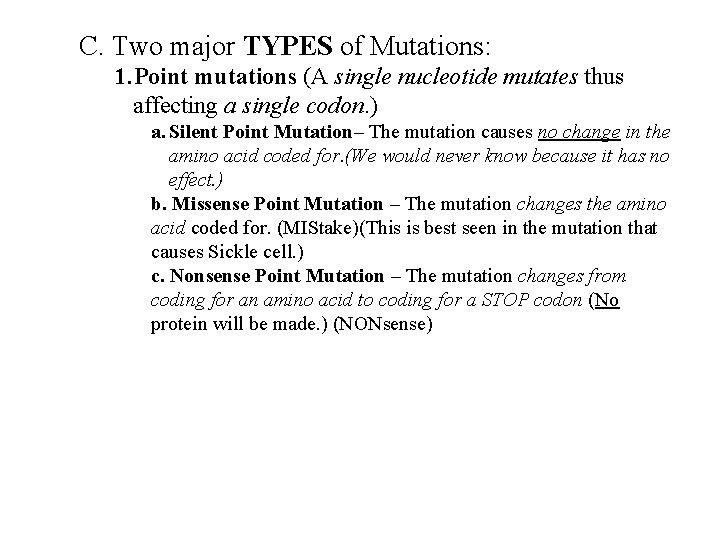
C. Two major TYPES of Mutations: 1. Point mutations (A single nucleotide mutates thus affecting a single codon. ) a. Silent Point Mutation– The mutation causes no change in the amino acid coded for. (We would never know because it has no effect. ) b. Missense Point Mutation – The mutation changes the amino acid coded for. (MIStake)(This is best seen in the mutation that causes Sickle cell. ) c. Nonsense Point Mutation – The mutation changes from coding for an amino acid to coding for a STOP codon (No protein will be made. ) (NONsense)
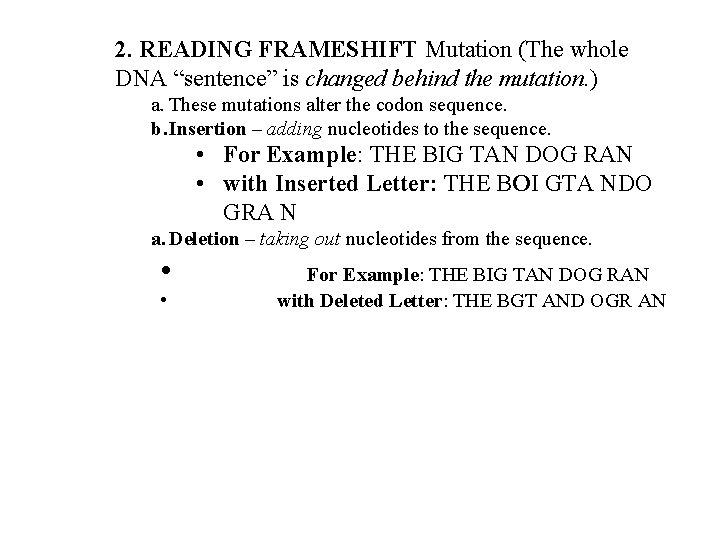
2. READING FRAMESHIFT Mutation (The whole DNA “sentence” is changed behind the mutation. ) a. These mutations alter the codon sequence. b. Insertion – adding nucleotides to the sequence. • For Example: THE BIG TAN DOG RAN • with Inserted Letter: THE BOI GTA NDO GRA N a. Deletion – taking out nucleotides from the sequence. • • For Example: THE BIG TAN DOG RAN with Deleted Letter: THE BGT AND OGR AN
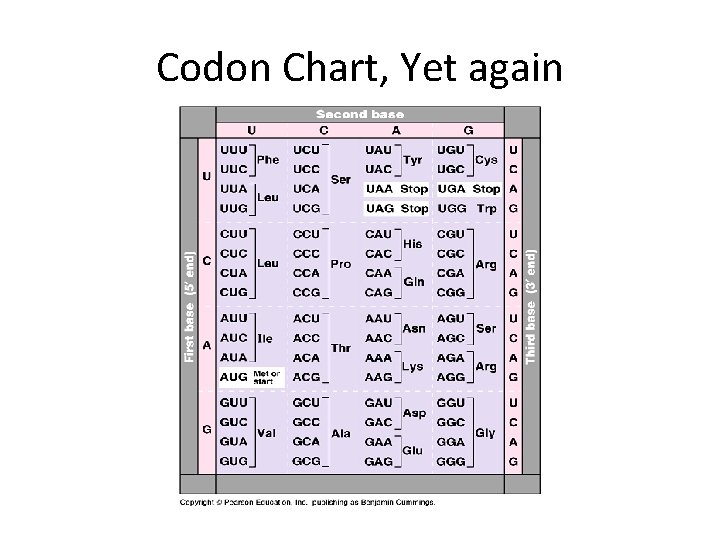
Codon Chart, Yet again
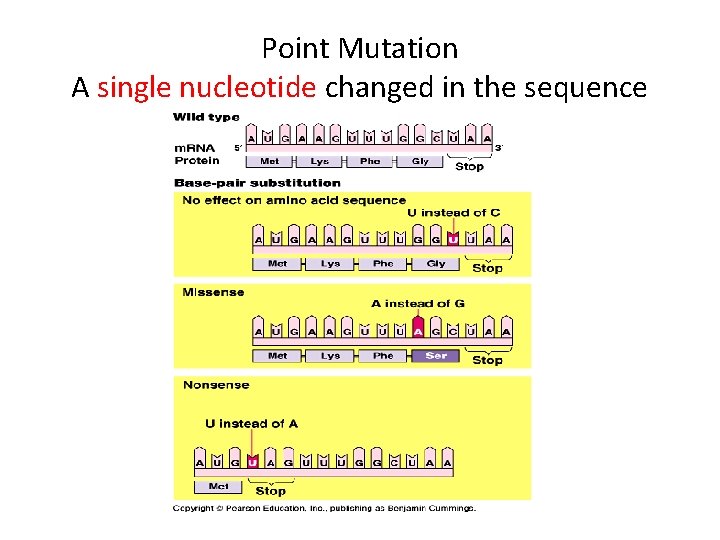
Point Mutation A single nucleotide changed in the sequence
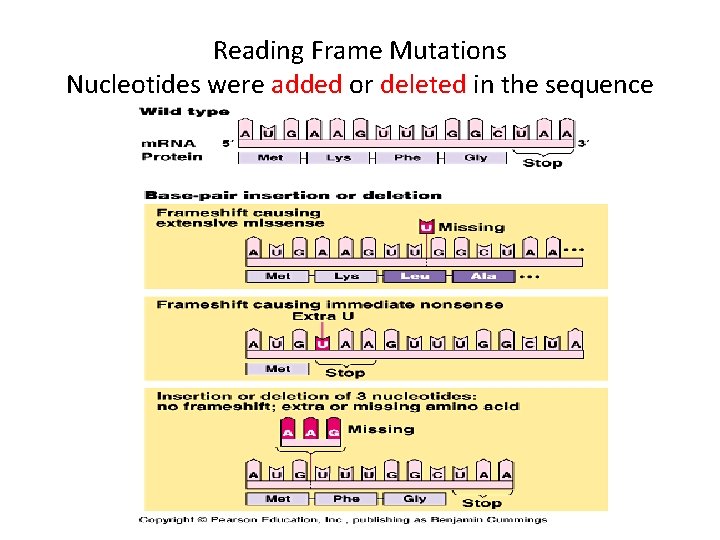
Reading Frame Mutations Nucleotides were added or deleted in the sequence
A. Gametes vs. Somatic – Who is affected? If a mutation occurs in somatic cells the only one affected by the mutation is the person that the mutation occurred to. If the mutation occurs in gametes (sex cells) the only one affected will be the organism created from that sex cell. This is how future generations may be affected by mutation and this is a cause of evolution. Change in the DNA over time.
- Slides: 53