
PRAMP Purpose provide initial observations and interpretation of

PRAMP Purpose: provide initial observations and interpretation of polygon results; discuss how these observations could inform network recommendations Final recommendations will also be informed by hierarchical clustering of ambient data, ambient levels relative to guidelines, station purpose, and local needs
Air monitoring stations • Three continuous (permanent) stations • Three Creeks #986 • Three Creeks #842 • Reno • All three stations monitor • THC, NMHC and triggered canister samples for VOCs analysis • SO 2 • Ozone, NO 2 and PM 2. 5 • Not monitored continuously in the Airshed • This does not include any compliance monitoring • Only results for 6 polygons are shown
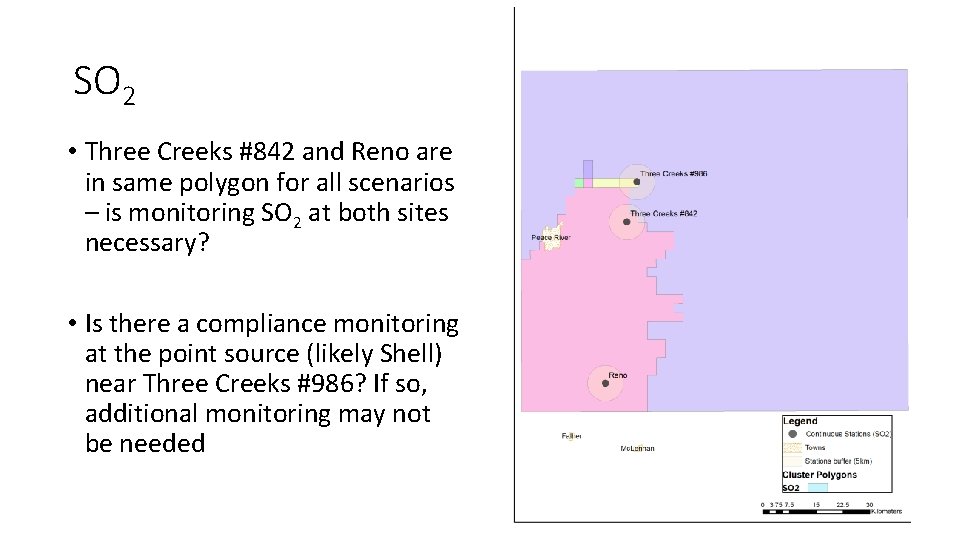
SO 2 • Three Creeks #842 and Reno are in same polygon for all scenarios – is monitoring SO 2 at both sites necessary? • Is there a compliance monitoring at the point source (likely Shell) near Three Creeks #986? If so, additional monitoring may not be needed
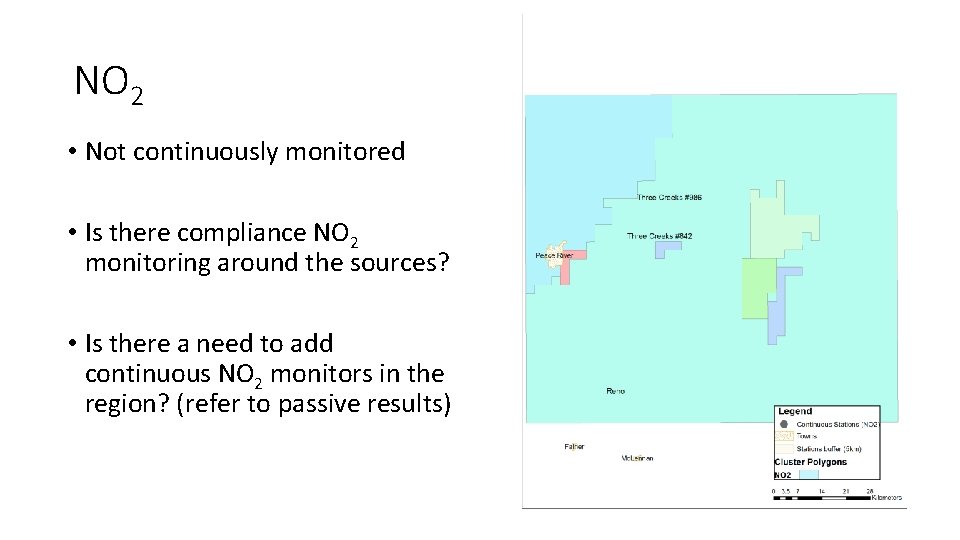
NO 2 • Not continuously monitored • Is there compliance NO 2 monitoring around the sources? • Is there a need to add continuous NO 2 monitors in the region? (refer to passive results)
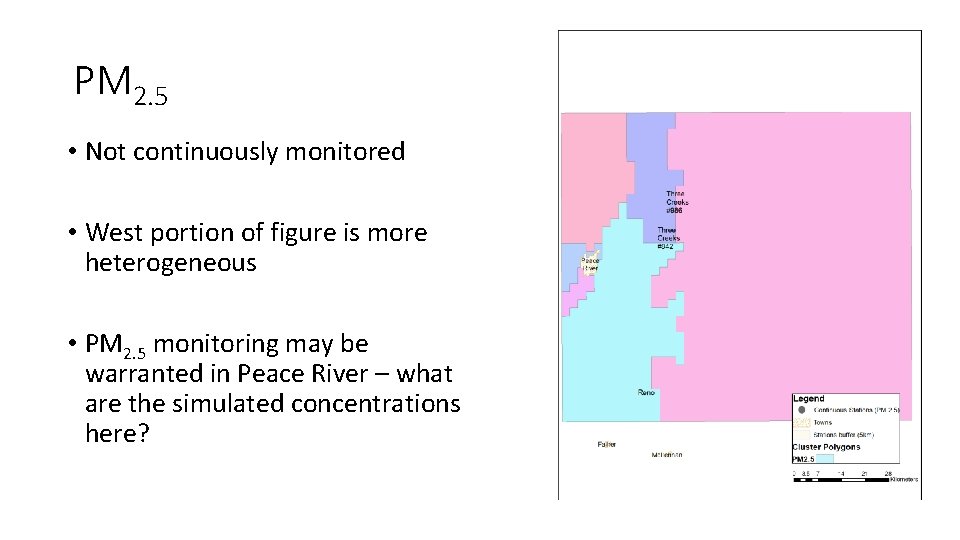
PM 2. 5 • Not continuously monitored • West portion of figure is more heterogeneous • PM 2. 5 monitoring may be warranted in Peace River – what are the simulated concentrations here?
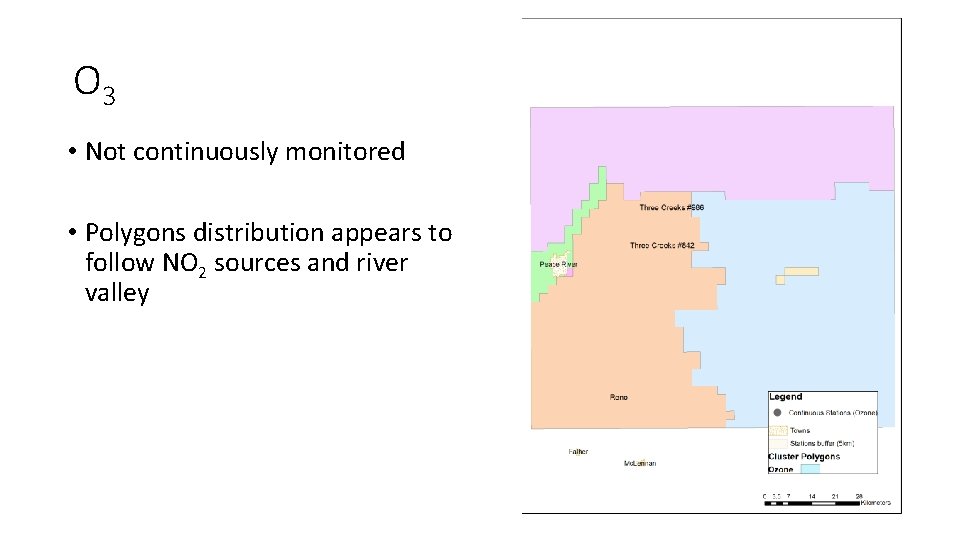
O 3 • Not continuously monitored • Polygons distribution appears to follow NO 2 sources and river valley
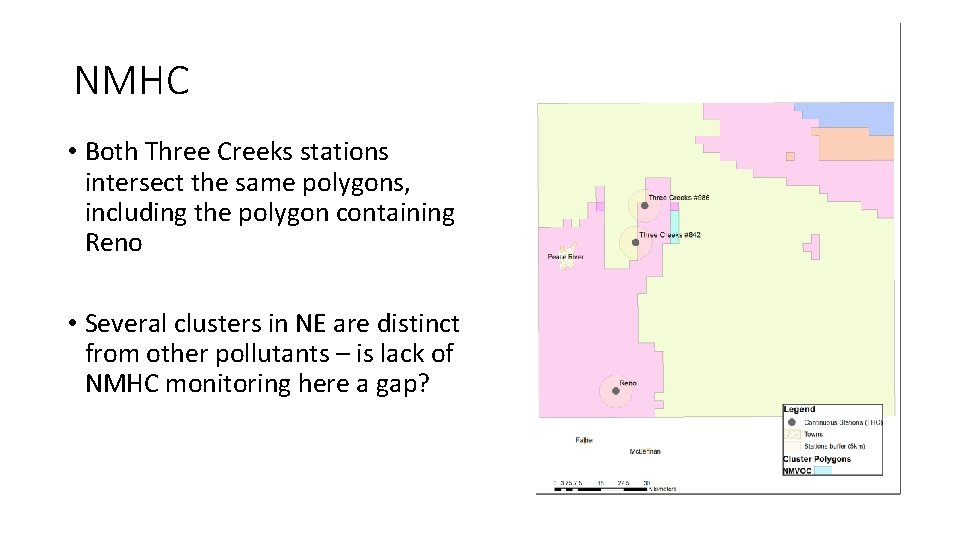
NMHC • Both Three Creeks stations intersect the same polygons, including the polygon containing Reno • Several clusters in NE are distinct from other pollutants – is lack of NMHC monitoring here a gap?
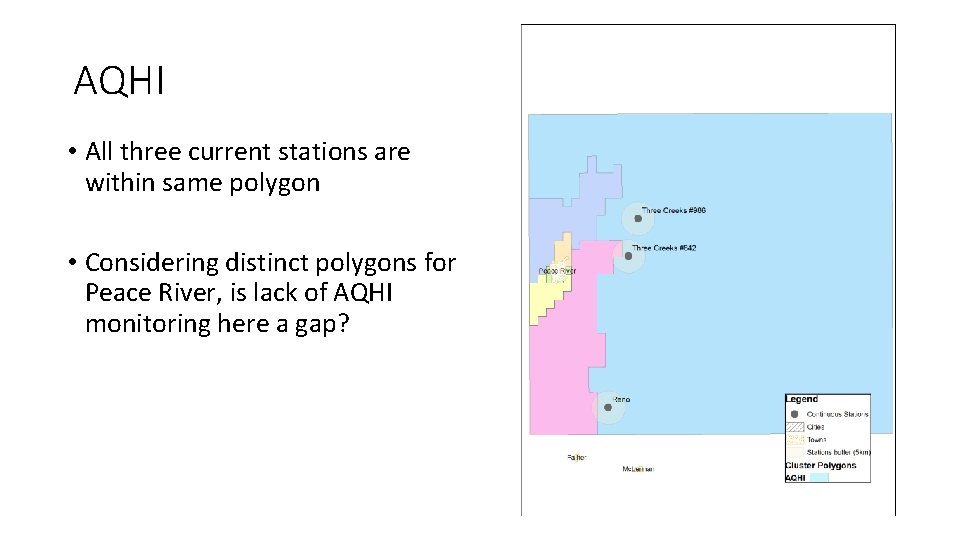
AQHI • All three current stations are within same polygon • Considering distinct polygons for Peace River, is lack of AQHI monitoring here a gap?
- Slides: 8