
Praise and Recognition The Absolute Best Guaranteed to
Praise and Recognition The Absolute Best, Guaranteed to Work Every Time, Employee Reward Doug Blizzard VP, Membership CAI, Inc.
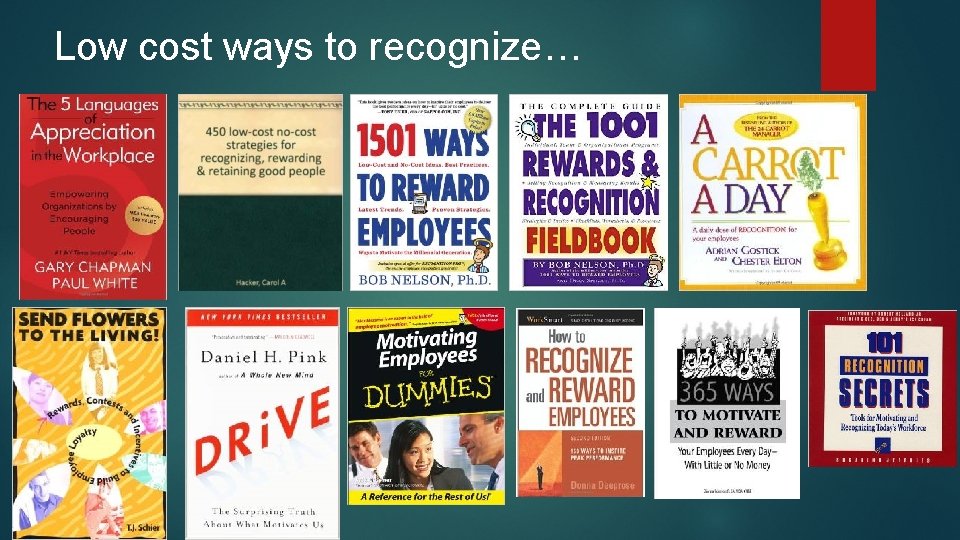
Low cost ways to recognize…
Who Too receives too much praise at work? much recognition?
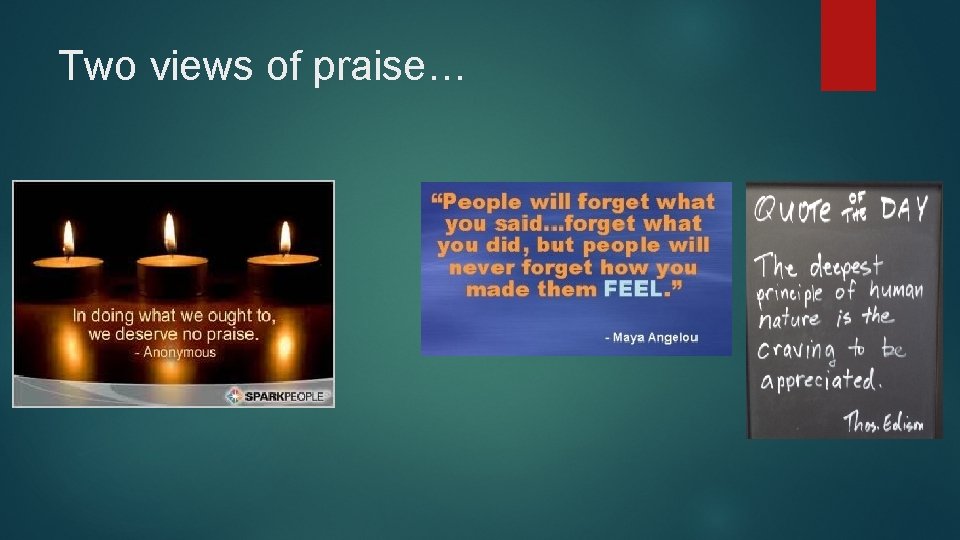
Two views of praise…
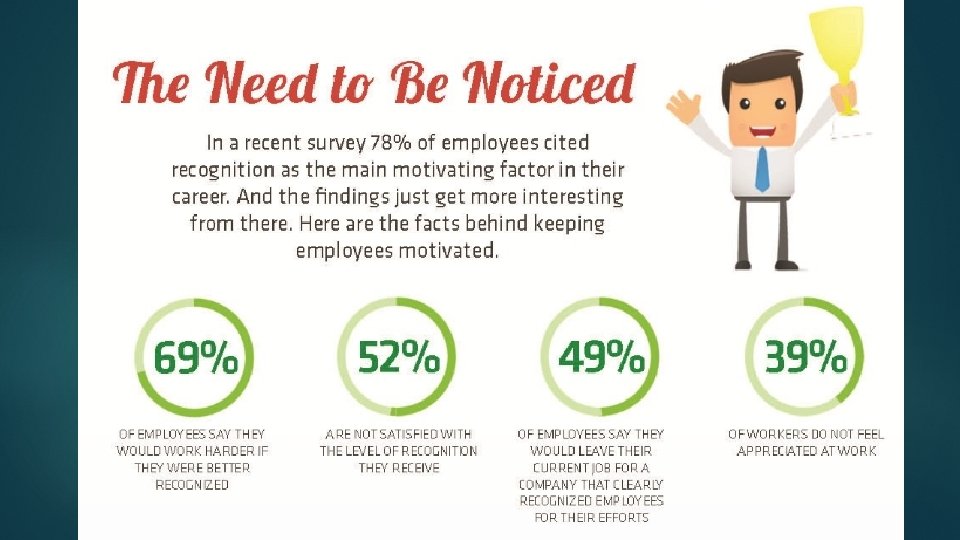
What percentage of employees can strongly agree that they've received any praise from a supervisor in the last seven days? Well, in fact, fewer than one in three American workers, according to Gallup research.
A few Definitions Praise / Appreciation: The act of expressing gratitude to an employee for their positive actions. It is best accomplished through simple expressions or statements, a simple thank you, a card, a pat on the back. Recognition: Acknowledging someone in front of their peers for specific accomplishments, actions or behaviors. Tailor both to each employee’s personality.
What Is Motivation? Motivation is “WHAT drives you” to behave in a certain way or to take a particular action. Can one person motivate someone else? You can’t motivate anyone to do anything You can make them do something Then Ideal: watch, monitor, push them to do it…a struggle match employees motivated to do the types of things required in their job.
Types of Motivation Intrinsic motivation comes from within an individual and occurs at a personal level. Intrinsic motivation includes competence, influence on others, work that is meaningful, etc. Extrinsic motivation comes from external sources and is in the form of tangible rewards. Examples of extrinsic motivation include money, benefits, recognition, training and promotion.
Exercise: Motivation Factors Working alone, rank the items from most important to least important. Rank their importance to YOU in the first column Rank how you think your team members would rank them in the middle column Compare your answers with your group’s responses.
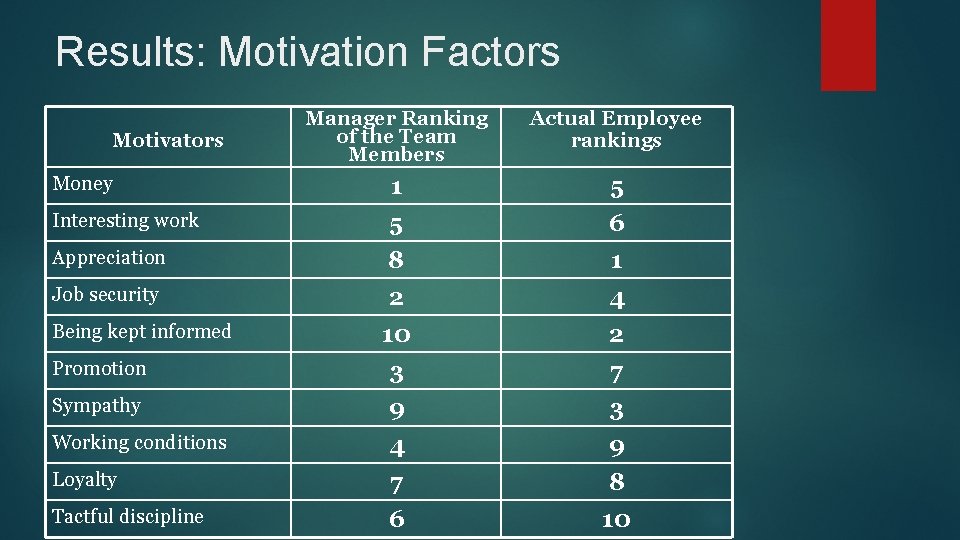
Results: Motivation Factors Manager Ranking of the Team Members Actual Employee rankings Money 1 5 Interesting work 5 6 Appreciation 8 1 Job security 2 4 10 2 Promotion 3 7 Sympathy 9 3 Working conditions 4 9 Loyalty 7 8 Tactful discipline 6 10 Motivators Being kept informed
Our Brains crave praise Receiving praise stimulates a chemical neurotransmitter in the brain called dopamine, something we all need Shortages of dopamine lead to feelings of frustration, anxiety, and difficulty in learning Increases Our stimulate feelings of pleasure and pride brain craves dopamine and figures out how to get it Dopamine Medication also crucial to memory and learning or illegal drugs are other ways to get it…
How much praise do we need? Physiologically our brains need praise at least once a week before the effects wear off. Is there a praise formula? Make it a goal to praise and / or recognize each employee twice a week.
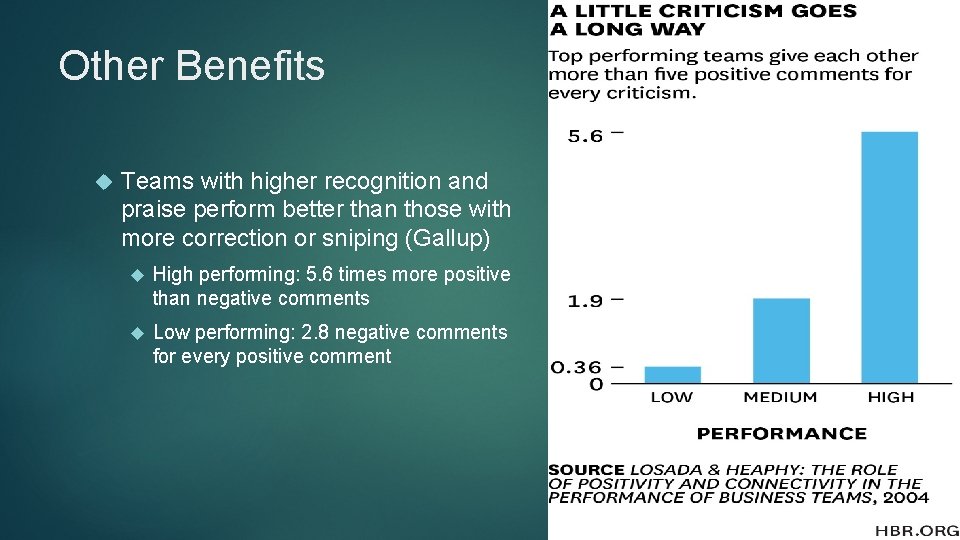
Other Benefits Teams with higher recognition and praise perform better than those with more correction or sniping (Gallup) High performing: 5. 6 times more positive than negative comments Low performing: 2. 8 negative comments for every positive comment
To Summarize We have a relatively simple concept that produces quick increases in employee performance that doesn’t cost anything. Our bodies physically crave praise. Most employees receive inadequate praise at work leading to higher turnover. How can we change our praising behavior?
Small Group Exercise: Recognition In your small groups, list: the benefits of praising / recognizing team members barriers to praising / recognizing team members strategies Share to overcome the barriers responses with large group.
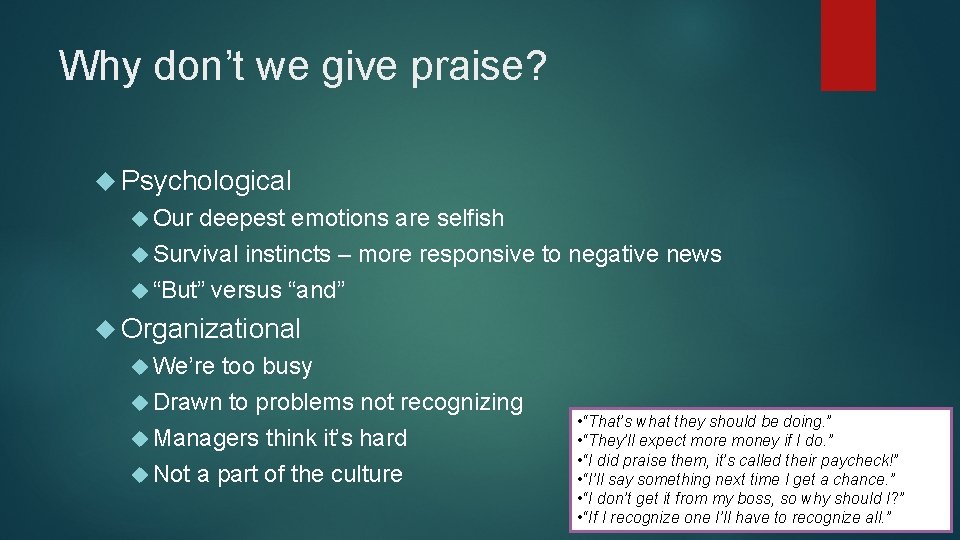
Why don’t we give praise? Psychological Our deepest emotions are selfish Survival instincts – more responsive to negative news “But” versus “and” Organizational We’re too busy Drawn to problems not recognizing Managers think it’s hard Not a part of the culture • “That’s what they should be doing. ” • “They’ll expect more money if I do. ” • “I did praise them, it’s called their paycheck!” • “I’ll say something next time I get a chance. ” • “I don’t get it from my boss, so why should I? ” • “If I recognize one I’ll have to recognize all. ”
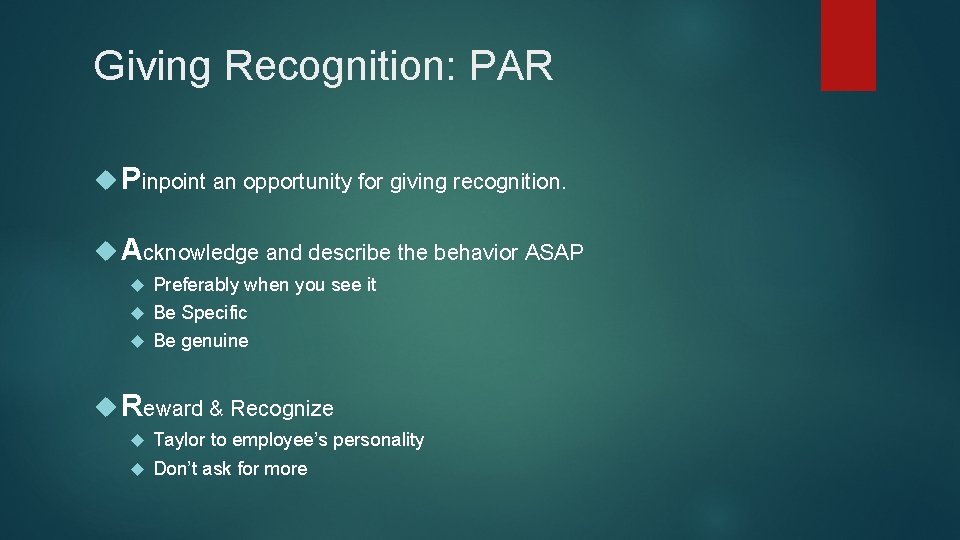
Giving Recognition: PAR Pinpoint an opportunity for giving recognition. Acknowledge and describe the behavior ASAP Preferably when you see it Be Specific Be genuine Reward & Recognize Taylor to employee’s personality Don’t ask for more
Huge issue facing business… Under-management Don’t have time Don’t know how Don’t want to Not our culture My employees don’t need it Other reasons…
Managers are critical… #1 reason good employees leave: bad boss (Gallop) Poorly managed work groups are 50 percent less productive and 44 percent less profitable than wellmanaged groups (Gallop). 75%‐ 80% of people leave jobs because of relationship issues. (Saratoga Institute) 75% of people voluntarily leaving jobs don’t quit their jobs; they quit their bosses. Herman) (Roger
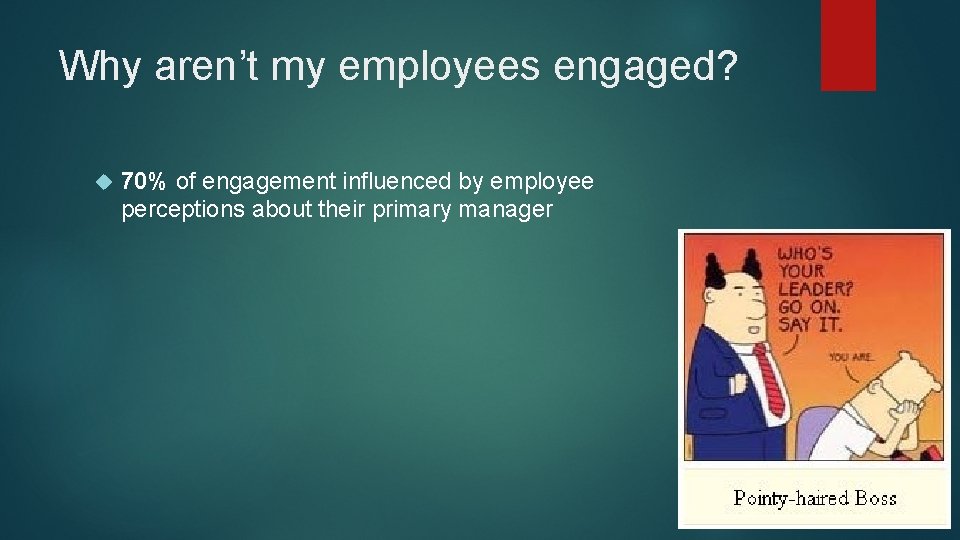
Why aren’t my employees engaged? 70% of engagement influenced by employee perceptions about their primary manager
Effective Managers Great Managers Display Build Get strong, trusting relationships with their staff the right people in the right jobs Care Set about performance and the individual equally clear expectations Value Are genuine care and concern for their people and invest in talent generous / genuine with praise and recognition
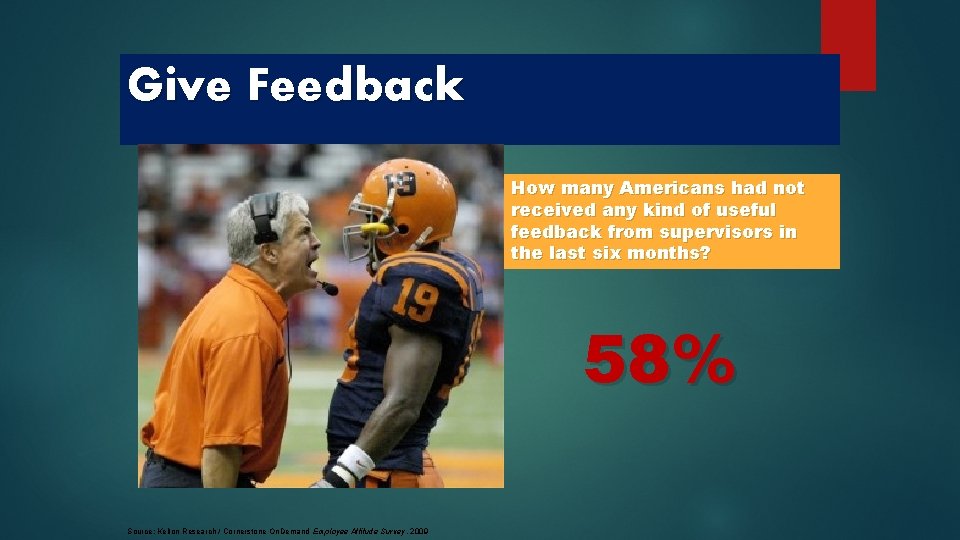
Give Feedback How many Americans had not received any kind of useful feedback from supervisors in the last six months? 58% Source: Kelton Research / Cornerstone On. Demand Employee Attitude Survey, 2009
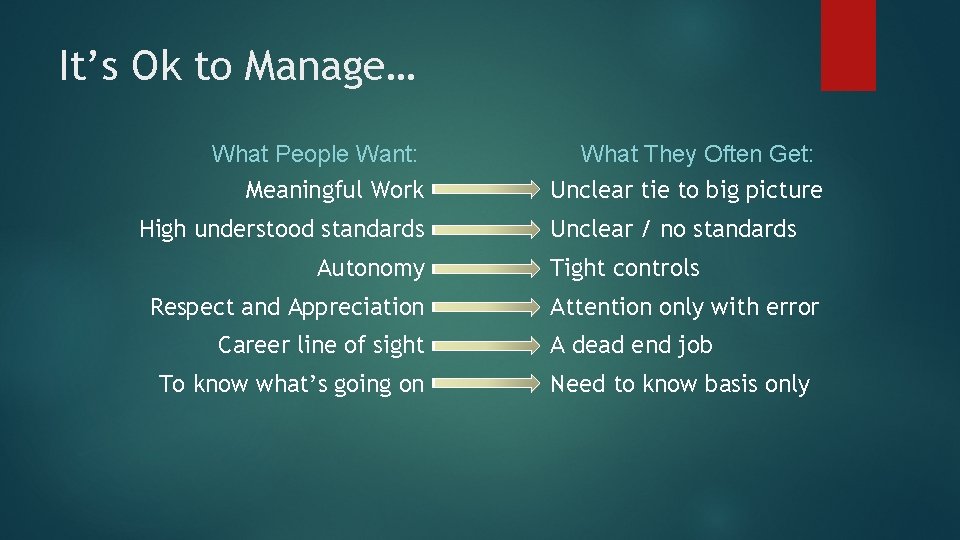
It’s Ok to Manage… What People Want: Meaningful Work High understood standards Autonomy Respect and Appreciation Career line of sight To know what’s going on What They Often Get: Unclear tie to big picture Unclear / no standards Tight controls Attention only with error A dead end job Need to know basis only
CAI Program Contact Doug Blizzard Vice President, Membership Doug. blizzard@capital. org
- Slides: 25