
Practitioner Launch November 18 th 2020 West Sussex
Practitioner Launch November 18 th 2020 West Sussex CCG Brighton and Hove CCG East Sussex CCG
Sally Kendal Business Manager Brighton & Hove Safeguarding Children Partnership West Sussex CCG Brighton and Hove CCG East Sussex CCG
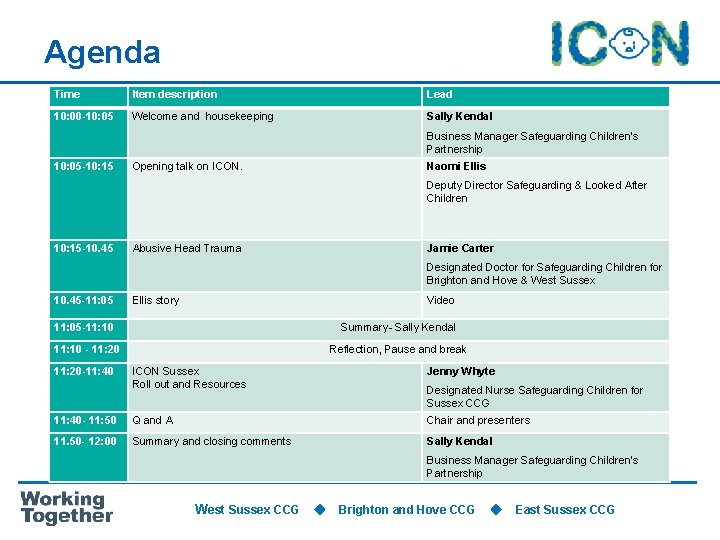
Agenda Time Item description Lead 10: 00 -10: 05 Welcome and housekeeping Sally Kendal Business Manager Safeguarding Children’s Partnership 10: 05 -10: 15 Opening talk on ICON. Naomi Ellis Deputy Director Safeguarding & Looked After Children 10: 15 -10. 45 -11: 05 Abusive Head Trauma Jamie Carter Ellis story Video Designated Doctor for Safeguarding Children for Brighton and Hove & West Sussex 11: 05 -11: 10 Summary- Sally Kendal 11: 10 - 11: 20 Reflection, Pause and break 11: 20 -11: 40 ICON Sussex Roll out and Resources Jenny Whyte 11: 40 - 11: 50 Q and A Chair and presenters 11. 50 - 12: 00 Summary and closing comments Sally Kendal Designated Nurse Safeguarding Children for Sussex CCG Business Manager Safeguarding Children’s Partnership West Sussex CCG Brighton and Hove CCG East Sussex CCG
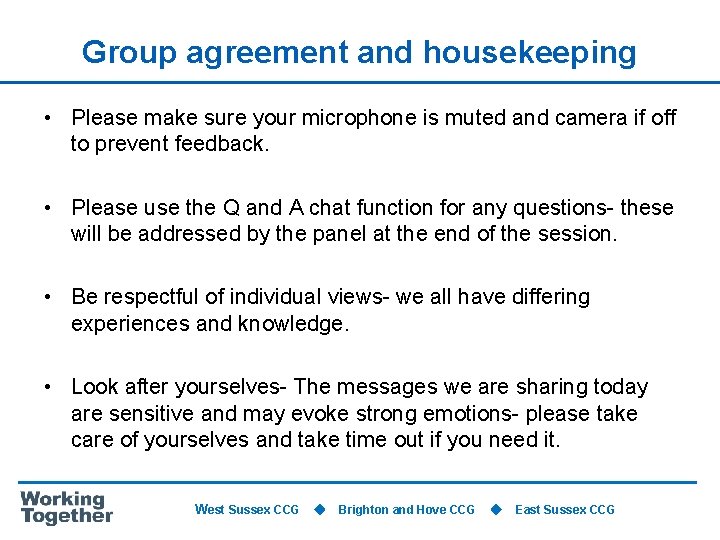
Group agreement and housekeeping • Please make sure your microphone is muted and camera if off to prevent feedback. • Please use the Q and A chat function for any questions- these will be addressed by the panel at the end of the session. • Be respectful of individual views- we all have differing experiences and knowledge. • Look after yourselves- The messages we are sharing today are sensitive and may evoke strong emotions- please take care of yourselves and take time out if you need it. West Sussex CCG Brighton and Hove CCG East Sussex CCG
Aims of this session • This training is designed to equip you with the knowledge, information and skills that you will need to discuss ICON: ‘Babies cry, you can cope’ with parents and carers. • The training will help you to: • understand more about Abusive Head Trauma (AHT) • share the message that crying in babies is normal • support parents/carers to soothe their baby & cope with their baby’s crying West Sussex CCG Brighton and Hove CCG East Sussex CCG
Please share the message @ICON_COPE @Brighton. Hove. SCP @East. Sussex. LSCB @West. Sussex. LSCP @Ssx. Safeguarding #ICONSussex West Sussex CCG Brighton and Hove CCG East Sussex CCG
Naomi Ellis Deputy Director of Safeguarding and Looked After Children Sussex CCGs West Sussex CCG Brighton and Hove CCG East Sussex CCG
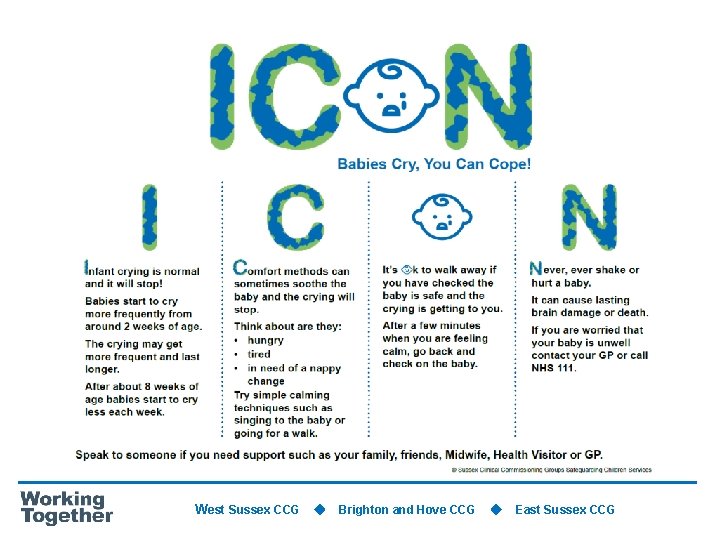
What is ICON? • The ICON Programme is a preventative programme, based around helping parents cope with a crying baby. • Conceived by Dr Suzanne Smith Ph. D who undertook research in USA and Canada in 2016 into the study of effective interventions and research into the prevention of Abusive Head Trauma (AHT/ Shaken baby). • ICON is an evidence based programme consisting of a series of brief ‘touchpoint’ interventions that reinforce the simple message making up the ICON acronym. It also incorporates a ‘safe sleep’ message. • Hampshire Safeguarding Children Partnership worked with Sue Smith to develop a programme for ICON in the UK. • ICON is now supported by RCGP, RCPCH, NHSE and has a National working group and strategic oversight. West Sussex CCG Brighton and Hove CCG East Sussex CCG
West Sussex CCG Brighton and Hove CCG East Sussex CCG
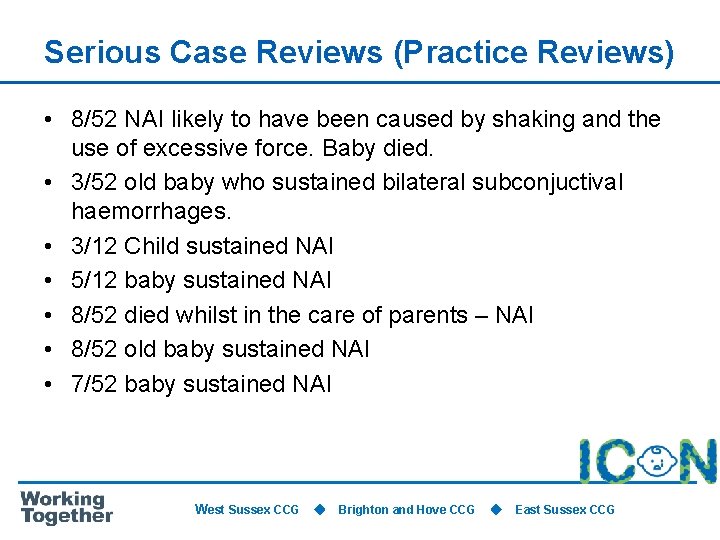
Serious Case Reviews (Practice Reviews) • 8/52 NAI likely to have been caused by shaking and the use of excessive force. Baby died. • 3/52 old baby who sustained bilateral subconjuctival haemorrhages. • 3/12 Child sustained NAI • 5/12 baby sustained NAI • 8/52 died whilst in the care of parents – NAI • 8/52 old baby sustained NAI • 7/52 baby sustained NAI West Sussex CCG Brighton and Hove CCG East Sussex CCG
Strategic Focus • As part of the learning from the NAI Serious Case/ Practice Reviews across Sussex, collaborative work was undertaken with the three Sussex Safeguarding Children Partnerships to commission the ICON programme Sussex-wide. • Discussions took place with Hampshire as the national hosts of ICON and the copyright permissions were purchased to ensure that the resources, materials, media and new developments could be widely accessed across Sussex. • Evaluation of impact will commence using qualitative and quantitative outcome measures including uptake of the resources and feedback by both service users and providers. West Sussex CCG Brighton and Hove CCG East Sussex CCG
Goal for ICON Our goal for ICON is to communicate to parents/carers that: • They can expect and understand crying • They can prepare for crying • They have some strategies to cope with crying West Sussex CCG Brighton and Hove CCG East Sussex CCG
Dr Jamie Carter Designated Doctor for Safeguarding Children West Sussex CCG Brighton and Hove CCG East Sussex CCG
Aims • Recognition & increased knowledge of AHT & nonaccidental Injuries • Features (signs) & outcome of abusive head injuries • Crying & injury prevention • Contribute to the Sussex Wide prevention West Sussex CCG Brighton and Hove CCG East Sussex CCG
AHT assessment • Medical assessment • CSC etc information • Forensic assessment • Assimilation of the ‘findings’ • Probabilistic diagnosis • NO GOLD STANDARD DIAGNOSTIC TESTS – Cumulative information & opinion West Sussex CCG Brighton and Hove CCG East Sussex CCG
Forensics/medical AHT assessment An understanding of: • Accidental injury in children • Biomechanics of injury • Pathology of healing West Sussex CCG Brighton and Hove CCG East Sussex CCG
Paediatric assessment of AHT • Does the injury fit with the explanation? • Is it consistent with the developmental stage of the child? • Vague/changing history/delay in seeking advice? • Inappropriate child response reported – e. g. “felt no pain” • Any history of previous injury or repeated presentations with illness West Sussex CCG Brighton and Hove CCG East Sussex CCG
Medical investigations • Blood tests • Coagulation • FBC • Ophthalmology • Skeletal survey • CT head/MRI brain West Sussex CCG Brighton and Hove CCG East Sussex CCG
AHT diagnosis • Never interpret in isolation • Developmental stage • HISTORY… or lack of it! West Sussex CCG Brighton and Hove CCG East Sussex CCG
Abusive head injury (AHT) • Inflicted Head Trauma • Traumatic Brain Injury • Shaken Baby Syndrome (SBS) West Sussex CCG Brighton and Hove CCG East Sussex CCG
Data • Babies disproportionately represented in Serious Case Reviews • AHT cases 25 per 100, 000 UK children • Mostly under 1 years age West Sussex CCG Brighton and Hove CCG East Sussex CCG
Abusive head trauma = Retinal haemorrhages (EYES) = Subdural (SDH) +/- sub-arachnoid haemorrhage (BRAIN) = Encephalopathy – ‘THE TRIAD’ West Sussex CCG Brighton and Hove CCG East Sussex CCG
Medical signs & symptoms Abusive Head Trauma Sepsis/meningitis • Impaired consciousness • Cardiopulmonary collapse • Respiration irregular • APNOEA • Seizures • Vomiting • Encephalopathy • Poor feeding • Focal neurological signs West Sussex CCG Brighton and Hove CCG East Sussex CCG
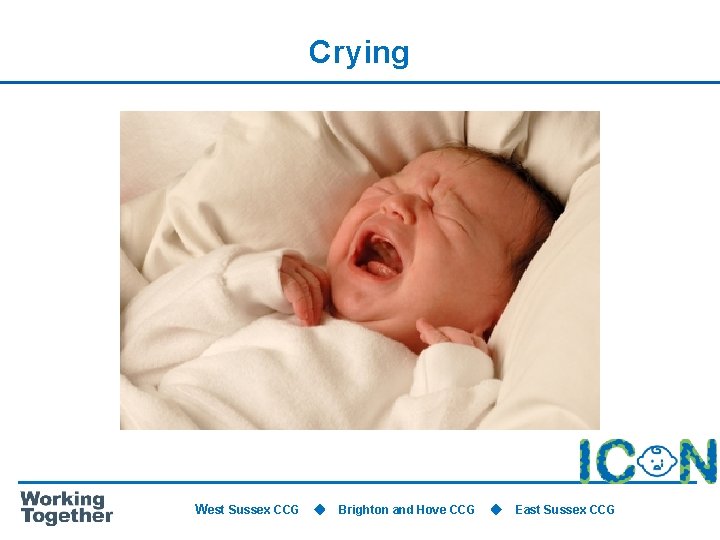
Crying West Sussex CCG Brighton and Hove CCG East Sussex CCG
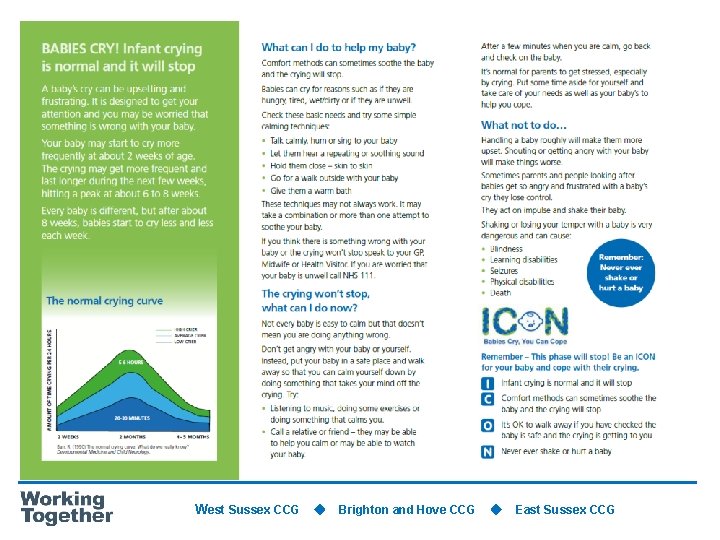
Infant crying • Crying is a normal part of child development which can have a significant negative impact on the emotional health of parents • All babies will cry but amount can vary from baby to baby • Crying seems to peak in the late afternoon & early evening… but this can vary • Parents may, at some point, struggle to cope with their baby’s crying • Emotional responses of anger and frustration • It is important to offer an alternative response to help control these extreme emotions West Sussex CCG Brighton and Hove CCG East Sussex CCG
Infant crying • Crying is sometimes misdiagnosed as colic, GORD, CMP intolerance. • Medical causes – GORD, CMP intolerance, cerebral palsy (dystonia)… • No one is really sure why babies cry so much in this period… research is ongoing • An immature nervous system may make babies more irritable… Crying is their only means of expression. West Sussex CCG Brighton and Hove CCG East Sussex CCG
Crying facts • Infant crying peaks around 4 -8 weeks of age • Most crying occurring in the late afternoon and evening • Recent studies have shown that infants who cry ++ in first 4 -6 weeks are not particularly likely to disturb their parents in the night at 3 months or have later sleeping problems West Sussex CCG Brighton and Hove CCG East Sussex CCG
Risk Factors • • Drug & alcohol mis-use Chaotic family Disability Prematurity (60%) & low birth weight Multiple pregnancies Domestic violence Educational difficulties Mental health issues • ALL SOCIAL & CULTURAL BACKGROUNDS West Sussex CCG Brighton and Hove CCG East Sussex CCG
Perpetrator confessions • Shaking ‘extremely violent’ (100%) • Repeated (55%) from 2 - 30 times (mean: 10) • “because it stopped the infant's crying” (62%) • Impact uncommon (24%) • No correlation between repeated shaking and SDH densities West Sussex CCG Brighton and Hove CCG East Sussex CCG
True or False… the following cause infant head injuries • Bouncing a baby on your knee • Tossing a baby in the air • Jogging or bicycling with your baby • Falls off a couch or other furniture • Sudden stops in a car or driving over bumps. West Sussex CCG Brighton and Hove CCG East Sussex CCG
Why is Shaking a Baby Dangerous? • Babies heads are heavy & large in proportion to their body size. – Babies have weak neck muscles. – Babies have fragile, undeveloped brains. • Large size & strength difference between the victim & the perpetrator West Sussex CCG Brighton and Hove CCG East Sussex CCG
Pathogenesis - Theories • Rotational + angular acceleration-deceleration forces • Associated limb fractures West Sussex CCG Brighton and Hove CCG East Sussex CCG
How much force? • Not seen in ‘normal play’ • Observers “recognise it as dangerous & likely to kill the child” 2001 Canadian Paediatric Society joint statement & American Academy of Paediatrics West Sussex CCG Brighton and Hove CCG East Sussex CCG
Associated injuries - Fractures • Multiple fractures – Old & new fractures – Metaphyseal fractures • Rib fractures – Posterior – Paravertebral • Skull fractures West Sussex CCG Brighton and Hove CCG East Sussex CCG
What happens to AHT babies? West Sussex CCG Brighton and Hove CCG East Sussex CCG
Consequences of AHT • • • Physical (cerebral palsy) & learning disabilities Visual impairment/blindness Hearing & speech impairment Seizures Cognitive impairment Death West Sussex CCG Brighton and Hove CCG East Sussex CCG
Prognosis of AHT • Mortality rate 15 -38% • USA 25% • Severe neurological deficits in survivors 30 -50% • Lifelong disability < 80% • Sequelae more severe compared to non-inflicted head injury eg. Road traffic accident • Repeated abuse if returned home (31% - 43%) • Under 6 month olds most commonly victims West Sussex CCG Brighton and Hove CCG East Sussex CCG
Why us/me? • Night waking usually does not involve excessive crying • The chief sources of parental concern are: – their baby is behaving differently from most other babies – baby being awake at night keeps the parents awake too & therefore disturbs the parents' own sleep West Sussex CCG Brighton and Hove CCG East Sussex CCG
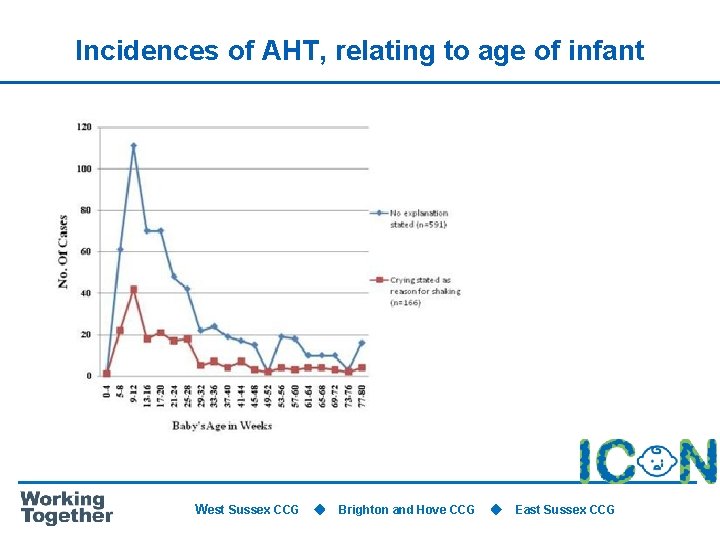
Incidences of AHT, relating to age of infant West Sussex CCG Brighton and Hove CCG East Sussex CCG
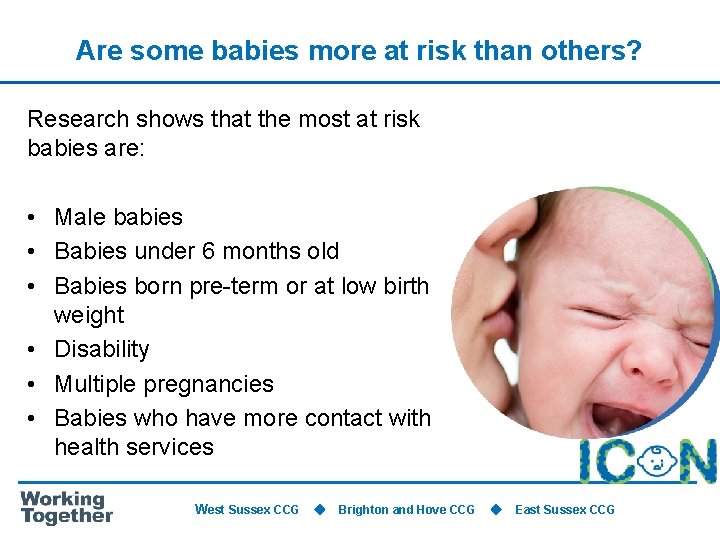
Are some babies more at risk than others? Research shows that the most at risk babies are: • Male babies • Babies under 6 months old • Babies born pre-term or at low birth weight • Disability • Multiple pregnancies • Babies who have more contact with health services West Sussex CCG Brighton and Hove CCG East Sussex CCG
Factors that can trigger AHT • Being a parent/carer • 50% mothers interviewed reported that their child’s crying made them feel like harming their child. • Such feelings are rarely acted on, but it can be a trigger for a parent to actually harm and abuse their child. • Momentary loss of control • Mental health problems/DV/relationship issues West Sussex CCG Brighton and Hove CCG East Sussex CCG
West Sussex CCG Brighton and Hove CCG East Sussex CCG
West Sussex CCG Brighton and Hove CCG East Sussex CCG
Jenny Whyte Designated Nurse Safeguarding Children West Sussex CCG Brighton and Hove CCG East Sussex CCG
ICON Pan Sussex West Sussex CCG Brighton and Hove CCG East Sussex CCG
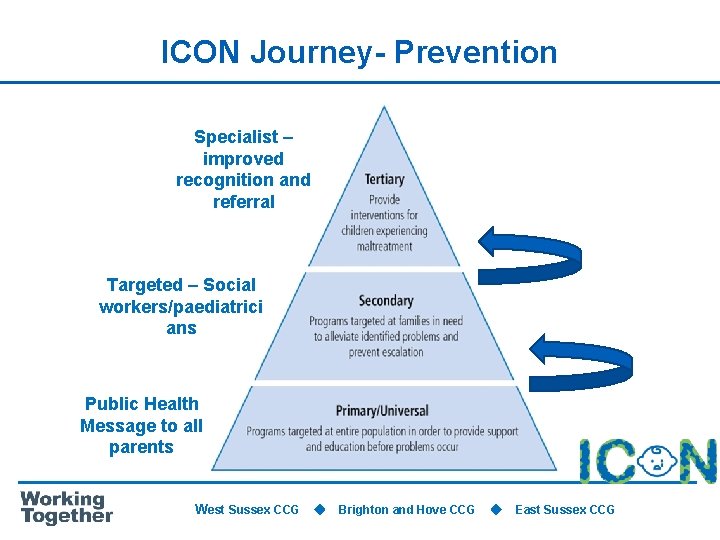
ICON Journey- Prevention Specialist – improved recognition and referral Targeted – Social workers/paediatrici ans Public Health Message to all parents West Sussex CCG Brighton and Hove CCG East Sussex CCG
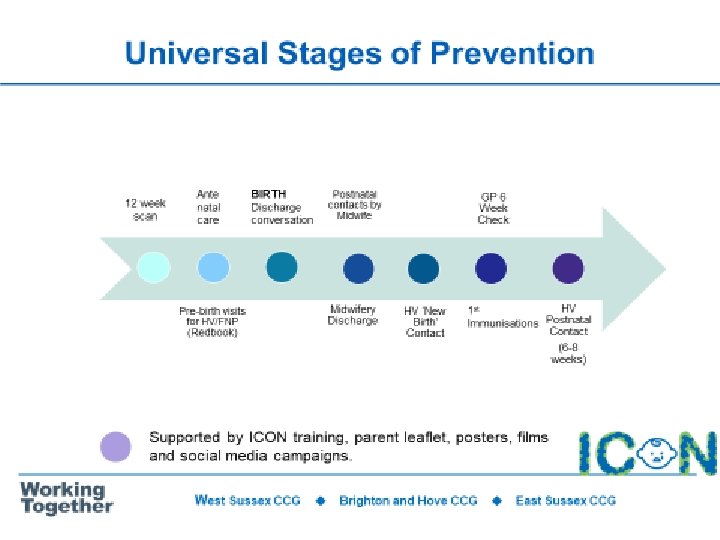
West Sussex CCG Brighton and Hove CCG East Sussex CCG
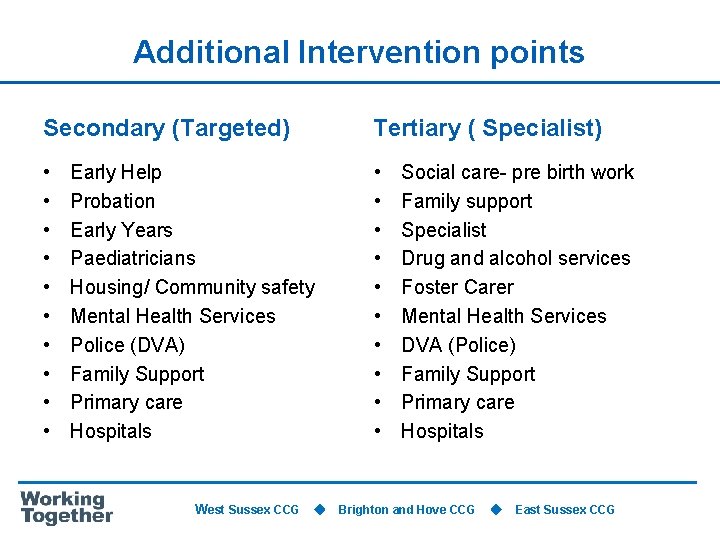
Additional Intervention points Secondary (Targeted) Tertiary ( Specialist) • • • • • Early Help Probation Early Years Paediatricians Housing/ Community safety Mental Health Services Police (DVA) Family Support Primary care Hospitals Social care- pre birth work Family support Specialist Drug and alcohol services Foster Carer Mental Health Services DVA (Police) Family Support Primary care Hospitals West Sussex CCG Brighton and Hove CCG East Sussex CCG
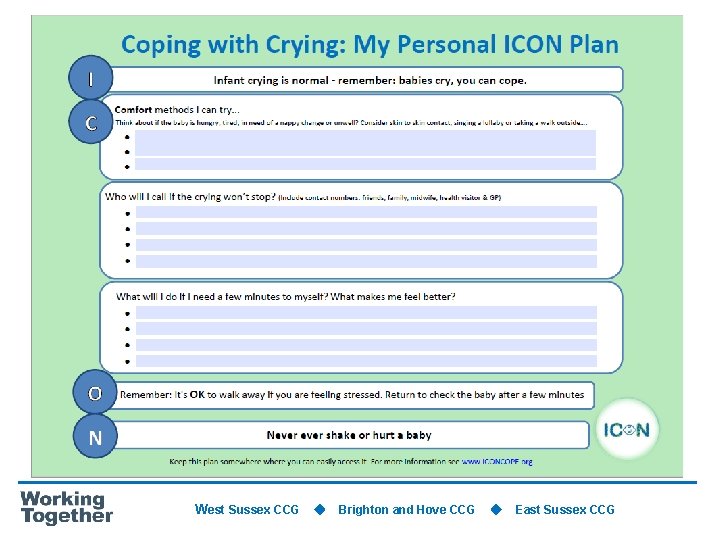
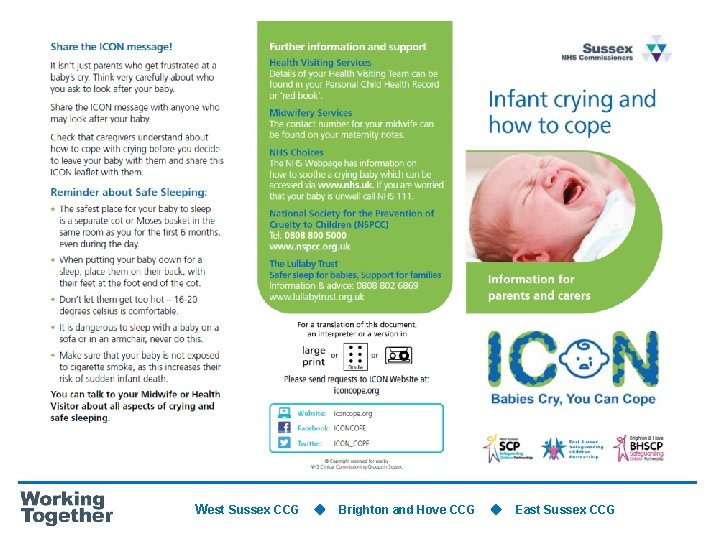
The ICON message for parents • Help parents understand that crying is normal… all parents can feel like this. • Explain that crying is a normal part of development. • Reassure parents that babies are not doing this on purpose. • Support parents in coping with their own emotions and stress (Coping with Crying Plan). • Teach parents soothing and safe sleep techniques. • Inform parents/carers about sharing the ICON leaflet with anyone who cares for your baby. West Sussex CCG Brighton and Hove CCG East Sussex CCG
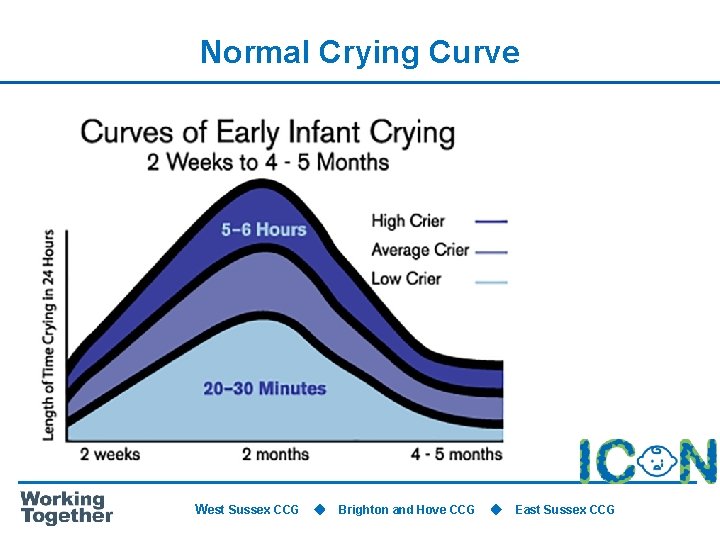
Normal Crying Curve West Sussex CCG Brighton and Hove CCG East Sussex CCG
West Sussex CCG Brighton and Hove CCG East Sussex CCG
Fathers & Male carers • SCRs identified fathers not included in agency work/safeguarding • Mothers are often seen by themselves for antenatal appointments (exception of scans). • Attendance at health appointments less likely than mothers such a s 6 week check and immunisation • Mothers can be encouraged to pass on ICON info and have conversations with partner. • Discussion on how family members are coping with new baby…. Relationship issues, work-family tensions (COVID-19) West Sussex CCG Brighton and Hove CCG East Sussex CCG
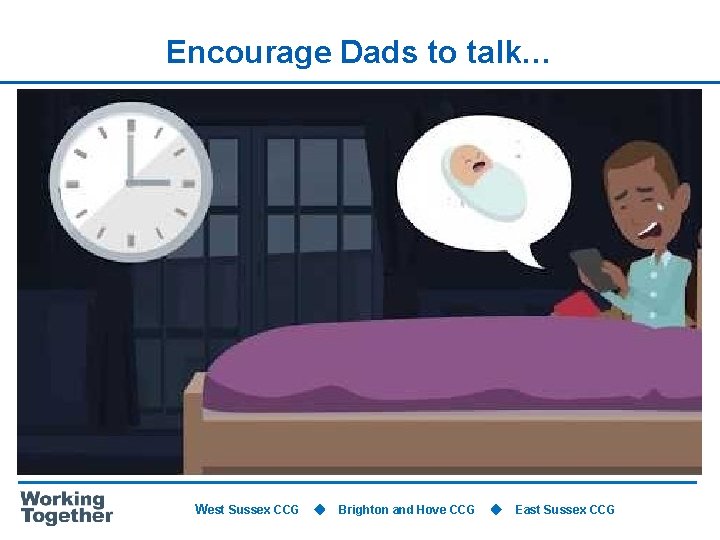
Encourage Dads to talk… West Sussex CCG Brighton and Hove CCG East Sussex CCG
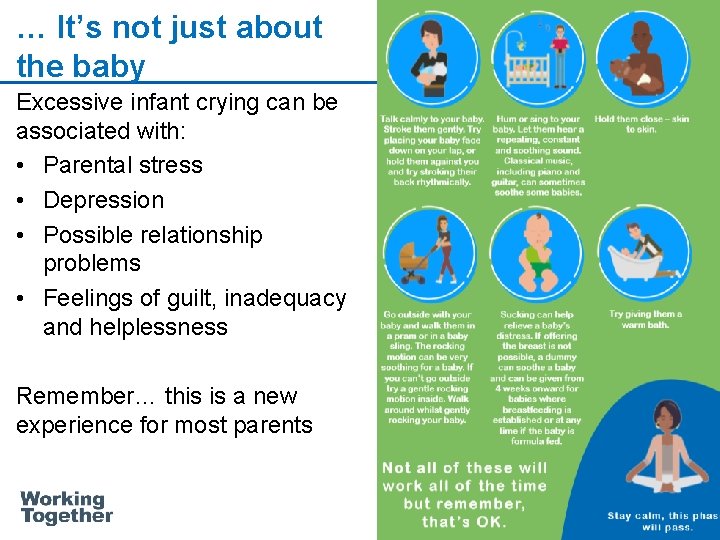
… It’s not just about the baby Excessive infant crying can be associated with: • Parental stress • Depression • Possible relationship problems • Feelings of guilt, inadequacy and helplessness Remember… this is a new experience for most parents West Sussex CCG Brighton and Hove CCG East Sussex CCG
Impact of COVID-19 and lockdown • Support networks not accessible. • Self isolation with children and potentially at risk adults • Concerns increased around young babies and parents in lockdown • Children not presenting at health settings • Families not accessing group and professional contacts • Loss of income • Social distancing restrictions on activities which might lessen stress (e. g. sports, social engagement and entertainment, celebrations) West Sussex CCG Brighton and Hove CCG East Sussex CCG
Sussex response to COVID -19 • Sussex wide launch April 1 st (launch events postponed) • ICON expedited role out to all maternity providers*. • As able: Touch point interventions throughout universal services for children and families: Scans (Dads), midwifery contacts, health visiting contacts. • Resources delivered to acute health settings. • Webinars to Primary care to support ICON message at routine 6 -8 week GP check and immunisations. • Multiagency training to professionals working with families with young babies including CSC, Early Help services, police, probation, Early Years settings, A&E, MUI and others. • Social media. West Sussex CCG Brighton and Hove CCG East Sussex CCG
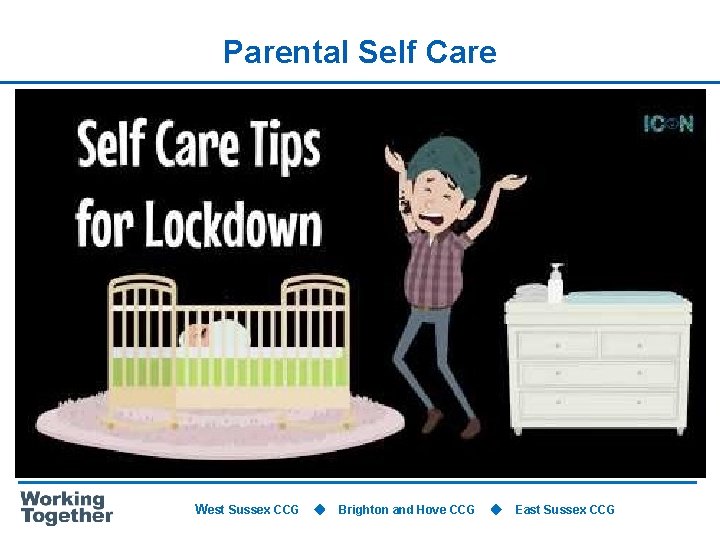
Parental Self Care West Sussex CCG Brighton and Hove CCG East Sussex CCG
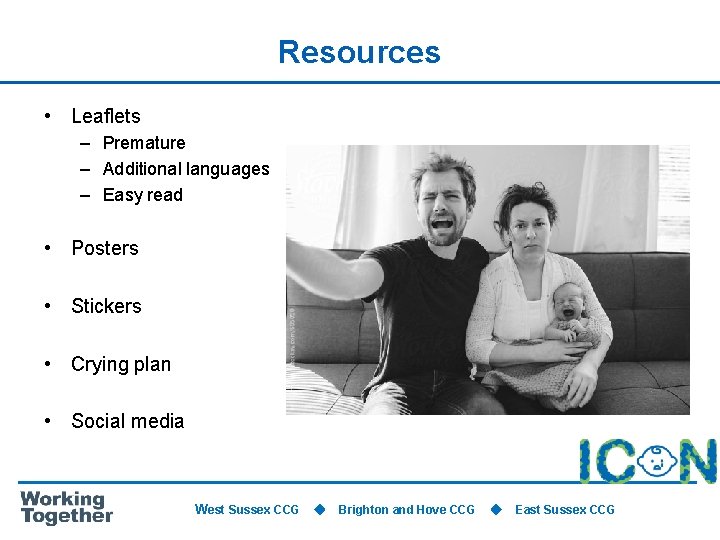
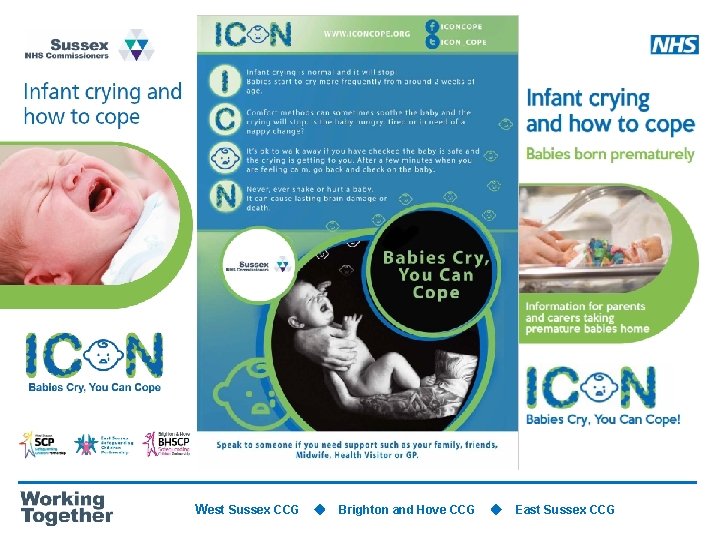
Resources • Leaflets – Premature – Additional languages – Easy read • Posters • Stickers • Crying plan • Social media West Sussex CCG Brighton and Hove CCG East Sussex CCG
West Sussex CCG Brighton and Hove CCG East Sussex CCG
West Sussex CCG Brighton and Hove CCG East Sussex CCG
West Sussex CCG Brighton and Hove CCG East Sussex CCG
West Sussex CCG Brighton and Hove CCG East Sussex CCG
Most useful resource… West Sussex CCG Brighton and Hove CCG East Sussex CCG
Sally Kendal Business Manager Brighton & Hove Safeguarding Children Partnership West Sussex CCG Brighton and Hove CCG East Sussex CCG
West Sussex CCG Brighton and Hove CCG East Sussex CCG
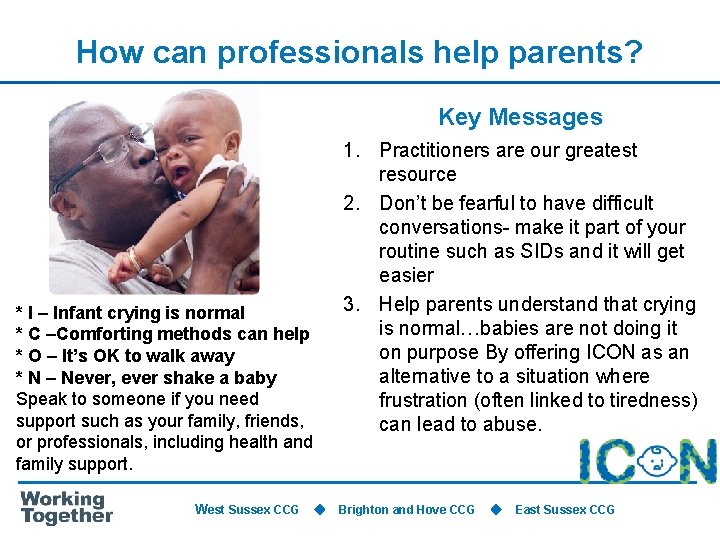
How can professionals help parents? Key Messages * I – Infant crying is normal * C –Comforting methods can help * O – It’s OK to walk away * N – Never, ever shake a baby Speak to someone if you need support such as your family, friends, or professionals, including health and family support. 1. Practitioners are our greatest resource 2. Don’t be fearful to have difficult conversations- make it part of your routine such as SIDs and it will get easier 3. Help parents understand that crying is normal…babies are not doing it on purpose By offering ICON as an alternative to a situation where frustration (often linked to tiredness) can lead to abuse. West Sussex CCG Brighton and Hove CCG East Sussex CCG
Links and Resources http: //iconcope. org/ https: //www. facebook. com/iconcope/ https: //twitter. com/ICON_COPE Sussex CCGs Coping With Infant Crying West Sussex CCG Brighton and Hove CCG East Sussex CCG
Thank You West Sussex CCG Brighton and Hove CCG East Sussex CCG
- Slides: 68