
PRACTICE MAKES PERFECT IMPLEMENTING CLINICAL SIMULATION IN RESIDENCY
- Slides: 25
PRACTICE MAKES PERFECT: IMPLEMENTING CLINICAL SIMULATION IN RESIDENCY TRAINING Johnny Tenegra, MD MS and Justin Parker, MD SIU School of Medicine Decatur Family and Community Medicine Residency Program
DISCLOSURE No disclosures relative to today’s presentation
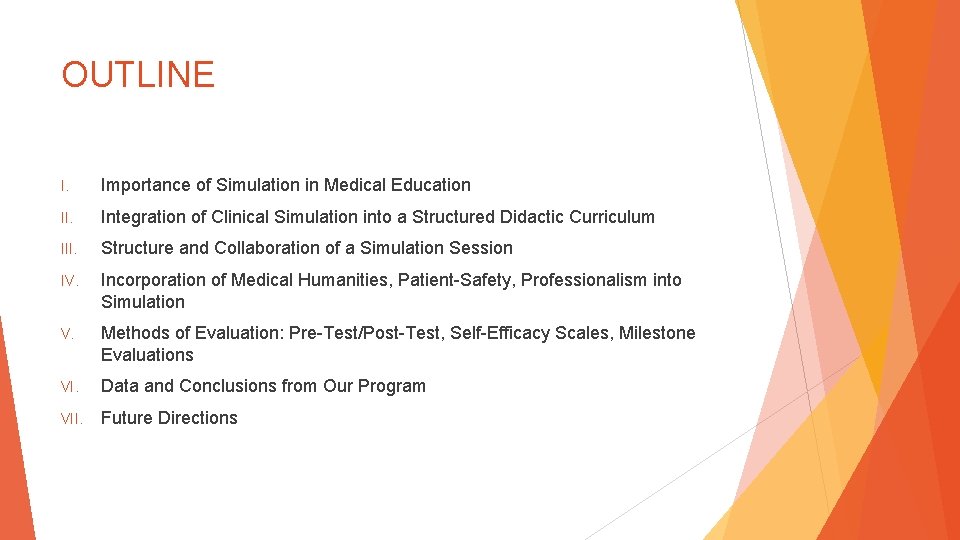
OUTLINE I. Importance of Simulation in Medical Education II. Integration of Clinical Simulation into a Structured Didactic Curriculum III. Structure and Collaboration of a Simulation Session IV. Incorporation of Medical Humanities, Patient-Safety, Professionalism into Simulation V. Methods of Evaluation: Pre-Test/Post-Test, Self-Efficacy Scales, Milestone Evaluations VI. Data and Conclusions from Our Program VII. Future Directions
Importance of Simulation in Medical Education
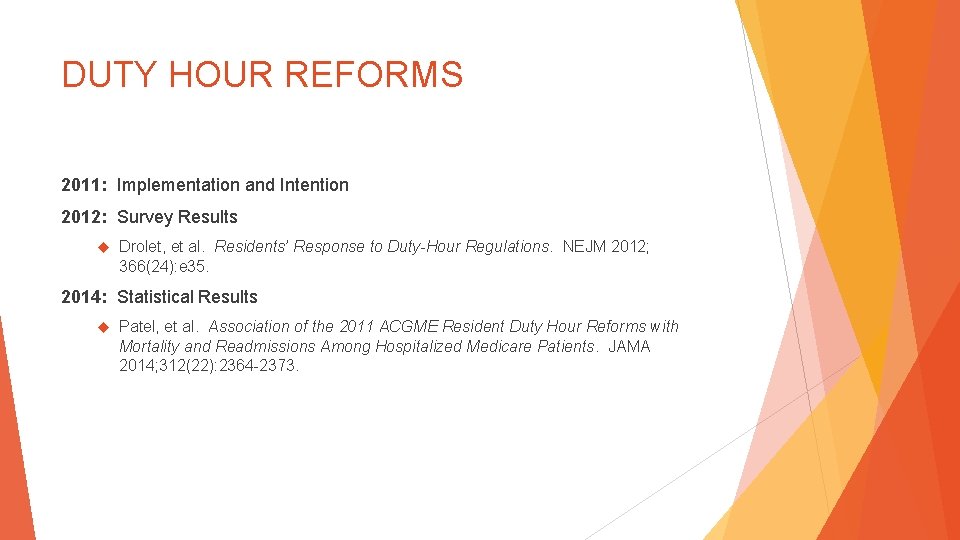
DUTY HOUR REFORMS 2011: Implementation and Intention 2012: Survey Results Drolet, et al. Residents’ Response to Duty-Hour Regulations. NEJM 2012; 366(24): e 35. 2014: Statistical Results Patel, et al. Association of the 2011 ACGME Resident Duty Hour Reforms with Mortality and Readmissions Among Hospitalized Medicare Patients. JAMA 2014; 312(22): 2364 -2373.
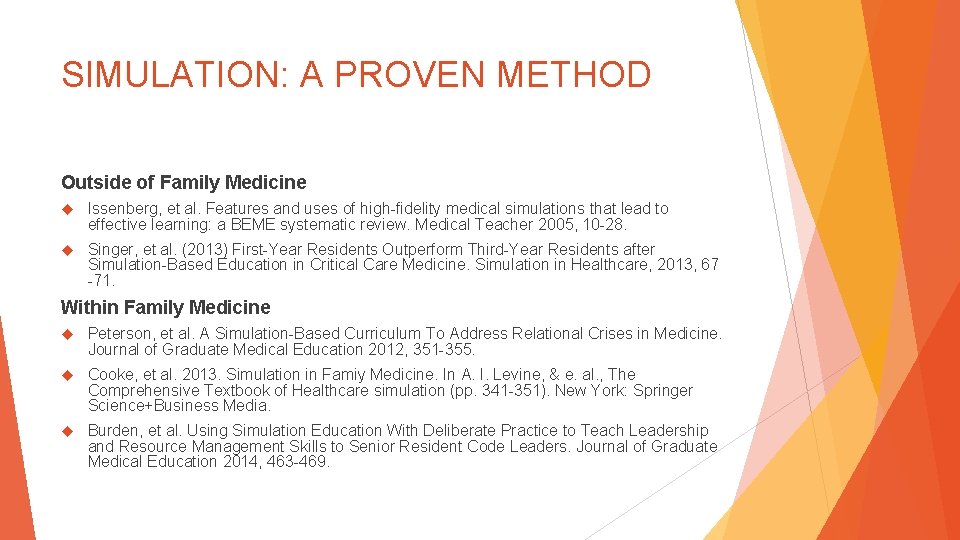
SIMULATION: A PROVEN METHOD Outside of Family Medicine Issenberg, et al. Features and uses of high-fidelity medical simulations that lead to effective learning: a BEME systematic review. Medical Teacher 2005, 10 -28. Singer, et al. (2013) First-Year Residents Outperform Third-Year Residents after Simulation-Based Education in Critical Care Medicine. Simulation in Healthcare, 2013, 67 -71. Within Family Medicine Peterson, et al. A Simulation-Based Curriculum To Address Relational Crises in Medicine. Journal of Graduate Medical Education 2012, 351 -355. Cooke, et al. 2013. Simulation in Famiy Medicine. In A. I. Levine, & e. al. , The Comprehensive Textbook of Healthcare simulation (pp. 341 -351). New York: Springer Science+Business Media. Burden, et al. Using Simulation Education With Deliberate Practice to Teach Leadership and Resource Management Skills to Senior Resident Code Leaders. Journal of Graduate Medical Education 2014, 463 -469.
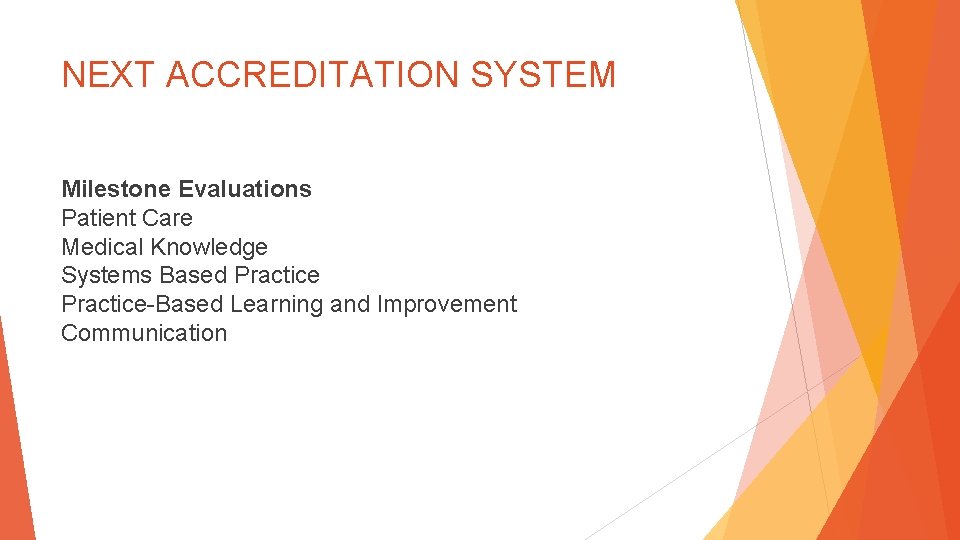
NEXT ACCREDITATION SYSTEM Milestone Evaluations Patient Care Medical Knowledge Systems Based Practice-Based Learning and Improvement Communication
Integration of Clinical Simulation into a Structured Didactic Curriculum
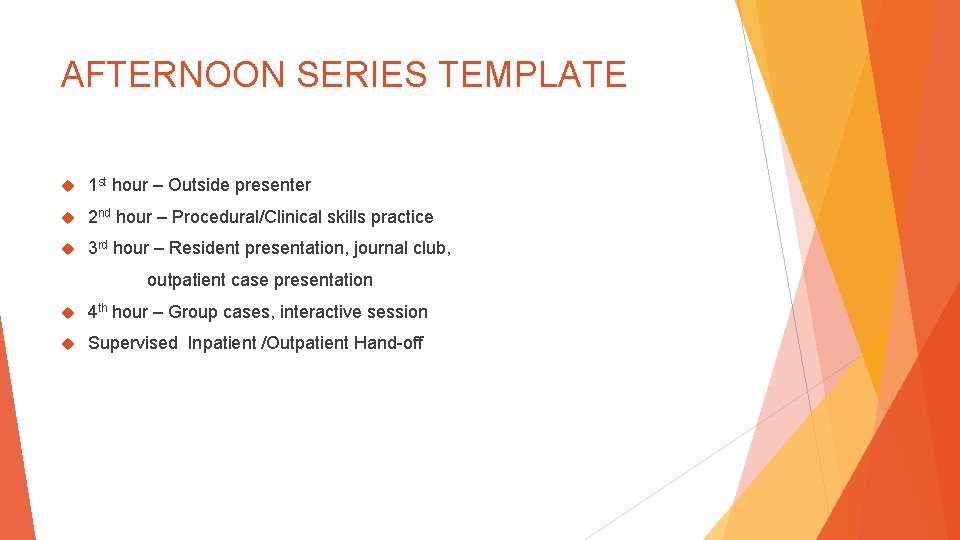
AFTERNOON SERIES TEMPLATE 1 st hour – Outside presenter 2 nd hour – Procedural/Clinical skills practice 3 rd hour – Resident presentation, journal club, outpatient case presentation 4 th hour – Group cases, interactive session Supervised Inpatient /Outpatient Hand-off
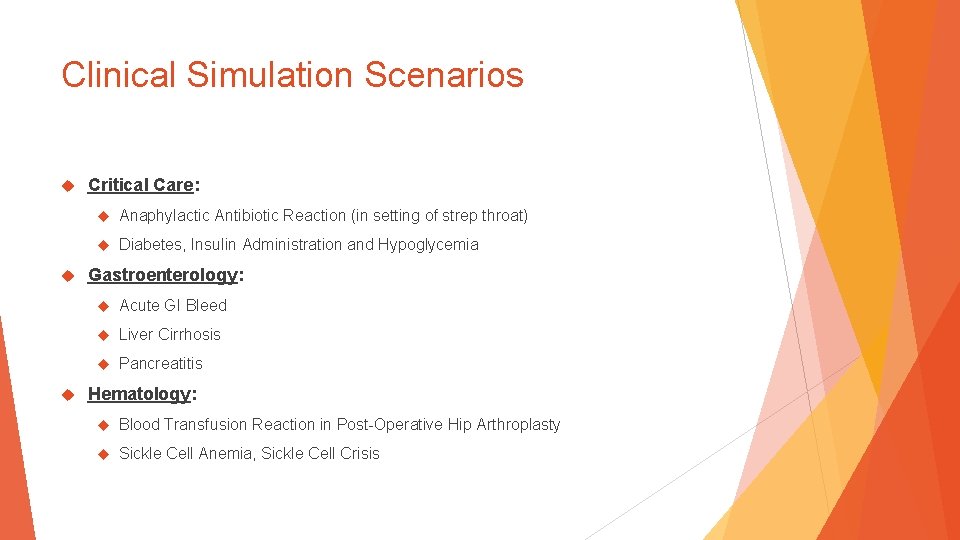
Clinical Simulation Scenarios Critical Care: Anaphylactic Antibiotic Reaction (in setting of strep throat) Diabetes, Insulin Administration and Hypoglycemia Gastroenterology: Acute GI Bleed Liver Cirrhosis Pancreatitis Hematology: Blood Transfusion Reaction in Post-Operative Hip Arthroplasty Sickle Cell Anemia, Sickle Cell Crisis
Structure and Collaboration of a Simulation Session
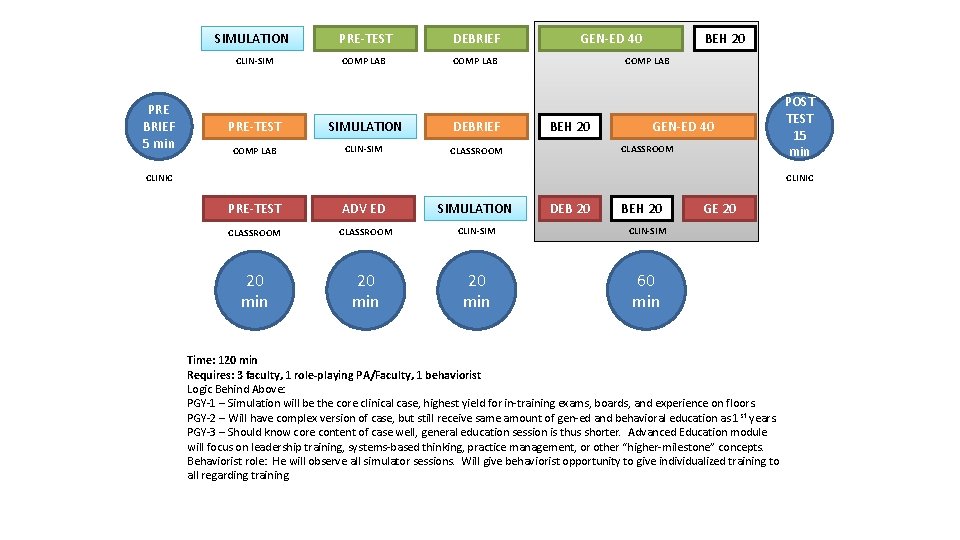
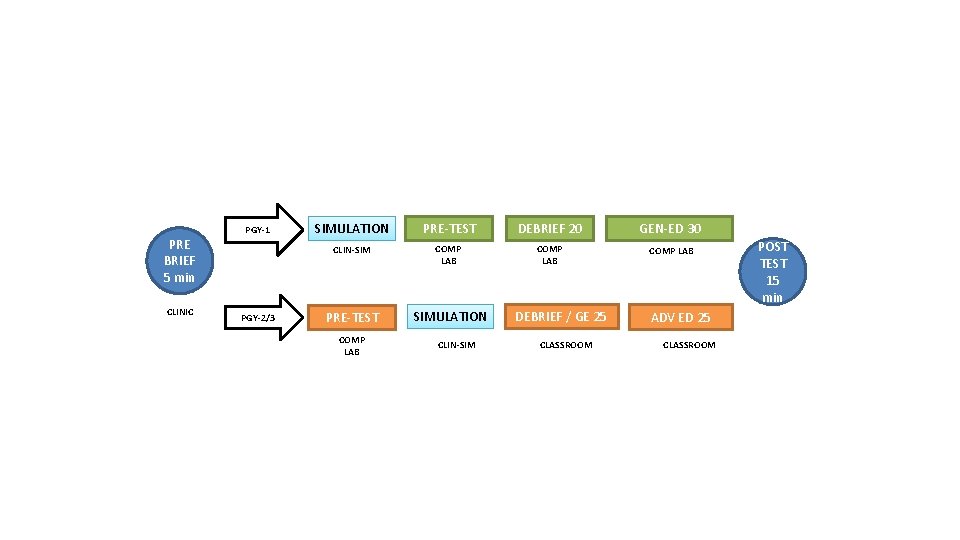
STRUCTURE Resident Tracks Training Circuits
PRE BRIEF 5 min SIMULATION PRE-TEST DEBRIEF CLIN-SIM COMP LAB PRE-TEST SIMULATION DEBRIEF COMP LAB CLIN-SIM CLASSROOM GEN-ED 40 BEH 20 COMP LAB BEH 20 GEN-ED 40 CLASSROOM POST TEST 15 min CLINIC PRE-TEST ADV ED SIMULATION DEB 20 BEH 20 CLASSROOM CLIN-SIM 20 min 60 min GE 20 Time: 120 min Requires: 3 faculty, 1 role-playing PA/Faculty, 1 behaviorist Logic Behind Above: PGY-1 – Simulation will be the core clinical case, highest yield for in-training exams, boards, and experience on floors. PGY-2 – Will have complex version of case, but still receive same amount of gen-ed and behavioral education as 1 st years. PGY-3 – Should know core content of case well, general education session is thus shorter. Advanced Education module will focus on leadership training, systems-based thinking, practice management, or other “higher-milestone” concepts. Behaviorist role: He will observe all simulator sessions. Will give behaviorist opportunity to give individualized training to all regarding training.
PRE BRIEF 5 min CLINIC PGY-1 PGY-2/3 SIMULATION PRE-TEST DEBRIEF 20 GEN-ED 30 CLIN-SIM COMP LAB PRE-TEST SIMULATION COMP LAB CLIN-SIM DEBRIEF / GE 25 CLASSROOM ADV ED 25 CLASSROOM POST TEST 15 min
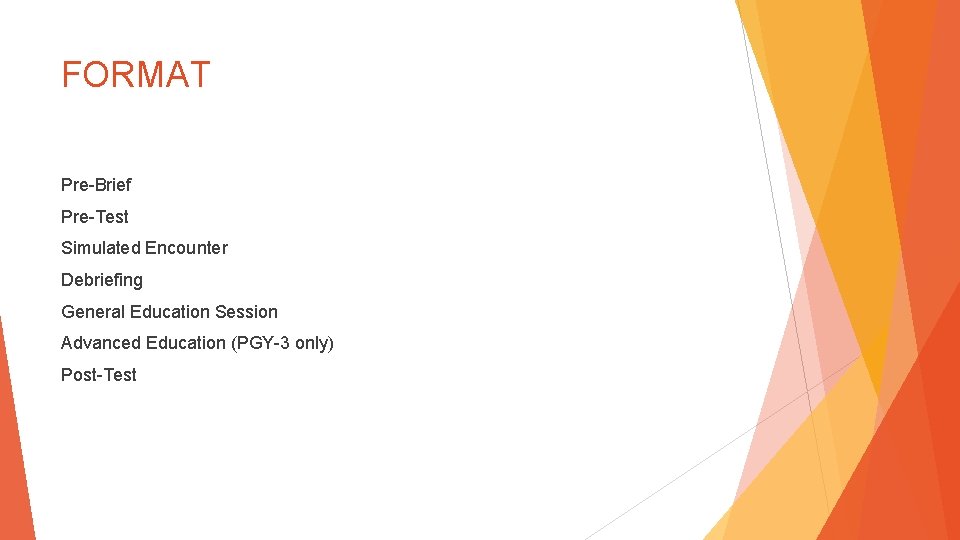
FORMAT Pre-Brief Pre-Test Simulated Encounter Debriefing General Education Session Advanced Education (PGY-3 only) Post-Test
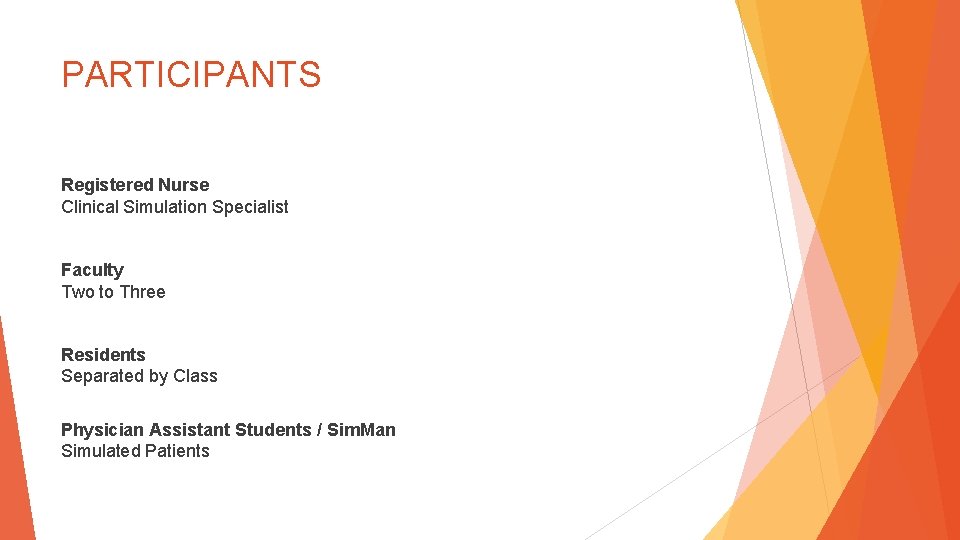
PARTICIPANTS Registered Nurse Clinical Simulation Specialist Faculty Two to Three Residents Separated by Class Physician Assistant Students / Sim. Man Simulated Patients
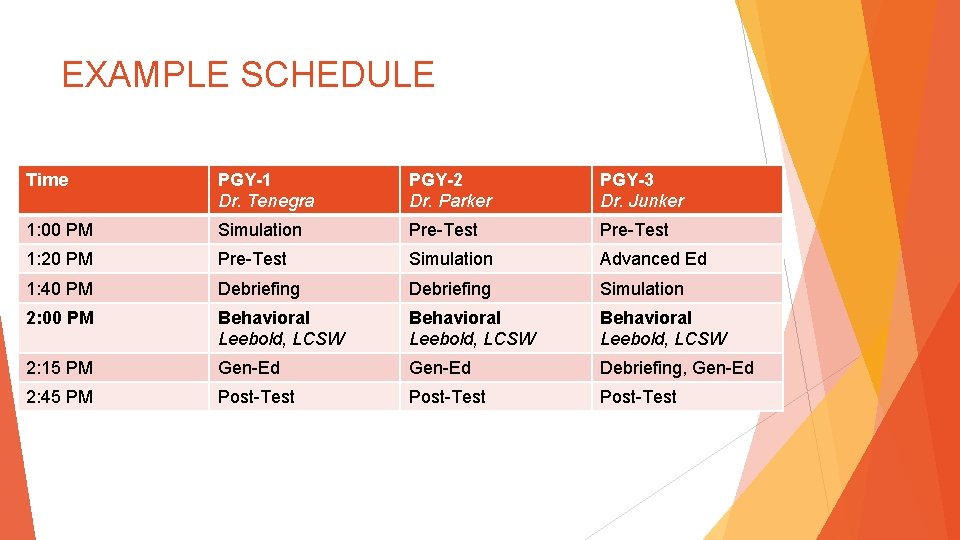
EXAMPLE SCHEDULE Time PGY-1 Dr. Tenegra PGY-2 Dr. Parker PGY-3 Dr. Junker 1: 00 PM Simulation Pre-Test 1: 20 PM Pre-Test Simulation Advanced Ed 1: 40 PM Debriefing Simulation 2: 00 PM Behavioral Leebold, LCSW 2: 15 PM Gen-Ed Debriefing, Gen-Ed 2: 45 PM Post-Test
Incorporation of Medical Humanities, Patient Safety, Professionalism into Simulation
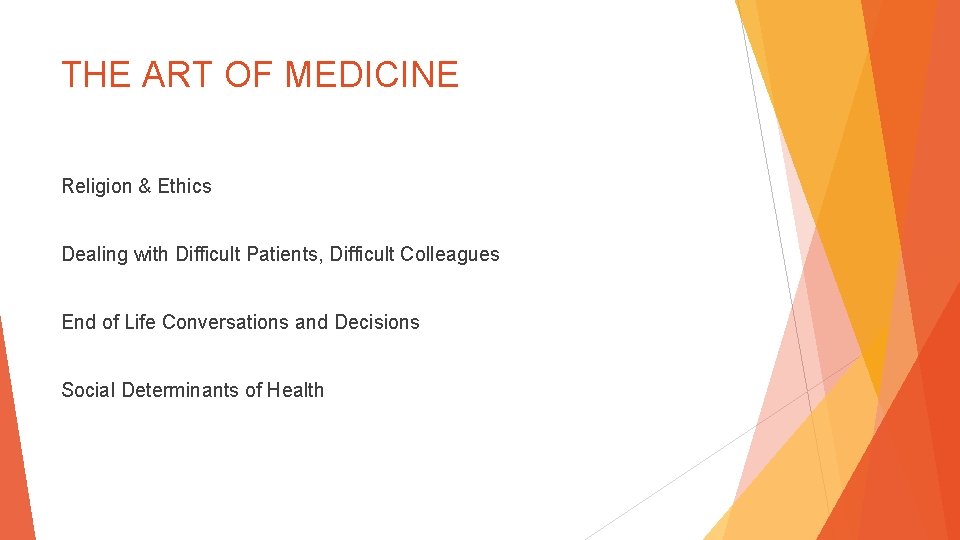
THE ART OF MEDICINE Religion & Ethics Dealing with Difficult Patients, Difficult Colleagues End of Life Conversations and Decisions Social Determinants of Health
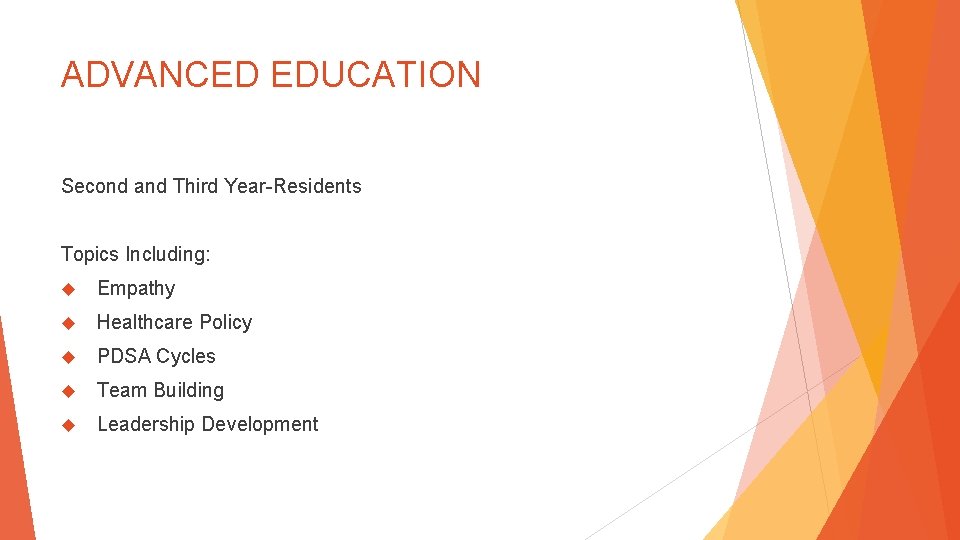
ADVANCED EDUCATION Second and Third Year-Residents Topics Including: Empathy Healthcare Policy PDSA Cycles Team Building Leadership Development
Assessment
TESTING EFFICACY PRE-TEST & POST-TEST Objective Assessment SELF-EFFICACY SCALE Subjective Assessment
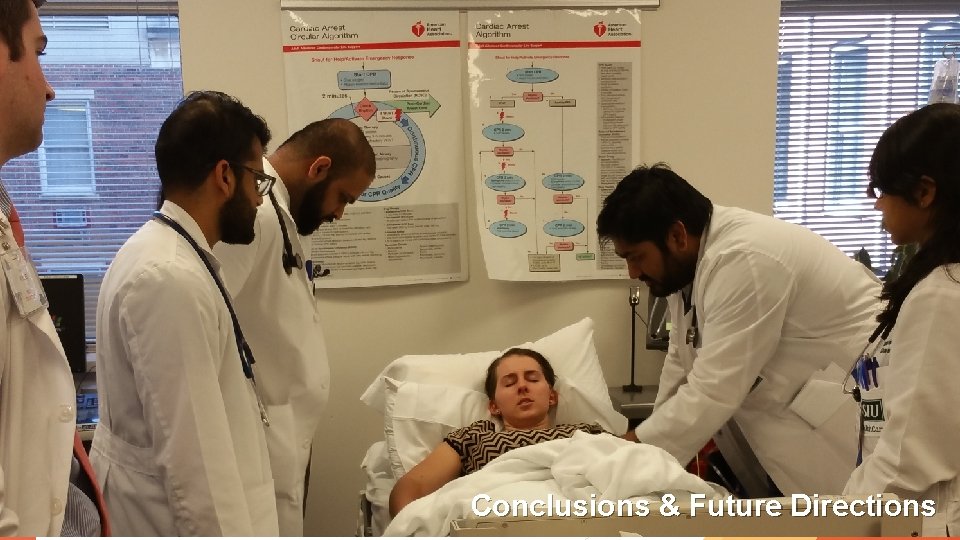
Conclusions & Future Directions
QUESTIONS?
THANK YOU Johnny Tenegra, MD MS jtenegra@siumed. edu Justin Parker, MD jparker@siumed. edu SIU Decatur Family and Community Medicine Residency 102 W. Kenwood Ave. , Suite 100 Decatur, IL 62526