
Practical Work for Learning Melting ice Nuffield Foundation
- Slides: 10
Practical Work for Learning Melting ice © Nuffield Foundation 2012
Learning outcomes • generate and evaluate scientific arguments • present a scientific argument using words and diagrams • describe how energy is transferred through a solid conductor from higher to lower temperature • apply ideas about energy transfer by thermal conduction in unfamiliar situations. © Nuffield Foundation 2012
Comparing the two blocks: plastic and metal © Nuffield Foundation 2012 Similarities Differences
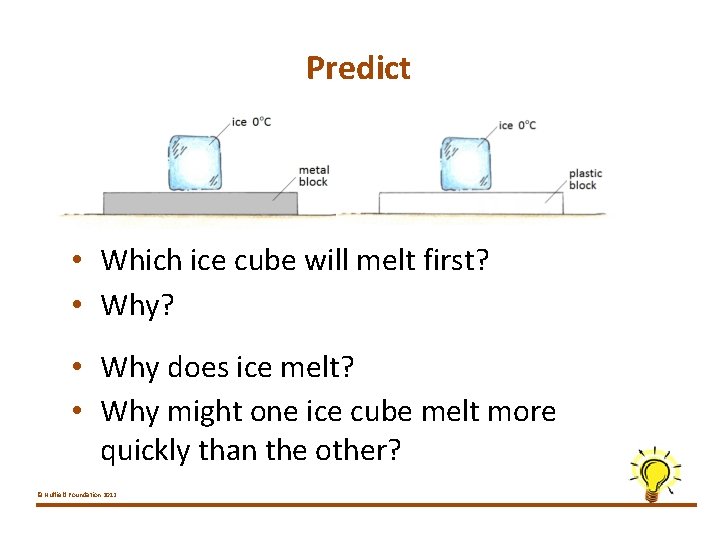
Predict • Which ice cube will melt first? • Why does ice melt? • Why might one ice cube melt more quickly than the other? © Nuffield Foundation 2012
Observe • Describe what you saw happen • Are the results what you predicted? © Nuffield Foundation 2012
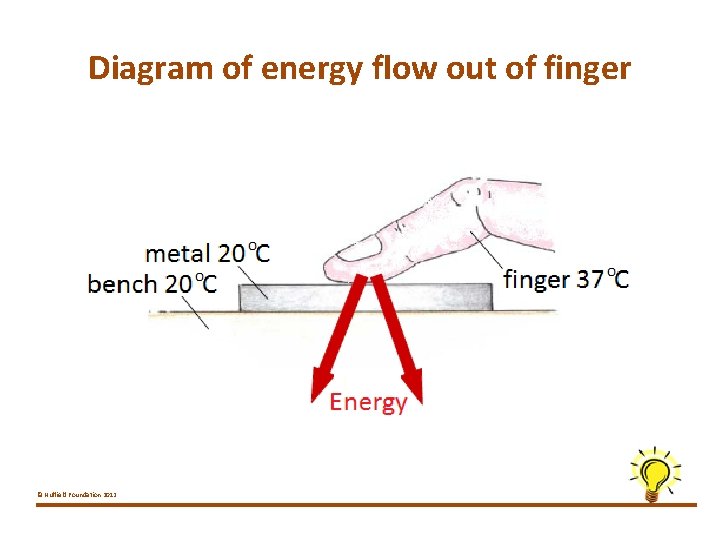
Explain Write a scientific explanation of what you saw happening. Use these terms in your explanation: • temperature • energy • conduction Extension: why does metal feel colder to touch than plastic? © Nuffield Foundation 2012
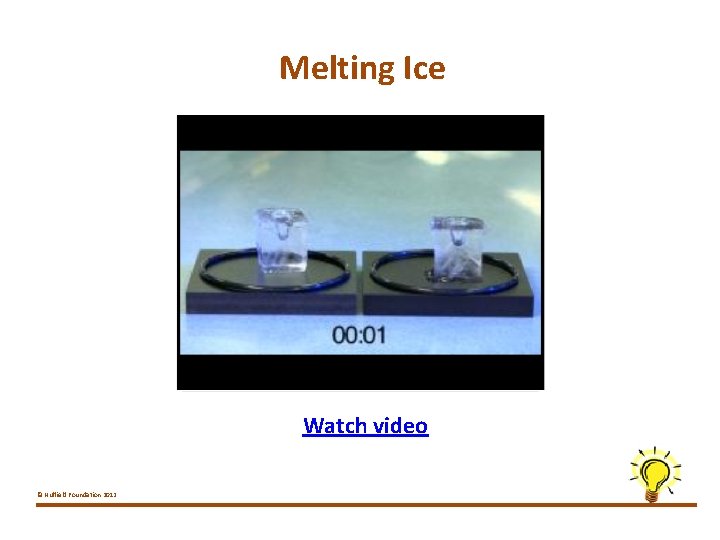
Melting Ice Watch video © Nuffield Foundation 2012
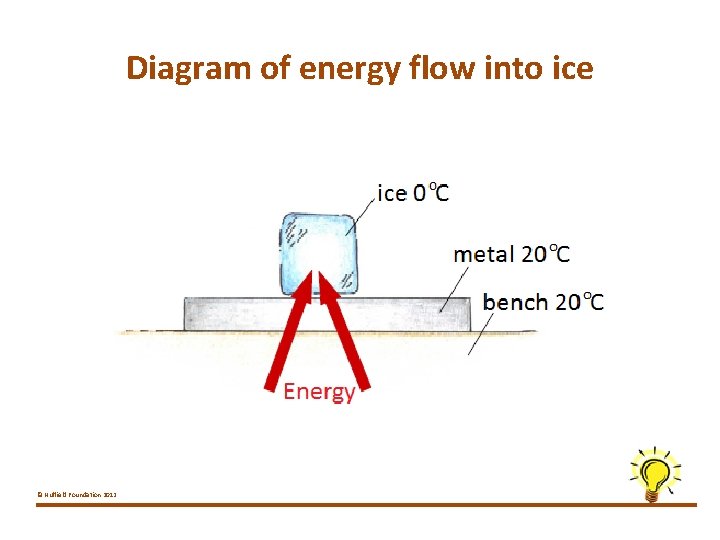
Diagram of energy flow into ice © Nuffield Foundation 2012
Diagram of energy flow out of finger © Nuffield Foundation 2012
Further Questions 1. Ice melts more quickly on a metal block than on a plastic one. Would the result be different if ice cubes were placed in a metal box and a plastic box, so that they were completely enclosed? 2. You are supplied with samples of several different materials. How could you adapt this experiment to put them in order, from best conductor to worst conductor? 3. Why do some materials feel warmer to the touch than others? © Nuffield Foundation 2012