
Practical Strategies to Tackle Memory Challenges Presented by
Practical Strategies to Tackle Memory Challenges Presented by: Komal Shaikh, MSc, MA
Cancer-related cognitive dysfunction • Symptoms • Fatigue • Sleep disturbance • Cognitive impairments: memory, learning, attention problems • One of the most common cognitive complaints: memory 2
Mechanisms of CRCD 1. 2. 3. 4. 5. 6. Direct neurotoxic effect Hormonal changes Secondary immunologic response Anemia Microvascular injury Genetic Predisposition 3
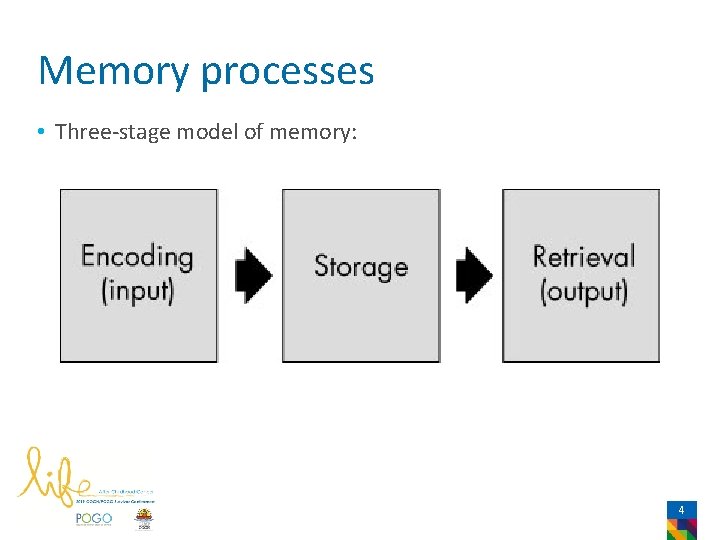
Memory processes • Three-stage model of memory: 4
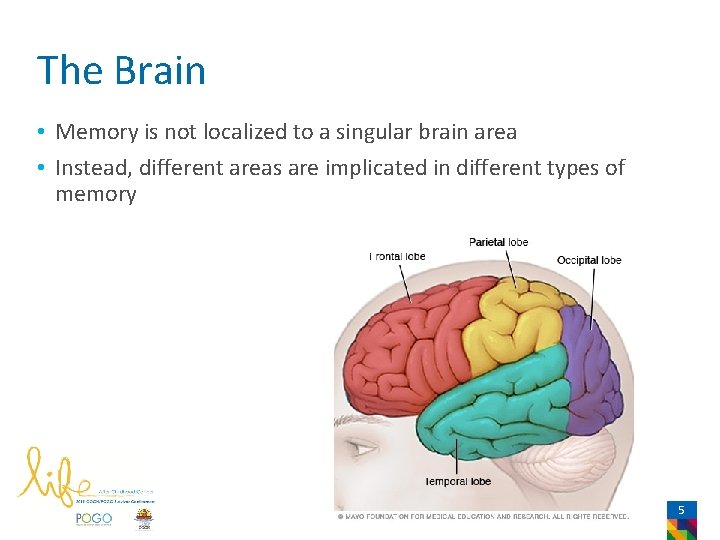
The Brain • Memory is not localized to a singular brain area • Instead, different areas are implicated in different types of memory 5

Memory Types • • • Semantic Memory Immediate memory Recent memory Remote memory Prospective memory Procedural memory 6
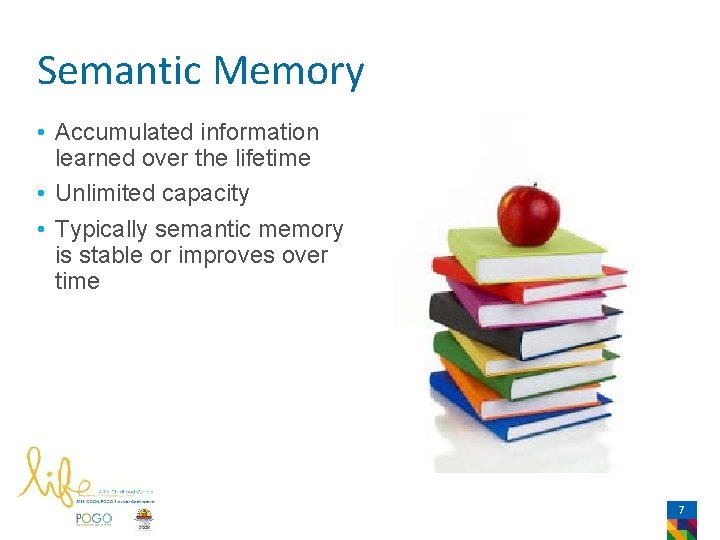
Semantic Memory • Accumulated information learned over the lifetime • Unlimited capacity • Typically semantic memory is stable or improves over time 7
Immediate or Working Memory • Remembering small information for several seconds • Fades very quickly • Definite capacity: “Magic number 7 +/- 2” 8
Recent Memory • Remembering information from hours, days ago • You probably remember more than you think you do • Recall vs. Recognition 9
Remote Memory • Remembering things that happened years ago • Sometimes referred to as autobiographical memory 10
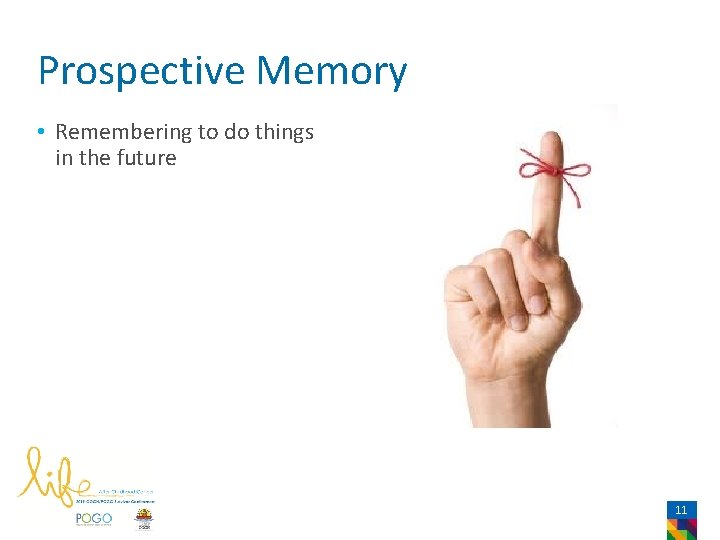
Prospective Memory • Remembering to do things in the future 11
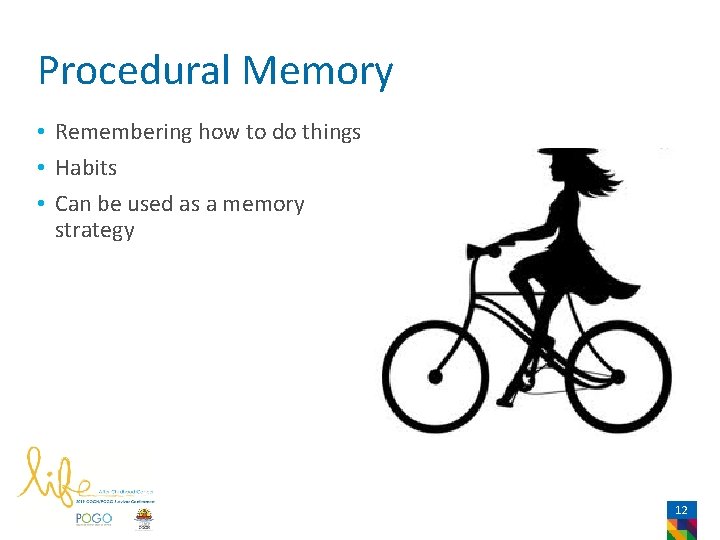
Procedural Memory • Remembering how to do things • Habits • Can be used as a memory strategy 12
Factors Affecting Memory • • Medical disorders and diseases Medications Diet Physical exercise Cognitive engagement Attitude Stress and relaxation 13
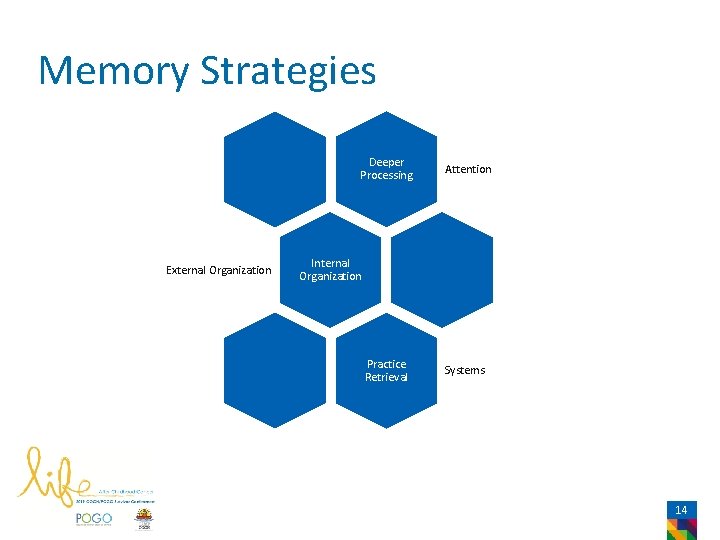
Memory Strategies Deeper Processing External Organization Attention Internal Organization Practice Retrieval Systems 14
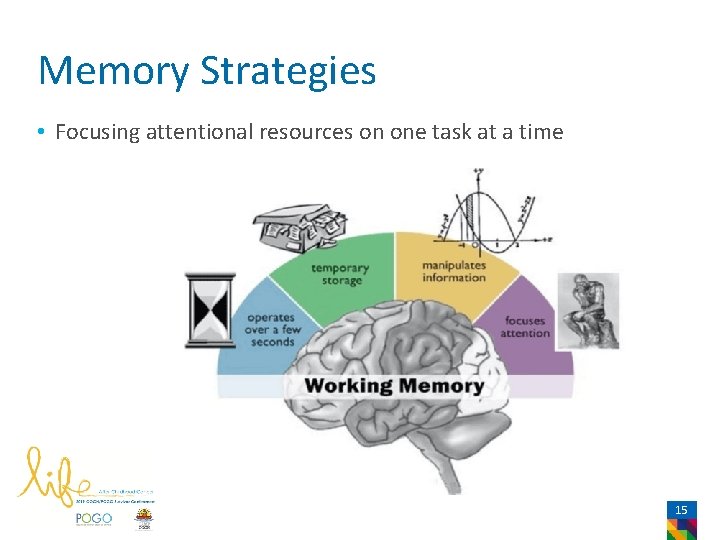
Memory Strategies • Focusing attentional resources on one task at a time 15
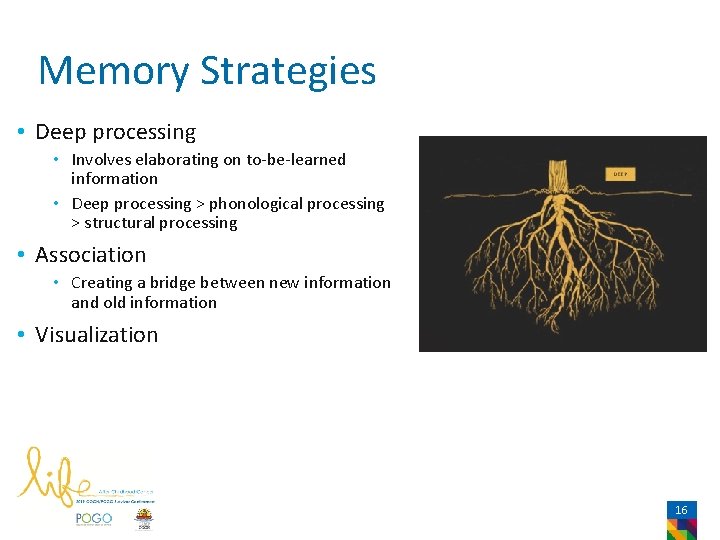
Memory Strategies • Deep processing • Involves elaborating on to-be-learned information • Deep processing > phonological processing > structural processing • Association • Creating a bridge between new information and old information • Visualization 16
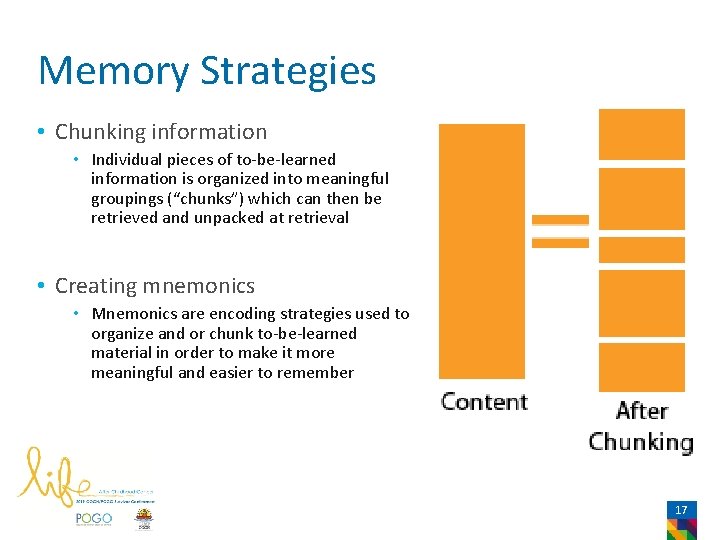
Memory Strategies • Chunking information • Individual pieces of to-be-learned information is organized into meaningful groupings (“chunks”) which can then be retrieved and unpacked at retrieval • Creating mnemonics • Mnemonics are encoding strategies used to organize and or chunk to-be-learned material in order to make it more meaningful and easier to remember 17
Memory Strategies • Creating habits to improve memory • Organizing your environment in a manner that aids your memory 18
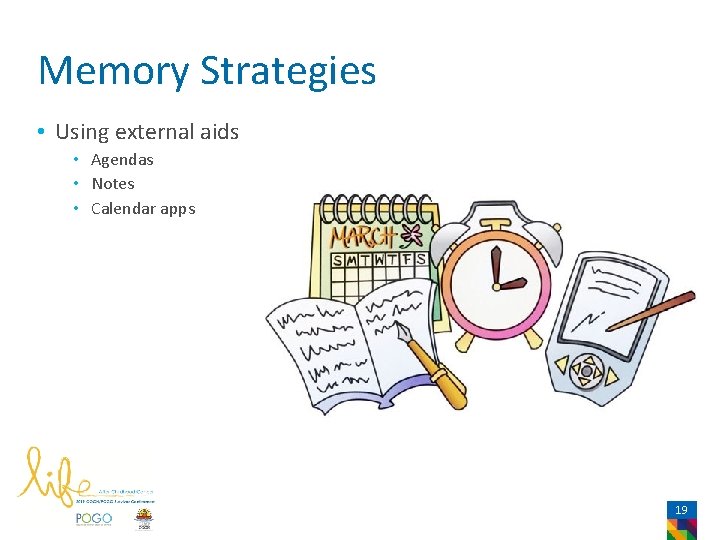
Memory Strategies • Using external aids • Agendas • Notes • Calendar apps 19
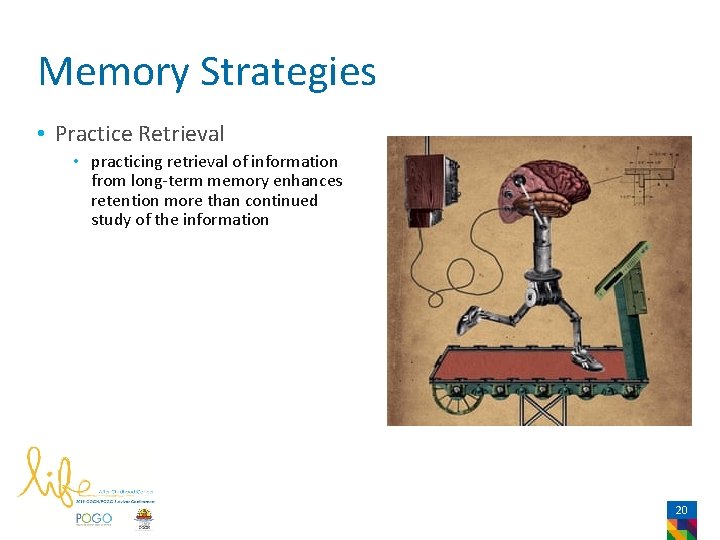
Memory Strategies • Practice Retrieval • practicing retrieval of information from long-term memory enhances retention more than continued study of the information 20
Memory Strategies • Systems level approach • Stress • • Deep breathing Progressive muscle relaxation Mindfulness Self-compassion & memory partners • Cognitive Engagement • Sleep & Exercise 21
Other Strategies • Self-reference effect • Refers to the memory advantage for material personally related to the learner • Generation effect • Refers to the memory advantage for learner created materials b • Encoding Specificity • Retrieval of a memory is more likely is cues present at retrieval were also present at encoding someone else 22
- Slides: 22