
Practical Software Engineering Fundamentals Software Development Practices and


- Slides: 53
Practical Software Engineering Fundamentals Software Development Practices and Methodologies Svetlin Nakov Telerik Corporation www. telerik. com
Agenda 1. Software engineering overview Requirements Design Construction Testing Project management 2. Development methodologies overview The waterfall development process Heavyweight methodologies Agile methodologies, SCRUM and XP
Software Engineering Requirements, Design, Construction, Testing
What is Software Engineering? Software engineering is the application of a systematic, disciplined, quantifiable approach to the development, operation, and maintenance of software Definition by IEEE
Software Engineering Software engineering is: An engineering discipline that provides knowledge, tools, and methods for: Defining software requirements Performing software design Software construction Software testing Software maintenance tasks Software project management
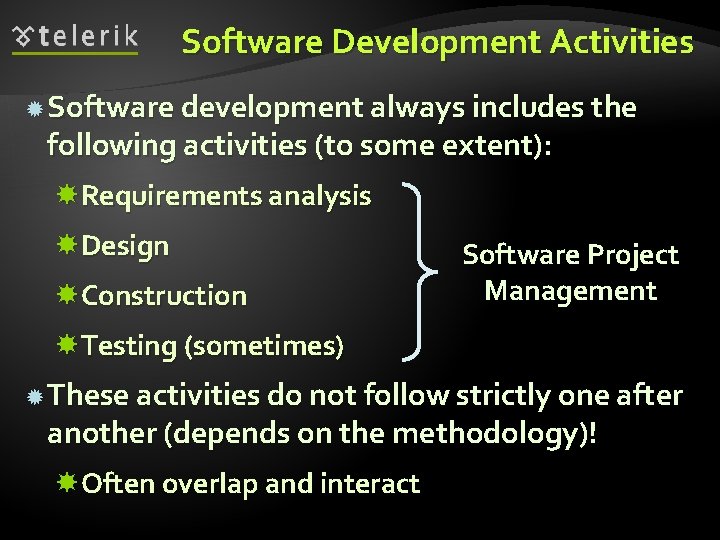
Software Development Activities Software development always includes the following activities (to some extent): Requirements analysis Design Construction Software Project Management Testing (sometimes) These activities do not follow strictly one after another (depends on the methodology)! Often overlap and interact
Software Requirements Functional, Non-functional Requirements, SRS
Software Requirements Software requirements define the functionality of the system Answer the question "what? ", not "how? " Define constraints on the system Two kinds of requirements Functional requirements Non-functional requirements
Requirements Analysis Requirements analysis starts from a vision about the system Customers don't know what they need! Requirements come roughly and are specified and extended iteratively Prototyping is often used, especially for the user interface The outcome is the Software Requirements Specification (SRS)
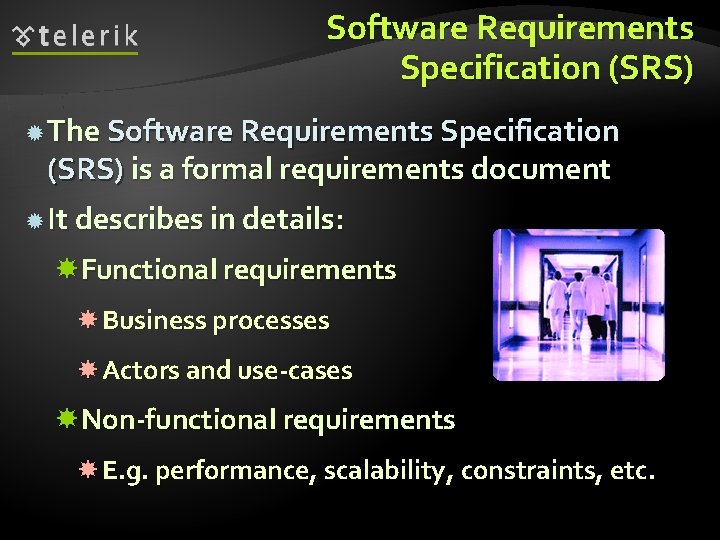
Software Requirements Specification (SRS) The Software Requirements Specification (SRS) is a formal requirements document It describes in details: Functional requirements Business processes Actors and use-cases Non-functional requirements E. g. performance, scalability, constraints, etc.
Software Requirements It is always hard to describe and document the requirements in comprehensive way Good requirements save time and money Requirements always change during the project! Good software requirements specification reduces the changes Prototypes significantly reduce changes Agile methodologies are flexible to changes
Software Requirements Specifications (SRS) and UI Prototypes Live Demo
Software Architecture and Software Design
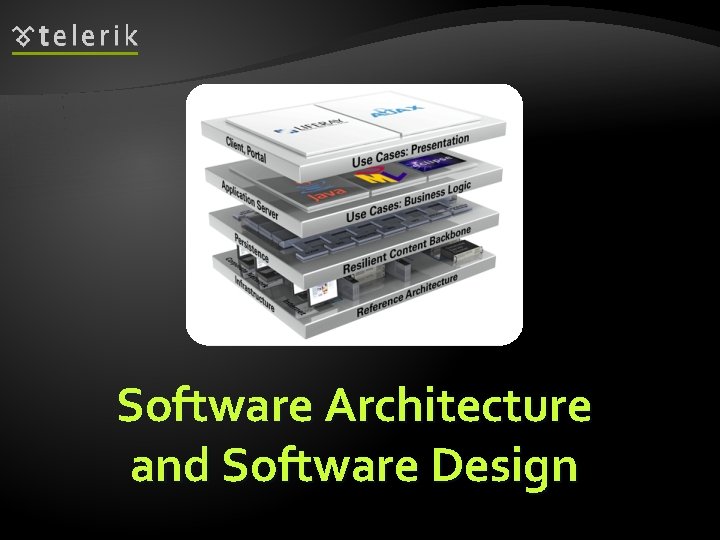
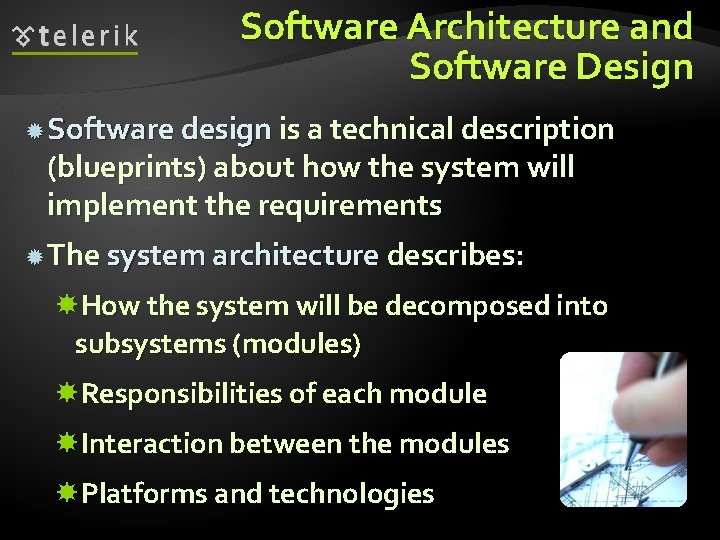
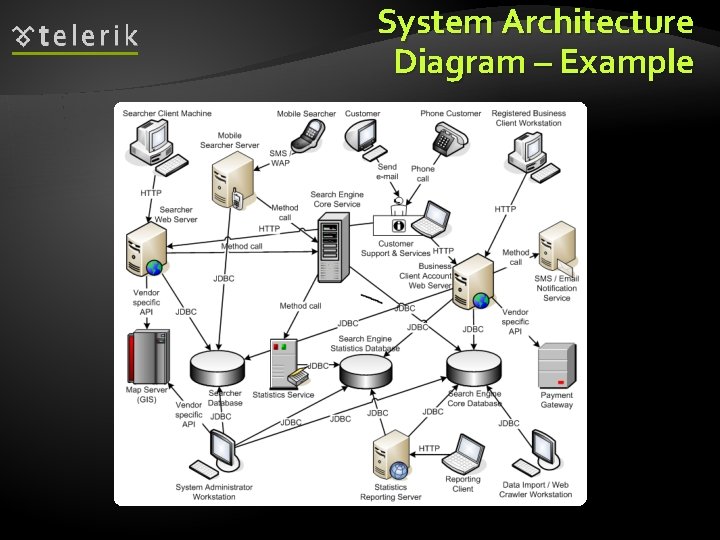
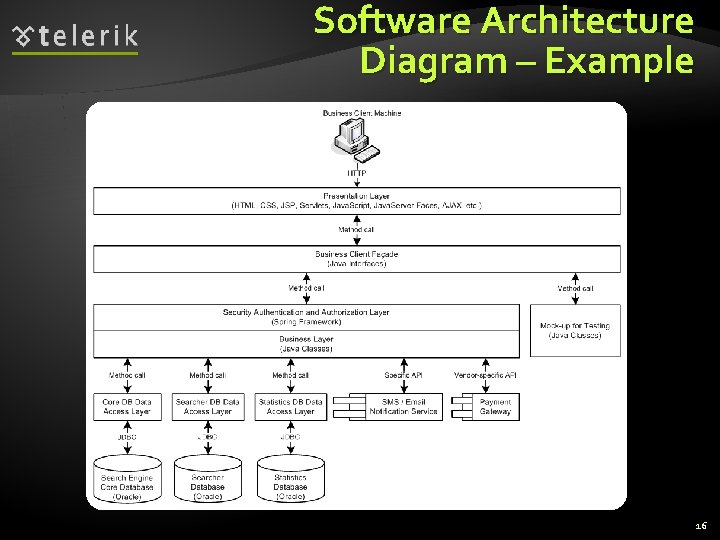
Software Architecture and Software Design Software design is a technical description (blueprints) about how the system will implement the requirements The system architecture describes: How the system will be decomposed into subsystems (modules) Responsibilities of each module Interaction between the modules Platforms and technologies
System Architecture Diagram – Example
Software Architecture Diagram – Example 16
Software Design Detailed Design Describes the internal module structure Interfaces, data design, process design Object-Oriented Design Describes the classes, their responsibilities, relationships, dependencies, and interactions Internal Class Design Methods, responsibilities, algorithms and interactions between them
Software Design Document (SDD) The Software Design Document (SDD) Formal description of the architecture and design of the system It contains: Architectural design Modules and their interaction (diagram) For each module Process design (diagrams) Data design (E/R diagram) Interfaces design (class diagram)
Software Design Document Live Demo
Software Construction Implementation, Unit Testing, Debugging, Integration
Software Construction During the software construction phase developers create the software Sometimes called implementation phase It includes: Internal method design Writing the source code Writing unit tests (sometimes) Testing and debugging Integration
Writing the Code Coding is the process of writing the programming code (the source code) The code strictly follows the design Developers perform internal method design as part of coding The source code is the output of the software construction process Written by developers Can include unit tests
Testing the Code Testing checks whether the developed software conforms to the requirements Aims to identify defects (bugs) Developers test the code after writing it At least run it to see the results Unit testing is even better Units tests can be repeated many times System testing is done by QA engineers Unit testing is done by developers
Debugging aims to find the source of already identified defect and to fix it Performed by developers Steps in debugging: Find the defect in the code Identify the source of the problem Identify the exact place in the code causing it Fix the defect Test to check if the fix is working correctly
Integration is putting all pieces together Compile, run and deploy the modules as single system Test to identify defects Integration strategies Big bang, top-down and -up Continuous integration bottom
Coding != Software Engineering Inexperienced developers consider coding the core of development In most projects coding is only 20% of the project activities! The important decisions are taken during the requirements analysis and design Documentation, testing, integration, maintenance, etc. are often disparaged Software engineering is not just coding! Programmer != software engineer
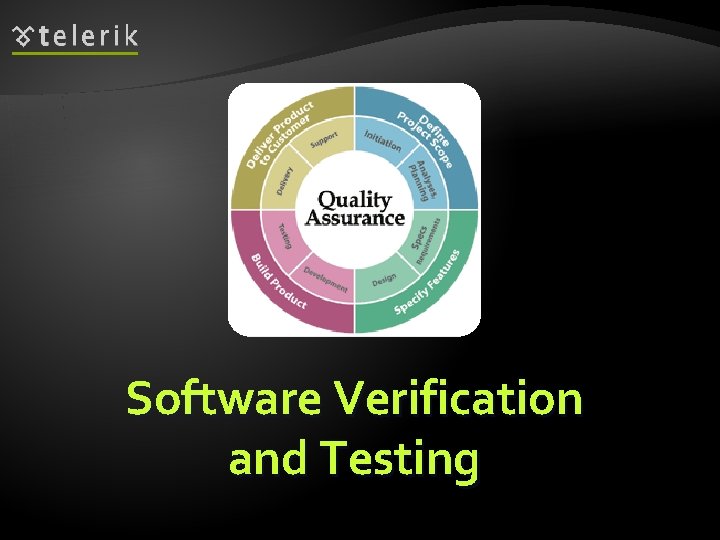
Software Verification and Testing
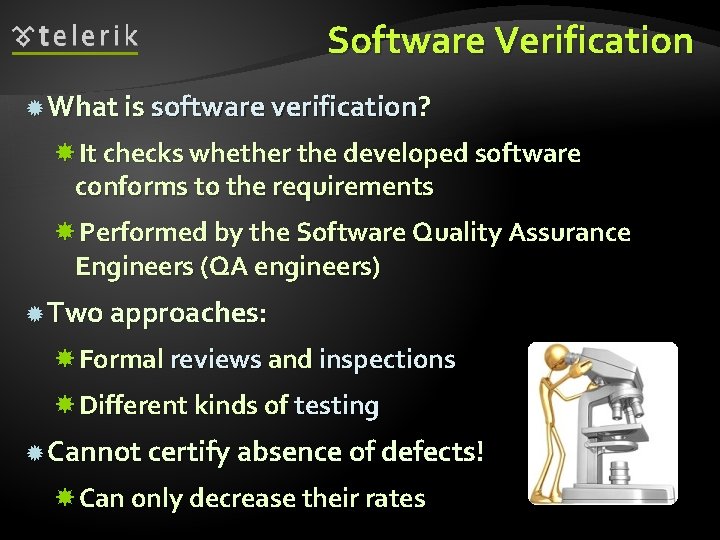
Software Verification What is software verification? It checks whether the developed software conforms to the requirements Performed by the Software Quality Assurance Engineers (QA engineers) Two approaches: Formal reviews and inspections Different kinds of testing Cannot certify absence of defects! Can only decrease their rates
Software Testing checks whether the developed software conforms to the requirements Testing aims to find defects (bugs) Black-box and white-box tests Unit tests, integration tests, system tests, acceptance tests Stress tests, load tests, regression tests Tester engineers can use automated test tools to record and execute tests
Software Testing Process Test planning Establish test strategy and test plan During requirements and design phases Test development Test procedures, test scenarios, test cases, test scripts Test execution Test reporting Retesting the defects
Test Plan and Test Cases The test plan is a formal document that describes how tests will be performed List of test activities to be performed to ensure meeting the requirements Features to be tested, testing approach, schedule, acceptance criteria Test scenarios and test cases Test scenarios – stories to be tested Test cases – tests of single function
Test Plans and Test Cases Live Demo
Software Project Management
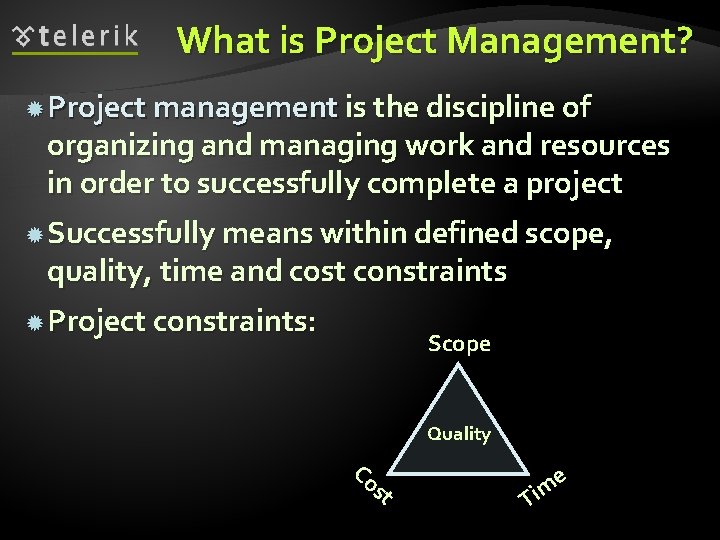
What is Project Management? Project management is the discipline of organizing and managing work and resources in order to successfully complete a project Successfully means within defined scope, quality, time and cost constraints Project constraints: Scope Quality Co st Tim e
What is Software Project Management? Software project management Management discipline about planning, monitoring and controlling software projects Project planning Identify the scope, estimate the work involved, and create a project schedule Project monitoring and control Keep the team up to date on the project's progress and handle problems
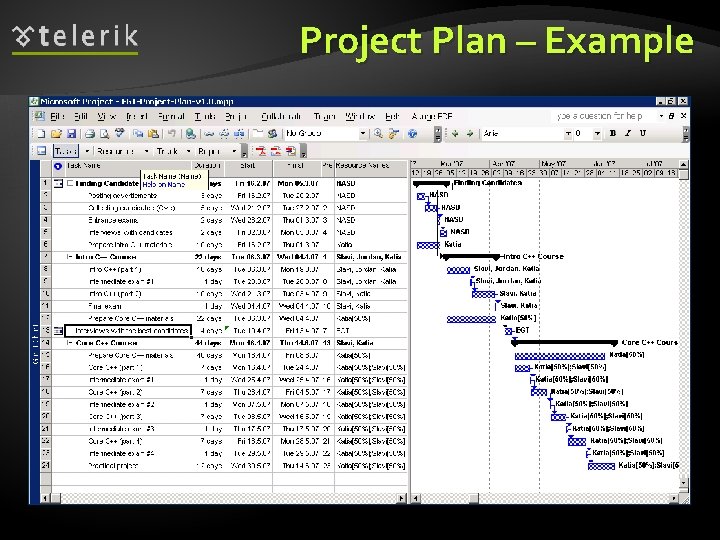
What is Project Plan? The project plan is a document that describes how the work on the project will be organized Contains tasks, resources, schedule, milestones, etc. Tasks have start, end, assigned resources (team members), % complete, dependencies, nested tasks, cost, etc. Project management tools simplify creating and monitoring project plans
Project Plan – Example
Development Methodologies Waterfall, Extreme Programming, Scrum
What is a Development Methodology? A development methodology is a set of practices and procedures for organizing the software development process A set of rules that developers have to follow A set of conventions the organization decides to follow A systematical, engineering approach for organizing and managing software projects
Development Methodologies The "Waterfall" Process Old-fashioned, not used today Rational Unified Process (RUP) Very formal, lots of documentation Microsoft Solutions Framework (MSF) Formal heavyweight approach Agile Development Processeses E. g. Extreme Programming (XP), SCRUM, etc.
The Waterfall Development Process
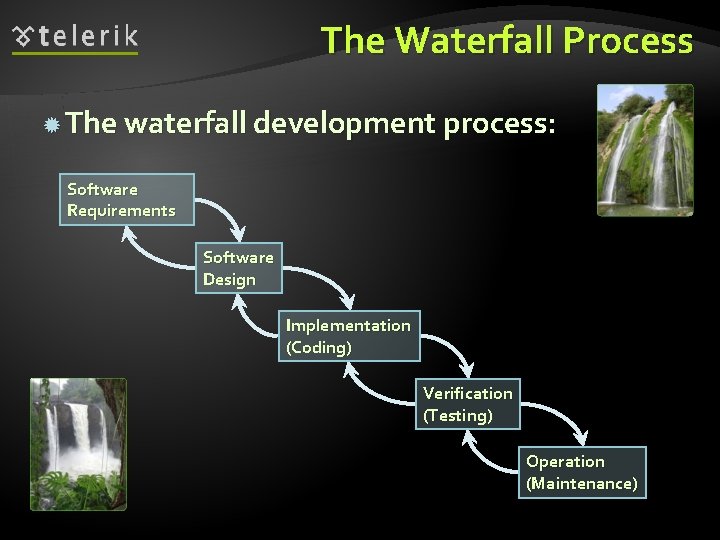
The Waterfall Process The waterfall development process: Software Requirements Software Design Implementation (Coding) Verification (Testing) Operation (Maintenance)
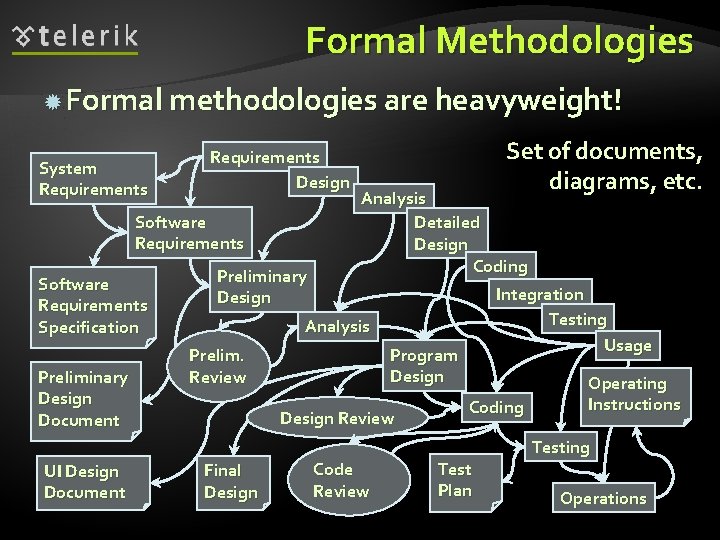
Formal Methodologies Formal methodologies are heavyweight! System Requirements Set of documents, diagrams, etc. Requirements Design Analysis Software Detailed Requirements Design Coding Preliminary Software Integration Design Requirements Testing Analysis Specification Usage Program Prelim. Design Preliminary Review Operating Design Instructions Coding Design Review Document UI Design Document Final Design Code Review Test Plan Testing Operations
Agile Development
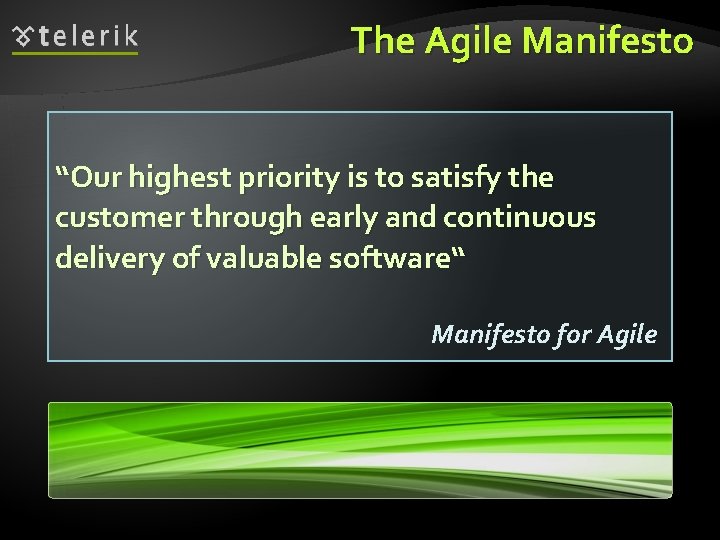
The Agile Manifesto “Our highest priority is to satisfy the customer through early and continuous delivery of valuable software“ Manifesto for Agile
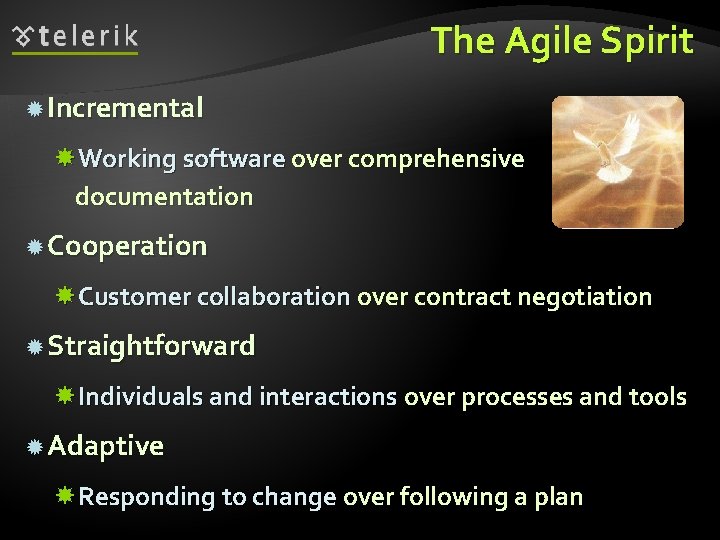
The Agile Spirit Incremental Working software over comprehensive documentation Cooperation Customer collaboration over contract negotiation Straightforward Individuals and interactions over processes and tools Adaptive Responding to change over following a plan
Agile Methodologies e. Xtreme Programming (XP) Scrum Feature-Driven Development (FDD) Crystal family of methodologies Adaptive Software Development (ASD) Dynamic System Development Model (DSDM) Agile Unified Process (AUP)
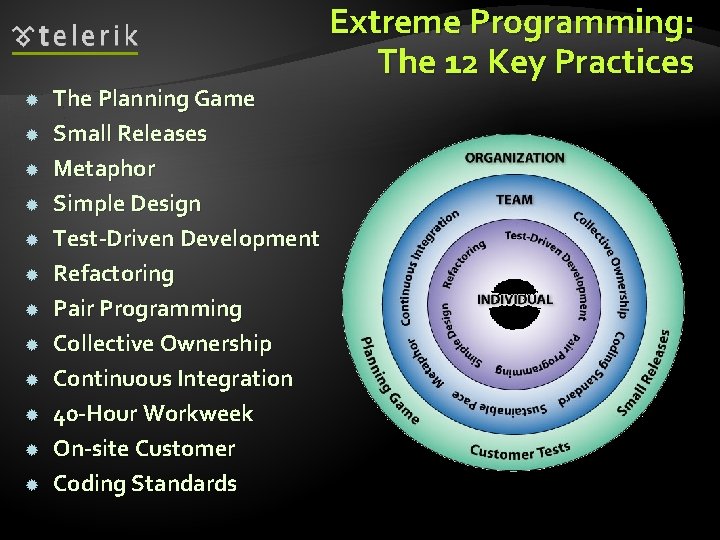
The Planning Game Small Releases Metaphor Simple Design Test-Driven Development Refactoring Pair Programming Collective Ownership Continuous Integration 40 -Hour Workweek On-site Customer Coding Standards Extreme Programming: The 12 Key Practices
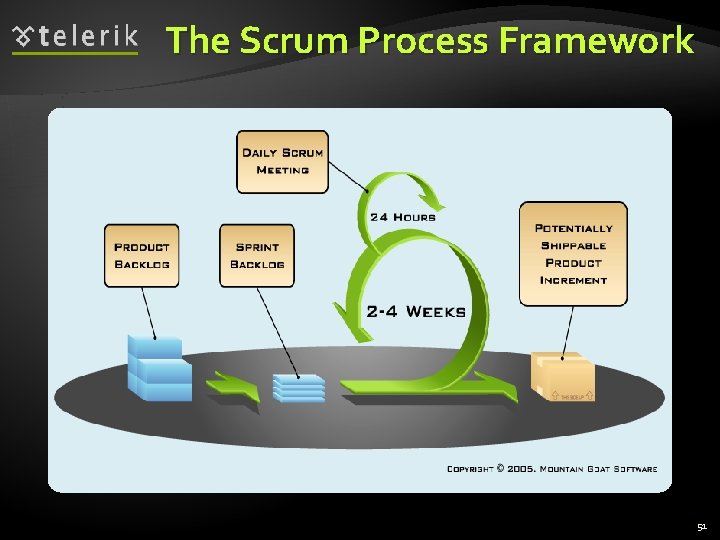
Scrum is an iterative incremental framework for managing complex projects Scrum roles: Scrum Master – maintains the Scrum processes Product Owner – represents the stakeholders Team – a group of about 7 people The team does the actual development: analysis, design, implementation, testing, etc. 49
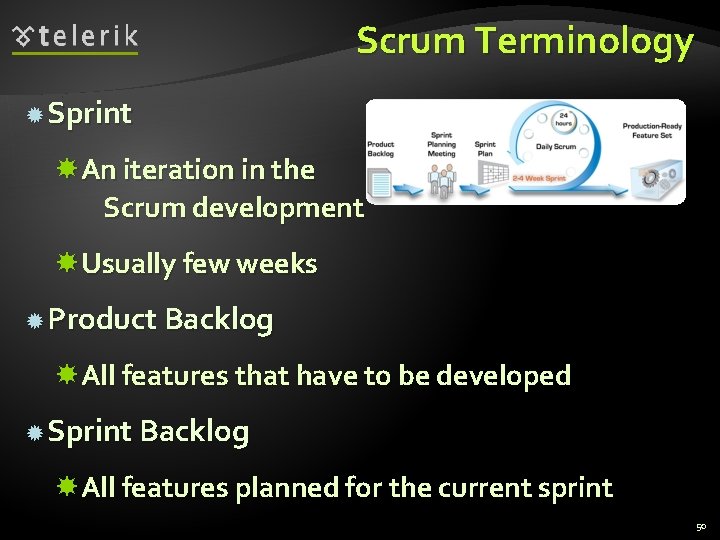
Scrum Terminology Sprint An iteration in the Scrum development Usually few weeks Product Backlog All features that have to be developed Sprint Backlog All features planned for the current sprint 50
The Scrum Process Framework 51
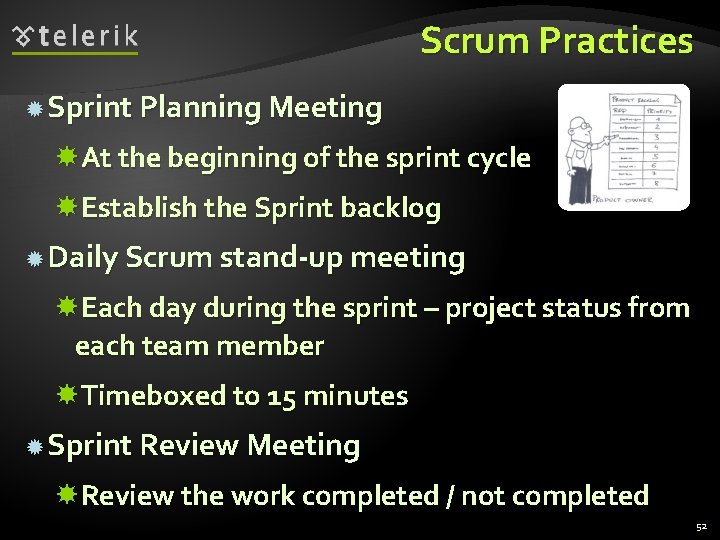
Scrum Practices Sprint Planning Meeting At the beginning of the sprint cycle Establish the Sprint backlog Daily Scrum stand-up meeting Each day during the sprint – project status from each team member Timeboxed to 15 minutes Sprint Review Meeting Review the work completed / not completed 52
? ? Software Engineering Fundamentals Questions? ? http: //academy. telerik. com