
Practical Problem Solving Intranet system at Toyota Motor
Practical Problem Solving Intranet system at Toyota Motor Manufacturing Kentucky By: Wayne Lowe, TMMK SAMC 9/25/2000
Topics covered ® Knowledge at Toyota ® TPS as a knowledge sharing system ® Practical Problem Solving within TPS ® Preserve Toyota’s unique knowledge processes ® Partnered with PHRED ® PPS Intranet system ® System Architecture
Knowledge at Toyota ”The basic unit of knowledge is a question answered The basic unit of learning is a question”
Toyota Production System as a knowledge sharing system ® TPS is a Thinking Production System ® Knowledge creation, conservation & sharing is embedded in the very systems used to build cars Standardization provides common frames of reference ® Standardized question / reasoning processes provide basic units of knowledge transfer ® Sensei/experts provide coaching, expertise and guide reflection ®
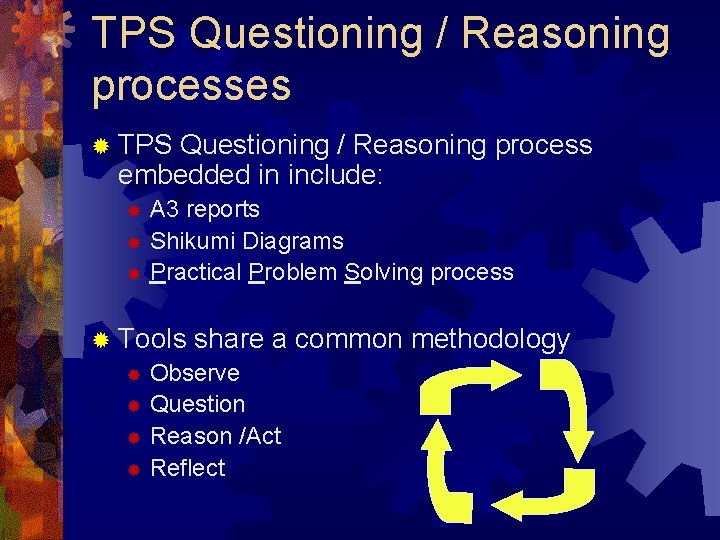
TPS Questioning / Reasoning processes ® TPS Questioning / Reasoning process embedded in include: A 3 reports ® Shikumi Diagrams ® Practical Problem Solving process ® ® Tools share a ® Observe ® Question ® Reason /Act ® Reflect common methodology
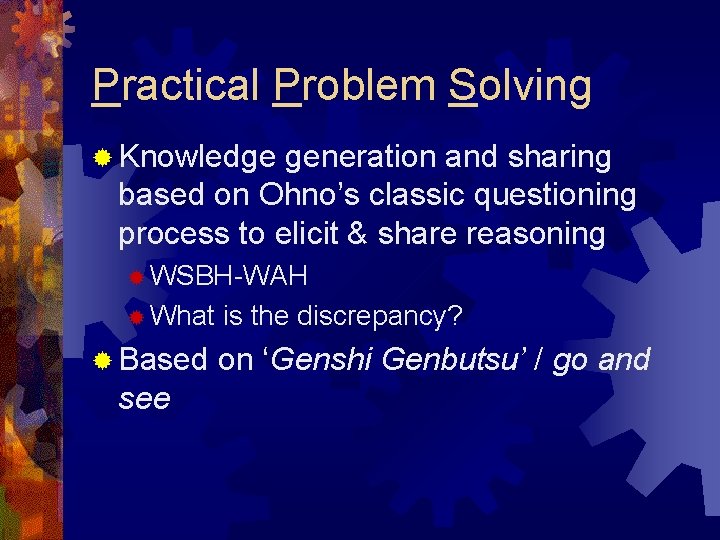
Practical Problem Solving ® Knowledge generation and sharing based on Ohno’s classic questioning process to elicit & share reasoning ® WSBH-WAH ® What ® Based see is the discrepancy? on ‘Genshi Genbutsu’ / go and
Challenges faced ® Massive growth ® Changing employment patterns ® Dynamic information sharing environment ® Need to preserve Toyota’s unique PPS system
Partnered with PHRED ® We needed someone who: ® Had experience with designing questionbased reasoning systems ® Understood qualitative as well as quantitative knowledge issues ® Could reflect the learning systems inherent in TPS / PPS

PPS Intranet system ® Guides users to address problems through a rigorous reasoning process that progresses over stages to a permanent countermeasure.
The PPS Intranet System is composed of: ® Process ® Reasoning / Tacit knowledge elicitation ® Transference of knowledge ® On line coaching / Just in time training ® Access to expert problem solvers, coaches and Sensei ® Knowledge management / Reporting
PPS standardized process ® Problems are individually defined as miniature projects ® The problem project is broken down from an initial problem identification and definition to root cause and permanent countermeasure ® Temporary fixes are documented and must be either removed or integrated into the permanent countermeasure before the problem can be closed
Reasoning/Tacit knowledge elicitation ® Users are asked to reflect on and respond to questions in a specific sequence that elicits their reasoning. ® The user’s reasoning is generally an expression of individual tacit knowledge, reflecting their perspective of the situation based on the situation’s unique context and the individual’s cumulative experience gained on-the-job but not written down for others to access
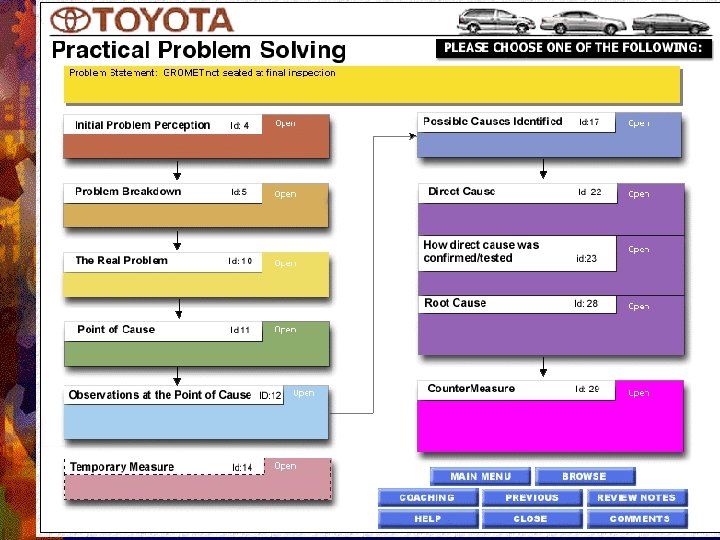
Following are 4 sample screens ® The entire process is 33 steps long ® Usually several sessions are required to solve a problem ® The tool constantly guides the user to go and observe the situation ® It is extremely rare to have all the information necessary to resolve a problem in a single session
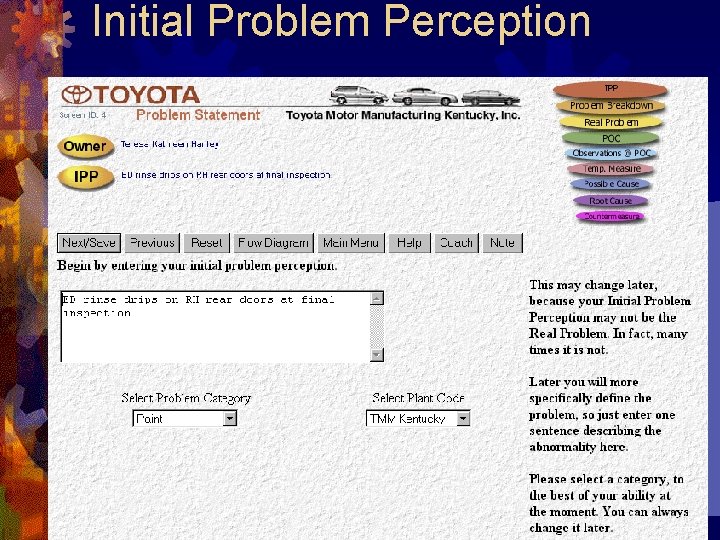
Initial Problem Perception
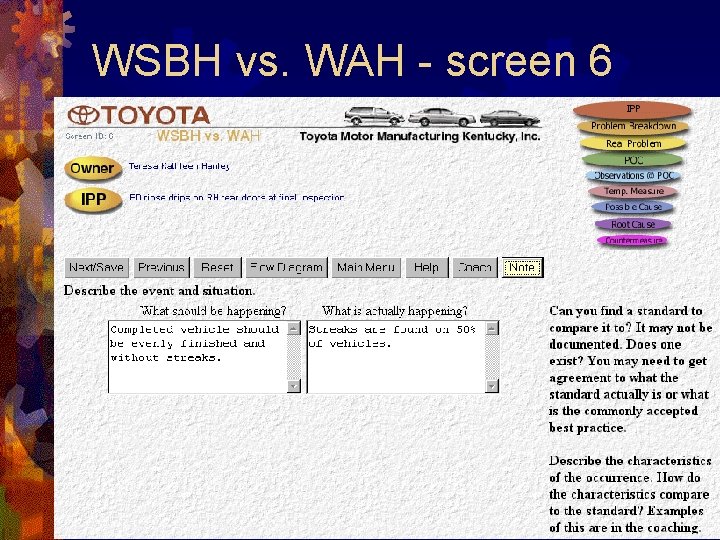
WSBH vs. WAH - screen 6
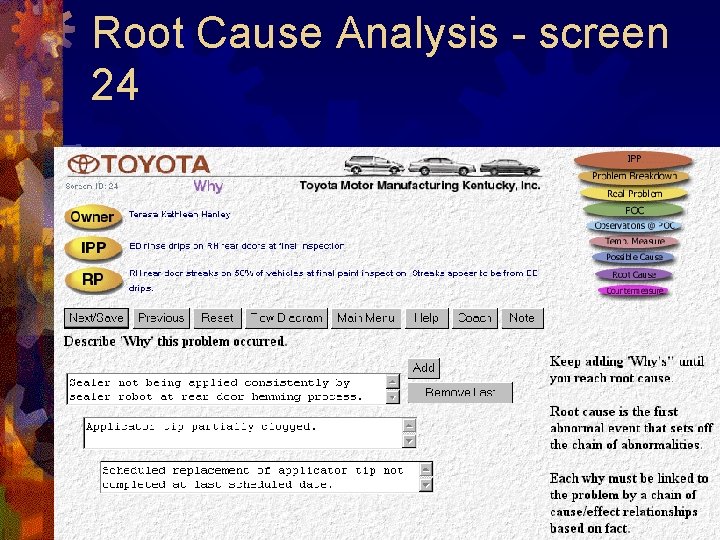
Root Cause Analysis - screen 24
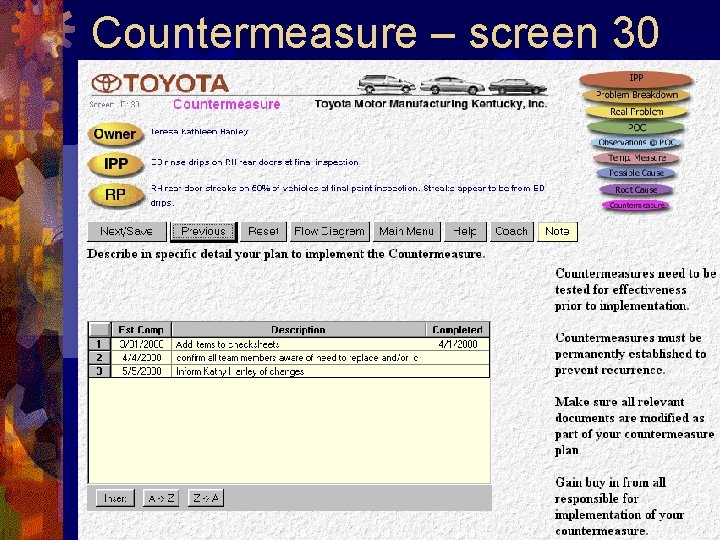
Countermeasure – screen 30
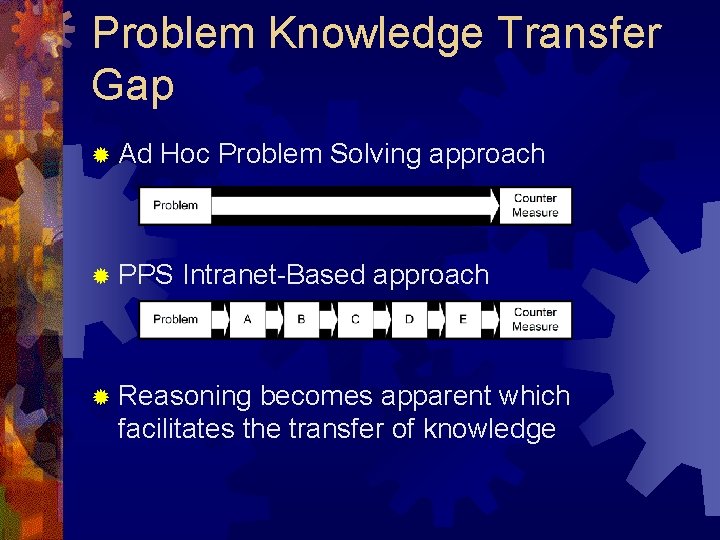
Problem Knowledge Transfer Gap ® Ad Hoc Problem Solving approach ® PPS Intranet-Based approach ® Reasoning becomes apparent which facilitates the transfer of knowledge
Transference of knowledge ® Questions break the problem and solution down into smaller, well reasoned components which: Makes the logic transparent ® Establishes a shared mental model ® Builds a common problem / solution framework ® ® There is a deep sharing of reasoning as third parties no longer have to make the “cognitive leap” from problem to solution ® As people get to understand benefit from each others experience , active collaborative problem solving communities arise
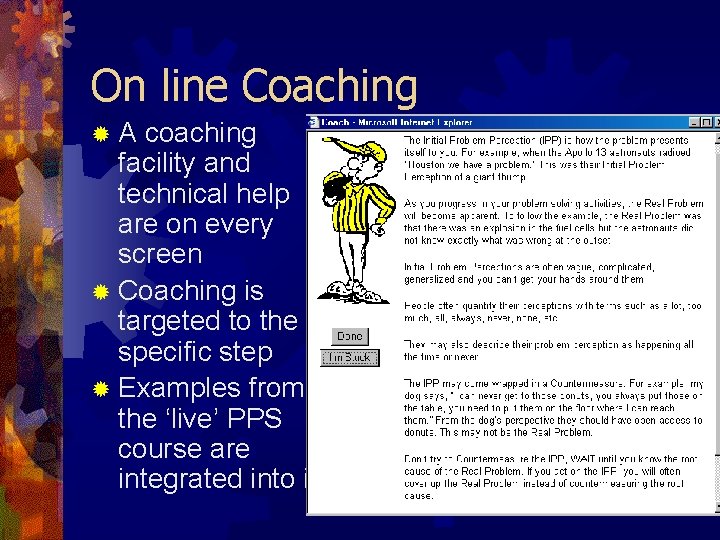
On line Coaching ®A coaching facility and technical help are on every screen ® Coaching is targeted to the specific step ® Examples from the ‘live’ PPS course are integrated into it
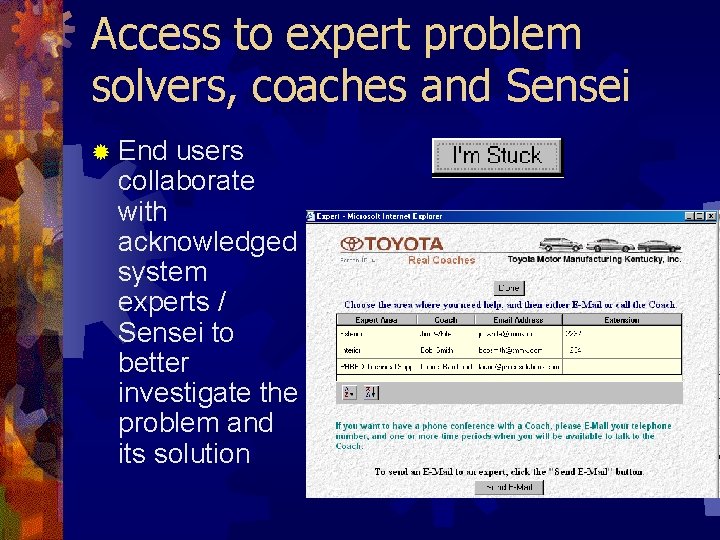
Access to expert problem solvers, coaches and Sensei ® End users collaborate with acknowledged system experts / Sensei to better investigate the problem and its solution
Knowledge management / Reporting ® The problem database contains information that enables all personnel to: Identify problems that have already been solved or are being worked on. Users can find closely related problems, enabling collaboration outside of their peer group ® Identify systemic or “repeat” problems quickly, allowing personnel to focus their attention better on those problems that arise over and over again ® Determine the status of current problems that the organization is trying to solve ® Access the wealth of tacit knowledge that went into solving closed problems ®
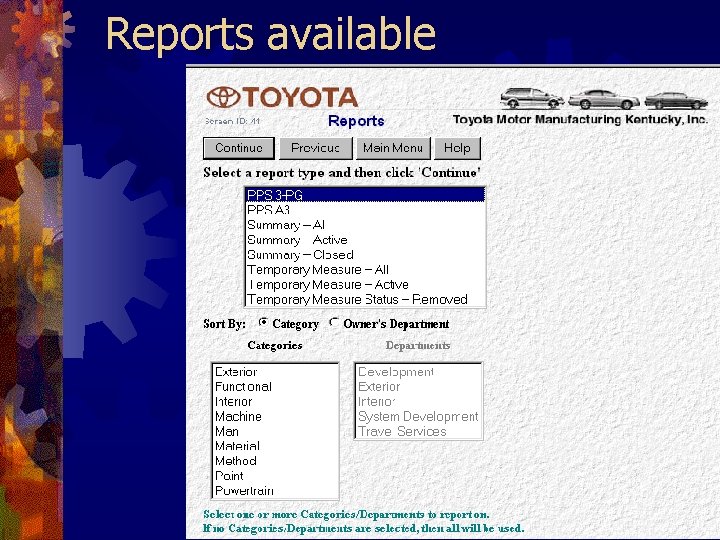
Reports available
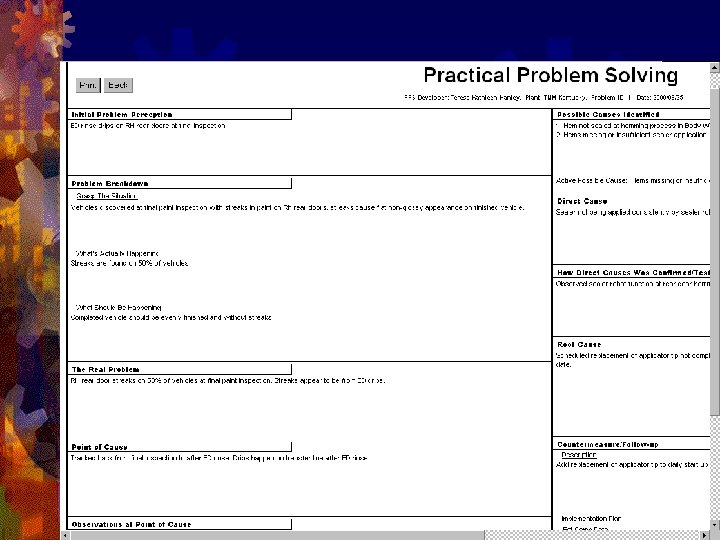
Mirrors existing A 3 format
The End ® Questions? "Watch for big problems. They disguise big opportunities. "
- Slides: 26