
Practical No 19 Vibrio cholerae Is a Gram
Practical No. 19 Vibrio cholerae
Is a Gram negative comma-shaped bacterium with a polar flagellum that causes cholera in humans. There are three main types of V. cholerae according to their antigenic structure; a-classical type b- El tor c- ogawa d- inaba V. cholerae enters the human body through ingestion of contaminated food or water. The bacterium enters the intestine, imbeds itself in the villi, replicates and releases cholera toxin.

Vibrio Short Rigid Gram -ve Single flagellum Comma , ( ) shape - called ‘Comma’ vibrio
Laboratory diagnosis: Specimen: Stool, rarely vomit. Transport 1. sea media include; salt medium , which is highly alkaline due to high Nacl 2. Alkaline peptone water. enrichment broth,
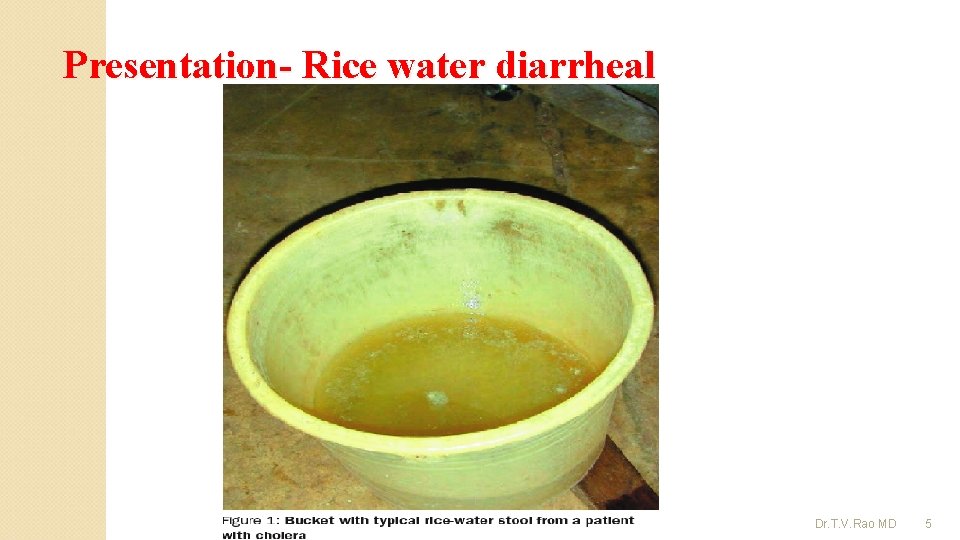
Presentation- Rice water diarrheal Dr. T. V. Rao MD 5
Culture: 1 - TCBS; (Thiosulfate citrate bile salt sucrose. ) is a selective agar medium Indicator – bromothymol blue. . Control is green ( prepared as plates ) After inoculation with suspected bacteria and a 18 to 24 hours’ incubation at 35° to 37°C on TCBS agar , Colonies suspicious for V. cholerae will appear as yellow, shiny colonies, 2 to 4 mm in diameter. The yellow color is caused by the fermentation of sucrose in the medium. Sucrose-nonfermenting organisms, such as V. parahaemolyticus, produce green to blue-green colonies.
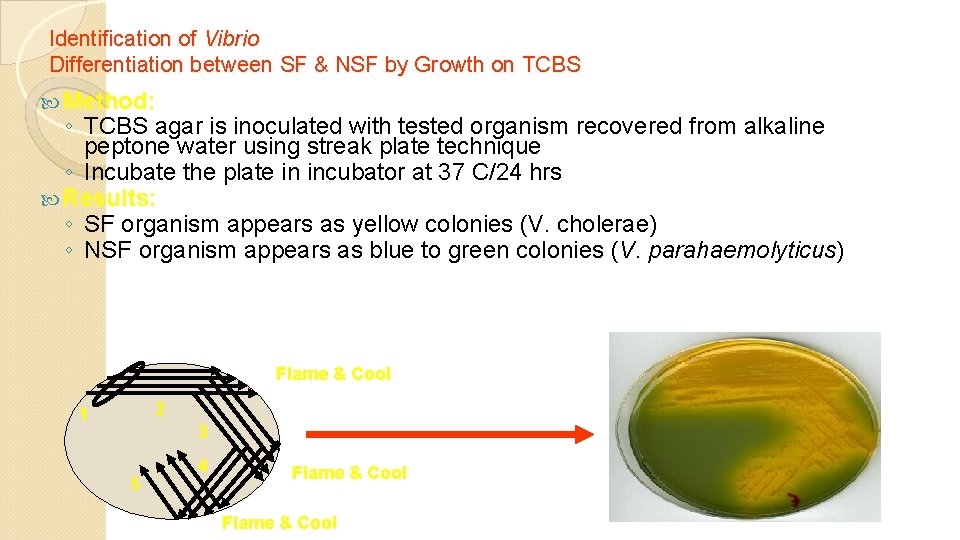
Identification of Vibrio Differentiation between SF & NSF by Growth on TCBS Method: ◦ TCBS agar is inoculated with tested organism recovered from alkaline peptone water using streak plate technique ◦ Incubate the plate in incubator at 37 C/24 hrs Results: ◦ SF organism appears as yellow colonies (V. cholerae) ◦ NSF organism appears as blue to green colonies (V. parahaemolyticus) Flame & Cool 2 1 3 5 4 Flame & Cool
2 - S. S agar 3 - Alkaline peptone water 4 - Sea salt medium. Biochemical Vibrio tests: cholerae appears as a non lactose fermenter - Motile - Urease -ve - Oxidase +ve. development of a dark purple color within 10 seconds. - TSI ; A/A Gas –ve, H 2 S –ve
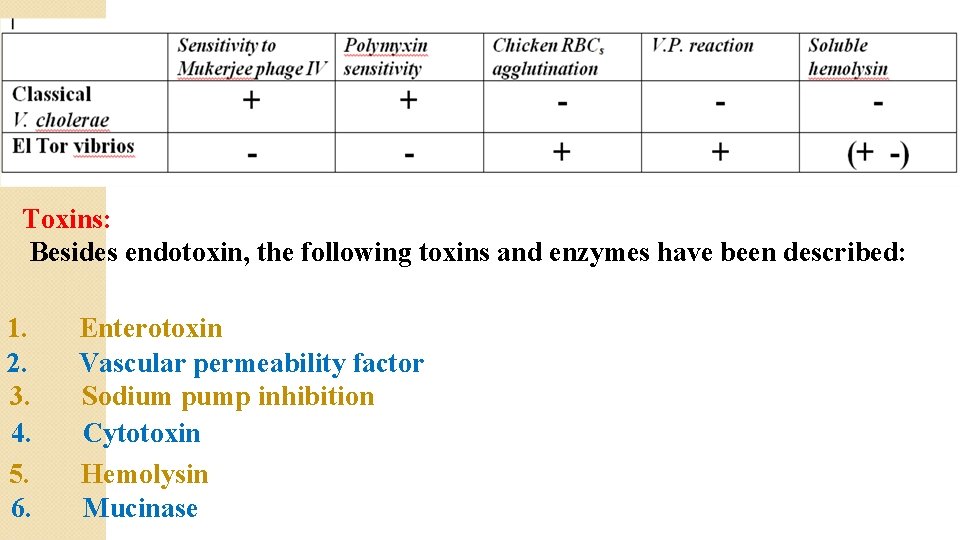
Toxins: Besides endotoxin, the following toxins and enzymes have been described: 1. 2. 3. 4. 5. 6. Enterotoxin Vascular permeability factor Sodium pump inhibition Cytotoxin Hemolysin Mucinase

Thank You
- Slides: 10