
Practical Microbiology Antimicrobial susceptibility Test 2019 2020 Dr

Practical Microbiology Antimicrobial susceptibility Test 2019 -2020 Dr. Mohammad Odibate Department of Microbiology and immunology Faculty of Medicine, Mutah University

Medical Application + New antibiotics are continuously being developed different bacteria acquire new resistant genes to the available antibiotics determine the antibiotic susceptibility or resistance is required to determine most suitable antibiotic therapy
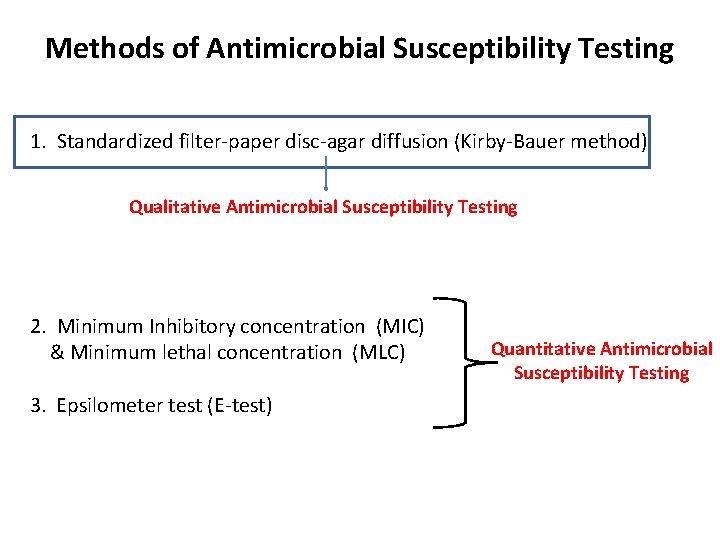
Methods of Antimicrobial Susceptibility Testing 1. Standardized filter-paper disc-agar diffusion (Kirby-Bauer method) Qualitative Antimicrobial Susceptibility Testing 2. Minimum Inhibitory concentration (MIC) & Minimum lethal concentration (MLC) 3. Epsilometer test (E-test) Quantitative Antimicrobial Susceptibility Testing
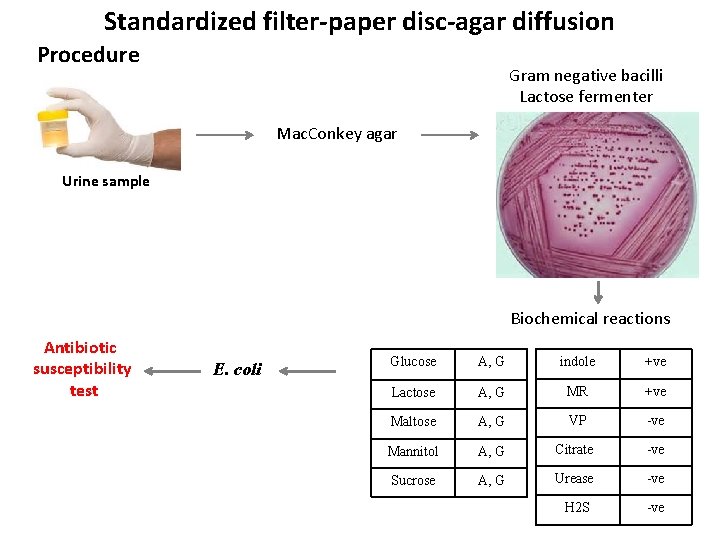
Standardized filter-paper disc-agar diffusion Procedure Gram negative bacilli Lactose fermenter Mac. Conkey agar Urine sample Biochemical reactions Antibiotic susceptibility test E. coli Glucose A, G indole +ve Lactose A, G MR +ve Maltose A, G VP -ve Mannitol A, G Citrate -ve Sucrose A, G Urease -ve H 2 S -ve
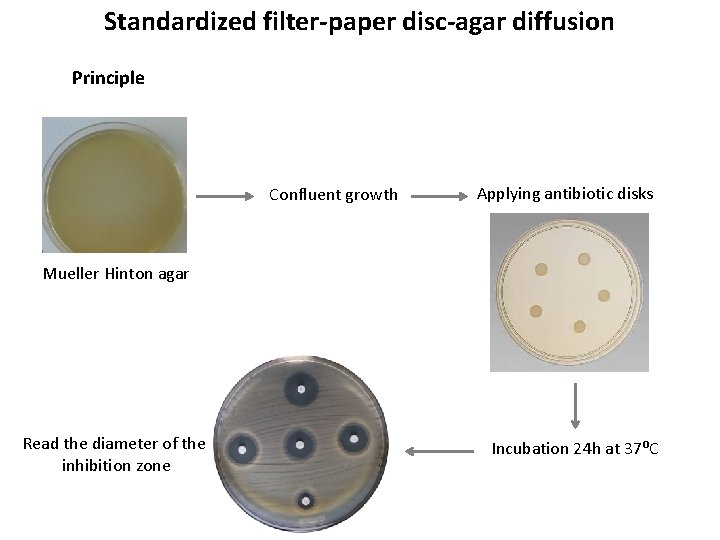
Standardized filter-paper disc-agar diffusion Principle Confluent growth Applying antibiotic disks Mueller Hinton agar Read the diameter of the inhibition zone Incubation 24 h at 37⁰C

Standardized filter-paper disc-agar diffusion Procedure Transfer at least three to five well-isolated colonies of the same morphological type into nutrient broth tube E. coli 2 1 Incubated between 2 to 6 hrs 4 Compare the turbidity of the nutrient broth to the 0. 5 Mc. Farland standards by either a photometric device or visually. 3
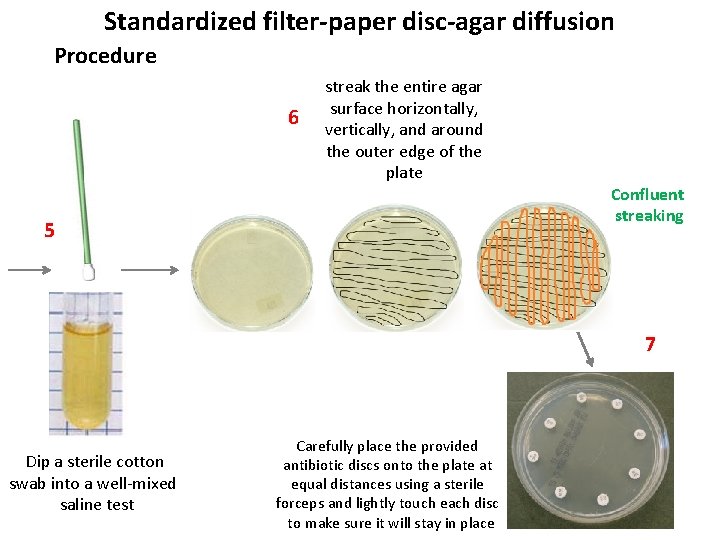
Standardized filter-paper disc-agar diffusion Procedure 6 streak the entire agar surface horizontally, vertically, and around the outer edge of the plate 5 Confluent streaking 7 Dip a sterile cotton swab into a well-mixed saline test Carefully place the provided antibiotic discs onto the plate at equal distances using a sterile forceps and lightly touch each disc to make sure it will stay in place
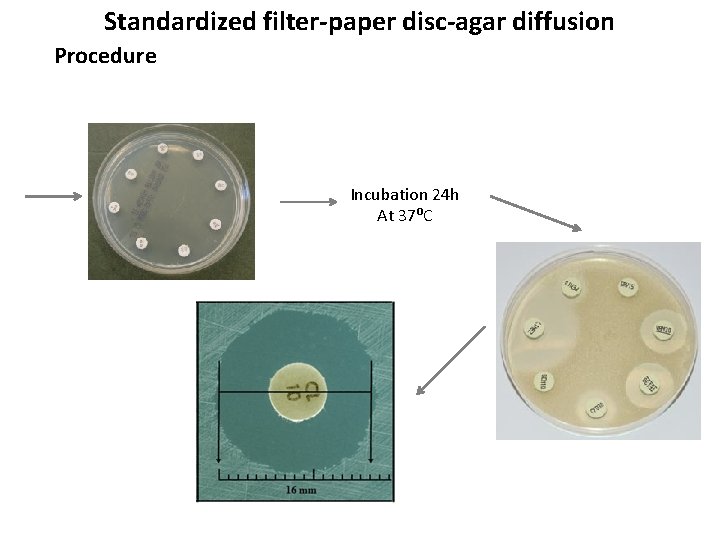
Standardized filter-paper disc-agar diffusion Procedure Incubation 24 h At 37⁰C
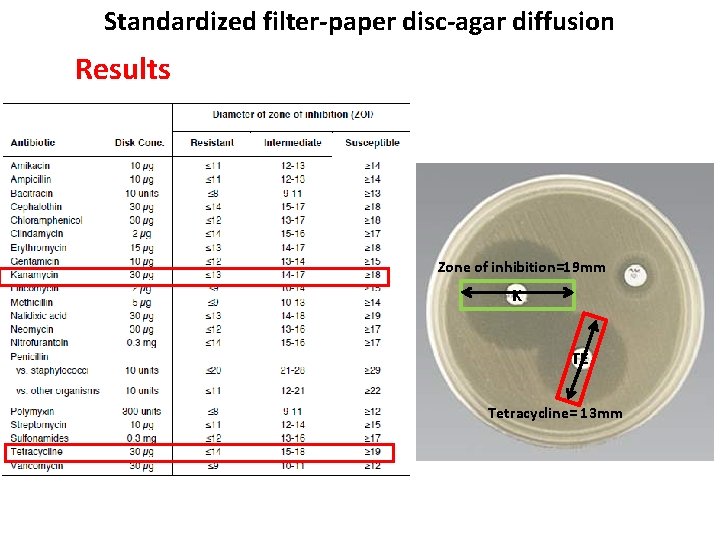
Standardized filter-paper disc-agar diffusion Results Zone of inhibition=19 mm K TE Tetracycline= 13 mm
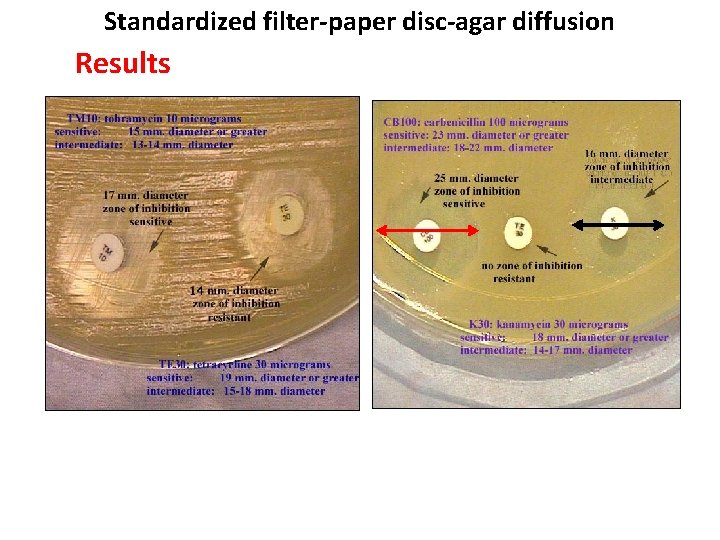
Standardized filter-paper disc-agar diffusion Results
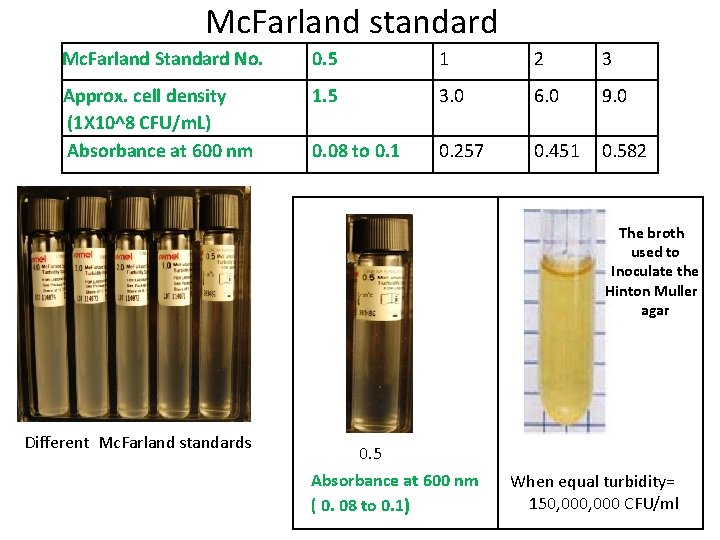
Mc. Farland standard Mc. Farland Standard No. 0. 5 1 2 3 Approx. cell density (1 X 10^8 CFU/m. L) Absorbance at 600 nm 1. 5 3. 0 6. 0 9. 0 0. 08 to 0. 1 0. 257 0. 451 0. 582 The broth used to Inoculate the Hinton Muller agar Different Mc. Farland standards 0. 5 Absorbance at 600 nm ( 0. 08 to 0. 1) When equal turbidity= 150, 000 CFU/ml
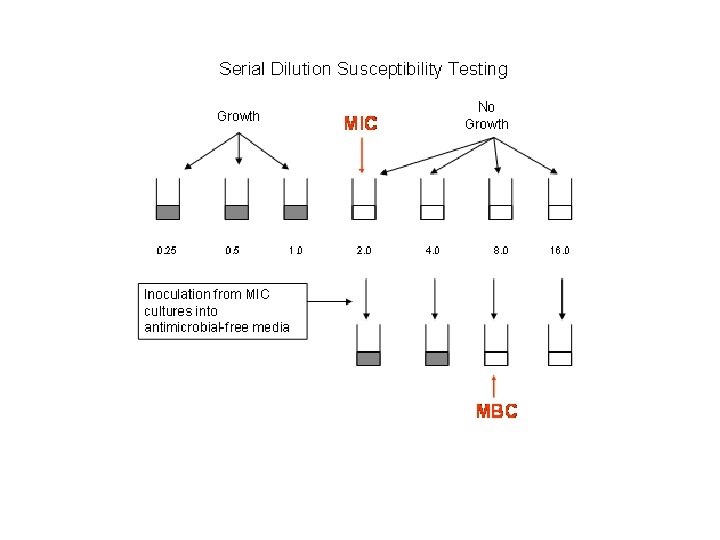
Minimum Inhibitory concentration (MIC) & Minimum lethal concentration (MLC) MIC: is the lowest concentration of an antimicrobial that will inhibit the visible growth of a microorganism after overnight incubation MLC (MBC): Is the lowest concentration of an antibacterial agent required to kill a particular bacterium. It can be determined from broth dilution minimum inhibitory concentration (MIC) tests by subculturing to agar plates that do not contain the test agent.
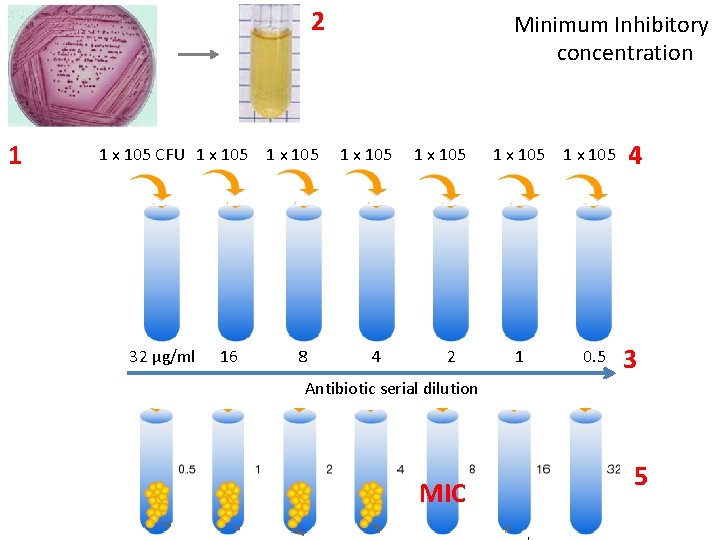
2 1 1 x 10⁵ CFU 1 x 10⁵ 32 µg/ml 16 8 Minimum Inhibitory concentration 1 x 10⁵ 4 1 x 10⁵ 2 1 x 10⁵ 1 0. 5 4 3 Antibiotic serial dilution MIC 5
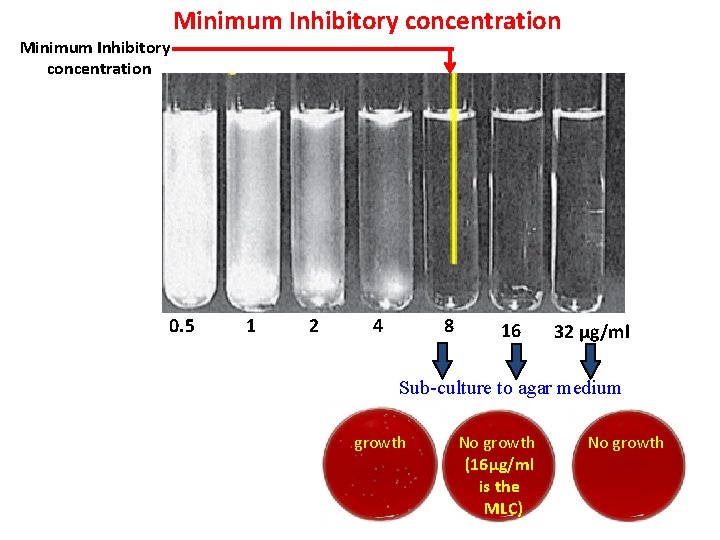
Minimum Inhibitory concentration 0. 5 1 2 4 8 16 32 µg/ml Sub-culture to agar medium growth No growth (16µg/ml is the MLC) No growth
Clinical applications for the Qualitative Antimicrobial Susceptibility Testing MICs can also be used to reduce drug dosage and cost of antimicrobial therapy for very susceptible organisms; therefore, drugs with lower MIC scores are more effective antimicrobial agents. This is important because populations of bacteria exposed to an insufficient concentration of a particular drug or to a broad-spectrum antibiotic (one designed to inhibit many strains of bacteria) can evolve resistance to these drugs. Therefore, MIC scores aid in improving outcomes for patients and preventing evolution of drug-resistant microbial strains MIC is used for determining treatment for patients suffering from infections such as sepsis, pneumonia, meningitis, endocarditis or osteomyelitis or managing the treatment of high-risk patients such as those suffering from cystic fibrosis or immunocompromised individuals.
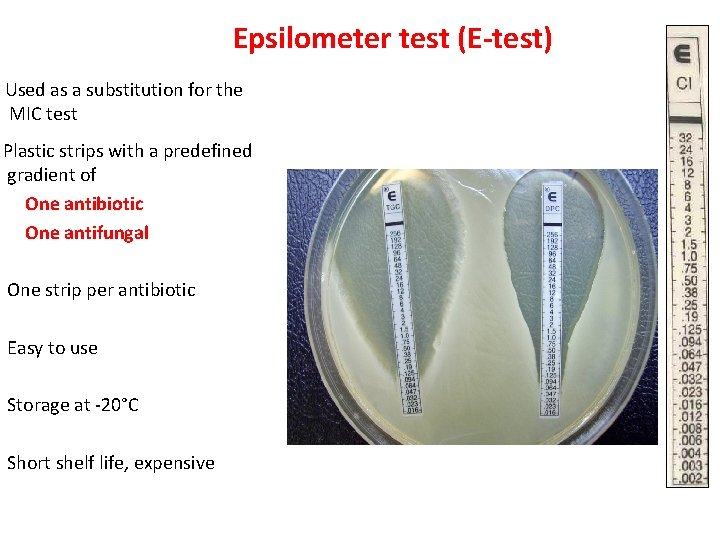
Epsilometer test (E-test) Used as a substitution for the MIC test Plastic strips with a predefined gradient of One antibiotic One antifungal One strip per antibiotic Easy to use Storage at -20°C Short shelf life, expensive
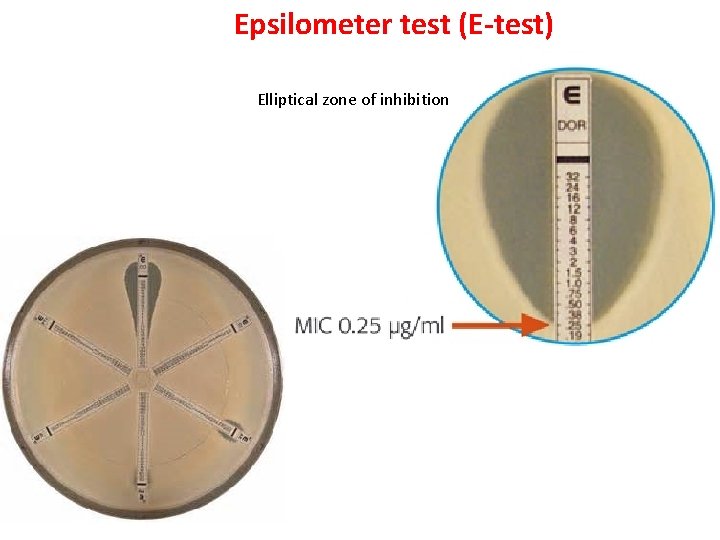
Epsilometer test (E-test) Elliptical zone of inhibition
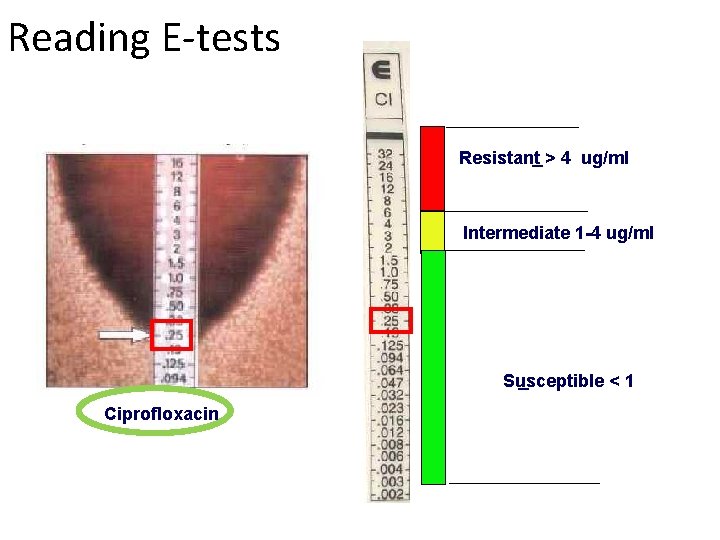
Reading E-tests Resistant > 4 ug/ml Intermediate 1 -4 ug/ml Susceptible < 1 Ciprofloxacin
- Slides: 19