
Practical Methods to Integrate Transportation Land Use Regional
- Slides: 24
Practical Methods to Integrate Transportation. Land Use / Regional Economics with a Travel Demand Model for Evaluating Policy Outcomes at the Atlanta Regional Commission TRB Transportation Planning Applications Conference Portland, Oregon, June 2019 Guy Rousseau, Atlanta Regional Commission grousseau@atlantaregional. org
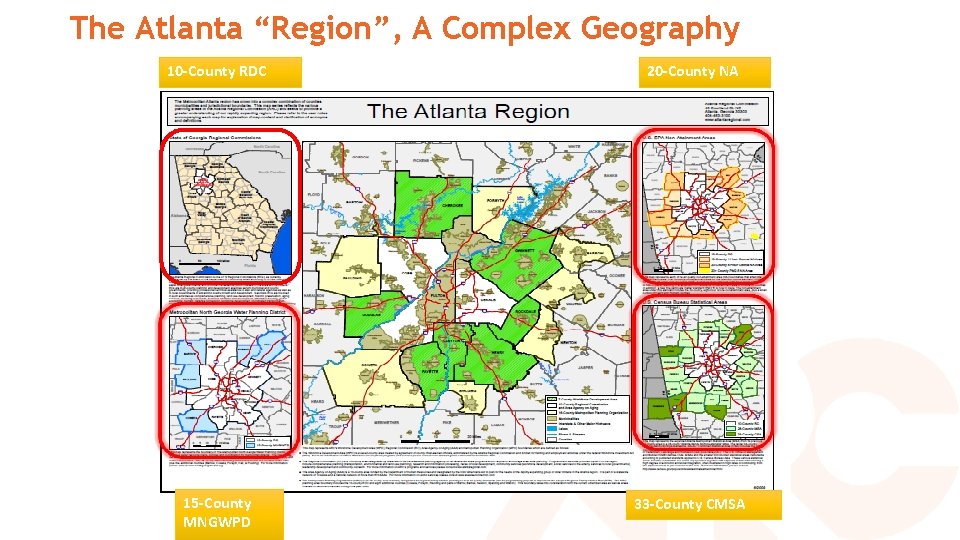
The Atlanta “Region”, A Complex Geography 10 -County RDC 20 -County NA 15 -County MNGWPD 33 -County CMSA
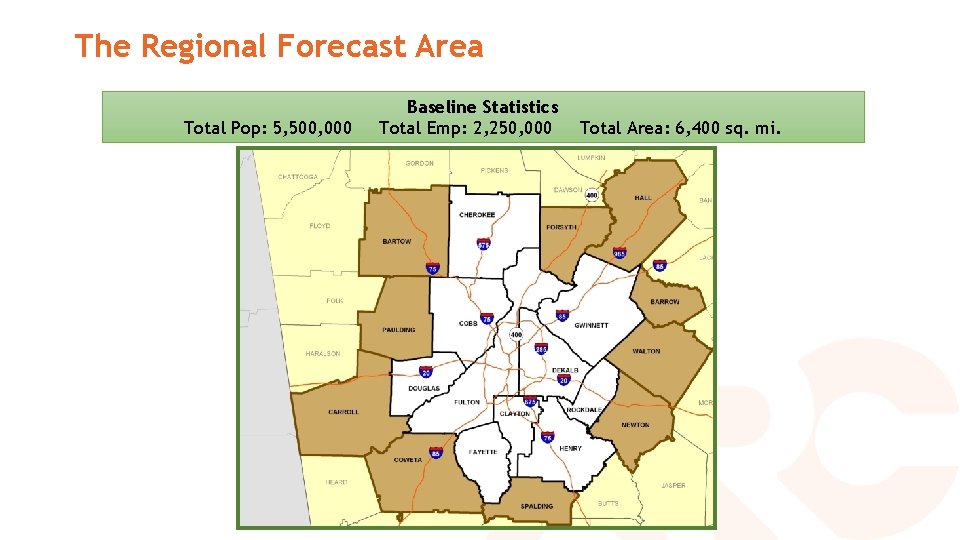
The Regional Forecast Area Total Pop: 5, 500, 000 Baseline Statistics Total Emp: 2, 250, 000 Total Area: 6, 400 sq. mi.
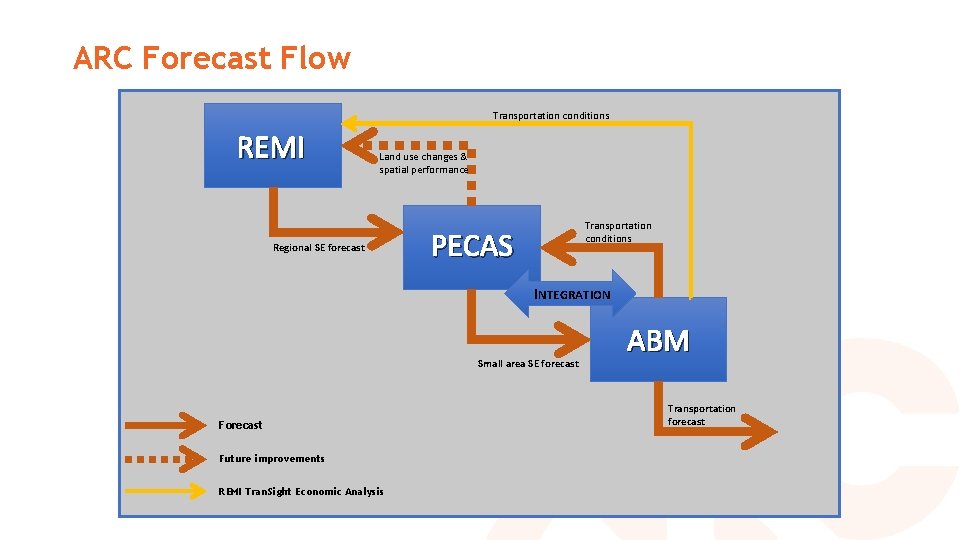
ARC Forecast Flow Transportation conditions REMI Land use changes & spatial performance Regional SE forecast Transportation conditions PECAS INTEGRATION Small area SE forecast Future improvements REMI Tran. Sight Economic Analysis ABM Transportation forecast
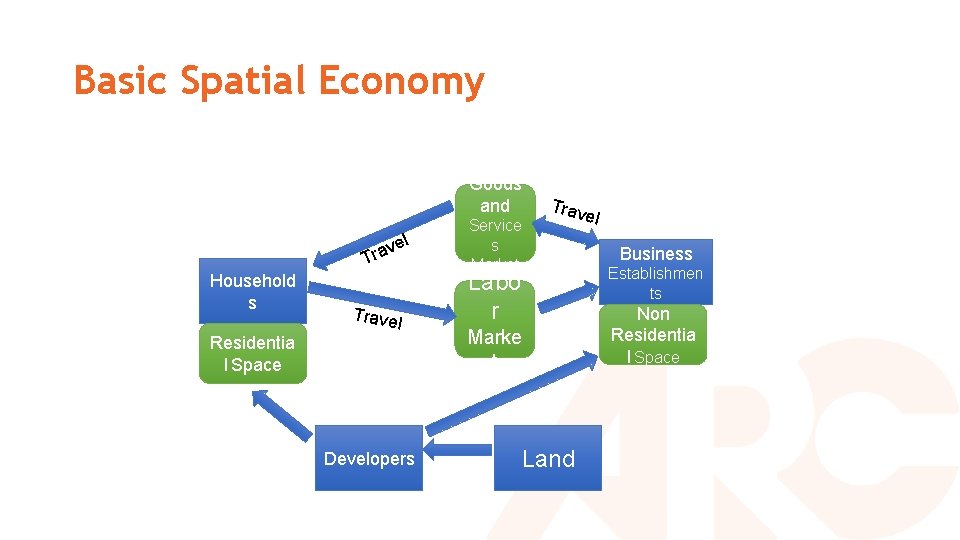
Basic Spatial Economy Goods and el v a Tr Household s Trave l Residentia l Space Developers Service s Market Trav Labo r Marke t Land el Business Establishmen ts Non Residentia l Space
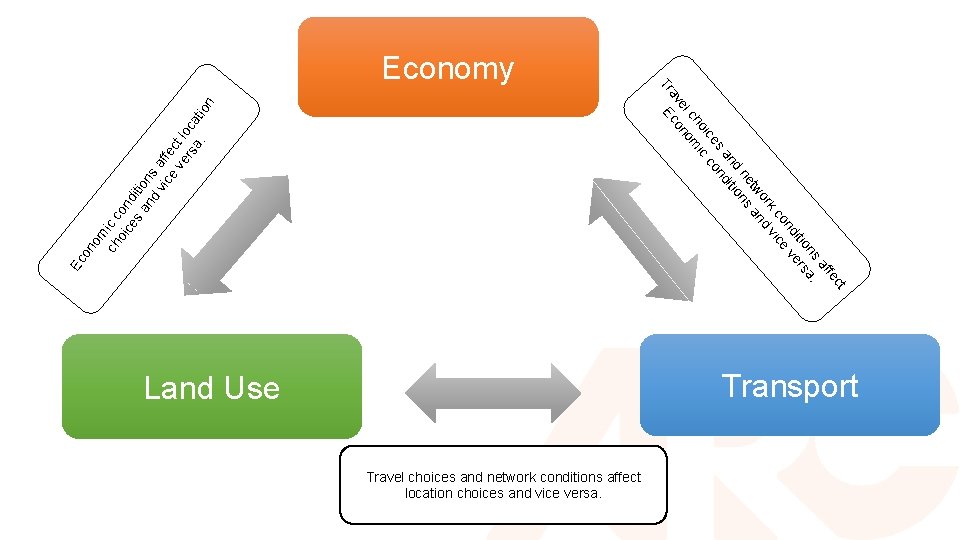
Ec on om ch ic c oic on es dit an ion d sa vic ff e ect ve lo rs ca a. tio n ct fe af ns a. itio ers nd v co vice k or d tw an ne s d ion an ndit s ce co oi ic ch m el no av Eco Tr Economy Transport Land Use Travel choices and network conditions affect location choices and vice versa.
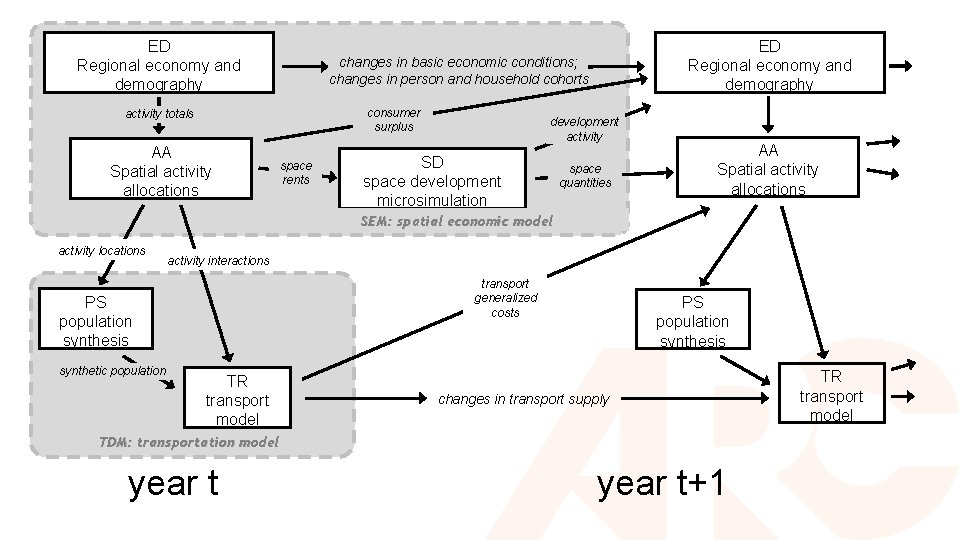
ED Regional economy and demography changes in basic economic conditions; changes in person and household cohorts consumer surplus activity totals AA Spatial activity allocations ED Regional economy and demography space rents development activity SD space development microsimulation space quantities AA Spatial activity allocations SEM: spatial economic model activity locations activity interactions transport generalized costs PS population synthesis synthetic population TR transport model PS population synthesis changes in transport supply TDM: transportation model year t+1 TR transport model
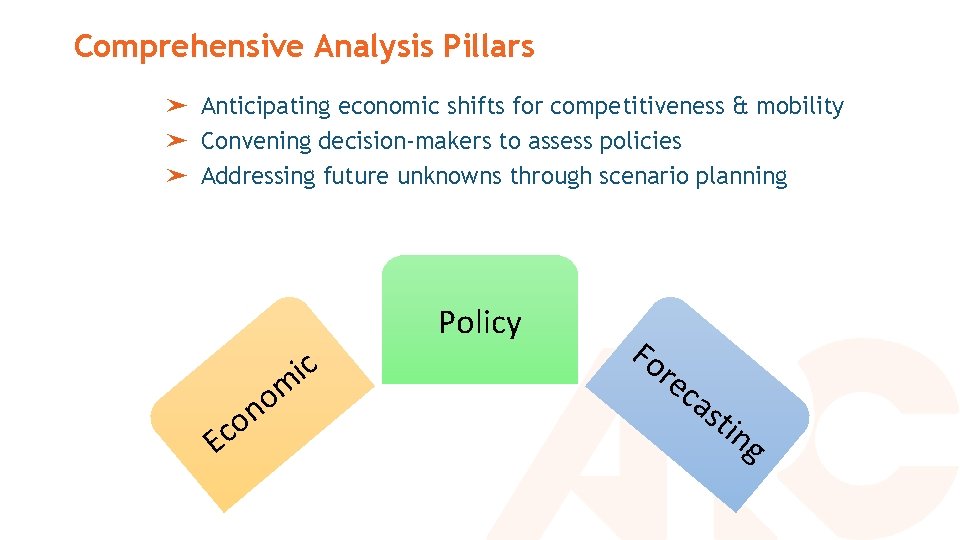
Comprehensive Analysis Pillars ➤ Anticipating economic shifts for competitiveness & mobility ➤ Convening decision-makers to assess policies ➤ Addressing future unknowns through scenario planning Policy ic E m o n o c Fo re ca sti ng
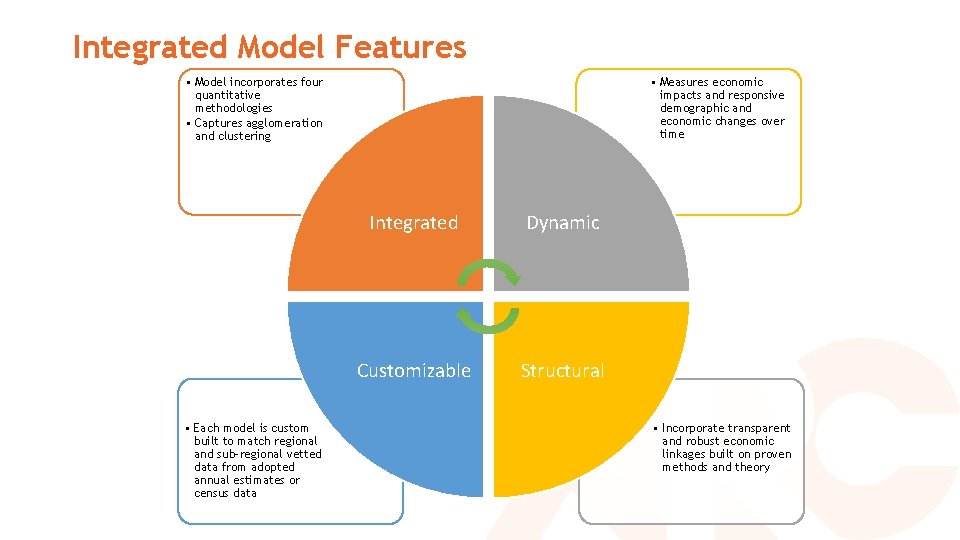
Integrated Model Features • Model incorporates four quantitative methodologies • Captures agglomeration and clustering • Each model is custom built to match regional and sub-regional vetted data from adopted annual estimates or census data • Measures economic impacts and responsive demographic and economic changes over time Integrated Dynamic Customizable Structural • Incorporate transparent and robust economic linkages built on proven methods and theory
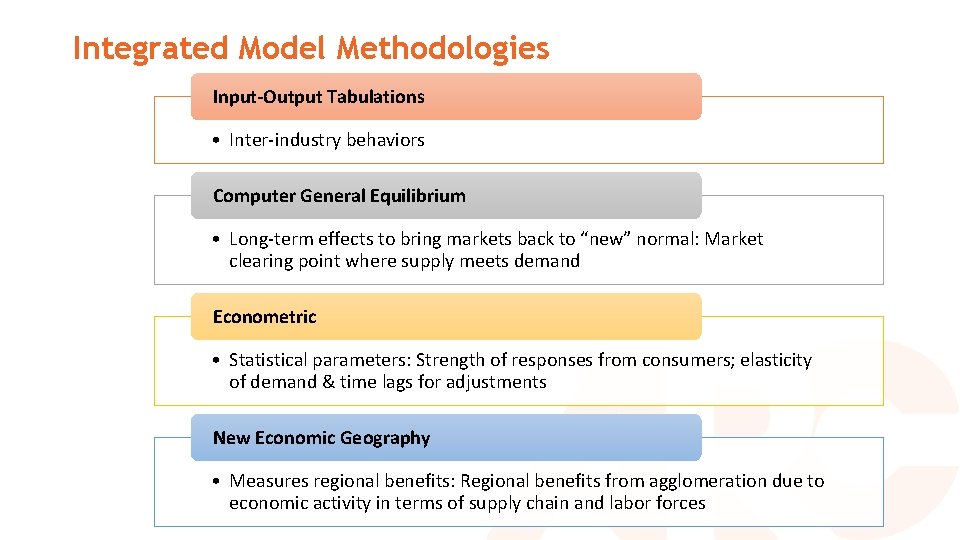
Integrated Model Methodologies Input-Output Tabulations • Inter-industry behaviors Computer General Equilibrium • Long-term effects to bring markets back to “new” normal: Market clearing point where supply meets demand Econometric • Statistical parameters: Strength of responses from consumers; elasticity of demand & time lags for adjustments New Economic Geography • Measures regional benefits: Regional benefits from agglomeration due to economic activity in terms of supply chain and labor forces
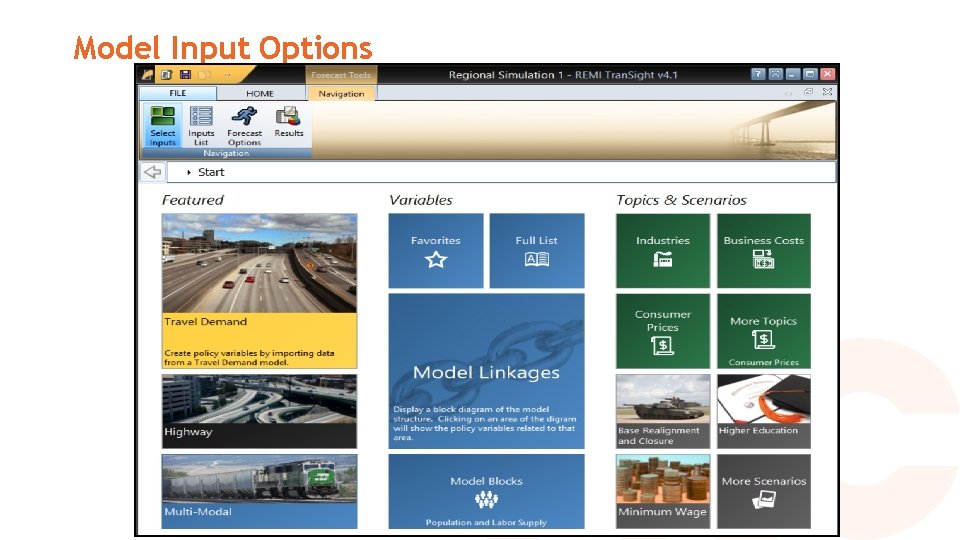
Model Input Options
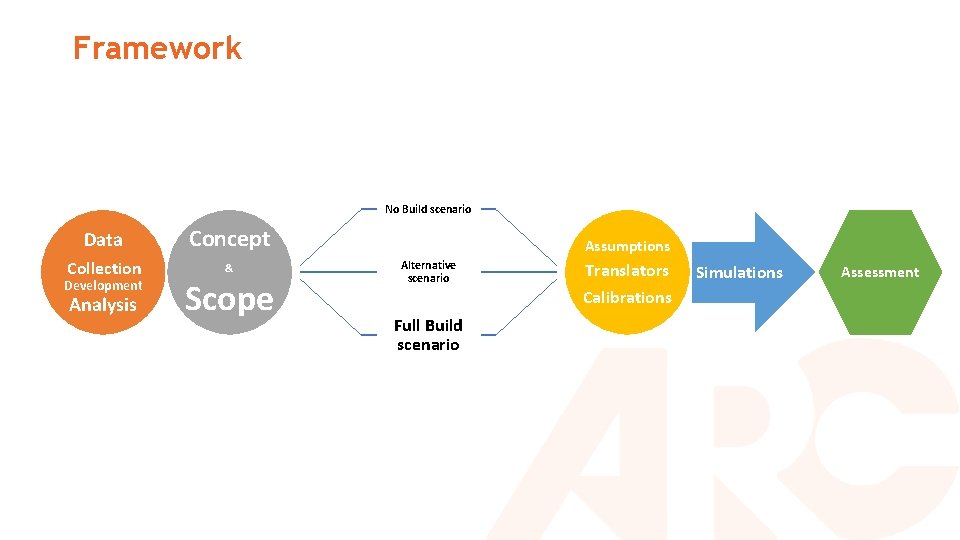
Framework No Build scenario Data Concept Collection & Development Analysis Scope Assumptions Alternative scenario Translators Calibrations Full Build scenario Simulations Assessment
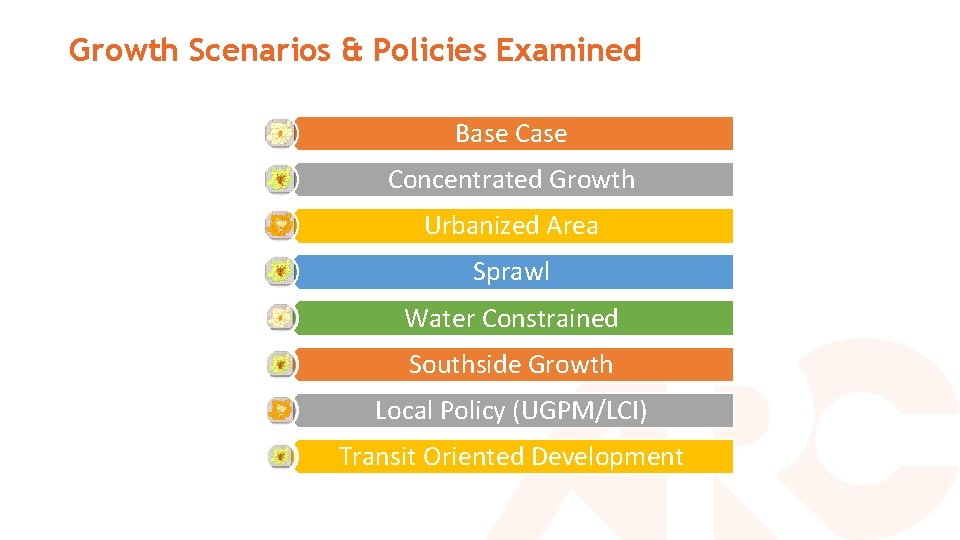
Growth Scenarios & Policies Examined Base Concentrated Growth Urbanized Area Sprawl Water Constrained Southside Growth Local Policy (UGPM/LCI) Transit Oriented Development
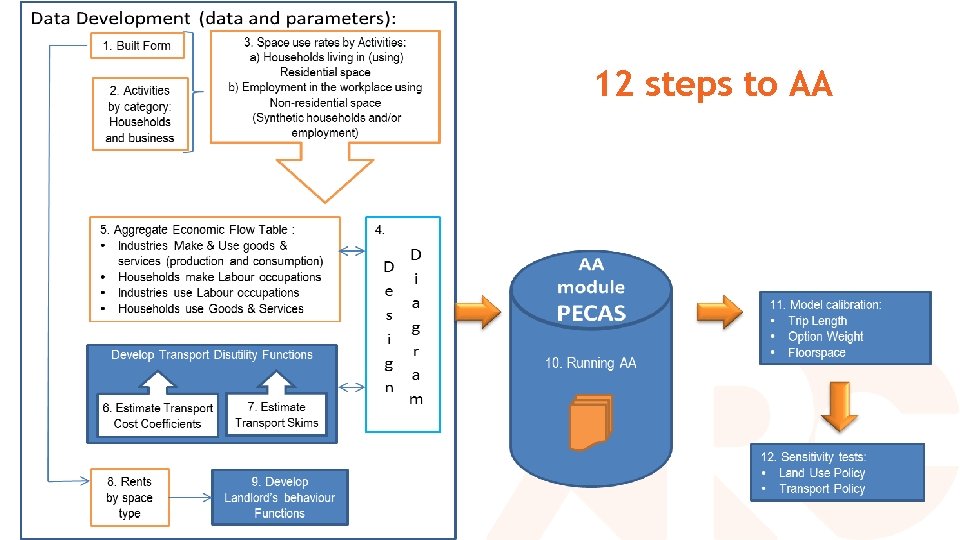
12 steps to AA
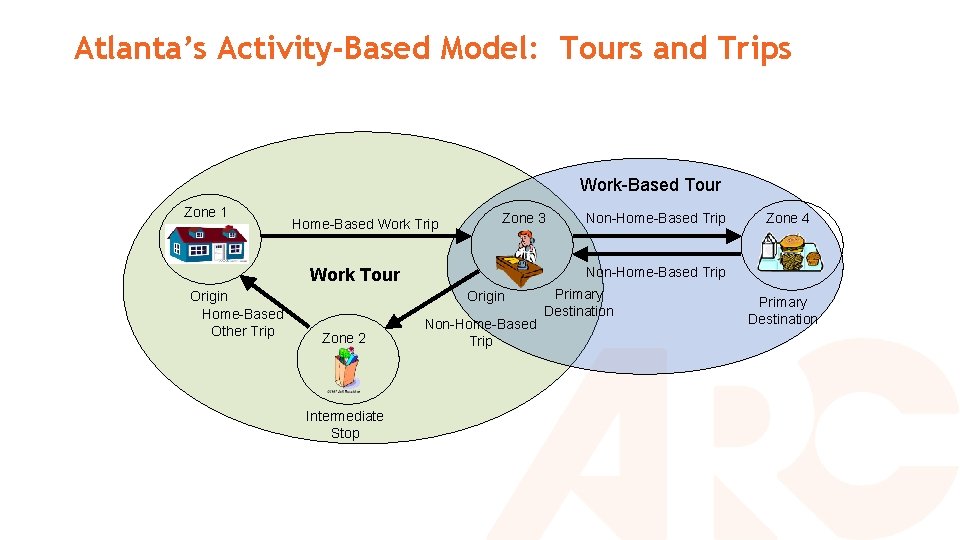
Atlanta’s Activity-Based Model: Tours and Trips Work-Based Tour Zone 1 Home-Based Work Trip Zone 3 Origin Zone 2 Intermediate Stop Zone 4 Non-Home-Based Trip Work Tour Origin Home-Based Other Trip Non-Home-Based Trip Primary Destination
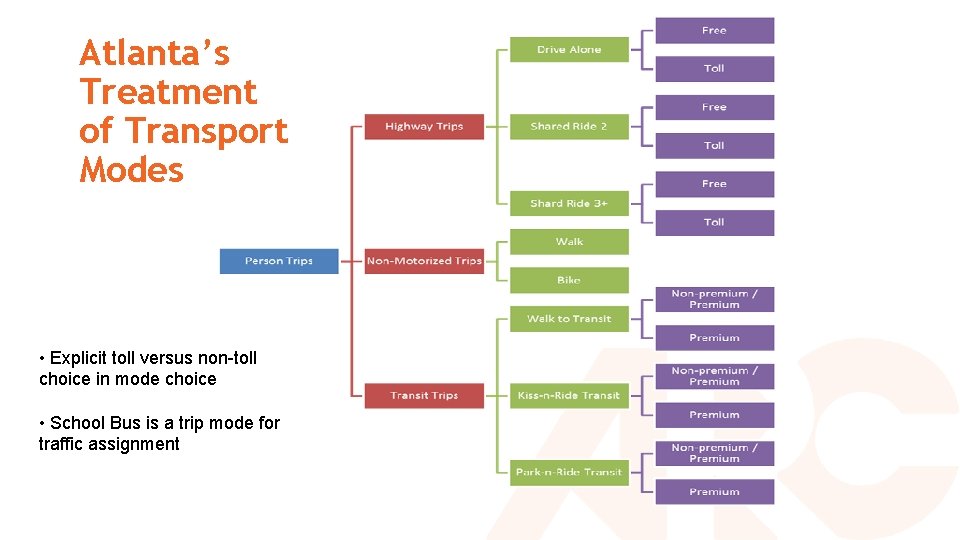
Atlanta’s Treatment of Transport Modes • Explicit toll versus non-toll choice in mode choice • School Bus is a trip mode for traffic assignment
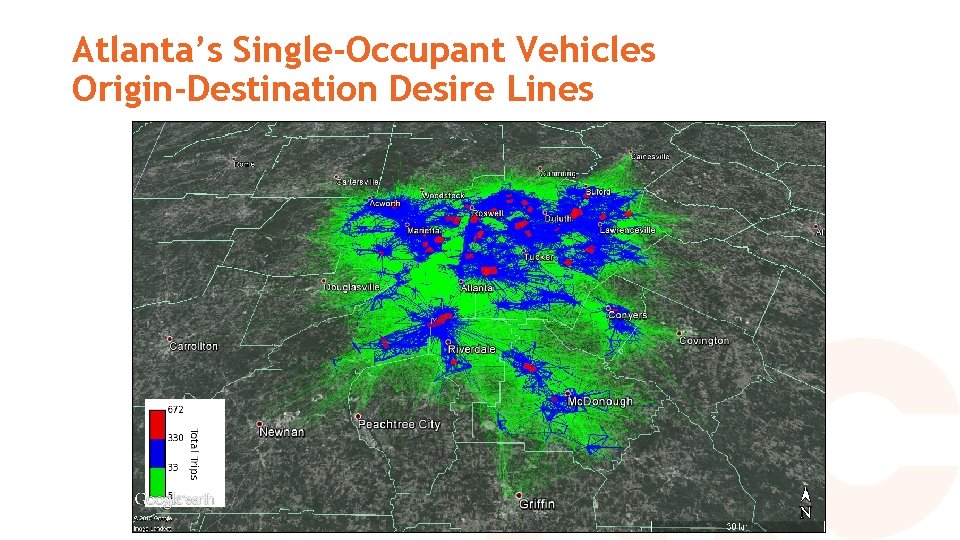
Atlanta’s Single-Occupant Vehicles Origin-Destination Desire Lines
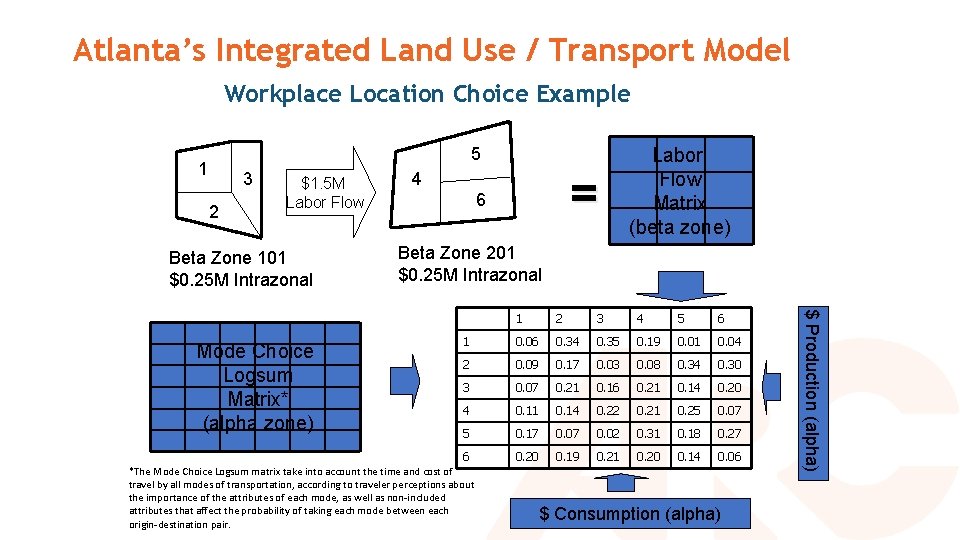
Atlanta’s Integrated Land Use / Transport Model Workplace Location Choice Example 5 1 3 2 $1. 5 M Labor Flow Beta Zone 101 $0. 25 M Intrazonal 6 Beta Zone 201 $0. 25 M Intrazonal 1 2 3 4 5 6 1 0. 06 0. 34 0. 35 0. 19 0. 01 0. 04 2 0. 09 0. 17 0. 03 0. 08 0. 34 0. 30 3 0. 07 0. 21 0. 16 0. 21 0. 14 0. 20 4 0. 11 0. 14 0. 22 0. 21 0. 25 0. 07 5 0. 17 0. 02 0. 31 0. 18 0. 27 6 0. 20 0. 19 0. 21 0. 20 0. 14 0. 06 *The Mode Choice Logsum matrix take into account the time and cost of travel by all modes of transportation, according to traveler perceptions about the importance of the attributes of each mode, as well as non-included attributes that affect the probability of taking each mode between each origin-destination pair. 18 $ Consumption (alpha) $ Production (alpha) Mode Choice Logsum Matrix* (alpha zone) = 4 Labor Flow Matrix (beta zone)
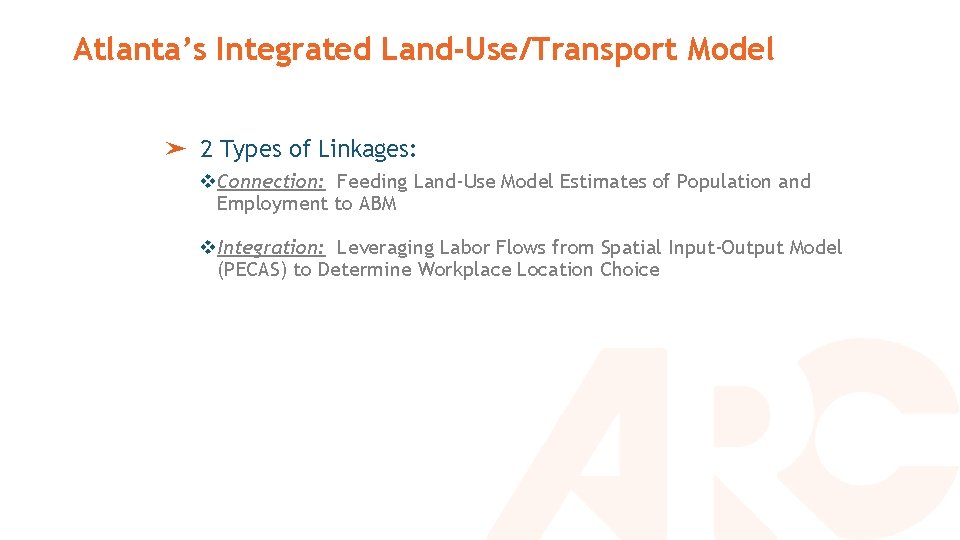
Atlanta’s Integrated Land-Use/Transport Model ➤ 2 Types of Linkages: v. Connection: Feeding Land-Use Model Estimates of Population and Employment to ABM v. Integration: Leveraging Labor Flows from Spatial Input-Output Model (PECAS) to Determine Workplace Location Choice
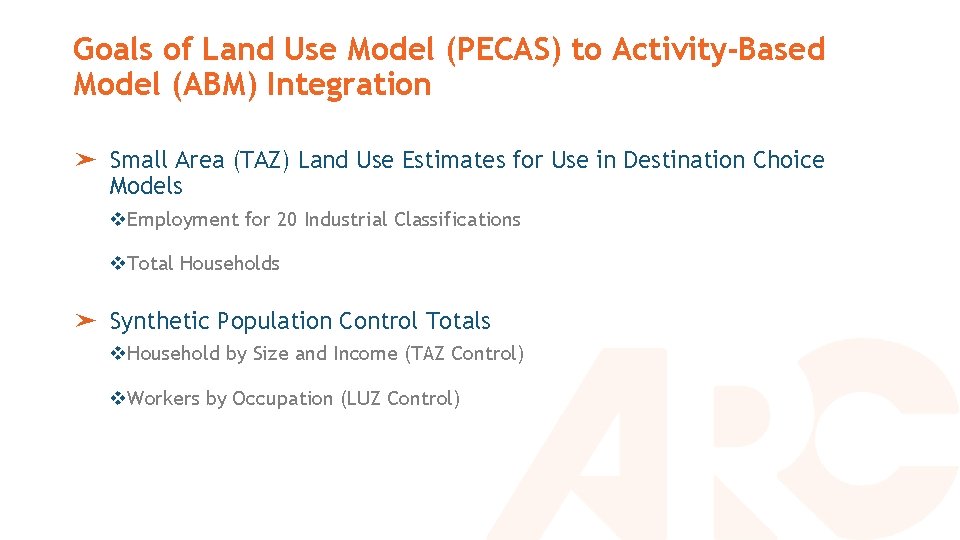
Goals of Land Use Model (PECAS) to Activity-Based Model (ABM) Integration ➤ Small Area (TAZ) Land Use Estimates for Use in Destination Choice Models v. Employment for 20 Industrial Classifications v. Total Households ➤ Synthetic Population Control Totals v. Household by Size and Income (TAZ Control) v. Workers by Occupation (LUZ Control)
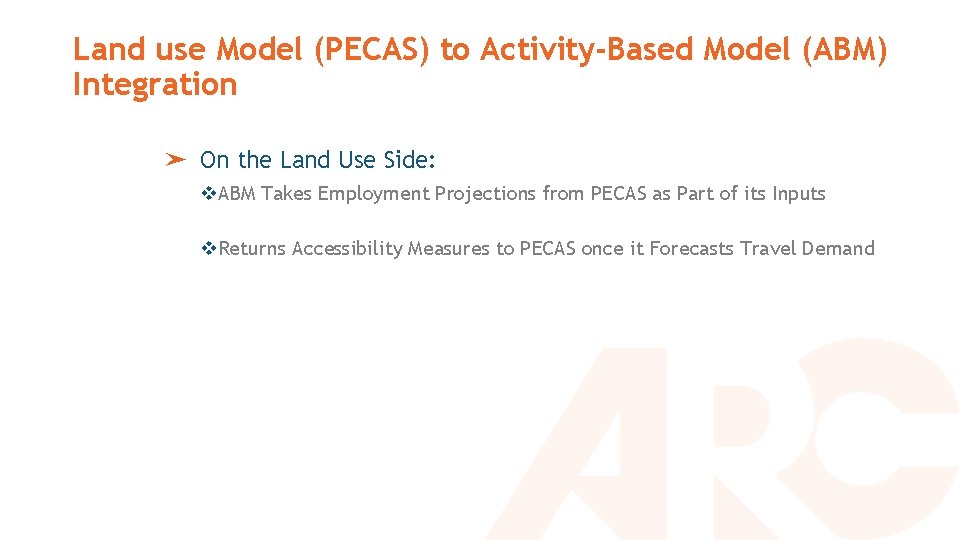
Land use Model (PECAS) to Activity-Based Model (ABM) Integration ➤ On the Land Use Side: v. ABM Takes Employment Projections from PECAS as Part of its Inputs v. Returns Accessibility Measures to PECAS once it Forecasts Travel Demand
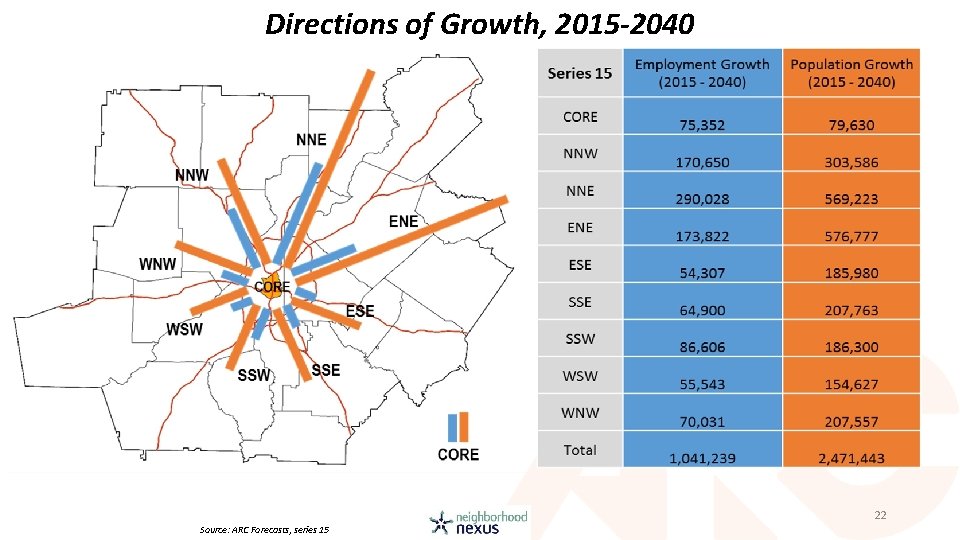
Directions of Growth, 2015 -2040 22 Source: ARC Forecasts, series 15
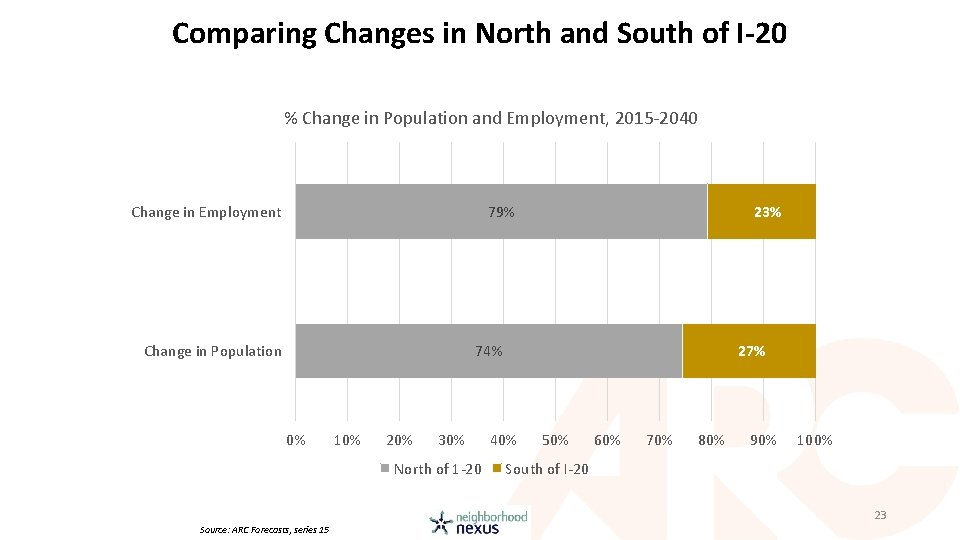
Comparing Changes in North and South of I-20 % Change in Population and Employment, 2015 -2040 Change in Employment 79% 23% 74% Change in Population 0% 10% 20% 30% North of 1 -20 27% 40% 50% 60% 70% 80% 90% 100% South of I-20 23 Source: ARC Forecasts, series 15
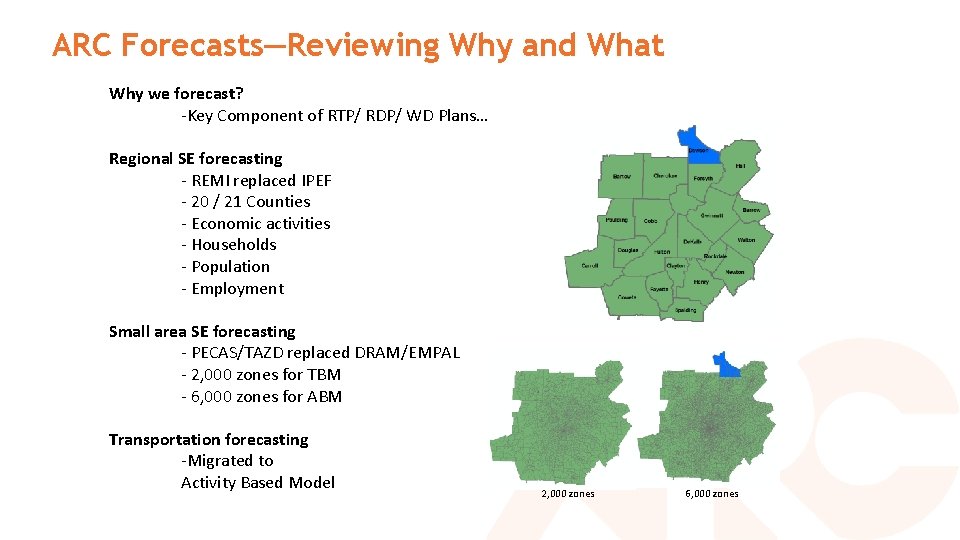
ARC Forecasts—Reviewing Why and What Why we forecast? -Key Component of RTP/ RDP/ WD Plans… Regional SE forecasting - REMI replaced IPEF - 20 / 21 Counties - Economic activities - Households - Population - Employment Small area SE forecasting - PECAS/TAZD replaced DRAM/EMPAL - 2, 000 zones for TBM - 6, 000 zones for ABM Transportation forecasting -Migrated to Activity Based Model 2, 000 zones 6, 000 zones