
Practical Malting and Its Influence on Malt Analysis

- Slides: 24
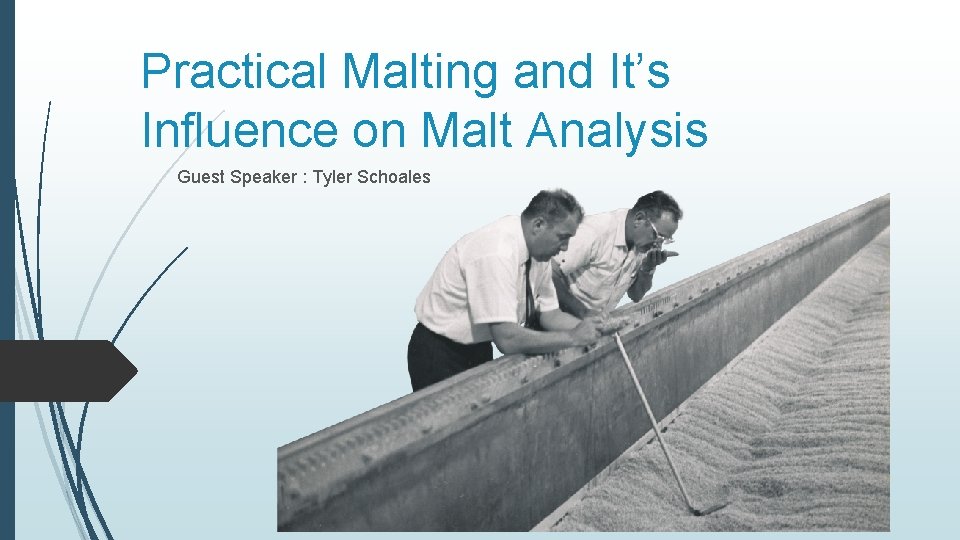
Practical Malting and It’s Influence on Malt Analysis Guest Speaker : Tyler Schoales
About Me Tyler Schoales • BSc Applied Molecular Sciences, MAGB Malting Diploma • 11 years global malting experience • Avid homebrewer (Grainfather, SS Brew. Tech), 20 Gallon SS Brew. Tech Infusion Mashtun and Brewmaster Kettle • Currently National Sales Manager for GWM
Outline • Why Barley ? • Practical Malting Steeping Germination Kilning
Why Malting Barley? Barley contributes the sensory characteristics associated with beer: Source of extract, hence alcohol Mash Enzymes – Alpha, Beta Amylase to name a few Source of Yeast nutrients and in particular FAN Excellent buffer of p. H in Wort Milled husk materials act as a filter bed during mash filtration (Lautertun & mash tun) A source of foam stabilizing proteins Source of polyphenols => antioxidant power
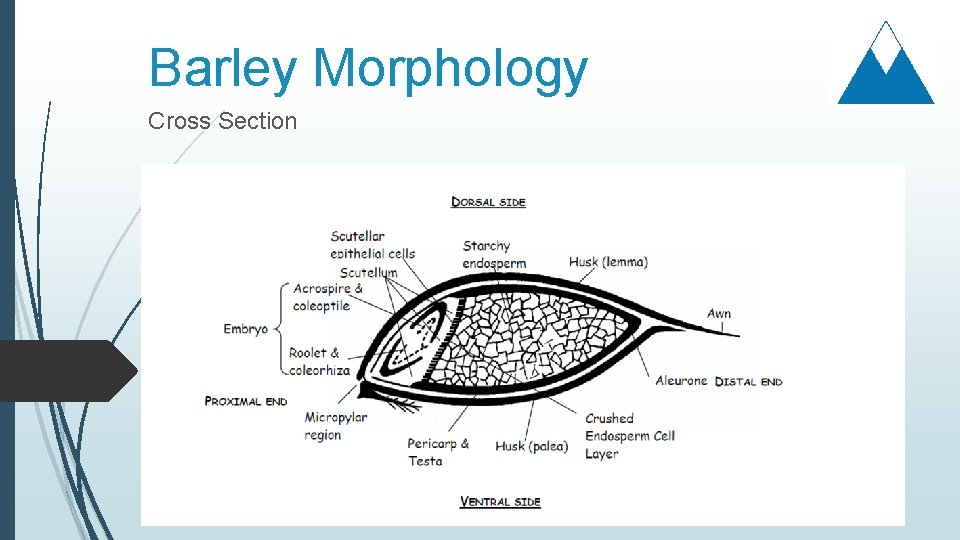
Barley Morphology Cross Section
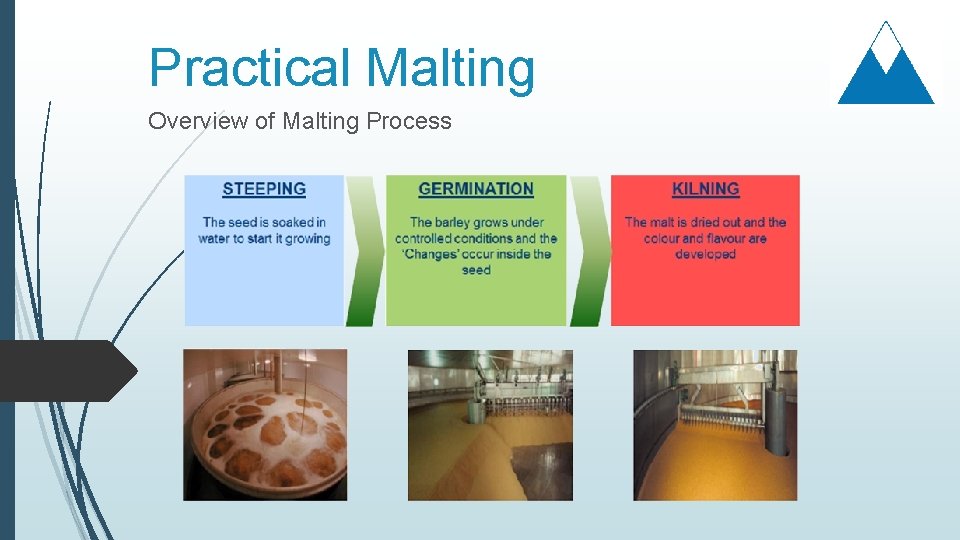
Practical Malting Overview of Malting Process
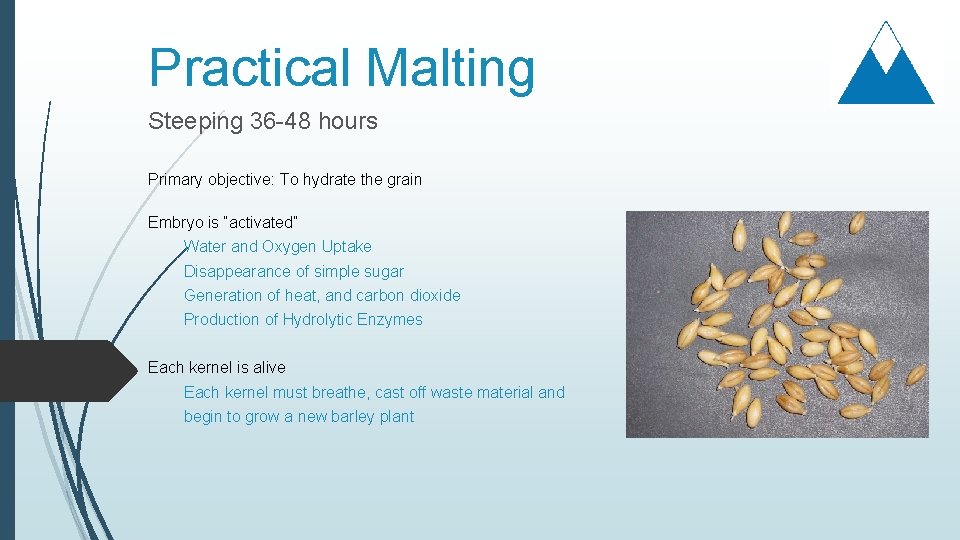
Practical Malting Steeping 36 -48 hours Primary objective: To hydrate the grain Embryo is “activated” Water and Oxygen Uptake Disappearance of simple sugar Generation of heat, and carbon dioxide Production of Hydrolytic Enzymes Each kernel is alive Each kernel must breathe, cast off waste material and begin to grow a new barley plant
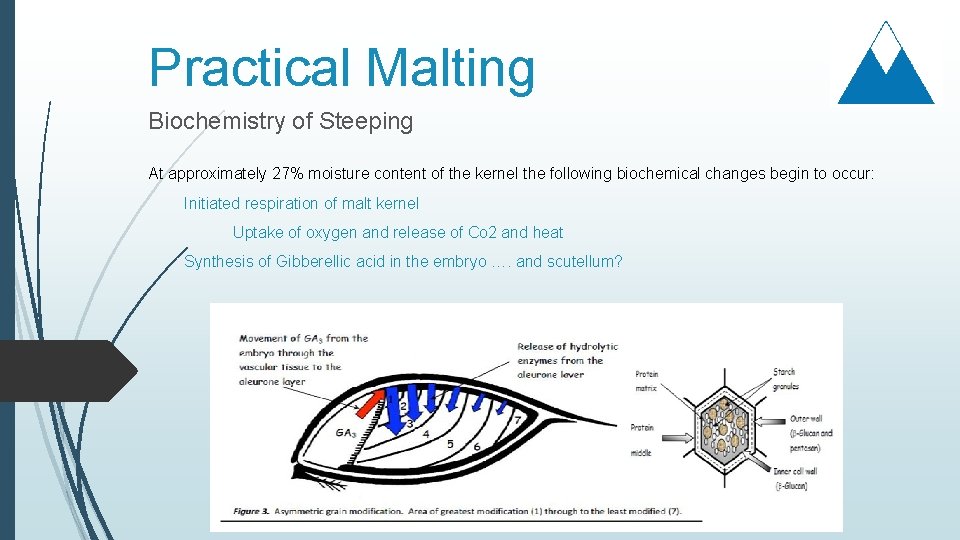
Practical Malting Biochemistry of Steeping At approximately 27% moisture content of the kernel the following biochemical changes begin to occur: Initiated respiration of malt kernel Uptake of oxygen and release of Co 2 and heat Synthesis of Gibberellic acid in the embryo …. and scutellum?
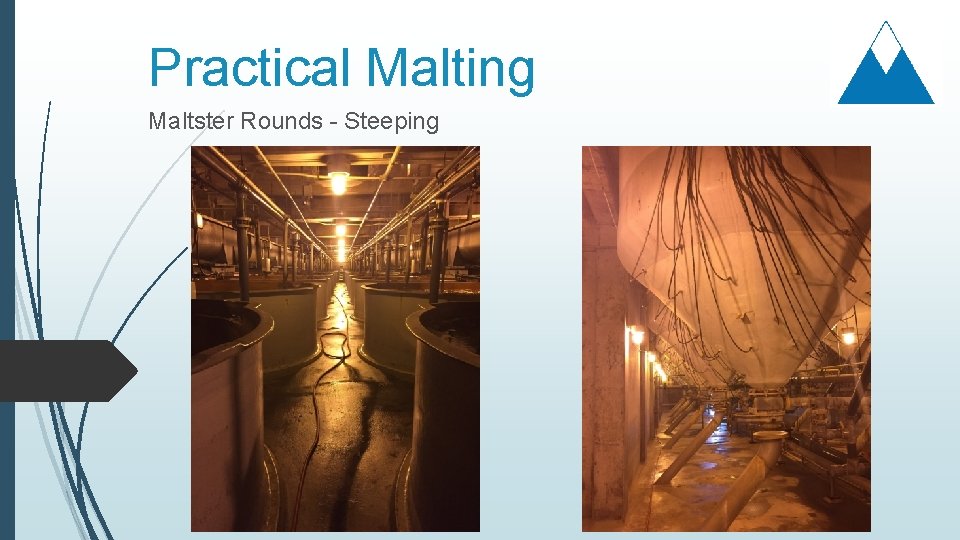
Practical Malting Maltster Rounds - Steeping
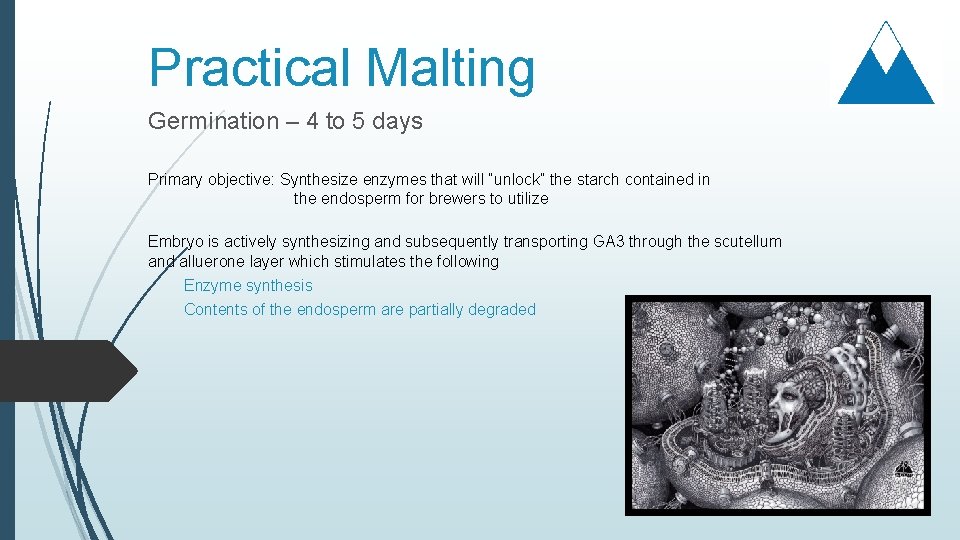
Practical Malting Germination – 4 to 5 days Primary objective: Synthesize enzymes that will “unlock” the starch contained in the endosperm for brewers to utilize Embryo is actively synthesizing and subsequently transporting GA 3 through the scutellum and alluerone layer which stimulates the following Enzyme synthesis Contents of the endosperm are partially degraded
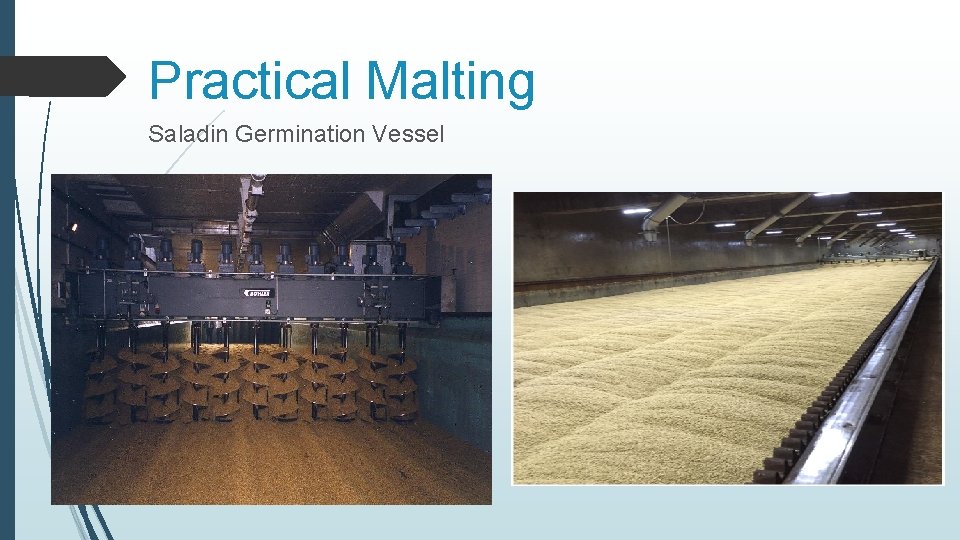
Practical Malting Saladin Germination Vessel
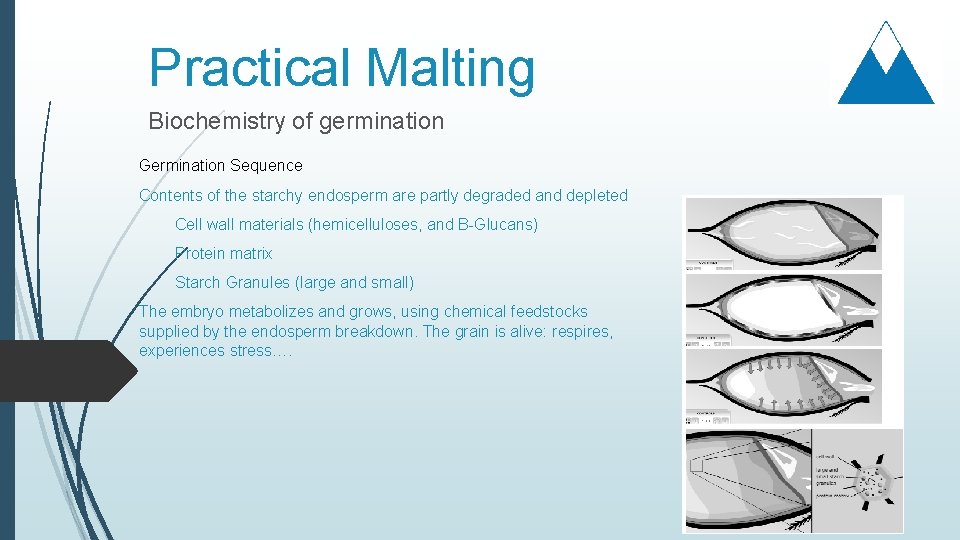
Practical Malting Biochemistry of germination Germination Sequence Contents of the starchy endosperm are partly degraded and depleted Cell wall materials (hemicelluloses, and B-Glucans) Protein matrix Starch Granules (large and small) The embryo metabolizes and grows, using chemical feedstocks supplied by the endosperm breakdown. The grain is alive: respires, experiences stress….
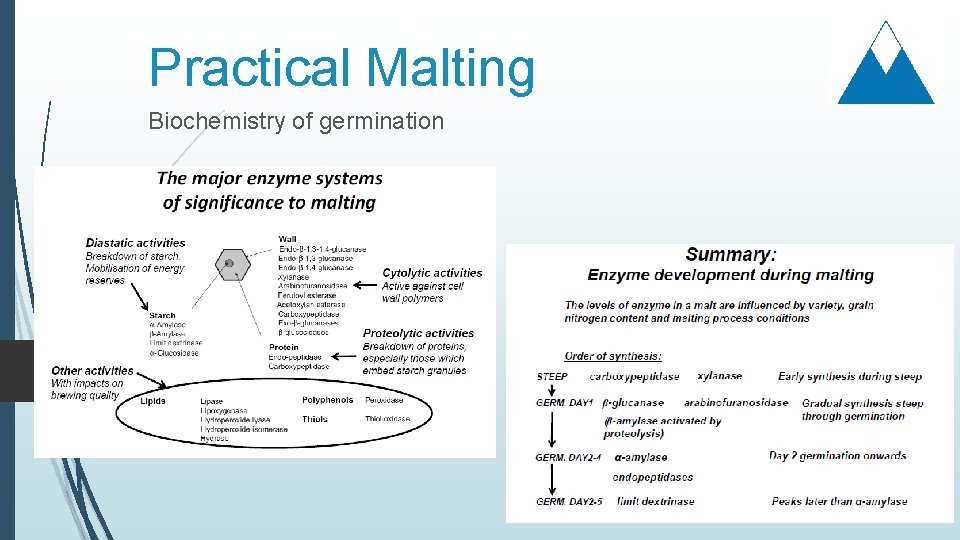
Practical Malting Biochemistry of germination
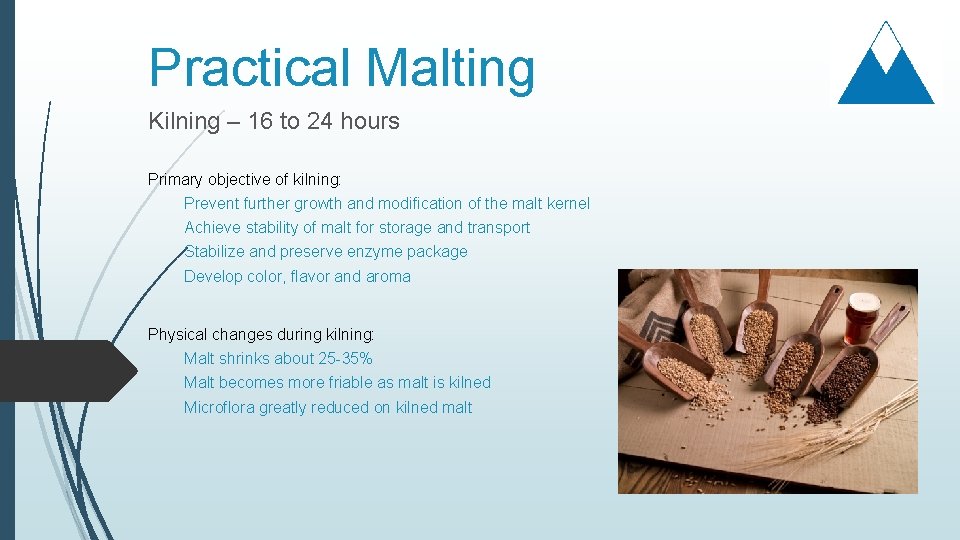
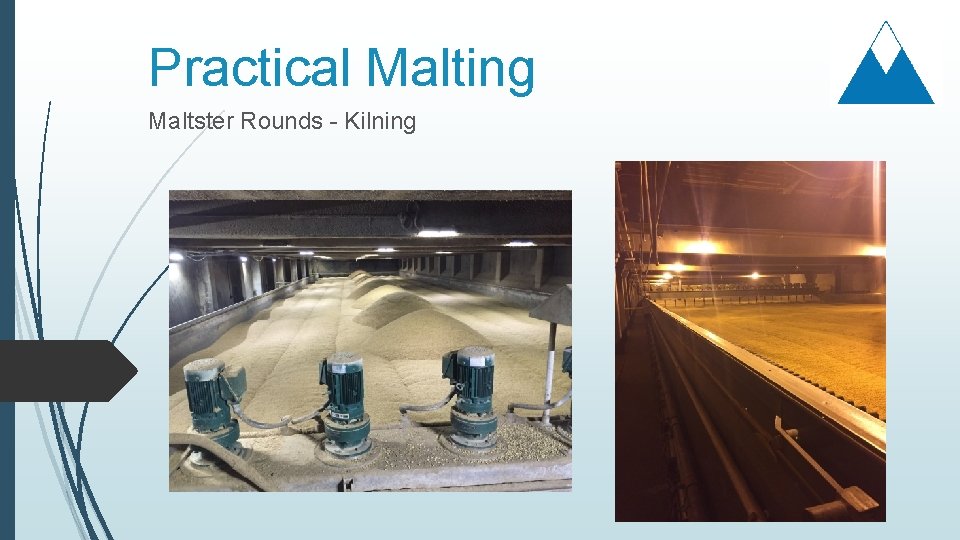
Practical Malting Kilning – 16 to 24 hours Primary objective of kilning: Prevent further growth and modification of the malt kernel Achieve stability of malt for storage and transport Stabilize and preserve enzyme package Develop color, flavor and aroma Physical changes during kilning: Malt shrinks about 25 -35% Malt becomes more friable as malt is kilned Microflora greatly reduced on kilned malt
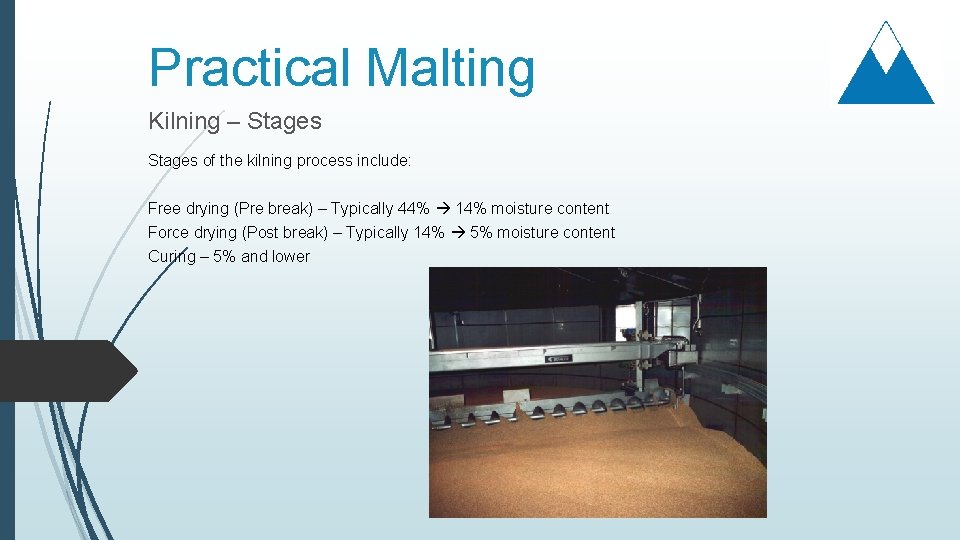
Practical Malting Kilning – Stages of the kilning process include: Free drying (Pre break) – Typically 44% 14% moisture content Force drying (Post break) – Typically 14% 5% moisture content Curing – 5% and lower
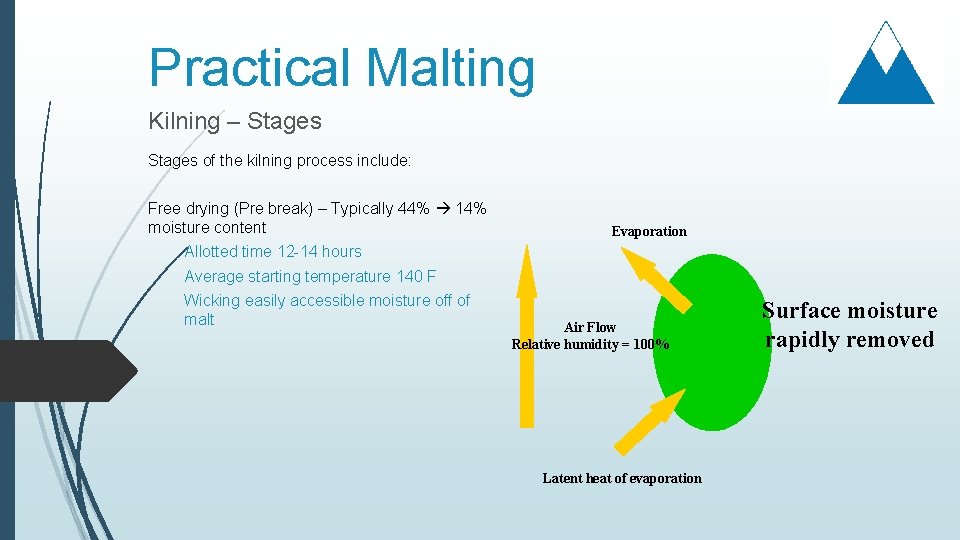
Practical Malting Kilning – Stages of the kilning process include: Free drying (Pre break) – Typically 44% 14% moisture content Evaporation Allotted time 12 -14 hours Average starting temperature 140 F Wicking easily accessible moisture off of malt Air Flow Relative humidity = 100% Latent heat of evaporation Surface moisture rapidly removed
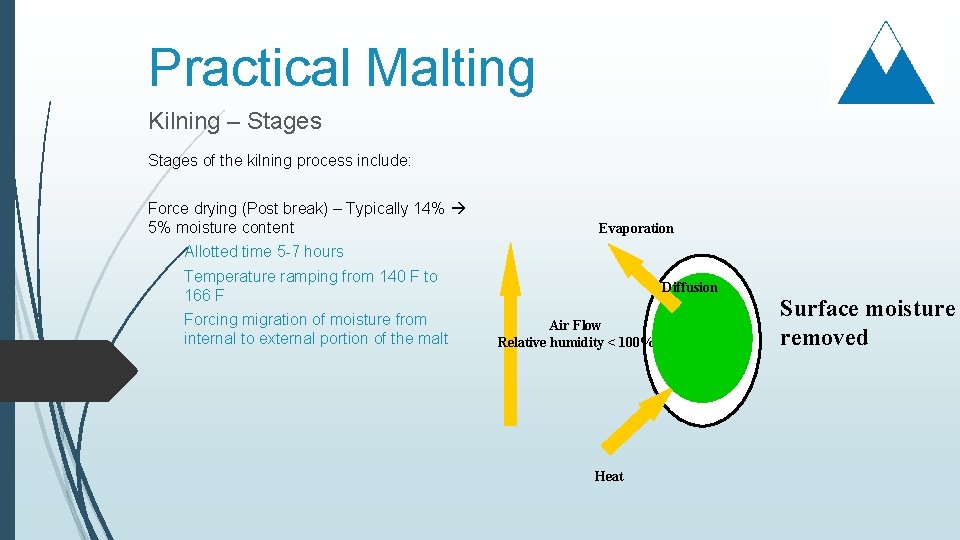
Practical Malting Kilning – Stages of the kilning process include: Force drying (Post break) – Typically 14% 5% moisture content Evaporation Allotted time 5 -7 hours Temperature ramping from 140 F to 166 F Forcing migration of moisture from internal to external portion of the malt Diffusion Air Flow Relative humidity < 100% Heat Surface moisture removed
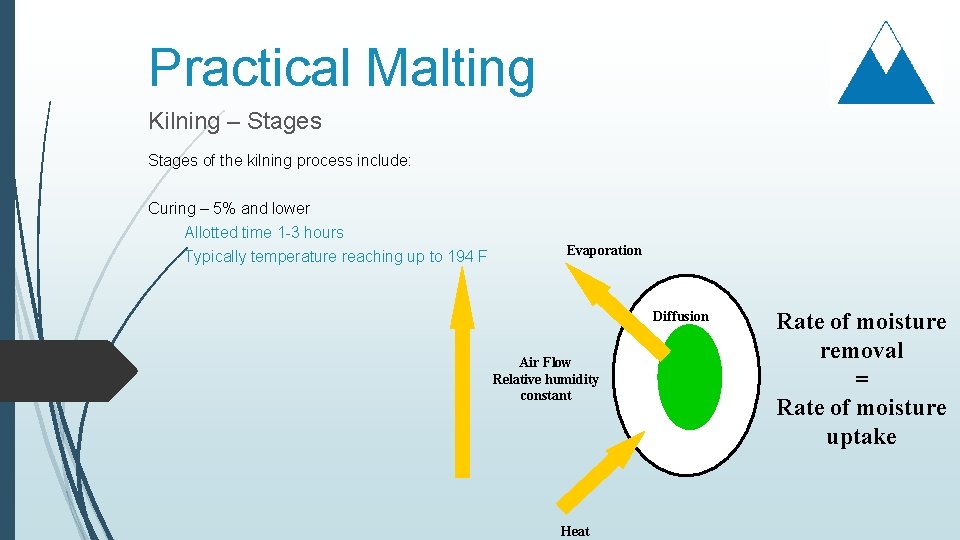
Practical Malting Kilning – Stages of the kilning process include: Curing – 5% and lower Allotted time 1 -3 hours Typically temperature reaching up to 194 F Evaporation Diffusion Air Flow Relative humidity constant Heat Rate of moisture removal = Rate of moisture uptake
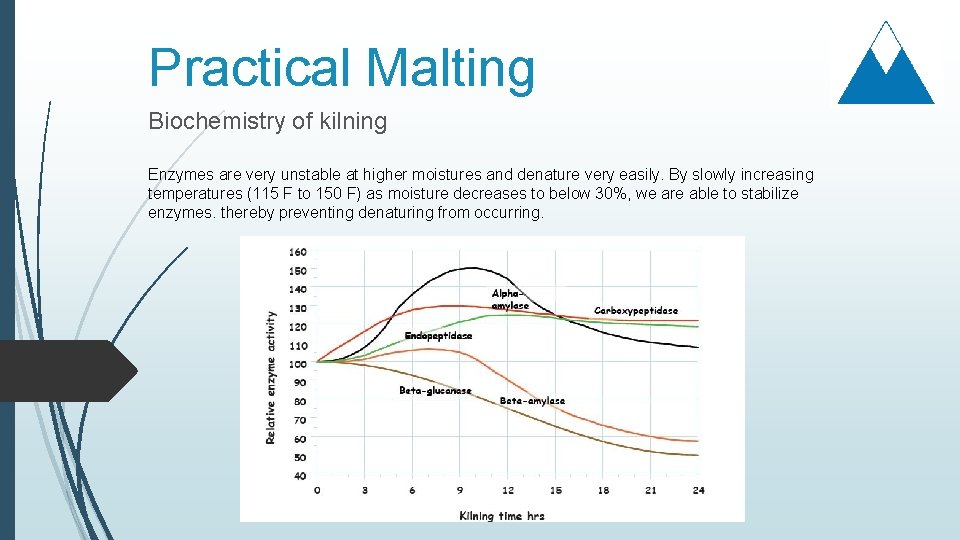
Practical Malting Biochemistry of kilning Enzymes are very unstable at higher moistures and denature very easily. By slowly increasing temperatures (115 F to 150 F) as moisture decreases to below 30%, we are able to stabilize enzymes. thereby preventing denaturing from occurring.
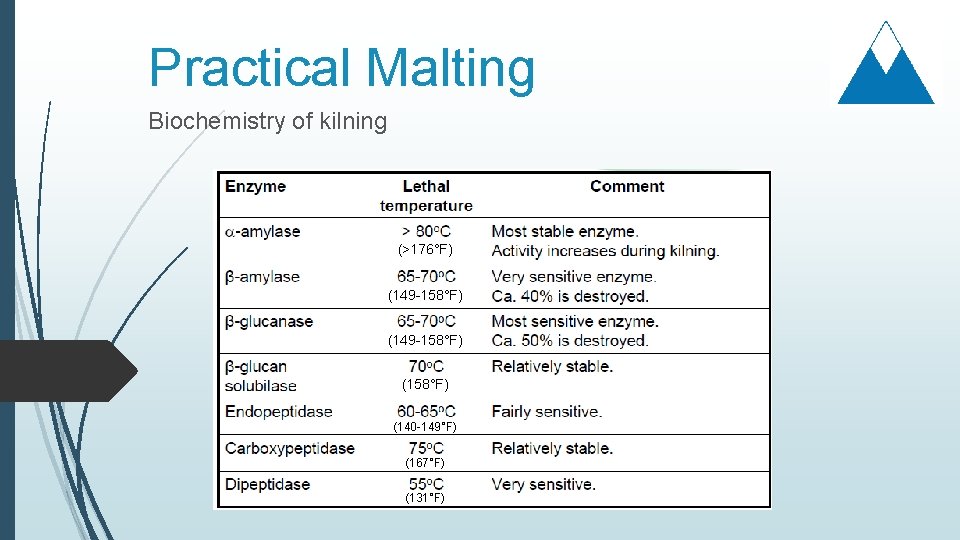
Practical Malting Biochemistry of kilning (>176°F) (149 -158°F) (158°F) (140 -149°F) (167°F) (131°F)
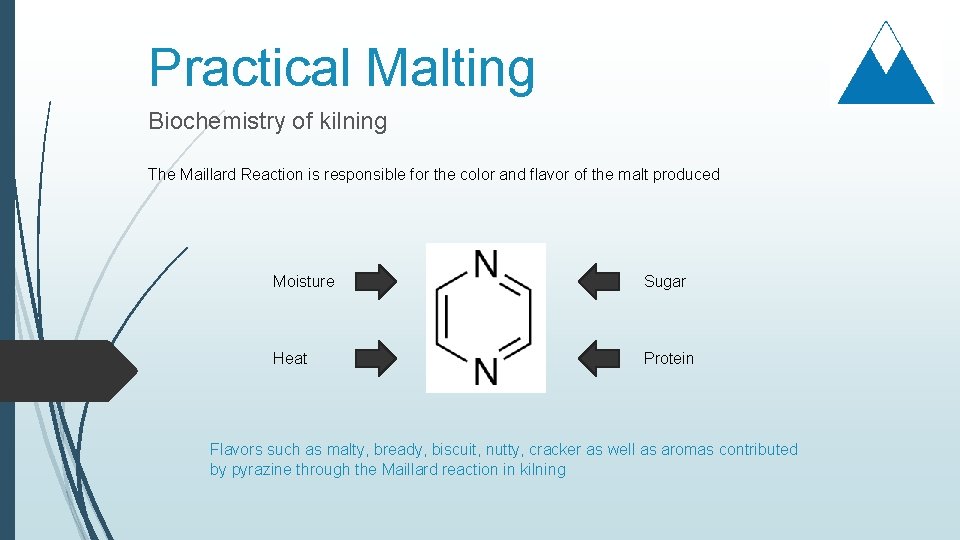
Practical Malting Biochemistry of kilning The Maillard Reaction is responsible for the color and flavor of the malt produced Moisture Sugar Heat Protein Flavors such as malty, bready, biscuit, nutty, cracker as well as aromas contributed by pyrazine through the Maillard reaction in kilning
Practical Malting Maltster Rounds - Kilning
Questions
References Bamforth, C. W. (2003). ‘Barley and malt starch in brewing: a general review’. MBAA TQ, 40(2): 89 -97 Briggs D. E. (1998). Malts & Malting. Blackie Academic Press. Cook, David. ‘Malt from the brewer’s perspective’ (2014) Briggs, D. E. , Boulton, C. A. , Brookes, P. A. & Stevens, R. (2004). ‘Brewing: Science and practice’, Woodhead Publishing Ltd. , Cambridge, UK.