
Practical Interventions Part I Areas of Focus Mindfulness





- Slides: 39
Practical Interventions Part I
Areas of Focus Mindfulness Communication Acceptance
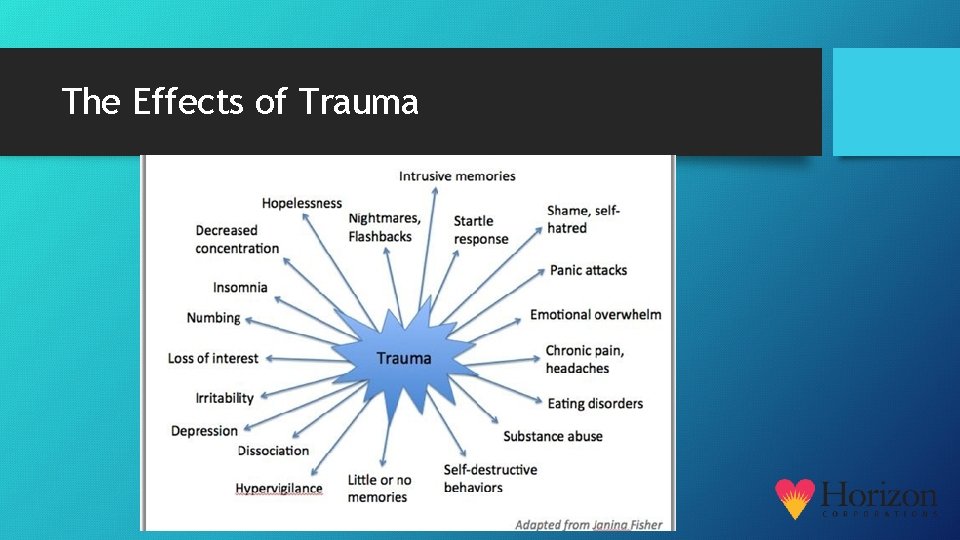
The Effects of Trauma
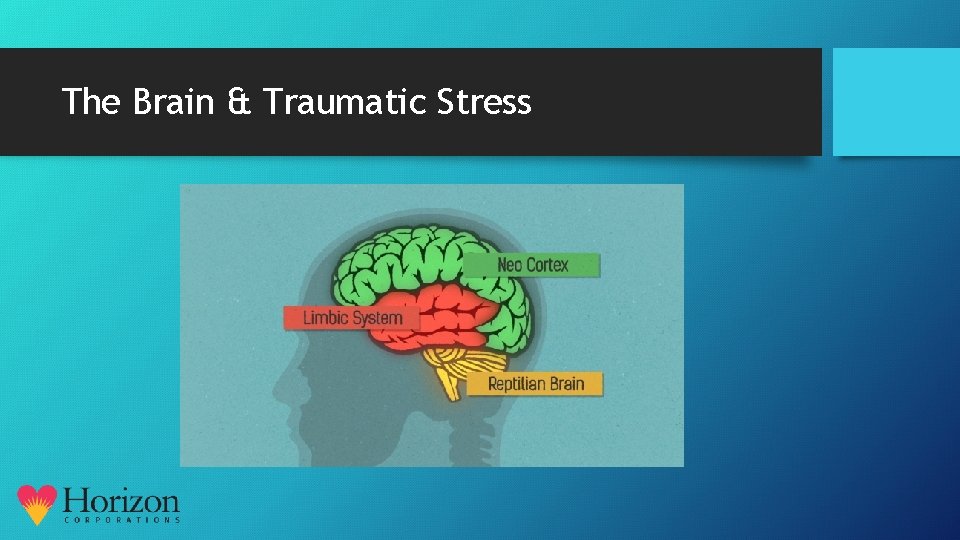
The Brain & Traumatic Stress
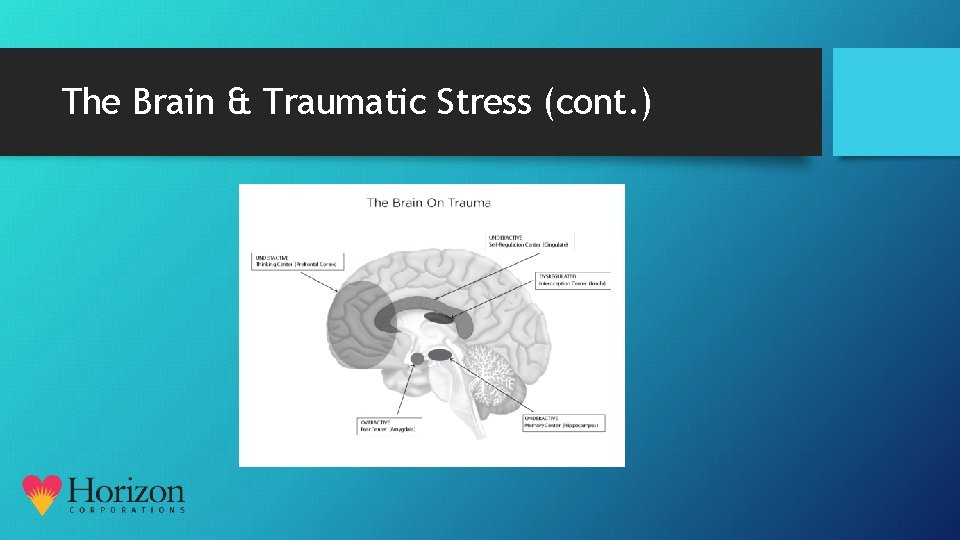
The Brain & Traumatic Stress (cont. )
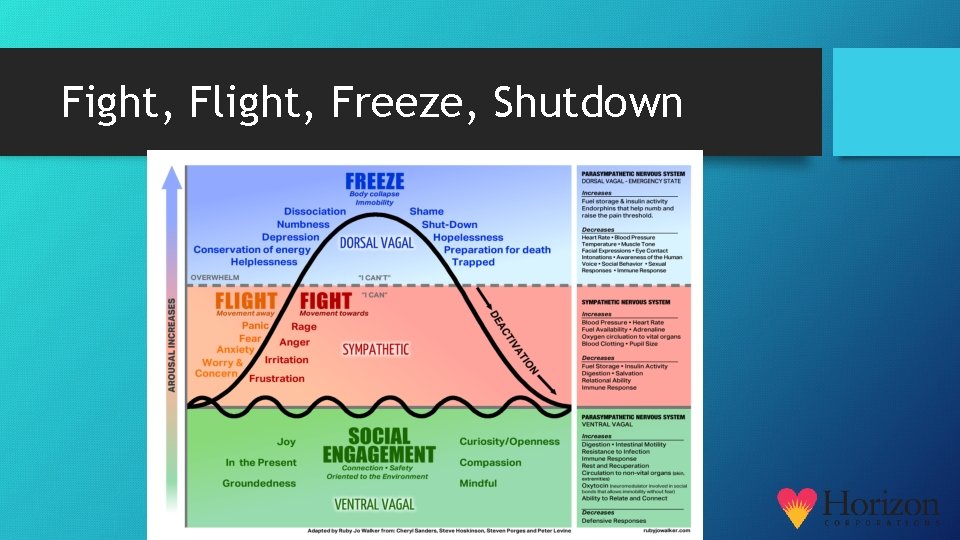
Fight, Flight, Freeze, Shutdown
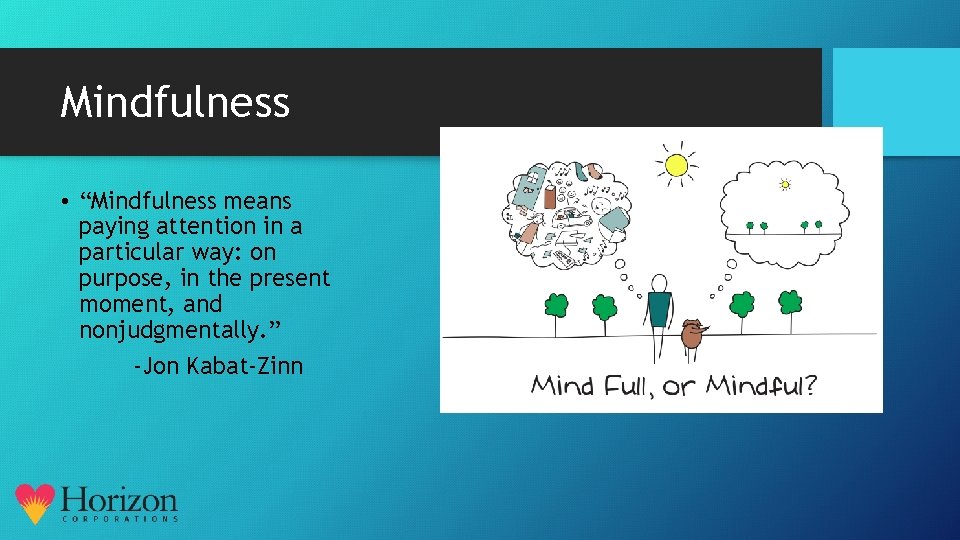
Mindfulness • “Mindfulness means paying attention in a particular way: on purpose, in the present moment, and nonjudgmentally. ” -Jon Kabat-Zinn
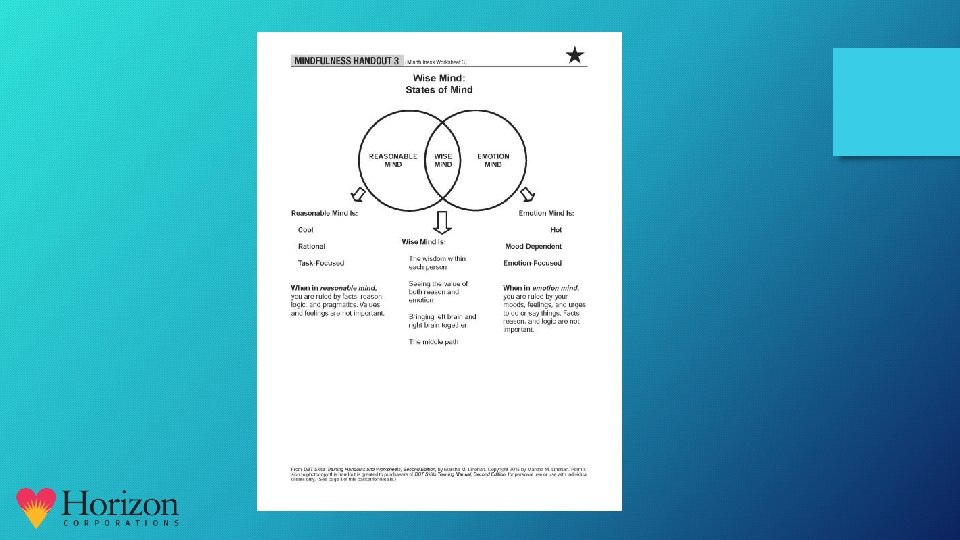
Wise Mind
Mindfulness Skills Taking Hold of Your Mind “What” Skills “How” Skills • Observe • Describe • Participate • Non-Judgmentally • One Mindfully • Effectively
“Observe” • Notice Your Body Sensations • Pay Attention • Control Your Attention • Practice Wordless Watching • Observe Both Inside and Outside Yourself
“Describe” • Put Words on the experience • Label what you observe • Just the facts • Who, what where & when
“Participate” • Throw yourself completely into it • Become one with whatever you are doing • Act intuitively from Wise Mind • Go with the flow
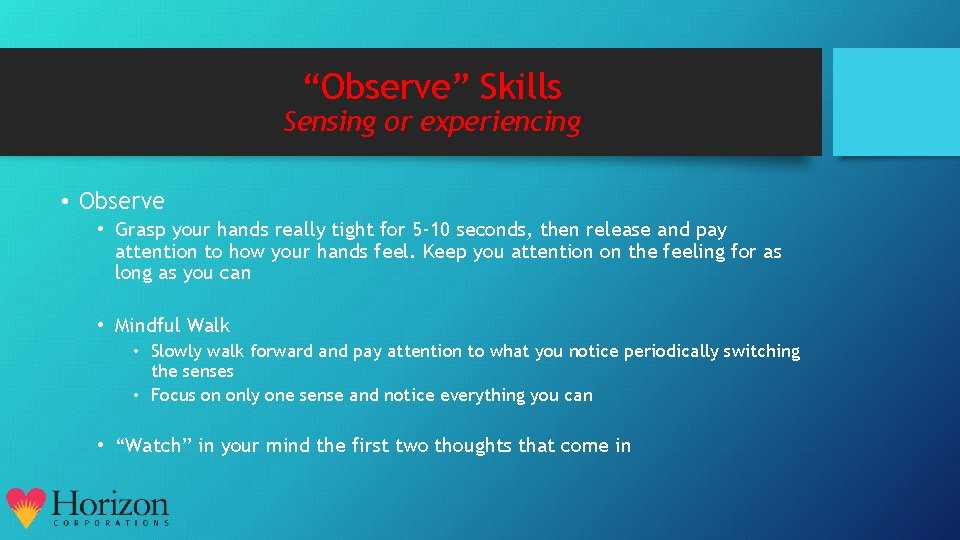
“Observe” Skills Sensing or experiencing • Observe • Grasp your hands really tight for 5 -10 seconds, then release and pay attention to how your hands feel. Keep you attention on the feeling for as long as you can • Mindful Walk • Slowly walk forward and pay attention to what you notice periodically switching the senses • Focus on only one sense and notice everything you can • “Watch” in your mind the first two thoughts that come in
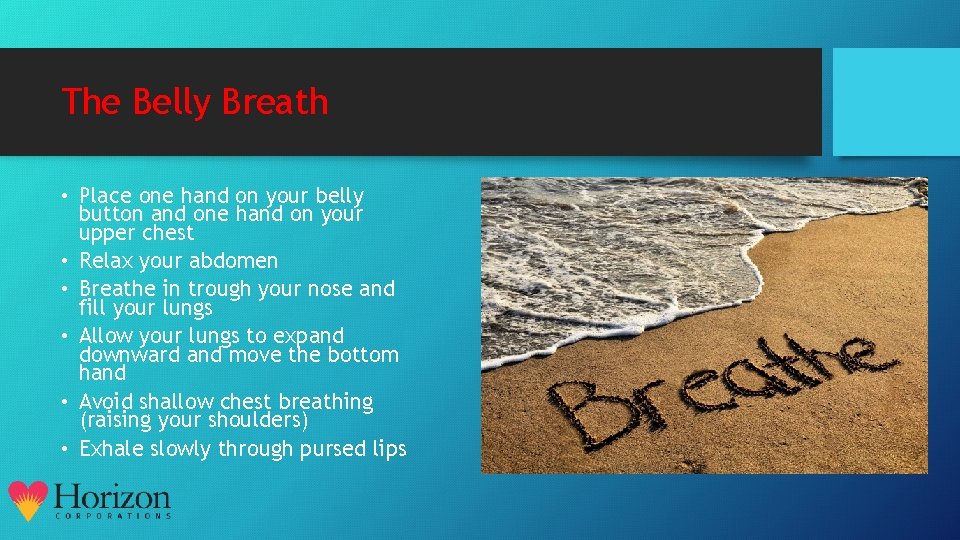
The Belly Breath • Place one hand on your belly button and one hand on your upper chest • Relax your abdomen • Breathe in trough your nose and fill your lungs • Allow your lungs to expand downward and move the bottom hand • Avoid shallow chest breathing (raising your shoulders) • Exhale slowly through pursed lips
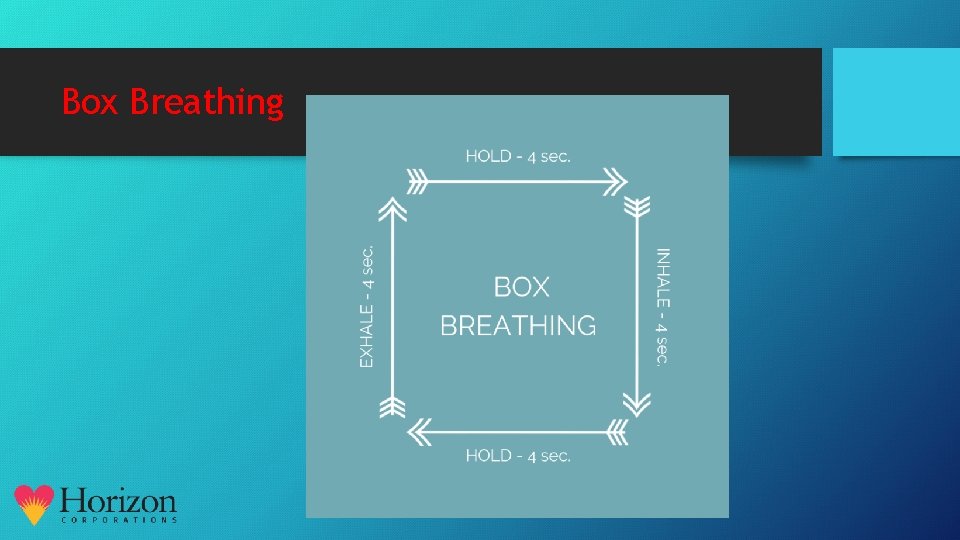
Box Breathing
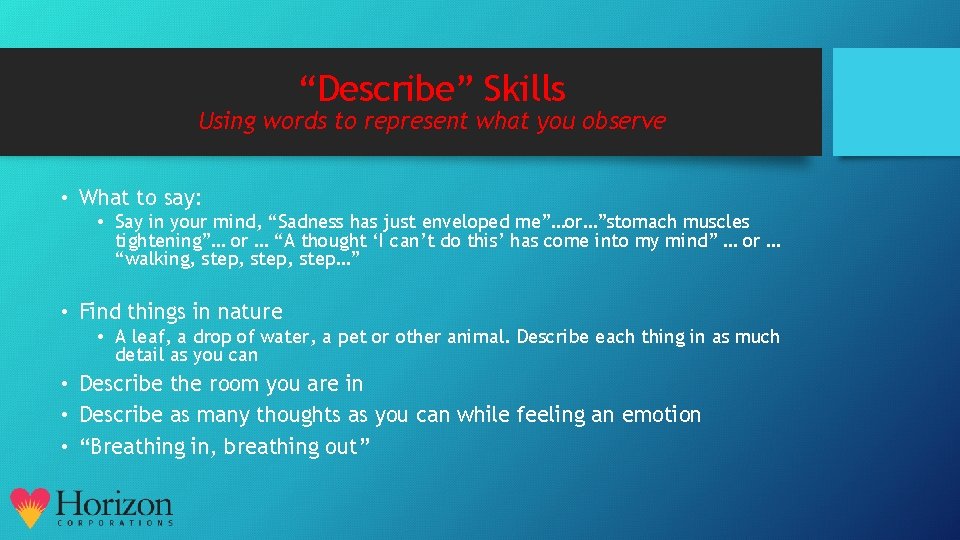
“Describe” Skills Using words to represent what you observe • What to say: • Say in your mind, “Sadness has just enveloped me”…or…”stomach muscles tightening”… or … “A thought ‘I can’t do this’ has come into my mind” … or … “walking, step, step…” • Find things in nature • A leaf, a drop of water, a pet or other animal. Describe each thing in as much detail as you can • Describe the room you are in • Describe as many thoughts as you can while feeling an emotion • “Breathing in, breathing out”
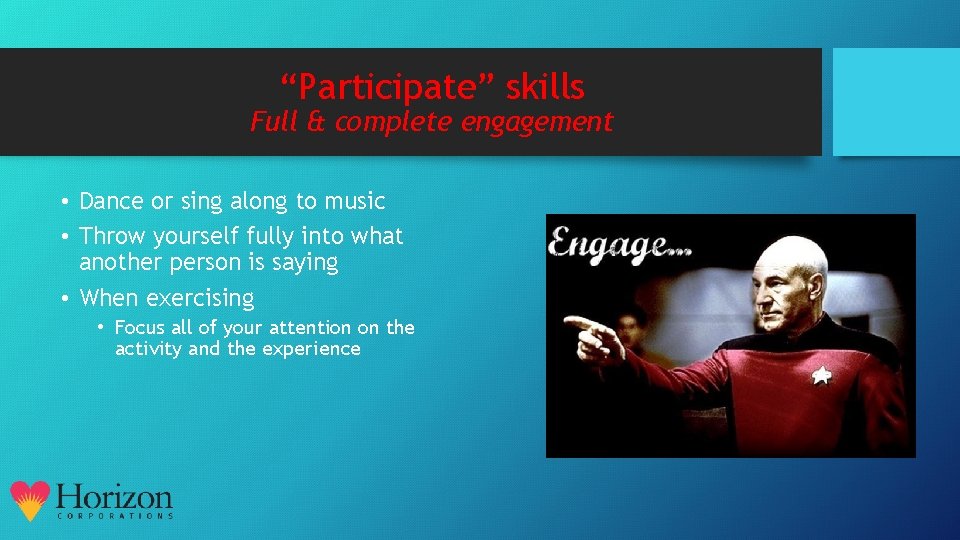
“Participate” skills Full & complete engagement • Dance or sing along to music • Throw yourself fully into what another person is saying • When exercising • Focus all of your attention on the activity and the experience
How Many Wolves?
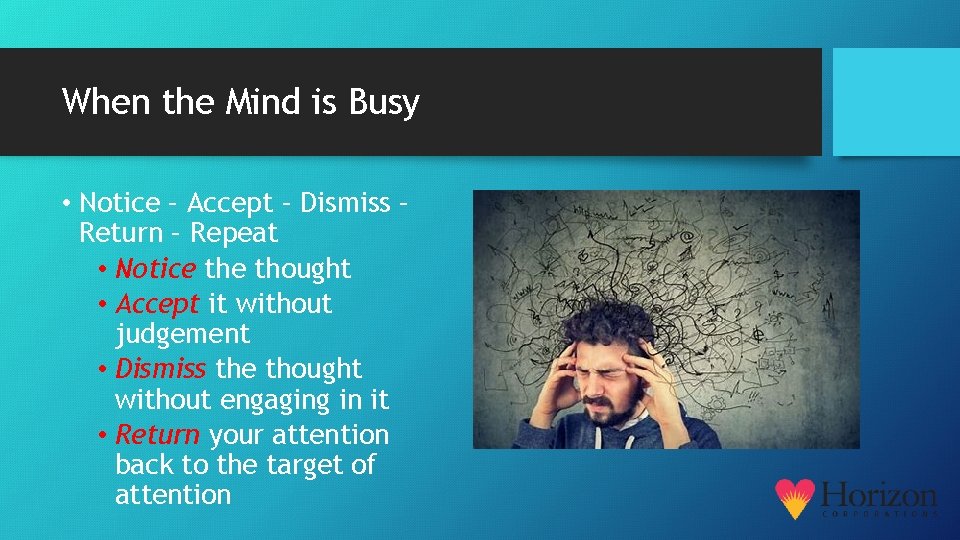
When the Mind is Busy • Notice – Accept – Dismiss – Return – Repeat • Notice thought • Accept it without judgement • Dismiss the thought without engaging in it • Return your attention back to the target of attention
Resources…
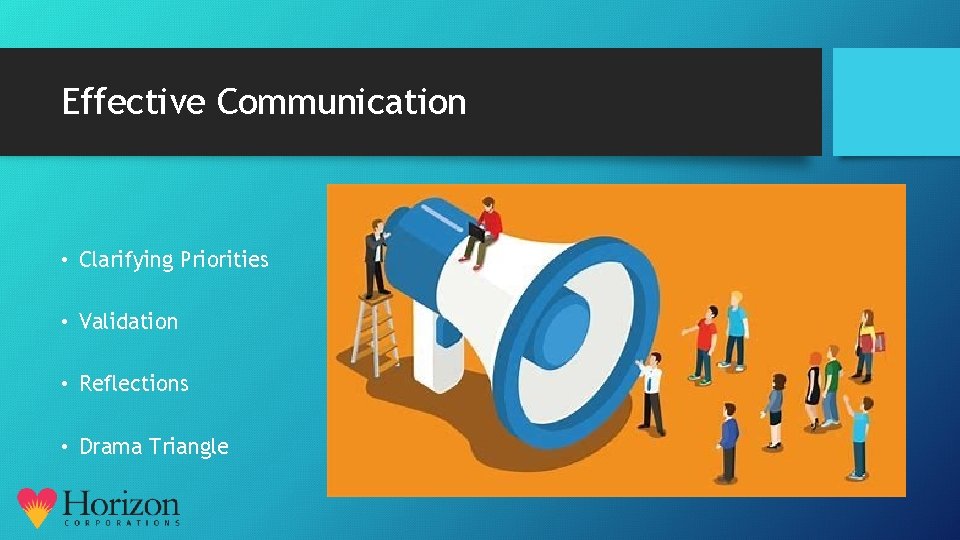
Effective Communication • Clarifying Priorities • Validation • Reflections • Drama Triangle
Clarifying Priorities • Three main objectives: 1. Getting what you want from another person • What specific results or changes do I want from this interaction? • What do I have to do to get the results? What will work? 2. Keeping and improving the relationship • How do I want the other person to feel about me? • What do I have to do to get (or keep) this relationship? 3. Keeping or improving self-respect • How do I want to feel about myself? • What do I have to do to feel that way about myself?
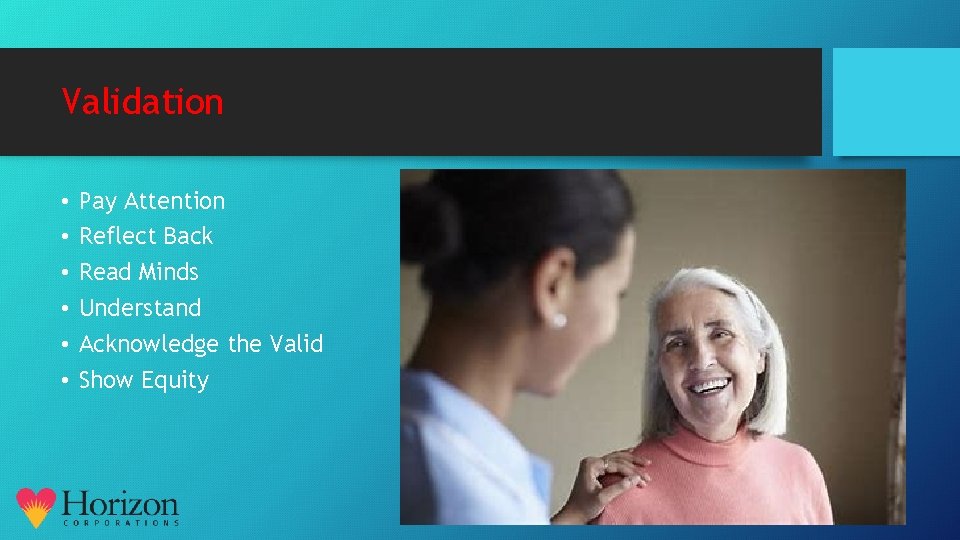
Validation • • • Pay Attention Reflect Back Read Minds Understand Acknowledge the Valid Show Equity
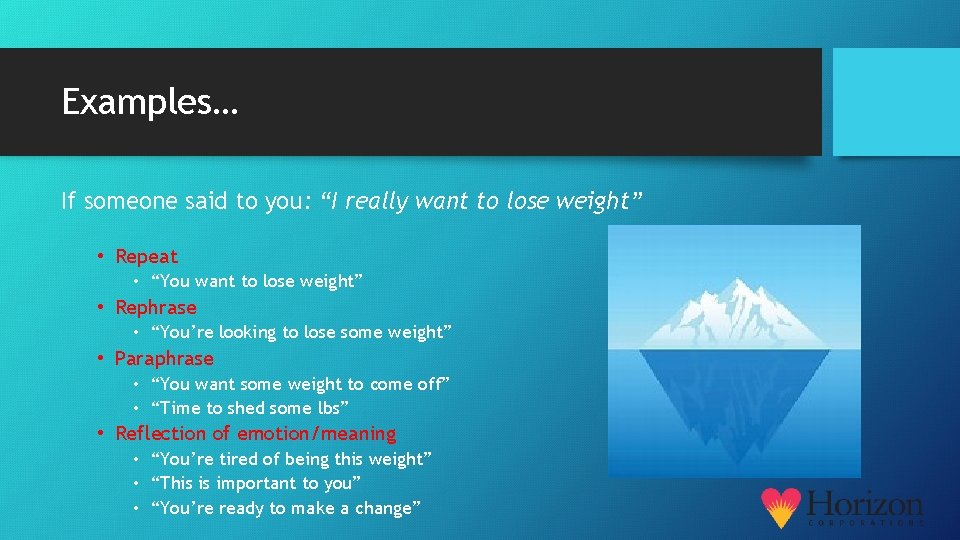
Reflective Listening Three Main Types 1. Repeating or rephrasing • Listener repeats or substitutes synonyms or phrases, and stays close to what the speaker has said 2. Paraphrasing • Listener makes a restatement in which the speaker’s meaning is inferred • This adds to and extends what was actually said 3. Reflection of feeling • Listener emphasizes emotional aspects of communication through feeling statements • This is the deepest form of listening • Metaphors and analogies are often used here
Roadblocks • • • Ordering, directing, commanding Warning, cautioning, threatening Giving advice, making suggestions, providing solutions Persuading with logic, lecturing, arguing, providing solutions Moralizing, preaching, telling patients their duty Judging, criticizing, disagreeing, blaming Agreeing, approving, praising Shaming, ridiculing, name calling Interrupting, analyzing Reassuring, sympathizing, consoling Questioning, probing Withdrawing, distracting, humoring, changing the subject
When perceptions appear accurate • “From your point of view…” • “It seems to you…” • “In your experience…” • “As you see it…” • “You think…” • “You believe…” • “You figure…” • “Your saying…”
When perceptions appear clouded • “It seems like…” • “It sounds like…” • “If I am hearing correctly…” • “What I guess I’m hearing is that…” • “It appears that you…” • “It might be that you…”
Examples… If someone said to you: “I really want to lose weight” • Repeat • “You want to lose weight” • Rephrase • “You’re looking to lose some weight” • Paraphrase • “You want some weight to come off” • “Time to shed some lbs” • Reflection of emotion/meaning • “You’re tired of being this weight” • “This is important to you” • “You’re ready to make a change”
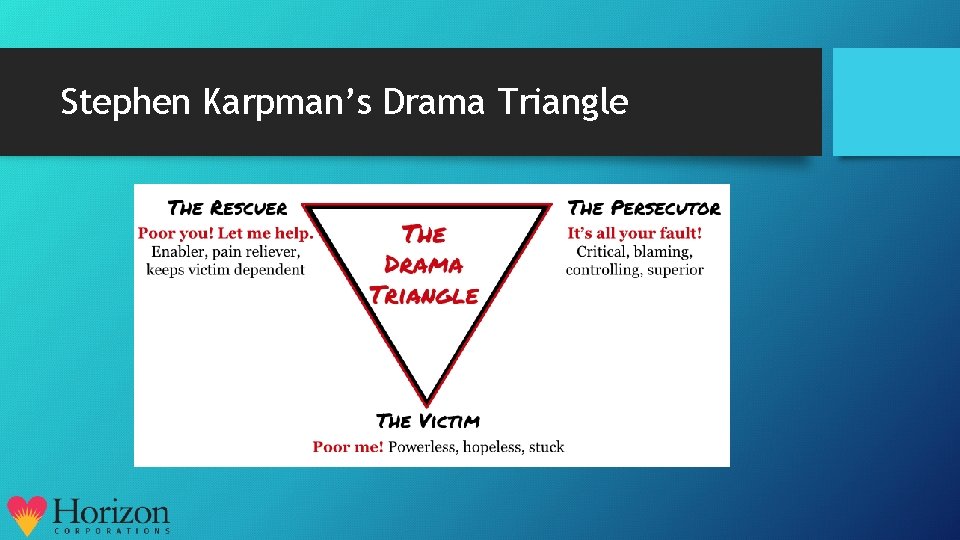
Stephen Karpman’s Drama Triangle
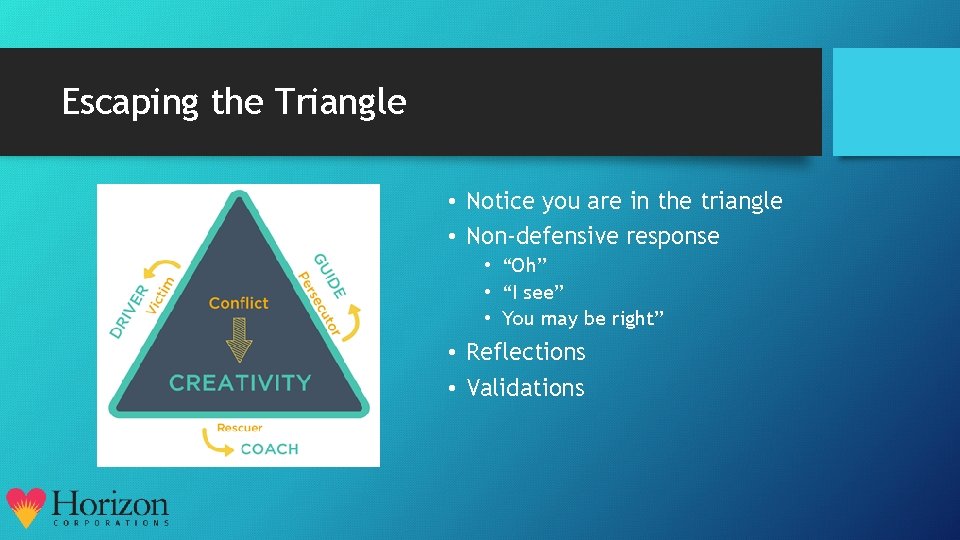
Escaping the Triangle • Notice you are in the triangle • Non-defensive response • “Oh” • “I see” • You may be right” • Reflections • Validations
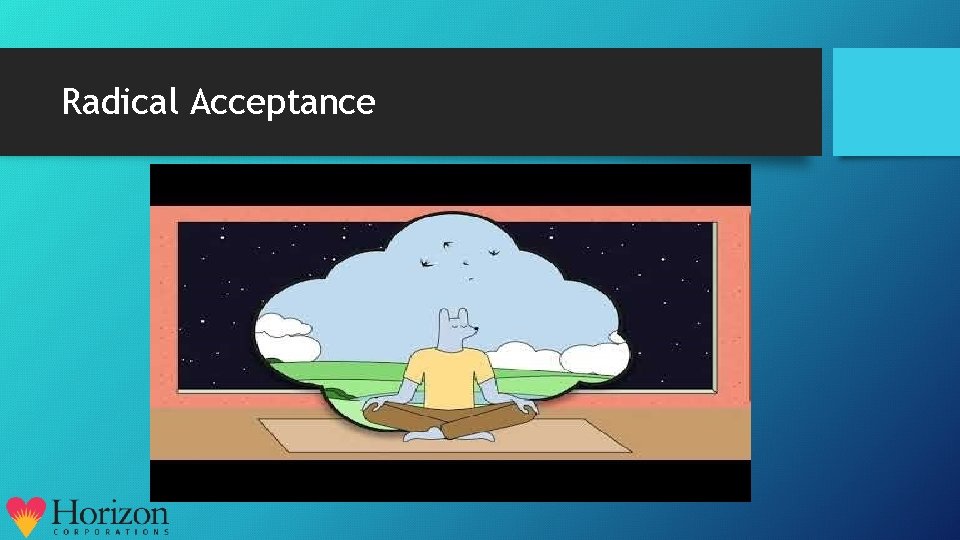
Radical Acceptance
Radical Acceptance Step-By-Step • • • Observe that you are questioning or fighting reality Remind yourself that the unpleasant reality is just as it is Acknowledge that some sort of history led to this very moment Practice accepting the whole self (mind, body & spirit) Practice opposite action. List all the behaviors you would do if you did accept the facts and then begin engaging in those actions.
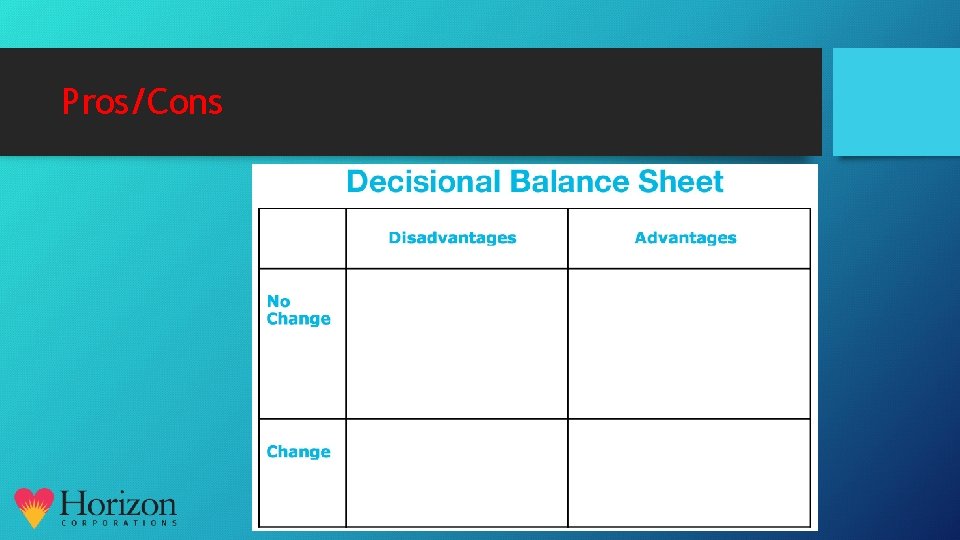
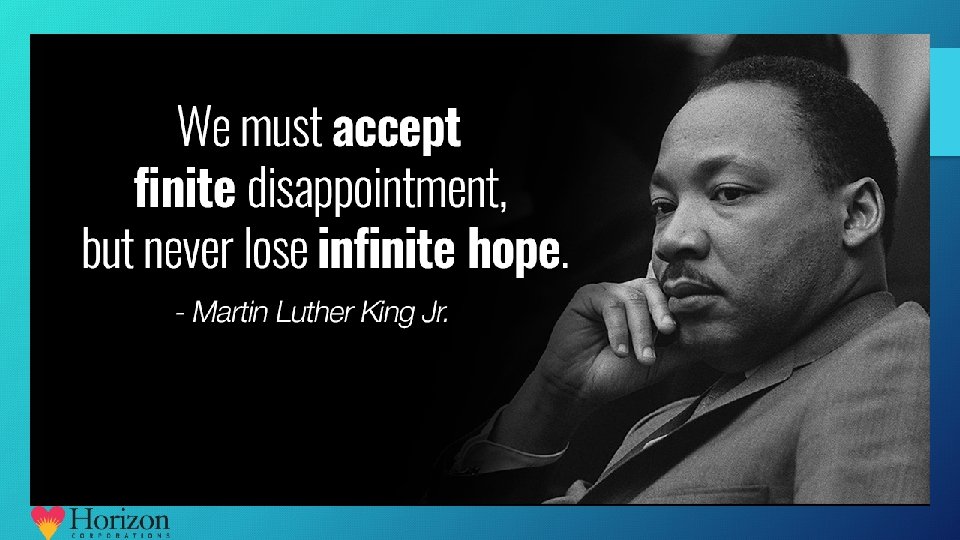
Step-By-Step (cont. ) • Cope ahead with events that seem unacceptable. • Attend to body sensations as you think about what you need to accept. • Allow disappointment, sadness, or grief to arise within you. • Acknowledge that life can be worth living even when there is pain. • Do pros and cons if you find yourself resisting practicing acceptance.
Pros/Cons
Thank you! Patrick Greene Clinical Supervisor Horizon Health Services Pgreene@horizon-health. org
For more information on presentations, resources and assistancee please don’t hesitate to reach out! Christina Pearl Director of Corporate Communication Horizon Health Services cpearl@horizon-health. org