
Practical Guide to Peripheral Artery Disease Ido Weinberg
Practical Guide to Peripheral Artery Disease Ido Weinberg, MD MSc Assistant Professor of Medicine Harvard Medical School Vascular Medicine Section Massachusetts General Hospital

Disclosure • I have no conflicts of interest to report regarding this presentation
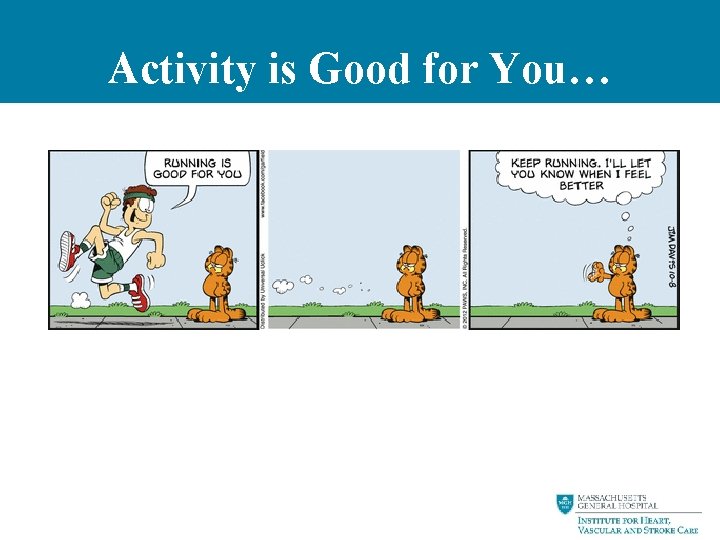
Activity is Good for You…

PAD is a BIG Problem That People Ignore
Case Presentation • • 67 y/o M presents for routine annual checkup No complaints PMHx: HTN, HL Social Hx: Recently retired, never smoked ROS: Rather sedentary Physical examination: “Normal pedal pulses” Should we address PAD in this patient?
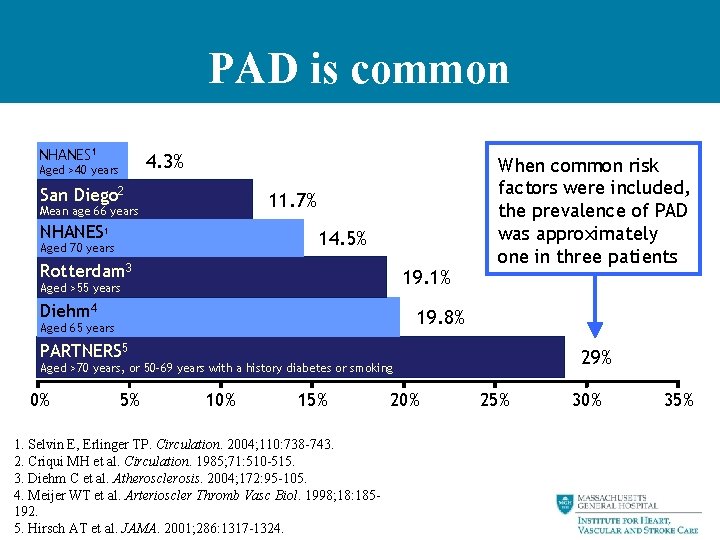
PAD is common NHANES 1 4. 3% Aged >40 years San Diego 2 11. 7% Mean age 66 years NHANES 1 14. 5% Aged 70 years Rotterdam 3 19. 1% Aged >55 years Diehm 4 When common risk factors were included, the prevalence of PAD was approximately one in three patients 19. 8% Aged 65 years PARTNERS 5 29% Aged >70 years, or 50– 69 years with a history diabetes or smoking 0% 5% 10% 15% 1. Selvin E, Erlinger TP. Circulation. 2004; 110: 738 -743. 2. Criqui MH et al. Circulation. 1985; 71: 510 -515. 3. Diehm C et al. Atherosclerosis. 2004; 172: 95 -105. 4. Meijer WT et al. Arterioscler Thromb Vasc Biol. 1998; 18: 185192. 5. Hirsch AT et al. JAMA. 2001; 286: 1317 -1324. 20% 25% 30% 35%
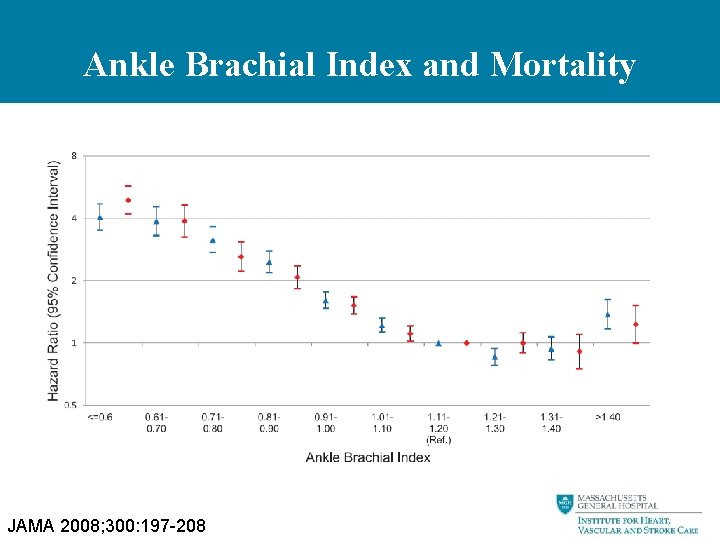
Ankle Brachial Index and Mortality JAMA 2008; 300: 197 -208
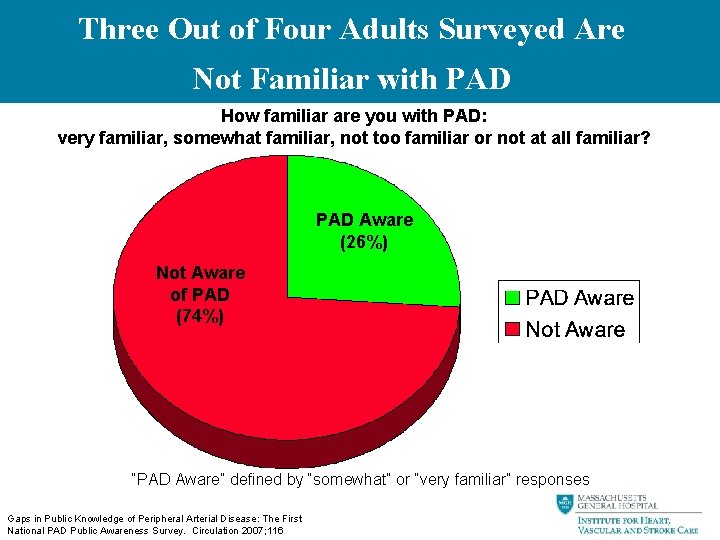
Three Out of Four Adults Surveyed Are Not Familiar with PAD How familiar are you with PAD: very familiar, somewhat familiar, not too familiar or not at all familiar? PAD Aware (26%) Not Aware of PAD (74%) “PAD Aware” defined by “somewhat” or “very familiar” responses Gaps in Public Knowledge of Peripheral Arterial Disease: The First National PAD Public Awareness Survey. Circulation 2007; 116
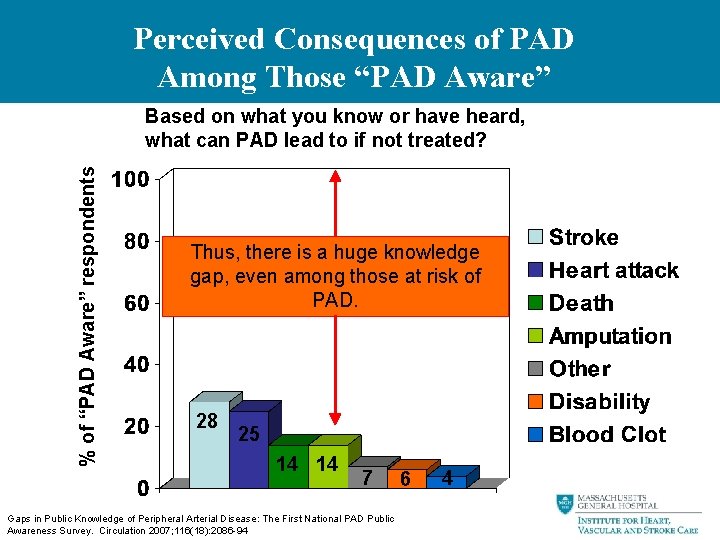
Perceived Consequences of PAD Among Those “PAD Aware” % of “PAD Aware” respondents Based on what you know or have heard, what can PAD lead to if not treated? Thus, there is a huge knowledge gap, even among those at risk of PAD. 28 25 14 14 7 Gaps in Public Knowledge of Peripheral Arterial Disease: The First National PAD Public Awareness Survey. Circulation 2007; 116(18): 2086 -94 6 4
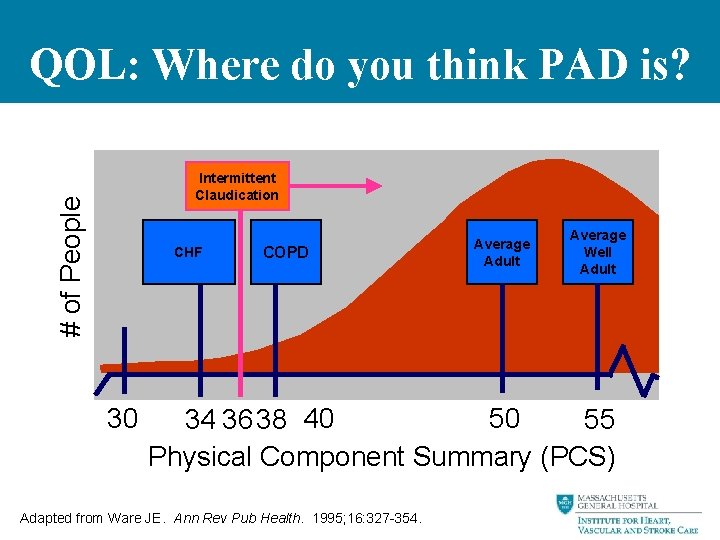
QOL: Where do you think PAD is? # of People Intermittent Claudication CHF 30 COPD Average Adult Average Well Adult 50 34 36 38 40 55 Physical Component Summary (PCS) Adapted from Ware JE. Ann Rev Pub Health. 1995; 16: 327 -354.
Interim conclusion #1: PAD is common, and should be addressed proactively
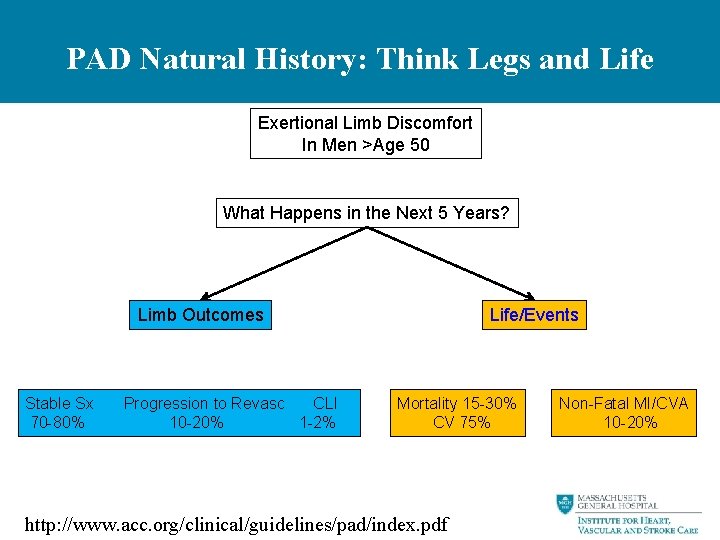
PAD Natural History: Think Legs and Life Exertional Limb Discomfort In Men >Age 50 What Happens in the Next 5 Years? Limb Outcomes Stable Sx 70 -80% Progression to Revasc CLI 10 -20% 1 -2% Life/Events Mortality 15 -30% CV 75% http: //www. acc. org/clinical/guidelines/pad/index. pdf Non-Fatal MI/CVA 10 -20%
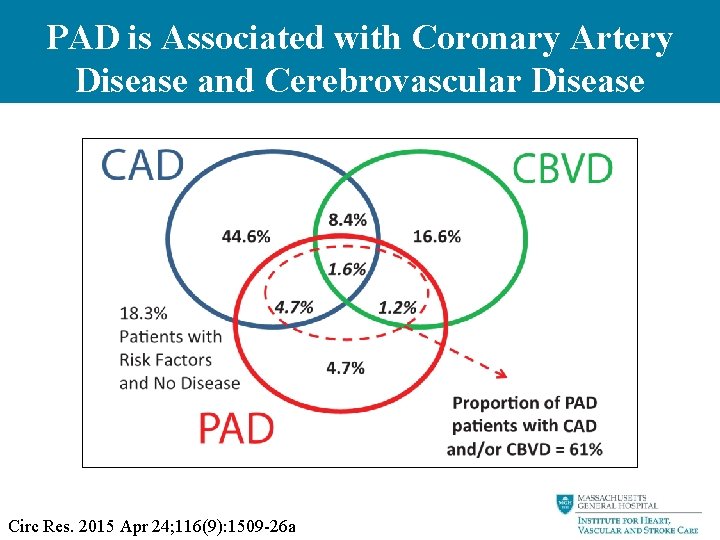
PAD is Associated with Coronary Artery Disease and Cerebrovascular Disease Circ Res. 2015 Apr 24; 116(9): 1509 -26 a
Interim conclusion #2: Intermittent claudication is common but CLI is hazardous
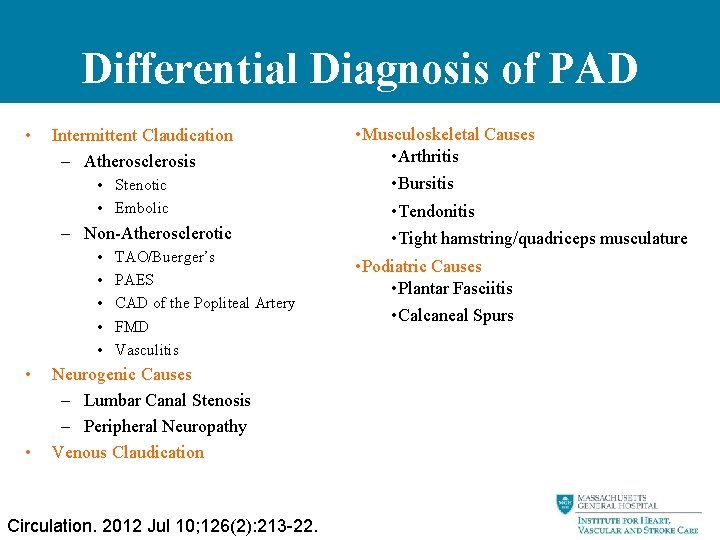
Differential Diagnosis of PAD • Intermittent Claudication – Atherosclerosis • Stenotic • Embolic – Non-Atherosclerotic • • TAO/Buerger’s PAES CAD of the Popliteal Artery FMD Vasculitis Neurogenic Causes – Lumbar Canal Stenosis – Peripheral Neuropathy Venous Claudication Circulation. 2012 Jul 10; 126(2): 213 -22. • Musculoskeletal Causes • Arthritis • Bursitis • Tendonitis • Tight hamstring/quadriceps musculature • Podiatric Causes • Plantar Fasciitis • Calcaneal Spurs
Interim conclusion #3: Intermittent claudication ≠ PAD
What should I focus on when taking a PAD-related patient history?
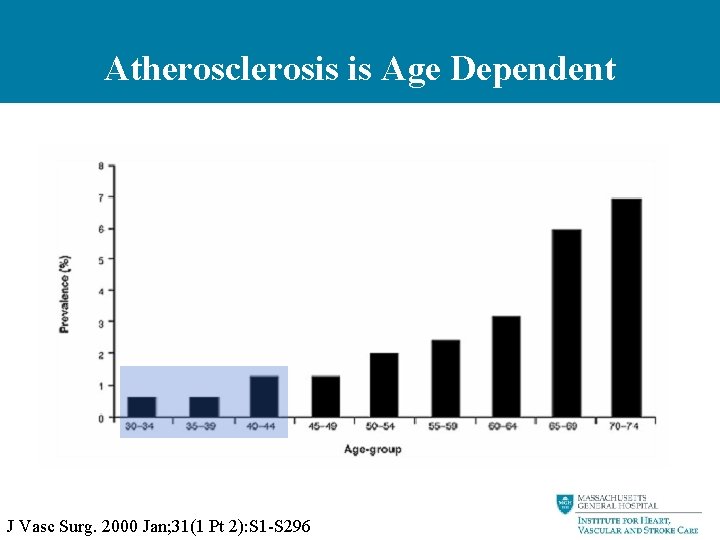
Atherosclerosis is Age Dependent J Vasc Surg. 2000 Jan; 31(1 Pt 2): S 1 -S 296
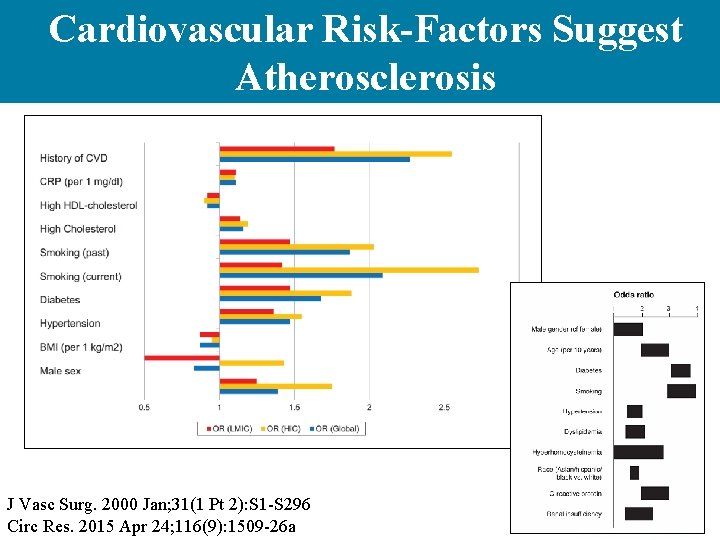
Cardiovascular Risk-Factors Suggest Atherosclerosis J Vasc Surg. 2000 Jan; 31(1 Pt 2): S 1 -S 296 Circ Res. 2015 Apr 24; 116(9): 1509 -26 a
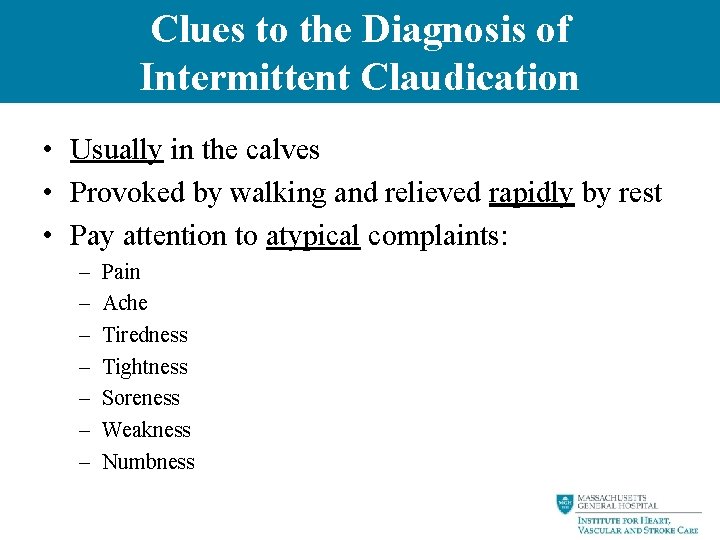
Clues to the Diagnosis of Intermittent Claudication • Usually in the calves • Provoked by walking and relieved rapidly by rest • Pay attention to atypical complaints: – – – – Pain Ache Tiredness Tightness Soreness Weakness Numbness
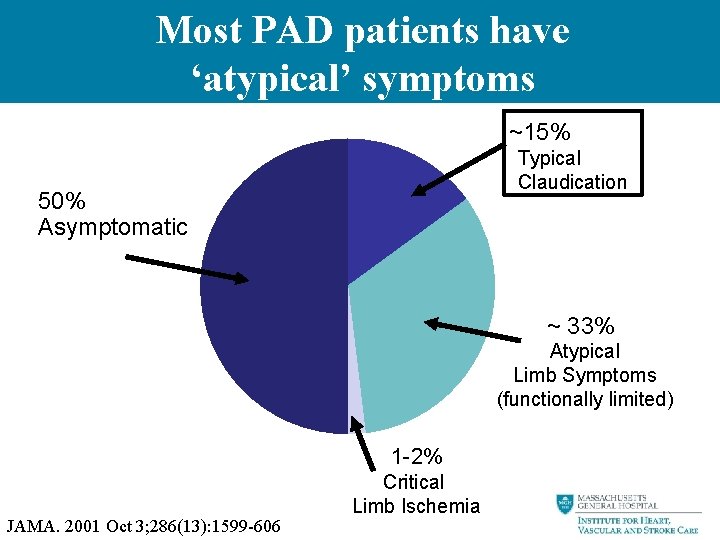
Most PAD patients have ‘atypical’ symptoms ~15% Typical Claudication 50% Asymptomatic ~ 33% Atypical Limb Symptoms (functionally limited) 1 -2% JAMA. 2001 Oct 3; 286(13): 1599 -606 Critical Limb Ischemia
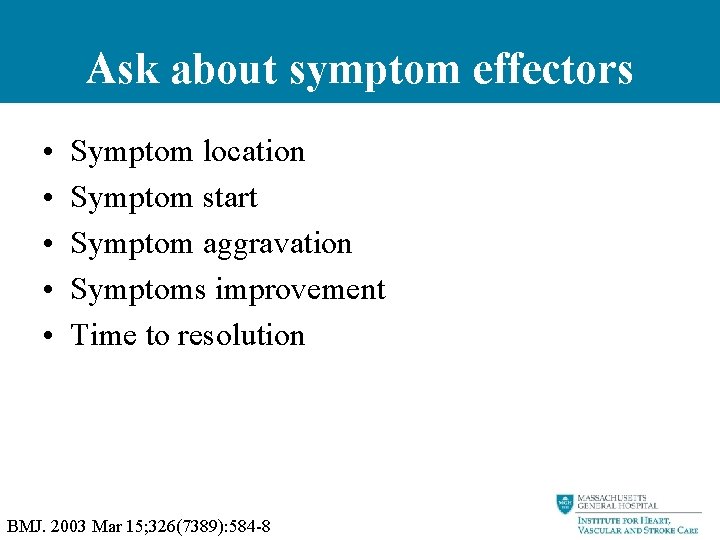
Ask about symptom effectors • • • Symptom location Symptom start Symptom aggravation Symptoms improvement Time to resolution BMJ. 2003 Mar 15; 326(7389): 584 -8
Interim conclusion #4: PAD is usually ‘atypical’
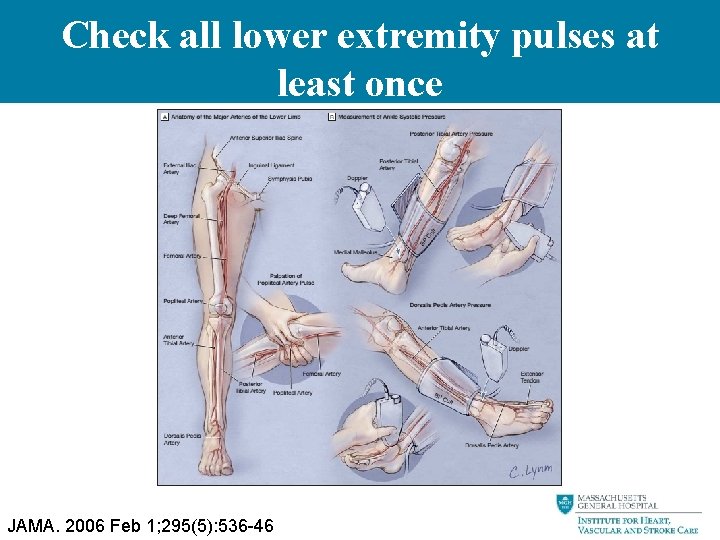
Check all lower extremity pulses at least once JAMA. 2006 Feb 1; 295(5): 536 -46
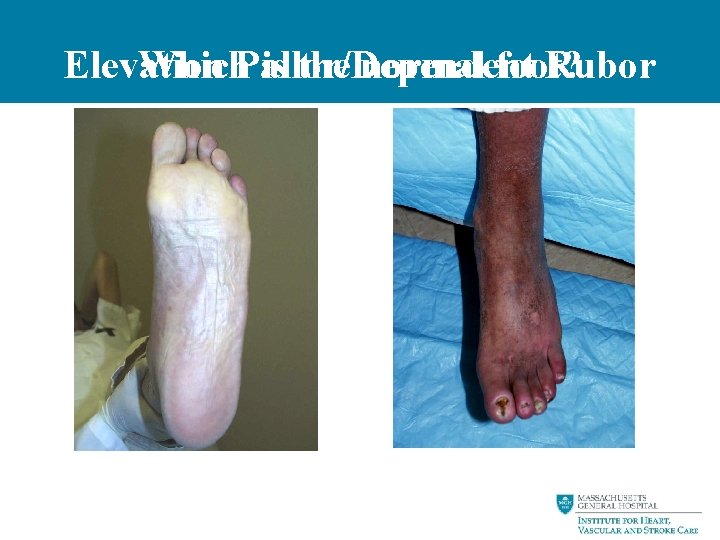
Elevation Which. Pallor/Dependent is the normal foot? Rubor
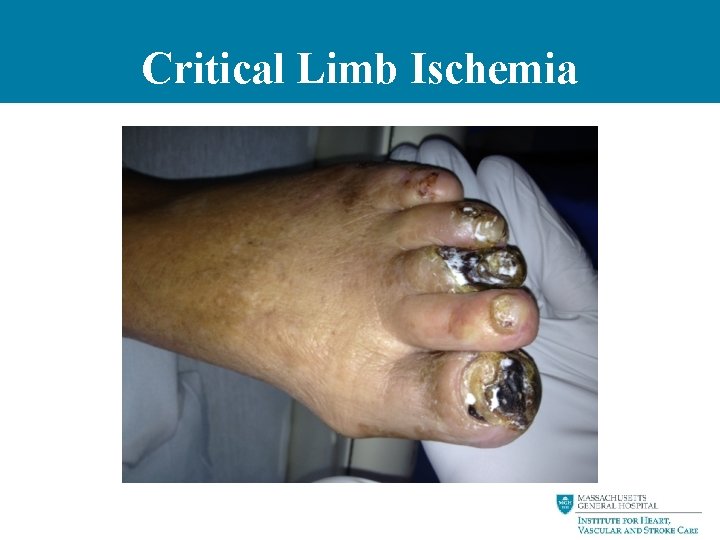
Critical Limb Ischemia
Interim conclusion #5: Don’t skimp on a comprehensive lower extremity physical examination
Vascular Laboratory Diagnosis and Surveillance of PAD Circulation. 2013 Aug 13; 128(7): 749 -57
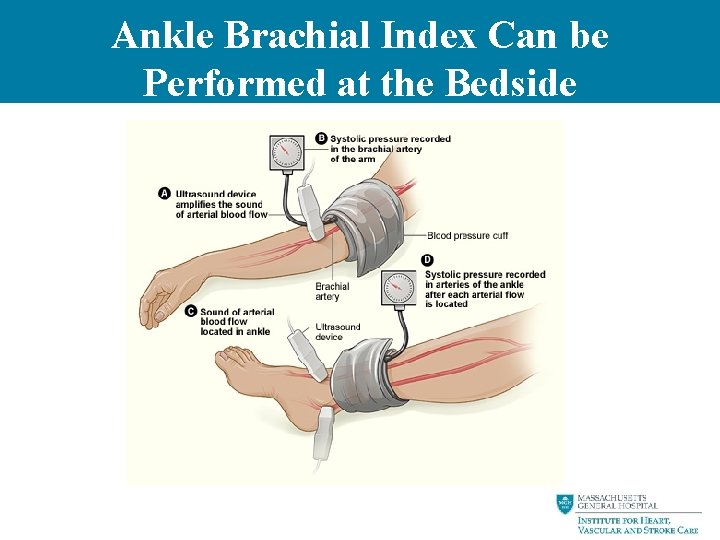
Ankle Brachial Index Can be Performed at the Bedside
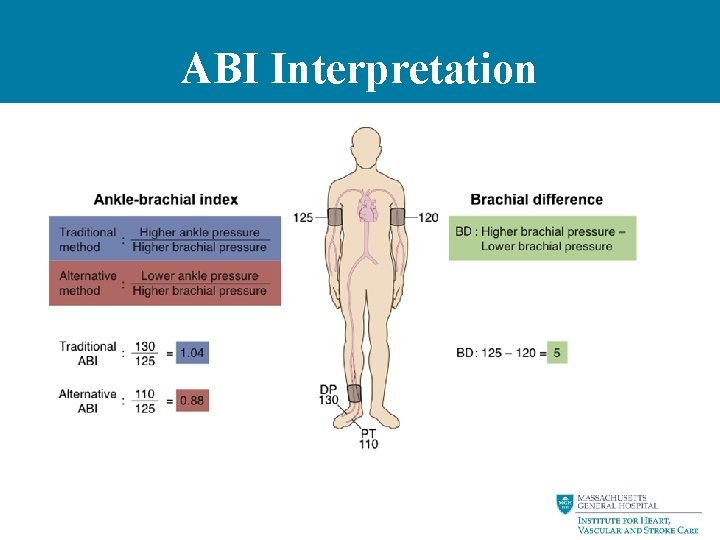
ABI Interpretation
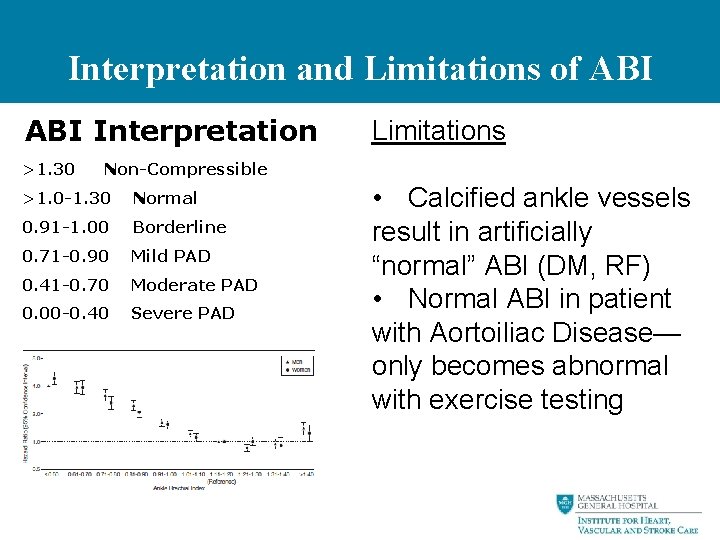
Interpretation and Limitations of ABI Interpretation >1. 30 Limitations Non-Compressible >1. 0 -1. 30 Normal 0. 91 -1. 00 Borderline 0. 71 -0. 90 Mild PAD 0. 41 -0. 70 Moderate PAD 0. 00 -0. 40 Severe PAD JAMA 2008; 300: 197 -208 • Calcified ankle vessels result in artificially “normal” ABI (DM, RF) • Normal ABI in patient with Aortoiliac Disease— only becomes abnormal with exercise testing
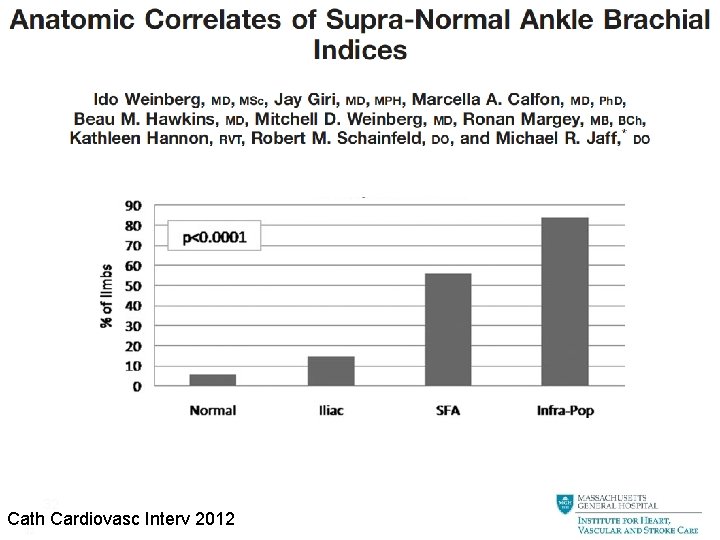
32 Cath Cardiovasc Interv 2012 32
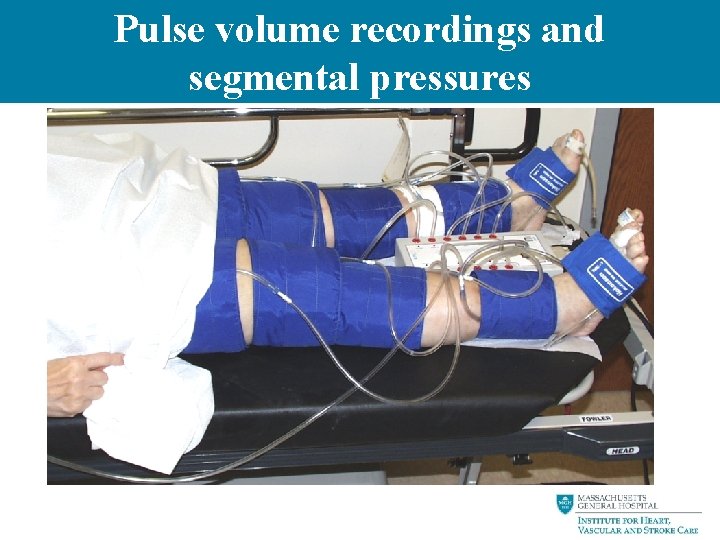
Pulse volume recordings and segmental pressures
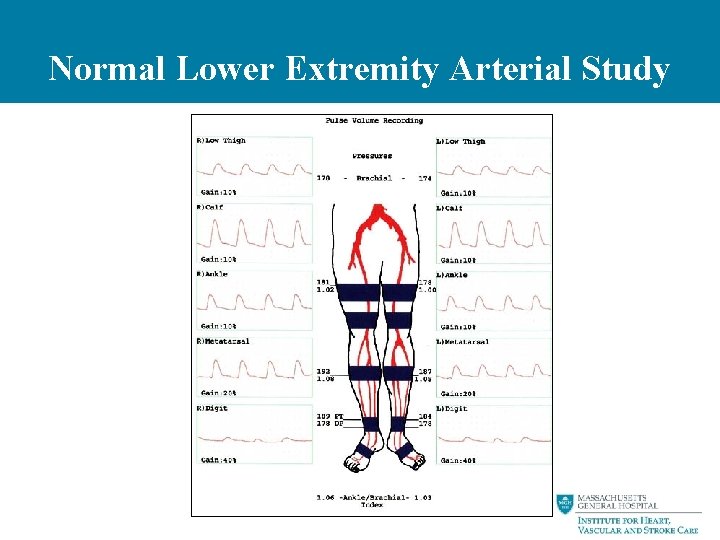
Normal Lower Extremity Arterial Study
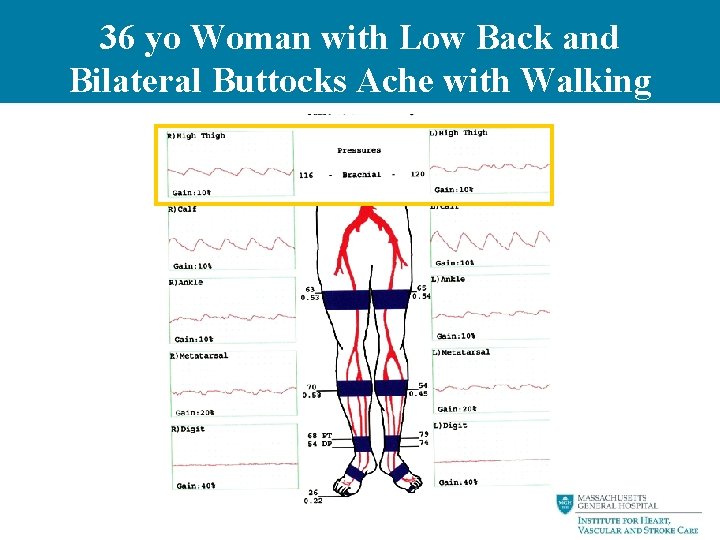
36 yo Woman with Low Back and Bilateral Buttocks Ache with Walking
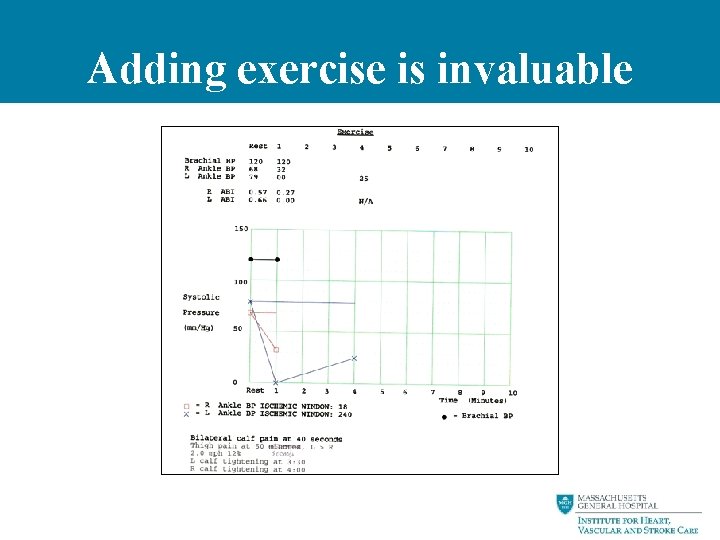
Adding exercise is invaluable
Interim conclusion #6: ABI = Cheap, useful, reimburseable. Add exercise
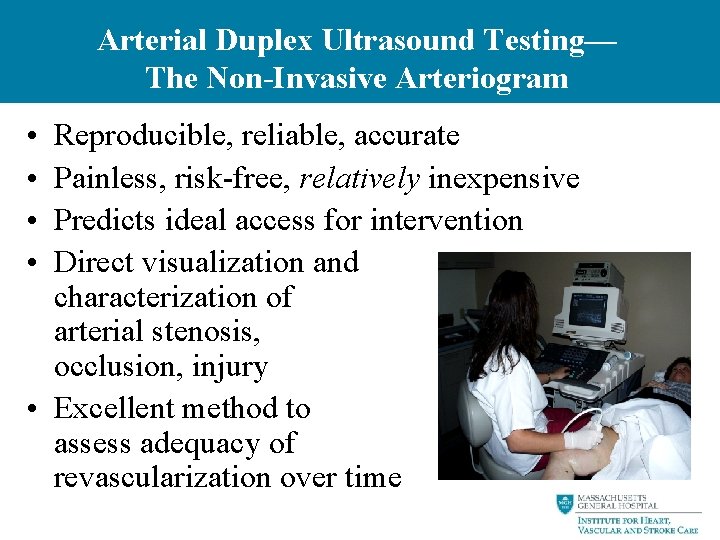
Arterial Duplex Ultrasound Testing— The Non-Invasive Arteriogram • • Reproducible, reliable, accurate Painless, risk-free, relatively inexpensive Predicts ideal access for intervention Direct visualization and characterization of arterial stenosis, occlusion, injury • Excellent method to assess adequacy of revascularization over time
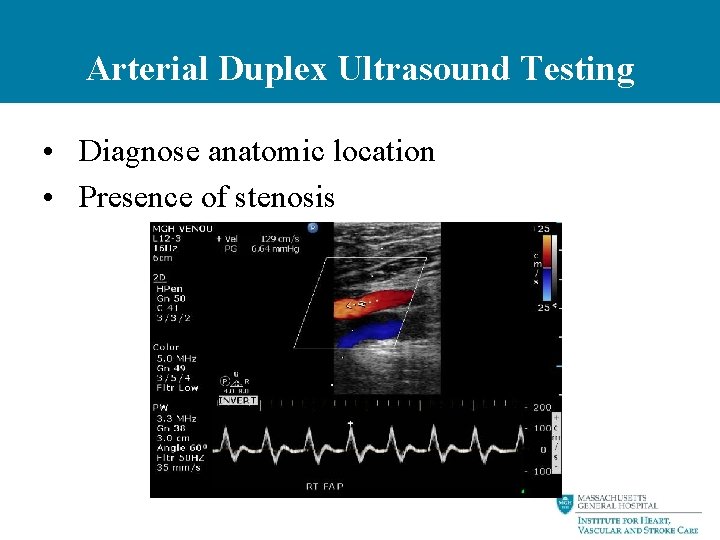
Arterial Duplex Ultrasound Testing • Diagnose anatomic location • Presence of stenosis
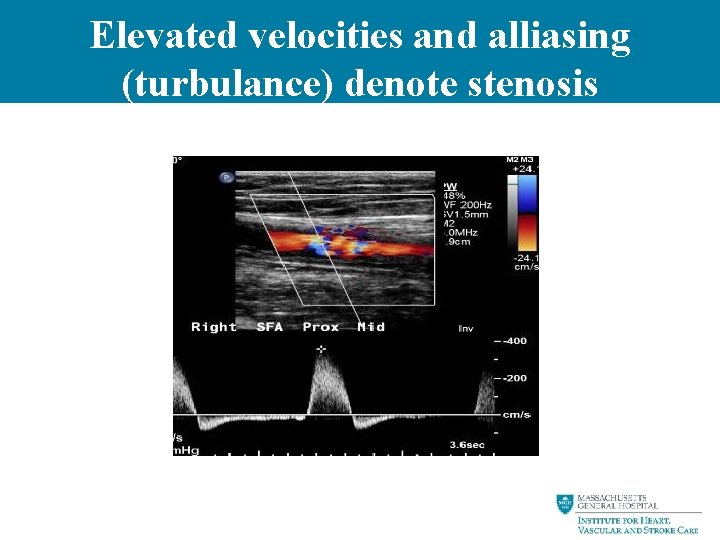
Elevated velocities and alliasing (turbulance) denote stenosis
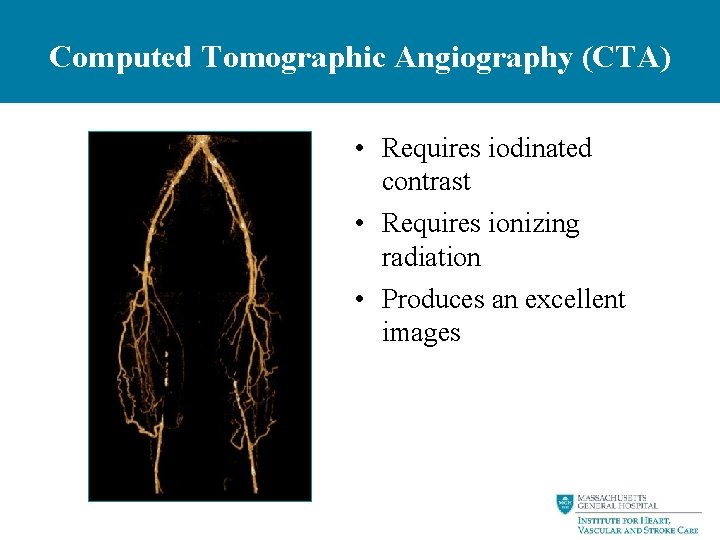
Computed Tomographic Angiography (CTA) • Requires iodinated contrast • Requires ionizing radiation • Produces an excellent images
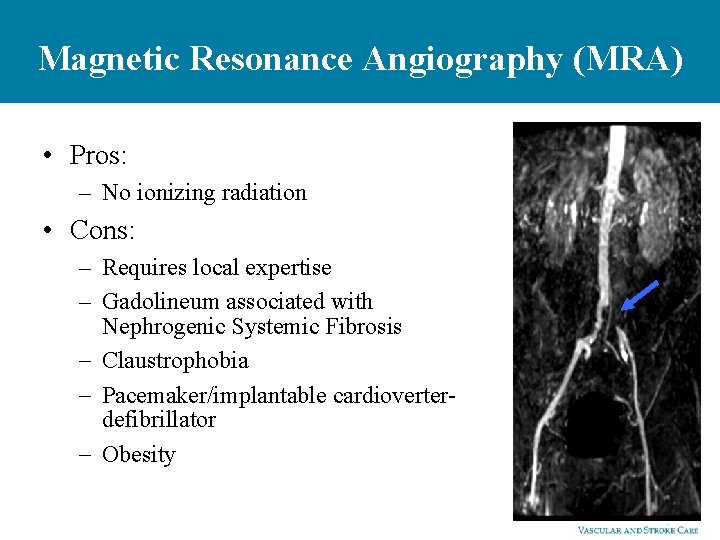
Magnetic Resonance Angiography (MRA) • Pros: – No ionizing radiation • Cons: – Requires local expertise – Gadolineum associated with Nephrogenic Systemic Fibrosis - Claustrophobia - Pacemaker/implantable cardioverterdefibrillator - Obesity
Is this vascular leg pain?
PAD Treatment
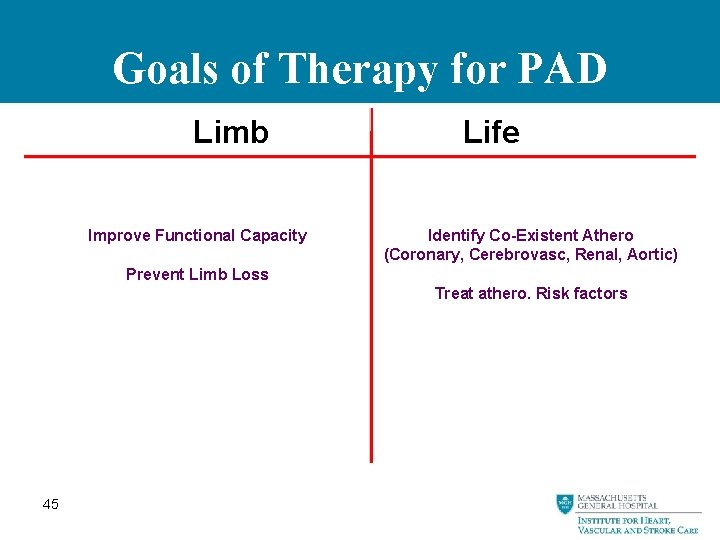
Goals of Therapy for PAD Limb Improve Functional Capacity Life Identify Co-Existent Athero (Coronary, Cerebrovasc, Renal, Aortic) Prevent Limb Loss Treat athero. Risk factors 45
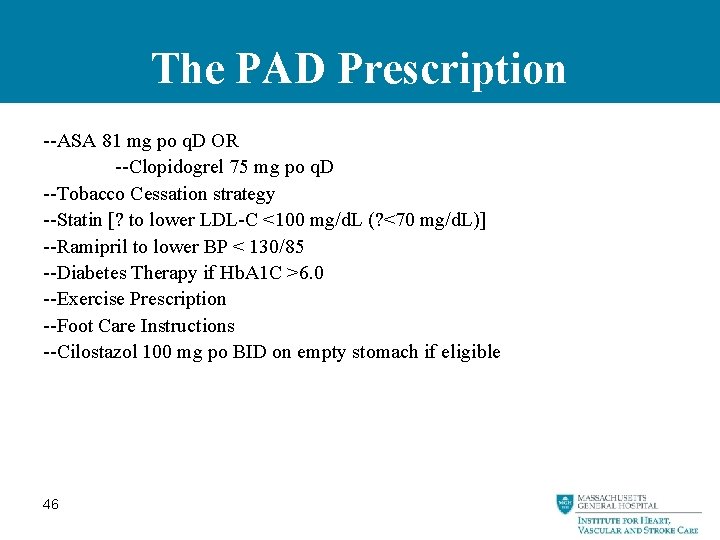
The PAD Prescription --ASA 81 mg po q. D OR --Clopidogrel 75 mg po q. D --Tobacco Cessation strategy --Statin [? to lower LDL-C <100 mg/d. L (? <70 mg/d. L)] --Ramipril to lower BP < 130/85 --Diabetes Therapy if Hb. A 1 C >6. 0 --Exercise Prescription --Foot Care Instructions --Cilostazol 100 mg po BID on empty stomach if eligible 46
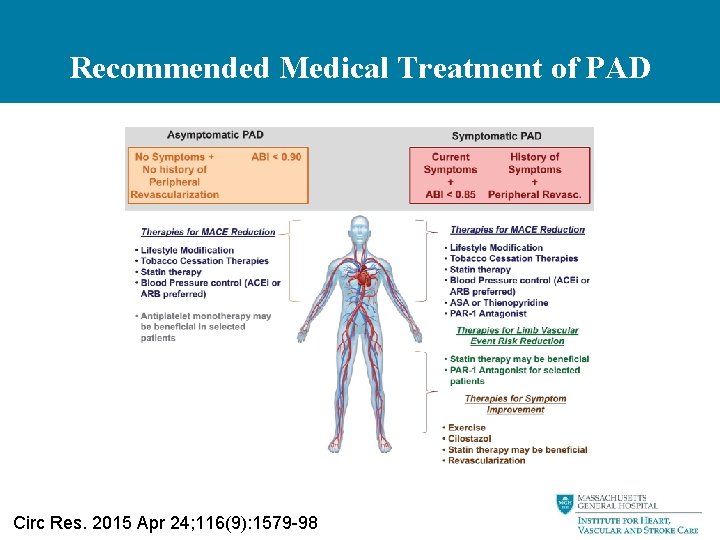
Recommended Medical Treatment of PAD Circ Res. 2015 Apr 24; 116(9): 1579 -98
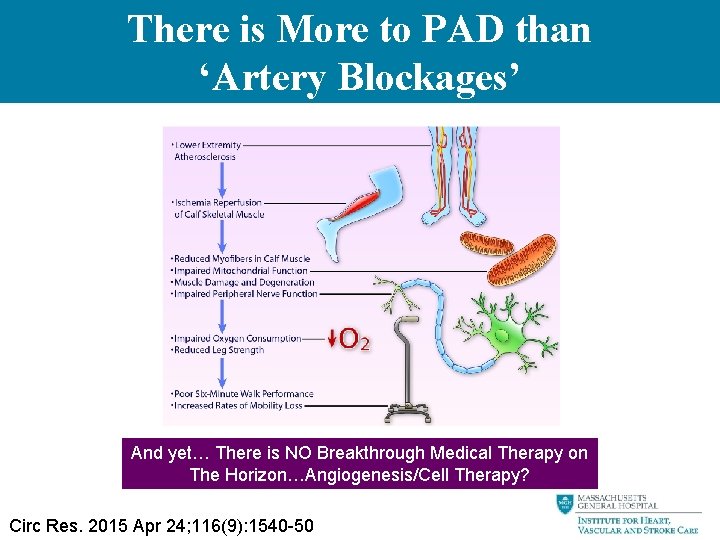
There is More to PAD than ‘Artery Blockages’ And yet… There is NO Breakthrough Medical Therapy on The Horizon…Angiogenesis/Cell Therapy? Circ Res. 2015 Apr 24; 116(9): 1540 -50
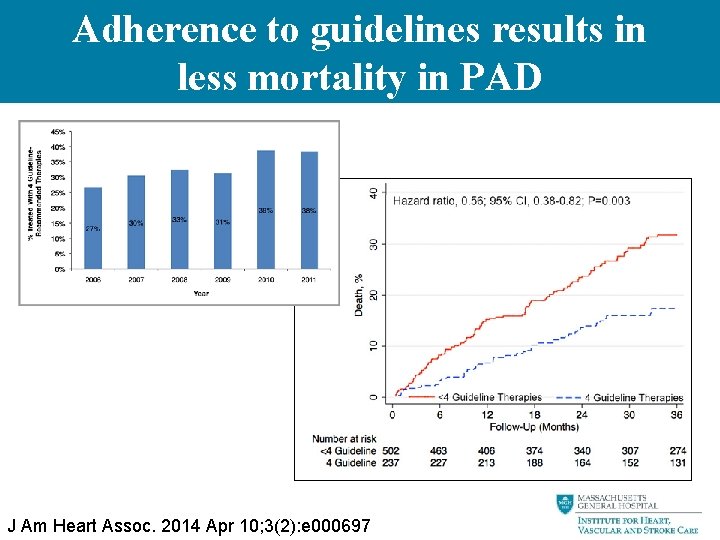
Adherence to guidelines results in less mortality in PAD J Am Heart Assoc. 2014 Apr 10; 3(2): e 000697
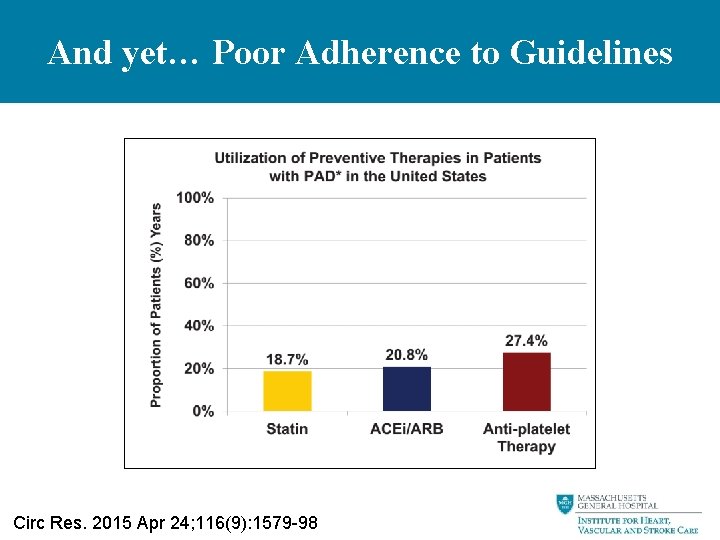
And yet… Poor Adherence to Guidelines Circ Res. 2015 Apr 24; 116(9): 1579 -98
When to Change Your Strategy? • No improvement with maximal medical therapy • Worsening claudication walking distance • Rest pain • Non-healing ulcer • Gangrene 51
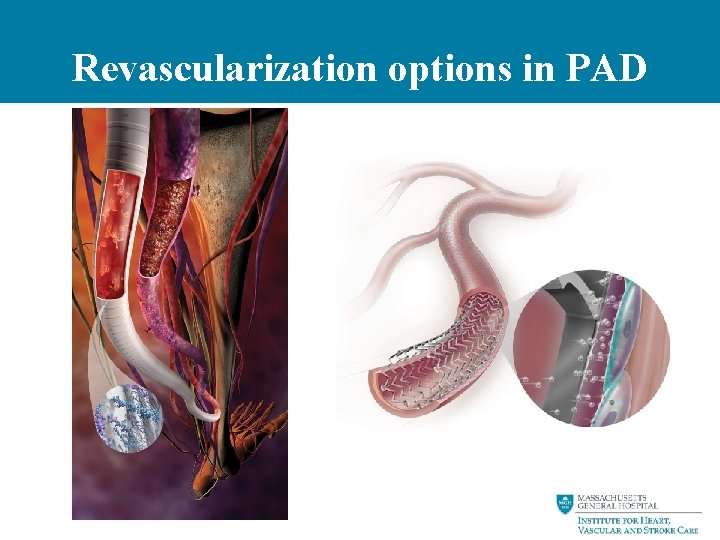
Revascularization options in PAD
53 Circulation 2011; epub November 16
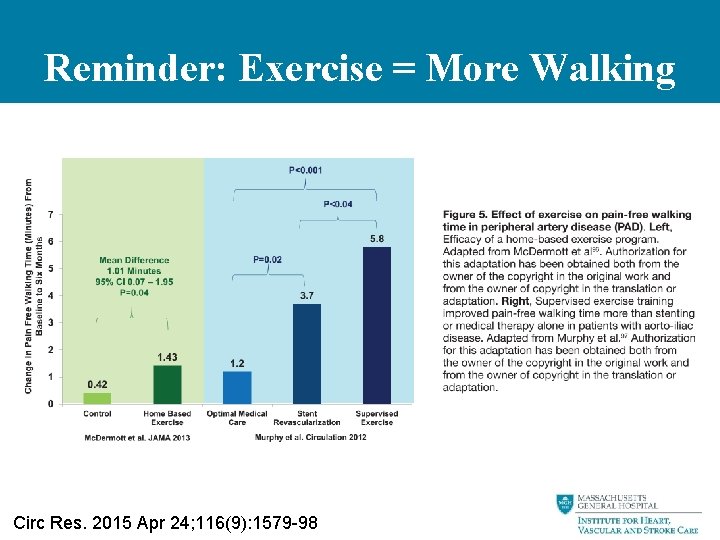
Reminder: Exercise = More Walking Circ Res. 2015 Apr 24; 116(9): 1579 -98
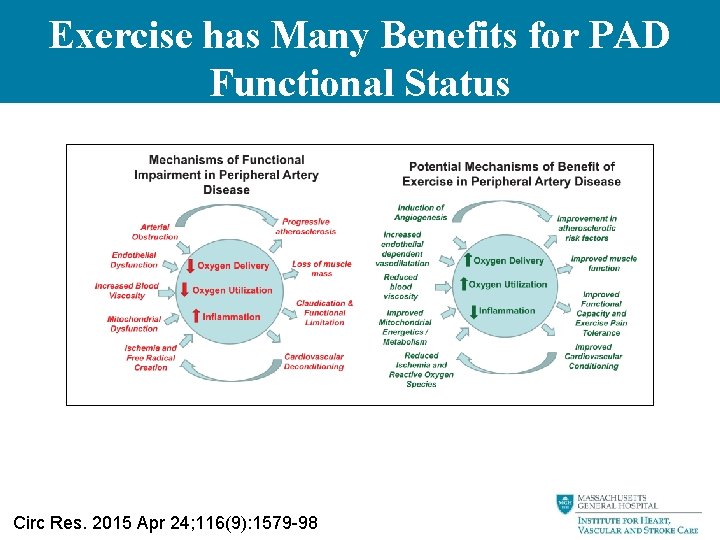
Exercise has Many Benefits for PAD Functional Status Circ Res. 2015 Apr 24; 116(9): 1579 -98
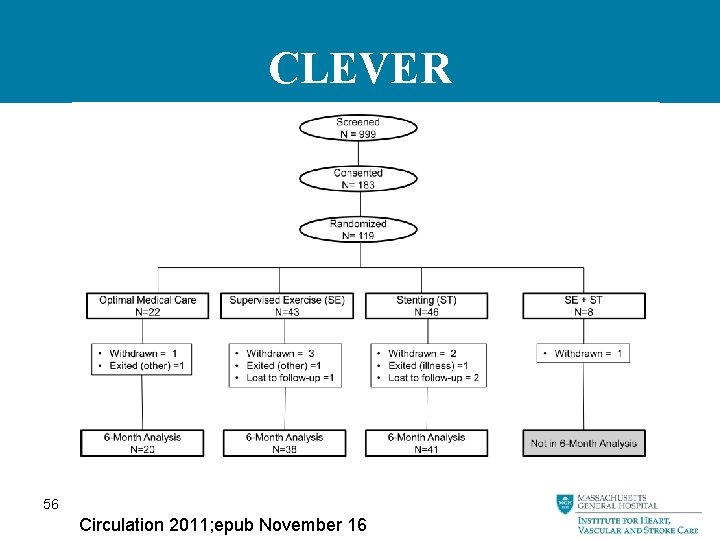
CLEVER 56 Circulation 2011; epub November 16
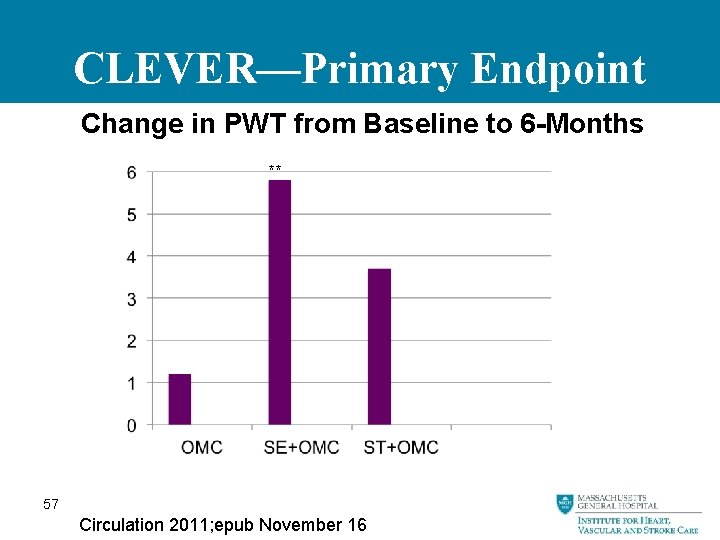
CLEVER—Primary Endpoint Change in PWT from Baseline to 6 -Months ** 57 Circulation 2011; epub November 16
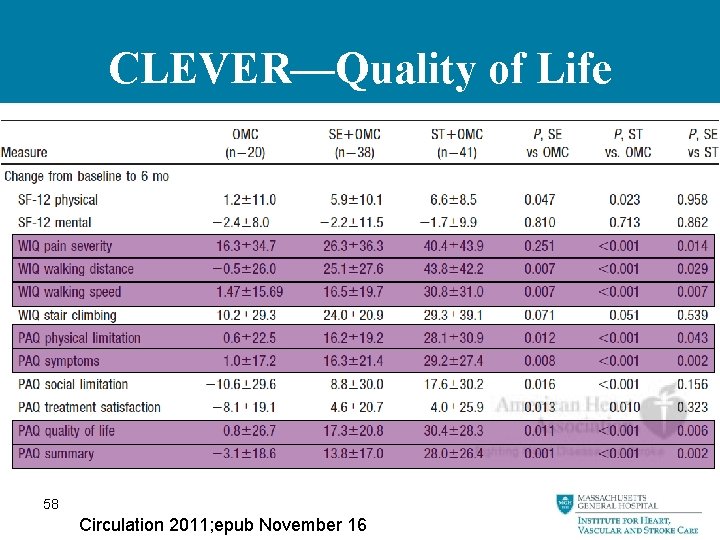
CLEVER—Quality of Life 58 Circulation 2011; epub November 16
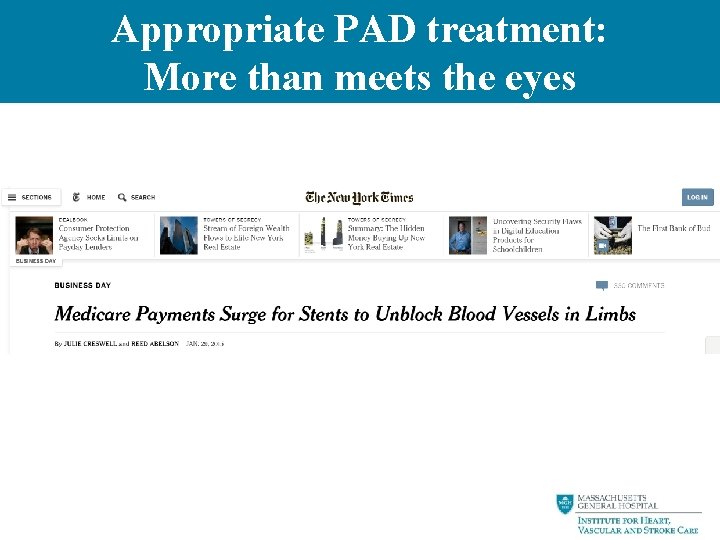
Appropriate PAD treatment: More than meets the eyes
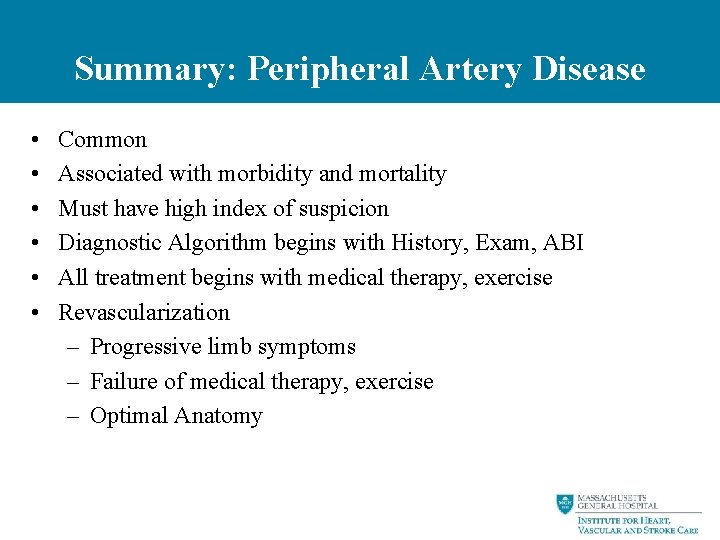
Summary: Peripheral Artery Disease • • • Common Associated with morbidity and mortality Must have high index of suspicion Diagnostic Algorithm begins with History, Exam, ABI All treatment begins with medical therapy, exercise Revascularization – Progressive limb symptoms – Failure of medical therapy, exercise – Optimal Anatomy
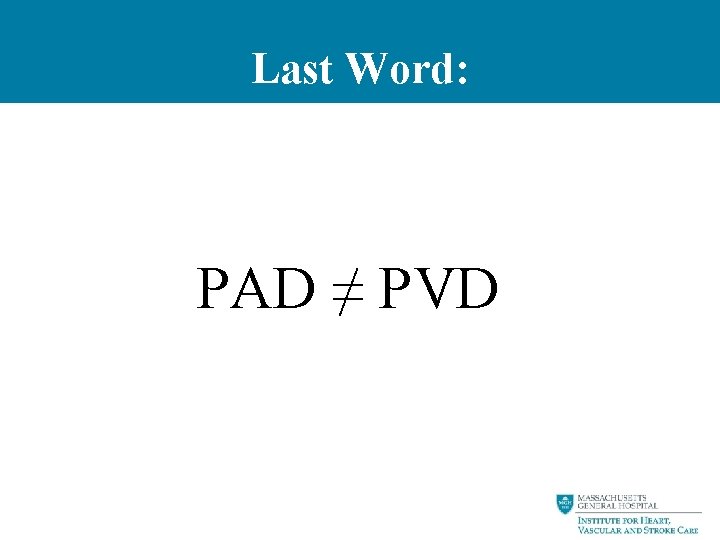
Last Word: PAD ≠ PVD

Thank You www. ANGIOLOGIST. com
- Slides: 62