
PRACTICAL GRAM STAINING Assist Prof Dr Syed Yousaf
- Slides: 17
PRACTICAL GRAM STAINING Assist Prof Dr. Syed Yousaf Kazmi
OBJECTIVES • Describe reagents used in Gram stain & purpose of these reagents • Color expected of Gram Pos & Gram Neg after performing the procedure • Explain reason of differential stain by Gram Pos & Gram Neg • Describe cell wall structure of Gram Pos & Neg • Explain Gram variable org
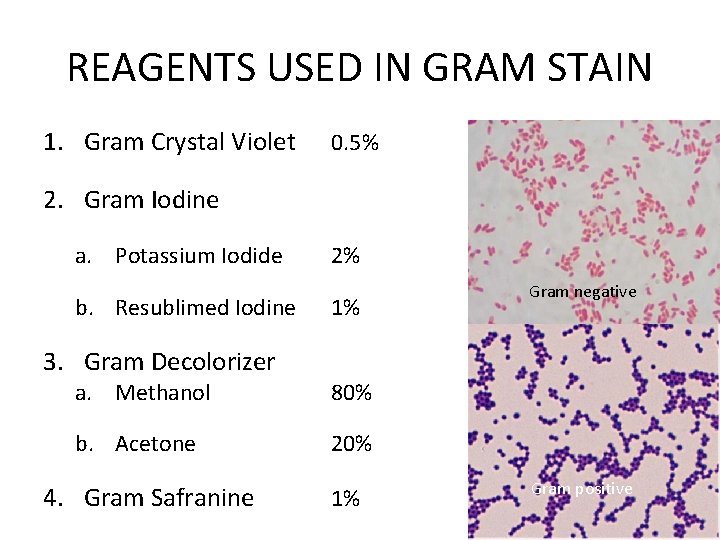
REAGENTS USED IN GRAM STAIN 1. Gram Crystal Violet 0. 5% 2. Gram Iodine a. Potassium Iodide b. Resublimed Iodine 3. Gram Decolorizer 2% 1% a. Methanol 80% b. Acetone 20% 4. Gram Safranine 1% Gram negative Gram positive
REAGENTS USED IN GRAM STAIN 1. CRYSTAL VIOLET • Primary stain • Violet colored, stains all micro-org 2. GRAM IODINE • Mordant • Forms Crystal violet iodine complexes 3. DECOLORIZER • Acetone + Methanol • Removes Crystal violet iodine complex from thin peptidoglycan layers • Dissolves outer layer of Gram negative org
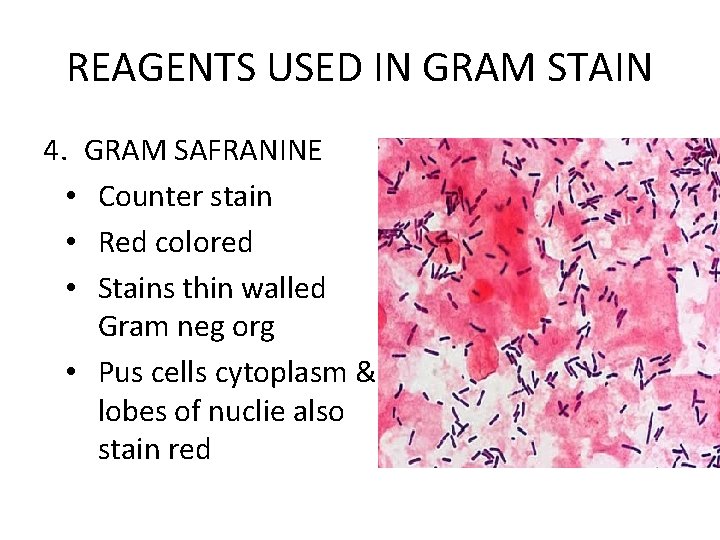
REAGENTS USED IN GRAM STAIN 4. GRAM SAFRANINE • Counter stain • Red colored • Stains thin walled Gram neg org • Pus cells cytoplasm & lobes of nuclie also stain red
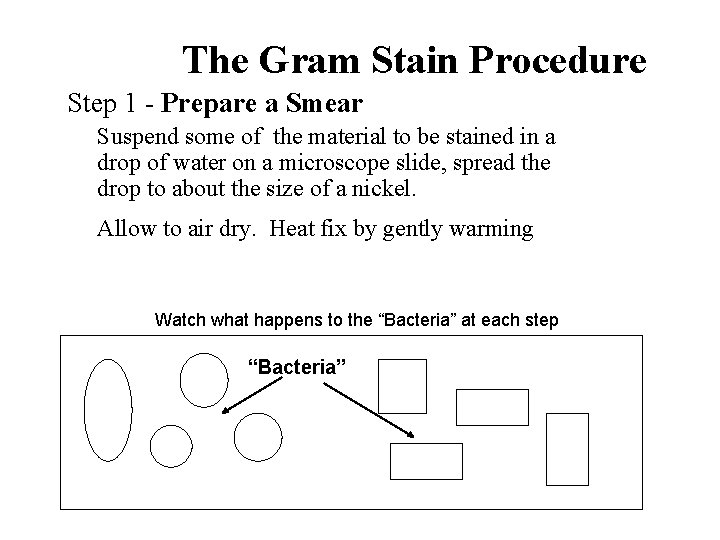
The Gram Stain Procedure Step 1 - Prepare a Smear Suspend some of the material to be stained in a drop of water on a microscope slide, spread the drop to about the size of a nickel. Allow to air dry. Heat fix by gently warming Watch what happens to the “Bacteria” at each step “Bacteria”
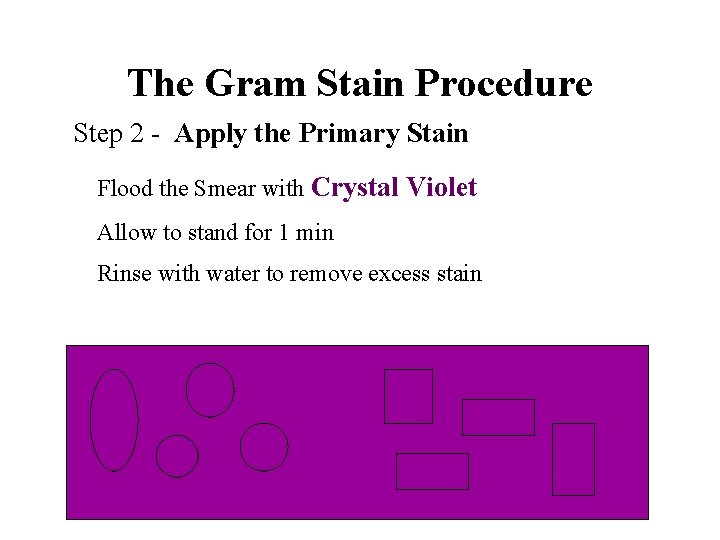
The Gram Stain Procedure Step 2 - Apply the Primary Stain Flood the Smear with Crystal Violet Allow to stand for 1 min Rinse with water to remove excess stain
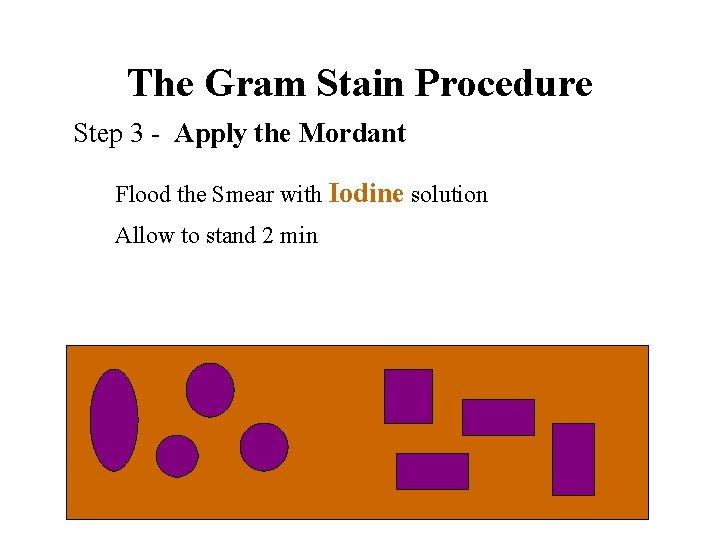
The Gram Stain Procedure Step 3 - Apply the Mordant Flood the Smear with Iodine solution Allow to stand 2 min
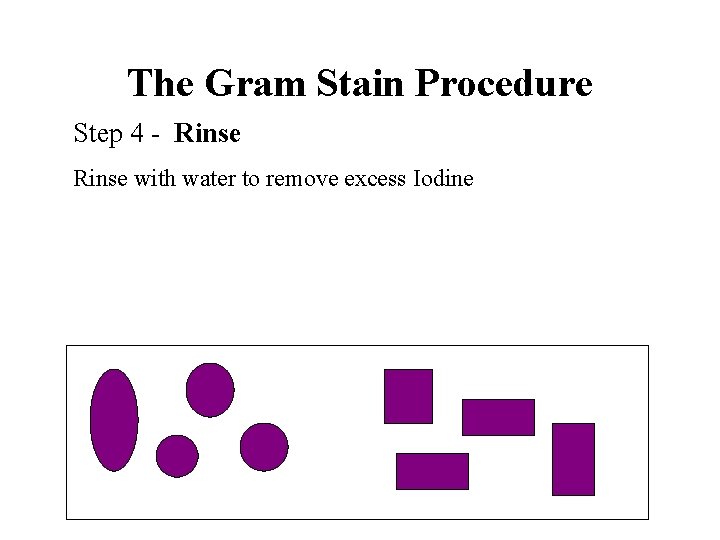
The Gram Stain Procedure Step 4 - Rinse with water to remove excess Iodine
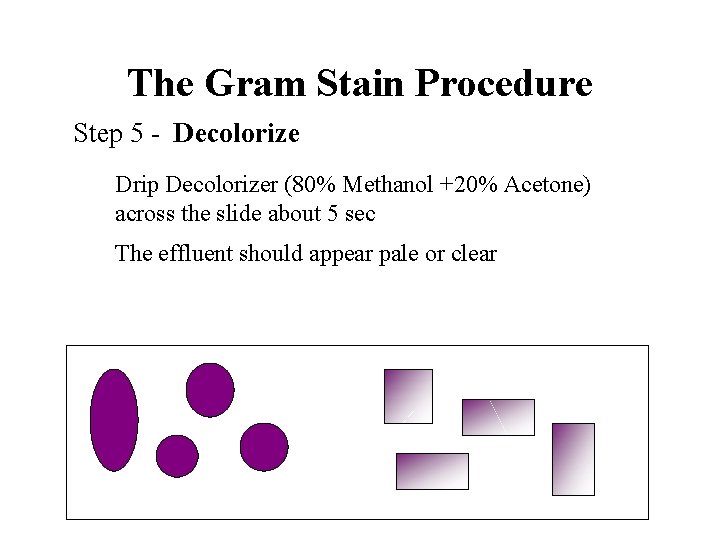
The Gram Stain Procedure Step 5 - Decolorize Drip Decolorizer (80% Methanol +20% Acetone) across the slide about 5 sec The effluent should appear pale or clear
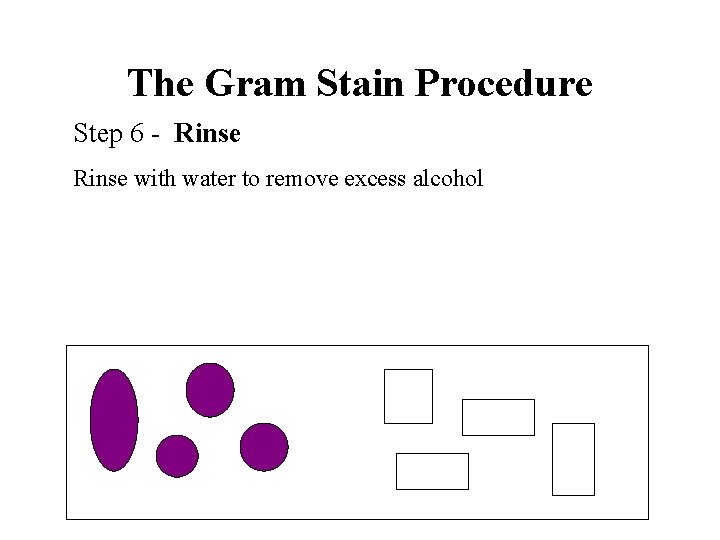
The Gram Stain Procedure Step 6 - Rinse with water to remove excess alcohol
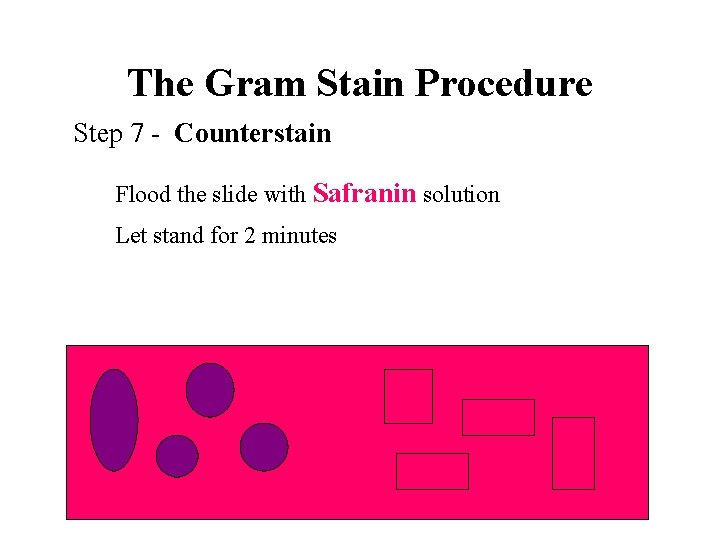
The Gram Stain Procedure Step 7 - Counterstain Flood the slide with Safranin solution Let stand for 2 minutes
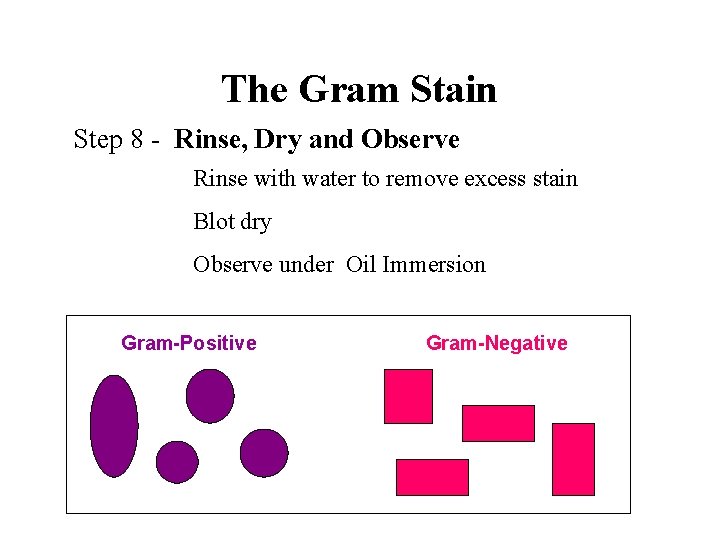
The Gram Stain Step 8 - Rinse, Dry and Observe Rinse with water to remove excess stain Blot dry Observe under Oil Immersion Gram-Positive Gram-Negative
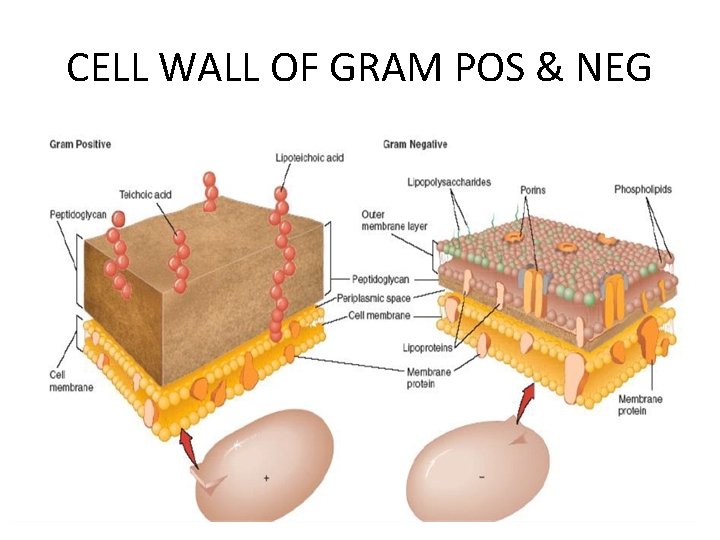
CELL WALL OF GRAM POS & NEG
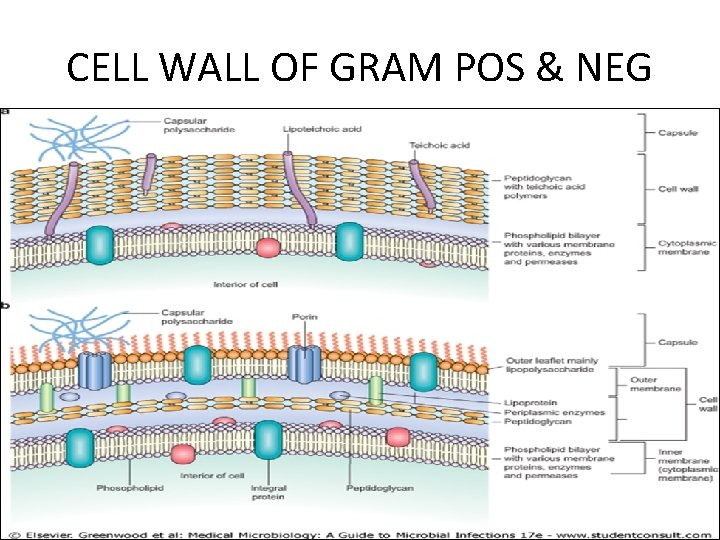
CELL WALL OF GRAM POS & NEG
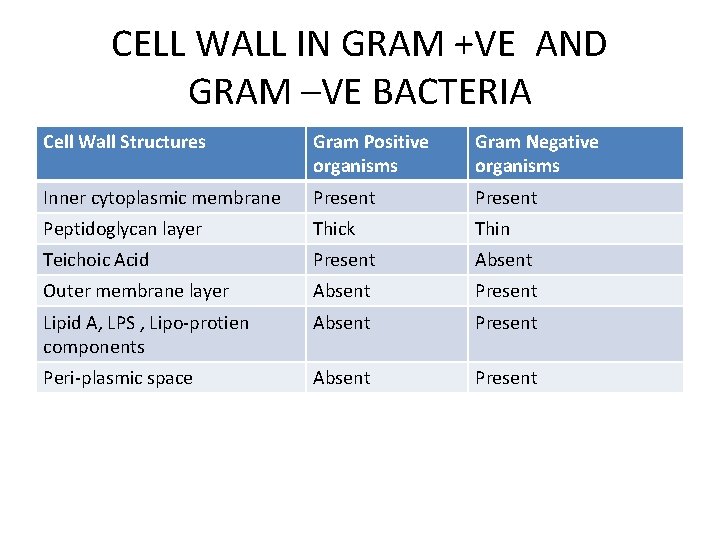
CELL WALL IN GRAM +VE AND GRAM –VE BACTERIA Cell Wall Structures Gram Positive organisms Gram Negative organisms Inner cytoplasmic membrane Present Peptidoglycan layer Thick Thin Teichoic Acid Present Absent Outer membrane layer Absent Present Lipid A, LPS , Lipo-protien components Absent Present Peri-plasmic space Absent Present
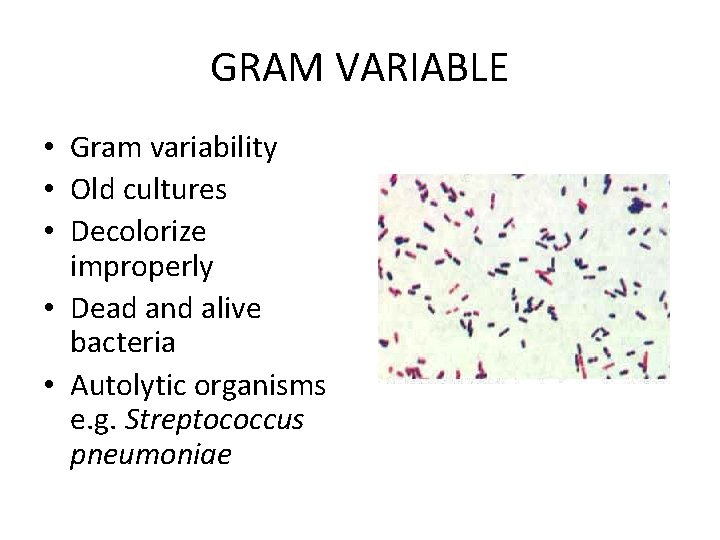
GRAM VARIABLE • Gram variability • Old cultures • Decolorize improperly • Dead and alive bacteria • Autolytic organisms e. g. Streptococcus pneumoniae