
Practical FISH BIOLOGY Development and Growth Development describes
Practical FISH BIOLOGY
Development and Growth �Development describes the sequencing of life-history stages �growth is a measure of change in size of either the whole body or some body part �growth rate is a measure of size change as a function of time
�Growth depends upon the quantity and quality of food ingested. � with inadequate nutrition both retarding growth and delaying developmental transitions, such as the timing of onset of sexual maturation. �In other words, the timing of sexual maturation appears to be more closely associated with size than age, leading to the concept that maturation is initiated once a ‘critical size’ has been attained.
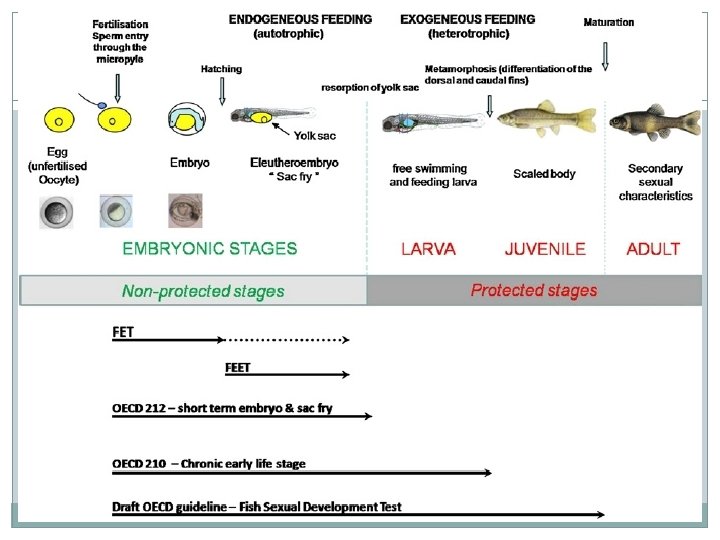
TERMINOLOGY OF LIFE-HISTORY STAGES �life history, from the fertilization of the egg until death, can be divided into five periods: 1 - embryonic 2 - larval 3 - juvenile, 4 - adult 5 - senescent.
�Metamorphosis is a major threshold separating the larval period from the juvenile or adult period.
1 - embryonic period �The embryonic period, starting with fertilization of the egg, is characterized by endogenous nutrition (from the yolk). �includes a cleavage phase �covering time between fertilization and start of organogenesis, and an embryonic phase within which there is intense organogenesis within the egg membrane. �The embryonic phase continues until hatching. �continues until most of the yolk has been utilized and the fish begins to take exogenous food.
2 - larval period �starts when the transition to exogenous feeding taken place. �lasts until ossification of the axial skeleton. �may be divided into two phase: � 1 - protopterygio-larval : spans the interval between the first exogenous feeding and the start of fin differentiation � 2 - pterygio-larval : terminates when the median fin-fold is no longer visible.
3 - juvenile period �begins once the fins are fully differentiated, and the temporary larval organs have regressed or been replaced. �The transition from larva to young fish sometimes involves extensive changes from an unfish-like appearance to one resembling the adult, i. e. there is a metamorphosis. �lasts until the fish mature and the first gametes are produced. �Juveniles are characterized by their rapid growth, and there can be a distinct juvenile body colour or pigmentation pattern.
4 - adult period � starts with gonad maturation, start in production of first gametes. � usually incorporates spawning or migrations, specialized reproductive behavior, and changes in external morphology and color. � Spawning may repeated for a number of years or seasons, as in iteroparous species, or may performed only once, as is the case with the semelparous species, such as some eels and salmonids � During this period, available resources may be directed more towards the development of the gonads than towards somatic growth. � Consequently, rates of growth generally lower during this period than during juvenile period.
5 - senescent period �covers a period of extremely slow growth. � during which reproductive activity may also be reduced. �can last for several years, during which there is a gradual decline in the numbers of fertile gametes produced. �Alternatively, the senescent period may last for no more than a few days or weeks, during which time the body undergoes rapid degenerative changes.
Takifugu �Kingdom: Animalia �Phylum: Chordata �Class: Actinopterygii �Order: Tetraodontiformes �Family: Tetraodontidae �Genus: Takifugu T. Abe, 1949
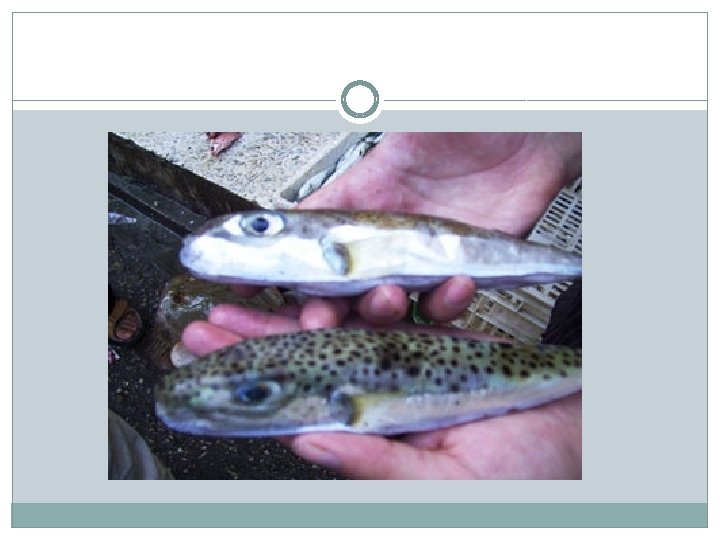
�is a genus of pufferfish. � 25 species belonging to this genus. �Their diet consists mostly of algae, molluscs, invertebrates and sometimes crustaceans. �fish is highly toxic. �contains lethal amounts of the poison tetrodotoxin in the internal organs, especially the liver and the ovaries, but also in the skin and the testes
�tetrodotoxin, or called more precisely anhydrotetrodotoxin 4 -epitetrodotoxin �is about 1200 times deadlier than cyanide. �The pufferfish does not create the poison itself; rather it is generated by bacteria e. g. Pseudomonas within the fish. �The fish obtains the bacteria by eating food containing these bacteria.
�Pufferfish that are born and grown in captivity do not produce tetrodotoxin.

Thank u
- Slides: 17