
Practical Considerations for setting up a COMMUNITY RECEPTION
- Slides: 21
Practical Considerations for setting up a COMMUNITY RECEPTION CENTER (CRC) Part 1 Armin Ansari, Ph. D. CHP Radiation Studies Branch Division of Environmental Hazards & Health Effects National Center for Environmental Health Centers for Disease Control & Prevention Atlanta, Georgia
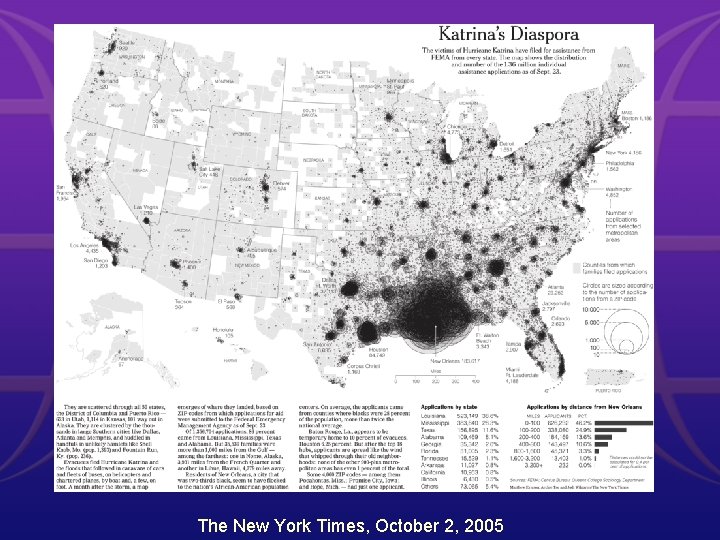
The New York Times, October 2, 2005
Community Reception Center (CRC) What? When? Who? Where? How? Examples
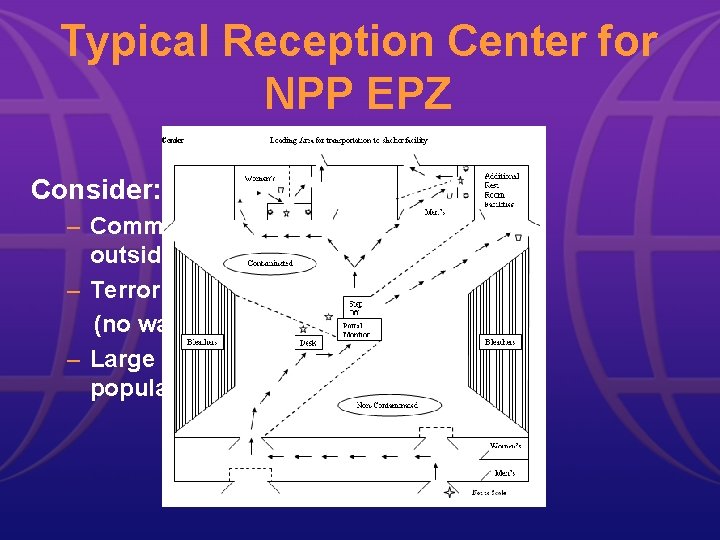
Typical Reception Center for NPP EPZ Consider: – Communities outside EPZ – Terrorism (no warning) – Large urban populations
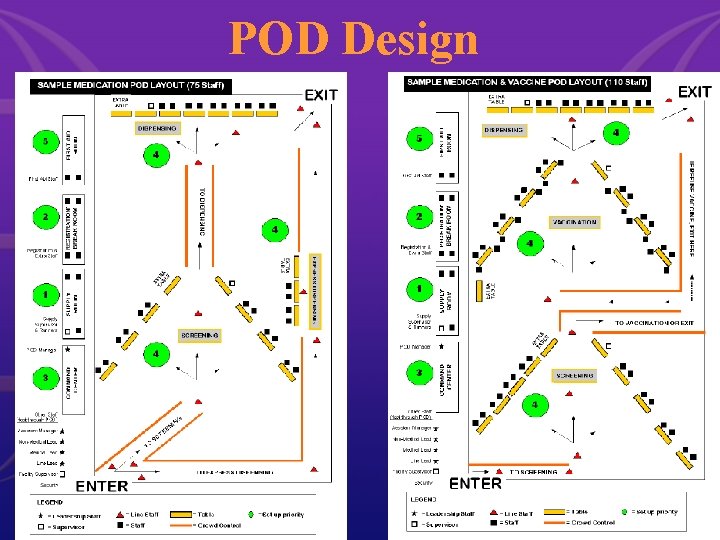
POD Design
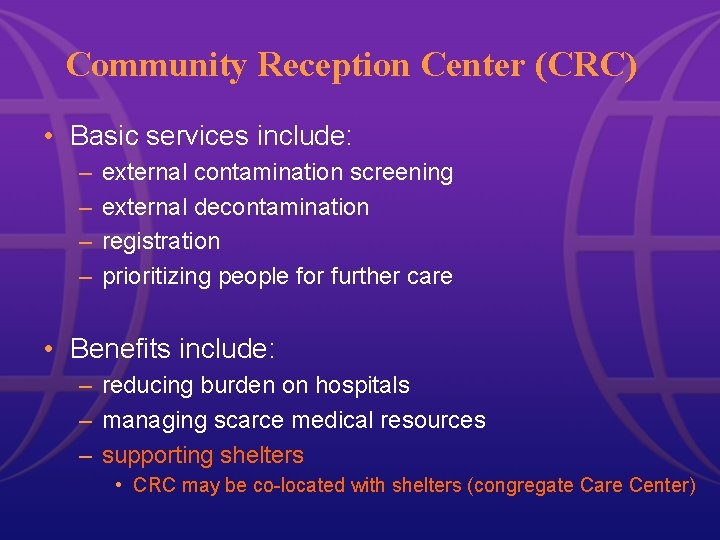
Community Reception Center (CRC) • Basic services include: – – external contamination screening external decontamination registration prioritizing people for further care • Benefits include: – reducing burden on hospitals – managing scarce medical resources – supporting shelters • CRC may be co-located with shelters (congregate Care Center)
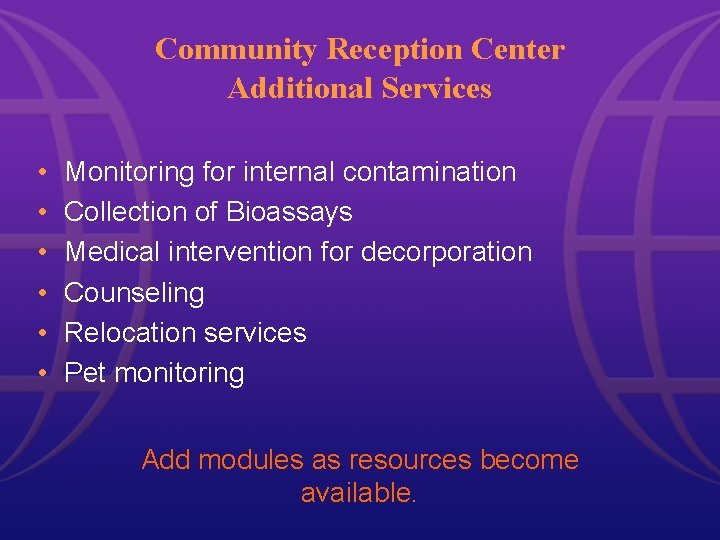
Community Reception Center Additional Services • • • Monitoring for internal contamination Collection of Bioassays Medical intervention for decorporation Counseling Relocation services Pet monitoring Add modules as resources become available.
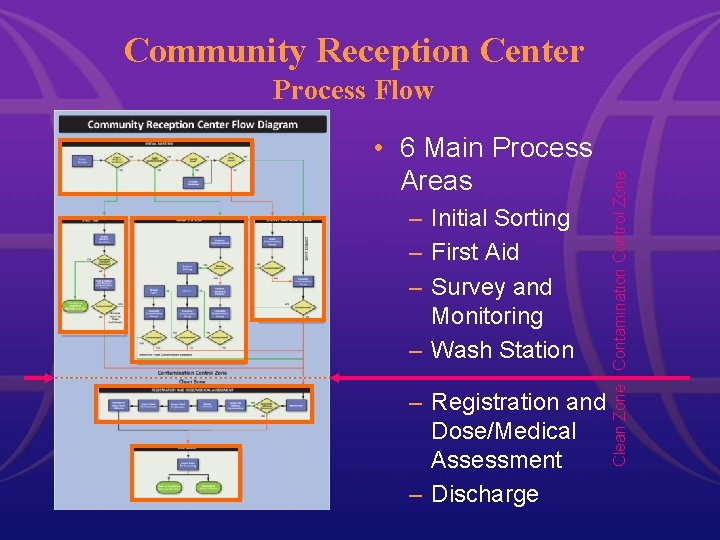
Community Reception Center • 6 Main Process Areas – Initial Sorting – First Aid – Survey and Monitoring – Wash Station – Registration and Dose/Medical Assessment – Discharge Clean Zone Contamination Control Zone Process Flow
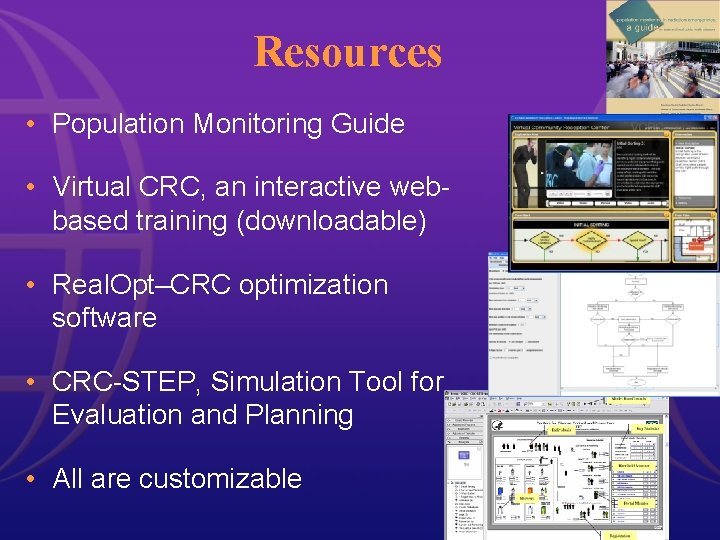
Resources • Population Monitoring Guide • Virtual CRC, an interactive webbased training (downloadable) • Real. Opt–CRC optimization software • CRC-STEP, Simulation Tool for Evaluation and Planning • All are customizable
Community Reception Center (CRC) Planning and Implementation Whose responsibility is it?
National Response Framework Nuclear/Radiological Incident Annex Decontamination/Population Monitoring are: “the responsibility of State, local, and tribal governments. ”
Population Monitoring at CRCs • Multi-agency effort, public health lead • Staffed by government employees and organized volunteers • Opened 24 -48 hours post event • Located outside of hot zone • Comparable to PODs, NEHCs • Need radiation protection professionals!
Need for Radiation Professionals in a large scale radiation emergency • Monitoring environment and workplace • Monitoring people • Supporting operations at: – Hospitals – Public and special needs shelters – Emergency operations centers l – Community reception centers a c o – Etc. L • Communications A fo f E ! ? rt
Where Does Radiation Expertise Come From? • • State? Federal? Mutual Aid? Local community?
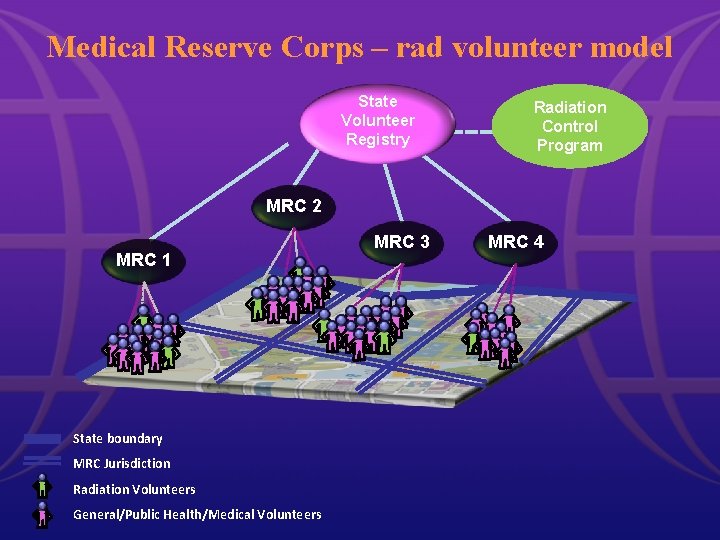
Medical Reserve Corps – rad volunteer model State Volunteer Registry Radiation Control Program MRC 2 MRC 1 State boundary MRC Jurisdiction Radiation Volunteers General/Public Health/Medical Volunteers MRC 3 MRC 4
Current Status • CRCPD / CDC collaboration on radiation professional volunteers • Program being implemented in six states and one metro area.
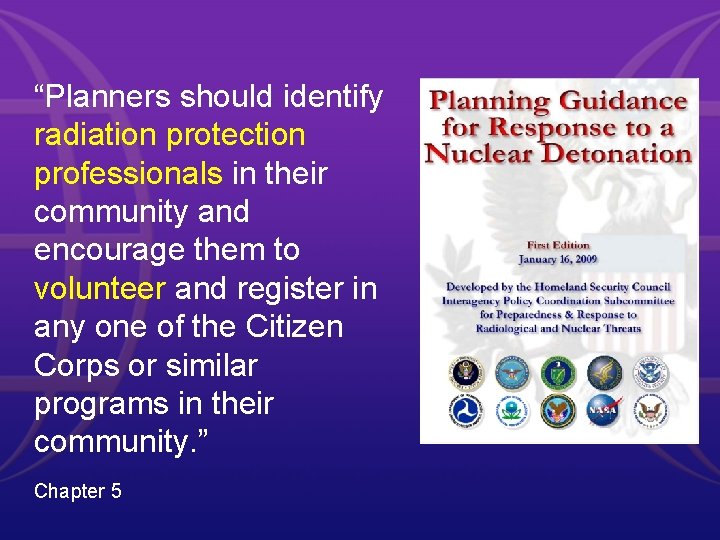
“Planners should identify radiation protection professionals in their community and encourage them to volunteer and register in any one of the Citizen Corps or similar programs in their community. ” Chapter 5
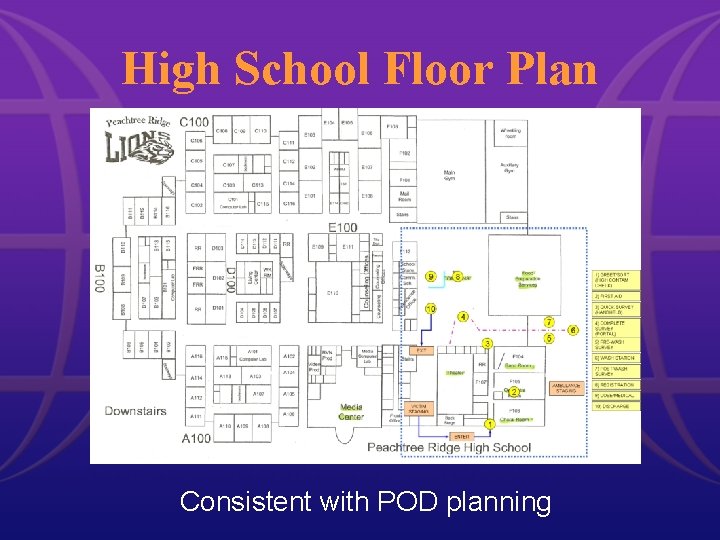
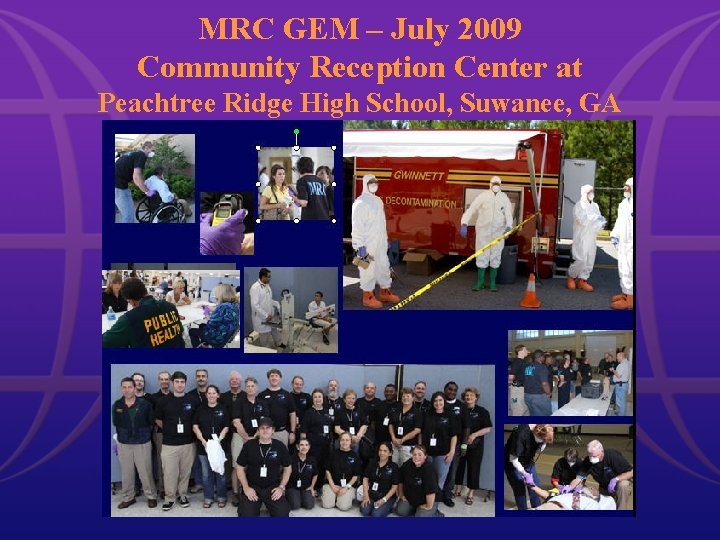
Example • CRC exercise in metro Atlanta community • Scenario: – 3 days after an IND 600 miles away – Displaced population seeking assistance in our community • Used a pre-designated POD location (high school) • Players were primarily MRC volunteers, assisted by county HAZMAT, public health, and radiation control
High School Floor Plan Consistent with POD planning
MRC GEM – July 2009 Community Reception Center at Peachtree Ridge High School, Suwanee, GA
Thank You Armin Ansari 770 -488 -3654 AAnsari@cdc. gov Radiation Studies Branch Division of Environmental Hazards & Health Effects National Center for Environmental Health Centers for Disease Control & Prevention Atlanta, Georgia