
Practical Coating Thickness Measurement Overview Presented by Paul
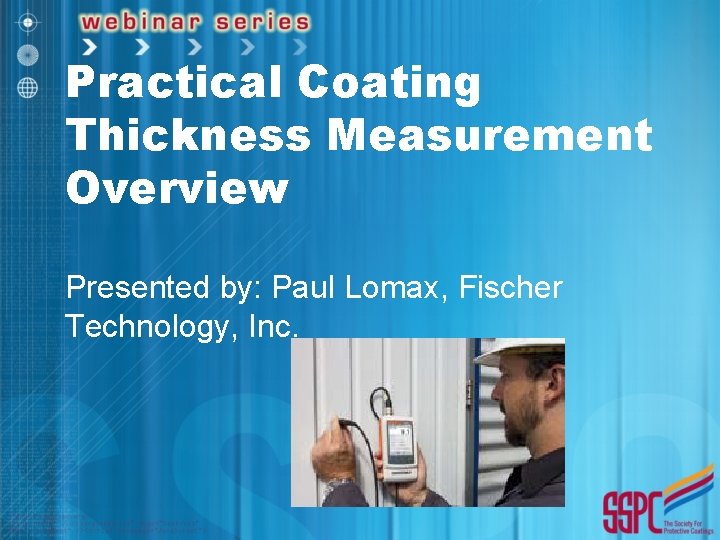
Practical Coating Thickness Measurement Overview Presented by: Paul Lomax, Fischer Technology, Inc.
Learning Objectives • Test Methods • Test methods available for coating thickness measurement • Working knowledge of the basic theory of common test methods • Best practices • Factors that influence coating thickness measurement • Instrument and probe selection criteria • Instrument repeatability and minimum specification limits • Evaluating the results of coating thickness • Data transfer to inspection reports
Part 1: Common Coating Thickness Test Methods and Gages • Magnetic Induction Method • Eddy Current Method • Type II Electronic Coating Thickness Gages • Best Practices

Magnetic Induction Method Basic Theory • The magnetic field of the probe interacts with the steel substrate • The nearer the probe to the substrate the higher the magnification of the magnetic field and vice versa • The changes of the magnetic field induce a voltage U in the measuring coil dependent on the distance of the probe from the ferrous (steel) base • The instrument translates this signal into a coating thickness value
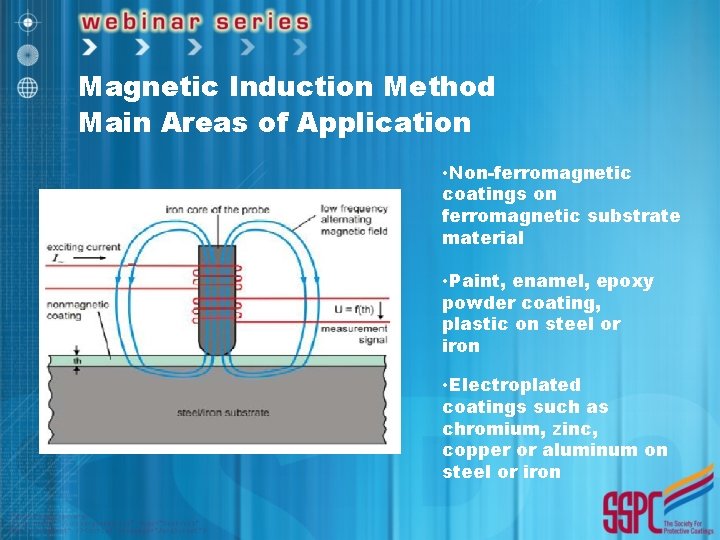
Magnetic Induction Method Main Areas of Application • Non-ferromagnetic coatings on ferromagnetic substrate material • Paint, enamel, epoxy powder coating, plastic on steel or iron • Electroplated coatings such as chromium, zinc, copper or aluminum on steel or iron
Magnetic Induction Method Advantages: Non-destructive Relatively low cost Easy to operate Accurate and repeatable thickness readings Instantaneous, digital thickness display Available in bench top and hand-held models Limitations: Not recommended for coatings under 0. 0001” (2. 5 microns)
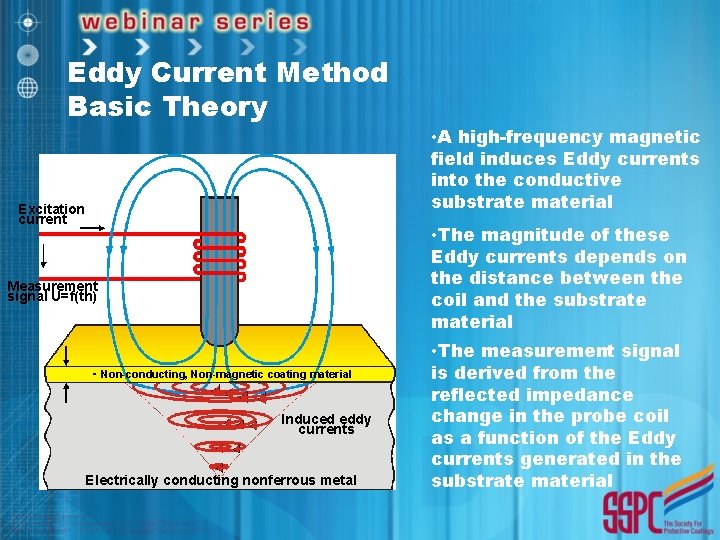
Eddy Current Method Basic Theory Excitation current • A high-frequency magnetic field induces Eddy currents into the conductive substrate material • The magnitude of these Eddy currents depends on the distance between the coil and the substrate material Measurement signal U=f(th)) - Non-conducting, Non-magnetic coating material Induced eddy currents Electrically conducting nonferrous metal • The measurement signal is derived from the reflected impedance change in the probe coil as a function of the Eddy currents generated in the substrate material
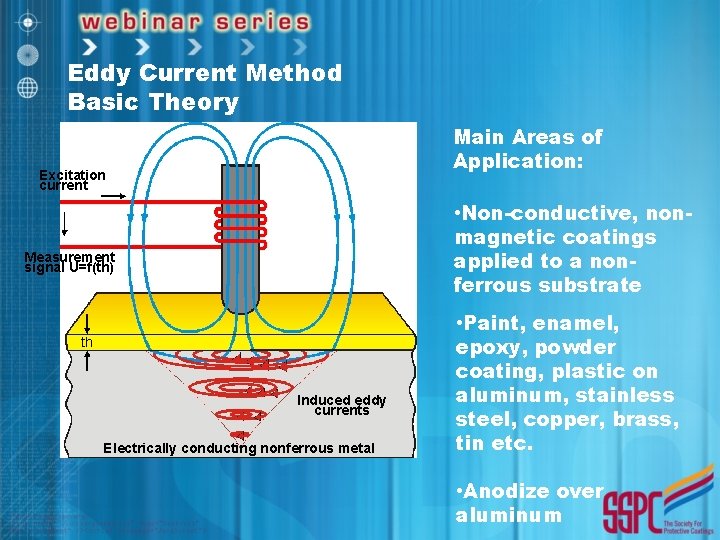
Eddy Current Method Basic Theory Main Areas of Application: Excitation current • Non-conductive, nonmagnetic coatings applied to a nonferrous substrate Measurement signal U=f(th)) th Induced eddy currents Electrically conducting nonferrous metal • Paint, enamel, epoxy, powder coating, plastic on aluminum, stainless steel, copper, brass, tin etc. • Anodize over aluminum
Eddy Current Method Advantages: Non-destructive Relatively low cost Easy to operate Accurate and repeatable thickness readings Instantaneous, digital thickness display Available in bench top and hand-held models available Limitations: Not recommended for coatings under 0. 0001” (2. 5 microns)
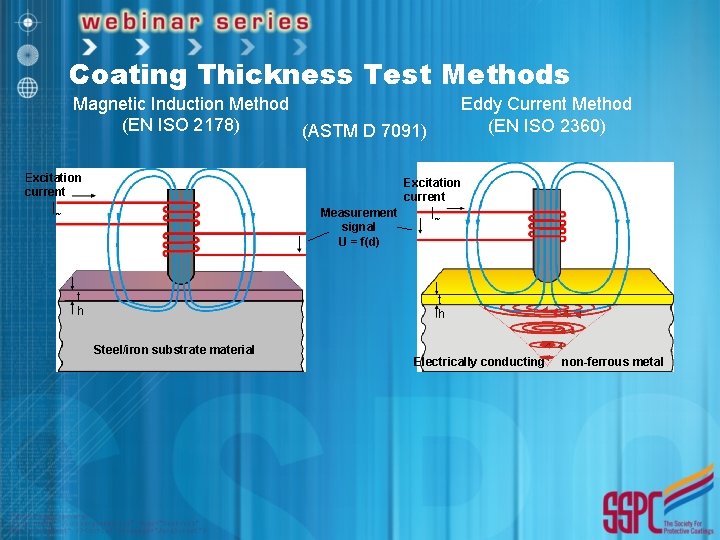
Coating Thickness Test Methods Magnetic Induction Method (EN ISO 2178) (ASTM D 7091) Excitation current Eddy Current Method (EN ISO 2360) Excitation current I~ Measurement signal U = f(d) t h I~ t h Steel/iron substrate material Electrically conducting non-ferrous metal
Type II Electronic Dry Film Thickness Gages DFT Gage Types • Integrated Probes • Separate Interchangeable probes • Basic • Memory • Ferrous • Non-Ferrous • Dual Ferrous and Non-Ferrous Measurement Strategies • SSPC-PA 2 Capabilities • IMO PSPC Capabilities
Coating Thickness Probes
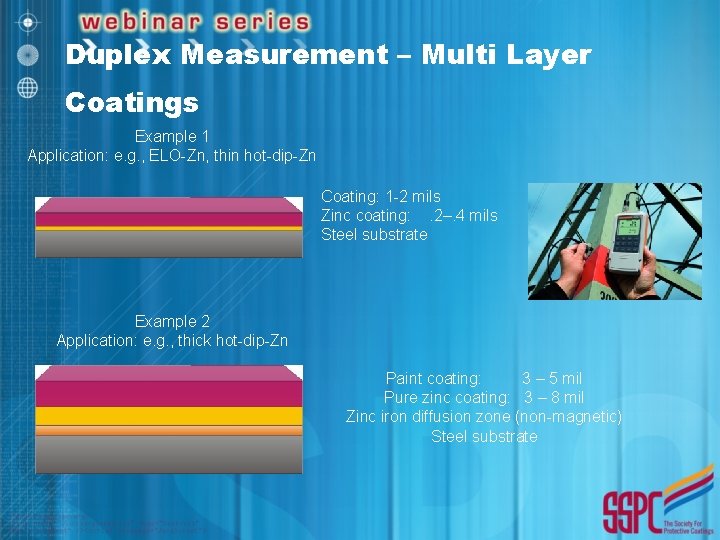
Duplex Measurement – Multi Layer Coatings Example 1 Application: e. g. , ELO-Zn, thin hot-dip-Zn Coating: 1 -2 mils Zinc coating: . 2–. 4 mils Steel substrate Example 2 Application: e. g. , thick hot-dip-Zn Paint coating: 3 – 5 mil Pure zinc coating: 3 – 8 mil Zinc iron diffusion zone (non-magnetic) Steel substrate
Terminology Related to Coating Thickness Measurement § Calibration § Normalization § Verification of Gage Accuracy § Adjustment
Calibration • Calibration of coating thickness gages is performed by the equipment manufacturer, an authorized agent, or by an authorized, trained calibration laboratory in a controlled environment using a documented process. The outcome of the calibration process is to restore/realign the gage to meet/exceed the manufacturer’s stated accuracy • Source ASTM D 7091
Verification of Accuracy • Obtaining measurements on coating thickness standards, comprising of at least one thickness value close to the expected coating thickness, prior to gage use for the purpose of determining the ability of the coating thickness gage to produce thickness results within the gage manufacturer’s stated accuracy • Source ASTM D 7091
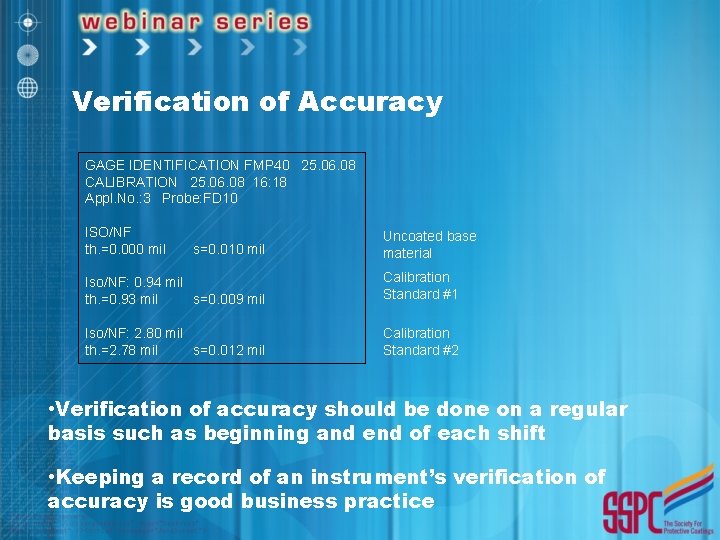
Verification of Accuracy GAGE IDENTIFICATION FMP 40 25. 06. 08 CALIBRATION 25. 06. 08 16: 18 Appl. No. : 3 Probe: FD 10 ISO/NF th. =0. 000 mil s=0. 010 mil Uncoated base material Iso/NF: 0. 94 mil th. =0. 93 mil s=0. 009 mil Calibration Standard #1 Iso/NF: 2. 80 mil th. =2. 78 mil s=0. 012 mil Calibration Standard #2 • Verification of accuracy should be done on a regular basis such as beginning and end of each shift • Keeping a record of an instrument’s verification of accuracy is good business practice
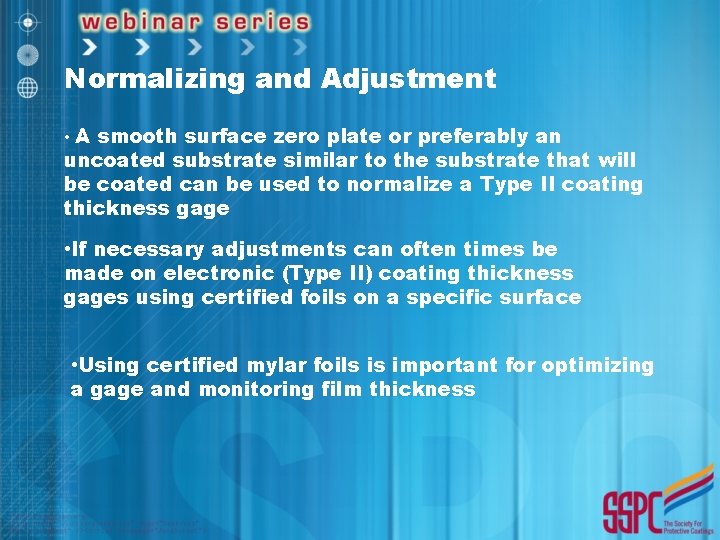
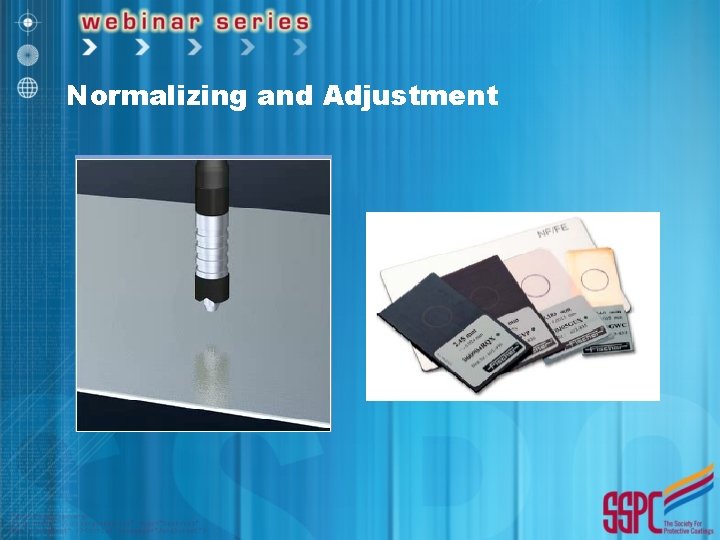
Normalizing and Adjustment A smooth surface zero plate or preferably an uncoated substrate similar to the substrate that will be coated can be used to normalize a Type II coating thickness gage • • If necessary adjustments can often times be made on electronic (Type II) coating thickness gages using certified foils on a specific surface • Using certified mylar foils is important for optimizing a gage and monitoring film thickness
Normalizing and Adjustment

Part 1: Test Method Summary • Magnetic Induction and Eddy Current are common test methods incorporated in Type II electronic coating thickness gages • Magnetic Induction Gages measure coatings over steel or iron (ferrous substrates) • Eddy Current Gages measure coatings over aluminum, stainless, steel and other (non-ferrous substrates) • Best practices include a record of the verification of gage accuracy along with an understanding of terminology such as calibration, normalization, adjustment
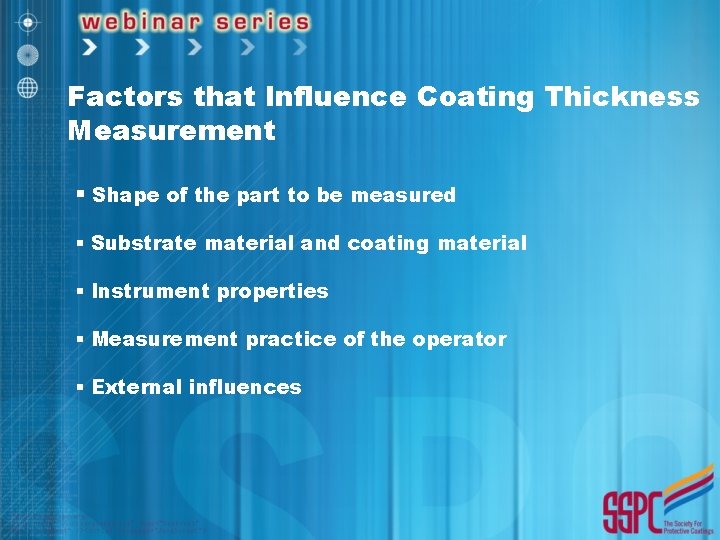
Factors that Influence Coating Thickness Measurement § Shape of the part to be measured § Substrate material and coating material § Instrument properties § Measurement practice of the operator § External influences
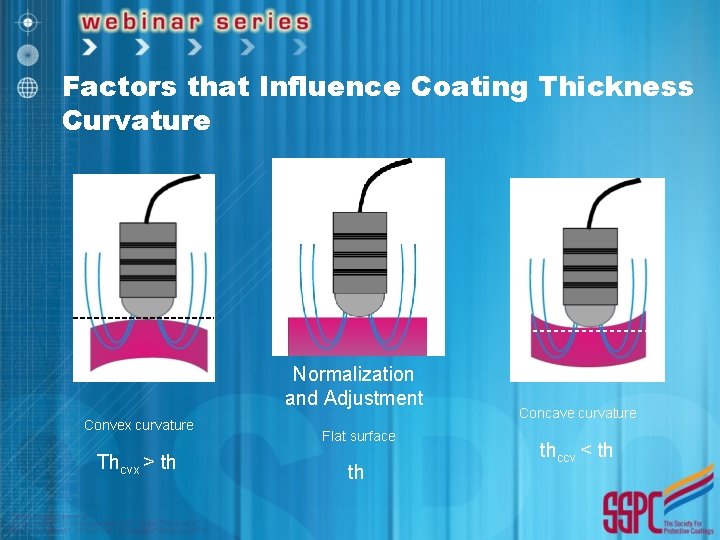
Factors that Influence Coating Thickness Curvature Normalization and Adjustment Convex curvature Thcvx > th Flat surface th Concave curvature thccv < th
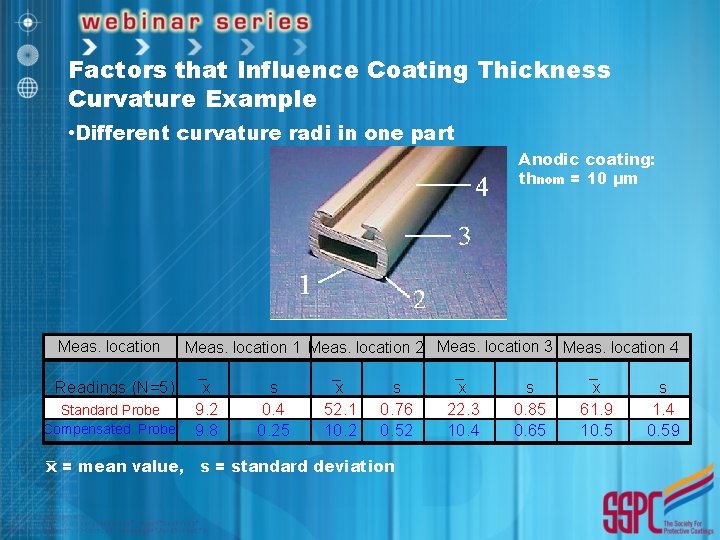
Factors that Influence Coating Thickness Curvature Example • Different curvature radi in one part Anodic coating: thnom = 10 µm Meas. location Readings (N=5) Standard Probe Compensated Probe Meas. location 1 Meas. location 2 Meas. location 3 Meas. location 4 _ x 9. 2 9. 8 s 0. 4 0. 25 _ x 52. 1 10. 2 s 0. 76 0. 52 _ x = mean value, s = standard deviation _ x 22. 3 10. 4 s 0. 85 0. 65 _ x 61. 9 10. 5 s 1. 4 0. 59
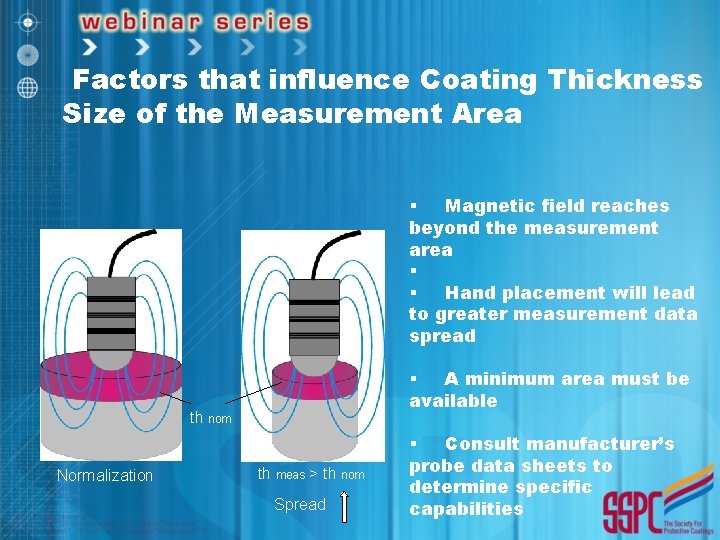
Factors that influence Coating Thickness Size of the Measurement Area § Magnetic field reaches beyond the measurement area § § Hand placement will lead to greater measurement data spread § A minimum area must be available th nom Normalization th meas > th nom Spread § Consult manufacturer’s probe data sheets to determine specific capabilities
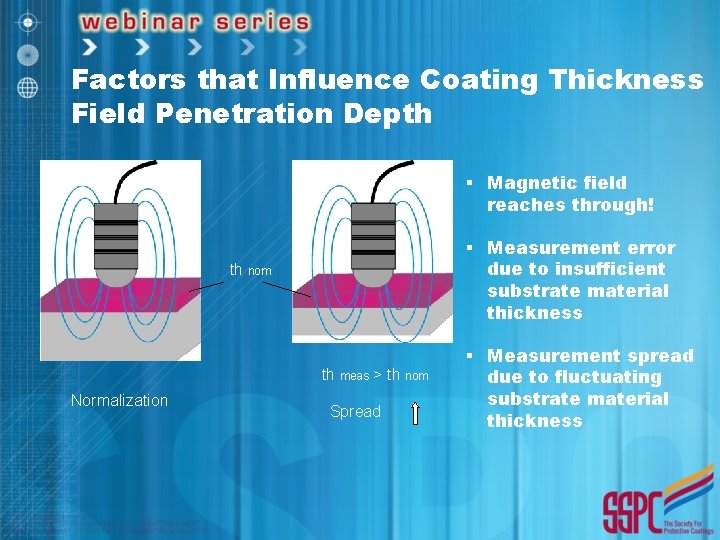
Factors that Influence Coating Thickness Field Penetration Depth § Magnetic field reaches through! § Measurement error due to insufficient substrate material thickness th nom th meas > th nom Normalization Spread § Measurement spread due to fluctuating substrate material thickness
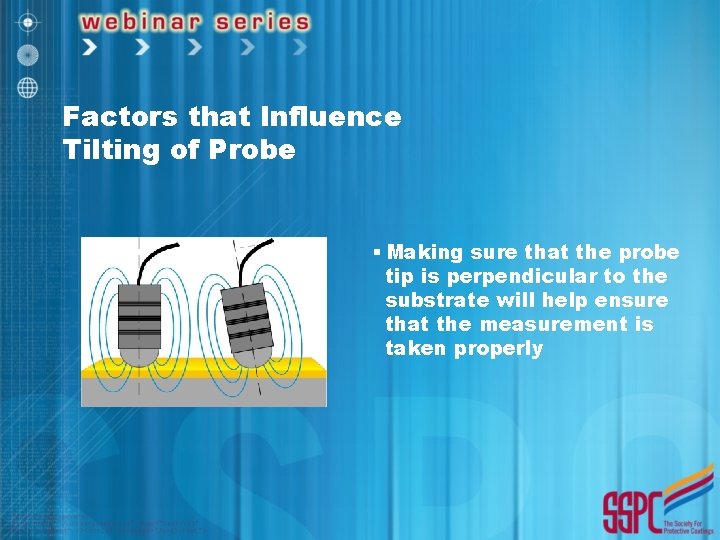
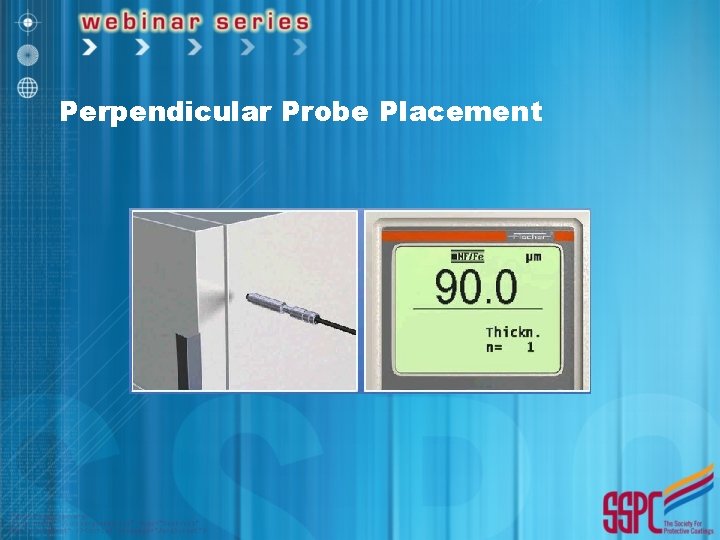
Factors that Influence Tilting of Probe § Making sure that the probe tip is perpendicular to the substrate will help ensure that the measurement is taken properly
Perpendicular Probe Placement
Coating Thickness Probes
Influence of the Substrate Material: Permeability Magnetic induction measurement method t h thmeas µr 2 > µr 1 Substrate material 2 thmeas < th t h thmeas µr 1 µr 3 < µr 1 Substrate material 3 Normalization thmeas > th Examples: Hard or soft magnetic steel, hardened surface
Influence of Roughness – Reduction With eddy current due to larger probe tip Low measurement data spread due to resting on roughness peaks With the magnetic induction method due to two-tip probes (or larger probe tip, respectively) Low measurement data spread due to integration via roughness profile
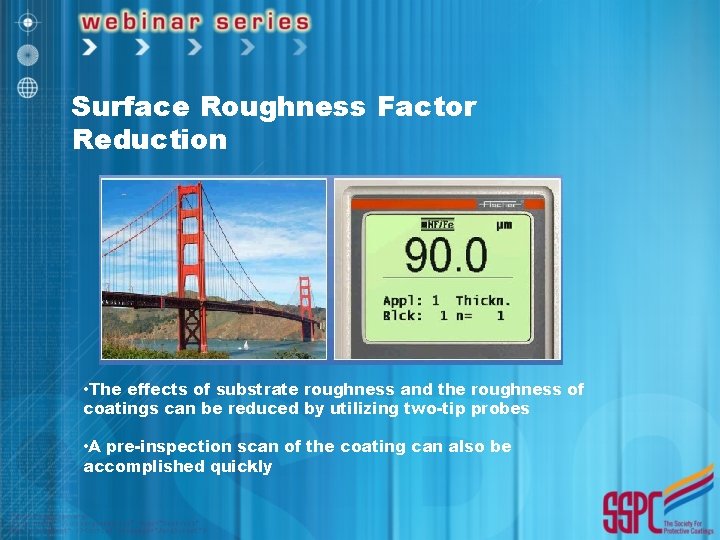
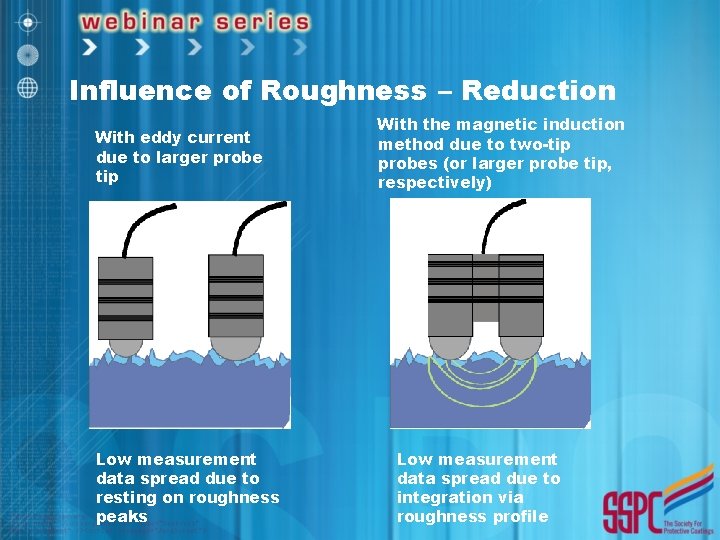
Surface Roughness Factor Reduction • The effects of substrate roughness and the roughness of coatings can be reduced by utilizing two-tip probes • A pre-inspection scan of the coating can also be accomplished quickly
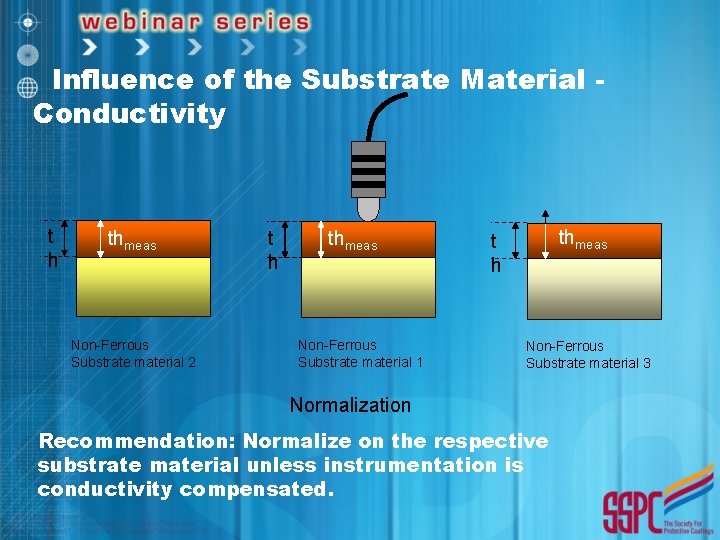
Influence of the Substrate Material Conductivity t h thmeas Non-Ferrous Substrate material 2 t h thmeas Non-Ferrous Substrate material 1 thmeas t h Non-Ferrous Substrate material 3 Normalization Recommendation: Normalize on the respective substrate material unless instrumentation is conductivity compensated.
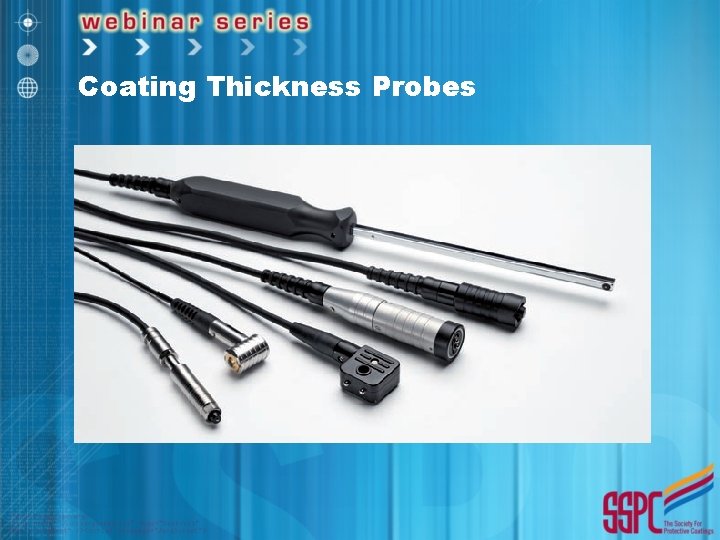
Coating Thickness Probes
Part 2: Factors and Probe Selection Summary • Factors including curvature, edge effect, permeability, penetration depth, and roughness effect coating thickness measurement • Probe selection criteria including performance specifications in relation to the above mentioned factors are available from manufacturers of coating thickness instruments • Just because a probe is capable of measuring doesn’t mean it is ideally suited for the application

Part 3: Measuring According to SSPCPA 2 and Documenting Results
Spot Mean Calculation • Low cost DFT Gages offer instant spot mean calculations. Typically the mean of three gauge readings are recorded in accordance with SSPC-PA 2
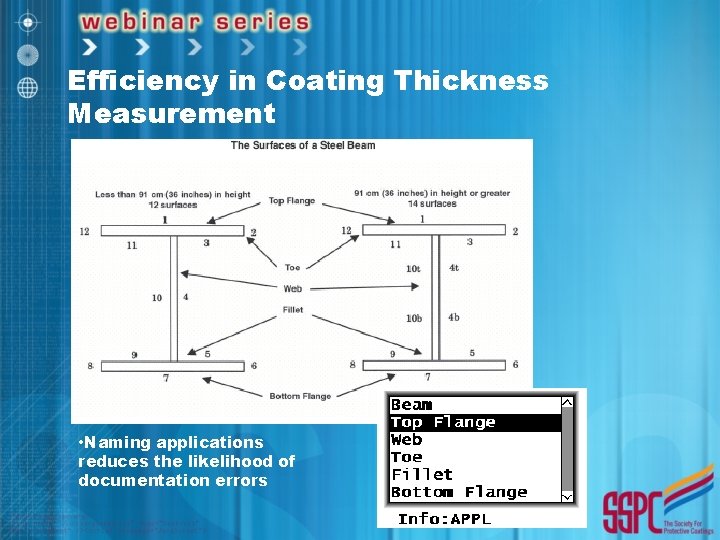
Efficiency in Coating Thickness Measurement • Naming applications reduces the likelihood of documentation errors 37
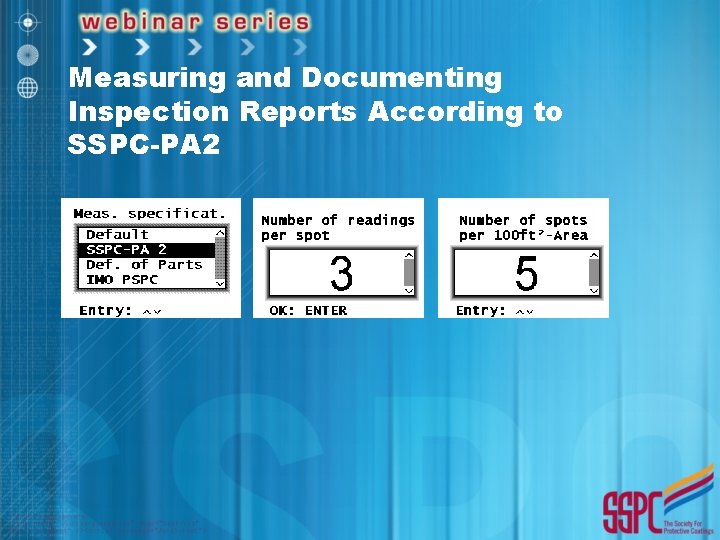
Measuring and Documenting Inspection Reports According to SSPC-PA 2
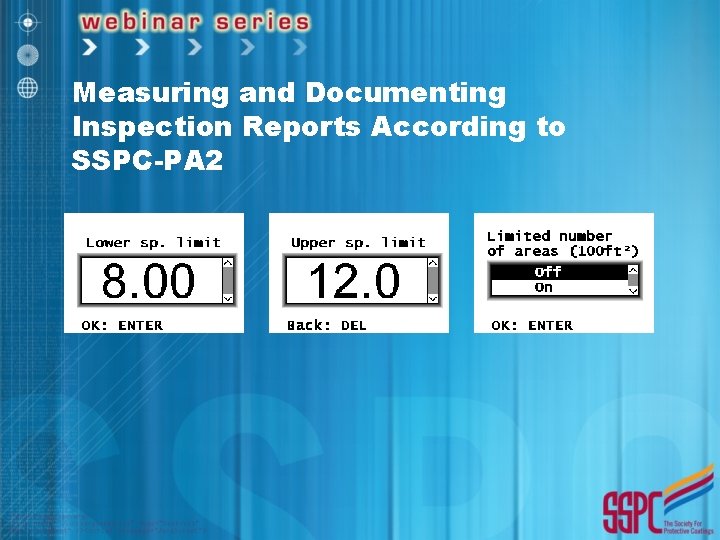
Measuring and Documenting Inspection Reports According to SSPC-PA 2
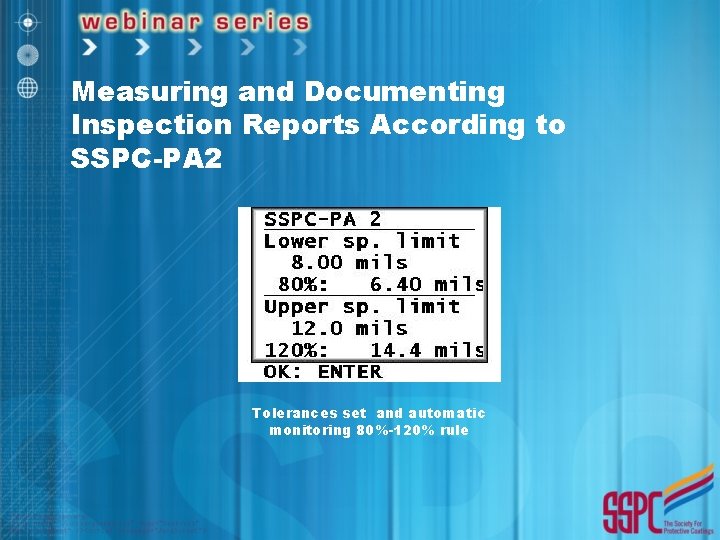
Measuring and Documenting Inspection Reports According to SSPC-PA 2 Tolerances set and automatic monitoring 80%-120% rule
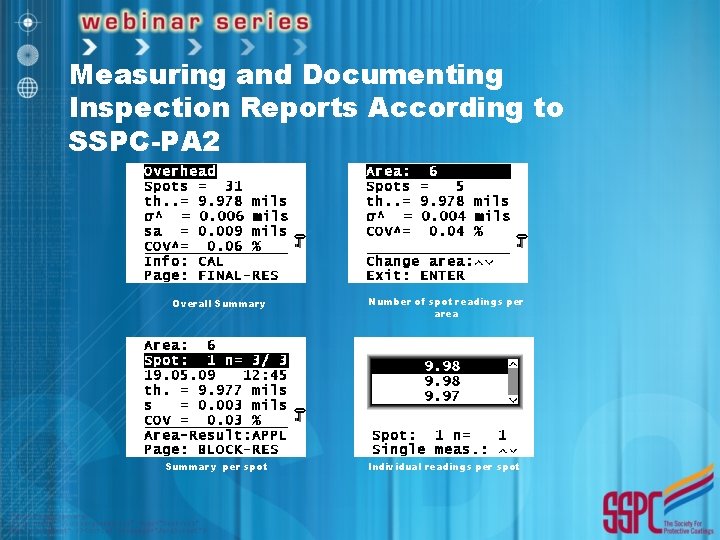
Measuring and Documenting Inspection Reports According to SSPC-PA 2 Overall Summary Number of spot readings per area Summary per spot Individual readings per spot
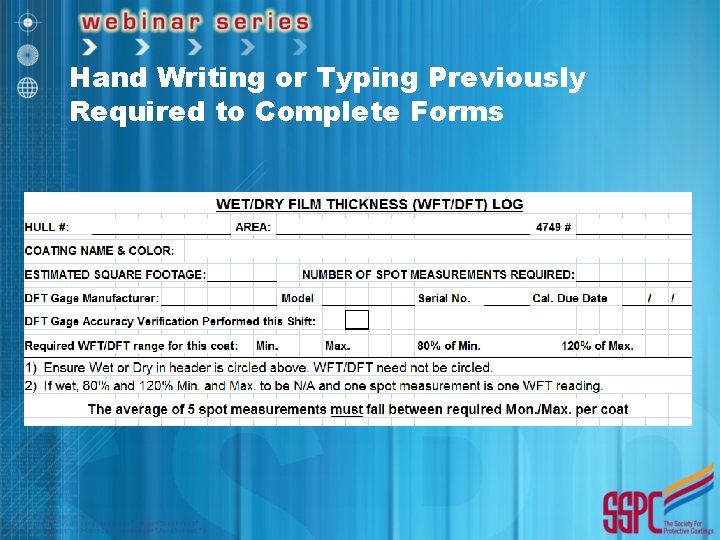
Hand Writing or Typing Previously Required to Complete Forms
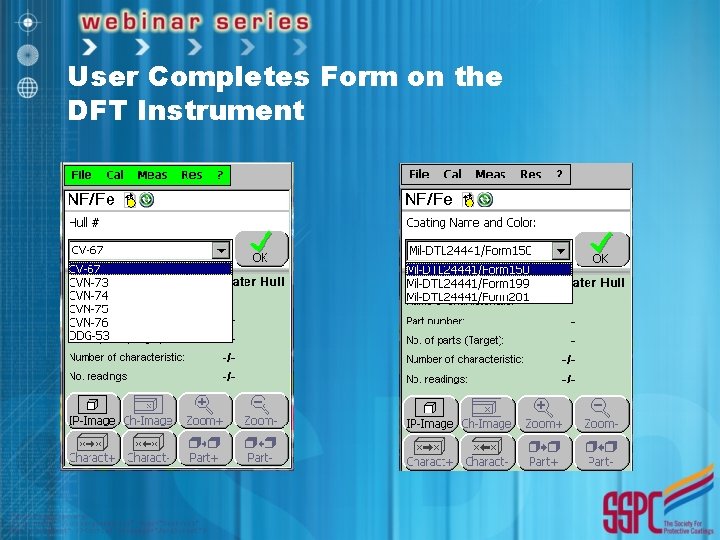
User Completes Form on the DFT Instrument
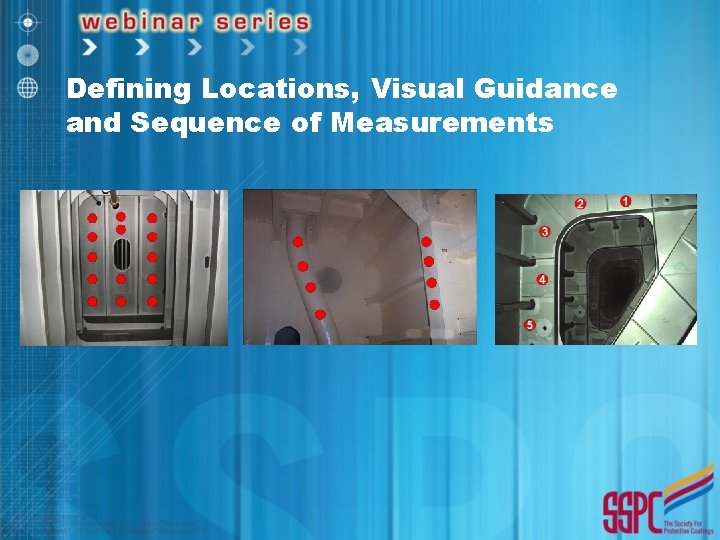
Defining Locations, Visual Guidance and Sequence of Measurements
Data Communication Common Data Communication Methods • Bluetooth® • USB Port • RS-232
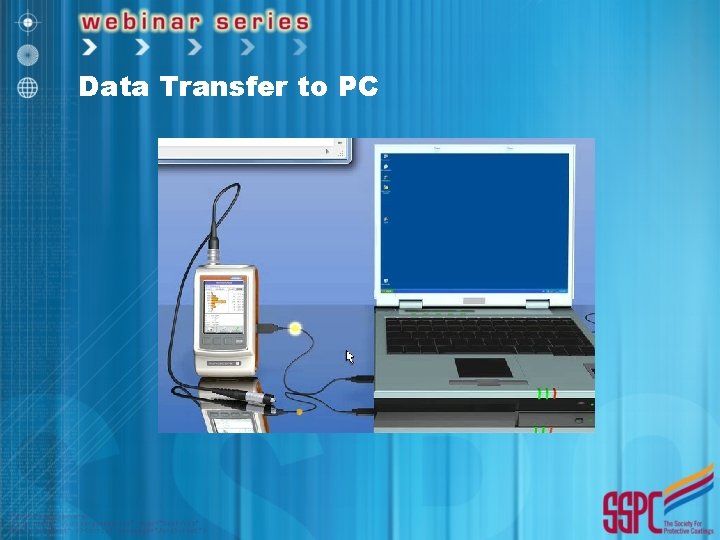
Data Transfer to PC
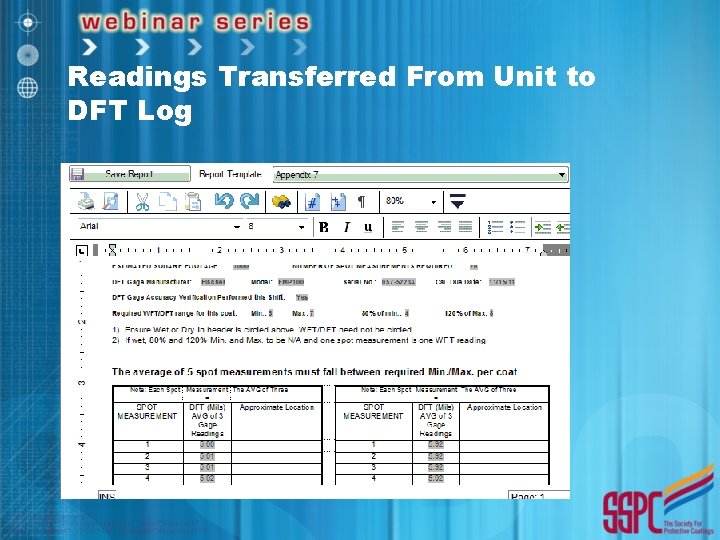
Readings Transferred From Unit to DFT Log
Part 3 Summary : Measuring According to SSPC-PA 2 and Documenting Results • Most Type II electronic gages now offer measurement specification guidance such as SSPC-PA 2 • Visual guidance and measurement sequencing allows for inspection plans to be followed in the field by using hand held dry film thickness instrumentation • Technology advancements yield reduction in costs, reduction in administrative time and reduction in errors
- Slides: 48