
Practical aspects of the implementation and enforcement of
- Slides: 32
Practical aspects of the implementation and enforcement of the Basel Convention rules governing transboundary movements of hazardous and other wastes
Basic principles (1) • Basel contains a detailed Prior Informed Consent procedure with strict requirements for transboundary movements (TBM) of wastes (notification and movement documents). • Right for each Party to prohibit import/export/transit of all or specific wastes (see national legislation) • Transboundary movements between Parties and non-Parties, including transit, generally not permitted • Ban amendement: not in force
Basic principles (2) • TBM not following the appropriate notification and consent procedures or resulting in deliberate dumping of wastes constitutes illegal traffic, which is to be considered criminal under national legislation. • National legislation to provide for penalties for illegal traffic • No comprehensive data on illegal traffic
Stages of customs intervention 4 Illegal activities can occur at any of these four stages
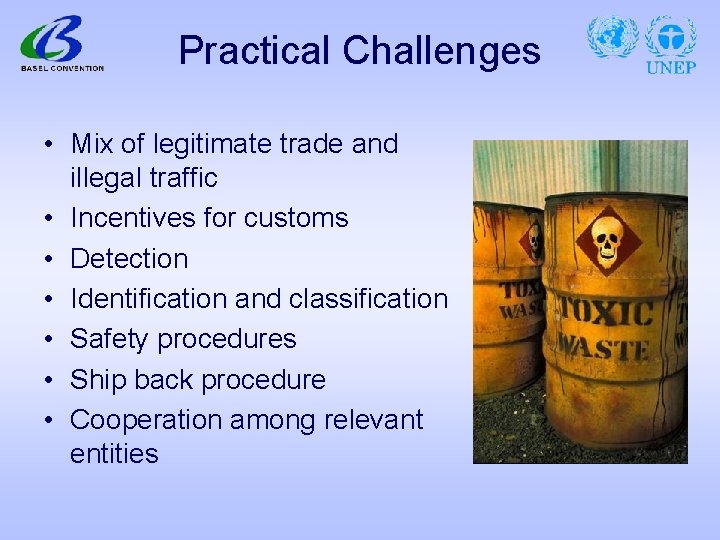
Practical Challenges • Mix of legitimate trade and illegal traffic • Incentives for customs • Detection • Identification and classification • Safety procedures • Ship back procedure • Cooperation among relevant entities
Legitimate trade
Incentives for customs • • Appropriate legal framework Awareness and capacity Focus on both import and export Environmental protection= policy priority at the highest level • Clear competences • Support from other relevant entities • Recognition for performance
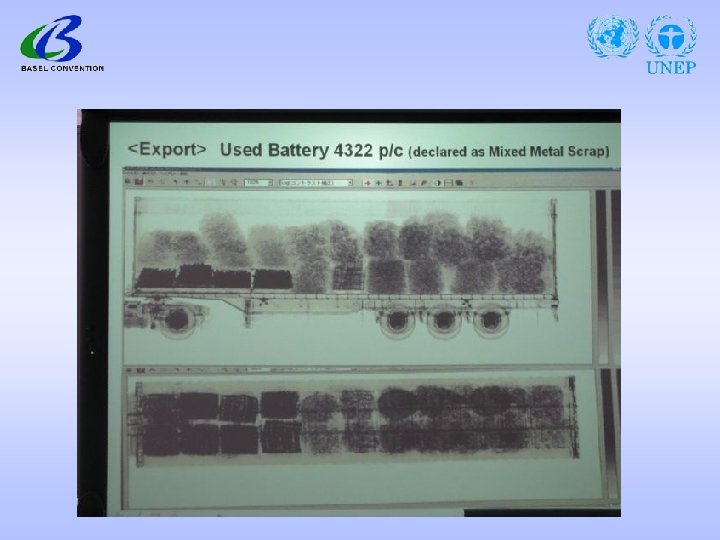
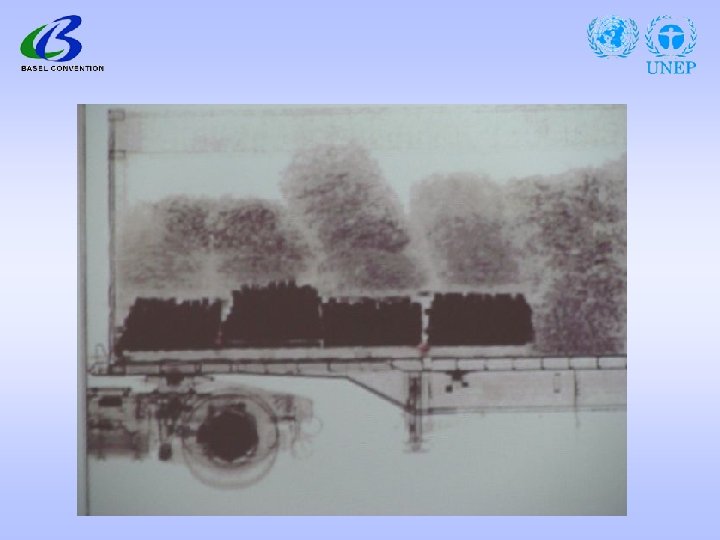
Detection: the trigger for enforcement action • Random or routine check, international inspections/enforcement actions (eg, WCO Operation Demeter, INECE SESN, IMPEL-TFS) • Tip/intelligence: foreign source or local/national • Suspicious shipment: based on appearance or paper work (eg, movement document): – – Country of origin or destination, Inadequate packaging Content Absence of, torn or mutilated placards and labels, broken seals, – Low value of the shipment
Should an illegal shipment of hazardous wastes be suspected, four essential steps should be followed: • Assess the situation; • Identify the hazardous substance; • Secure the scene; • Report the incident to relevant health, safety and regulatory personnel.
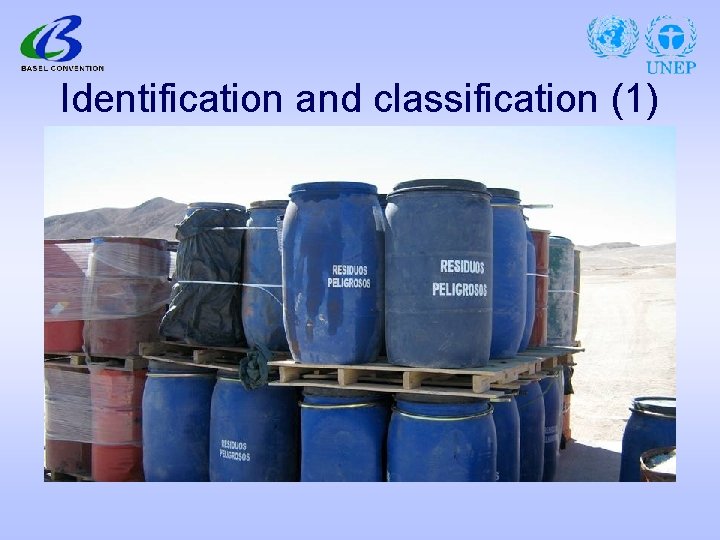
Identification and classification (1)
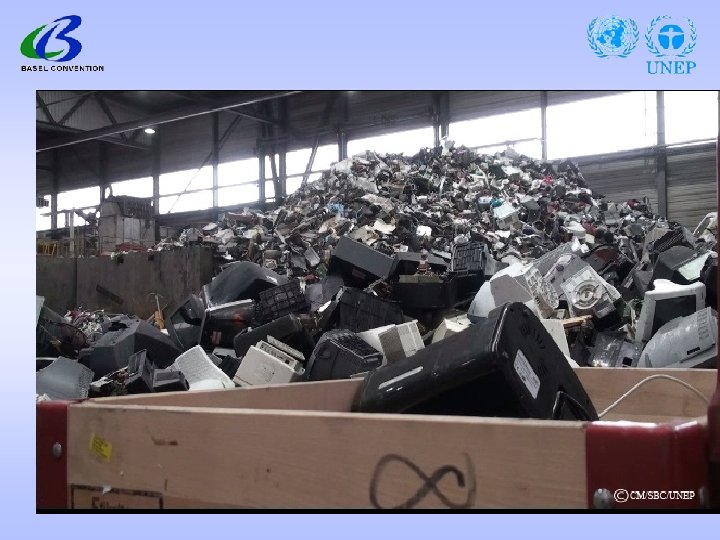
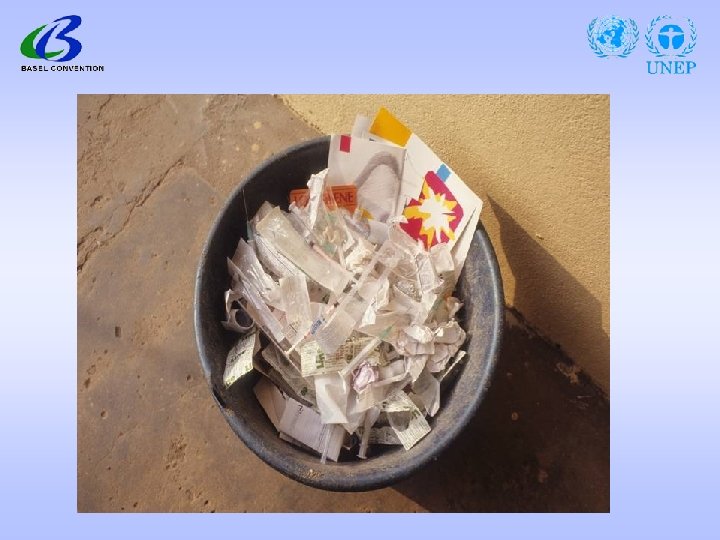
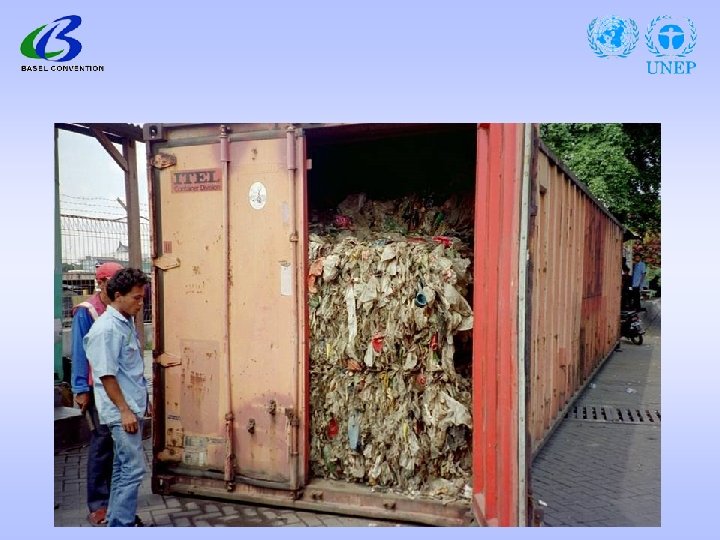
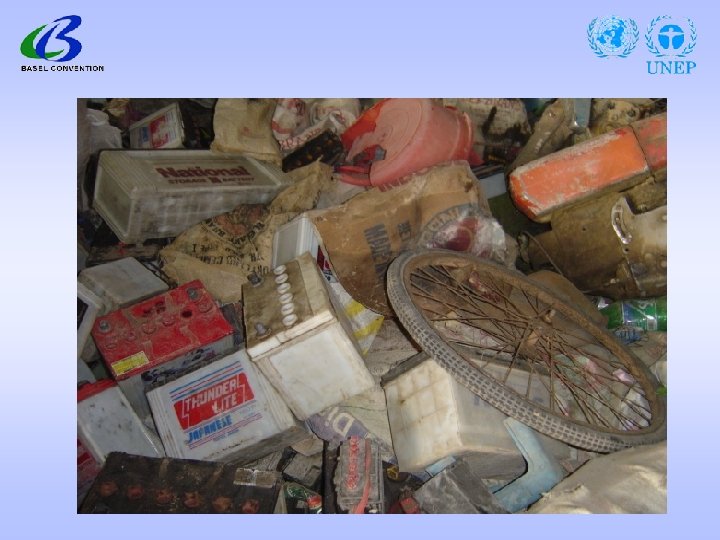
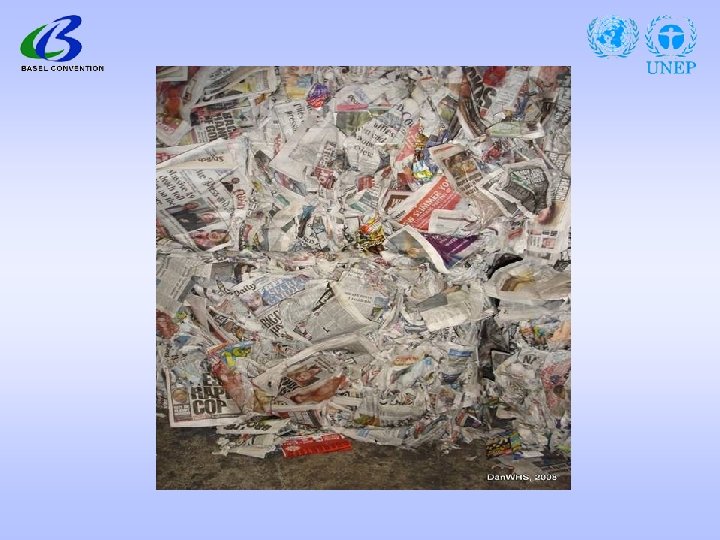
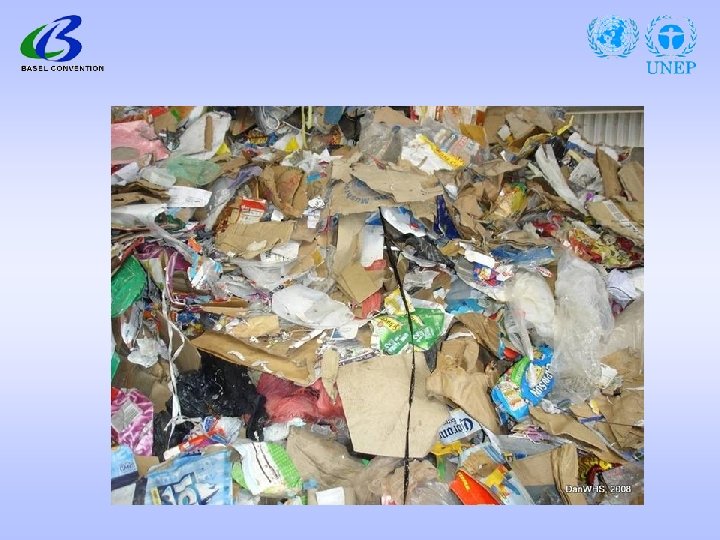
Identification and classification (2) • Physical identification – Visual: eg, glass waste from cathode-ray tubes, contaminated paper waste, household waste, lead-acid batteries, metal cables insulated with plastics… – Sample analysis: if waste is liquid or sludge. Will require specific safety measures and expertise
Identification and classification (3) • Legal classification – Definition of « waste » : substances or objects which are disposed of are intended to be disposed of or are required to be disposed of. Mainly subjective appreciation – Used, second-hand goods? – BC Annexes I, III, VIII and IX – National legislation: national definition of hazardous wastes and import/export prohibitions of specific or all BC wastes
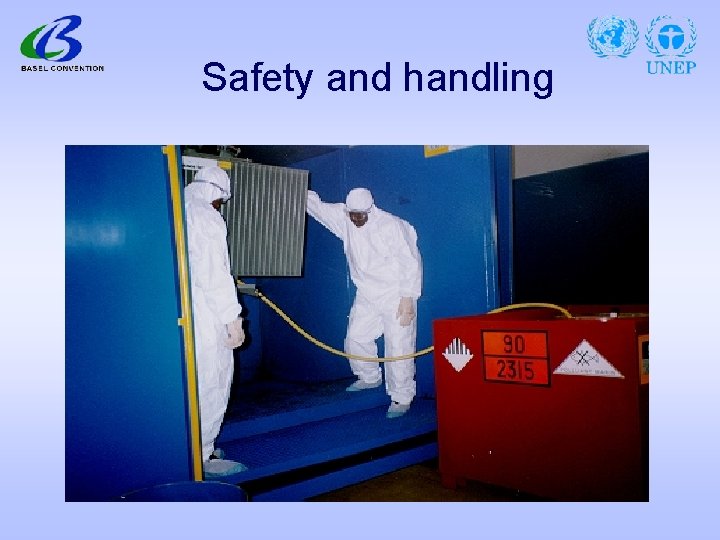
Safety and handling
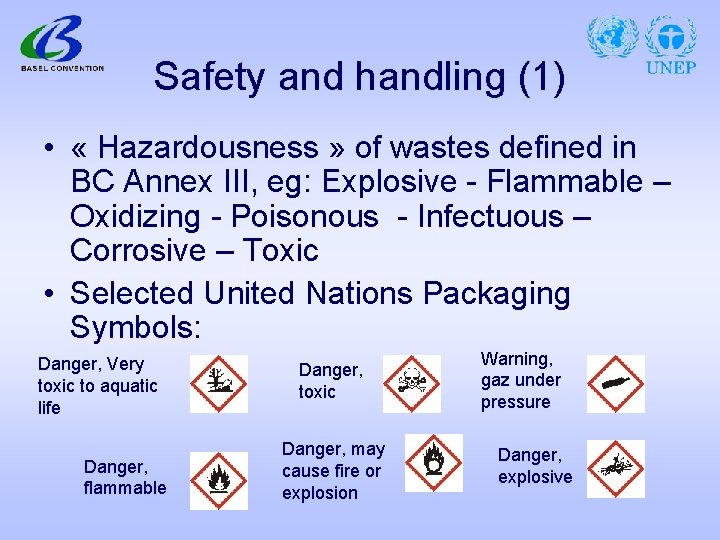
Safety and handling (1) • « Hazardousness » of wastes defined in BC Annex III, eg: Explosive - Flammable – Oxidizing - Poisonous - Infectuous – Corrosive – Toxic • Selected United Nations Packaging Symbols: Danger, Very toxic to aquatic life Danger, flammable Danger, toxic Danger, may cause fire or explosion Warning, gaz under pressure Danger, explosive
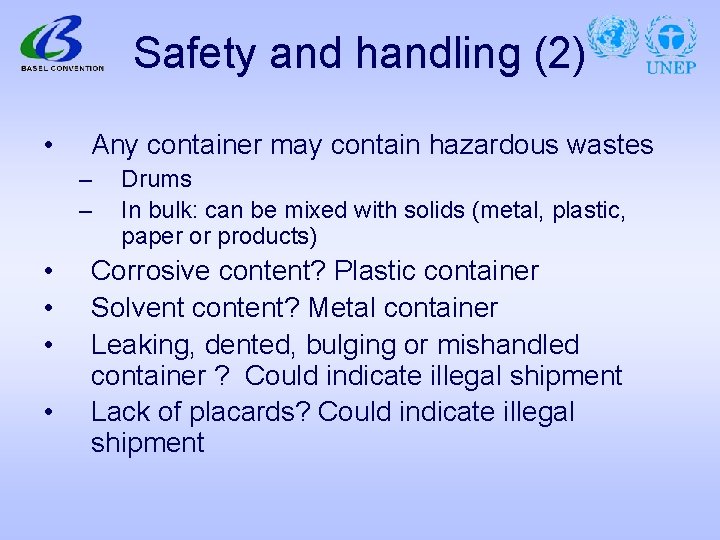
Safety and handling (2) • Any container may contain hazardous wastes – – • • Drums In bulk: can be mixed with solids (metal, plastic, paper or products) Corrosive content? Plastic container Solvent content? Metal container Leaking, dented, bulging or mishandled container ? Could indicate illegal shipment Lack of placards? Could indicate illegal shipment
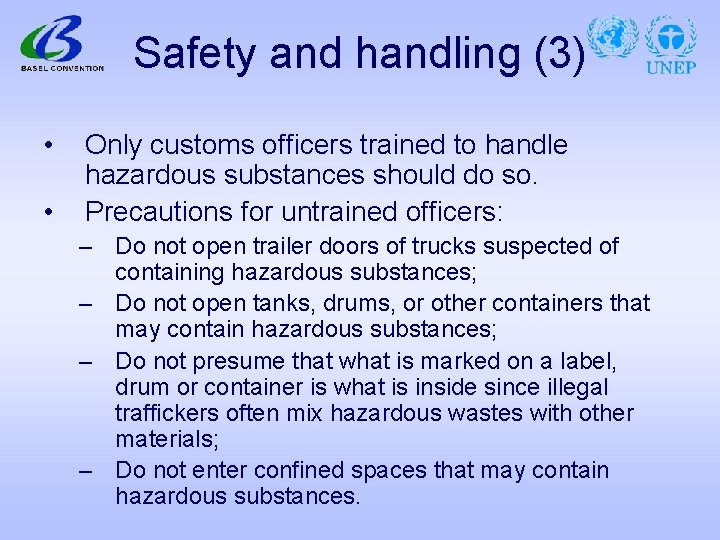
Safety and handling (3) • • Only customs officers trained to handle hazardous substances should do so. Precautions for untrained officers: – Do not open trailer doors of trucks suspected of containing hazardous substances; – Do not open tanks, drums, or other containers that may contain hazardous substances; – Do not presume that what is marked on a label, drum or container is what is inside since illegal traffickers often mix hazardous wastes with other materials; – Do not enter confined spaces that may contain hazardous substances.
Ship back procedure (1) BC Article 9. 2: In case of a TBM deemed to be illegal traffic as the result of conduct on the part of the exporter or generator, the State of export shall ensure that the wastes in question are: (a) taken back by the exporter or the generator or, if necessary, by itself into the State of export, or, if impracticable, (b) are otherwise disposed of in accordance with the provisions of this Convention (i. e. environmentally sound management)
Ship back procedure (2) • • Costly measure, both financially and politically Between Competent Authorities Role of the shipping company Role of the Secretariat: good offices and legal/technical support • Role of the Implementation and Compliance Committee: submission for non-compliance with article 9. 2 • Delays means storage/safety measures • Monitoring the returned shipment
Cooperation (1) Institutional Structure of the Convention
Cooperation (2) Many entities with specific roles National Level: • Governmental: Customs officers; Police; Coast Guards; Port Authorities; Focal Points; Competent Authorities; Ministries of Justice; and Prosecution services: • Others: shipping company, generator, disposer, consignee, laboratories, NGOs => Establish a national task force International Level: • Basel Convention Secretariat, other countries, WCO, Interpol, BCRCs, informal networks
Cooperation (3) Cooperation with the Competent Authority at every stage of the enforcement procedure: • Preventive, eg development of risk profiling, information sharing, training, and • Reactive, i. e. as soon as possible illegal waste shipment is detected (legal and technical support). • Backed by a Memorandum of Understanding
Relevant Basel Convention Reference Materials • Guide to the Control System (Instruction Manual) http: //www. basel. int/pub/instruct. doc • Instructions for Completing the Notification and Movement Documents http: //www. basel. int/techmatters/forms-notif-mov/v. COP 8. pdf • Guidance Elements for Detection, Prevention and Control of Illegal Traffic in Hazardous Wastes http: //www. basel. int/legalmatters/illegtraffic/ge_e. doc • Training Manual on Illegal Traffic for Customs Officers and other Enforcement Agencies http: //www. basel. int/legalmatters/illegtraffic/trman-e. pdf
Other sources of information • Globally Harmonised System of Classification and Labelling of Chemicals (GHS) http: //www. unece. org/trans/danger. htm • Interpol: www. interpol. int • UN Recommendations on the Transport of Dangerous Goods, Model Regulations: http: //www. unece. org/trans/danger. htm • World Customs Organisation: www. wcoomd. org • Green Customs Initiative: http: //www. greencustoms. org • IMPEL TFS: http: //www. impeltfs. eu
THANK YOU! For further Information Visit the Basel Convention’s Website: www. basel. int