
Practical Application of the ORAS The Corrections Institute


- Slides: 41
Practical Application of the ORAS The Corrections Institute Center for Criminal Justice Research University of Cincinnati
Overall Objectives • Review the output of the ORAS • Discuss components of an effective case management plan • Develop an effective case management plan using the ORAS
Principles of Effective Classification • • Risk Need Responsivity Professional Discretion
Risk/Need • Static and dynamic factors that are associated with new criminal behavior • Higher risk = more intensive services • Lower risk = lesser intensive services
Responsivity • Specific responsivity – Barriers to services – Non-criminogenic needs • • Motivation Childcare Support for change Race/ethnicity
Case Planning
Why Case Plan? • Provides a structured approach to case management • Documents interventions and progress • Provides offender with concrete expectations • Guides decision-making • Helps maintain focus on criminogenic needs
Case Management Models • Strengths-based model • Assertive model • Blended model (Strengths-based + Assertive)
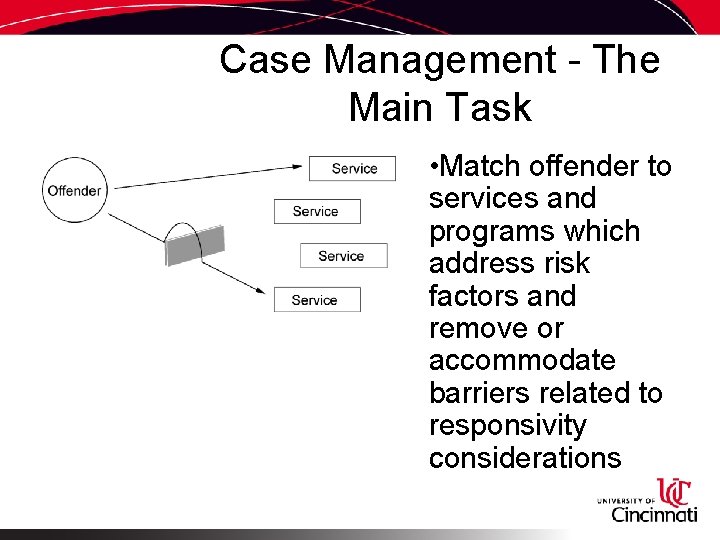
Case Management - The Main Task • Match offender to services and programs which address risk factors and remove or accommodate barriers related to responsivity considerations
Prioritizing Interventions: What to Change and Why • Criminogenic targets – reduce risk • Non-criminogenic targets – reduce barriers but NOT risk
Prioritizing Needs • Reasons for prioritization – Most needy/risky – Interest of the offender – Court order – Most difficult – Easiest
Practice Identifying Individual Targets for Change • Use the scenario in the workbook • Identify areas of risk • Prioritize individualized needs
Slide 13 Blended Case Management
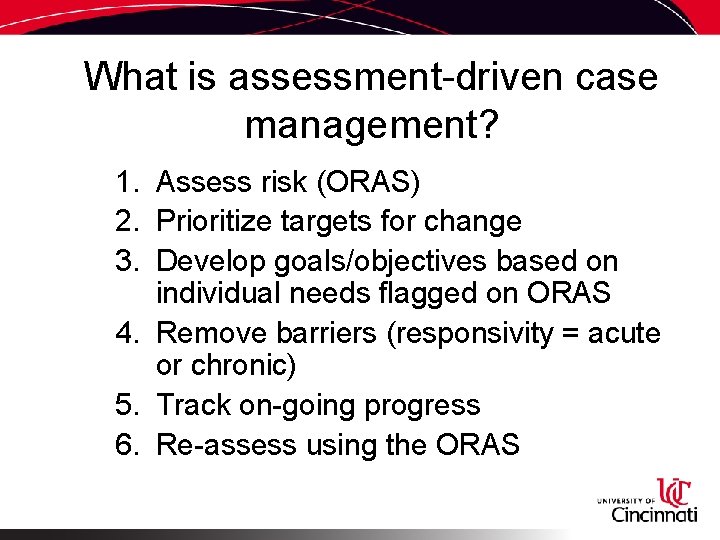
What is assessment-driven case management? 1. Assess risk (ORAS) 2. Prioritize targets for change 3. Develop goals/objectives based on individual needs flagged on ORAS 4. Remove barriers (responsivity = acute or chronic) 5. Track on-going progress 6. Re-assess using the ORAS
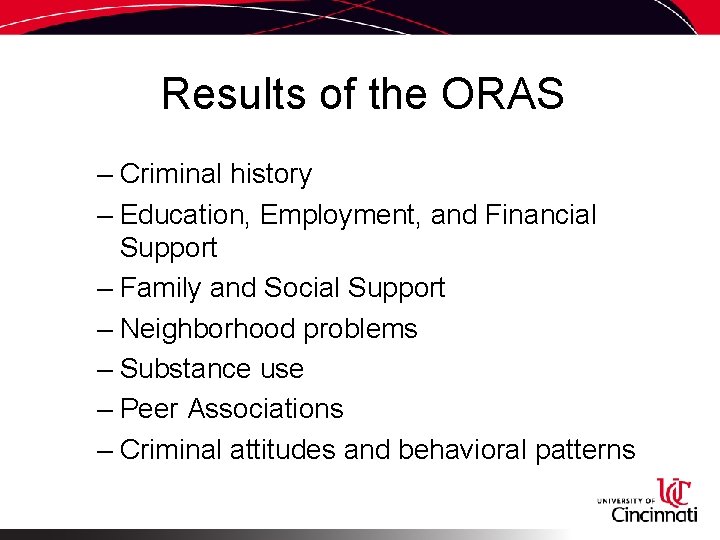
Results of the ORAS – Criminal history – Education, Employment, and Financial Support – Family and Social Support – Neighborhood problems – Substance use – Peer Associations – Criminal attitudes and behavioral patterns
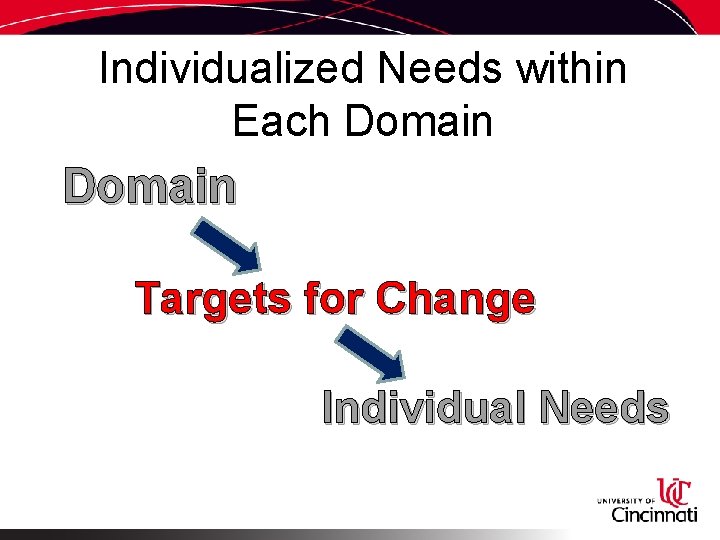
Individualized Needs within Each Domain Targets for Change Individual Needs
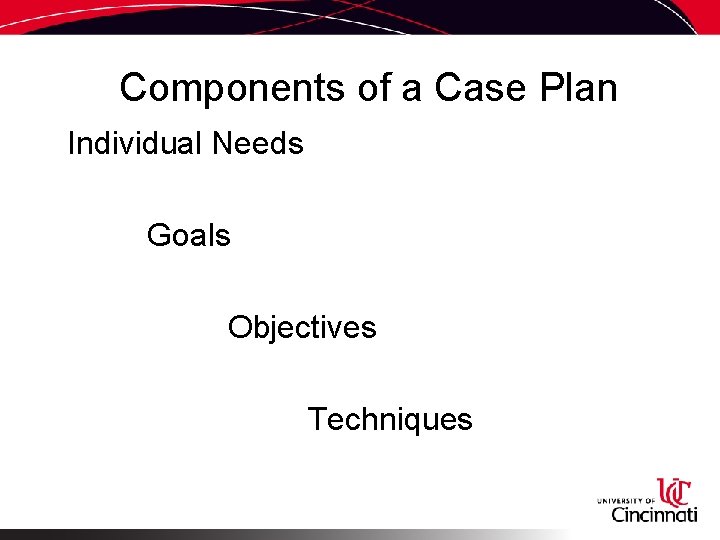
Components of a Case Plan Individual Needs Goals Objectives Techniques
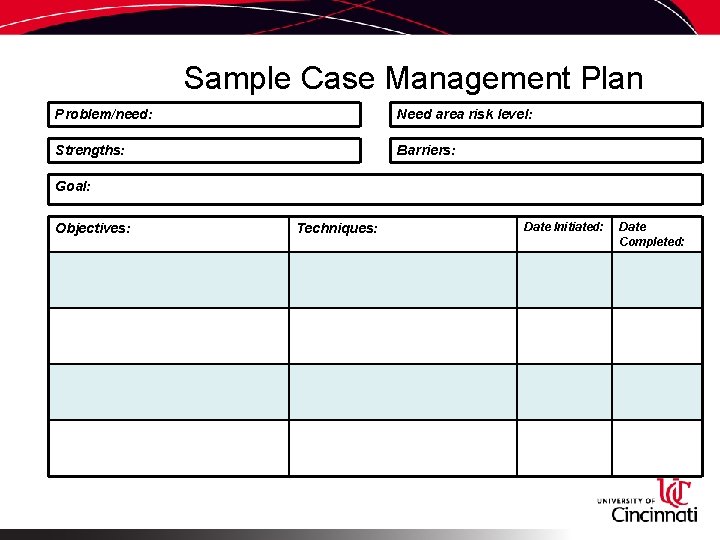
Sample Case Management Plan Problem/need: Need area risk level: Strengths: Barriers: Goal: Objectives: Techniques: Date Initiated: Date Completed:
Domains • Directly from assessments • Major focus on criminogenic factors • Address responsivity issues
Individualized Targets Examine domains flagged as moderate to high risk Determine what makes it risky for the offender Use specialized assessments if needed
Substance Abuse Issue with peers? Physiologically Addicted? Poor emotional regulation?
Examples of Individualized Needs 1. Ineffective communication with prosocial family 2. Presence of antisocial friends and lack of prosocial influences 3. Marijuana use 4. Poor problem solving skills 5. Pattern of aggressive behavior
Goals • Long-term outcomes • One goal for each individualized target • Does not have to be measurable • States a desired behavioral change
Examples of Goals 1. Develop and maintain healthy relationships with prosocial family members. 2. Develop and maintain prosocial peer relationships. 3. Develop skills to maintain substance-free lifestyle. 4. Maintain employment in a prosocial environment. 5. Increase ability to manage anger with prosocial coping skills.
Examples of Goals in Offender’s Language • Get along with spouse better • Hang out with friends who stay out of trouble • Learn new ways to stay away from drugs • Get a job and keep it • Learn to handle situations without getting physical
Goals Exercise Develop long-term goals for 2 needs you identified in the previous case.
Objectives • Short-term steps to reach broad goal • Will likely need several objectives to reach ultimate goal • Consider offender input • Must be measurable (quantifiable) • State in “SMART” terms
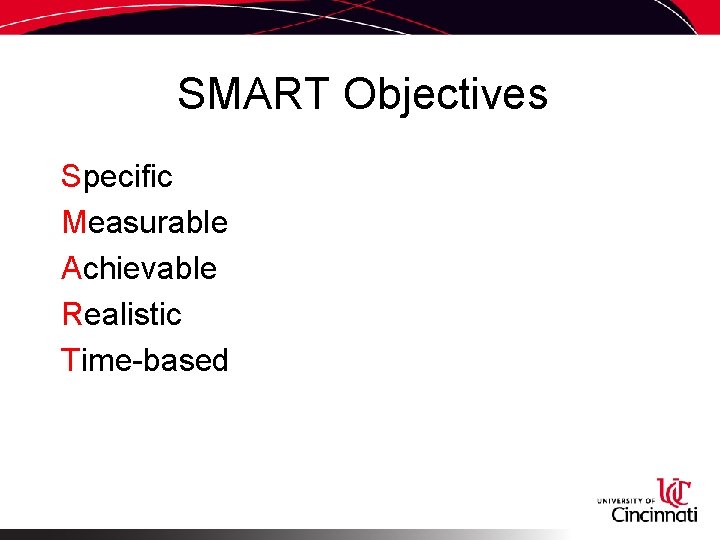
SMART Objectives Specific Measurable Achievable Realistic Time-based
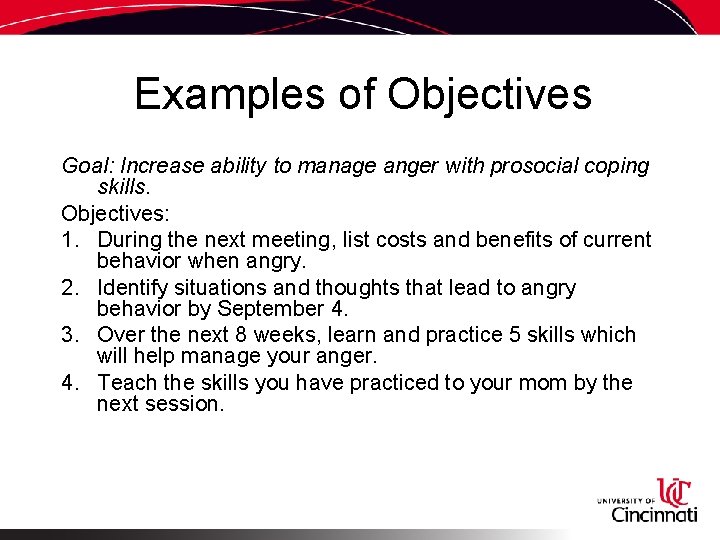
Examples of Objectives Goal: Increase ability to manage anger with prosocial coping skills. Objectives: 1. During the next meeting, list costs and benefits of current behavior when angry. 2. Identify situations and thoughts that lead to angry behavior by September 4. 3. Over the next 8 weeks, learn and practice 5 skills which will help manage your anger. 4. Teach the skills you have practiced to your mom by the next session.
Practice with Objectives Choose 2 goals and develop objectives which meet the SMART criteria.
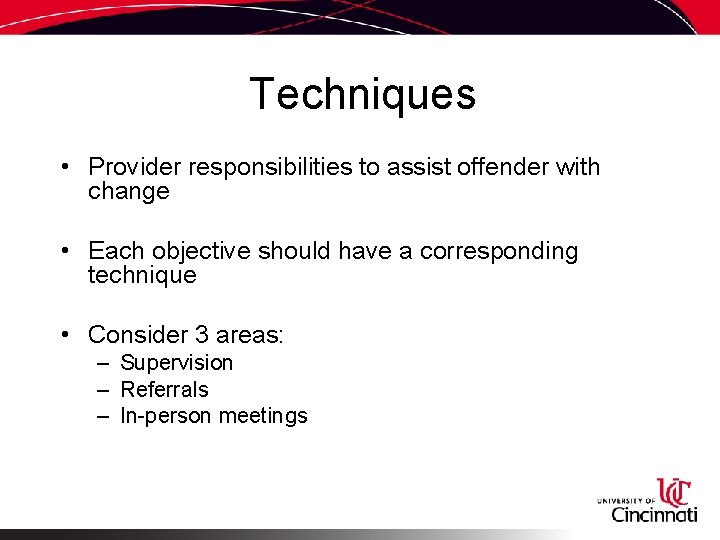
Techniques • Provider responsibilities to assist offender with change • Each objective should have a corresponding technique • Consider 3 areas: – Supervision – Referrals – In-person meetings
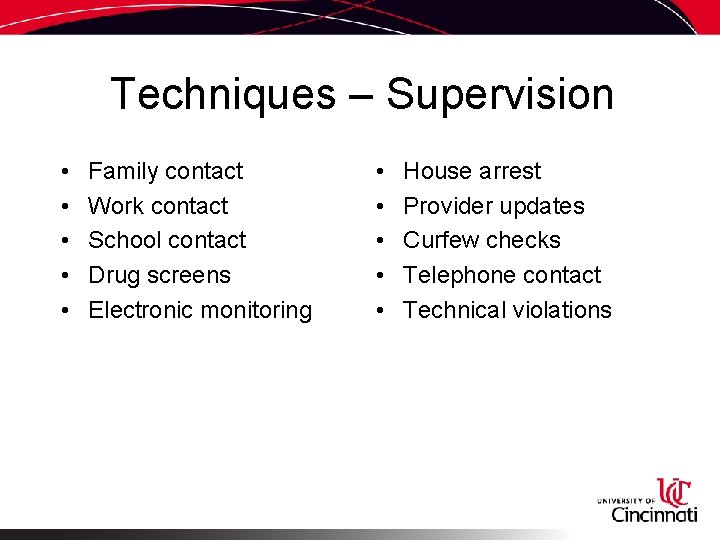
Techniques – Supervision • • • Family contact Work contact School contact Drug screens Electronic monitoring • • • House arrest Provider updates Curfew checks Telephone contact Technical violations
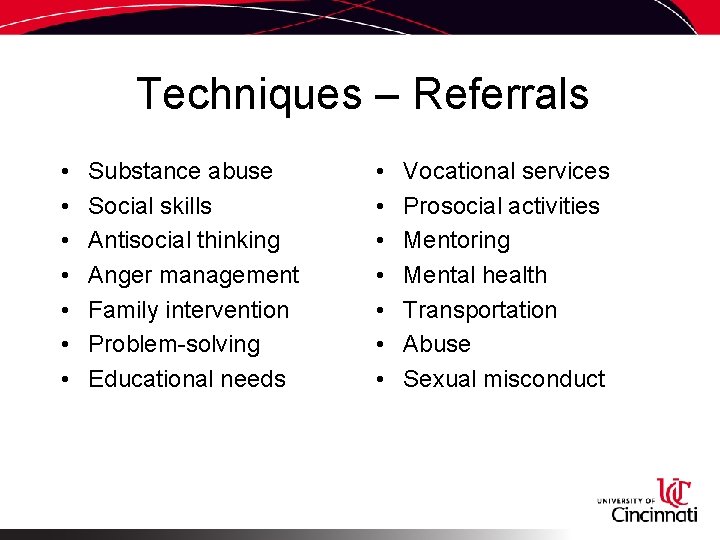
Techniques – Referrals • • Substance abuse Social skills Antisocial thinking Anger management Family intervention Problem-solving Educational needs • • Vocational services Prosocial activities Mentoring Mental health Transportation Abuse Sexual misconduct
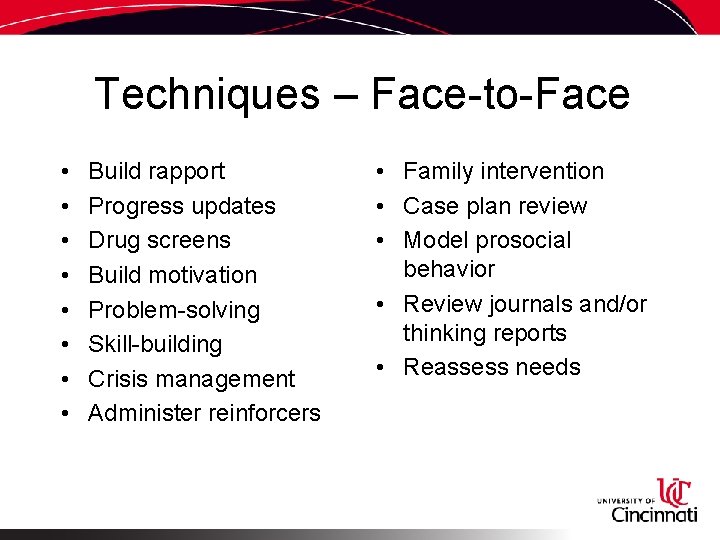
Techniques – Face-to-Face • • Build rapport Progress updates Drug screens Build motivation Problem-solving Skill-building Crisis management Administer reinforcers • Family intervention • Case plan review • Model prosocial behavior • Review journals and/or thinking reports • Reassess needs
Examples of Techniques Goal: Increase ability to manage anger with prosocial coping skills. Objective 1: During the next meeting, list costs and benefits of current behavior when angry. Techniques: 1. Complete a cost-benefit analysis with offender to help build motivation.
Examples of Techniques Goal: Increase ability to manage anger with prosocial coping skills. Objective 2: Identify situations and thoughts that lead to angry behavior by September 4. Techniques: 1. Refer to anger management group. 2. Monitor participation through monthly contact with provider. 3. Review group homework regarding triggers.
Practice with Techniques Choose 2 objectives and develop corresponding techniques. Focus on supervision, referrals, and face-to-face interactions for each objective.
Putting It All Together • • Create a case from scratch Develop a goal for 2 domains Develop 1 objective per goal Develop 2 techniques per objective
Using the Case Plan to Track Progress • Identify goals/objectives • Track progress on each goal/objective • Creates a record of accomplishments and continued needs
Updating the Case Plan with the ORAS • Develop a case plan off initial assessment • Re-assessment provides up-to-date risk • Individualize goals/objectives
ORAS and the Case Plan • Use the ORAS to inform areas of need • Develop individualized targets for change • Track change • Reassess • Maintain success and continued need