
PRACTICAL APPLICATION OF RISK ASSESSMENT USE OF PHA

- Slides: 37
PRACTICAL APPLICATION OF RISK ASSESSMENT: USE OF PHA Jen Czak PSM Lead Phillips 66
Session Outline • Terminology • How to assess risk • Gas station example • How Industry risk assessments are different • Questions • Closing
TERMINOLOGY
PHA Process Hazard Analysis – An organized and systematic assessment of potential hazards associated with the processing or handling of highly hazardous materials. WAC 296 -67 -017 (1) The employer shall perform an initial process hazard analysis (hazard evaluation) on processes covered by this standard. The process hazard analysis shall be appropriate to the complexity of the process and shall identify, evaluate, and control the hazards involved in the process. . .
HAZARD Source of potential damage or harm Example – Icy surface
RISK Likelihood that any hazard will cause harm Example – Potential for individual to be injured slipping on an icy surface
SAFEGUARD Something that protects people or the environment from harm Example - Ice melt, sand, footwear traction devices, padding
RISK TOLERANCE How much risk you are willing to accept Example – A person is walking across an icy surface covered with sand. Is the risk for an injury from a fall acceptable?
HOW TO ASSESS RISK
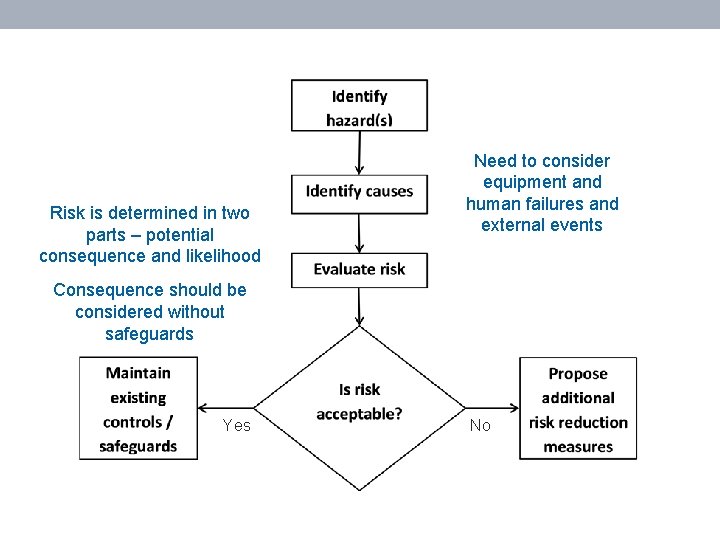
Risk is determined in two parts – potential consequence and likelihood Need to consider equipment and human failures and external events Consequence should be considered without safeguards Yes No
GAS STATION EXAMPLE
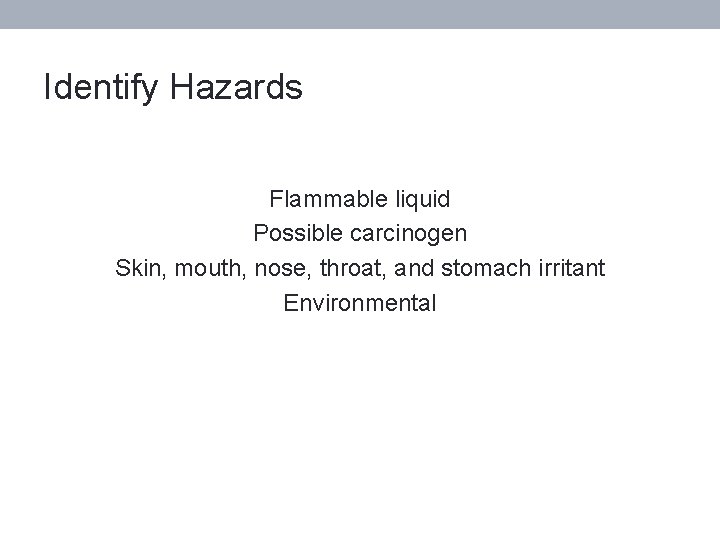
Identify Hazards Flammable liquid Possible carcinogen Skin, mouth, nose, throat, and stomach irritant Environmental
Filling Vehicle with Gasoline Cause – Credit card machine doesn’t work Consequence – Time delay, can't fill car with gasoline No hazardous consequences
Filling Vehicle with Gasoline Cause – Select wrong grade of gasoline Consequence – Increased cost, or potential engine damage over time. No hazardous consequences
Filling Vehicle with Gasoline Cause – Person holds trigger down while moving the nozzle to the car Consequence – Release of gasoline, minor exposure Safeguards – Is the risk acceptable?
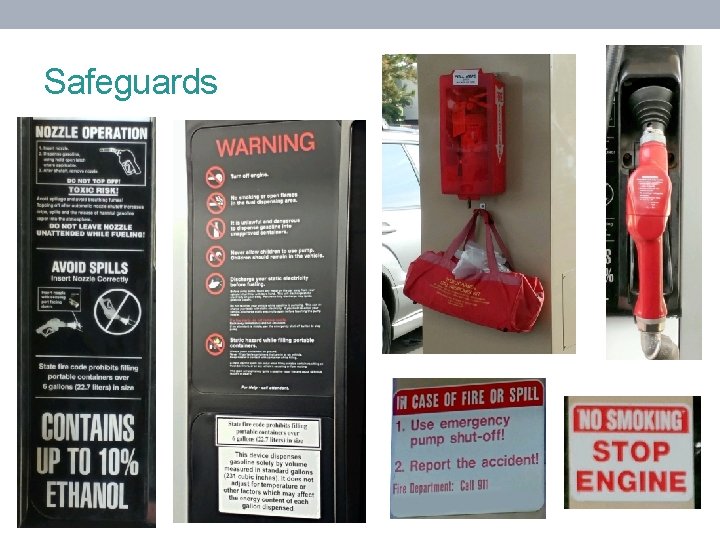
Filling Vehicle with Gasoline Cause – Squeeze trigger to activate gasoline pump and set latch on nozzle (normal operation – no specific cause) Consequences – 1. Gasoline vapors present near opening ignite and start a fire, person is burned 2. Person is exposed to gasoline vapors Safeguards – Warning signs posted on pumps about precautions for potential ignition sources, nozzles are equipped with rubber boots/splash guards Is the risk acceptable?
Safeguards
SMALL GROUP ACTIVITY
Filling Vehicle with Gasoline Cause – Pump shuts off or shutoff valve trips early while filling Consequence – Time delay, can't fill car with gasoline No hazardous consequences
Filling Vehicle with Gasoline Cause – Low ambient temperature when filling up with gasoline Consequence – Low temperatures cause person to wait in vehicle while gasoline is being pumped, static discharge occurs when person touches nozzle, gasoline vapors ignite and start a fire, person is burned Safeguards – Warning signs posted on pumps about precautions for static electricity Is the risk acceptable?
Filling Vehicle with Gasoline Cause – High ambient temperature when filling up with gasoline Consequence – Additional vapors present when refueling 1. Gasoline vapors present near opening ignite and start a fire, person is burned 2. Person is exposed to gasoline vapors Safeguards – Warning signs posted on pumps about precautions for potential ignition sources, nozzles are equipped with rubber boots/splash guards Is the risk acceptable?
Filling Vehicle with Gasoline Cause – Raining when filling up with gasoline Consequence – Potential for some moisture to get into gasoline tank causing engine damage No hazardous consequences
Filling Vehicle with Gasoline Cause – High wind when filling up with gasoline Consequence – May be more difficult to complete task No hazardous consequences
Filling Vehicle with Gasoline Cause – Shutoff valve fails Consequence – Gasoline tank is overfilled, release of gasoline, gasoline catches on fire, person is burned Safeguards – Instructions on how to insert nozzle and warning signs about precautions for potential ignition sources posted on pumps Is the risk acceptable?
Filling Vehicle with Gasoline Cause – Person tops off gasoline tank after the shutoff valve has been activated Consequence – Release of gasoline, minor exposure Safeguards – Warning signs posted on pumps, nozzles are equipped with rubber boots/splash guards Is the risk acceptable?
Filling Vehicle with Gasoline Cause – Person drives off with nozzle still inserted into car Consequence – Hose is ripped off injuring nearby person, release of gasoline, gasoline catches on fire resulting in additional injuries to other person and property damage Safeguards – Breakaway valve installed on hoses, nozzle instructions posted at pumps, emergency pump shut-offs Is the risk acceptable?
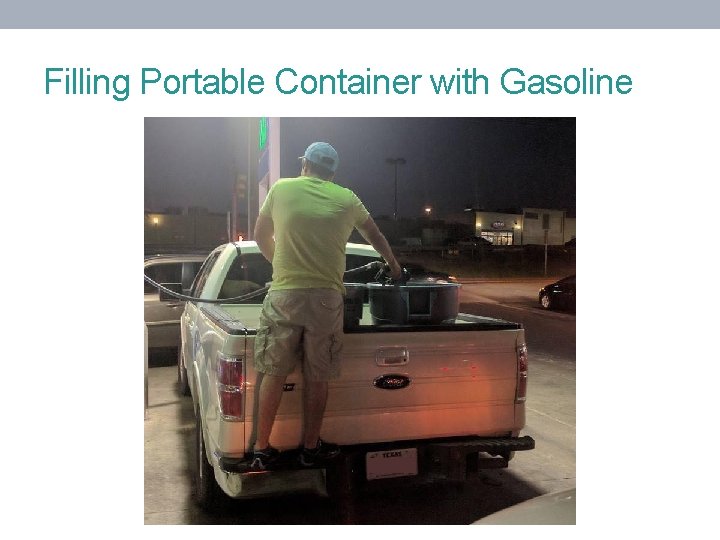
Filling Portable Container with Gasoline Cause – Portable container filled inside vehicle or on bed of truck Consequence – Static builds up while filling and ignites flammable vapors, fire starts, person is burned Safeguards – Warning signs posted on pumps about portable container risks Is the risk acceptable?
Filling Portable Container with Gasoline
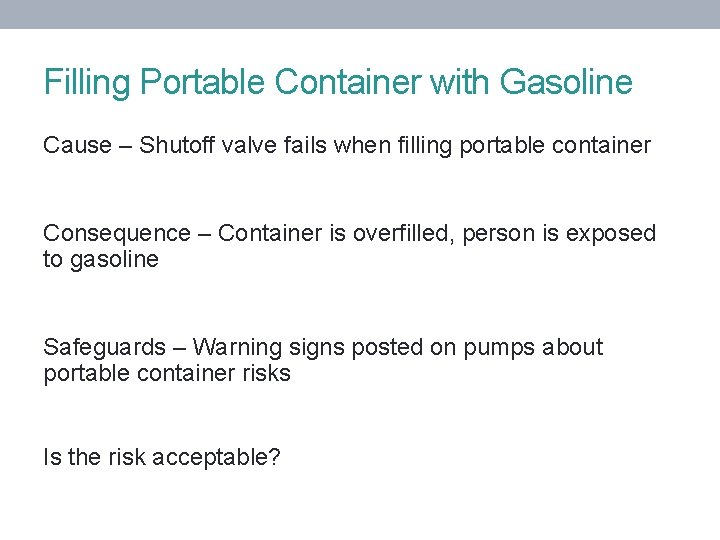
Filling Portable Container with Gasoline Cause – Shutoff valve fails when filling portable container Consequence – Container is overfilled, person is exposed to gasoline Safeguards – Warning signs posted on pumps about portable container risks Is the risk acceptable?
HOW INDUSTRY RISK ASSESSMENTS ARE DIFFERENT
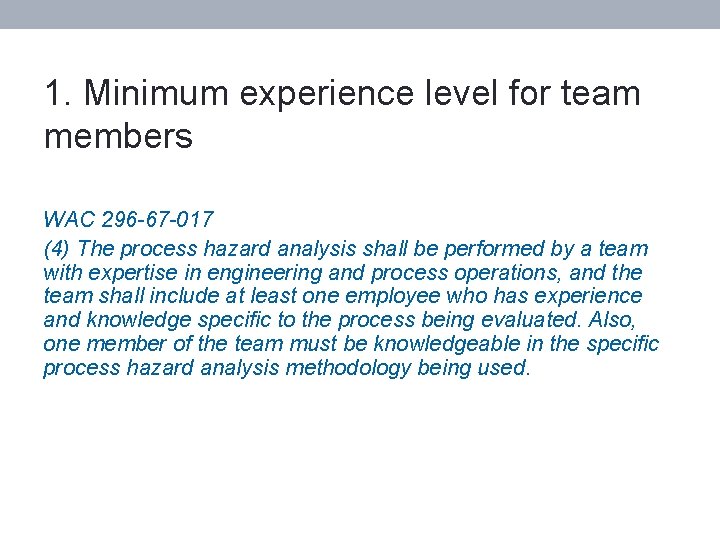
1. Minimum experience level for team members WAC 296 -67 -017 (4) The process hazard analysis shall be performed by a team with expertise in engineering and process operations, and the team shall include at least one employee who has experience and knowledge specific to the process being evaluated. Also, one member of the team must be knowledgeable in the specific process hazard analysis methodology being used.
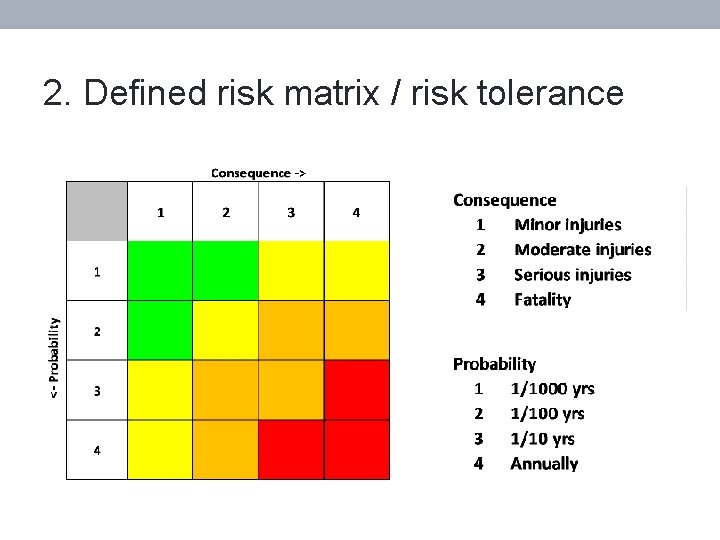
2. Defined risk matrix / risk tolerance
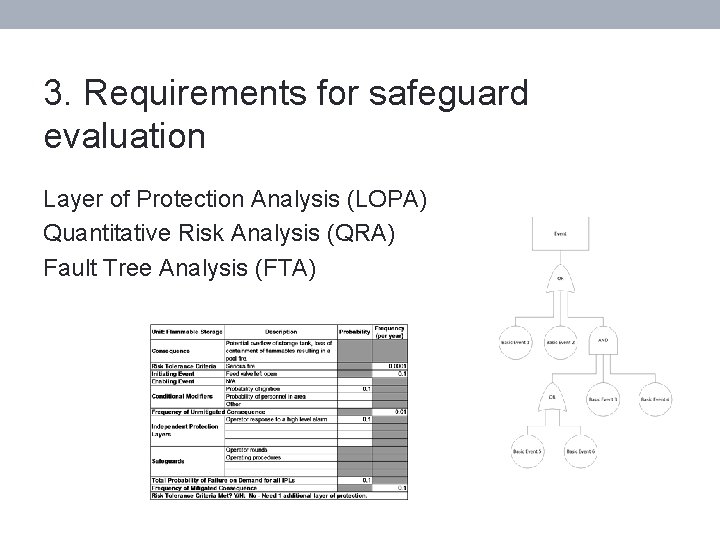
3. Requirements for safeguard evaluation Layer of Protection Analysis (LOPA) Quantitative Risk Analysis (QRA) Fault Tree Analysis (FTA)
ANY QUESTIONS?
CLOSING