
Practical application of motivation theory to health professions






- Slides: 32
Practical application of motivation theory to health professions education: a scoping review and examples for practice Shelley Ross, Ph. D SDRME Conference, Salt Lake City June 2015
Acknowledgements Funding provided by a grant from Society of Directors of Medical Education Research • Research assistant: Rosslynn Zulla • I have no conflicts to disclose.
Overview Motivation theory: what makes people want to learn? Scoping review: Major theories Applying theories to health professions education
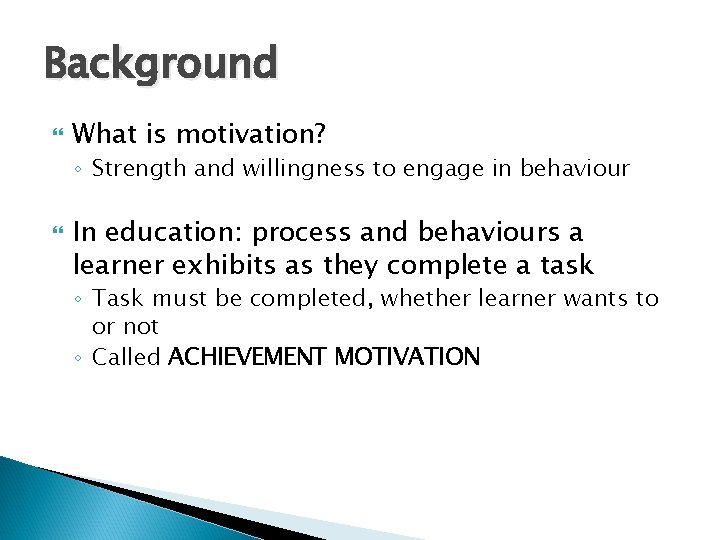
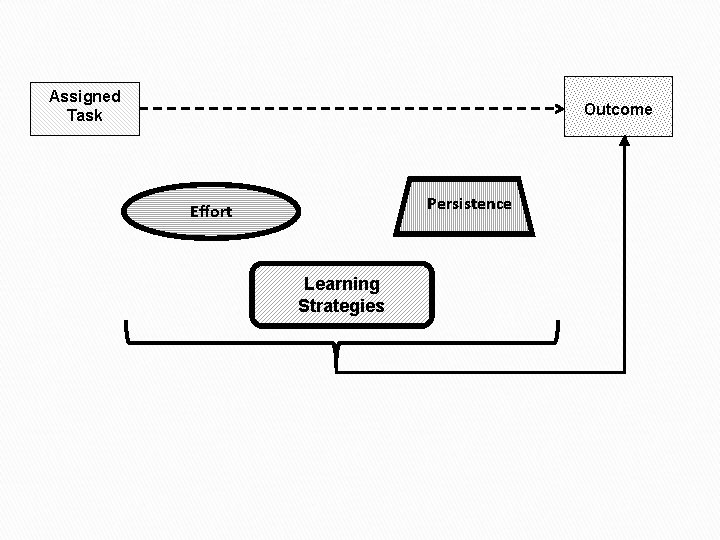
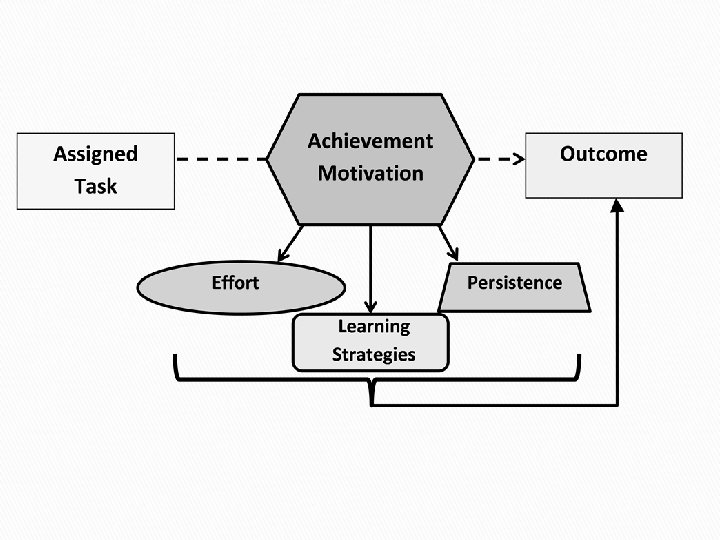
Background What is motivation? ◦ Strength and willingness to engage in behaviour In education: process and behaviours a learner exhibits as they complete a task ◦ Task must be completed, whether learner wants to or not ◦ Called ACHIEVEMENT MOTIVATION
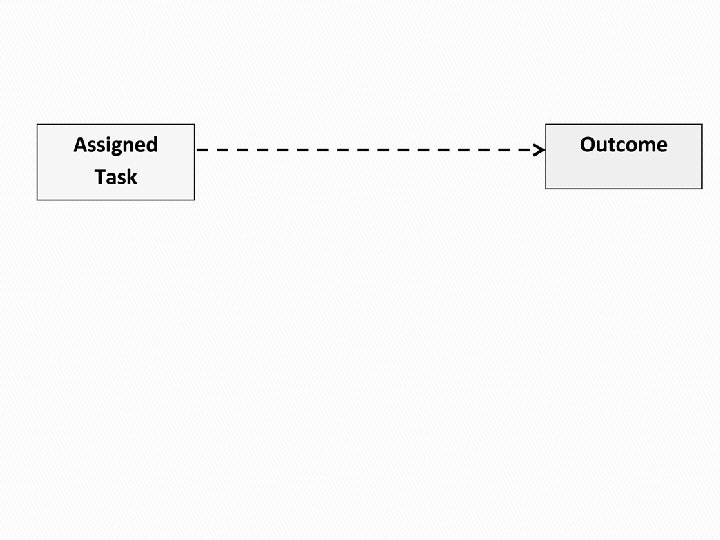
Assigned Task Outcome Persistence Effort Learning Strategies
Intent of scoping review Enormous amount of published research ◦ And multiple theories in use Use scoping review methodology to summarize key research findings Offers medical education researchers an introduction to current motivation theories ◦ As well as practical tips to implement in their teaching
Methods w Scoping review to summarize research findings w Reviewed To. C of 5 leading Ed Psych journals (last 5 years) w Identified current leading motivation theories
Methods w Key terms: self-efficacy, achievement goal theory, expectancy-value, attribution theory w Multiple searches (Psyc. Info, Med. Line, ERIC; Google Scholar) w Reference lists of papers also searched for older key citations
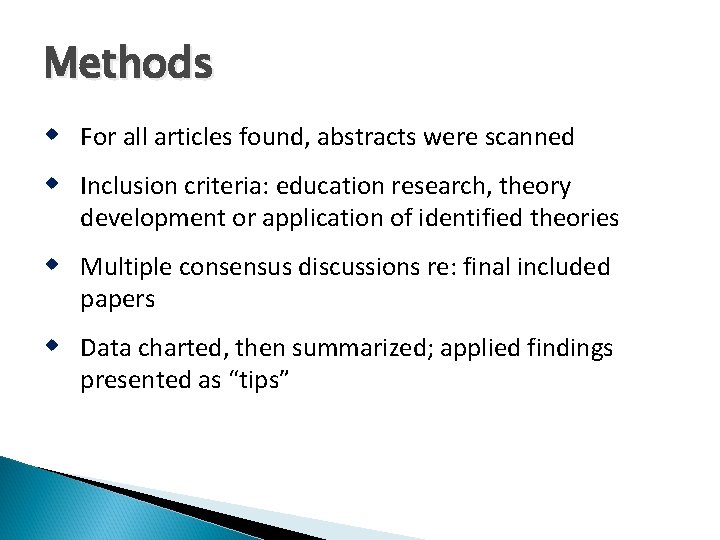
Methods w For all articles found, abstracts were scanned w Inclusion criteria: education research, theory development or application of identified theories w Multiple consensus discussions re: final included papers w Data charted, then summarized; applied findings presented as “tips”
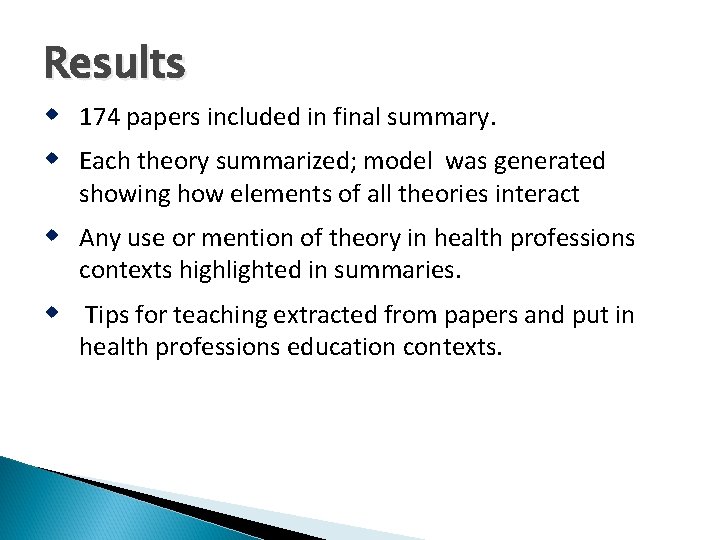
Results w 174 papers included in final summary. w Each theory summarized; model was generated showing how elements of all theories interact w Any use or mention of theory in health professions contexts highlighted in summaries. w Tips for teaching extracted from papers and put in health professions education contexts.
Major current motivation theories
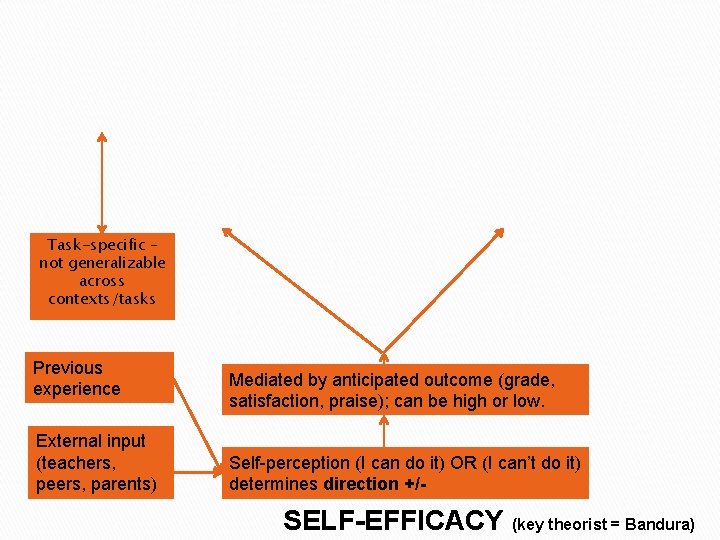
SELF-EFFICACY Key theorists: Bandura (1977, 1997); Schunk, (1991); Zimmerman, (1992, 2000)
Task-specific – not generalizable across contexts/tasks Previous experience External input (teachers, peers, parents) Mediated by anticipated outcome (grade, satisfaction, praise); can be high or low. Self-perception (I can do it) OR (I can’t do it) determines direction +/- SELF-EFFICACY (key theorist = Bandura)
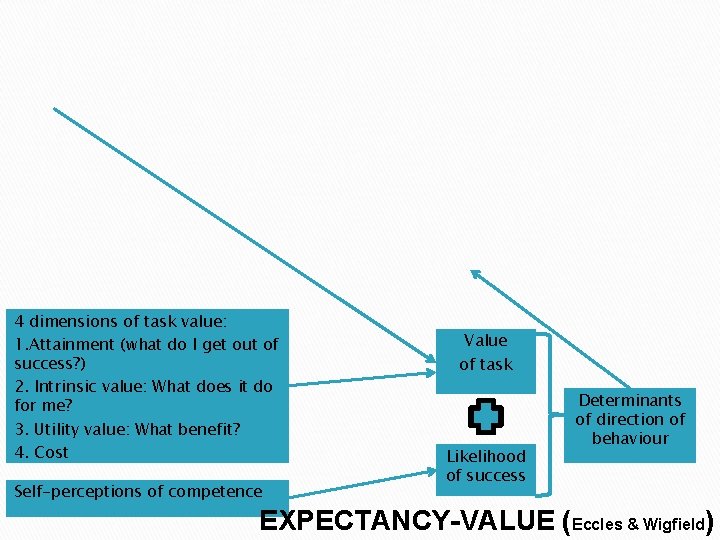
EXPECTANCY-VALUE Key theorists: Eccles (1987, 2005), Eccles & Wigfield (2000); Wigfield (2014)
4 dimensions of task value: 1. Attainment (what do I get out of success? ) 2. Intrinsic value: What does it do for me? 3. Utility value: What benefit? 4. Cost Self-perceptions of competence Value of task Likelihood of success Determinants of direction of behaviour EXPECTANCY-VALUE (Eccles & Wigfield)
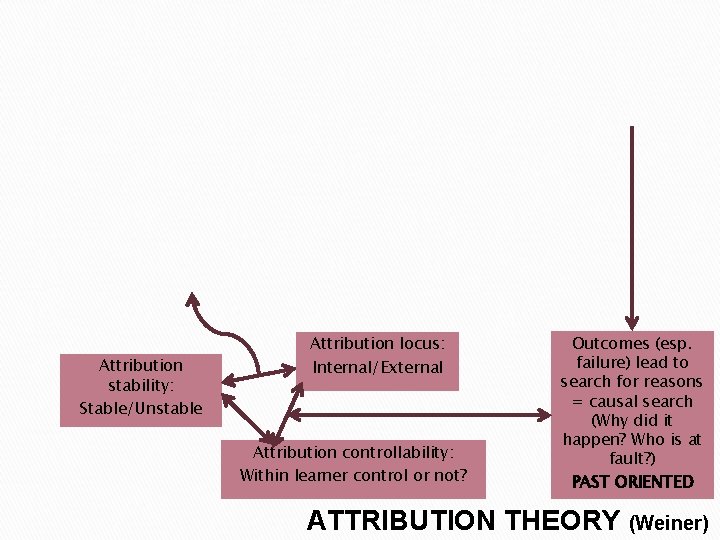
ATTRIBUTION THEORY Key theorist: Weiner (1979, 1985)
Attribution stability: Stable/Unstable Attribution locus: Internal/External Attribution controllability: Within learner control or not? Outcomes (esp. failure) lead to search for reasons = causal search (Why did it happen? Who is at fault? ) PAST ORIENTED ATTRIBUTION THEORY (Weiner)
ACHIEVEMENT GOAL THEORY Key theorists: Ames (1984); Nichols (1984); Dweck & Leggett (1988); Elliott (1999, 2001, 2013)
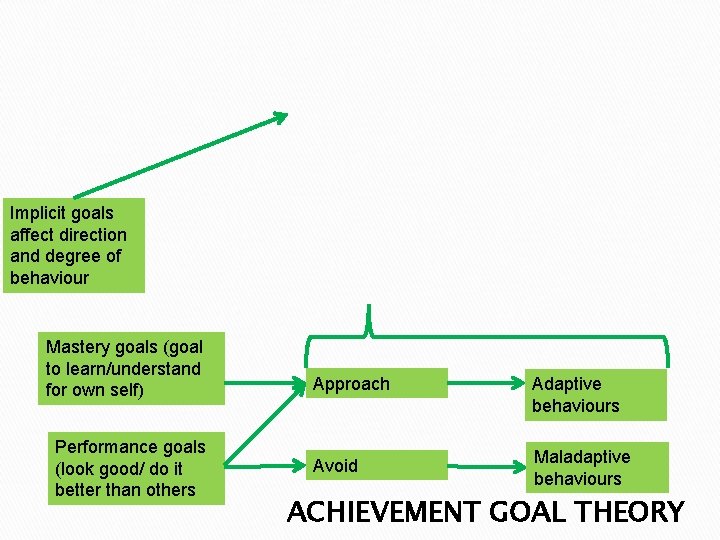
Implicit goals affect direction and degree of behaviour Mastery goals (goal to learn/understand for own self) Performance goals (look good/ do it better than others Approach Adaptive behaviours Avoid Maladaptive behaviours ACHIEVEMENT GOAL THEORY
Practical applications
Feelings of competence and selfworth Applies to: All theories Feedback: focus on skill and competence development; ability comments should be minimized, ie. “You took a good approach to developing your differential” rather than “You are good at this”
Feelings of competence and selfworth Applies to: All theories Tasks: should be challenging, but also doable ◦ students need to be able to feel successful, but also to feel that they worked for it
Adaptive attributions Applies to: Attribution theory Feedback: emphasize the importance of effort and effective strategies Tasks: offer choice, to encourage feelings of control; ◦ if possible, give options in learning
Valuing tasks and their outcome Applies to: expectancy-value; self-efficacy Tasks: Relevant to students ◦ connect a critical appraisal task directly to a patient presentation (from lecture or PBL) Present tasks and information in ways that answer the question “When will I ever need to know this stuff? ”
Emphasize learning, not achievement Applies to: Achievement goal theory Stress understanding when explaining concepts Don’t post grades, or create an environment where comparisons are encouraged
Emphasize learning, not achievement Create an environment where peer helping and seeking help from the teacher are encouraged and facilitated Feedback: never compare students to each other; use criterion-referenced feedback exclusively
Intrinsic motivation Applies to: All theories Provide variety and novelty in learning tasks , and be open to creative interpretations of any didactic assignments Avoid praise, and use feedback instead ◦ “You were very effective in finding common ground with that patient”
Conclusions w Decades of motivation theory development and applied research exists; w summaries makes this literature accessible to health professions educators (may not otherwise be able to efficiently access it) w Contextualize tips into clinical and non-clinical environments - gives concrete ideas w Future research can examine theory development in the context of health professionals and learners (a unique population).
Conclusions Status of the paper from SDRME grant ◦ - complete ◦ - 14000 words long ◦ - exploring options for publication (monograph, series, stand alone)
Would you like a copy of slides? Have further questions? sross@ualberta. ca Or ask me for a card