
Practical 2 Micrometry Measuring cells To accurately measure


- Slides: 21
Practical 2: Micrometry (Measuring cells)
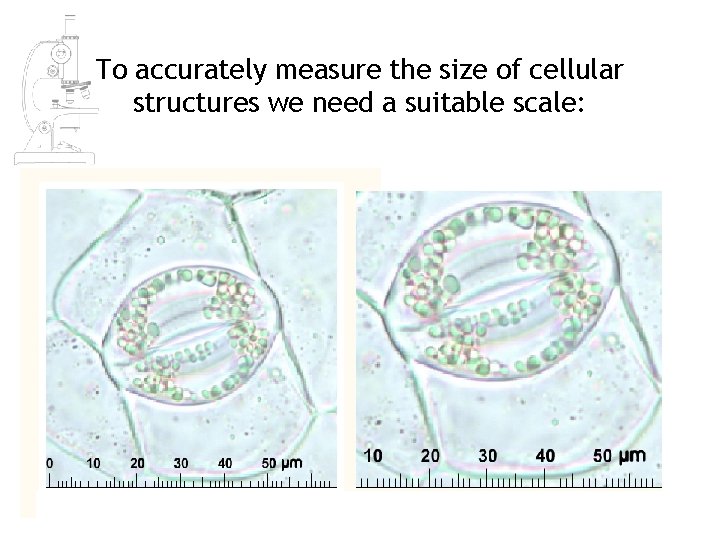
To accurately measure the size of cellular structures we need a suitable scale:
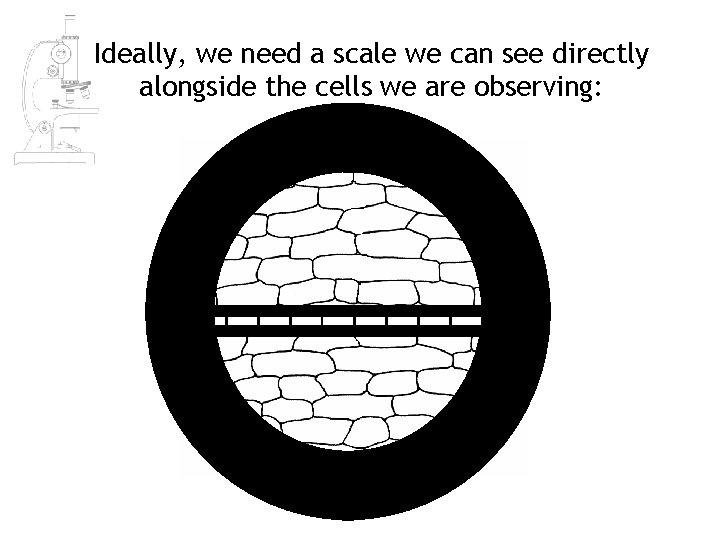
Ideally, we need a scale we can see directly alongside the cells we are observing:
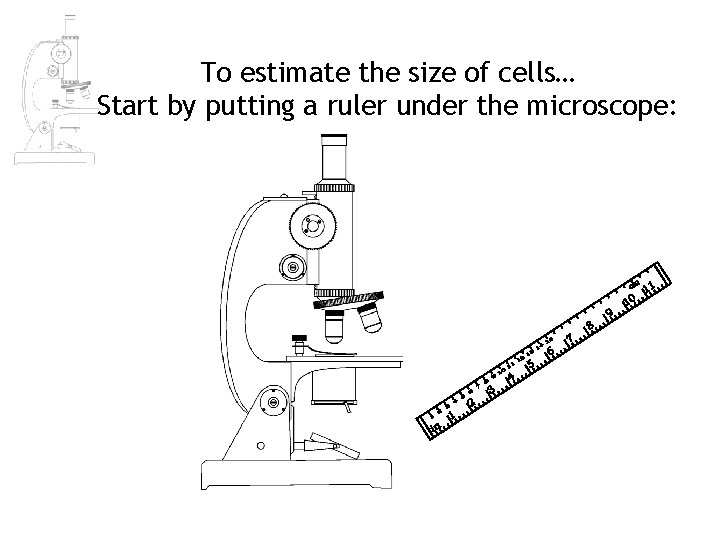
To estimate the size of cells… Start by putting a ruler under the microscope:
Appearance of ruler at medium magnification What is the field of view?
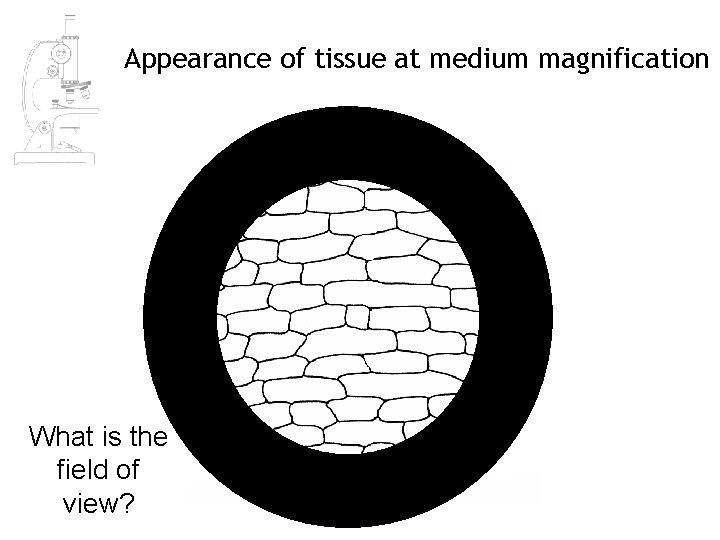
Appearance of tissue at medium magnification What is the field of view?
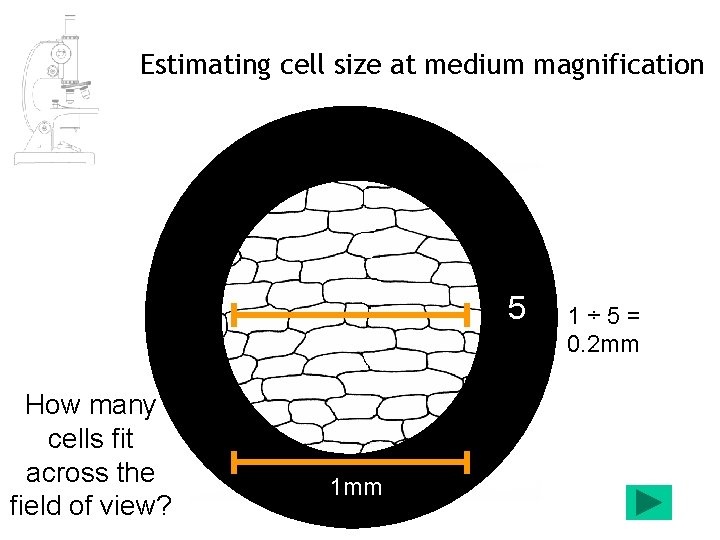
Estimating cell size at medium magnification 5 How many cells fit across the field of view? 1 mm 1÷ 5= 0. 2 mm
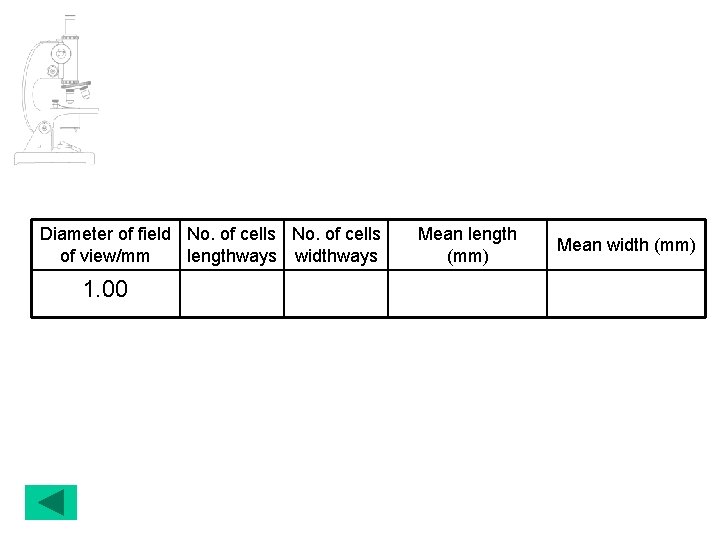
Diameter of field No. of cells of view/mm lengthways widthways 1. 00 5 12 Mean length (mm) Mean width (mm) 0. 2 0. 083
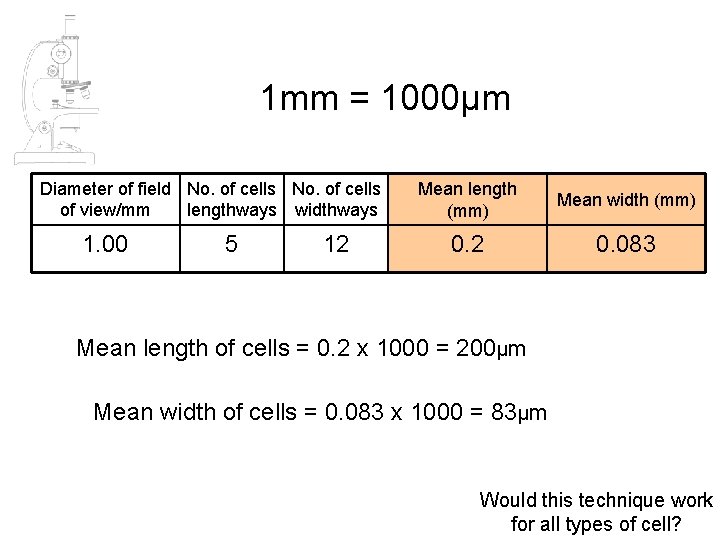
1 mm = 1000µm Diameter of field No. of cells of view/mm lengthways widthways 1. 00 5 12 Mean length (mm) Mean width (mm) 0. 2 0. 083 Mean length of cells = 0. 2 x 1000 = 200µm Mean width of cells = 0. 083 x 1000 = 83µm Would this technique work for all types of cell?
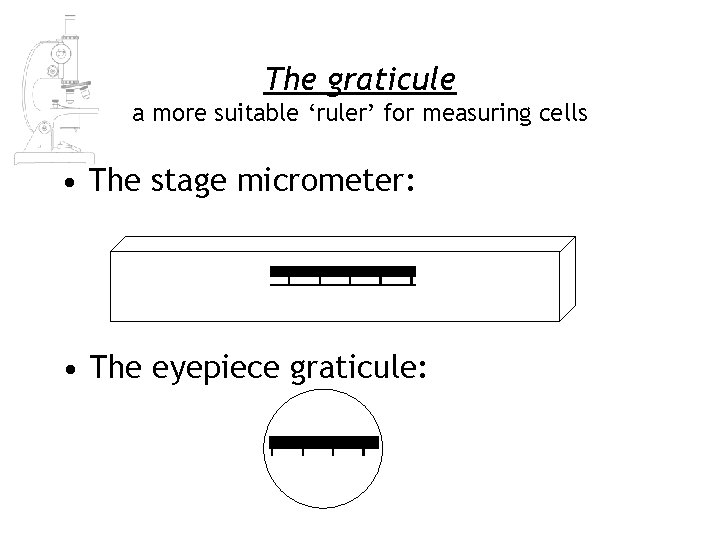
The graticule a more suitable ‘ruler’ for measuring cells • The stage micrometer: • The eyepiece graticule:
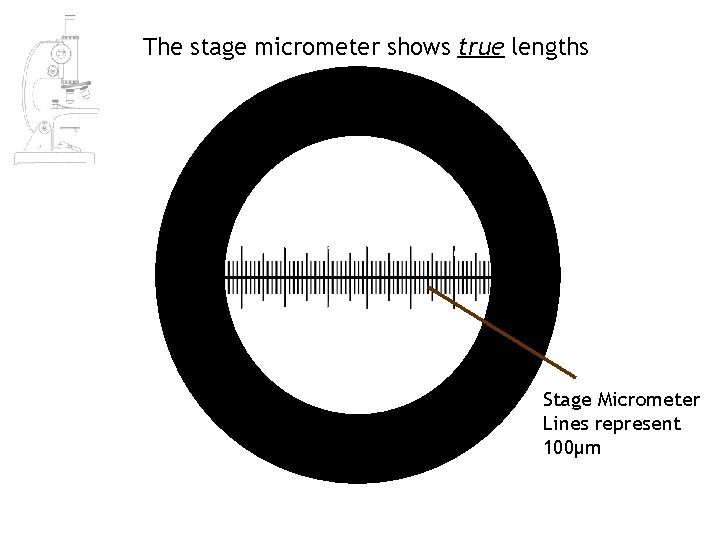
The stage micrometer shows true lengths Stage Micrometer Lines represent 100μm
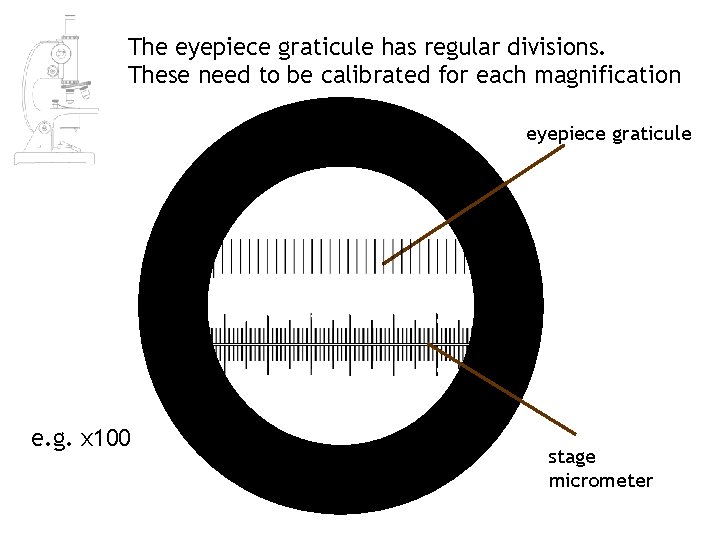
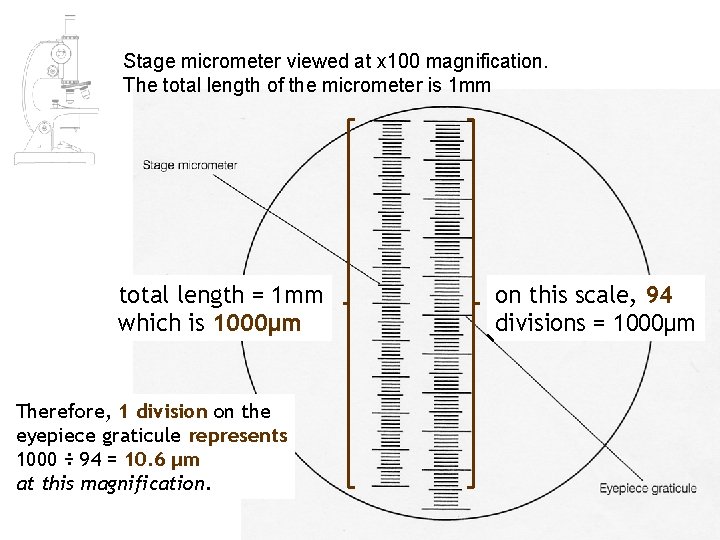
The eyepiece graticule has regular divisions. These need to be calibrated for each magnification eyepiece graticule e. g. x 100 stage micrometer
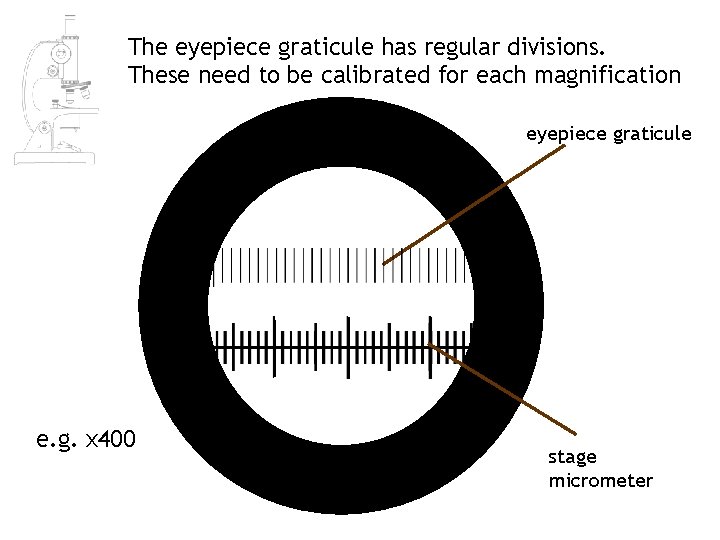
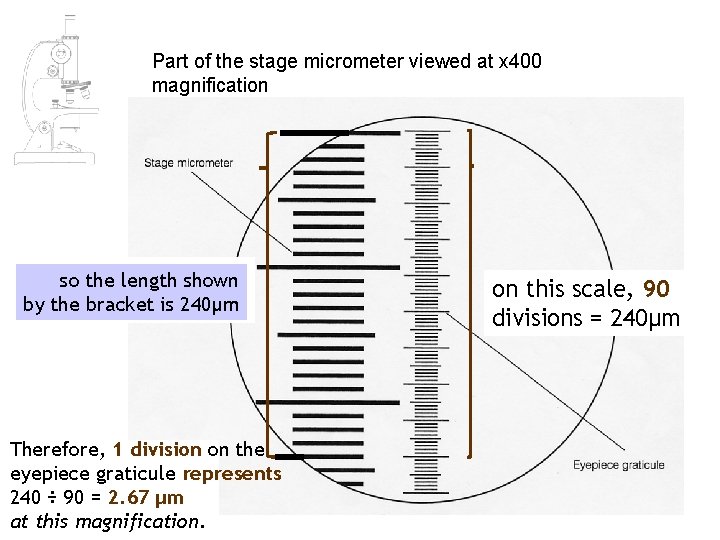
The eyepiece graticule has regular divisions. These need to be calibrated for each magnification eyepiece graticule e. g. x 400 stage micrometer
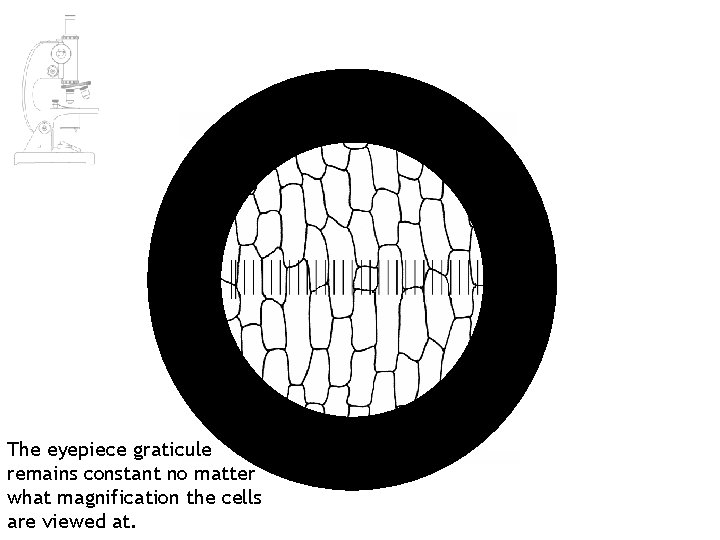
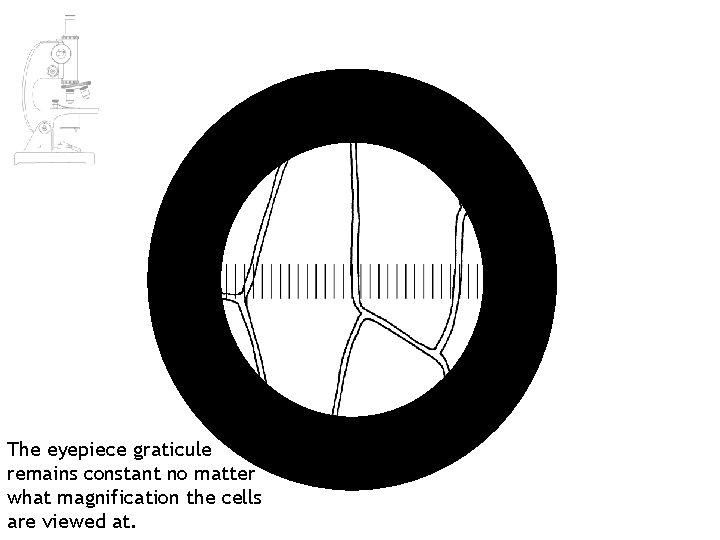
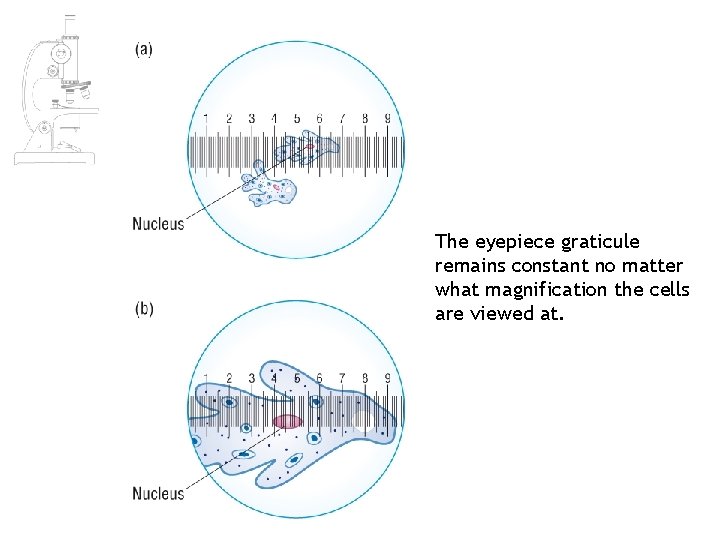
The eyepiece graticule remains constant no matter what magnification the cells are viewed at.
The eyepiece graticule remains constant no matter what magnification the cells are viewed at.
The eyepiece graticule remains constant no matter what magnification the cells are viewed at.
Stage micrometer viewed at x 100 magnification. The total length of the micrometer is 1 mm total length = 1 mm which is 1000μm Therefore, 1 division on the eyepiece graticule represents 1000 ÷ 94 = 10. 6 μm at this magnification. on this scale, 94 divisions = 1000μm
Part of the stage micrometer viewed at x 400 magnification remember thatshown each so the length by the bracket division here isis 240μm 10μm Therefore, 1 division on the eyepiece graticule represents 240 ÷ 90 = 2. 67 μm at this magnification. on this scale, 90 divisions = 240μm
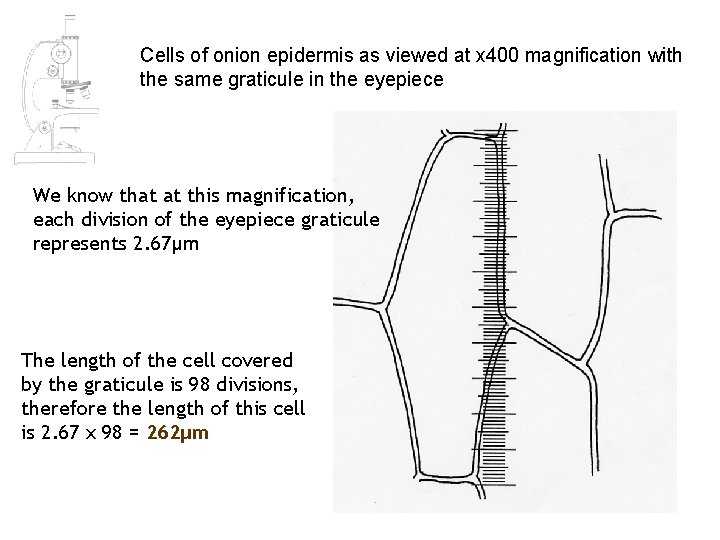
Cells of onion epidermis as viewed at x 400 magnification with the same graticule in the eyepiece We know that at this magnification, each division of the eyepiece graticule represents 2. 67μm The length of the cell covered by the graticule is 98 divisions, therefore the length of this cell is 2. 67 x 98 = 262μm
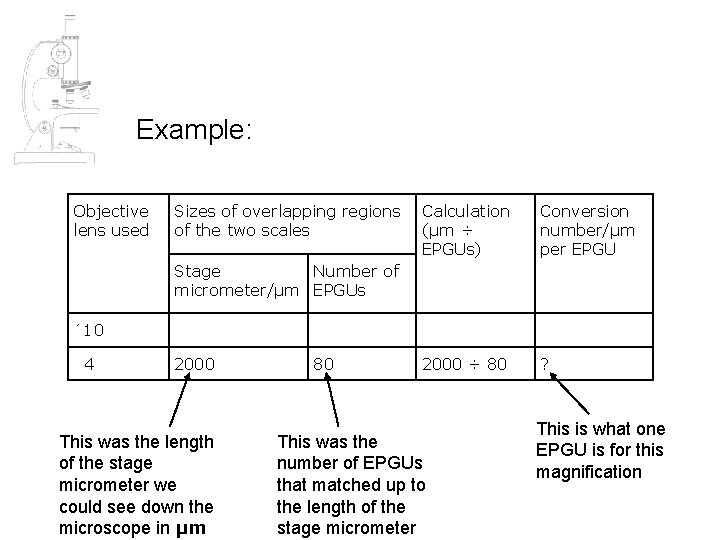
Example: Objective lens used Sizes of overlapping regions of the two scales Calculation (µm ÷ EPGUs) Conversion number/µm per EPGU 2000 ÷ 80 ? Stage Number of micrometer/µm EPGUs ´ 10 4 2000 This was the length of the stage micrometer we could see down the microscope in µm 80 This was the number of EPGUs that matched up to the length of the stage micrometer This is what one EPGU is for this magnification
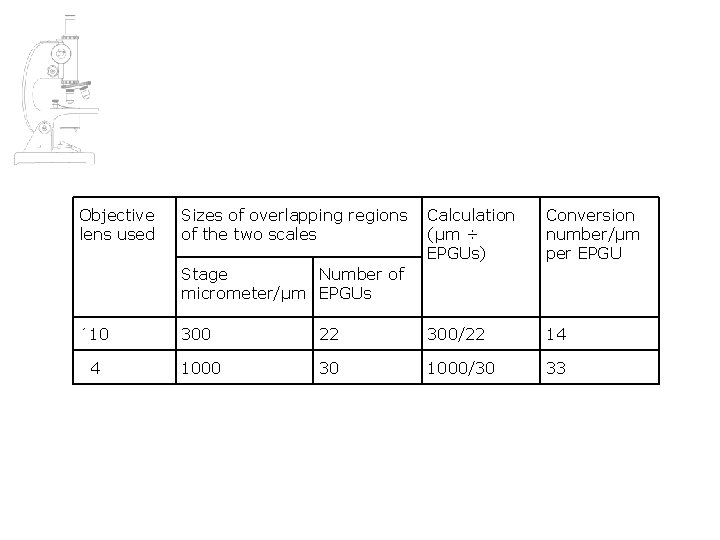
Objective lens used Sizes of overlapping regions of the two scales Calculation (µm ÷ EPGUs) Conversion number/µm per EPGU Stage Number of micrometer/µm EPGUs ´ 10 4 300 22 300/22 14 1000 30 1000/30 33