
PPT Unit 3 part 3 Effects of Aging
- Slides: 44
PPT Unit 3 part 3 Effects of Aging & Environmental Factors
AGE RELATED CHANGES
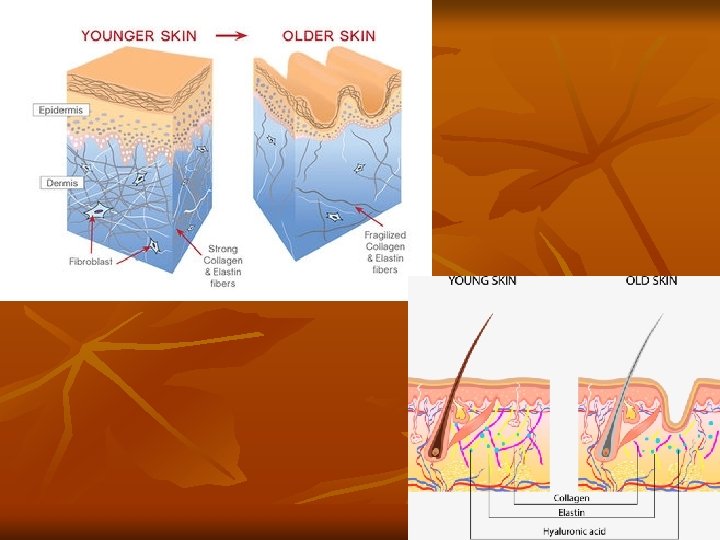
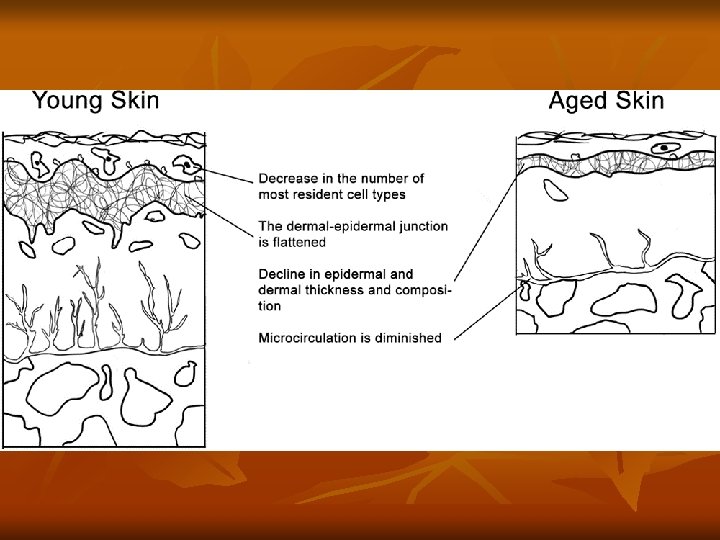
Dermal changes n Age related Changes n Reduction in synthesis of collagen & elastin fibers in dermis Dermis reduced in size = wrinkling & sagging of skin n Fewer fibroblasts = slower wound healing n
Sebaceous Gland changes n Reduced activity of sebaceous glands n Decrease in oil dries skin
Hair follicle & nail bed changes n Decreased pigment production in hair follicles n n Hair shafts become transparent Diminished blood supply to hair follicles & nail beds Hair growth slows, hair thins & # of follicles decrease n Impaired growth of nail beds causing dulling & hardening n
Sensory receptor changes n # of sensory receptors falls = decreased sensitivity to pain & pressure
Vascularity changes n Reduced ability to maintain body temperature homeostasis n Capillary beds shrink, # of sweat glands falls, & ability to shiver declines n n Vasoconstriction & vasodilation declines reducing ability to regulate body temperature Also contributes to pressure sore development
Vitamin D synthesis changes n Reduced ability to form & activate vitamin D leading to reduction in bone health
Environmental factors: Burns
Burns · Define: Protein denaturation and cell death caused by heat, electricity, UV radiation, or chemicals · 2 main dangers · Dehydration–Loss of fluids & Electrolytes lead to: ·Renal Shutdown ·Circulatory shock · Infection ·Skin (mechanical)barrier lost ·Immune system depresses Copyright © 2003 Pearson Education, Inc. publishing as Benjamin Cummings Slide 4. 25
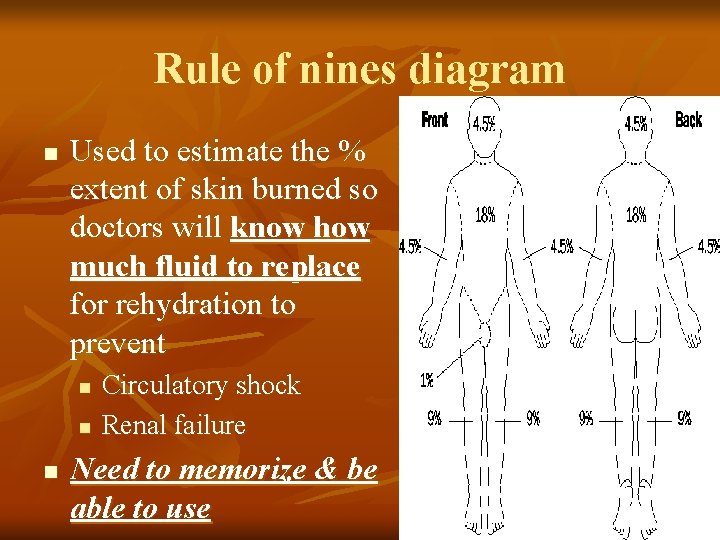
Rule of nines diagram n Used to estimate the % extent of skin burned so doctors will know how much fluid to replace for rehydration to prevent n n n Circulatory shock Renal failure Need to memorize & be able to use
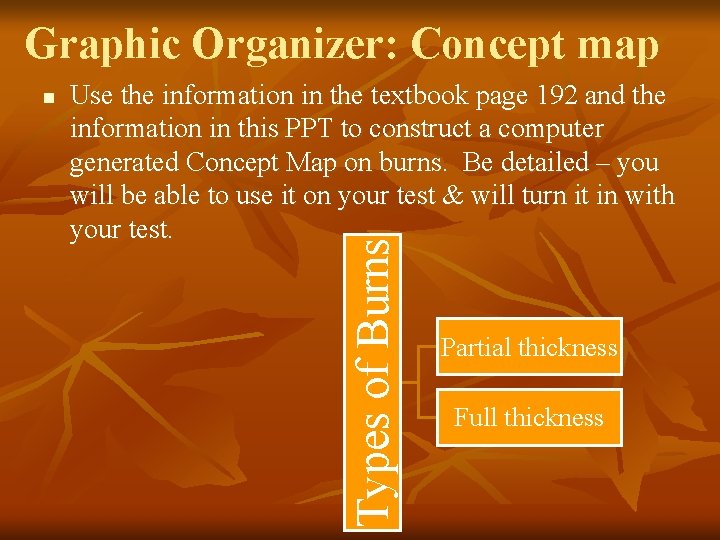
Graphic Organizer: Concept map Use the information in the textbook page 192 and the information in this PPT to construct a computer generated Concept Map on burns. Be detailed – you will be able to use it on your test & will turn it in with your test. Types of Burns n Partial thickness Full thickness
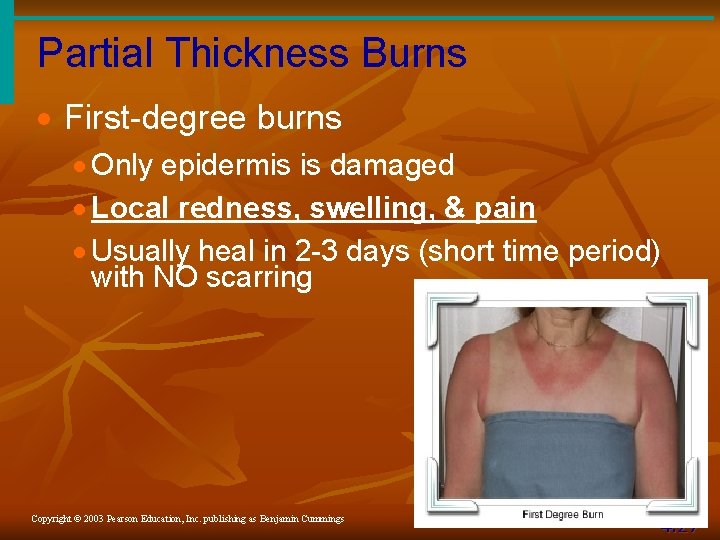
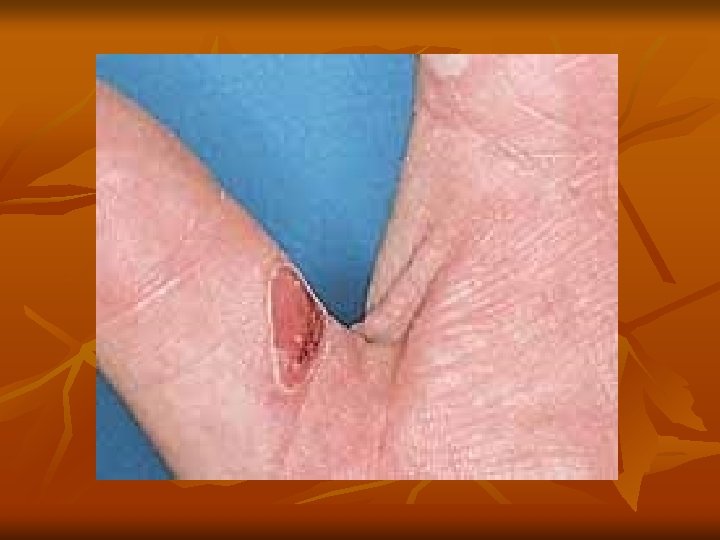
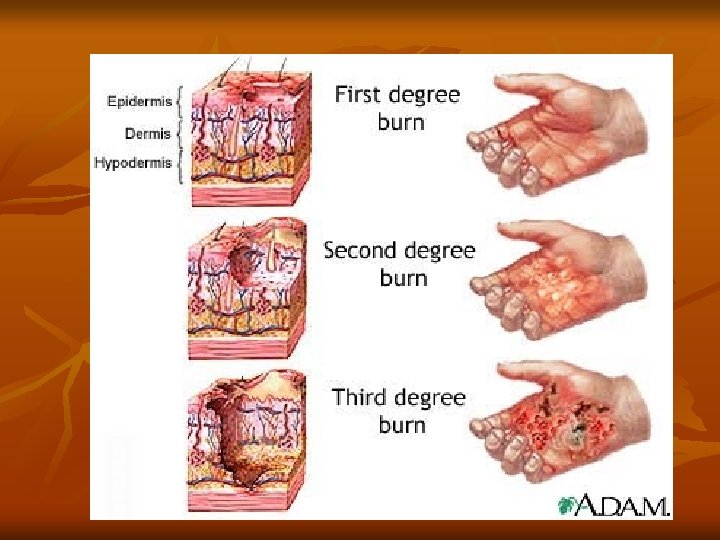
Partial Thickness Burns · First-degree burns · Only epidermis is damaged · Local redness, swelling, & pain · Usually heal in 2 -3 days (short time period) with NO scarring Copyright © 2003 Pearson Education, Inc. publishing as Benjamin Cummings Slide 4. 27
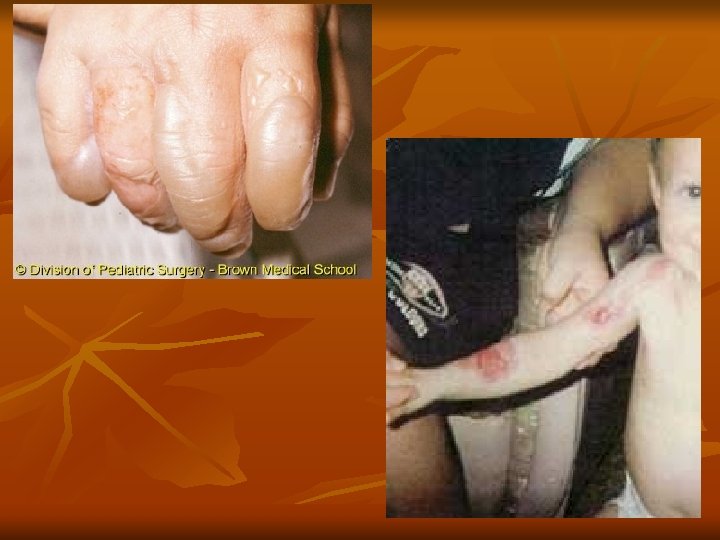
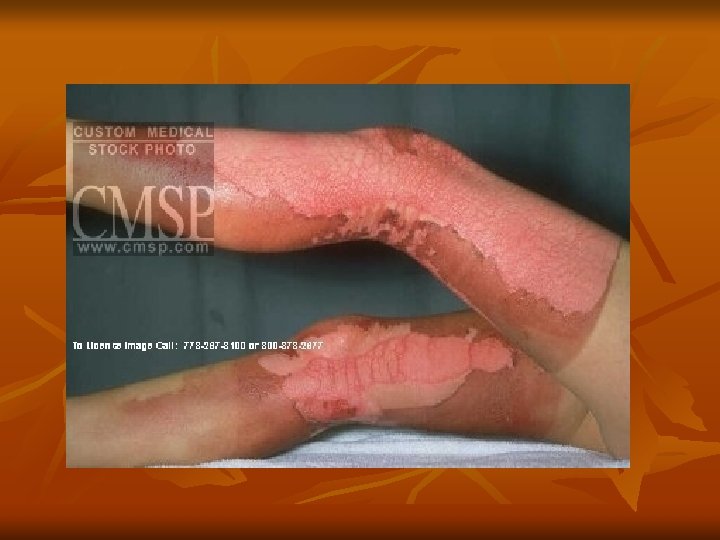
Partial Thickness Burns · Second degree burns · Epidermis and upper dermis & structures within dermis are damaged · Appearance of blisters of any size · Skin regeneration in 3 -4 weeks with some scarring · There is a danger of infection Copyright © 2003 Pearson Education, Inc. publishing as Benjamin Cummings Slide 4. 27
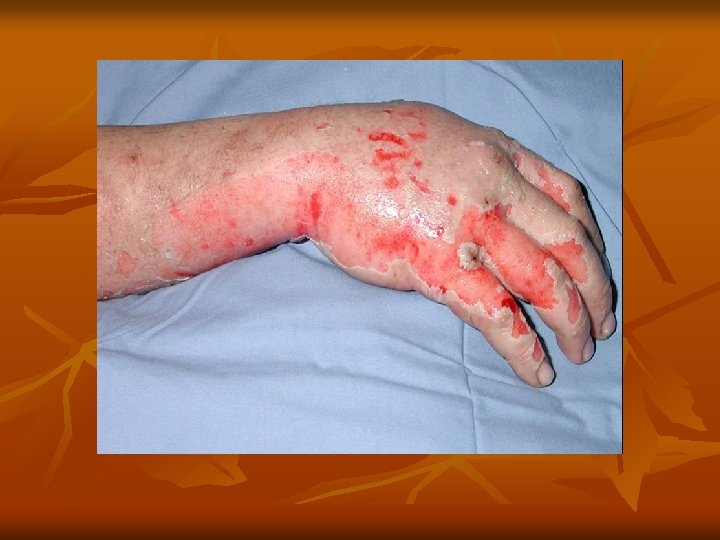
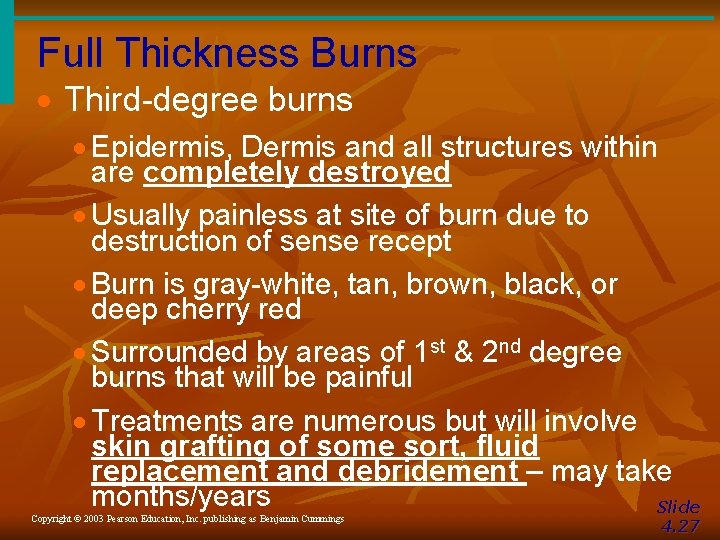
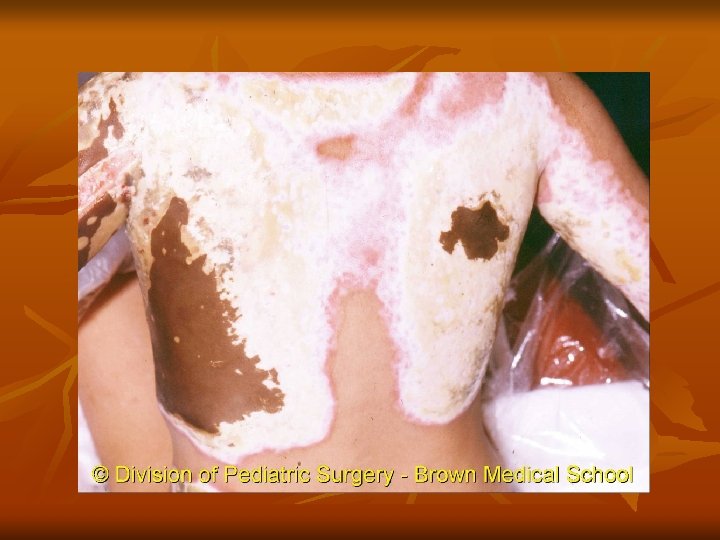
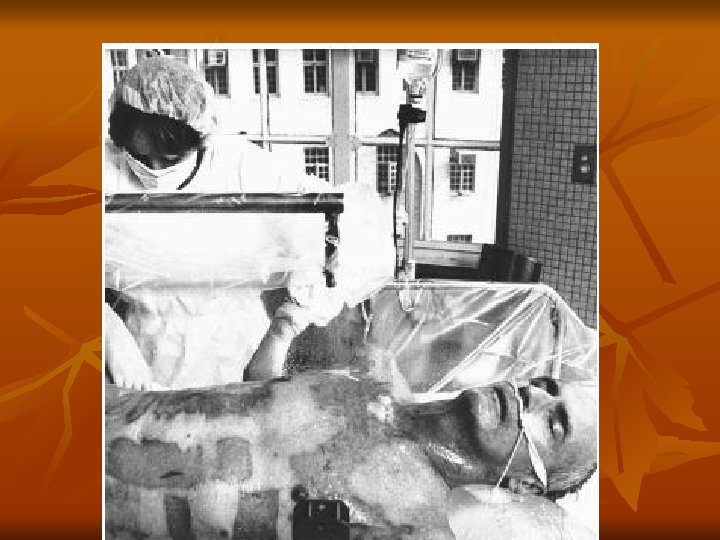
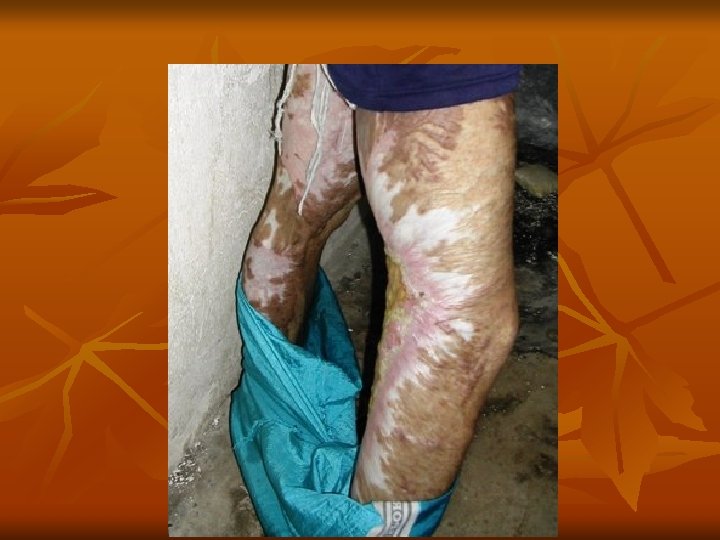
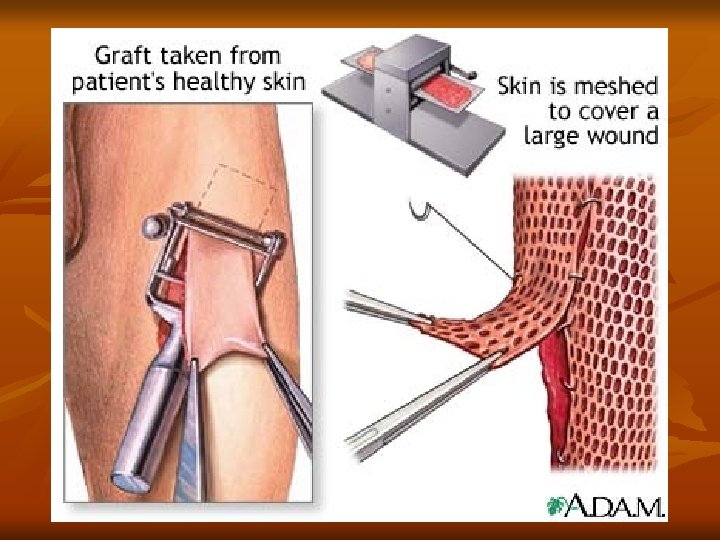
Full Thickness Burns · Third-degree burns · Epidermis, Dermis and all structures within are completely destroyed · Usually painless at site of burn due to destruction of sense recept · Burn is gray-white, tan, brown, black, or deep cherry red · Surrounded by areas of 1 st & 2 nd degree burns that will be painful · Treatments are numerous but will involve skin grafting of some sort, fluid replacement and debridement – may take months/years Slide Copyright © 2003 Pearson Education, Inc. publishing as Benjamin Cummings 4. 27
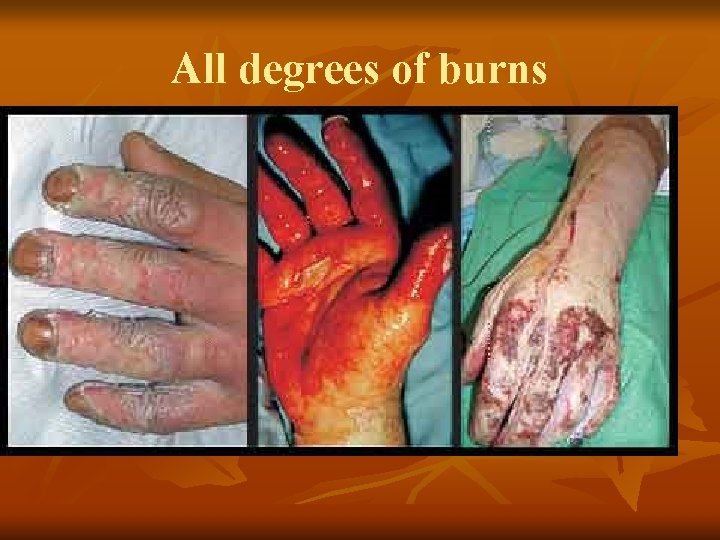
All degrees of burns
Environmental Factors: Radiation SKIN CANCER
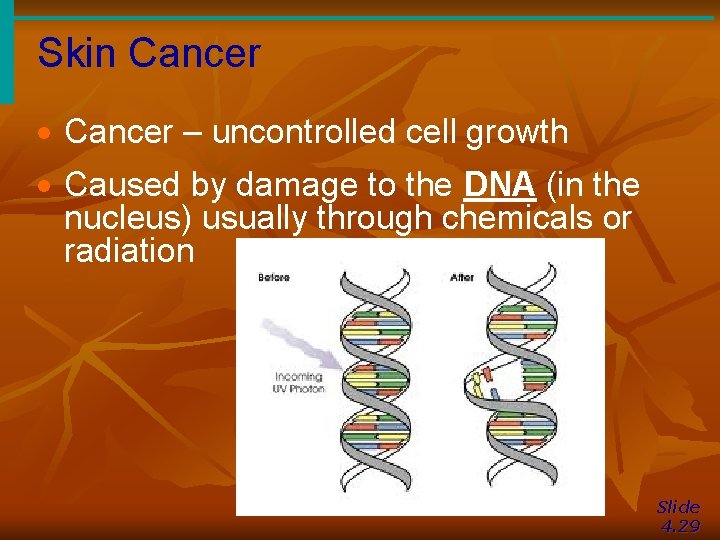
Skin Cancer · Cancer – uncontrolled cell growth · Caused by damage to the DNA (in the nucleus) usually through chemicals or radiation Slide 4. 29
Tumor Types · Two types of tumors · Benign · · Does not spread (encapsulated) Malignant: these are the cancerous ones · Metastasized (moves) to other parts of the body
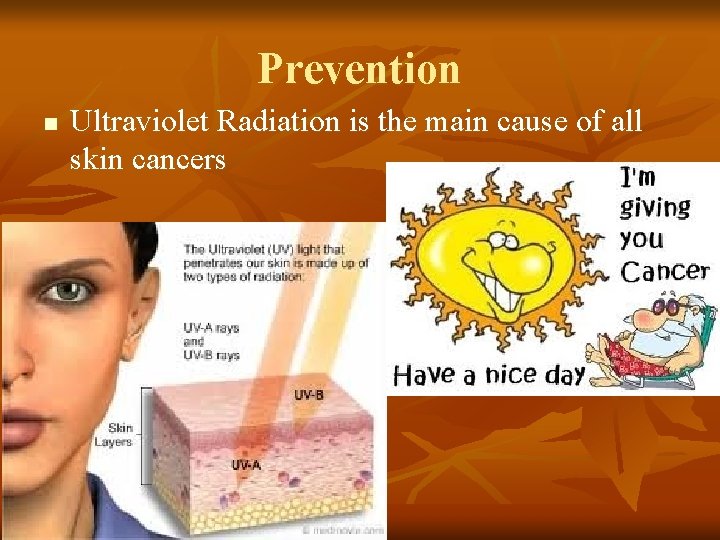
Prevention n Ultraviolet Radiation is the main cause of all skin cancers
Partner Project n n Using the information in this PPT, the textbook page 182 & the link below: https: //www. aad. org/public/spot-skincancer/learn-about-skin-cancer/types-of-skincancer n n Click on the name of each cancer & then go through the Overview & Symptoms tabs Follow the instructions on your project page.
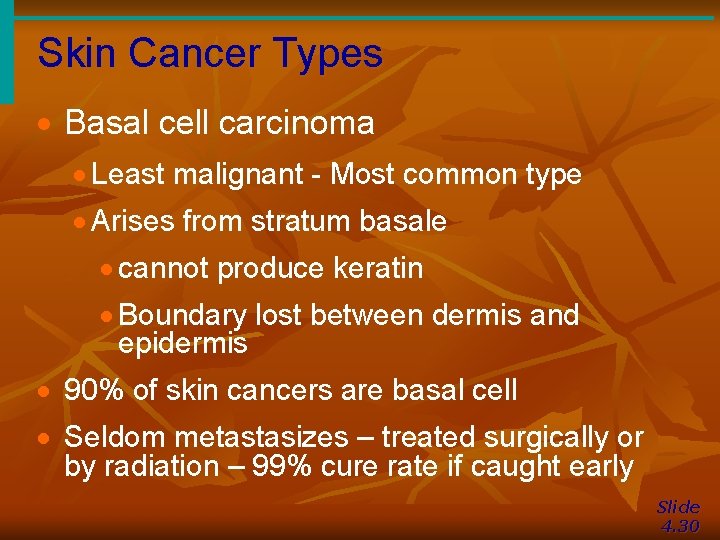
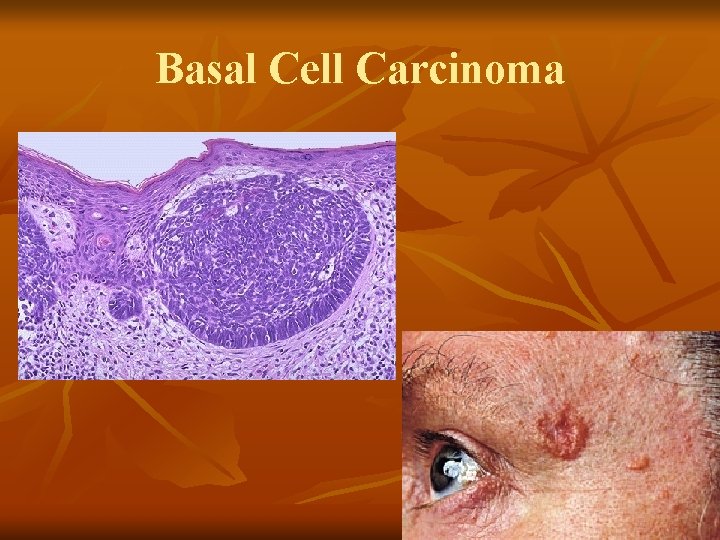
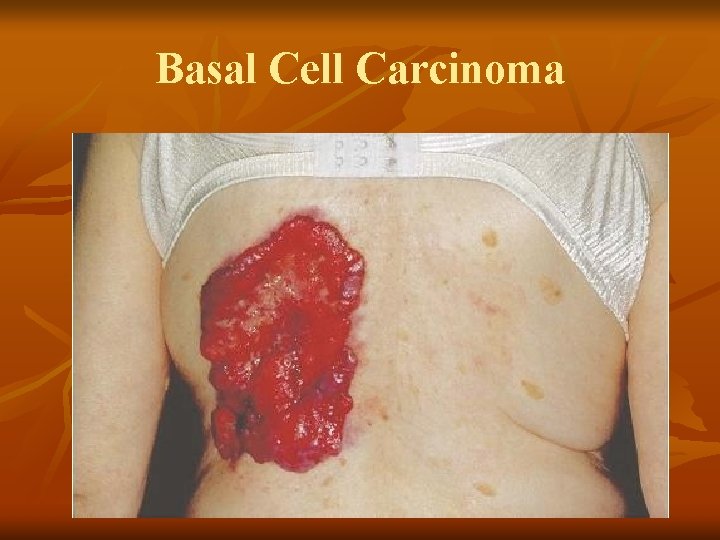
Skin Cancer Types · Basal cell carcinoma · Least malignant - Most common type · Arises from stratum basale · cannot produce keratin · Boundary lost between dermis and epidermis · 90% of skin cancers are basal cell · Seldom metastasizes – treated surgically or by radiation – 99% cure rate if caught early Slide 4. 30
Basal Cell Carcinoma
Basal Cell Carcinoma
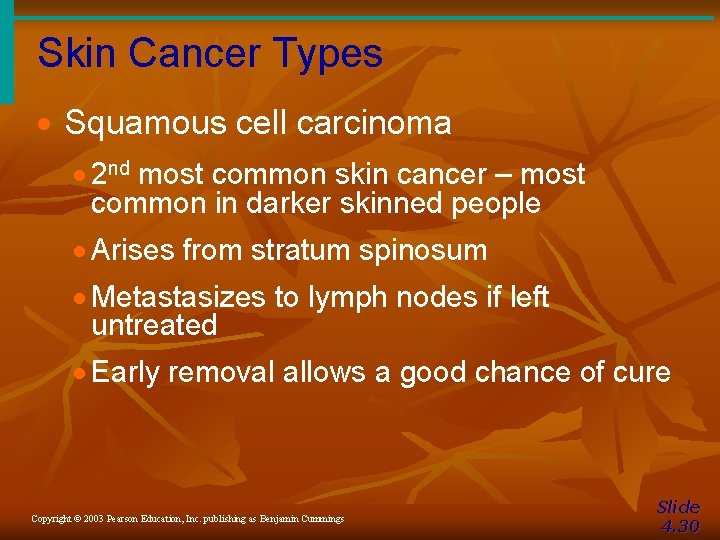
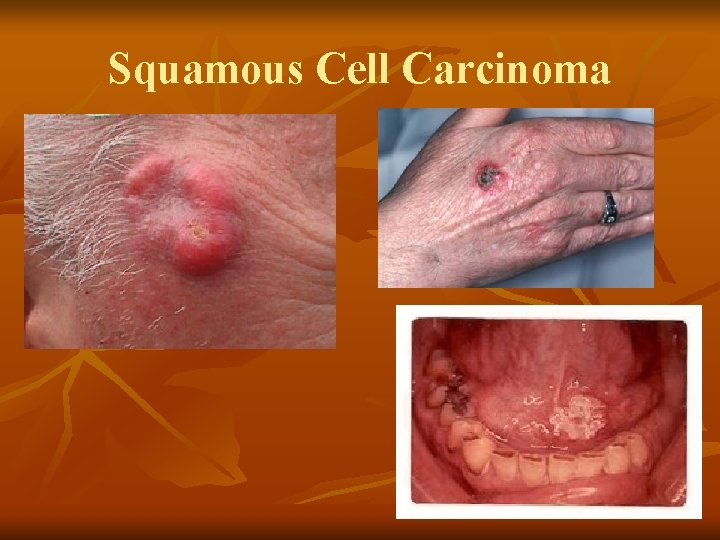
Skin Cancer Types · Squamous cell carcinoma · 2 nd most common skin cancer – most common in darker skinned people · Arises from stratum spinosum · Metastasizes to lymph nodes if left untreated · Early removal allows a good chance of cure Copyright © 2003 Pearson Education, Inc. publishing as Benjamin Cummings Slide 4. 30
Squamous Cell Carcinoma
Cumulative Effects n n n IMPORTANT TO KNOW Basal cell & squamous cell carcinomas are due to cumulative effects of the sun’s radiation (or chemical exposures as well) These tend to develop in ages 30 -40 s after years of daily sun exposure
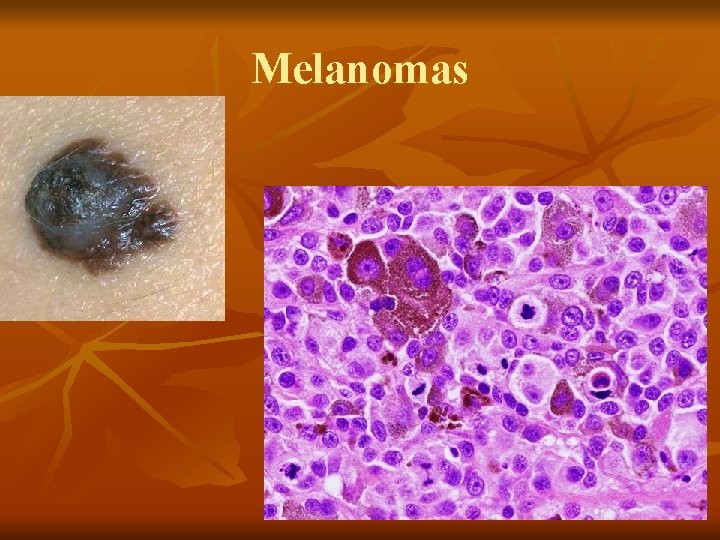
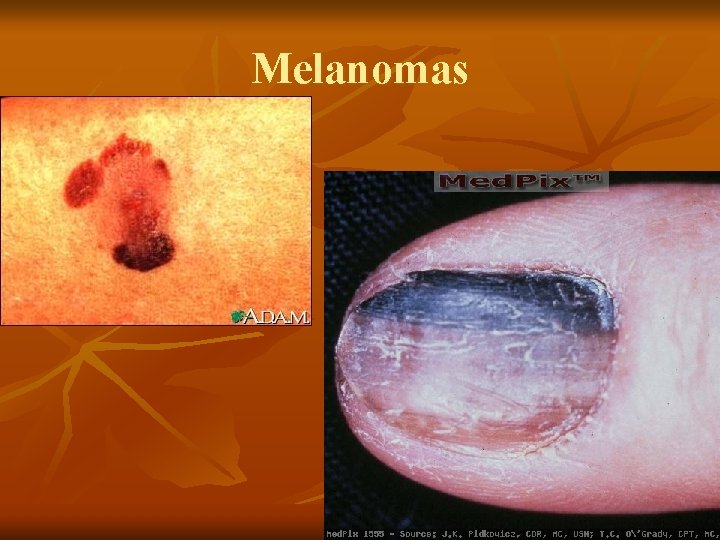
Skin Cancer Types · Malignant melanoma · Least common BUT most deadly of skin cancers · Originates melanocytes · Metastasizes rapidly to lymph and blood vessels · Early detection is critical Copyright © 2003 Pearson Education, Inc. publishing as Benjamin Cummings Slide 4. 31
Intensive Effects n n n Malignant Melanoma tends to occur in younger ages (as well as older people) It is due to brief intense exposures (aka: sunburns) This is the most serious form of skin cancer and MUST be caught early to be treated successfully!
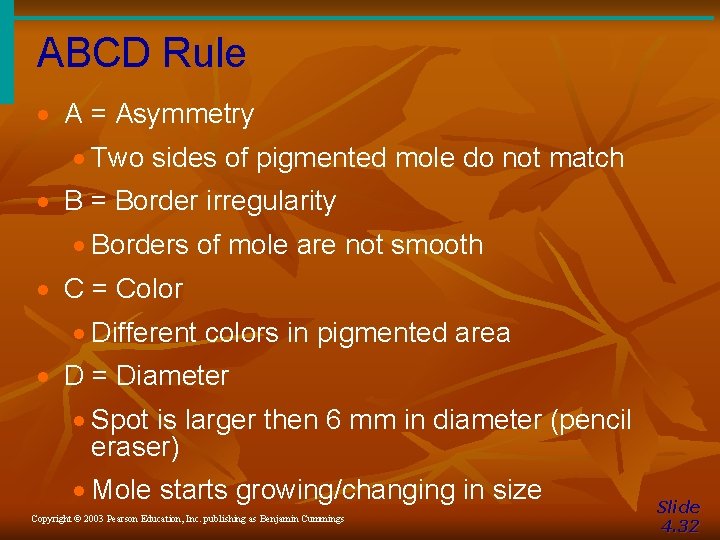
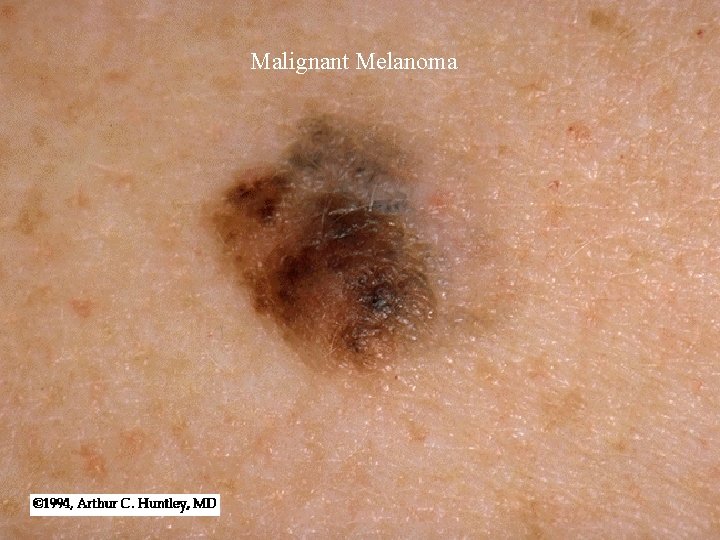
ABCD Rule · A = Asymmetry · Two sides of pigmented mole do not match · B = Border irregularity · Borders of mole are not smooth · C = Color · Different colors in pigmented area · D = Diameter · Spot is larger then 6 mm in diameter (pencil eraser) · Mole starts growing/changing in size Copyright © 2003 Pearson Education, Inc. publishing as Benjamin Cummings Slide 4. 32
Malignant Melanoma
Melanomas
Melanomas