
PPT ON WATER CONVERSATION THE WATER CYCLE PROCESS

- Slides: 8
PPT ON WATER CONVERSATION
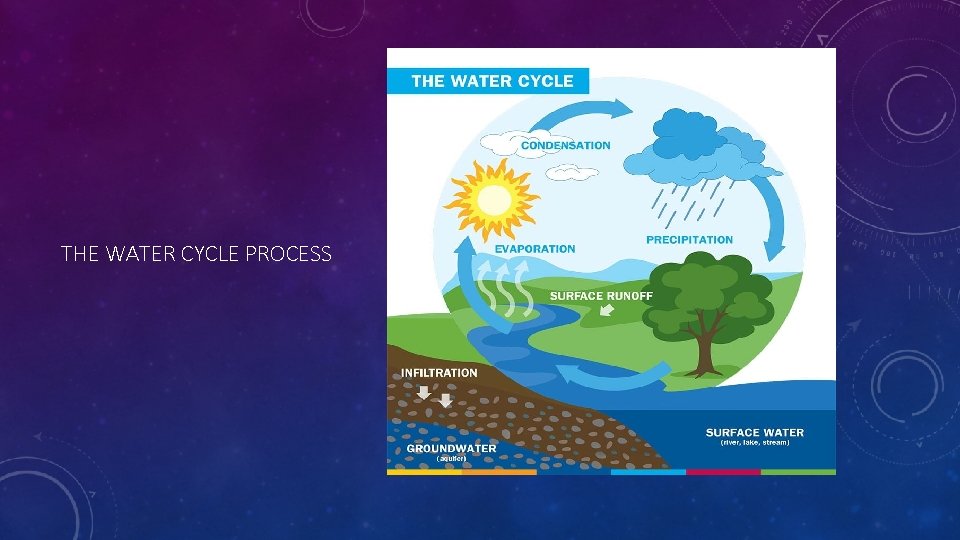
THE WATER CYCLE PROCESS
WATER • Water is an inorganic, transparent, tasteless, odorless, and nearly colorless chemical substance, which is the main constituent of Earth's hydrosphere and the fluids of all known living organisms. It is vital for all known forms of life, even though it provides no calories or organic nutrients.
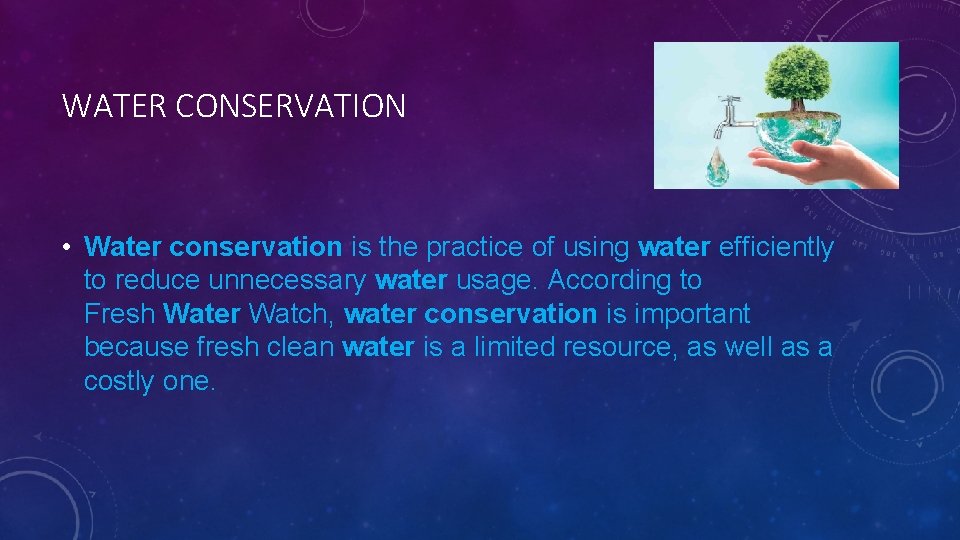
WATER CONSERVATION • Water conservation is the practice of using water efficiently to reduce unnecessary water usage. According to Fresh Water Watch, water conservation is important because fresh clean water is a limited resource, as well as a costly one.
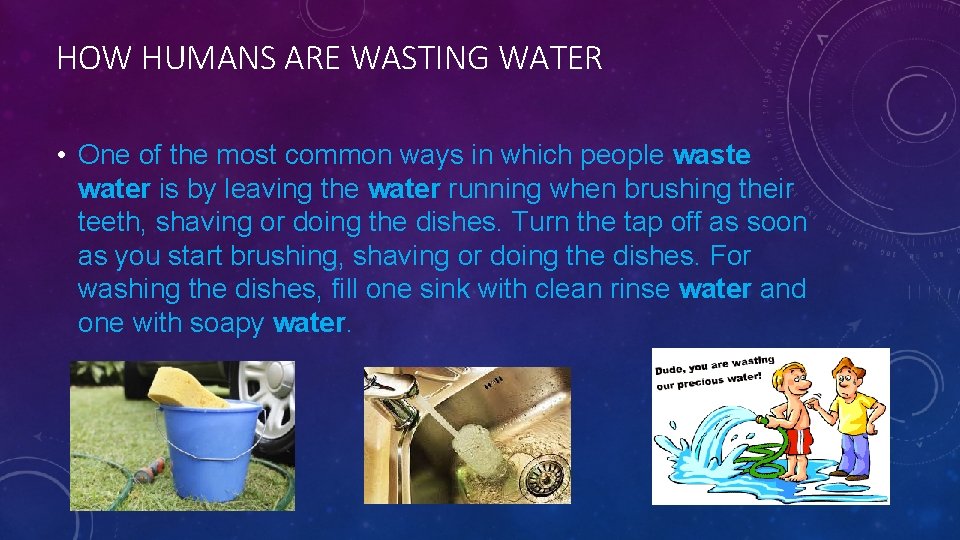
HOW HUMANS ARE WASTING WATER • One of the most common ways in which people waste water is by leaving the water running when brushing their teeth, shaving or doing the dishes. Turn the tap off as soon as you start brushing, shaving or doing the dishes. For washing the dishes, fill one sink with clean rinse water and one with soapy water.
HOW MUCH WATER CAN HUMANS AND ANIMALS DRINK? ? • The USDA recommends a daily intake of total water: not necessarily by drinking but by consumption of water contained in other beverages and foods. The recommended intake is 3. 7 liters (appx. 1 gallon) per day for an adult male, and 2. 7 liters (appx. 0. 75 gallon) for an adult female.
CONSERVE WATER TO SAVE LIFE