
PPT Introduction INTRODUCTION TO RECREATION SERVICES FOR PEOPLE
- Slides: 18
PPT - Introduction INTRODUCTION TO RECREATION SERVICES FOR PEOPLE WITH DISABILITIES A PERSON-CENTERED APPROACH: THIRD EDITION AUTHORS: BULLOCK — MAHON — KILLINGSWORTH
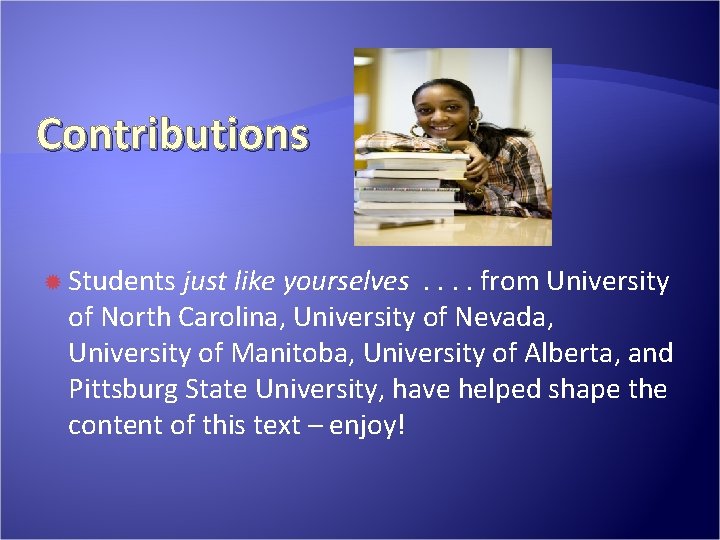
Contributions Students just like yourselves. . from University of North Carolina, University of Nevada, University of Manitoba, University of Alberta, and Pittsburg State University, have helped shape the content of this text – enjoy!
Importance of “Our” Community Content is also driven from invaluable insights of countless people with disabilities and advocates. Important voices, thoughts, admonitions, and encouragement are contained within.
Benefits of Advancement in WEB Information on “disability” available to all through the Internet. . . has greatly expanded in recent years and is constantly updating.
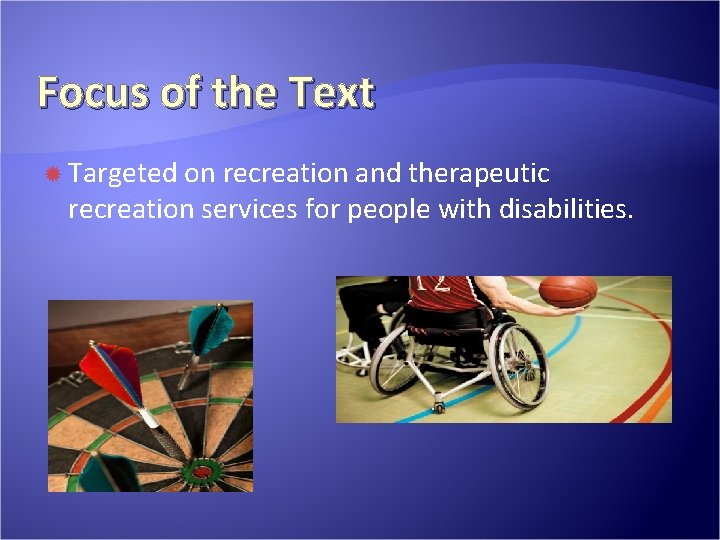
Focus of the Text Targeted on recreation and therapeutic recreation services for people with disabilities.
Priority Knowledge To Gain Recreation services MUST BE centered around the person who is being served.
True? People with disabilities are: 1) People who have the same needs and wants as everyone else. 2) Deserve the right to be at the center of recreation and therapeutic recreation services that are ostensibly “for” them.
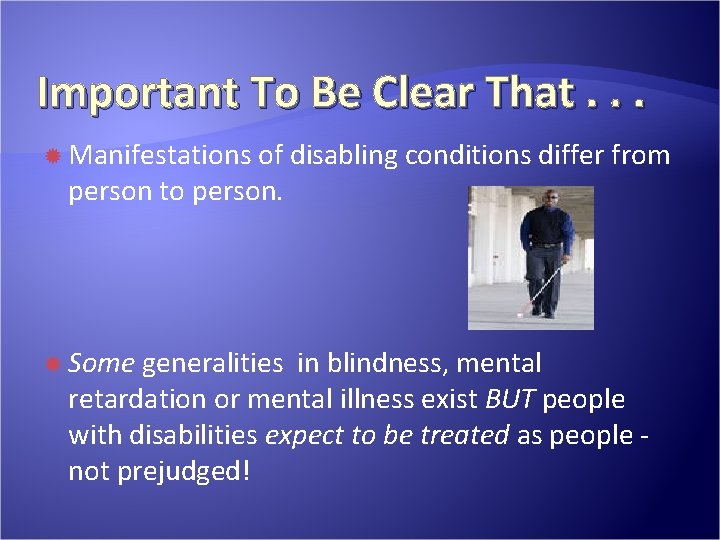
Important To Be Clear That. . . Manifestations of disabling conditions differ from person to person. Some generalities in blindness, mental retardation or mental illness exist BUT people with disabilities expect to be treated as people not prejudged!
Important To. . . Challenge Re-think long-held beliefs and concepts. and sometime modify your positions.
Introductory Text For all students in parks and recreation/leisure studies curricula. Every student, whether he or she intends to work in a provincial park or a state hospital, a community recreation center or a community mental health center, a public school or a cruise ship, needs a basic level of knowledge about people with disabilities.
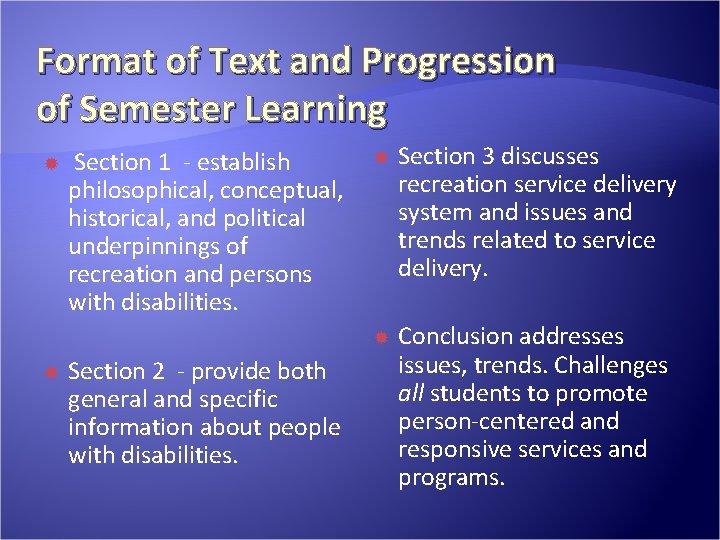
Format of Text and Progression of Semester Learning Section 1 - establish philosophical, conceptual, historical, and political underpinnings of recreation and persons with disabilities. Section 2 - provide both general and specific information about people with disabilities. Section 3 discusses recreation service delivery system and issues and trends related to service delivery. Conclusion addresses issues, trends. Challenges all students to promote person-centered and responsive services and programs.
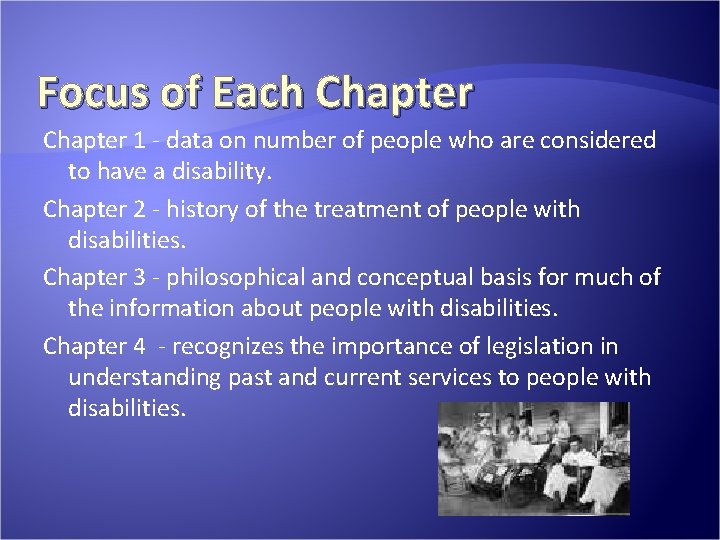
Focus of Each Chapter 1 - data on number of people who are considered to have a disability. Chapter 2 - history of the treatment of people with disabilities. Chapter 3 - philosophical and conceptual basis for much of the information about people with disabilities. Chapter 4 - recognizes the importance of legislation in understanding past and current services to people with disabilities.
Focus of Each Chapter 5 - how people with disabilities are treated today. Look theoretically at attitude formation and attitude change. Chapter 6 - begins discussion of recreation and therapeutic recreation services. Chapter 7 – detailed discussion of a number of issues that cut across all disabilities.
Focus of Each Chapter 8 – focus - mental retardation/intellectual disability. Chapter 9 – focus - physical disabilities. Chapter 10 – focus - visual impairments. Chapter 11 – focus - hearing impairments. Chapter 12 – focus - mental illness.
Culminating Expectation Students will emerge from this book (and their class) with person-centered knowledge. Having learned much — how to provide recreation services to people with disabilities.
Culminating Expectation Representative cont. . . of a new breed of recreation and therapeutic recreation professionals who celebrate differences and strive to provide person -centered and responsive services!
You. Tube Nancy Ward. . on Disability Identity “Disability gave me my identity” http: //www. youtube. com/watch? v=Gl. BGw. ZV 4 kmc 4: 49 minutes
In-Class Break-Out Session What are some of your long-held positions and beliefs in relation to persons will disabilities? What does this phrase mean to you ? Recreation services MUST BE centered around the person who is being served. What is your current exposure and experience with individuals with disabilities?